The Thrill of It All: Raj Kapoor at the Pacific Film Archive

Raj Kapoor, vagabonding, Shree 420, 1955
Starting this week and running from July 19-Aug. 11, the Pacific Film Archive plays host to The Eternal Poet: Raj Kapoor & the Golden Age of Indian Cinema, a six-film series of classic Bollywood films by Raj Kapoor, the superstar actor and director whose career spanned six decades. Beginning in the 1930s Kapoor was involved in dozens of films and his popularity in India gained him the nickname “The Great Showman.” He’s probably best known for his lovable tramp persona, modeled in part on Charlie Chaplin’s famous screen character, and he made some of India’s most popular films of the 20th century.
Kapoor began his career in 1935 at the age of 11—his breakthrough film was Neel Kamai in 1947. Many other hit films followed and by the time of his death he was revered as one of the kings of Hindi-language cinema—he acted in as well as directed, produced, and marketed many of his films. Handsome and photogenic, with wavy dark hair and blue eyes, and with a nimble physical grace and keen comic timing, Kapoor was made for the silver screen. As is often the case in India, several of his family members are also members of the Bollywood pantheon including his father Prithviraj, brothers Shashi and Shammi, sons Rishi and Randhir, and grandchildren Karisma, Kareena, and Ranbir Kapoor.
The PFA series is a nice sampler of his work, with films ranging from Aag (1948) to the Kapoor-directed Bobby (starring his fresh-faced son Rishi) from 1974. The films are lovely fables about life, love, and humanity, with Kapoor as the everyman searching for meaning and beauty amidst the chaos of modern times.

Nargis & Raj 4-ever, Barsaat, 1949
Barsaat (1949) stars Kapoor and Premnath as friends who woo two country girls, with Kapoor’s violin-playing idealist looking for love while Premnath looks for recreation. Nargis (who later starred in Mother India) was Kapoor’s real-life extramarital squeeze and she appears in five of the six films in the PFA series. In Barsaat she plays Kapoor’s romantic muse and the chemistry between the two is palpable, reflecting their torrid offscreen relationship.
I watched a DVD screener of Barsaat and even in that degraded format the cinematography was pretty stunning. Despite the fact that it was clearly shot partially on location and partially on a soundstage, the film successfully blends the two visual styles, creating dreamlike mix of realism and artifice. The film also artfully alternates between diegetic and non-diegetic music, further enhancing its surreal, mythical feel.
In Shree 420 (1955), Kapoor in full-on tramp mode is charming and entirely watchable. His lovable rube, also named Raj, wanders the mean streets of Bombay, where, as one character states, “high buildings are made of cement, people have hearts of stone, and only one thing is sacred, that’s money. ” The number 420 in the film’s title refers to the section in the Indian penal code dealing with theft, and literally translates as “Mr. 420,” or respectable thief. Written by K.A. Abbas (a well-known figure in India’s “parallel,” or neo-realist, film community), the movie is an interesting critique of unbridled capitalism, portraying the wealthy as unethical, venal predators who ruthlessly exploit the poor.
Kapoor’s innocent character is seduced by the corruption of the big city, much to the dismay of his love interest, the right-minded and honorable Vidya, played by Nargis. Much like her similar character in Barsaat, Nargis’ Vidya is the film’s moral center, using her expressive eyes and virtuous bearing to great effect.
Despite the harsh realities of life in the big city, Raj finds small kindnesses from the other poor and working-class folks he encounters—a matronly fruit-seller gives him free bananas and, after a brief misunderstanding, his fellow street-dwellers welcome him into their midst. The film’s climax evokes Frank Capra at his populist best, as Kapoor rages against the machine and rallies the downtrodden.

Get your motor runnin’, Rishi & Dimple, Bobby, 1974
Bobby (1974), directed by Kapoor, was the first Indian film to feature the now-familiar Bollywood premise of young protagonists defying tradition in the name of love. Baby-faced Rishi Kapoor, his character named Raja (Hindi for “prince”), and sixteen-year-old Dimple Kapadia play out the classic rich boy/poor girl storyline, challenging the status quo with their caste-busting romance. The film reflects the youth rebellion sweeping the world at the time and at one point, astride a motorbike and dressed in leathers, Rishi Kapoor actually resembles Peter Fonda. Both of the filmic fathers (one played with great zest by Premnath from Barsaat, here with a middle-aged paunch) are tigers, loudly and insistently battling it out for top cat. As is fitting its 1970s release the costume design is amazing, with Rishi in red velour jumpsuits, long striped scarves, and turquoise bell-bottoms.
The film, which takes the countercultural revolution of the 1960s and 70s and filters it through a distinctively Bollywood lens, was the first Hindi-language film to focus on young love, and Rishi Kapoor and Dimple Kapadia ably fulfill their roles as the passionately yearning teen couple. Interestingly enough, many years later in his middle age Rishi Kapoor played a similar role in the 2009 film Love Aaj Kal, as a man who overcomes parental and societal pressure in order to pursue his true love.
The PFA series also includes Awaara (1951) another of Kapoor’s renderings of his famous little tramp character, Boot Polish (1954), and Aag (1948), Kapoor’s directorial debut. All three were available on preview DVDs but I instead decided to wait to see them on the big screen, as they should be. I’m sure I won’t regret it.
The Eternal Poet: Raj Kapoor & the Golden Age of Indian Cinema
July 19-Aug. 11, 2012
Pacific Film Archive
2575 Bancroft Way
Berkeley, CA 94720
(510) 642-1124
Wonderwall: 2012 San Francisco Silent Film Festival

Come hither, Clara Bow, Mantrap, 1926
I love a good film festival and this year’s San Francisco Silent Film Festival was one of the best. Held at the legendary Castro Theater, the festival showcased several brand new or recently restored prints of classic and obscure films from Germany, China, the U.S., Sweden, and beyond. Probably due to the popularity of The Artist, winner of last year’s Best Picture Oscar, the festival was packed morning, noon, and night.
In this age of DVDs and online streaming the SFSFF understands the need to offer a value-added film viewing experience. All of the shows at the fest had live accompaniment, ranging from glorious piano and Wurlitzer stylings to full-on ensemble performances from crack film orchestras. Wings, the opening night film, was screened not only with live music but with a live foley setup providing sound effects in the theater as the film unspooled. The screening of Georges Melies’ classic short, A Trip To The Moon (recently featured in Martin Scorsese’s Hugo), included live narration by Paul McCann from the director’s notes on the film, adding a droll note to the whimsical film.
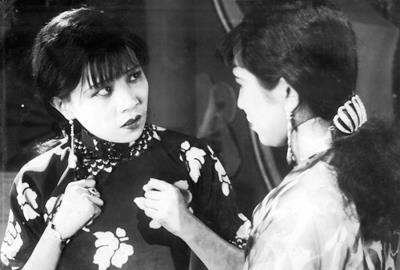
Ruan Lingyu, flowery, Little Toys, 1933
I started my long weekend o’ film viewing with Little Toys (1933), starring the legendary Chinese performer Ruan Lingyu, who died by her own hand at the tender age of 24. Between 1927 to her death in 1934 Ruan appeared in nearly 30 films during the golden age of Chinese filmmaking, famously playing lovelorn prostitutes, and other down-and-out characters. In Little Toys she’s a toymaker in rural China who is swept up by the events of the day, including the Sino-Japanese War, the advent of capitalism, and the urbanization of China. The film, by left-leaning director Sun Yu (who ironically was later denounced by Mao Zedong), is an interesting critique of the inhumanity of war and the ways in which ordinary people are harmed by violent political conflict.
The festival also included films featuring two very different silent era actresses. Mantrap (1926), starring the awesome Clara Bow, screened with impeccable live accompaniment by Stephen Horne on piano, flute and accordion. I’d never seen Clara Bow in action before and, as directed by her then-inamorato Victor Fleming (The Wizard of Oz; Gone With The Wind) she’s fun and charismatic, with darting eyes and a sly, impish grin. The pre-code storyline of a notorious flirt who dazzles her husband and his friend, as well as most of the other men in the movie, is refreshingly non-judgmental—as Michael Sragow observes in the program notes, “the film doesn’t punish the character for her sexual independence, it salutes her for it.”

Louise Brooks schwag, San Francisco Silent Film Festival
Saturday night’s centerpiece film featured another silent-screen goddess, the ever-stunning Louise Brooks starring in Pandora’s Box. The festival screened a gorgeous new restoration that confirmed director G.W. Pabst’s mastery of light and shadow, emphasizing the moody chiaroscuro that makes this film a classic. We’d meant to attend the 10pm show of The Overcoat immediately following Pandora’s Box, with music by the surprise-a-minute Alloy Orchestra, but delays in loading in the Mattie Bye Orchestra for the Pabst film pushed The Overcoat’s start time past 11pm. With plans to see the 10am show the next day we regretfully took a pass on the Russian expressionist movie and headed for home.
Sunday morning bright and early, less than ten hours after the late-night screening of The Overcoat, a full house turned out to see Douglas Fairbanks in The Mark of Zorro (1920), as the mild-mannered Don Diego who turns into the sexy crime-fighting Zorro. As noted by Fairbanks biographer Jeffrey Vance, Zorro’s underground hideout, his dual identity, and his form-fitting all-black outfit, cape and mask were a clear influence on Batman creator Bob Kane. In Zorro, Fairbanks of course flaunts his toned booty, fencing chops and parkour skills—more surprising are his well-honed comic chops as the foppish Don Diego. The film isn’t very cinematically innovative but once Fairbanks gets going the movie picks up steam. The climatic chase scene, with Fairbanks running, jumping and climbing his way across the scenery, is a lot of fun.

Sidecar, Buster Keaton, The Cameraman, 1928
Capping the weekend’s screenings was Buster Keaton’s The Cameraman (1928), his last great feature film and his first as an MGM contract player. As a UCLA undergrad I was crazy for Buster Keaton, seeing all of his independent features and several shorts. I even watched The Navigator on a flatbed at the UCLA film archives since, back then at the dawn of time, Keaton’s movies weren’t available on home video. I’d never seen The Cameraman, though, so I was happy to that it was part of this year’s festival. Although MGM’s dictatorial studio brass was already on its way to fatally hampering his career, Keaton turned out a near-perfect movie in The Cameraman, which follows a callow young photographer in his attempts to break into the newsreel business. Along the way he woos a pretty girl, shatters many windows, leaps effortlessly onto moving vehicles, and gets caught in the middle of a full-scale tong war. Unlike many movies from the era, the film’s portrayal of Chinatown and its habitués is fairly unsensational, though I wonder if the tongs really would have had several full-on machine guns to go with their machetes and six-shooters.
All in all the festival was quite fun and invigorating. It’s always a treat when vintage movies get the royal treatment, and the SFSFF displays the utmost care and sensitivity in presenting its programs. In an age when media is often made to be watched on a cell phone, it’s great to see films produced for and projected on the all-mighty big screen.
Spanish Bombs: Granada Street Art, Occupy, and the legacy of Garcia Lorca

Stop especulacion/Stop speculation, Granda, Spain, 2012
Just got back from a trip to Spain, the birthplace of the Occupy movement, which continues to be a hotbed of anti-capitalist activism. The Spanish economy is on the verge of collapse, due in large part to the same predatory banking practices that nearly wrecked the U.S. economy back in 2008, and pissed-off Spaniards have been marching and protesting for many months.
On our trip we drove through Torre del Mar, Nerja and other towns on the Costa del Sol in southern Spain that have been overdeveloped to within an inch of their lives by speculation that was clearly financed by funny money and faulty investment practices that primarily benefit the banking industry. In the meantime, unemployment in Spain is at 24% overall and an insane 51% for those under 25 years of age. More than 5 million people total are out of work in the country.
The Occupy movement has its origins in the Spain in the mass demonstrations of May 15, 2011 and “15-M” activists have continued to protested newly elected conservative Prime Minister Mariano Rajoy’s rollbacks in workers’ rights such as raising the retirement age to 67 years of age and deregulating the labor market. Over a million people across Spain took to the streets last February, with more than half a millon demonstrators in Madrid alone.

Al final siempre gana el banco/In the end the bank always wins, Granada, Spain, 2012
Over 30,000 “indignados”, (“the outraged”) demonstrated on May 15 in Madrid’s Puerta del Sol just a couple weeks before we arrived, protesting against austerity measures. As one demonstrator noted on cnn.com,
“We are really tired of this situation,” said Madrid protester Paola Alvarado, a purchasing agent. “And the new government is the same. They steal our money and give it to the banks.”
We saw these sentiments reflected all over the streets of Granada. Grafitti on banks and cathedrals denounced capitalism, consumerism, and the banking system, and reflected growing anger at speculation gone wild.

La usura pasa factura/Usury takes its toll, Granada, Spain, 2012
Andalucia was a stronghold against Franco during the Spanish Civil War, and famed Granada poet and outspoken leftist Federico Garcia Lorca was martyred by the Nationalists in the early days of the war, so it’s no wonder that grafitti artists in his hometown continue in this spirit of resistance.

Consumo luego existo/I consume therefore I am, Granada, Spain, 2012
It’s great to see that activism and protest is alive and well in Spain. In a country that’s been devastated by unregulated speculation and a disregard for its damaging effects on everyday people, dissenting voices are still speaking up loud and clear.
Night and Day: More Hong Kong International Film Festival

Teen nihilism, Himizu, Sion Sono, 2012
Besides Love In The Buff and Beautiful/My Way, I also saw a few other films during my stay in Hong Kong, at both the Hong Kong International Film Festival and the Hong Kong Asian Film Financing Market (HAF). HAF is the biggest trade show in Asia for television and film distribution buying and selling, so I spent a couple days wandering the halls of the massive Hong Kong Convention Center checking out the latest product from all over Asia.

Starlets r us, Hong Kong Asian Film Financing Forum, 2012
One day I caught the press conference for Painted Skin 2, where pretty male and female starlets Aloys Chen Kun and Yang Mi appeared along with director Wuershan. Wuershan’s last film, The Butcher, The Chef, and the Swordsman, followed the psychedelic journey through time and space of a fateful meat cleaver, and which earned him the chance to direct PS2, which comes out this summer. The presser was all in Mandarin so I didn’t catch any of the fluff, but the trailer looks pretty fun and the costumes and art direction promise to be as fantastical as Wuershan’s last movie. I’m afraid that I didn’t recognize Yang Mi as one of the stars of Love In The Buff, which I’d just seen the day before, in part because she’s so generic looking. I didn’t stick around for the press conference for The Bullet Vanishes, even with the lure of the possible appearance of star Lau Ching-Wan, but apparently only Jaycee Chan, Yang Mi, and a couple other starlets were in attendance so I don’t think I missed much. On my way out I came across a random TVB press conference with yet more starlets, this time in period dress, promoting an indeterminate historical drama.

It’s rainin’ today, Himizu, Sion Sono, 2012
HAF and HKIFF both screened a slew of movies that have yet to see release in the U.S., so I tried to catch as many of those as I could. Himizu, Sion Sono’s new movie, is a hot mess, yet at times it’s also visionary in its extreme and unflinching critique of the human condition. The film uses post-tsunami Fukashima as a metaphor for the decline of humanity, as seen through the eyes of hapless teen Sumida and his admirer, fellow child-abuse survivor Chazawa. Sumida is the forlorn son of an abusive gambler and a neglectful mother who run a crappy boathouse on the outskirts of town. Enduring several beatdowns from his useless dad, the loan sharks chasing him, and various random gangsters, Sumida eventually takes matters into his own hands, with the help of Chazawa, the rich girl crushing on him who’s also got some weird family issues. Though overly long and in desperate need of a more disciplined narrative structure, the film is nonetheless engaging and in several scenes quite gripping. Shota Sometani and Fumi Nikaidou are very good as the oppressed teens, with Sometani in particular bringing a fierce intensity to his role as the beaten-down yet not defeated protagonist who struggles to find a moral center.

Shu Qi, jungian, The Second Woman, 2012
The Second Woman, Carol Lai’s thriller, stars Shawn Yue and Shu Qi as Nan and Bao, two lovers who perform together in Chinese theater troupe. Their relationship is complicated by the presence of Bao’s identical twin Hui Xiang, who is also a wannabe actress. When Hui Xiang secretly subs for Bao during a performance the hijinks ensue. The Second Woman clearly aims to replicate the backstage psychological drama of The Black Swan in its use of the theatrical milieu and its Freudian (or is it Jungian?) identity confusion. It’s a handsome and expensive-looking production but all too often relies on really loud and sharp blasts of music, dark objects suddenly falling from offscreen, and other hoary cinematic devices to provoke the viewer’s jumpiness factor, rather than truly creepy or frightening events. It doesn’t help that Shu Qi’s twin characters don’t have a lot of distinguishing features, with the exact same hairstyle, wardrobe, and facial expressions. As the fulcrum of the love triangle Shawn Yue doesn’t have much of the charm that he exhibited in Pang Ho-Cheung’s Love In A Puff/The Buff. The movie is a tepid attempt at psychodrama that the lacks narrative tension or engaging characters that would give the film some force.

Little Tony & Lau Ching-Wan, disappointing, The Great Magician, Derek Yee, 2012
I had high hopes for The Great Magician, since it was directed by Hong Kong stalwart Derek Yee (Lost In Time; C’est La Vie, Mon Cherie: One Nite In Mongkok) and stars the A-list cast of Tony Leung Chiu-wai, Lau Ching-Wan, and Zhou Xun. The film is set in the 1920s during the Republican Era in China and has high-tone production values and art design by Oscar-nominated Chung Man-yee. It’s a glossy picture with all kinds of talent and an interesting premise, but in the end it falls flat, suffering from an inability to maintain a consistent filmic tone (is is a comedy? a romance? a satire? an action movie?).
The movie also feels about thirty minutes too long, and here again I must lament the decline of the 90-minute Hong Kong action movie. When Hong Kong directors worked within an hour and a half running time they finely tuned their narrative structures to cram the story and action into that rapid-fire time length. Now that Chinese-language films have begun to creep toward the 2-hour mark it seems like many Hong Kong productions start to tread water around the 45-minute mark in order to fill up the screen time, to the detriment of pacing and action and without compensating by more advanced character development. Such is the unfortunate case in The Great Magician–if the movie had been tightened up by 25% the flaws in its execution might have been reduced by the sheer energy of its breakneck pace (which has many times been the case in even the most celebrated Hong Kong films). Here the unforgiving two-hour run time stretches the unfocused storyline and the movie’s mugging and sight gags start to repeat themselves, ending up in a flaccid, badly paced, expensive looking spectacle. There’s no excuse for an action comedy starring Little Tony, Lau Ching-Wan, and Zhou Xun putting me to sleep, which this film did, which is a criminal waste of underused talent.

Zhou Xun, decorative, The Great Magician, Derek Yee, 2012
If I’d been able to I could have easily seen many more films than these at HAF and the film festival, but since my visit was limited to a week I felt like I should spend some time outside in the sunshine instead of lingering in darkened rooms all day. Clearly I underestimated by not booking many more days (or weeks!) in Hong Kong, but alas, my responsibilities in the U.S. called me back home. Here’s hoping for another, longer trip some time in the near future.
Don’t Stop Believin’: An Interview with Filmmaker Ramona Diaz

Arnel Pineda, belting, Don’t Stop Believin’: Everyman’s Journey, 2012
Don’t Stop Believin’: Everyman’s Journey, Ramona Diaz’s new documentary about classic-rock band Journey’s Filipino-born lead singer Arnel Pineda, premiered last month at the Tribeca Film Festival and showed here as the closing night film at the San Francisco International Film Festival. After attending the closing-night show, which also included Arnel and his bandmates live in person, I had the chance to chat with Ramona (who also directed the excellent documentary Imelda, about the former first lady of the Philippines), where she discussed the camera as confessor, converted haters, and the difficulty in finding late-night noodles in San Francisco.
BeyondAsiaphilia: I saw the movie on a DVD screener and then watched it again at the Castro last night, which is a really different experience. The film really works with the crowd. I loved how everyone cheered at the end as if they were at the concert.
Ramona Diaz: Yes, that happened at Tribeca, too. Even with jaded New Yorkers. The crowds have been incredible. It’s nice because you never know how a movie is going to be received.
BA: In Imelda you do a great job making Imelda Marcos a really fleshed-out person, for better or worse. How did she react to the film once she saw it?
RD: She tried to get a restraining order in the Philippines–she sued us in the Philippines but we won, so she let it go. When she saw the New York Times review she how people saw her. It was scary because you don’t want to have to pay all that money but we won. Luckily we got a lot of pro bono work from human rights lawyers who helped us out.

Arnel Pineda, icon, Don’t Stop Believin’: Everyman’s Journey, 2012
BA: So it’s interesting that you also have Arnel Pineda as an icon, but you personalize him in the same way.
RD: Well, you try to personalize someone and make them flesh and blood, or what’s the point? But when I met him I knew that he was golden. He’s a great narrator of his personal life in whatever language, although he’s more comfortable in Tagalog. The film is a happy story but inside that story is an angst-ridden artist trapped in a fairy tale. He addresses that in the language. Filipino audiences get it—it’s not even a word, it doesn’t translate—he’s kind of sarcastic about it. He knows that things don’t last. It’s a function of his personal experience and what he did to survive on the streets. He can talk about it in a real and fresh way.
BA: Where did you first meet him?
RD: I met him to the when Journey was rehearsing for the tour. I went to shoot a trailer to prove to the band that they had a story. The camera loves him and he returns the love to camera. I’m glad we made the movie in his first year because it would’ve been a very different film in the second year with the band. Now he has a personal assistant—in the first year the camera was his confessor.
BA: Was the fact that you’re Filipino helpful in the process of making the film?
RD: Yes, I was the only other Asian face in the whole band (entourage) and it really helped that he could talk to me. My crew was also very low-key and he got to trust them. Jim Choi was fantastic—he did sound and camera.

Arnel Pineda, leaping, Don’t Stop Believin’: Everyman’s Journey, 2012
BA: You talk about how the band adopted this nation. I like how the Filipino fans are featured in the movie in an interesting way. They’re really present in the film.
RD: They just became more and more present as the tour progressed.
BA: So they found about him gradually?
RD: Oh, yes. With Filipinos word gets around!
BA: So where did you shoot that scene where all of the Filipinos are there with the t-shirts and signs and everything?
RD: That’s at the Greek Theater in Los Angeles.
BA: That’s just a wonderful moment in the movie because he seems so surprised.
RD: Yes, Arnel was just looking for a signal and he was totally surprised at all of the people there to see him. And yet he stood there and signed everything for a good half hour. He might not do that nowadays—now he has a roadie to protect him.
BA: Does he do that now, now that he’s more used to it?
RD: Not so much any more. It’s not a good idea to prolong those things. He has to save his energy for the stage and performing.
BA: Why has he become this icon to Filipinos?
RD: He represents someone breaking through the mainstream, and he’s a talented and wonderful person. He’s very kind to his fans and they’re kind to him. We had to cut this out of the movie but they give him a lot of gifts—clothes, clothes for his wife, clothes for his son.
BA: A friend of mine said that Arnel is kind of an Overseas Foreign Worker. He’s doing this diasporic thing where he has to leave his home in order to make a living. It must be comforting for him to see these Filipino Americans treat him like a family member and make him feel a little bit more at home when he’s away from his home.
RD: He is in a way the ultimate OFW but in a way not—he’s in a different league. He flies back and forth to the Philippines first class.
BA: So he really makes a point of going back to the Philippines?
RD: He refuses to live in the West and now his family tours with him—after the first year he wasn’t alone.
BA: So when you started to make this film did you expect him to become so popular?
RD: Well, it is Journey—someone at Tribeca asked me, “Is Journey really popular?” They’ve got 21,000 people at their shows every night for 90 shows. Converted fans love him. I knew he’d be popular in the Filipino American community.
BA: But some of the response has been, “Where did this person come from?” For people who aren’t Asian American the Philippines could be the moon for all they know. And of course he’s very talented and good at what he does and that helps a lot. But he does mention really briefly in the movie about the haters, the people who didn’t like him in the beginning—there’s one woman who says, “I wish he was American.”
RD: That’s petered out—what are you gonna do? You can’t force people to like you—there’s always racism, so you just have to deal with it and move on. So he really blocked it out. It’s easy to do because you’re in the Journey bubble. What do you care if the bloggers hate you? There will always be hardcore Steve Perry fans who never accept you.
BA: What if Arnel had lost his voice like Steve Augeri (Journey’s previous lead singer)? Did you ever have that thought?
RD: You never know what will happen at the beginning of the shoot–if he’d lost his voice and had to drop out it’s a darker film. You don’t participate—you just go along with it.
People ask if there were creative differences but there weren’t very many. He was their ticket to a very popular summer and everyone had a great time.
I think they were also happy because they took a leap of faith to hire this guy from what seemed like across the universe—who knew if he would work out? It was a leap of faith that worked, so everyone was very happy about that.
BA: How has it been screening the movie?
RD: It’s very exciting and fun. I love the shooting and the process but it is a lot of work. I’m so glad that people are responding so positively. One person said to me, “It seems like a real film!” Meaning maybe not a documentary! I think people have to be educated about documentaries.
BA: You guys were on the road shooting for four months?
RD: We were on the road for four months, plus we went to the Philippines three times. It’s been fours years this month since we started working on the film. My last film, The Learning, was in post when we were about to start this one so I was hesitant at first, but you have to take the opportunity when it comes.
BA: You mentioned funding last night—what support did you get for the film?
RD: We put it on our credit cards and we were working our ass off on commercial jobs to pay for our next shoot. We didn’t get money from the traditional sources like ITVS, since there wasn’t time (to apply). It’s also not a fundable film in the usual sense. Some funders said “It’s too commercial for us.” A lot of people working on the movie deferred their payment—it’s a fun gig, so they were happy to do it. When you’re used to shooting wars in Afghanistan this is much more fun, even if you’re driving around in a mini-van all day. At least at the end of the day you get to stay in a nice hotel.
BA: So this is much more relaxing! Well, congratulations again, this is a really fun movie. We all know how the story ends, that he’s successful, so for me as a filmmaker to watch how you structure that story is also very fun. It could’ve been very maudlin or sentimental and it’s not, it always has a very interesting edge to it.
RD: Arnel takes you out of that sentimental world—he’s a realist. He and his wife have both been around the block a few times so they have a good perspective. He went from nothing to everything in the space of a few months.
BA: So do you still keep in touch with Arnel?
RD: I just saw him off the to airport—I still see him quite a bit. We went to have noodles in Chinatown late last night. San Francisco is such an early town! It was hard to find a place that was open but luckily there was something in Chinatown.
Bonus beats: Arnel Pineda sings “Why Can’t This Night Go On Forever” acapella at the SFIFF Closing Night Q & A for Don’t Stop Believin’: Everyman’s Journey. Thanks to APEX Express for the clip!
Hit ‘Em Up: Warriors of the Rainbow: Seediq Bale film review

Swagga, Warriors of the Rainbow: Seediq Bale, 2011
Opening this weekend in the U.S., Warriors of the Rainbow: Seediq Bale has bloody battles, fierce beheadings, brave sacrifice, facial tattoos, evil Japanese, and everything else you could ask for in an action movie. It’s another example of the huge growth of the commercial Taiwanese film industry which, as I’ve noted before, is a long way from the arthouse days of Edward Yang and Hou Hsiao-Hsien.
Seediq Bale (which translates as “true man” or “real person”) is the most expensive Taiwanese production ever, and it’s also one of last year’s most popular films in Taiwan and Hong Kong (it just came out in China this week). It was originally released in a four-and-a-half-hour, two-part version in Asia—here in the U.S. we get the trimmed-down festival edit that only runs 2.5 hours. The shorter version seems to hit most of the significant plot points and moves along at a brisk pace, especially once the fighting starts.

Man and superman, Warriors of the Rainbow: Seediq Bale, 2011
Interestingly enough, the film is directed by Wei Te-shing, who also directed the sentimental and cheesy rom-com Cape No. 7, which featured a curiously nostalgic view of the Japanese occupation of Taiwan. In Seediq Bale Wei corrects Cape No. 7’s soft-focus representation of the occupation, as the Japanese are portrayed as fascistic aggressors who deserve to become machete-fodder for the vengeful Seediq.
Seediq Bale is based on the Wushe Incident, a real-life event during the Japanese occupation of Taiwan when in 1930 some few hundreds of indigenous Seediq tribespeople rose up against the colonizers. The fighting lasted almost two months, during which the Seediq, despite the Japanese troops’ superior numbers and firepower, killed more than one thousand Japanese soldiers and undermined the Japanese operations in the Wushe region.
The film starts out with the Seediq blissfully hunting boar, chanting and dancing, and squabbling amongst themselves about who has the most swag. Their little jungle paradise, however, is soon disrupted by the arrival of the conquering Japanese, who won the island of Taiwan from the Chinese in the 1895 Treaty of Shimonoseki. Not unlike the fate of the Native Americans after the arrival of the Europeans, the Seediq are subjugated by the maurading Japanese, with their hunting curtailed and their jungle homelands cut down. After a couple decades of the Japanese usurption of their culture and territory, Seediq chief Mouna Rudo decides to take matters into his own hands and plans with his clan to kill the Japanese squatting his land and to retake control of the jungles.

Think like the wind, Warriors of the Rainbow: Seediq Bale, 2011
Director Wei makes great use of the gorgeous terrain, with his gliding camerawork following the fleet-footed Seediq racing barefoot through Taiwan’s jungles. He also contrasts the bland and unimaginative, uniformed Japanese with the wild and wooly, improvisational Seediq, who used their familiarity with the landscape to corner and ambush their befuddled foes. Clearly espousing the tenets of guerilla warfare, one Seediq says, “You have to think like the wind–it’s invisible.”
There’s no denying the sheer pleasure in watching a persecuted minority rise up to utterly decimate its oppressors, and to see the Seediq outwit the Japanese and literally cut them down to size is an unholy joy. Yet the film avoids becoming a good native/bad invader polemic by also showing the intratribal strife among the Seediq—not all of the tribal chiefs wholeheartedly supported Mouna Rodu’s quixotic rebellion and some of them actively oppose it, taking revenge for old slights by siding with the Japanese against Mouna’s clan.
The film is both a liberation story and cautionary tale, demonstrating both the need to fight back against the oppressor as well as the great cost of the struggle for sovereignty. A long and emotionally intense passage shows a group of Seediq women, who are as dangerous as the men, sacrificing themselves for their tribe by committing mass suicide. There’s also an interesting subplot about the cultural conflicts of two of the Seediq who have assimilated as low-ranking policemen in the Japanese occupying forces.

True man Lin Ching Tai, Warriors of the Rainbow: Seediq Bale, 2011
Movie idol Masanobu Ando is fierce and gorgeous as per usual as a Japanese soldier who befriends some of the Seediq, but the film’s real star is first-time actor Lin Ching Tai as the scary-good Mouna Rudo. Lin is charismatic and convincing as the badass leader of the Mehebu tribe who decides to stand up to the abusive Japanese invaders, rallying his troops with declamations about the blood sacrifice that will enable them to earn the facial tats they’ll need to enter the afterlife’s fertile hunting grounds.
Also aces is the adolescent Lin Yuan-Jie as Pawan, a young Seediq warrior in the making who earns his tribal tattoos by wielding a mean machine gun. Other Seediq parts are filled by various Taiwanese pop stars with real-life aboriginal blood, including Vivian Hsu, Landy Wen, and Umin Boya. The inclusion of these celebrities is a shrewd move on the part of Wei, as it increases box office appeal while at the same time pointing out the previously overlooked indigenous heritage of some of Taiwan’s most popular singers and actors.
The film’s message is that it’s better to die a brave death as a free man than to capitulate to the colonizer, even against impossible odds. Passionate, violent, and entertaining as hell, the movie is a glorious tribute to its downtrodden protagonists who fight back against colonization and extermination in order to preserve their cultural beliefs.
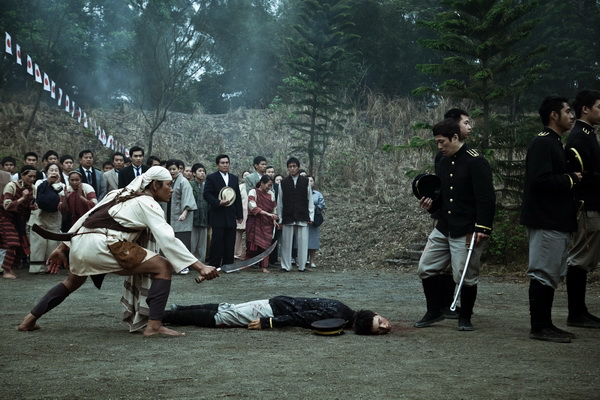
Headless colonizer, Warriors of the Rainbow: Seediq Bale, 2011
NOTE: Apparently the success of Seediq Bale in Taiwan (it won Best Picture at this year’s Golden Horse Awards) has spurred an upsurge of interest in indigenous Taiwanese culture, including the building of Seediq Bale Park in Taipei that recreates one of the film’s locations. There tourists can see props from the movie and purchase memorabilia, although, unlike in the movie, the streets are probably not strewn with headless corpses.
In Dreams: Golden Slumbers at the San Francisco International Film Festival

Significant ephemera, Golden Slumbers, 2011
Davy Chou’s Golden Slumbers, showing this week at the San Francisco International Film Festival, looks at the Cambodian film industry in the 1960s and 70s before the Khmer Rouge, and underscores the power of collective memory in the face of great trauma and oppression. Focusing on moviemaking in particular and Cambodian pop culture in general Golden Slumbers is an ethereal dream of a film, with people listening to old music, looking at film fragments, and reminiscing about people long dead. The movie is a testament to the power of using artmaking and storytelling to overcome great emotional and psychological scars.
The documentary starts with a sustained shot from the back of a moving vehicle as it travels down a road in modern-day Cambodia. This simple image conveys the long journey the Cambodian people have gone through as they’ve passed from the happy years of the 1960s and 70s through the national nightmare of the reign of the Khmer Rouge and back again from that great upheaval. Although Pol Pot’s genocidal regime was overthrown in 1979 the damage from that time period still lingers in Cambodia’s collective memory. Cambodia’s commercial film industry produced upwards of 400 films in the decade or so preceding the Khmer Rouge yet fewer than a dozen films now exist. Movies were deemed corrupt and most film prints were destroyed, with film directors and movie stars targeted and purged by the regime during its four-year reign. Golden Slumbers documents the traces of the once-thriving industry through ephemera including film stills and posters, fragments of soundtracks, and most significantly, interviews with the few surviving members of the Cambodian film world of the time.
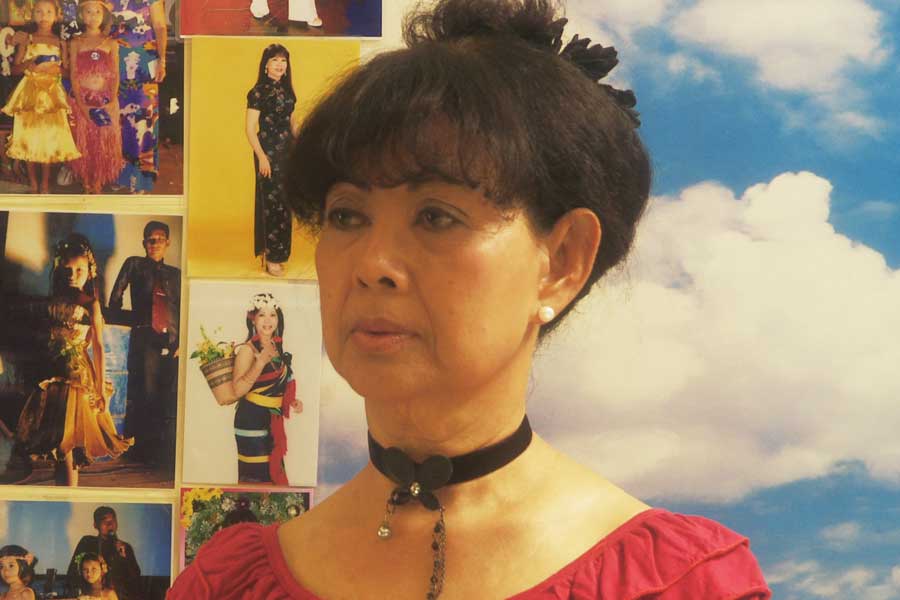
Staying alive, Golden Slumbers, 2011
One director managed to escape to France where he lived for nearly two decades before returning to Cambodia. Another happened to be among the 180 out of 1000 from his village to survive the Khmer Rouge massacres, although his wife and several children were among those killed. Another actress also fled to France, where she keeps a wall of photographs, postcards, and other mementos from lost Cambodian films. She notes, “If I remember the pictures, it’s like they’re still alive.” Her statement as well as others throughout Golden Slumbers suggests that keeping alive the memories of those martyred can vanquish the war crimes of the Khmer Rouge and that the key to defeating and outlasting those crimes is through human remembrance and a refusal to give up on the hopes and dreams of the people.
At one point the film visits a former movie palace that has become an indoor favela, housing over 100 families who squat the building. The residents there also have vivid memories of the films that they saw before the Khmer Rouge and can easily recall their plots and storylines. It’s as if the movies become symbols of happier times before the great national trauma of the war, taking on the status of myths or fairytales. At another point in the film one man sadly notes that he can’t remember the faces of his lost family members, yet he clearly recalls the faces of the actors from the films.

Cultural memory, Golden Slumbers, 2011
The film ends with footage from some of the lost Cambodian films projected on a brick wall in one of the repurposed movie houses. Current residents watch the footage in thoughtful silence as the images flicker on the segmented wall. The lines of the bricks fragment the pictures but they remain clear and focused, suggesting their resiliency despite their near-destruction. Cambodian movies thus become the immutable repositories of the country’s memory and mythology, preserving its vital stories even after the Khmer Rouge’s violent attempts to rewrite and obliterate them.
By illustrating the important place these lost movies hold in the hearts and minds of the Cambodian people, diretor Chou shows how the films have become a means of resisting brutality and persecution. Golden Slumbers is an elegaic tribute to a country and a culture that has survived despite near annihilation.
Other notable films in the festival by Asian/American directors include Johnny To’s Life Without Principle, which delves into the questionable morality of Hong Kong’s world of commerce; Wu Xia, Peter Chan’s detective/swordplay/martial arts movie starring the lovely and eminently watchable Takeshi Kaneshiro; Hong Sang Soo’s The Day He Arrives, another odd meditation on life, film, and neurosis; and Don’t Stop Believin’: Everyman’s Journey, Ramona Diaz’s glorious and energetic real-life fable about Arnel Pineda, the Filipino singer from the shantytowns of Manila who became the lead vocalist for the classic rock band Journey.
For tickets and information go here.
Miles Ahead: Ann Hui’s A Simple Life and My Way

Deanie & Andy, A Simple Life, 2012
Now playing in San Francisco is Ann Hui’s A Simple Life, which was the number one film at the local box office when I was in Hong Kong last month. The film’s popularity was just rewarded at the Hong Kong Film Awards, where it won Best Picture Best Actor, Best Actress, Best Director, and Best Screenplay statues, adding to a slew of other accolades from the Golden Horse Awards, the Hong Kong Film Society, the Venice Film Festival, and many more. It’s an outstanding film that deserves all of the attention it’s been getting, and it represents director Hui at her best.
The film follows the relationship between domestic servant Ah Tao (Deanie Ip) and Roger (Andy Lau), her long-time employer. Ah Tao has worked for Roger’s family for three generations over several decades, caring for the children, cooking, and cleaning. Roger, a successful screenwriter, lives with Ah Tao in his family’s flat in Hong Kong after the rest of his family has migrated to the U.S. After Ah Tao suffers a stroke she decides to retire and Roger helps her to move to an old folks’ home in a former bank, with the elderly residents living in the former cubicles.
Hui’s sure directorial hand crafts what might have been an overwrought tearjerker into a film with emotionally honest core. Shooting digitally in modest locations Hui simply captures the quotidian life of her protagonists, which allows the complexities of their relationship to shine through. Without lapsing into sentimentality or melodrama she manages to evoke a deeply emotional response, demonstrating the value of directorial restraint over bombast.

Chemistry, Deanie & Andy, A Simple Life, 2012
Andy Lau is quite good, although the movie takes pains to downplay his movie-star gorgeousness. At one point he’s mistaken for a repairman and another time a cabbie, but his perfect jawline and aquiline nose belie those conceits. As evidenced by her collection of Best Actress awards, Deanie Ip as Ah Tao is also outstanding. She also dresses down, with a plain-Jane haircut and dowdy cotton shirt and trousers disguising her glamour. Lau and Ip’s chemistry is excellent and believable and results in several truly affecting moments.
Anthony Wong, in red nail polish and a dramatically fluffy scarf, is amusing as the landlord of the rest home and Chapman To makes a brief cameo as a dentist. The denizens of the old-folks home are played by a who’s who of senior Hong Kong actors including Paul Chun, Helena Law Lan and many others.
The movie comments on the formation of families outside of traditional family structures. Both Roger and Ah Tao’s relationship and the bonds Ah Tao forms with the senior home residents replicate family and stress that kinship is not the exclusive domain of blood ties. This is emphasized by the neglectful relationship between one of the residents and her absent son, as well as another woman whose family abandoned her to assisted living in the senior home.

Andy & Deanie, Best Actor & Actress, 2012 Hong Kong Film Awards
The film also makes some interesting points about class divisions. Although Roger and Ah Tao are clearly very fond of each other they remain distanced as master and servant. Ah Tao continually insists on staying in her place as a servant, refusing money from her former employer and only reluctantly joining a family picture. Her room in the family flat apparently doubles as the laundry room.
Hui’s naturalistic filmmaking style is in full force, with the film’s mis-en-scene seamlessly meshing with my real-life afternoon walk through Wanchai. Seeing it in Hong Kong the film also took on more meaning for me, since in many middle and upper class families there domestic servants are the norm. Hui’s film does an excellent job dissecting the complexities of the master-servant relationship and filtering them through the realities of human emotion.

Masculin/Feminin, Francis Ng in My Way, 2012
At the Hong Kong International Film Festival I saw another Ann Hui movie, My Way, which is a 20-minute piece in Beautiful, a four-part omnibus sponsored by the HKIFF, and which just went live on youku.com today (it’s already had more than 1 million hits and has spawned a great debate about transgendered people in the comments section). Like A Simple Life, My Way focuses on ordinary people going through dramatic changes. In a case of extreme anti-typecasting, Francis Ng plays a transgendered woman on the eve of sex-reassignment surgery. His past roles in hypermasculine crime flicks like The Mission and Exiled dramatically underscore the intertwined nature of gender identity and confounds expectations of clear-cut gender roles—if Francis Ng can convincingly portray a man who wants to become a woman, then that kernal of femaleness must lie within every male.
Since Ng’s character is a man dressed as a woman, it’s fine that his sleek black silk dress, stockings and pumps don’t quite disguise his muscular arms and broad shoulders. Francis more than compensates for his still-male physicality by his female gestures and expressions, embodying the duality of his pre-op transsexual character–he’s completely convincing in his gender-switching role.
The short film captures an impressive range of emotions in its brief running time, in no small part due to Francis’ intense and vulnerable rendition of a person trying to cope with difficult decisions. Jade Leung is also excellent as his bitter and estranged wife coming to grips with her husband’s transformation. A small but significant character, Ng and Leung’s adolescent son, has a particularly poignant and moving moment. After his father’s surgery, the son receives a text message announcing the operation’s success. Hui shows both the wife and son’s reactions—the wife weeps, while the son quietly accepts the news.
Like A Simple Life, the film also looks at the formation of familial ties outside of the bonds of blood kin, with Ng’s character supported by a circle of other transgendered women who are more caring than her supposed family members. As with many Hui films, there are no clear villains or heroes, just regular people dealing with stressful circumstances as best they can. Sweet and moving, this film captures the pain and joy of a difficult situation. Francis Ng is fearless in his vulnerable rendering of a fragile yet strong character who must make the difficult decision to break from societal expectations in order to find personal happiness.
Here’s the link to My Way in its entirety on youku.com.
A Simple Life now playing:
San Francisco
Cupertino
Round & Round: This Is Not A Film film review
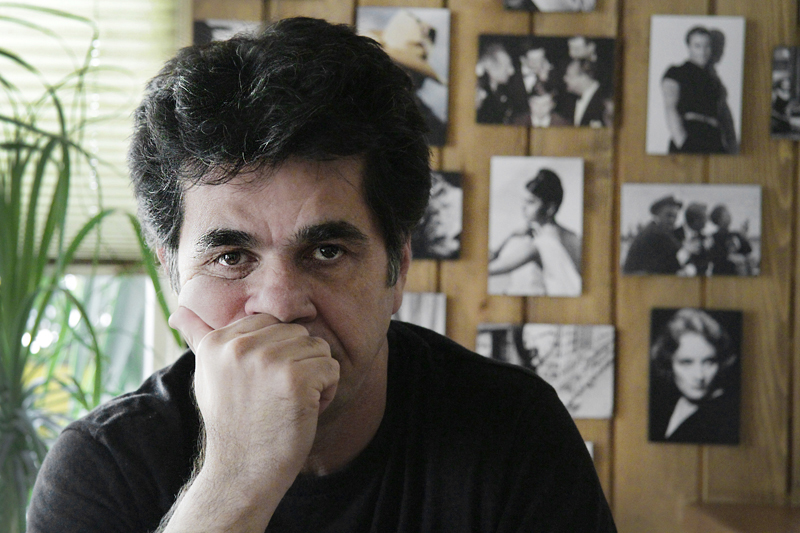
Jafar Panahi, house arrest, This Is Not A Film, 2012
Iranian director Jafar Pahahi has been under house arrest for more than a year now awaiting the outcome of latest appeal of his 2010 conviction of conspiring to overthrow Iran’s Islamic Republic. His latest effort, This Is Not A Film is a documentary of what he describes as “two idle filmmakers,” Panahi and fellow Iranian director Mojtaba Mirtahmasb, attempting to make sense out of a nonsensical situation. Filmed mostly inside Panahi’s Tehran apartment over the course of a day and evening, the movie is an interesting metaphor for the likely state of Panahi’s frustrated creative mind right now.
The movie follows Panahi as he eat breakfast and kibitzes with his lawyer on the phone about the possible results of his legal appeal. It then continues with a visit from Mirtahmasb who films Panahi as he describes the scenario for his most recently script, lately rejected by the Iranian censorship board. Panahi and Mirtahmasb begin to block out the film on Panahi’s living room rug, but the process abruptly ends and the documentary goes on several tangents. Somehow Panahi ends up filming Mirtahmasb on his cell phone camera while Mirtahmasb is filming him, in circumspect defiance of the regime’s ban on Panahi making films. The film ends with Panahi interviewing an art student/garbage collector/deliveryman on his trash-collecting rounds as they discuss the difficulties of creating work under the current regime’s oppressive eye.
Attesting to Panahi’s status as one of Iran’s leading directors, we see him in his comfortable flat casually name-checking various members of the Iranian filmmaking pantheon such as Rakhshān (Bani-E’temād) and Khambozia (Partovi). Yet he also seems quite at ease chatting with the art student/garbageman and doesn’t seem to mind riding in an elevator with a smelly trashcan.

Jafar Pahahi, blocking, This Is Not A Film, 2012
This Is Not A Film has the same watchful intelligence as Panahi’s narrative films (The Circle; Offside; Crimson Gold), and as with those films, this one possesses a sharp critique of the Iranian power structure. Several times Panahi mentions his unwillingness to solicit public support from his fellow Iranian filmmakers due to the risks from the government their aid may cause them and Mirtahmasb at one point asks Panahi to take a picture of him as evidence in case the government retaliates against him for helping out Panahi. Throughout the documentary an uneasy undercurrent of repression flavors the goings-on, adding a furtive guardedness to the proceedings.
Panahi maintains a keen eye for metaphor–he paces fitfully in his apartment, only able to connect to the outside world through remote devices like the cell phone or through TV news, or at a distance, by watching the city’s daily life at a remove on his balcony. The storyline of Panahi’s rejected script involves a young woman attempting to escape the house that her family has locked her in, which of course echoes Panahi’s own real-life house arrest. Tellingly, the recounting of this story and others in the documentary are interrupted and unfinished, adding to the film’s mood of incompleteness and frustration.

Jafar Panahi, frustrated, This Is Not A Film, 2012
Panahi also makes good use of the spectacle of Fireworks Wednesday, the boisterous celebration of Persian New Year. The film ends with Panahi viewing from afar a bonfire just outside the gates of his apartment building as his visitor warns him not to be seen holding a camera or “they will see you.” As he lingers in his doorway he clearly longs to join the celebration, yet his wariness that “they” will censure him constrains him.
This small moment is an excellent representation of the invisible restrictions on Panahi’s freedom and the way in which the Iranian regime holds him captive, as well as the means by which he attempts to subvert that captivity. The doublespeak of This Is Not A Film’s title echoes that subversion, as Panahi tries to find a workaround to his confinement without pushing the regime too far. It’s a delicate, frustrating balance and one Panahi captures pretty effectively in this film. His creative life hangs in the balance and, like the interrupted stories throughout, if the Iranian government prevails, it may never reach its full completeness.
This Is Not a Film (In film nist, Iran 2011), dir. Jafar Panahi
opens April 6
SF Film Society Cinema
1746 Post Street
San Francisco CA
go here for tickets and information
Between Love & Hate: Love In The Buff and Marrying Mr. Perfect film reviews

Cherie & Jimmy living it up, Love In The Buff, 2012
Two romantic comedies that I saw on my trip to Hong Kong radically demonstrate two different aspects of popular Hong Kong movies today, and are possible indicators of the fate of the local film scene. Although once upon a time loyal Hong Kong audiences ardently supported local film productions, in the past ten or fifteen years interlopers first from Hollywood and now mainland China have been chipping away at the once indomitable Hong Kong film industry.
Pang Ho-Cheung’s Love in the Buff, the sequel to his 2010 film Love in a Puff, is a funny, smart flick that picks up shortly after the first film ends. The first film perfectly captured the irreverent lifestyle and language of young adults in Hong Kong and the sequel continues in the same vein. Instead of locating itself smack dab in the middle of Hong Kong’s young urban professional milieu, the film is set both in Hong Kong and Beijing, probably due co-production regulations as well as an attempt to appeal to the massive mainland Chinese audience. Yet despite the change in locale, the movie retains the kicky, profane humor that was so fun in the original. This is due in part to strong performances throughout the film as well as Pang’s clever script and sharp eye for the sleek yet realistic urban landscapes of the two cities.

Luv 'n' hate, with watermelon, Love In The Buff, 2012
In the sequel, protagonists Jimmy and Cherie face more difficulties in their romantic relationship, as they split up at the beginning of the movie (no spoiler here as it happens pretty early on). Both individually end up in Beijing as they follow their jobs to China’s capital city, and both begin new relationships there, but despite their best efforts they can’t seem to keep away from each other. Pang’s script arranges for a few key supporting Hong Kong characters to travel there with them so that the salty vernacular and attitude of the first movie remains intact. Miriam Yeung as Cherie is particularly outstanding as the foul-mouthed city girl stuck on Shawn Yue’s childlike Jimmy. There are also some extremely funny cameos that cannot be revealed without spoiling the fun but suffice to say that they’re cleverly utilized. One in particular resolves the storyline of ugly duckling Brenda (June Lam Siu-Ha) from Love In A Puff in an especially hilarious yet surprisingly heartwarming way.
Pang does a great job capturing the passionate and illogical attraction between Jimmy and Cherie, and places his main characters in a groovy contemporary milieu, surrounding them with fun and interesting supporting characters. It’s no wonder the movie has been going like gangbusters at the local box office, as its portrayal of contemporary Hong Kongers is flattering and appealing. In its opening weekend in Hong Kong Love In The Buff has grossed more than HK$5 million, making it a bona fide hit, and it opened here in the U.S. this weekend to positive reviews across the board.

Awwwww! Ronald Cheng & Gigi Leung, Marrying Mr. Perfect, 2012
On the flipside, while I was in Hong Kong I saw Wong Jing’s latest comic effort, Marrying Mr. Perfect, which stars Ronald Cheng, Gigi Leung, Chapman To, Eric Tsang, and Sandra Ng. With a cast like that it seems like the movie couldn’t help but be pretty funny but alas it was a fairly tepid and formulaic affair, with mistaken identities, catty office politics, and other contrivances making up most of the dumb storyline. All of the above actors have comic chops to spare but here they have to strain for laughs against the idiotic and derivative script. Apparently Wong Jing has lined up some hefty mainland China co-production financing for his next film projects, but if this is the future of Hong Kong filmmaking then things are looking pretty bleak.
I saw Marrying Mr. Perfect at a Sunday afternoon show with a bunch of local Hong Kong movie fans including bloggers and podcasters Paul Fox, Sean Tierney and Glenn Griffith, Ross (Kozo) Chen and Kevin Ma from lovehkfilm.com, and film programmer and writer Tim Youngs, on one of their weekly jaunts to see the latest Hong Kong releases. Afterwards we all spent teatime at the downmarket food court in the otherwise ultra-posh Elements mall and commiserated about the sorry state of Hong Kong films that this picture represented. Besides the seven of us there were about five other people in the small theater and the posters and trailers in the cinema were all for Hollywood movies like The Avengers (except for a trailer for another HK product, Love Lifting, which features Elanne Kong as a heartbroken Olympic weightlifter. Despite its sappy-looking premise the film actually made some money at the HK box office last week).

Chapman To working it, Marrying Mr. Perfect, 2012
This group of HK film aficionados echoed what other friends told me while I was in the SAR; to wit, no one in Hong Kong goes to Hong Kong movies any more. My buddy Jay had never heard of either Love In A Puff or its sequel, although he’s a pretty media-savvy guy, and another friend confessed that he only goes to see Hollywood product. If cheesy goods like Marrying Mr. Perfect are all that the Hong Kong film industry had to offer then it’s not surprising that local films can’t draw a local audience. But Ann Hui’s A Simple Life has been selling out theaters since its release a few weeks ago, and Love In The Buff is also making some bank, so maybe it’s just a case of Hong Kong moviegoers no longer tolerating crappy local products like they used to.

Pretty people, Love In The Buff, 2012
It’s sad that there’s little brand loyalty for the indigenous film scene, but Hong Kong audiences have probably gotten accustomed to the high-gloss commercial fare from around the world that makes its way to local theaters. Last year two of the biggest films in HK were Aamir Khan’s Bollywood hit 3 Idiots and Giddens Ko’s Taiwan youth flick You Are The Apple Of My Eye, and of course most Hollywood blockbusters show up in HK cinemas as well. Interestingly enough, the films with more local flavor, including A Simple Life, Clement Chang’s Gallants, and Alex Law’s Echoes of the Rainbow, have successfully struck a chord with local audiences, so maybe the local film industry isn’t completely dead. With the restrictive requirements of mainland China co-productions threatening to further choke off the Hong Kong movie scene it will be interesting to see in the next few years whether an unadulterated Hong Kong movie aesthetic can survive.
Love In The Buff now playing:
101 Fourth St. San Francisco, CA 94103
10123 North Wolfe Road, Cupertino, California

 beyondasiaphilia
Recent Comments