I Ain’t Gonna Stand For It: Oakland Police Department Attempts To Beat Down OccupyOakland

Oakland Police Department fires teargas into peaceful crowd, Oct. 25, 2011
Been following the heinous acts of police brutality tonight in Oakland as the Oakland Police Department cracks down on peaceful protestors trying to demonstrate in support of Occupy Oakland. Twitter feeds from Davey D, Josh Holland, and a great livestream from jlevinger on qik.com have been providing immediate on-the-ground updates of the violence against peaceful and lawfully assembled demonstrators. Throughout the night the police have fired tear gas, rubber bullets, and flash-bang grenades, and used sonic cannons to harass the thousands of people exercising their right to peacefully assemble.
Right now I’m listening to the the police repeatedly playing a chilling warning demanding that the crowd disperse or face arrest and that, “regardless of your purpose,” they face “possible serious injury” and that “chemical agents will be used.” Who knew that when the regime in Iran was cracking down on peaceful protesters back in 2009 that the OPD would be using similar shock tactics to prevent U.S. citizens from exercising their constitutional rights?

Navyman holding a copy of the Constitution faces down the OPD, Oct. 25, 2011, Oakland, CA. Photo: North Oakland Now
Luckily, on the protesters’ side cooler heads seem to be prevailing so far and there have been no rash acts on their part. But who knows how long folks will tolerate being gassed before they break down and fight back? The OPD knows they just have to provoke one misguided fool into breaking a window or lighting a garbage can on fire and it will be all over the front page as justification for their misdeeds tonight.
At one point in the livestream (now looping previous information as the cameraperson’s phone batteries recharge), jlevinger say, “I’m no pro videographer here, it’s just a fucking iPhone.” But he’s doing much more than the so-called professionals working for the TV news. Earlier tonight ABC-Live had a live feed from one of their traffic helicoptors following the demonstrations, but, mysteriously, just as the police started to fire the first tear-gas cannisters, the chopper pulled away from the scene and the live-feed stopped. ABC-Live tweeted that they helicopter needed to refuel–I call bullshit. Mysteriously, the #OccupyOakland hashtag on twitter has intermittently been inoperative through the night as well. Inadvertent technical glitch or deliberate censorship?
As Davey D tweets, “All folks were doing was trying to create a better living situation for many damaged by economy and now it’s copters & tear gas.” Is this how the U.S. government is going to deal with lawful dissent? If so, we need to be really worried really fast.
My friend Rebecca Solnit has taken up another guerilla tactic, this time on facebook. She posts,
By the way, I just wrote this note to the letters section of the Chronicle and then started posting it on Oakland Mayor Jean Quan’s (facebook) wall. It gets taken down after a few minutes. Feel free to post it if you like. “Dear Editors, Even if you’re a conservative you should be against the kind of police brutality we just saw in Oakland, because the courts are not going to be as enthused about beating people bloody, throwing tear gas at crowds that include children, and denying people their civil and constitutional rights. It is going to be really expensive for the city of Oakland to pay for the brutality and denial of rights lawsuits, and the plaintiffs will deserve every penny they get. As for the rest of us, we’re against it because it’s inhumane, undemocratic, and vicious. As well as expensive. Police brutality is an indulgence, a luxury, a spendthrift activity most cities can’t afford any more.”
Mayor Quan, by the way, was a student activist in the Third World Liberation Front at UC Berkeley during the Third World Strike back in 1969. Sadly, her presence, her leadership, and her ethics are nowhere to be found tonight and her absence has allowed the OPD to wild in the streets of Oakland unchecked. Shame on her–
Incredible video of OPD firing teargas into peaceful crowd, shot by Kazu Haga.
Too Much Heaven, Part Four: Taiwan Film Days at the San Francisco Film Society

Taivalu, Taiwan Film Days, SFFS, 2011
Taiwanese cinema has produced several world-class filmmakers, including Hou Hsaio-Hsien, Edward Yang, and Tsai Ming-Liang, but fans of those arthouse titans would be hard-pressed to recognize the current crop of Taiwanese films now popular on the island nation. Cape No. 7 (2008), the second-highest grossing film in Taiwan of all time (just behind Titanic), was a frothy, melodramatic little flick that nostalgically recalled the Japanese occupation of Taiwan (!), and Monga (2010), another recent blockbuster, had more in common with Hong Kong’s gangster movies than Hou or Yang’s thoughtful, epic dramas. Taiwan’s biggest box office hit this year, popular novelist Giddens Ko’s adaptation of his book, You Are The Apple Of My Eye, is a coming-of-age comedy that’s light years from earlier Taiwanese arthouse fare.
Taiwan Film Days, the upcoming three-day festival at the San Francisco Film Society which is now in its third year, reflects the recent upswing in Taiwan’s commercial film industry and showcases its wide range of moviemaking styles and themes. Opening night film Formosa Mambo (2011, dir. Wang Chi-tsai )bears no relation to Hou Hsiao-Hsien’s Millenium Mambo, and in fact, other than its country of origin, is pretty much unrelated to the Taiwanese auteur in any way. A quirky and breezy movie that touches lightly on the Taipei underworld, the story follows several characters including a gang of incompetent kidnappers, an underemployed businessman running a popcorn chicken stand, and a group of shady entreprenuers involved in a telephone scam. After the kidnappers snatch a schoolkid various hijinks ensue, with the hapless gang attempting to collect ransom from the kid’s recalcitrant single mom, who can ill-afford the modest ransom. The film’s interlocking stories comment on fate and free will against a backdrop of modern-day Taiwan.
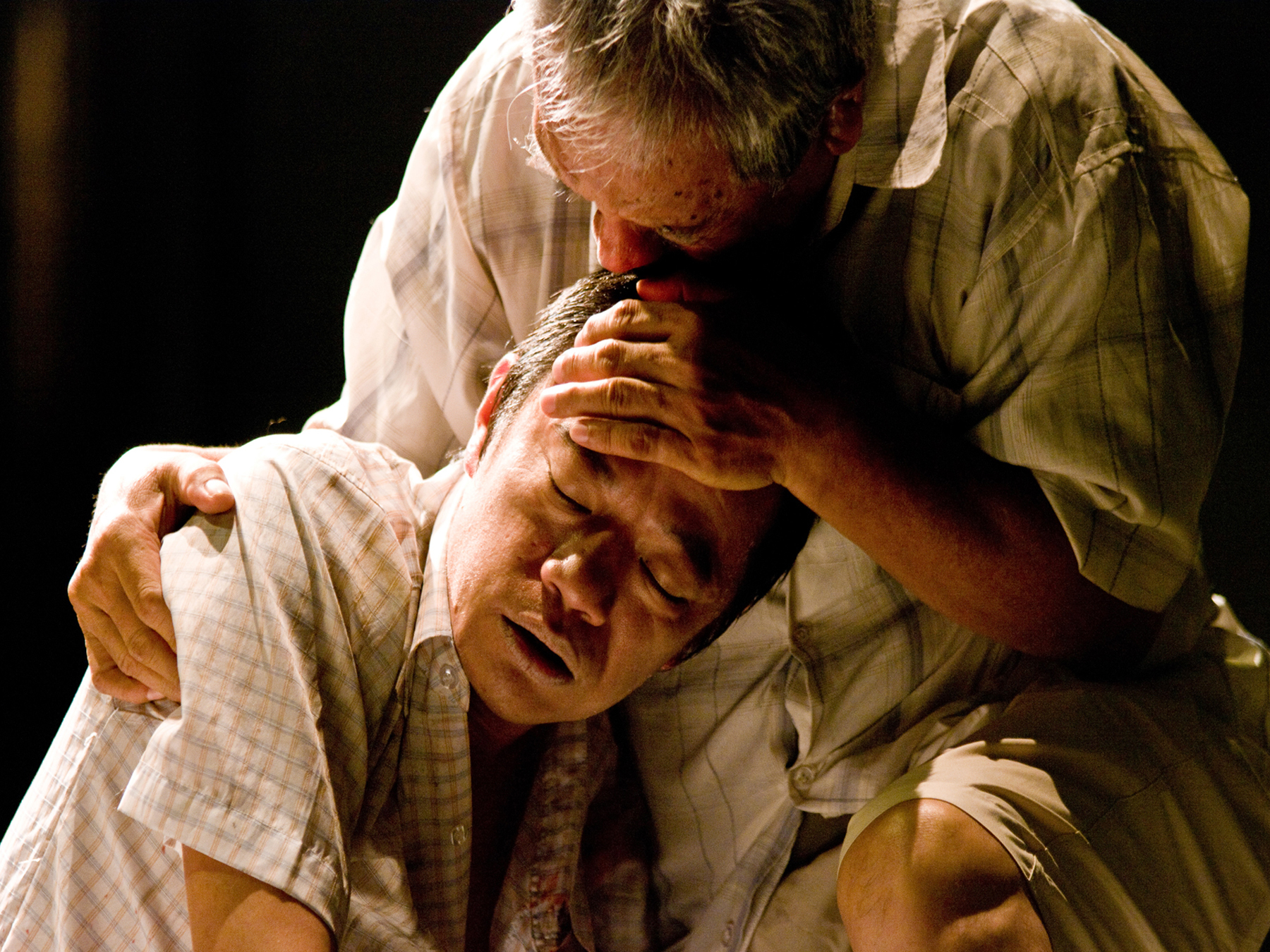
Gangsters, Ranger, 2011
Ranger, (2010) a much darker gangster movie, closes the festival. Wen-Sheng, a convicted killer, is released from prison after 25 years and finds himself immediately re-enmeshed in the hard-knock life. A gritty and observational crime drama, Ranger is also a character study of a man seeking redemption after a wasted life. Director Chienn Hsiang makes good use of the mean streets of Taipei and the film’s handheld camerawork underscores the everyday brutality of Sheng’s woeful existence. Lead actor Wu Pong-fong effectively conveys the resilience of his worn down but not yet defeated character.
Honey Pu Pu (2011, dir. Chen Hung-i) presents a dreamy, visually imaginative view of Taiwanese society, following a group of young groovesters as they ramble the streets of Taipei apparently in search of the a totemic beehive. The screener DVD that I tried to view was alas very janky and I wasn’t able to watch the film in its entirety but the little I saw was engaging, full of pretty young art-student types blithely wandering through trippy, experimentally framed cityscapes.

Groovesters, Honey Pu Pu, 2010
Also notable at the festival are Giddens’ aforementioned hit film (although both screenings have gone to rush), as well as the intriguing documentary Taivalu (2011, dir. Huang Hsin-yao), which looks at the effect of climate change on the southern Taiwan city of Tainan, and Pinoy Sunday (2009, dir. Ho Wi-ding), a comedy that follows the travails of a pair of Filipino immigrants in Taipei. The festival opens with two screenings of Formosa Mambo sandwiching a reception and party.
Taiwan Film Days
October 14–16, 2011
San Francisco Film Society | New People Cinema
1746 Post Street, San Francisco, CA
(415) 561-5000
Tickets and full schedule for Taiwan Film Days here.
Too Much Heaven, Part Three: Hong Kong Cinema at the San Francisco Film Society

Buzz Chung, astronaut, Echoes of the Rainbow, 2010
This weekend the San Francisco Film Society presents Hong Kong Cinema, the first of two Chinese-language film festivals, which runs for three days with seven films from the former Crown Colony. Although it doesn’t include any blockbusters, the brief festival runs the gamut from romantic comedies to crime films to melodramas and is a good look at the range of films coming out of Hong Kong these days. Herewith are a few of the films included in the series.
Punished
A sleek, economical crime film that’s actually a family drama in disguise, Punished is produced by Johnnie To and directed by Law Wing Cheong, To’s editor and frequent second unit director. The story moves along at a brisk and efficient pace, emphasizing the dysfunctional family relationships behind the kidnapping drama.

Moral choices, Anthony Wong and Richie Jen, Punished, 2010
Anthony Wong is outstanding as Wong Ho-chiu, a ruthless and powerful businessman seeking vengeance for his errant daughter’s kidnapping and death–his performance is subtle and explosive and as usual he can do no wrong. Richie Jen is also excellent as Anthony Wong’s bodyguard and hatchet man with his own family issues to deal with. Supporting performances are uniformly strong and the mood is mostly realistic throughout–the bad guys aren’t too bad and the good guys aren’t too good, so the film possesses a great deal of moral complexity. Each person has a motivation for his or her actions, justified or not, and no one is completely evil or completely good.
In the end, it’s a mother-daughter relationship that’s the catalyst for the resolution of Wong’s moral crisis. As with the best Hong Kong films the movie is also unafraid to tap into the characters’ deep emotional responses–men cry, women swoon, and children weep unashamedly. Director Law keeps things pretty straightforward, with none of the annoying quirks of fellow Milkywayer Wai Ka-Fei. The film makes intelligent connections between the corruption of big business, damaged family dynamics, and immoral criminal activity.
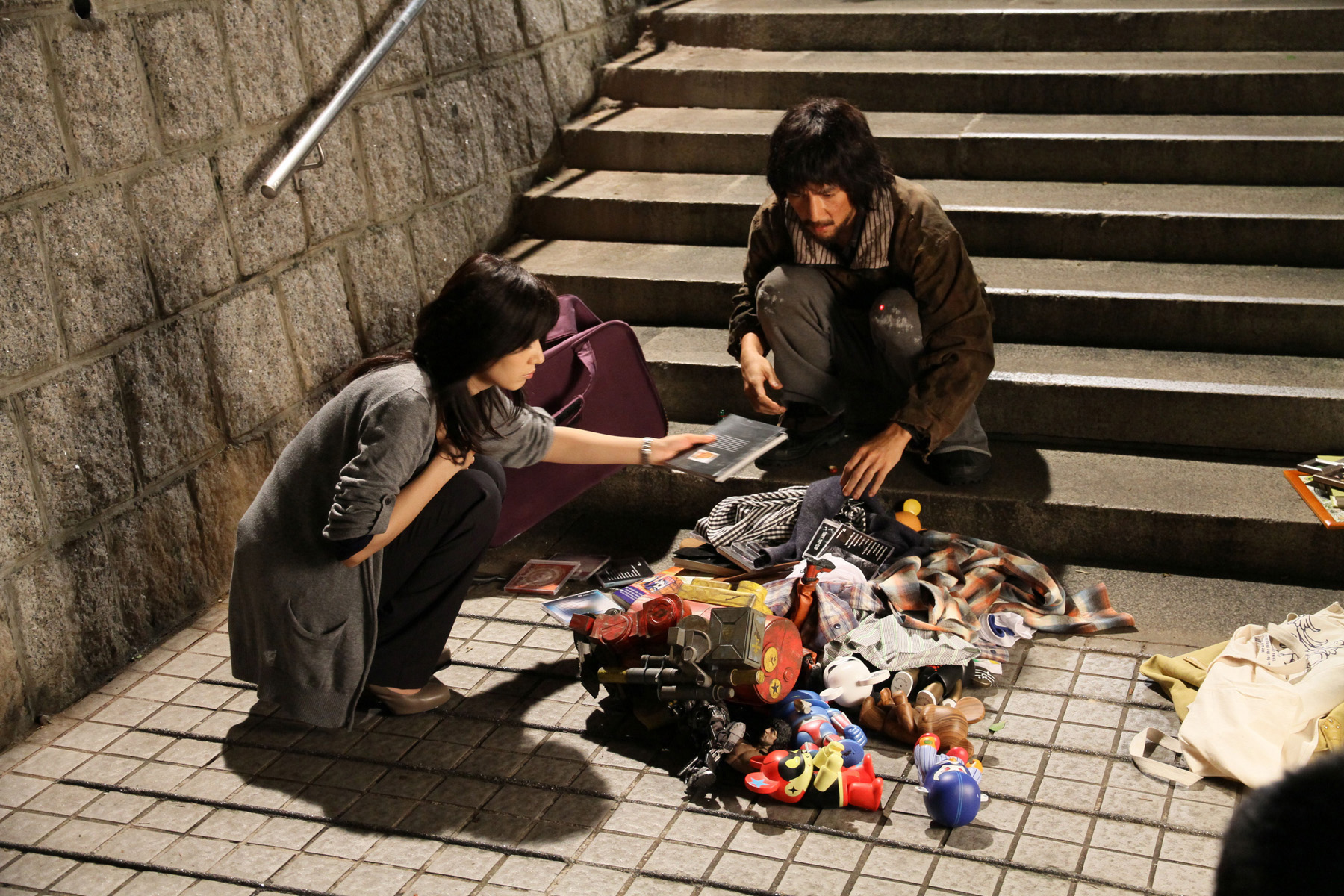
Meeting cute, Gao Yuan Yuan and Daniel Wu, Don't Go Breaking My Heart, 2011
Don’t Go Breakin’ My Heart
An adequate rom-com that attempts to capture the uber-success of early 2000s Johnnie To flicks Needing You and Love on A Diet, Don’t Go Breakin’ My Heart stars Louis Koo, Gao Yuan Yuan, and Daniel Wu in a love story set in Hong Kong and China. The three play young urban professionals, with Gao unable to decide between playboy Koo and nice guy Wu.
Gao’s dilemma becomes tedious pretty quickly since Louis Koo’s character is so clearly a womanizing asshole. It’s hard to understand what she sees in him, especially with the charming and sensitive Daniel Wu also courting her. But the plot demands a love triangle so the audience must suffer through her indecision for nearly two hours (whatever happened to the excellent concept of the 90-minute Hong Kong movie?) while she dithers between her two beaus. Director To even cribs from his own most successful romantic comedy, Needing You, by using the device of would-be lovers communicating the movie’s catchphrase by signage. There’s some clever usage of messages pasted on office building windows but even that seems awfully contrived by the end of the movie. Though both are cute and dimply, Gao and Koo never seem to really spark–Gao and Wu’s chemistry is better, with Wu nicely conveying a sense of romantic longing. Gao lacks the manic goofiness and exquisite comic timing of To’s usual rom-com muse Sammi Cheng and Louis Koo just isn’t charming enough to warrant Gao’s long-term fascination. Daniel Wu is very sweet as the long-suffering third party but he doesn’t have much character development except his ongoing dedication to a neon green frog. But as rom-coms go, this one is serviceable, with three good-looking and well-dressed lead actors amidst the glamorous backdrop of Hong Kong’s skyscrapers.
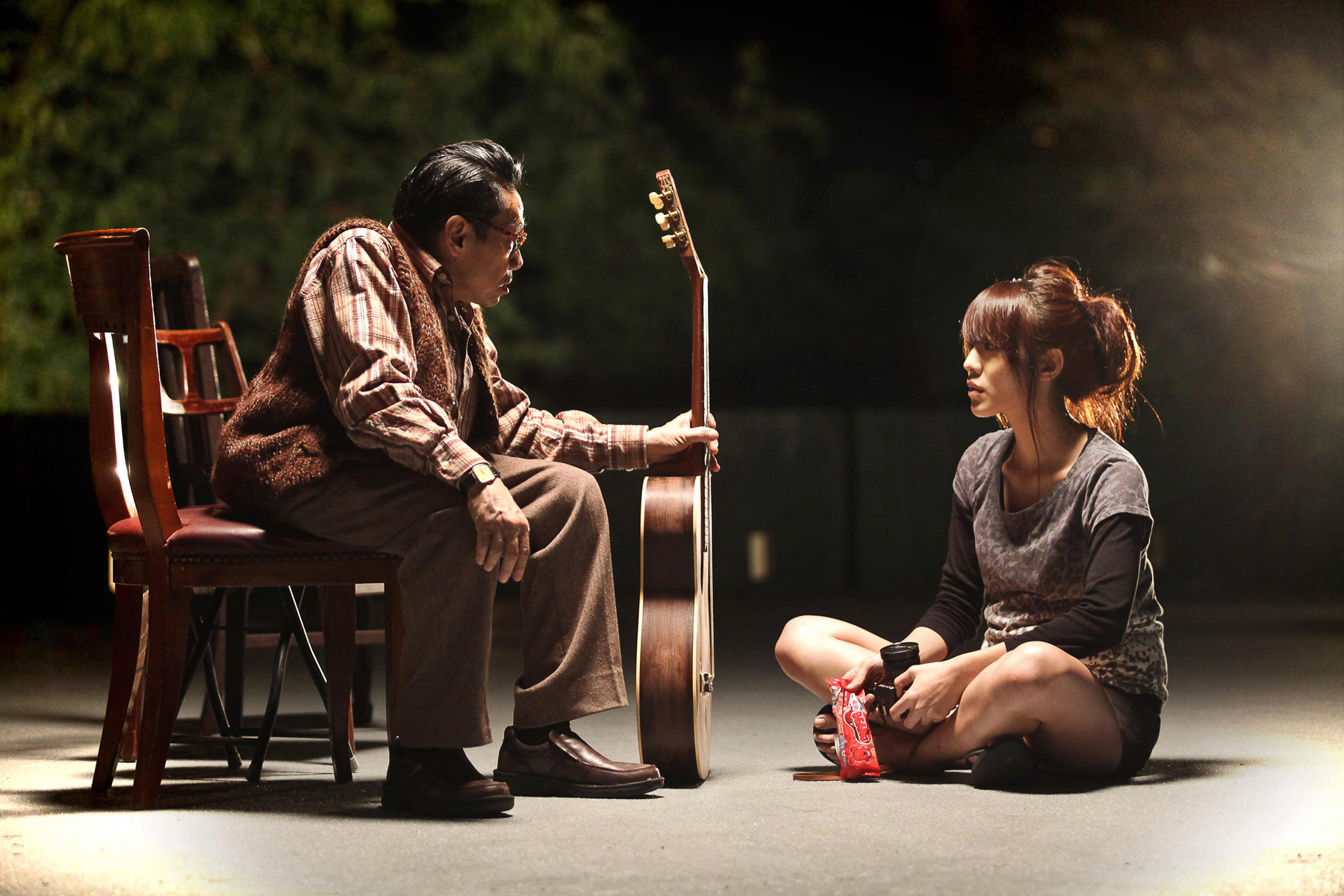
Choices, Teddy Robin and Ella Koon, Merry-Go-Round, 2010
Merry-Go-Round
Though it looks great, with beautiful, rich cinematography and art direction, Merry-Go-Round, (dirs. Yan Yan Mak and Clement Cheng) is just a bit too long and a bit too dependent on coincidence to be completely effective. Ella Koon and Nora Miao play two Hong Kong ex-pats living in San Francisco who return to the former Crown Colony after long absences. Koon’s character is a young bohemian with a hidden past, and Miao’s is a master herbalist who left Hong Kong to follow her bliss in the United States. Their lives converge in somewhat forced circumstances– the film’s narrative links its many characters with overly convenient plot twists.
Merry-Go-Round takes a light but serious look at death, loss, and separation. The film uses the idea of returning home as a metaphor for going back, not forward, in life, with several characters attempting to make amends for past misjudgments or dealing with the results of long-gone choices. It also makes some nice points about the advantages of moving on with life instead of dwelling on past traumas, with one character wistfully telling another, “I would have forgotten long ago but you keep reminding me.”
Teddy Robin, who won Best Actor for Gallants (also directed by Clement Chang) at last year’s Hong Kong Film Awards, is very effective as the lovelorn manager of the coffin home/mortuary where Koon ends up working. Also excellent is Nora Miao as the imperious herbalist who so long ago followed her fate to the U.S. But the time structure of the film seems a little skewed–if some of the characters were young adults in 1938, that means that they would be in their nineties now, and the actors playing them in the modern-day sequences seem much too young to be nonegenarians.
Despite its handsomely mounted production design, Merry-Go-Round’s storyline is a bit too unfocused to be completely convincing. But it’s nice to see a Hong Kong film that’s a serious drama instead of the martial arts/triad/comedy flicks that the city’s film industry usually puts out.
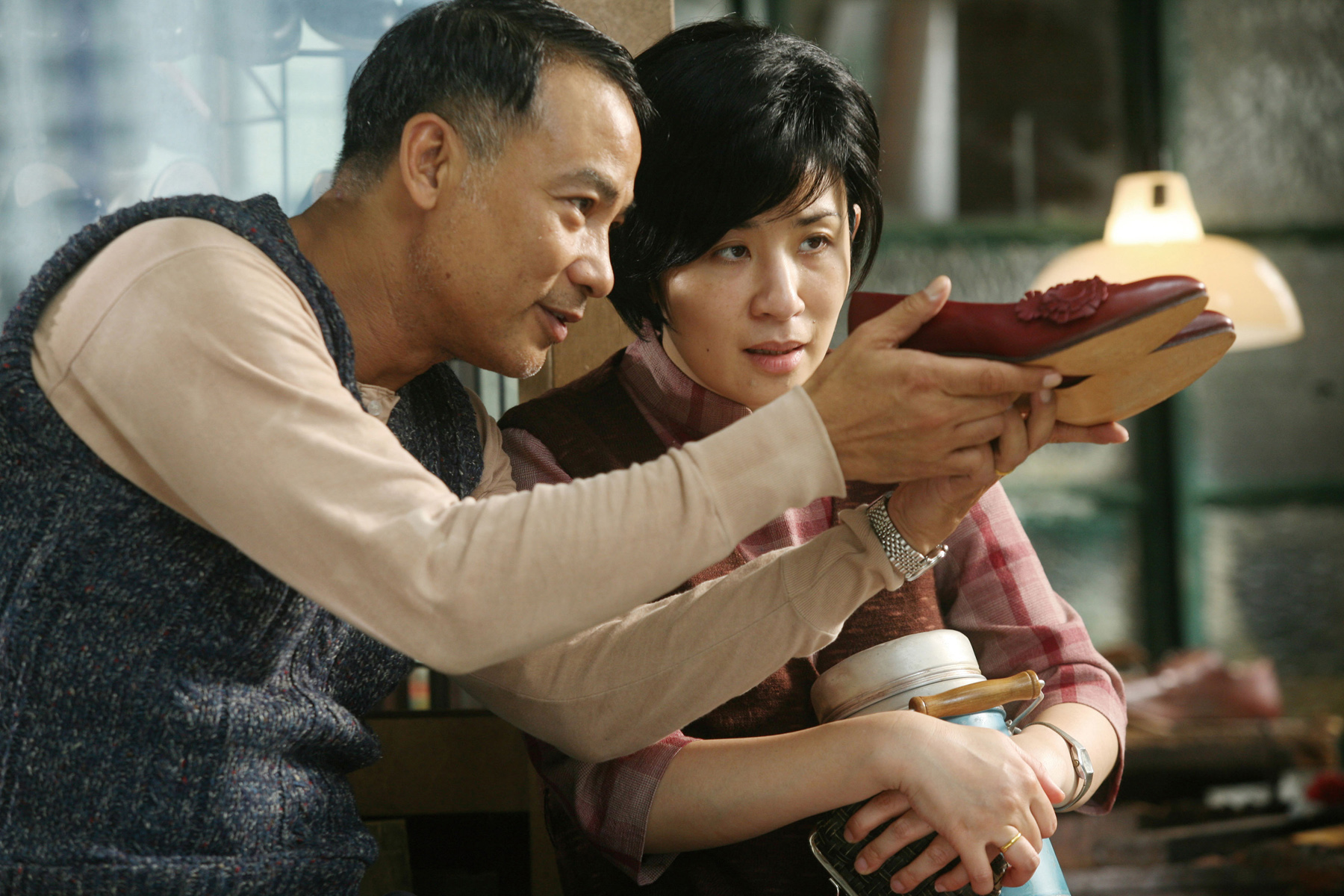
Shoemaking, Simon Yam and Sandra Ng, Echoes of the Rainbow, 2010
Echoes of the Rainbow
A charming family drama set in 1960s Hong Kong, this melodrama by Hong Kong New Wave director Alex Law stars Buzz Chung Shiu-Tiu as Big Ears, a young boy whose shoemaker father, his mother and his older brother strive to make an honest living making and selling shoes in their working-class neighborhood. Though a bit soft around the edges, the film is best when it illustrates the community neighborliness found amongst the residents of the street. One pleasant moment occurs when Big Ear’s family takes its nightly meal out to the street behind their house to eat on a homemade dinner table built on top of a tree stump. They’re joined by the rest of their neighbors who are also dining al fresco, presumably to escape the heat of their small, non-airconditioned houses. This small but engaging scene underscores the sense of belonging, safety, and comfort found in an earlier, less hectic time and place.
The film also makes cogent point in its examination of class differences between Desmond (Aarif Lee) and his girlfriend Flora (Evelyn Choi). In one scene Desmond walks for a very long time from his humble street to visit Flora, eventually arriving at the toniest neighborhood in town. The length of his journey and his awkwardness and discomfort in such rarefied surroundings contrasts nicely with the sense of ease and belonging he feels in his own neighborhood and underscores the great gulf in social status between himself and his wealthier sweetheart.
Simon Yam and Sandra Ng are excellent as the cobbler and his wife, and Buzz Chung is endearing without being saccharine. Aarif Lee is suitably modest despite his blazing hotness and Evelyn Choi is sweet and charming as his love interest. Eventually the film succumbs to extreme melodrama but it still remains a lovely rendering of a more innocent time in Hong Kong history.
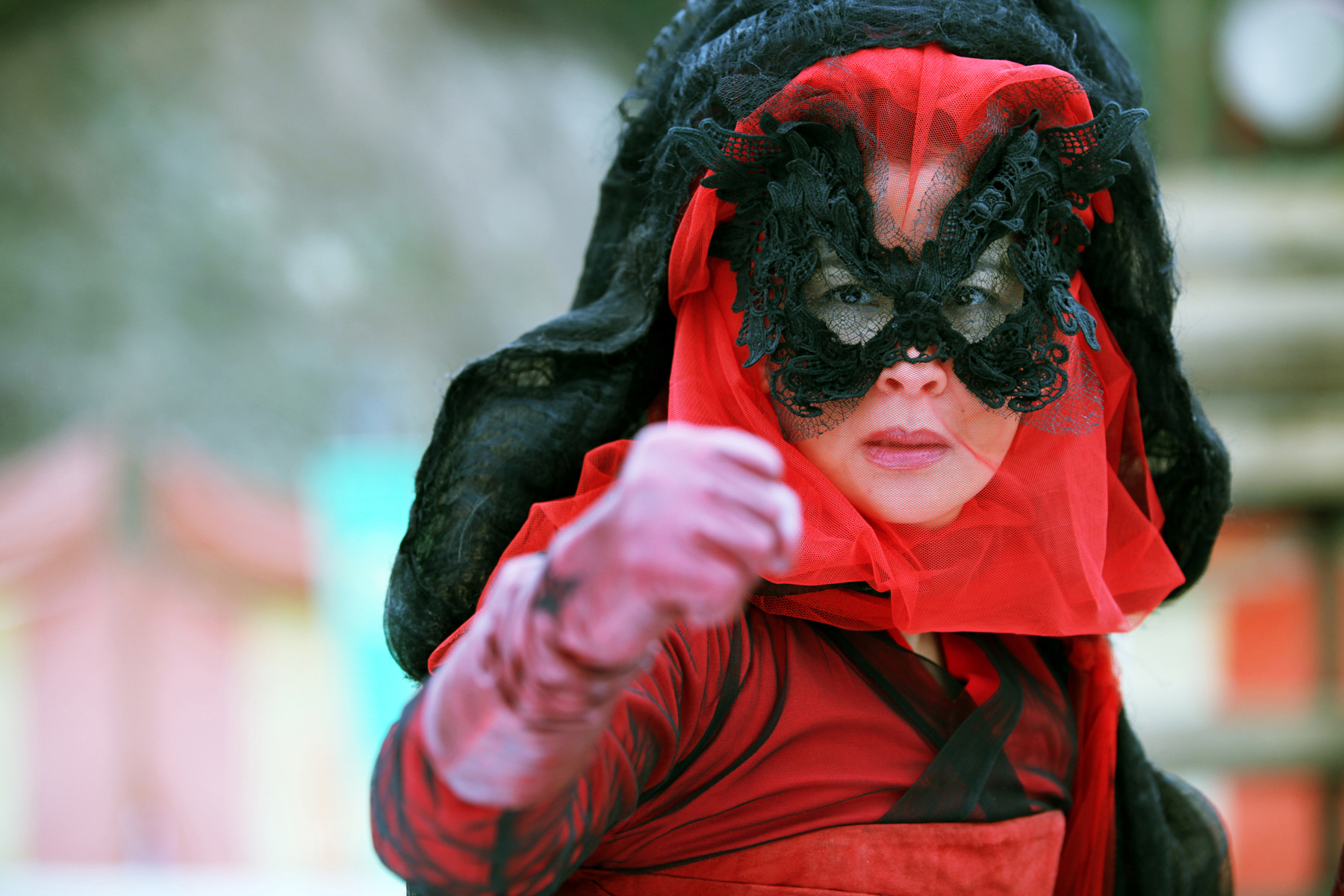
Ass-kicking, Sandra Ng, Mr. and Mrs. Incredible, 2011
Mr. and Mrs. Incredible
A period piece directed by Vincent Kok, the sometime collaborator of king of comedy Stephen Chiao, this superhero comedy feels a lot like a Lunar New Year film, with its wacky concept, broad humor, slapdash production design, and lead performances by popular stars Louis Koo and Sandra Ng. Koo and Ng play a married couple who are also the retired superheroes formerly known as Gazer Warrior and Aroma Woman (both excellent superhero names). The two erstwhile heroes have renounced adventuring and have settled down incognito in a quiet village where they run a pork bun shop. Their attempt to start a family and to live anonymously in peace is interrupted by a martial arts contest, a life-force sucking villain, and other outlandish circumstances.
Goofy and mild, with humorous banter between its amiable co-stars, the film is a bit talkier than you’d expect from a movie about costumed heroes. It’s carried by the charming performances of Koo and Ng, who are unafraid of looking ridiculous and whose good-natured interplay makes the film an innocuous and pleasant timepass.
Also screening: Redoubtable auteur Ann Hui’s All About Love, a lesbian love story starring Sandra Ng and Vivian Chow, and Benny Chan’s City Under Siege, an action film that involves toxic waste, mutants, circus performers, and other everyday Hong Kong denizens, starring Aaron Kwok and Shu Qi, with production design by the legendary William Chang Suk-Ping (In the Mood for Love, Rouge, 2046).
Hong Kong Cinema
Sept. 23-25, 2011
San Francisco Film Society New People Cinema
1746 Post Street, San Francisco
San Francisco
Too Much Heaven, Part Two: City of Life and Death and Detective Dee reviews

Andy Lau, sleuthing, Detective Dee and the Mystery of the Phantom Flame, 2010
Two more Chinese-language films have their theatrical releases in San Francisco, and, although they are completely different in subject, tone, and treatment, both are testaments to the vitality of the new Chinese cinema.
City of Life & Death, dir. Lu Chuan, 2010
My head was spinning when I walked out of the screening for City of Life and Death, Lu Chuan’s devastating and uncompromising look at the Rape of Nanking (or Nanjing). City of Life and Death is an unflinching look at the infamous Japanese occupation and destruction of the Chinese capital in 1938–the film is a stellar example of the ways in which cinema can both explicate and elevate events from real life. Lu masterfully utilizes wide-screen, black and white, mostly hand-held cinematography, subtle and emotional performances, and a story structure that precludes simplistic nationalism.

Civilians, City of Life and Death, 2010
At the very start in the first hour of the film Lu kills off one of the main characters, forcefully undermining any pretense of a conventionally told story and serving notice that the film will be merciless in the treatment of its characters. As in the real-life occupation of Nanjing, no one is safe and no one will be spared from the casual brutality of wartime and the mentality it fosters. The film also refuses to focus on acts of heroism, although though there are brave and unselfish acts throughout the film’s 2.5 hour running time. No single character is a savior, nor are there any simple answers to the inhuman violence that was perpetrated upon the citizens of Nanjing.
As a Chinese filmmaker Lu makes the unusual choice of presenting the well-known story, which has been used in China to demonize Japan, in part through the eyes of Kadokawa, a Japanese soldier. The opening shot of the film is a close-up of the wide-eyed and impressionable Kadokawa’s terrified face as he and his fellow Japanese soldiers prepare to storm the walls of Nanjing. Kadokawa’s horrified responses to the violence surrounding him as well as the pivotal choices he makes at the end of the film belie any condemnation of the Japanese as inherently bestial or subhuman, The film refuses to lay the blame for the events in Nanjing on inborn flaws in the Japanese national character, instead placing responsibility on the insanity of militarism itself.

Atrocities, City of Life and Death, 2010
Viewers shouldn’t be deterred by the grim subject matter as this is filmmaking of the finest order. The wide screen black and white cinematography underscores the huge scope of the atrocities, and director Lu Chuan understands the value of a long, long take in creating an almost unbearable tension. The performances are also uniformly outstanding. Liu Ye is excellent in his brief but significant role as a pragmatic Chinese officer, utilizing his sensitive, evocative face to great effect. Wei Fan is also very effective as a bureaucrat working for the Germans who realizes too late that his position does not grant him immunity from the horrors around him.
A scene near the end of the film where the Japanese soldiers perform a celebratory dance underscores the violent group psychosis of war. While taiko drummers beat out a mournful cadence, the crouched-over soldiers move through the rubble-filled streets with blankly fierce expressions on their youthful faces. After the screen carnage of the past two hours their procession seems like an exercise in group insanity as the men move in hypnotic lockstep, driven by a rhythm dictated to them and with little will of their own. The scene becomes a grim and surreal commentary on the collective madness of war and the indoctrination that makes young men such as Kadokawa into unfeeling, obedient machines of destruction. This image and many others in City of Life and Death make the film absolutely essential viewing, The film’s current theatrical release makes it possible to experience it on the big screen, where its vast and detailed rendering can completely engulf the viewer and magnify its cataclysmic impact.
Detective Dee and the Mystery of the Phantom Flame, dir. Tsui Hark, 2010

Andy Lau investigates, Detective Dee and the Mystery of the Phantom Flame, 2010
A film epic of a completely different sort than City of Life and Death, Tsui Hark’s extravagantly fun and fantastic movie is another example of the outstanding product coming out of China and Hong Kong. Like Benny Chan’s Shaolin, Detective Dee is a brilliant blending of traditional Hong Kong moviemaking with the super-high production values of recent mainland films.
Detective Dee is very loosely based on the exploits of real-life historical figure Di Ren-jie, also known as Judge Dee, who has been the subject of several Hong Kong and Chinese films, books, and television series. Here Dee is played by the ageless Andy Lau, as an implacable sleuth assigned to determine the cause of a spate of spontaneous human combustion.
Carina Lau plays another historical figure, Wu Zetian, who was the only woman to ascend to the Chinese imperial throne. Both Andy and Carina, who started their careers at TVB long ago in the 1980s, are excellent as the titular sleuth and the Empress who may or may not be his adversary. Carina Lau holds the distinction of being one of the only actresses of her generation (along with Maggie Cheung and Michelle Yeoh) who is still working, and she brings a presence and authority to her role. Andy Lau has turned into an excellent screen actor and his ability to convey thoughtfulness and depth (despite his incredible good looks) is a result of his experience in more than a hundred films. He’s not afraid to take roles that emphasize his maturity, as seen here and in Shaolin, which is a nice testament to his graceful aging.

Phatasmagoria, Detective Dee and the Mystery of the Phantom Flame, 2010
As expected from a Hong Kong fantasy film, Detective Dee includes a surfeit of cleverly staged action set pieces, underscored by director Tsui’s fantasmagoric set designs and kinetic camerawork. But Detective Dee moves beyond earlier Hong Kong films’ visual realizations with its excellent use of extensive digital effects. The world of digital effects has finally caught up to Tsui’s gloriously saturated cinematic vision and in Detective Dee he makes the most of them. Whereas Tsui’s 1990s fantasy classics such as Green Snake featured charmingly unconvincing rubber prosthetics and matte paintings, Detective Dee has the advantage of a full slate of DFX, here outsourced to a well-known Korean effects house. Tsui utilizes this to full effect in realizing his lavishly imaginative vision, which includes transmogrifying faces, a herd of talking (and fighting) deer, characters convincingly immolating from the inside out, and a skyscraper-sized statue of a female bodhisattva.
At the same time Tsui doesn’t let the digital madness take precedence over plot or characterization. The film’s story is a clever and well-developed mystery, and Andy Lau, Carina Lau and Li Bing Bing portray intriguing and complex characters. Tony Leung Kar-Fei is excellent as a revolutionary with a long grudge against the empress. In fine Hong Kong movie tradition, Li and Andy Lau court and spark as conflicted would-be lovers separated by duty and circumstance. As is his wont, Tsui also throws a bit of political commentary into the mix in his critique of the corruption of power.
Detective Dee won Best Director and Best Actress statues at the most recent Hong Kong Film Awards and represents a comeback of sorts for longtime auteur Tsui. Although it was financed by mainland Chinese money and performed in Mandarin, Detective Dee is still a Hong Kong movie through and through, and is an outstanding example of what might come from the integration of mainland and Hong Kong commercial cinema.
City of Life & Death
opens Fri. Sept. 23, 2011
Landmark Opera Plaza Cinema
601 Van Ness Ave.
San Francisco, CA 94102
(415) 267-4893
Detective Dee and the Mystery of the Phantom Flame
now showing
Landmark Embarcadero Cinema
One Embarcadero Center, Promenade Level
San Francisco, CA 94111
(415) 267-4893
Landmark Shattuck Cinema
2230 Shattuck Avenue
Berkeley, CA 94704
(510) 464-5980
I’ll Take You There: Carlos Villa: Manongs, Some Doors, and a Bouquet of Crates
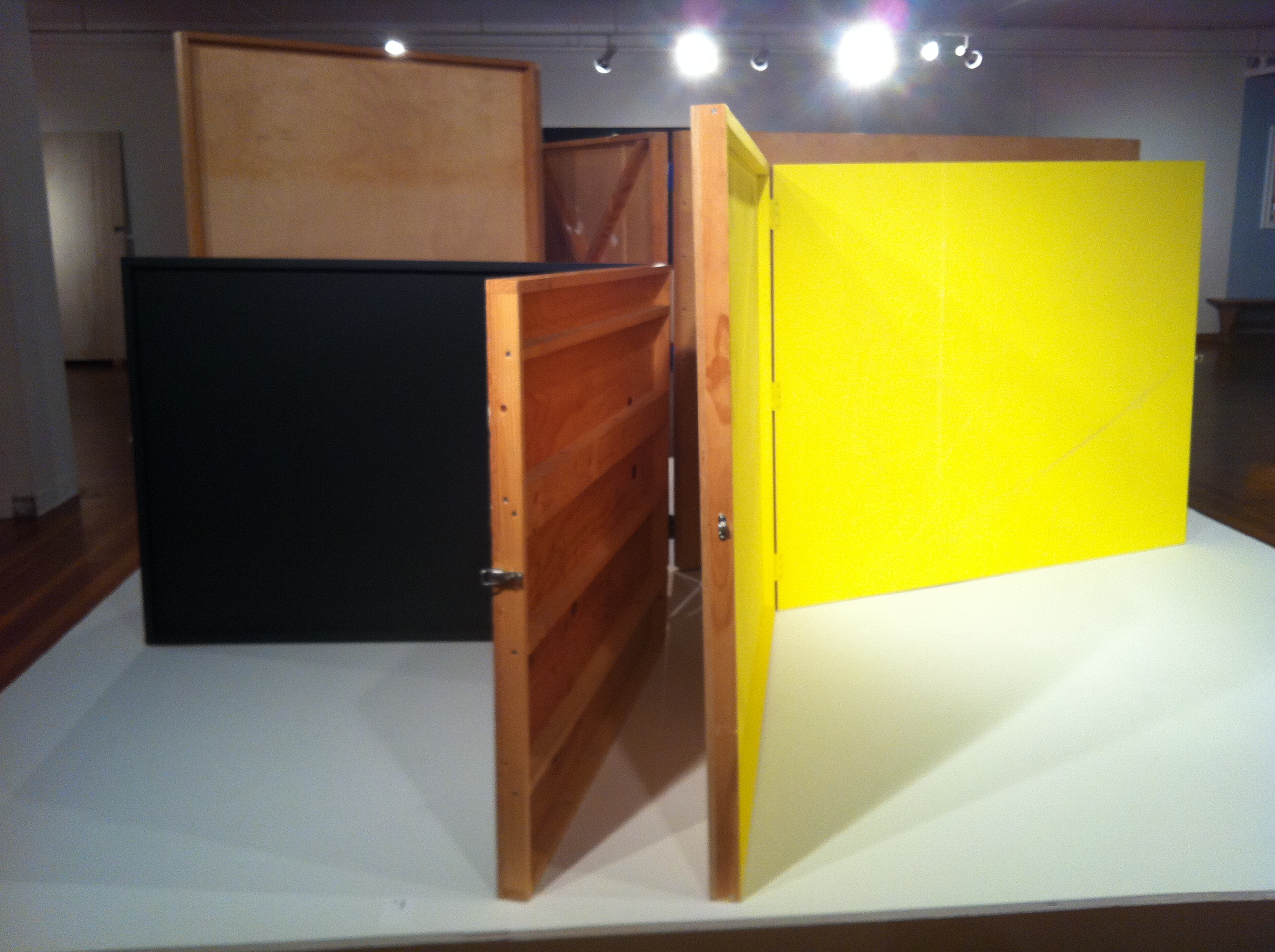
Manongs, Some Doors, and a Bouquet of Crates, installation view, Carlos Villa, 2011, Mission Cultural Center for Latino Art
Carlos Villa’s beautiful new show, Manongs, Some Doors, and a Bouquet of Crates, at the Mission Cultural Center for Latino Art (MCCLA) is a selective survey of his work, and the show is a great introduction to Villa’s formal, thematic, and stylistic range. The show’s title is indicative of the diversity of the work from Villa’s long career, which has spanned more than seven decades.
As Filipino American cultural critic Theo Gonsalves notes, some art historians as well as some Asian American Studies scholars have had a hard time placing Villa’s wide-ranging body of work. As a Filipino American, Villa has never shied from referencing his cultural heritage in his work, most notably in his striking, large-scale cloaks of feathers, bone, shells, hair, and other evocative organic materials. But Villa also has a large body of non-representational pieces that don’t easily fit into culturally specific pigeonholes, which puzzles the more literally minded multiculturalists among us. However, his ability to move easily between culturally rooted work and work that less directly references his cultural background is perhaps what best defines Villa as an Asian American artist. As Stuart Hall famously notes in his essay, Cultural Identity and Diaspora, “Cultural identity is a matter of ‘becoming’ as well as of ‘being,” and the variety of approaches in Villa’s work speaks to that constantly evolving state of becoming. The current show at MCCLA is an excellent example of the broad scope of Villa’s ongoing concerns.
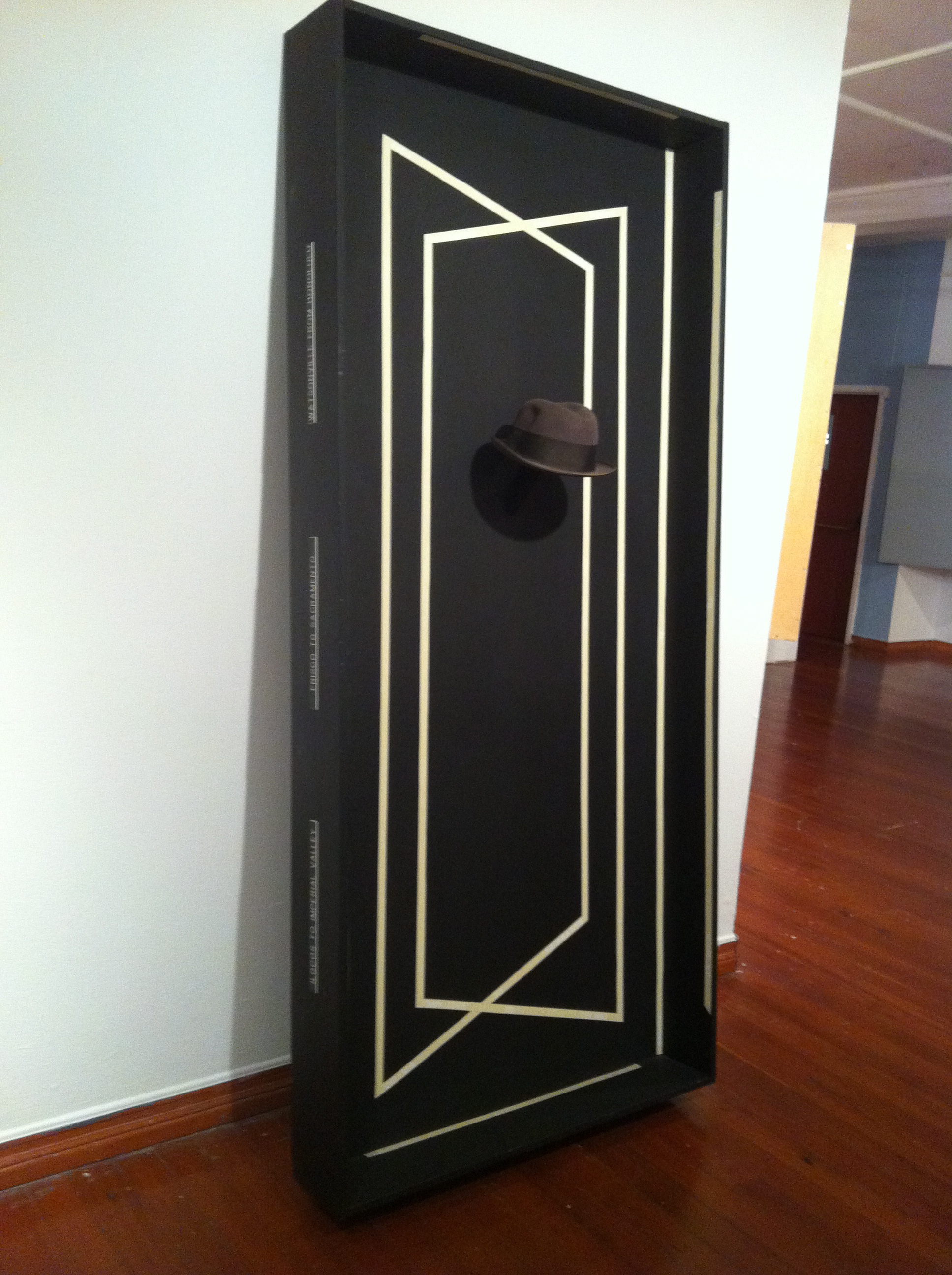
Where My Uncles Went West, 2002-2004, Carlos Villa
Upon entering the gallery at MCCLA the viewer hears a recording of “I Can’t Give You Anything But Love,” sung by manong Freddy, one of the tenants of the original International Hotel who was involved in the long and bitter struggle to save that Manilatown landmark. The audio track immediately locates Villa’s work in Filipino America and reinforces the deep cultural connection that informs all of his work. Other suggestions of Pinoy culture are found in Where My Uncles Went West, a tall, shallow rectangular box with geometric white lines painted on a black background–both the box and the lines resemble doorframes, suggesting the entrances and exits of the immigrant experience. The side panels of the piece also pay tribute to the various journeys of the manong in their travels from the Philippines and throughout the U.S., with inscriptions including “Cebu to Fresno” and “Watsonville from Honolulu” suggesting the travels of first-generation Filipino Americans in their search for itinerant labor. Centered between the door-shaped geometric lines is a porkpie hat, another significant element of manong culture. Here Villa evokes the transitions and translocations faced by those Filipino immigrants from the early 20th century, suggesting both their origins as well as their destinations.
The show also includes a sampling of Villa’s earlier work, including some beautiful geometric studies on paper as well as photographs of several plywood sculptures that presage some of the work that makes up the bulk of the MCCLA show. A series of large-scale, hand-built wooden boxes marked with carefully drawn lines on colored backgrounds, this body of work is a good example of the way that Villa’s non-representational pieces echo the concerns found in his more culturally specific work.

Manongs, Some Doors, and a Bouquet of Crates, detail, 2011, Carlos Villa, Mission Cultural Center for Latino Art
The boxes at the MCCLA show are hinged panels that are displayed in the gallery’s center. The viewer is able to circumnavigate the boxes, seeing both their painted and etched “front” as well as the structural supports of the “back,” thus evoking packing crates, suitcases, and other forms associated with transiency and migration. Beautifully hand-etched with precise, closely spaced parallel lines, these pieces are displayed ajar, both opening and closing, echoing the transitional mindset of many immigrants.
Like Ruth Asawa, another great Asian American artist of the same generation whose carefully crafted non-representational work defies easy categorization, Villa is biliterate and bicultural, belonging in many worlds and utilizing a multitude of frames of reference. By refusing to fit neatly into a single, simple classification, Villa’s work redefines what it means to be an artist, a Filipino American, and an American.
Carlos Villa: Manongs, Some Doors, and a Bouquet of Crates
August 13- October 5, 2011
Mission Cultural Center for Latino Art
2868 Mission Street, San Francisco CA 94110 (map)
An Evening with Carlos Villa
September 17, 6:30-9:30p / FREE Admission
Mission Cultural Center for Latino Art
Join Carlos Villa and distinguished guests for a night of storytelling and dialogue, as we celebrate the release of Villa’s new monograph, Carlos Villa and the Integrity of Spaces, edited by Theodore S. Gonzalves.
Too Much Heaven: Shaolin, My Kingdom, and Love In Space movie reviews

Aaron Kwok and Rene Liu in zero-gee, with chocolate, Love In Space
For those of us lucky enough to be in the Bay Area, San Francisco is going to be an epicenter of theatrical Chinese-language film screenings as in the next couple months we are about to get slammed by a profusion of movies from Hong Kong, China, and Taiwan. Two film festivals plus several open-run screenings will be taking place in the last part of 2011, giving us sinophile film otaku many chances to partake of our favorite addiction on the big screen. In fact, there are so many Chinese-language movies playing in the next couple months that this is the first of at least three posts on the subject, with upcoming entries on two more movies from Hong Kong and China next week, as well as two film festivals sponsored by the San Francisco Film Society (SFFS) respectively focusing on Hong Kong and Taiwan.
With China’s increasing financial clout and the subsequent meteoric rise in the Chinese film industry (64 percent growth last year, to US$1.6 billion; 526 films produced in 2010, up 15%; and 6,000 new cinemas planned for next year) we are witnessing a new era of Chinese-language films. For better or worse the Chinese film industry has grown exponentially in the past decade and with the inexorable integration of the finest talents from the Hong Kong film industry, Chinese cinema has evolved from the arthouse-oriented political allegories of the 20th century to highly accessible commercial fare like the three films releasing this week. Shaolin, My Kingdom and Love In Space, opening in the U.S. on Sept. 9, represent the new paradigm of Chinese filmmaking and their appearance in U.S. theaters, along with and other upcoming Hong Kong and Chinese releases, heralds a trend toward increased Chinese theatrical releases in this country. These three recent Chinese-language films, one from Hong Kong and two from mainland China, also reflect the trend toward Hong Kong-China co-productions, as all three are cross-pollinated projects with talent both from Hong Kong and “the North.”
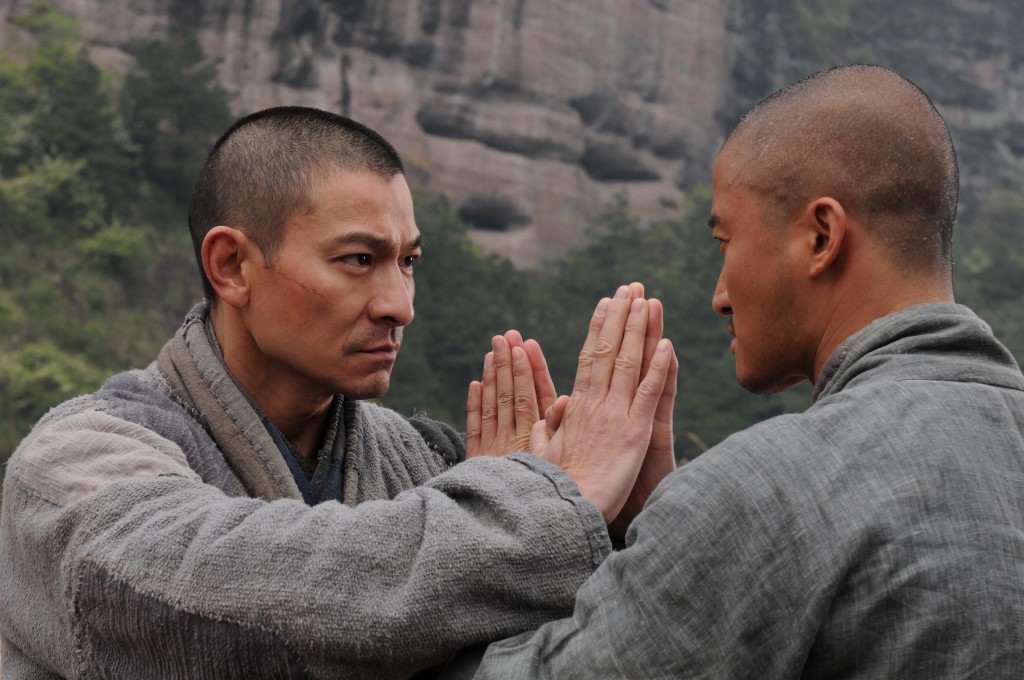
Andy Lau and Wu Jing, monks, Shaolin
Now playing at the Four-Star Theater (and also playing at the San Francisco Film Society’s New People theater on Sept. 28-29) is Shaolin, director Benny Chan’s historical martial arts film involving warlords, monks, and lots of kung fu. Shaolin is an exhilarating big-budget spectacle that captures a lot of the fun of classic 1990s HK moviemaking—although the producers claim the movie is a tribute to Jet Li’s debut film from 1986, the storyline doesn’t have a lot to do with that old-school kung fu classic, aside from having a cadre of righteous, kick-ass monks defending the honor of the legendary martial arts stomping ground. This Shaolin is set in the Republican era of the early 20th century when ruthless warlords duked it out for domination of their various fiefdoms. Superstar (and my favorite Heavenly King) Andy Lau ably anchors the film as an ambitious warlord who tragically learns the error of his ways. He’s aging beautifully, and that aquiline nose and perfect jawline look as photogenic now as they did twenty-five years ago. Nicholas Tse as Andy’s adversary is a bit less effective, overacting his way through his villainous role decked out in shiny black boots and an evil sneer. Wu Jing leads a group of crack martial artists as awesome Shaolin monks defending their sacred turf. Jackie Chan’s supporting role as the temple cook provides him a fun little fight scene, as Chan uses woks, cleavers, and other kitchen implements to showcase his trademark comic kung fu style.
Also outstanding is Cory Yuen’s fantastic action choreography, which includes a furious fight on wheels during a nighttime horse and carriage chase through the city as well as excellent hand-to-hand martial arts with bad-ass monks showing off their mad skilz, armed only with wooden staffs or their bare hands against rifle-carrying bad guys. As with many Chinese co-productions these days there are also the obligatory sadistic European actors maniacally giggling their way through senseless destruction. Fan Bing Bing (not to be confused with Li Bing Bing) is effective as Andy Lau’s wife, though she mostly just bats her eyes and weeps.
The film’s scenery, art direction, and cinematography are all top-notch–if this is the future of Hong Kong films then I’m all for it. Veteran HK director Benny Chan does a great job scaling up and the movie blends the big-budget production values of recent mainland films with the heart and emotion of Hong Kong movies.

Han Geng, popstar, with porkpie, My Kingdom
Two other films from China also open up Stateside today from distributor China Lion, which has been putting out series of monthly day-and-date releases of Chinese commercial films. The lineup has been a somewhat random and diverse slate of pics including 3D Sex and Zen: Extreme Ecstasy (officially banned in China but a massive hit in Hong Kong), the weepy Shu Qi/Liu Ye melodrama A Beautiful Life, and the Chinese Communist Party epic Beginning of the Great Revival.
Its release postponed a month due to the success of 3D Sex & Zen, My Kingdom is an action melodrama played out against the backdrop of classical Chinese opera. The film has the typically high production values of current commercial Chinese films and nicely recreates 1920s Shanghai, with great art direction and cinematography. But the 90-minute movie is very slight in comparison with the big kahuna of Chinese opera movies, Chen Kaige’s Farewell My Concubine. While Chen’s film was a vast, emotionally wrenching epic writ large across twentieth-century Chinese history, My Kingdom focuses on a much smaller story of love, revenge, and opera.
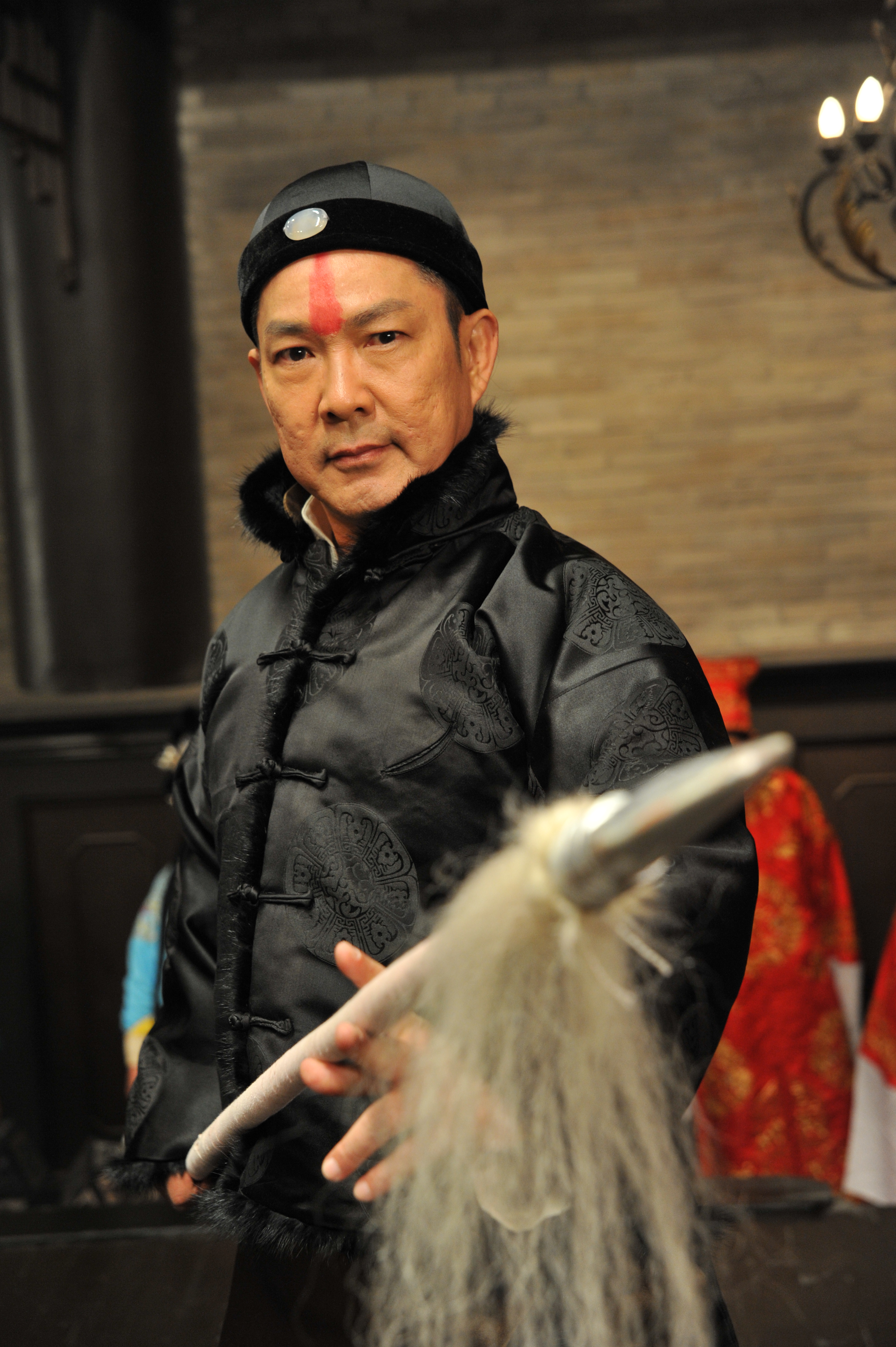
Yuen Biao and staff, My Kingdom
The movie also suffers from the callowness of its lead performers, with Sinopop idols Wu Chun and Han Geng cast as Yi-Long and Er-Kui, sworn brothers trained as “opera warriors.” Although Wu occasionally works up to a good smolder, the wide-eyed Han seems a bit overwhelmed by his role and never really seems like a man consumed by a desire for vengeance. Barbie Hsu is adequate as the opera troupe’s lead actress but she’s not convincing as a diva, much less one desired by most of the male cast. The three leads also are less than stellar in their opera performances, and the choreography in some of these scenes is also pretty uninspired. The exception is when the fabulous Yuen Biao, one of Jackie Chan’s “brothers,” shows up at the beginning of the movie in a brief role as the Yi-Long and Er-Kui’s sifu. Both his acting and his footwork demonstrate Yuen’s genuine Chinese opera training, and showcase “big brother” Sammo Hung and Chin Kar-lok’s fluid and efficient action choreography.
The film’s producers were clearly aiming for the youth market, but the singers cast here are not quite up to the task of driving the emotional, convoluted plotline. Especially miscast is the floppy-haired actor who plays a scheming policeman–the actor looks about 22 years old and his haircut seems to be channeling Justin Bieber. However, the movie is an interesting example of the ongoing integration of Hong Kong and mainland Chinese commercial film productions, with Hong Kong stalwarts such as Yuen and Hung teaming up with their younger mainland co-stars.
Also from China Lion is Love In Space, the only modern-day film of the three on the docket this week. Love In Space follows the romantic adventures of three sisters, an actress, an artist, and, yes, an astronaut, in Bejing, Sydney, and orbiting around the planet. This fun and fanciful little film reflects co-director Wing Shya’s whimsical fashion photography–it also stars a slew of pop stars (including three generations of male idols–Aaron Kwok, Eason Chan, and Jing Boran) who are put to better effect than their compatriots in My Kingdom.

Guey Lun-Mei and Eason Chan get wacky, Love In Space
Most effective are Cantopop king Eason Chan and Guey Lun-Mei (who kicked ass in Dante Lam’s crime thriller The Stool Pigeon) who play a garbageman and his germ-phobic love interest. Both Chan and Guey have mobile, expressive faces and excellent comic timing, and their story is the most fun and engaging to follow. Also good, though a bit more twee, are Angelbaby and Jing Boran as a movie-star-in-hiding and her spunky, watermelon-selling suitor. Oddly enough, the least compelling story features Rene Liu and Heavenly King Aaron Kwok as estranged lovers working together on a space station. The space-station set and the constantly revolving camerawork suggest a rom-com Solaris, and the soundtrack even features The Blue Danube waltz from Stanley Kubrick’s 2001: A Space Odyssey, but the storyline is predictable and Liu and Kwok’s performances are unconvincing. However, the movie as a whole is a delightful confection and a far cry from the dour political allegories of Chinese filmmakers from the 20th century.
Next week will find Indomina Pictures continued U.S. rollout of Tsui Hark’s blockbuster Detective Dee and the Mystery of the Phantom Flame, as well as the World War II drama The City of Life and Death. Relativity Media also recently announced a deal with SAIF Partners and IDG China Media to produce and distribute Chinese films for the international market. With more product comes the need for more consumers and, although the billion-person Chinese market is a good start, the Chinese film industry sees more income ripe for the picking in the international market. As an Asian film aficionado I see no reason to complain–seeing movies on the big screen beats torrenting any day. It will also be interesting to see how the demands of the international market further affect the look and feel of Chinese cinema in the 21st century.
Shaolin
4 Star Theater
2200 Clement Street
San Francisco
(415) 519-8716
NOTE: live perfomance by Shaolin monks, Friday, Sept. 9, 8p, free
Love in Space and My Kingdom
AMC Loews Metreon
16101 Fourth Street
San Francisco, CA 94103
(888) 262-4386
AMC Cupertino Square 16
10123 North Wolfe Road
Cupertino, CA 95014
(888) 262-4386
Identity: Chico & Chang and Stephanie Syjuco

Hipster Pig, Pablo Cristi, 2011, plaster, denim, fake gold, and wood
In the late 1990s I vividly recall visiting a class at UC Berkeley to show my work, after which one of the students, a nice Asian American kid, came up to me and said, “I really liked your videos, but are you really interested in all of that identity stuff?” Nearly 15 years later, my students at SF State see Jabbawockeez, and Harry Shum Jr. on their Tivo all the time, and Far East Movement is topping the charts, yet simultaneously they’re dealing with Hollywood’s stubborn refusal to abandon whitewashing (Akira, anyone?) and the teabaggers retro-paranoid siege mentality, while some people continue to deny that Mickey Rooney’s yellowface turn in Breakfast At Tiffany’s is racist. So I’m not completely convinced that identity politics are obsolete, and I’m happy to see young artists of color still examining issues of race, culture, and representation.

Chico & Chang, 2011, installation view, Intersection 5M, San Francisco
Two recent San Francisco shows look at Multiculturalism 2.0. Intersection 5M’s newest show, Chico & Chang: A Look at the Impact of Latino and Asian Cultures on California’s Visual Landscape, deals with this crazy transitional time we’re living in, examining the inexorable demographics shifts in this country and the unexpected ways that U.S. culture is changing to reflect that shift. Organized by Intersection’s indomitable visual artists program director Kevin Chen, this chock full of energy and good information and includes several choice tidbits that bring multiculturalism into the current millennium.
Right up front is Pablo Christi’s clever and arresting Hipster Pig. A life-size mounted patchwork denim hog’s head with gilded chicken-foot necklace, Christi’s sculpture critiques the new snout-to-tail foodie movement that fetishes consuming every bit of the butchered animal.
I immediately recognized the chicken foot adorning the pig’s neck since my dad loved sucking down those bones long before Anthony Bourdain made it trendy. Likewise my grandmother’s stockpot was full of necks, wings, feet, and chicken heads, which horrified her grandchildren but made for excellent soup. Who knew that she and Pops were such culinary trailblazers? I’m sure they was just trying to save a buck, whereas the foodies that Christi critiques are making bank selling bone marrow and fish cheeks to gullible upscale consumers. Funny how poor people eating fish stomach don’t make it onto The Food Network very often.

Carry On, Ana Teresa Fernandez, 2011, detail, mixed media
Ana Teresa Fernandez’ installation Carry On possesses an immediate visual appeal. Fernandez has created a kitchen tableau with all objects, including floor, walls, furnishings, food packaging, clothes, ironing board, and crucifix, covered in the fabric from the plaid plastic shopping bags usually found on the arms of the ladies on the 30 Stockton and the 14 Mission. Not unlike applying an “ethnic plastic bag” filter onto a photoshopped picture, the immediately recognizable pattern of the installation’s surfaces cleverly underscores Chico & Chang’s curatorial premise. By pointing out the ubiquity of said plastic bags in both Asian and Latin American communities, Fernandez’ project speaks volumes about the Asian/Latino cultural intersections and iterates Asian and Latino influences on U.S. culture at large.
Charlene Tan’s Silent Labor investigates a more poignant topic, examining an overlooked aspect of immigrant life in the U.S., as well as the global impact of our hyperconsumerist society.
Tan notes in her artist’s statement,
When I was 14 a family friend gave us an old traditional Chinese-style table. We swooned because my family had just bought a new home and we needed furniture. As we unpacked the table piece by piece my younger brother and I noticed handprints in dust on the finished surfaces. Thinking nothing of it, we chirped about the small size of the hands, thinking it was an errant child playing in the storeroom. Then, we saw small handprints in wood stain and shellac. Our hearts sank when we realized the hands smaller than ours built our table. Silent anger laced with guilt took over; we could be these unknown workers.

Silent Labor, Charlene Tan, 2011, (sculpture on floor), wood, mirror plexi, shellac, latent print powder
In her piece Tan references this experience, replicating a black IKEA-style table under which she has placed a large mirror. Nothing amiss is evident on the tabletop, but below, visible only in the mirror’s reflection, are small handprints on the underside of the table. Tan’s piece is a subtle commentary on the hidden human cost of the cheap imported goods that power the U.S. economy.

RAIDERS: International Booty, Bountiful Harvest, 2011, Stephanie Syjuco, installation view, archival Epson photo prints mounted on lasercut wood, hardware, platforms, crates
Just up the street at Catherine Clark Gallery, Stephanie Syjuco’s “RAIDERS: International Booty, Bountiful Harvest (Selections from the A_____ A__ M_____), is an outstanding prank on art collecting, orientalism, and intellectual property. Syjuco downloads reproductions of collectibles from the Asian Art Museum’s website, blows them up life-size, and mounts them on propped-up plywood backing. Her sly commentary is simultaneously visually appealing, intellectually stimulating, and culturally relevant.
As a refugee of 1990s multiculturalism I’m glad to see both Chico & Chang andSyjuco’s work moving the practice forward. Both shows forgo being simple cultural celebration or definition in their astute, relevant, 21st century views of racial and cultural representation.
Bonus beats: Identity, by X-Ray Spex, with the late, lamented Poly Styrene on lead vocals, ca. 1978
Chico & Chang: A Look at the Impact of Latino and Asian Cultures on California’s Visual Landscape
June 11 – Aug 20, 2011
Intersection for the Arts
925 Mission Street
San Francisco, CA 94103
Gallery Hours: Tuesdays-Saturdays, 12-6pm, FREE
(415) 626-2787 x109
Stephanie Syjuco: Raiders
June 4 – July 16, 2011
Cathering Clark Gallery
150 Minna Street
San Francisco CA 94105
Another Tear Falls: RIP John Walker, 1942-2011
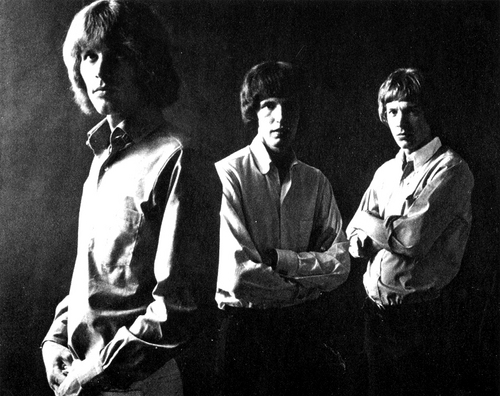
The Walker Brothers pose for you, 1965
Last week saw the death of John Walker (nee Maus), of the 1960s pop trio The Walker Brothers. Most pop music fans know the Walkers primarily as an early chapter in the book of vocal god Scott Walker’s career, who came into his own later in that decade with a string of baroque and eclectic solo albums that showcased his legendary baritone. But the Walker Brothers came first in the Scott Walker chronology, and in some ways Scott would never have gotten far without John and his pitch-perfect vocal harmonies.
The Walker Brothers clawed their way up the show business ladder in the early sixties in Los Angeles, as the house band at the West Hollywood nightclub Gazzarri’s, where they set the record for most consecutive performances. Their first recordings were covers of generic tunes like Do Wah Diddy which were mostly indistinguishable from the slew of other LA power pop songs released at the time.

The Walker Brothers, in shades, 1966
But once the Walkers crossed the pond to England their fortunes changed. There they refined their style, honing a hybrid sound that included Spectoresque wall-of-sound arrangements, blue-eyed soul, and John and Scott’s powerful, otherworldly harmonies. With this successful formula they hit their stride and had a series of chart-topping hits including Love Her, The Sun Ain’t Gonna Shine Any More, Make It Easy On Yourself, and My Ship Is Comin’ In. Scott’s dramatic lead vocals got the lion’s share of the spotlight, but John’s equally strong and evocative harmonies made the Walker Brothers recordings transcendent.
Scott’s retreat from public life and his late-career forays into deep experimentalism ensured that the Walkers would never again sing together live, and thankfully precluded any latter-day golden oldies reunions. But nearly fifty years after their debut, the Walkers’ eerily beautiful vocal consonance is still astoundingly affecting. Despite their obscurity in this century, Scott and John Walker arguably were the best vocal duo in American rock music.
Herewith are a few selections that illustrate the Walkers’ gorgeous song stylings.
Make It Easy On Yourself, 1965, written by Burt Bacharach & Hal David, arranged by Johnny Franz
Scott’s serpentine lead vocals drive this tune, but John’s descant makes it soar. Note: the audio quality is wonky on this clip but the video images of the young and tender Walkers is worth a watch.
Land of A Thousand Dances, 1966
John shows that he was a much better dancer than Scott, who looks miserably out of sorts in this live performance on German television.
Love Minus Zero, 1966
Another clip from German tv, with the Walkers prettily rendering Bob Dylan’s sprightly tune.
Stay With Me, Baby, 1966
Scott and John wail in perfect harmony in this densely layered slice of soul.
No Regrets, 1975, written by Tom Rush
A delicate and poignant country-tinged tune, again with impeccable harmonies by Scott and John.
Make It Easy On Yourself, 2009
A solo version by John, displaying his clear, lovely intonation.
Give Me Everything: Hasan Elahi, Gaye Chan, Stephanie Syjuco, and the New Gift Economy
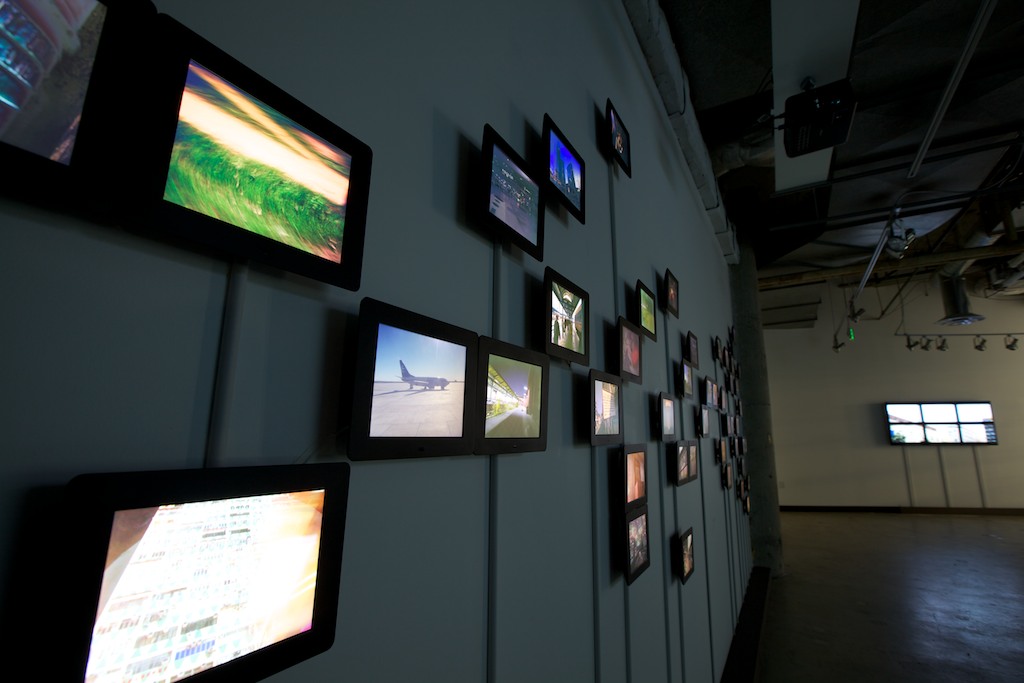
Hiding In Plain Sight, Hasan Elahi, 2011, Intersection 5M
Did a mini gallery crawl a couple weeks ago and saw three interesting shows that got me to thinking all about commodification, ownership, late capitalism and various other pet topics. I started out at SFMOMA’s First Tuesday–my press pass somehow lapsed last year and I haven’t been able to bring myself to shell out the double-digit entrance fee to the museum, so I was happy to take advantage of the gratis admission. I wanted to check out Stephanie Syjuco’s awesome Shadowshop project one more time (as a participating artist I was able to get into the members’ opening for free back in November) to buy a print of one of Indigo Som’s Chinese Restaurant series. Syjuco’s simple yet brilliant concept gave local artists a place to sell their wares within the confines of a mainstream art institution and hundreds, if not thousands, of items from postcards to paintings to objets d’art (including DVDs of The Oak Park Story–only $25!) were on sale in a compact fifth floor space on the way to SFMOMA’s posh rooftop sculpture gallery. All proceeds went directly to the artists and Syjuco’s insertion into the museum of an intermediary-free site for sales cleverly undercut the art world’s hypercommodified system of exchange. Plus it was a good place to pick up some excellent deals on outstanding work by San Francisco’s best artists.
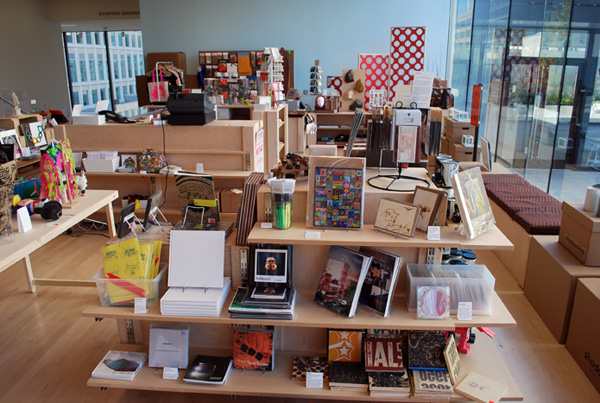
Shadowshop, Stephanie Syjuco, 2011, San Francisco Museum of Modern Art
Since it was free and since I had a bit of time on my hands I also popped into Exposed: Voyeurism, Surveillance and The Camera Since 1870 and checked out Nan Goldin’s famous photo series, The Ballad of Sexual Dependency, here presented as a large-scale slide show projected on the wall of the gallery. It was fun and entertaining to revisit this seminal piece and to see New York’s hipster underground in all its naked, lustful glory screened huge on the SFMOMA wall. Goldin’s piece has aged relatively well since it’s 1986 debut, though its soundtrack and its almost exclusively Caucasian denizens were decidedly 20th century. I was especially amused to see the slide show’s coda, which declared that each version of the limited edition show was unique, its scarcity thus insuring its worth on the art market.

Hiding In Plain Sight, Hasan Elahi, 2011, Intersection 5m
SFMOMA’s emphasis on the unique specialness of the individual art work contrasted beautifully with the anti-commodification concept of Hasan Elahi’s excellent multimedia installation, Hiding In Plain Sight, at Intersection for the Arts’ brand-spanking new digs, Intersection 5M, just down the street in the former Chronicle building at 5th and Mission. After Elahi was detained by Homeland Security in 2002 on suspicion of terrorist activities he began obsessively photographing his everyday activities and uploading the snapshots to his website, trackingtransience.net.
A wall of small monitors in the installation at Intersection showed random images, constantly downloaded from Elahi’s server, of the thousands of photos of toilets, airports, takeout dinners, cups of coffee, and other bland, quotidian details of Elahi’s everyday existence. A bank of flat-screen monitors on an adjacent wall scrolled Elahi’s daily credit card transactions. The volume and detail of the images and information, uploaded daily by Elahi, document his every move and cleverly defeat any attempt to imply illicit activities by Elahi. As he notes in an interview with Wired magazine, “I’ve discovered that the best way to protect your privacy is to give it away.” Elahi also made a quick guest appearance on the Colbert Report where he and Stephen amiably mixed it up.
Free Grindz, Gaye Chan, 2011, Southern Exposure Gallery
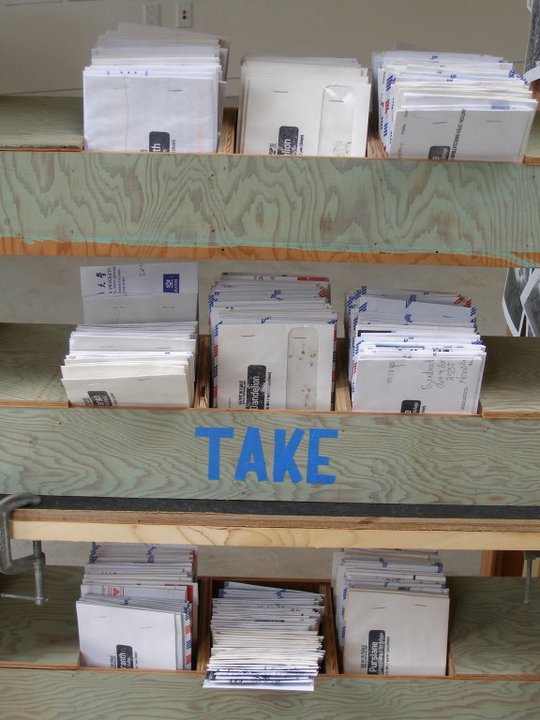
I then hopped over to the Mission to Southern Exposure’s On The Ground exhibit. Curated by SF artist Weston Teruya, the show includes several pieces by artists dealing with location and place. Once again issues of capitalism and commodification cropped up, notably in Hawai’i-based artist Gaye Chan’s Free Grindz, an element of Chan’s ongoing project Eating In Public, which explores issues around land use and centers on retaking the commons from both private and public interests. In Chan’s installation at Southern Exposure she presented a brief history of various edible weeds found on O’ahu, along with seeds, recipes and identifying photos, all displayed on the expanded shipping crate in which the materials traveled from Hawai’i. Viewers were free to take as many seeds and recipes as they liked, and to (literally) disseminate the plants and information without cost.
Both Elahi’s freely accessible photos and Chan’s gift economy seed distribution project are stark counterpoints to the art-market imposed preciousness of Nan Goldin’s slide show at SFMOMA. While both Elahi images and Chan’s seeds are available to anyone who wants them, Goldin’s can be seen only by those who can afford the museum’s admission, and owned only by those wealthy enough to purchase one of her limited editions. Although Goldin’s work is still aesthetically relevant, its means of distribution is decidedly archaic. In this era of the democratization of information and the erosion of intellectual property rights, will the art world still be able to control access to the objects and images that drive its market?
through Sun. May 1, 2011
SFMOMA
151 Third Street
San Francisco, CA 94103
Monday – Tuesday: 11:30am -5pm Wednesday: closed Thursday: 11:30am – 8:45pm Friday – Sunday: 11:30am – 5pm
Hiding In Plain Sight – A Solo Exhibition by Hasan Elahi
through Sat. Ap. 23, 2011
Intersection 5M
925 Mission Street (@ 5th)
San Francisco, 94103.
Tuesday-Saturday, 12-6PM. Closed Sundays and Mondays.
through Sat. Ap. 23, 2011
Southern Exposure Gallery
3030 20th Street (@ Alabama)
San Francisco, CA 94110
Tuesday – Saturday, 12:00 – 6:00 pm
You Must Learn: Bao Phi Dropping Science at San Francisco State University

Bao Phi speaks truth
Last week I had the pleasure and privilege of witnessing the phenomenal spoken word artist Bao Phi reading at my homebase, San Francisco State, and his singular blend of brilliant wordsmithing and sharp political commentary was completely awesome. Bao was the capstone presentation at the two-day long Re-SEAing Southeast Asian American Studies conference, hosted by the Asian American Studies Department at SFSU where I work, and he rocked the house with his funny, smart, sensitive, and deeply moving work.
Phi is the author of one of my favorite spoken word pieces, Reverse Racism, which I teach in all of my Asian American culture classes, but prior to last week I’d never heard him read in person so I was really looking forward to his presentation. He didn’t disappoint, reading mostly from his ongoing series, The Nguyens, in which he inhabits and articulates the experiences of various Vietnamese American characters surnamed Nguyen, from waitresses to artists to Prince impersonators.
But the showstopper of the afternoon was 8 (9), was his elegy to Fong Lee, a Hmong American teenager shot and killed by the police in Minneapolis under very suspicious circumstances. As the poem’s introduction notes:
In 2006, Minneapolis Police Officer Jason Andersen shot and killed Fong Lee, a 19-year old Hmong American. Andersen was awarded a Medal of Valor, though the Lee family and community members allege that Fong Lee was unarmed and the gun found on the scene was planted by police. During a foot chase in North Minneapolis, Andersen shot at Lee 9 times, 1 bullet missing, the other 8 hitting Fong Lee as he ran and as he lay dying on the ground.
8 (9) embeds significant parenthetic phrases (gang member for Lee; hero and peace officer for Anderson) to suggest the moral panic evoked by the police department in smearing Lee in court. The poem captures the irony of Hmong Americans who fled persecution in their home country only to find more violence as well as flagrant racism once in the U.S. It also links Lee’s experience with other egregious cases of police brutality, invoking among others Oakland’s Oscar Grant, whose killer, Johannes Mehserle, has already been released from prison after serving just 24 months.

Fong Lee's mother Youa Vang Lee, 2010
Bao Phi has active in the fight to bring Lee’s killer to justice, using his poetry and spoken word pieces as well as numerous blogs posts and articles to illuminate this grave miscarriage of justice. Unfortunately the fight has thus far been a futile one, with the Supreme Court recently declining to review the case, but it has galvanized an outraged Minneapolis Asian American community. Phi has been at the forefront of the struggle, and by using poetry as a means of memorializing the injustices in Lee’s death, his work offers hope for preventing future cases of unchecked police brutality. It’s great to see an artist passionately engaged with important social issues–I’m counting the days to the release of his first book, Song I Sing, due out in the fall from Coffee House Press.
Here and here are a couple nice blog entries by Bao Phi outlining the Fong Lee case and Phi’s involvement in it. As usual the comments section is instructive in itself.
With many thanks to Bao Phi, here in its entirety is 8 (9).
8 (9)
In memory of Fong Lee
And for the Lee family, and the Justice for Fong Lee committee
In 2006, Minneapolis Police Officer Jason Andersen shot and killed Fong Lee, a 19-year old Hmong American. Andersen was awarded a Medal of Valor, though the Lee family and community members allege that Fong Lee was unarmed and the gun found on the scene was planted by police. During a foot chase in North Minneapolis, Andersen shot at Lee 9 times, 1 bullet missing, the other 8 hitting Fong Lee as he ran and as he lay dying on the ground.
1.
Community members point out that accusations about Fong Lee’s history and character, specifically allegations that he was in a gang, were allowed in court and written about in the press. But Officer Andersen’s alleged dislike of Asians and history of derogatory remarks against Asians was neither allowed in court nor written about in the press.
One of the devil’s greatest powers
Is to force you to take a deal
That he himself would never take.
2.
Fong Lee was 19 (gang member). I can imagine him (gang member) and his (gang member) family. They are eating (gang member) something that steams and it does not steam like food from this (gang member) country, the smell lingers (gang member) like home. It is Minnesota so (gang member) the lights inside no matter how dim somehow makes (gang member) all indoor rooms feel warm. Now its summer and he’s fishing with his (gang member) friends. They (gang member) get on bikes and their (gang member) legs drape low, (gang member), arms lazy crosses on the handlebars. Their heads lean as they debate the Minnesota Vikings (gang member) and the Minnesota Twins, slapping absently at the logos (gang member) on their caps and (gang member) shirts.
3.
Officer Jason Andersen (hero) shot Hmong American teenager Fong Lee eight times (to serve and protect). A bullet wound in Fong Lee’s hand suggests the teenager may have held his hands up in surrender (decorated officer) as Officer Andersen (white) shot (Medal of Valor) him. Andersen was also charged with domestic assault (peace officer) by his girlfriend though charges were later dropped (officer of the law). Officer Andersen (police officer) was also accused of kicking (hero) an African American teenager who was on the ground in handcuffs in 2008.
4.
An all-white jury found Officer Anderson not guilty of using excessive force.
Put a blindfold on me
Tell me who you fear
And I will tell you
Your skin.
5.
I’m wondering when people will care.
If we made your story into a movie about killing dolphins, perhaps.
6.
I’m 18 and the brutal cold holsters my hands into the warm solace of my jacket pockets. The police officer snaps his hand to his gun. My pockets are empty. My hands open. Still. My story would have ended in smoke and red snow. If my body lay there, perforated, would I bleed through holes in his story?
7.
Lost, you turn the car around and see trees stretching up like greenbrown fencing up to the blue skies. For a moment you think that woods stretch forever, somewhere close a bubbling stream whispers white kisses across worn rocks, a deer leans its neck down to drink, the velvet moss of a hushed secret world here in your city. But just beyond the neck of scrub trees is the hint of chain-link, the distant ghost silhouette of strip mall, just one step past the shadows of those leaves are railroad tracks running like stitches over broken glass and gravel.
Minnesota Nice: this city hides its scars so well.
8.
All our lives, men with guns.
Chased, in the womb, in the arms
Of our parents.
Our parents
Chased, all our lives,
By men with guns.
In the womb, in our parent’s arms
We’ve run
Chased by men with guns.
(9).
Michael Cho. Cau Thi Bich Tran. John T. Williams.
Tycel Nelson. Oscar Grant. Fong Lee.
May your names be the hymn
wind that sways
police bullets to miss.
Bao Phi
November 25, 2010

 beyondasiaphilia
Recent Comments