Posts filed under ‘movies’
Boundless Oceans, Vast Skies: An interview with filmmakers Mabel Cheung and Alex Law

Court and spark, Tang Wei and Lau Ching-Wan, A Tale Of Three Cities (2014)
CAAMfest 2016 finished up last Sunday, but not before hosting the legendary Hong Kong director Mabel Cheung, screening her newest film A Tale of Three Cities, as well as her classic 1999 epic historical The Soong Sisters. I was lucky enough to sit down to talk with Mabel and her husband and filmmaking partner Alex Law (who directed Echoes of the Rainbow, among other excellent Hong Kong new wave films). Although Cheung and Law worked with mainland China film production entities back in the nineties when they made The Soong Sisters, in the decade and a half since then the Chinese-language film market has completely changed. I talked to them a bit about their experiences creating A Tale of Three Cities as a Hong Kong-China co-production, their thoughts on the constant migration of the Chinese people, and the intricacies of dealing with the Chinese censorship board, among other topics.

Chef or spy? A Tale Of Three Cities, 2015
BEYOND ASIAPHILIA: So I know you’re here for your new movie. Maybe you should talk a little bit about how you found the story and why were you interested in it?
MABEL CHEUNG: Well, It started as a documentary more than ten years ago. That’s the time when Jackie Chan suspected that he’s not his father’s son. And so he asked his father, and his father said “Well, I’m growing old so maybe I’ll tell you the story before I die. Otherwise it will be buried,” and so Jackie Chan had to go back to Australia, because his father works in the American Embassy there. So he asked us, “Would you be interested in coming along? To listen to the story? I’ll pay for everything,” he said (laughs). So he said, “Just make a family video. It’s not supposed to be a documentary.” So we went because it was the Chinese New Year holiday and it will be nice to spend the holiday with Jackie Chan.
So we went and listened to the story. But we didn’t expect that it was going to come out to be so dramatic.
Alex Law: Because at that time everybody in Hong Kong thought that Jackie Chan’s father was a chef because he’s pretty well known for his cooking. He likes to cook for his friends and (Jackie Chan’s) mother was like a household maid working for the American Embassy in Hong Kong. But suddenly it turned out his father was a spy and his mother was an opium smuggler (laughs)! It was so surprising!
BA: So the people who raised him were not his parents, or did they just have two different lives?
MC: They were his parents but they have different lives in China. They were each married to a different spouse. And each had two children from the previous husband and wife. And then they got married to each other eventually in Hong Kong, and Jackie Chan was the only child they had. Because of the war, you know, the spouses died
BA: I know that the film is set in China. Is it also in Hong Kong? A lot of your past movies were about people who are separated from their homeland who have to travel elsewhere. Is this also similar to that? Does this film also have an immigrant story?
MC/AL: Yeah, actually it’s an immigrant story except that it happens during wartime. They escape from Anhui to Shanghai and then to Hong Kong after 1949 when the communists took over. So it’s also a story of immigration. But then this always happens in Hong Kong. You know, Hong Kong is a place for all the immigrants. And then we immigrated elsewhere for different reasons.
MC: This happens all over and over, in Chinese history. In San Francisco they have a lot of illegal immigrants in the 19th century for railroad builders and gold-diggers, and then during the Qing dynasty in 1911 during Sun Yat-Sen’s time everybody escaped from China, then in 1949 the exodus, and then the Cultural Revolution, another exodus, and then in Hong Kong before 1997 everybody tried to immigrate as well.
AL: It’s a little like a merry-go-round, actually. People like to escape and then come back.
MC: And then they also emigrate to Shanghai and Beijing and the other way around.
BA: So from Hong Kong back to–
MC/BA: China!
MC: And now they are starting to emigrate to Taiwan.
AL: They seem to be tightening and tightening censorship and suddenly people disappear–
BA: In Hong Kong?
AL: Yes. Little things like that scare people.
BA: Are these mostly people of who are wealthy or middle class? Or do the working class escape also?
MC: No working class. In the past, of course, it is the working class during the Qing dynasty but now I think it’s people with money.
AL: Middle-upper class–
MC: They think of the future.
BA: Because they can’t afford to leave without money. So then the working classes are stuck.
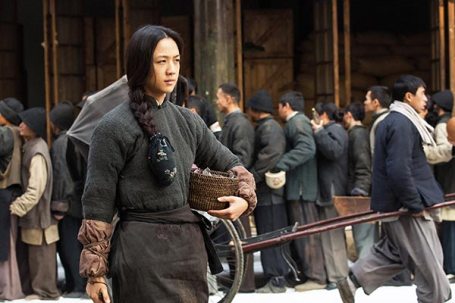
Mother’s generation, A Tale Of Three Cities, 2015
MC: We made this film for my parent’s generation because they all escaped–like Jackie Chan’s parents, they escaped from China to Hong Kong in the 1950s. And then we were born in Hong Kong. Their generation of people built modern Hong Kong. They have to start to build a home from zero and with no money, and they left everything behind in China. I think that people who could escape to Hong Kong at that time must be the best and the strongest.
BA: Is that the general consensus that the strongest came?
MC: I think so. If you look at Jackie Chan’s father, he’s very strong and very charismatic and you know that he can fight and shoot people, he can kill, and you know he’s a survivor.
BA: What about the ones who go to the US?
MC: I think so too. I mean people who survive. Of course the weaker ones would die or run away–
ALL: (laughs)
MC: Can they survive the poverty? The people who can survive and have families must be the strongest.
AL: A friend of mine told me that every time there’s a war— take for example, the second world war–he said that people who finally survive the concentration camps live the longest. They had long, long lives because they were so tough–they are the toughest people.
BA: What about the people who stayed in China?
MC: I think they survive all the different revolutions or whatever, the movements, so they are very I strong. Look at China now, there are very strong people.
BA: That’s pretty interesting if you think of all of this different migration going on through history.
MC: And now Europe. The same thing goes on, which is a more less the same at the ending of my film. People escape as they smuggle themselves on a fishing boat, and a lot of people are crammed at the bottom and a lot of people die even before they reached their destination.
BA: So why do you think you’re attracted to these kind stories?
MC: Because I want to make a film about my parent’s generation. I think I owe that generation a story. I didn’t have time to, for my mother. I didn’t listen to her story and then she died ten, eleven years ago. And at that time we already knew Jackie Chan’s father because we had made that documentary with him. And then we become friends afterwards. We drink and have dinner and we have a good time, and so he told us more stories about his lifetime.
MC: Jackie Chan’s mother passed away right after we finished the documentary.
BA: So was she able to see it?
AL: No, she was suffering from very serious Alzheimer’s and she could not quite know who’s who.
MC: Except Jackie Chan.
AL: Yeah, she would look at her son and she would smile a little bit. She looked at everybody else like, “Who are you? Who are you?”

Three divas, The Soong Sisters, 1999
BA: So this is the first co-production you’ve worked on with China?
MC: Not really. The Soong Sisters is also a co-production. It was at the beginning of co-production, before 1997.
AL: It was before the kind of co-production we have now. Because back then Hong Kong had all the money, all the people. So all the Hong Kong filmmakers would go to China to look for a studio to co-produce with and Hong Kong would provide all the money, the people, the creative people–
MC: And the boss. (laughs)
AL: And China would provide the location, the equipment, the props–
BA: Because the Chinese film industry wasn’t as big at that time–
AL: No, it wasn’t.
MC: And they didn’t have the money.
AL: Or the expertise.
MC: But now it’s definitely changed around.
AL: Yeah, now it’s the other way around.
BA: How has that affected the filmmaking process?
MC: Well, the censorship system is more or less a thing, except that now the Chinese production company controls everything so you have to report to them. Before, we had to report to the Hong Kong film company.
BA: Is there difference between what they expect?
MC: Actually, our film companies are very good and so we initiate the stories. They read the script and they liked it, so they didn’t interfere too much. And so we have the same creative freedom as we had before with The Soong Sisters. Even with casting and everything. We have the casting before and we submitted the scripts to the production company so they knew exactly what would happen. The cast, and the crew, everything we have already put together.
BA: So you put a package together? But then what when it goes to the Chinese censors?
MC: This is even better than The Soong Sisters. Back then the censors cut eighteen minutes from The Soong Sisters but this one they didn’t even cut anything. Just one or two places where I think the writing was wrong on the posters. Otherwise they didn’t touch the film.
BA: So then it was pretty smooth for you.
AL: It was much better than we thought or we feared.
BA: Had you heard that there would be problems? Or issues with co-production?
MC: Because of The Soong Sisters experience we were quite worried about the censorship.
BA: Because they cut so much before? But now you send the script out before you start shooting, right? To the SAPPRFT (State Administration of Press, Publication, Radio, Film and Television)?
MC: That was okay too. Because now I think it’s not so centralized. They allow the local government to decide. And the local government is usually friends with the film company. So sometimes for local productions they don’t even read the script. For local filmmakers, I think. Not for us–they have to read our script.
BA: Because you’re from Hong Kong?
MC: Yeah.
BA: Because I know that one of the things that I think some people worry about is that Hong Kong directors have to change scripts or the things that writings about because they’re working with Chinese censors.
MC: It’s not the censors but the production company. If you’re not a strong creative person and you are a director for hire, the production company will give you a script and you do it according to their wishes. But then there are also directors who submit their script to the production company and then they have creative freedom, if the production company accepts the scripts as they are.

Co-production dos and don’ts, The Soong Sisters, 1999
BA: Are there projects that you that you wanted to work on but you’re not able to do in China yet?
MC: Not really. Maybe because we can’t find investors mainly! (laughs)
AL: First of all, we more or less know what projects will pass or what will not pass.
BA: So you know ahead of time. You don’t submit into something that is not going to get approved.
AL: Yes, there are some taboos that they will never, never let you film, like too political, no ghost stories–
BA: That’s pretty curious to us in the US about the ghost stories. Why is that?
MC: They think maybe it will lead people to superstitions.
AL: It’s very funny. They will say, okay you cannot have a ghost in your movie but you can have a yao. Yao, meaning like a genie–let’s say an animal that turns into a genie. If you talk about a wolf that turns into human being, that is a yao, or a snake that turns into a very seductive woman, that is a yao. So you can have yao but you cannot have a ghost.
MC: I don’t really understand why, though. Yao can also turn people to superstitions.
AL: Yeah, for me yao is almost like a ghost because it does supernatural things.
MC: Maybe they think that a person cannot turn into a ghost.
AL: Right
BA: So it can be an animal turning into a person but not a person turning into a ghost.
MC: Because an animal turning into something is incredible. But the person turning into a ghost, people may believe it, maybe. I don’t know (laughs), I don’t know.
BA: Maybe you just don’t do it.
AL: Right. Nobody can quite understand that, but that’s what they say. No ghost. (laughs)
BA: Anything else? No politics right?
AL: No, no politics.
MC: No religious things–taboo.
BA: No religion? Nothing religious at all? Like even Buddhism?
MC: Better not!
(all laugh)
MC: I don’t know. I mean it’s different from time to time.
BA: No drug dealing?
MC: Drug dealing? Yes sometimes— drug dealing is allowed
BA: But you have to be punished right? (laughs) Oh! No gangsters!
MC: At the end, the police cannot be a bad person.
AL: It’s a little bit like in the 80s in Malaysia. They have similar censorship and so it was very funny because every time you have a bad cop, at the end in the movie you always see the bad cop’s twin brother coming in. It was like, “That was not me, that was my twin brother who was actually a gangster.”
MC: A bad cop must get killed or something. He must die at the end
BA: The police have to die if they’re bad?
AL: If he is a bad cop, he has to die!
BA: In Malaysia–so it’s same thing in China now?
MC: I think so. You remember the film Infernal Affairs.
BA: That’s right, they made a China version.
MC: A China version where Andy Lau died in the end!
AL: So funny! Another way to get around the system is that you always see the bad cop suddenly snaps awake and says, ”Oh! What a bad dream!”
BA/MC: (laughs)
MC: Yeah, if it is a dream then you can even have a ghost.
AL: I think so! I haven’t tried that. But as long as you have the bad cop waking up and saying, “I shouldn’t have done that, not even in my dream
BA: I remember there was a movie a couple of years ago where there were ghosts. Then it turned out to be a drug trip–
MC: Ah, like that person is crazy or something–
MC: Do you think the audience knows that there are restrictions?
MC: Oh, they know. They think it’s really a laugh!
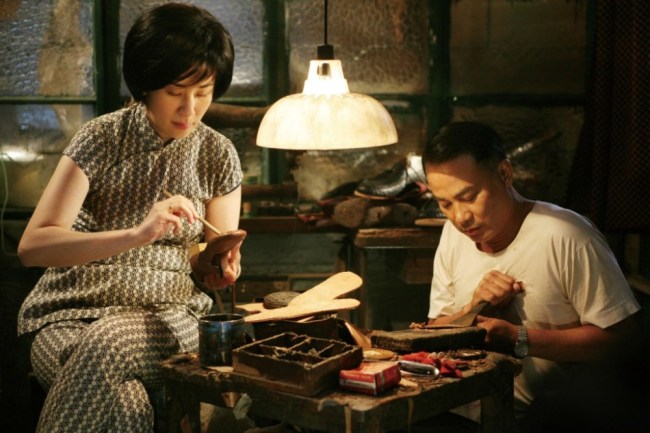
Hong Kong local, Echoes of the Rainbow, 2010
BA: What was the last time you made a film in Hong Kong? Was it Echoes Of The Rainbow? Do you still want to make films in Hong Kong that are only financed in Hong Kong?
MC: We never consciously say that we want to make films only in Hong Kong or in China or wherever because if you look at the films we produced, wherever it is suitable to make a film or wherever we have interesting topics or a good cast, we’ll make a film. At the beginning of our careers we made a film in New York, An Autumn’s Tale.
BA: I love that movie.
MC: And then we made a film in China, Eight Taels of Gold, which was before everybody did. Because that person went back to China, so we shot in China. So it’s a necessity of the location. I think as filmmakers we shouldn’t restrict ourselves to making films only in Hong Kong or China. I think we should widen our horizons and make films wherever there’s an interesting topic.
BA: Have you seen the film Ten Years?
MC: Not yet, but it is a big controversy in China.
AL: I think it was getting more and more popular in Hong Kong and then suddenly the cinema chain cut it because it was too popular.
MC: They got pressured from China.

The future, Ten Years, 2015
BA: How does that affect the filmmaking community when you find out something like that?
MC: I think the film director’s guild gave it a special jury award.
BA: I think it’s nominated for Best Picture also?
AL: Right
BA: That’s a very local film, right? Do you think that there is still an audience for very local films like that in Hong Kong?
MC: The box office is very good! I haven’t watched the film yet but it’s about ten years from now and the things that will happen to Hong Kong. The young people especially were very interested, and that reflects their fear and their concern about the future of Hong Kong.
BA: Do you think more films like that will be made and shown?
MC: For as long as they can make money then (laughs).
AL: There are still more other organizations, some people, who are you know worried about the future of Hong Kong, and then every now and then you would see these producers with the visions who will say okay you do it. Ten Years I think was produced by a religious organization in Hong Kong.
MC: They paid for it, but it was very cheap to make.
AL: It was done by five new directors on a shoestring budget.
BA: But then how did it get distributed? How do people find out?
MC: It was only shown in one cinema that’s for special films, independent films like that. So people heard about it and more and more people. Only it is shown in one cinema but I heard it’s full the a whole day, and so people heard about it and so more people lined up for the tickets and so it got bigger and bigger.
BA: And it spread to other theaters?
MC: Yes.
BA: And then it stopped.
MC: Right, and then it stopped.
BA: So that reflects a lot going on politically in Hong Kong as well, like the localization movement. How is that affecting people making movies in Hong Kong? Is it separate, the idea about politics and filmmaking? This one seems to b very close to that, but how about commercial filmmaking in Hong Kong?
MC: But in Hong Kong we don’t have the censorship problem so we can make any film. I think people will make any films they like while they can. You don’t know when the censorship system will come.
BA: Do you know if that’s making people make more of these kinds of movies right now because they can?
MC: I don’t know, actually. After Ten Years—
AL: People get more cautious?
MC: I don’t know about the commercial film companies—they would not dare to invest anymore in films like that but then of course there are independent filmmakers that who can make films like that in a very low budgets, or with volunteers.
BA: Does it seem like independent films get an audience in Hong Kong?
MC: It is not getting more and more popular–
AL: Ten Years was a minor hit and then it got bigger and bigger, when suddenly it was cut off from the cinemas
MC: Cut off because of the cinema owners, I think.
AL: Not because of the box office but because the owners or the distributors got worried.
MC: Because they also have business in China. So I think China can control people by the economy, with the business.
BA: So it doesn’t have to be threatening?
MC: No. They don’t even have to say anything. (laughs) That’s what they do with the rest of the world, too. Everybody who wants to do business with China has to kowtow, right? Even the queen has to get an invite (laughs).
BA: China is very powerful now, business-wise, but it’s unstable in a lot of ways.
MC: The economy is going down again.
AL: It never been stable, actually. In the past 100 years, China has never been stable. Although financially they are getting bigger and bigger. And even the film market is now number two in the world next to America. They say that in two to three years it will surpass the USA.
BA: Is that for mostly Chinese language-films that are locally produced in China?
MC: Yeah, I think the best-selling films. The Chinese films have surpassed the Hollywood films.
BA: Like the Chow Sing-Chi film (The Mermaid) is huge–
AL: Yeah.
MC: But then of course the Chinese government controls the release of Western films. They will not get the “golden time” (note: these are the times during the year such as the Spring Holiday when Western films are prohibited from screening in China).
AL: Sometimes when it (a Hollywood film) gets too big and too popular, they say stop, and then suddenly it disappears also!
BA: So how does that affect you all as filmmakers?
AL: It gets more difficult to get a producer to finance your film. Because they are worried and they only invest in films that they believe will make money.
MC: Yeah, the comedies and action films, they are safe.
BA: If you want to make something like this last film, for instance, that is less like an action film it’s harder to find financing?
MC: It’s always difficult to find investors for our films. For A Tale of Three Cities we spent about ten years trying to find an investor because it’s not a kind of mainstream thing and they don’t want to risk, you know.
There was one film company that expressed interest, and then we went into production. That was five years ago and we have the casting ready and everything. But then they calculated the budget and said it’s too high. Because it’s a film where people escape from one place to another we wanted to shoot in the actual locations–so from Anhui to Shanghai to Hong Kong and the big exodus and the illegal immigration and all the people and it’s is really expensive. They backed out because they think the budget is too high and they do not want to risk. Then we waited for another two years for Nansun Shi, who is a very good producer. She found us the money and so we started again.

Alex Law and Mabel Cheung, Crystal Bear Award, Berlin Film Festival, 2010
MC: Because Echoes Of The Rainbow is a low budget film it is easier and you get government sponsorship in Hong Kong but A Tale of Three Cities cost us like–
AL: 70 million–in American dollars that’s how much–a hundred? No, hmmm.
MC: It’s in renmenbi—70 million.
BA: So then Echoes was how much approximately?
MC: In Hong Kong dollars. It’s only–
AL: 12 million? 1 million USD
BA: But Echoes was very popular. It made back its money?
MC: Yes, yes.
BA: And won awards? But not anything like the Chow Sing-Chi movie.
MC/AL: (laughs)
BA: And that’s what they want right?
MC: With the investors, money is the first thing, you know. If they are not sure they will not invest. There are so many people who want to make movies.
BA: They all have these movie theaters now they have to fill, right?
MC: Oh, there are lots of films being made in the China. And maybe no more than half make it to cinemas.
AL: And maybe even less than that. The majority of Chinese movies don’t get shown theatrically and there’s so many films that you’ve never heard of.
BA: What did they do with them?
MC: They put them on the internet. Now the internet pays quite good money.
BA: But you want to make movies to be shown in theaters?
MC: Sometimes now people open the movies at the same time on the internet and also in the cinema.
BA: So then, do you think of yourself as a Hong Kong filmmaker? Or a Chinese filmmaker? Or just a filmmaker?
AL: I would say just a filmmaker
BA: But maybe twenty years ago you would say Hong Kong filmmaker?
AL: Yeah.
MC: Or basically a Hong Kong filmmaker who wants to be a filmmaker everywhere (laughs).
BA: I know some people make European co-productions—
MC: No, no.
BA: Then you have to find somebody French to be in your movie
MC/BA: (laughs)
BA: What do you think you’d like to do next? Do you have a project you’re working on? Or many projects probably?
MC: Yeah, we have ten scripts written already but we’re trying to get investors.
AL: Waiting for the producer–
MC: Actually every one of our film has problems with investors (laughs). So we’re used to it.
Shining Star: CAAMfest 2016

Art, life, and community, Mele Murals, 2016
It’s March so that must mean it’s time for CAAMfest, San Francisco’s annual Asian American film festival. As with past iterations, the ten-day fest includes a generous helping of documentaries, narratives, shorts, and animation from Asian and Asian American and diasporic directors.
Notable this year is the strong slate of Asian American documentaries, including the Opening Night film Tyrus, directed by Pam Tom (Two Lies), which looks at Chinese American animator Tyrus Wong, the man behind Disney’s Bambi, among other iconic characters. Also of note are Breathin’: The Eddy Zheng Story (dir. Ben Wang), which follows the life of the titular Chinese American poet and prison activist; Daze of Justice, (dir. Mike Siv) which looks at the trial of Khmer Rouge war criminals in Cambodia, and Ninth Floor (dir. Mina Shum), an examination of the historic 1969 occupation of Sir George Williams University in Montreal by Jamaican student activists.
Another doc of note is Tadashi Nakamura’s latest, Mele Murals. Nakamura (Jake Shimabukuro: Life On Four Strong; A Song For Ourselves) has again produced a winner in this beautiful and moving story about two Hawai’ian artists who gradually learn about themselves, their art, and their culture. Commissioned to lead the creation of a large-scale mural on the walls of a public school in Waimea, graffiti artists Estria Miyashiro and John “Prime” Hina gradually immerse themselves in Waimea’s history, culture, and community through their involvement with the mural project. As the project progresses Prime discovers a heretofore unexpressed connection with his Hawai’ian heritage, while Estria learns to overcome his ego and his need to be “the artist.” Featuring some beautiful digital cinematography, Nakamura’s film includes a remarkable sensitivity to and empathy with his subjects. Prime talks about growing up shuttling between his divorced parents and the resultant disconnect with his history and culture, and Estria develops an understanding of the importance of respecting the wishes of the group over individual needs and desires. Director Nakamura understands how human beings interact with place and the land and he often frames his shots with a lot of sky and horizon, placing the people as part of the landscape and not just centering the human experience. The final scene is powerful and moving and all I can say is MIC DROP.

It’s lit, Grass, 2016
Another fun film is Tanuj Chopra’s Grass, a narrative about a day in the life of two weedheads as they smoke a huge amount of cannabis and hang out in a park in Los Angeles. The plot, such as it is, follows Cam and her buddy Jinky as they contemplate a backpack full of buds that Cam’s boyfriend Austin has given them to deliver to a third party. Cam and Jinky can’t help sampling a bit of the goods and one thing leads to another as they gradually imbibe more and more of Austin’s weed. Mostly comprised of the absurdist running commentary by the increasingly lit protagonists, the film features spot-on dialog that effectively simulates the sensation of smoking many joints over a short period of time. Emily C. Chang and Pia Shah are hilarious as the stoned protagonists as they gradually become higher and more paranoid throughout the day. Chopra breaks up the two gals’ crazy rambling and obsessive discussions about pizza with a synthy score, hallucinatory bumpers featuring food porn and blooming time-lapse plants, and a few well-placed digital effects to heighten the generally baked proceedings.
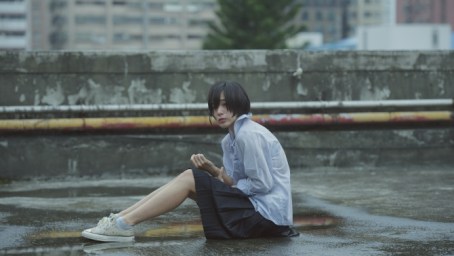
Crushed, The Kids, 2015
For those looking for films on the Asian tip, Taiwanese director Sunny Yu’s narrative The Kids is a poignant and effective drama about two teens facing adversity as they try to make their way in an adult world. Set in working-class Taipei, the film includes heartfelt and unaffected performances by the two young leads. The actors portray adolescent parents of an infant daughter who are slowly being crushed by the weight of grownup responsibilities. And for those looking for a more commercial Asian cinematic experience, CAAMfest is showing the South Korean historical The Royal Tailor, which stars the hot and charming Ko Soo as Lee Gong-jin, a rakish fashion designer who turns the Joseon court upside-down and who becomes romantically entangled with the young queen (played by ingénue Park Shin-Hye, star of hit K-dramas The Heirs, You’re Beautiful, and Pinocchio).
This is only the tip of the iceberg of CAAMfest’s bounteous programming slate, which also includes music shows, panels, and food events. Tickets are selling fast so go here to get yours before they’re gone.
Mighty Mighty: Mostly British Festival
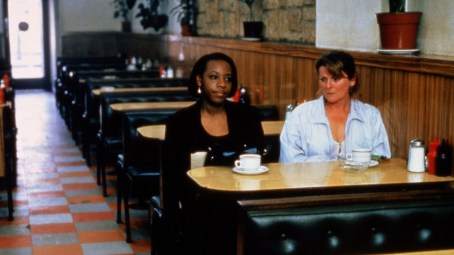
Hello, mum, Secrets & Lies, 1996
The Mostly British Film Festival is in full swing in San Francisco this week (closing night is Thursday Feb. 25) and it’s a great opportunity to see a lot of indie and classic movies that might not otherwise get theatrical release here in the states. Established eight years ago, this year’s festival includes movies from the UK and the former British empire, including Australia, and India.
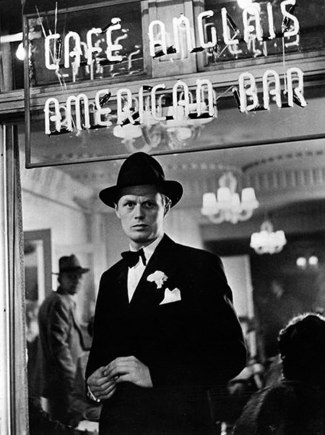
Widmark in London, Night and the City, 1950
Following along the current craze for film noir, MBFF screened the Richard Widmark/Gene Tierney vehicle Night and the City (1950). Directed by Jules Dassin after he fled to England following his blacklisting during the McCarthy era, the movie transplants the noir aesthetic to London, making great use of the city’s seedy docksides and proving that betrayal, backstabbing, conniving, and cheating aren’t strictly the domain of U.S. crime films. Richard Widmark does his thing, using his kinetic and expressionistic acting style to enliven the character of loser and conman Harry Fabian. Gene Tierney looks pretty as the moral center of the movie but doesn’t get to do a lot with a character that’s much less compelling than her leading turn in Laura. Despite an unintentionally comic climactic wrestling match, the film is an excellent example of noir’s examination of dark side of human existence.

Costumer extraodinaire Orry-Kelly and Marilyn, Women He’s Undressed, 2015
MBFF also screened Women He’s Undressed (2015) Gillian Armstrong’s documentary about legendary Hollywood costume designer Orry-Kelly. Orry-Kelly was a native of Australia (as is Armstrong) who made his way into the U.S. movie business during its golden age in the 1930-60s. Armstrong’s doc includes lots of Orry-Kelly’s glamorous costumes for stars such as Bette Davis, Marilyn Monroe, Ingrid Berman, and Barbara Stanwyck, and also outs Cary Grant in a big way, describing his on-again-off-again affair with Orry-Kelly over the many years of their relationship. Intercutting dramatic re-enactments of Orry-Kelly’s life, interviews with top Hollywood costume designers, and many examples of Orry-Kelly movie wardrobes, Women He’s Undressed is a fun and light little romp through gay Hollywood.

Sensitive and stocky Timothy Spall, Secrets & Lies, 1996
The highlight of the festival for me was the chance to see Mike Leigh’s Secrets & Lies on the big screen. I’m a latecomer to Leigh but now that I’ve seen the glory of his brilliant filmmaking I’m trying to see every movie of his that I can track down. As with most of his oevre, in Secrets & Lies Leigh explores the emotional devastation of complex human relationships. After the death of her adopted mother a young black woman discovers that her birth mother is white. Leigh’s film paints fully fleshed out pictures of each of the characters, who are brilliantly realized by actors Marianne Jean-Baptiste as Hortense, the adopted woman, Brenda Blethyn as Cynthia, her birth mother, and Timothy Spall, Cynthia’s brother. Curiously, although it’s a central element of the film, Secrets & Lies elides the narrative’s racial aspect. Although it’s significant that Hortense is black and Cynthia is white this is used mostly as a plot device and not as a means of exploring race relations in the UK in any depth. None of the white characters express any racial animosity toward Hortense and their shocked reactions to her seems to be based mostly on the fact that she is Cynthia’s long-lost daughter and not that she’s black. There’s a passing allusion to Cynthia’s father’s disapproval of Hortense’s biological father, a Jamaican man, but the film implies that the issue of Cynthia’s youth at the time and not the race of the her lover resulted in her giving up Hortense for adoption. Nonetheless, the movie is an excellent look at the overt and underlying tensions in family relations. Secrets & Lies also further indoctrinated me into the cult of Timothy Spall, who I love as a leading man despite his being stocky, doughy, and far from handsome. He’s without a doubt a sensitive, charismatic, and highly underrated actor and he was robbed last year for not getting an Academy Award Best Actor nomination for Mr. Turner (also directed by Leigh). I’m always happy to see him in performances outside of his role as comic relief in the Harry Potter franchise.
The Mostly British Film Festival concludes this Thursday, Feb. 25 with a screening of A Royal Night Out at the newly renovated Alamo Drafthouse in the Mission District. For more information and tickets go here.
The Darkest Star: Noir City Film Festival 2016

I was born when she kissed me. I died when she left me. I lived a few weeks while she loved me, In A Lonely Place, 1950
My first introduction to one of my favorite cinematic genres, film noir, was way back in grad school at the School of the Art Institute of Chicago, aka SAIC. Richard Peña, who at the time was the film programmer at the Lincoln Center in New York City, was doing a guest teaching stint at SAIC and one of the classes he taught was all about film noir. It was in that class that I was introduced to all the classics—Detour, The Big Heat, Out Of The Past, Farewell, My Lovely, Gun Crazy, They Live By Night, Pickup on South Street, Double Indemnity—as well as latter-day rarities such as Otto Preminger’s mid-60s British noir Bunny Lake Is Missing. That class had a huge impact on me and started my lifelong love for movies about the seamier side of life.
So I always look forward to seeing noir on the big screen and this year’s Noir City film festival at the glorious Castro Theater successfully slaked my thirst for dark cinema. I was in the middle of writing a series of long academic articles so I wasn’t able to make it to as many shows as I would’ve like to, but the ones that I saw were top-notch. Once again organizer Eddie Mueller and film programmer extraordinaire Anita Monga put together a captivating, engaging slate of films. After fourteen years of programming most of the classic noirs have been shown to death, so the challenge is in finding fresh material to fill the bill every year.
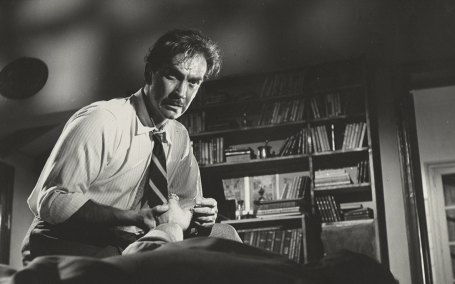
Noir en espanol, Los Tallos Amargos (The Bitter Stems, 1956)
In that vein my Noir City 2016 experience started with the Argentine film, Los Tallos Amargos (The Bitter Stems, 1956). Recently restored with the help of the Film Noir Foundation, Noir City’s parent organization, the movie is a gem, following the gradual descent of the flawed leading character, a Buenos Aires newsman who get caught up in a spiral of paranoid deception that eventually leads to murder. The film is on American Cinematographer’s Top 100 list (at #49) and it’s all about the chiaroscuro lighting and snazzy cinematography. The film demonstrates how well the noir esthetic travels, as it combines classic American noir conventions with Argentine innovations including Astor Piazzolla’s stunning tango-based score.
The highlight of the festival for me was the thrill of seeing In A Lonely Place (1950) again. I first saw this movie back in that life-changing class in grad school in Chicago and I always enjoy watching it. Humphrey Bogart and Gloria Grahame as star-crossed lovers are a noir film match made in heaven and their soulful performances complement the angsty storyline perfectly. Bogart is fearless as the tormented screenwriter Dixon Steele, bringing some of his darkest shadings to a character that supposedly very closely matched Bogie’s personality IRL. The chemistry between Bogart and Gloria Grahame is fierce and Grahame’s flawless performance matches Bogie beat for beat. Combining a sharp-eyed look at the world of mid-century Hollywood, Nicholas Ray’s masterful direction, and the one of the most emotionally devastating endings ever captured on celluloid means that once again I was completely wrecked at the film’s conclusion.
The second half of the Bogart double bill, The Two Mrs. Carrolls (1947), also shows off Bogie’s acting chops, and co-stars another member of noir royalty, Barbara Stanwyck. Set in England, The Two Mrs. Carrolls features Bogie as an anguished painter with a shady past who may or may not have killed his first wife in order to marry an ingénue, played by Stanwyck. Even though it’s not a great movie, Bogart and Stanwyck are undeniable in their talent, charisma, and screen presence. Acting-wise, they both hit a lot of notes in this one, effortless demonstrating their command of their craft. Barbara Stanwyck in particular utilizes the brilliant instrument that is her voice to convey a vast emotional range.

Kirk and Lana, entangled, The Bad and the Beautiful, 1952
The last film I caught at the festival was The Bad And The Beautiful (1952). A bit classier than your average noir, this MGM product, directed by Vincent Minnelli, stars A-listers Kirk Douglas and Lana Turner in a tale of greed and betrayal in Hollywood. The film is littered with great character actors, highlighted by Gloria Grahame’s cute and charming turn as a Southern belle married to an F. Scott Fitzgerald stand-in, played by Dick Powell. Kirk Douglas shows off his alpha male chops and Lana Turner is beautiful, glamorous, and vulnerable in her platinum blonde coif and on-fleek fur-trimmed and beaded gowns, making this considerably less seedy than, say, Detour or Double Indemnity. But noir’s world-weary cynicism is still present in this bitter tale of one man’s ascent to the top of Hollywood over the bodies and careers of some of his best friends and lovers.
I could have easily spent every night at the ten-day festival but alas my other life obligations made that impossible. But I’m more than happy for the chance to see a bunch of excellent noir on the big screen every year, complete with mid-century cosplaying audience members and free gin in the mezzanine between films, so I’m grateful for Noir City’s annual lovefest to one of my favorite film genres.
UPDATE: Noir City will be hitting the road later this year! Here are the confirmed dates and locations:
NOIR CITY Hollywood: April 15-24
NOIR CITY Austin: May 20-22
NOIR CITY Chicago: August 19-25
Go to the Noir City website for more updates as they happen.
Different Drum: Three big Asian films to see instead of Star Wars
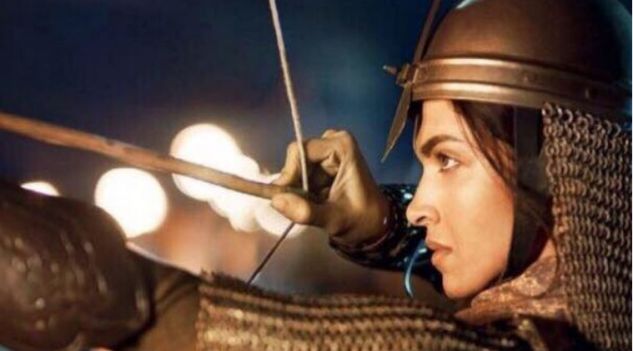
Deepika takes aim, Bajirao Mastani, 2015
The advent of the new S*** W*** release means that no other big Hollywood movies are opening this weekend, which has an added hidden bonus for fans of Asian cinema. Although most US multiplexes have booked the return of Han, Leia, and Chewie, theaters still need to fill out their calendar to give the illusion of choice for moviegoers. Aside from a few holdovers from past weeks and some other counterprogramming hoping to catch the overflow of those not fortunate enough to have gotten advance tix to SW, there are three big Asian movie spectacles opening up this weekend in San Francisco.

Shah Rukh Khan, Lord of all he surveys, Dilwale, 2015
Included among those are two huge Bollywood blockbusters featuring some of the biggest stars in India. Dilwale includes the legendary jodi of the baadshah of Bollywood, Shah Rukh Khan, and Kajol, the violet-eyed movie queen who has starred with him in several giant hits over the years. Dilwale purports to be a romance/action film and the trailer includes longing glances, exploding cars, automatic weapons, slapstick masala humor, and pretty European scenery, so it will either find a huge audience in South Asia and beyond or fall completely flat at the box office. SRK has a massive fanbase and a lot of goodwill banked over the years so despite the film’s apparent formulaicness I’m betting that the former rather than the latter will occur.

Ranveer brings it, Bajirao Mastani, 2015
Going head to head against Dilwale in India and here in North America is Bajirao Mastani, another lavish spectacle starring New Gen superstars Ranveer Singh (Lootera; Gunday), Deepika Padukone (Chennai Express; Tamasha), and Priyanka Chopra (Dil Dhadakne Do; Mary Kom). The latest historical epic from quirky visionary Sanjay Leela Bhansali (Saawariya; Devdas), Bajirao Mastani follows the story of the famous Maratha general Peshwa Bajirao and his two romantic interests, a warrior princess (Padukone) and Bajirao’s loyal wife (Chopra). As with all Bhansali films the art direction is completely gorgeous and over the top, this time utilizing a beige and sandstone palette accented by deep, saturated reds and greens. Real-life lovers Singh and Padukone were brilliant together in Bhansali’s 2013 Romeo and Juliet epic Goliyon Ki Raasleela Ram Leela and hopefully Bajirao Mastani recaptures some of their intense chemistry. Chopra is one of Bollywood’s best actresses, with presence, gravity, and beauty, and she’s also been making inroads in Hollywood lately, most recently as the star of the ABC action series Quantico.

Shu Qi, Tomb Raider, Mojin: The Lost Legend, 2015
Rounding out the clutch of Asian film spectacles opening this weekend is Mojin: The Lost Legend, another big-budget CGI spectacle from mainland China’s movie mill. This one is full of A-list Chinese stars including Chen Kun, Huang Bo, Shu Qi, and Angelababy, with an appearance by young Hong Kong actress Cherry Ngan (The Way We Dance) as a Japanese schoolgirl assassin. The storyline follows a pair of down-and-out adventurers, Hu Bayi (Chen Kun) and Wang Kaixuan (Huang Bo), former tomb raiders and treasure hunters who end up scraping by on the streets of New York City Chinatown in 1986. Somehow they are enlisted to rob a tomb they’d disastrously encountered twenty years prior, and the movie follows their exploits as they travel to Mongolia to find their fate. Shirley (Shu Qi) goes along for the ride based on poorly sketched and gratuitous romantic subplot with Hu.
Director Wu Ershan (Painted Skin: The Resurrection) continues his patented ADHD style of filmmaking, as the disjointed plot jumps back and forth in time from China to Mongolia to New York City. The film intersperses large swaths of nonsensical exposition with lackluster fighting and action scenes loaded with egregious CGI. The cast gamely attempts to inject some energy into the witless proceedings, with the usually excellent Huang Bo in particular trying to enliven things with scenery-chewing and profanity, but the film remains a paper-thin excuse for a string of not-very-spooky tomb-based action scenes and strangely juxtaposed set pieces. I actually enjoyed the maniacal weirdness of Wu Ershan’s first feature, The Butcher, the Chef and the Swordsman (2010) but here the scenario falls pretty flat, as the effects overwhelm the story and characterizations.
My favorite part of the movie is the flashback to the Cultural Revolution that includes clueless Red Guards giddily singing CCP propaganda songs and foolishly deriding ghosts and spirits for being counterrevolutionary, but this sequence of political irreverence is short-lived. The rest of the movie relies on a turgid plot and lack of characterization that is sorely lacking in wit or originality.
So if you’re not feeling The Force this week, these are a few options for cinematic spectacle instead. Catch ’em while you can.
UPDATE: Saw both Dilwale and Bajirao Mastani last week. Dilwale: not good. A few brief incandescent moments of SRK-Kajol magic surrounded by many long passages of utterly boring masala crap. I love SRK but this is a shyte movie.
Bajirao Mastani, on the other hand, is utterly enthralling. From its very first moment I was completely hooked. Top-notch art direction, costumes, songs, and performances, with Ranveer Singh bringing the swagga as Peshwa Bajirao, matched in fierceness and intensity by Deepika Padukone as his warrior princess lover. Priyanka Chopra as the third leg of the love triangle is strong and steady. The film is almost too gorgeous in its warm beige and red color palette, with crazy detailed costumes and the best pearl and jewel earrings on men that I’ve ever seen. The songs and choreography don’t stop, with old-school dance sequences featuring a cast of dozens in moving in fluid unison. A complete delight for the eyes and ears, with a passionate love story at its core. Highly recommended.
opens Dec. 18, 2015
Dilwale, dir. Rohit Shetty
Century San Francisco Centre 9 and XD
Bajirao Mastani, dir. Sanjay Leela Bhansali
Century San Francisco Centre 9
Mojin: The Lost Legend, dir. Wu Ershan
AMC Van Ness 14, San Francisco
Shall We Talk: Coming Home and Office movie reviews

Eason and a cast of thousands, Office, 2015
In an interesting coincidence, two famous Chinese-language film directors have films opening in the U.S. this weekend, but their respective movies might puzzle the casual viewer expecting a certain type of cinematic output from each director. But on closer inspection both movies are in some ways throwbacks to early periods of each director’s filmmaking careers.
Starting with Hero (2002) and continuing through House of Flying Daggers (2002), Curse of the Golden Flower (2006), and The Flowers Of War (2011), Zhang Yimou for the most part in the 21st century made a series of glossy commercial films that have been successful marketed in the West, and he capped off this run of box-office hits by overseeing the much-lauded opening ceremony for the 2008 Beijing Olympics. So viewers who only started following Zhang’s career in the 21st century might think that his oeuvre is all about wire-fu, movie stars, a hypersaturated color palette, and an affinity for spectacle. But Zhang started out in the 1980s as one of the so-called Fifth Generation of Chinese directors who were noted for their realistic styles and politically astute commentary. Often depicting the ordinary lives of peasants in China’s rural countryside and usually starring Gong Li, Zhang’s first several features were poetic ruminations on the effects on everyday people of various types of systematic repression. These movies, including Ju Dou, Red Sorghum, Raise the Red Lantern, and The Story of Qiu Ju, made Zhang the darling of the arthouse film festival set, so it was a bit of a surprise when he busted out with a string of martial-arts fantasies at the turn of the 21st century. But those later films were pretty big at the box office and thus many folks only know Zhang as a director of big-budget spectacles, so it might seem like a surprise that Zhang’s latest film, Coming Home, includes neither martial arts nor brightly colored costumes and sets. Astute observers, however, will realize that the movie actually harkens back to Zhang’s earlier Fifth Generation output from the 1980s and 90s.

Chen and Gong try to remember, Coming Home, 2015
Coming Home is a family drama set during and just after the Cultural Revolution in China and is based on the novel The Criminal Lu Yanshi by popular Chinese author Yan Geling (whose novella 13 Flowers of Nanjing was the basis of Zhang’s recent film The Flowers of War). The movie opens as former professor Lu Yanshi (Chen Daoming) surreptitiously arrives back at his town after escaping from a re-education camp. His devoted wife Feng Wanyu (Gong Li) attempts to meet him but is thwarted by the Chinese secret police and Lu is sent back to prison. Lu and Feng’s teenage daughter Dandan (Zhang Huiwen), an aspiring ballerina, resents her dad’s outlaw status since it’s messing with her career plans to play the lead soldier/dancer in the school play, which Zhang drolly depicts as leftist musical featuring dancers en pointe who are wielding rifles in the service of the revolution. Cut to several years later, after the end of the Cultural Revolution in the mid-70s. Lu again returns home but Feng has become addled from either a blow to the head, PTSD, early-onset Alzheimer’s, or a combination of all three, and thus doesn’t recognize him. The film then follows Lu’s attempts to reconcile with the amnesiac Feng.
Coming Home’s muted mis en scene at first seems a million miles away from the brightly colored, glossy sheen of Zhang’s martial arts movies but the film’s meticulous art direction, featuring scuffed walls, dull brick and wooden buildings, and threadbare wool coats and trousers, reflects Zhang’s careful attention to period detail and authenticity. The usually glamorous Gong Li tones down her customary high-wattage gorgeousness to play the dowdy teacher Feng, but in her performance she seems to have acting awards in mind, as she weeps piteously over Lu’s absence, then affects a glassy-eyed dolor to simulate mental confusion. (In fact, Gong was nominated for the first time for Best Actress for Taiwan’s 2014 Golden Horse award but lost out to Chen Shiang-chyi. In glorious diva fashion Gong subsequently pitched a fit, calling the Golden Horse unprofessional and vowing never to attend again.)

Chen Daoming shabby chic, Coming Home, 2015
Although Gong is a bit off, Chen Daoming right on the money as the long-suffering Lu. His world-weary eyes and sorrowful demeanor speak volumes about Lu’s personal traumas and his experience becomes a metaphor for the human cost of China’s various social and political upheavals. Through Chen’s sensitive and understated performance the film becomes an allegory about the erasure of memory and the amnesia of the Cultural Revolution. In this way the movie hearkens back to director Zhang’s earlier films that focused on political and cultural critique, which preceded his more recent, more commercial output. Zhang also recently released another film set during the Cultural Revolution, Under The Hawthorne Tree, but his next project is the blockbuster Andy Lau-Matt Damon China/US-coproduction action fantasy The Great Wall. So he’s nothing if not versatile—

Chow and Chang, Office, 2015
Also releasing in North America this weekend is the latest from Johnnie To, Office. Like Zhang’s movie, Office at first may seem like an anomaly in its director’s catalog but in fact the film, which is a musical comedy, has a lot in common with To’s past work. Though To is best known in the West for hardboiled crime movies like The Mission, Election, Exiled, and his last film, Drug War, he’s got a much more varied back-catalog than that. To got his start directing at Hong Kong’s television studio TVB and there he directed everything from romances to comedies to martial arts historicals, including the famous period drama The Yang Family Saga. His prolific filmmaking output includes the fantasy action films The Heroic Trio and The Executioners, the comedy farces The Eighth Happiness and The Fun, The Luck, The Tycoon, and Stephen Chow vehicles Justice, My Foot and The Mad Monk. Although his crime films have won him much love among Asian film fanpeople, To’s most commercially successful movies have been romcoms such as Needing You and Don’t Go Breakin’ My Heart 1 & 2.
So it’s not as far-fetched as it might initially seem to be that Office is a musical, with all of its leads (except Chow Yun-Fat) singing at least one song in the film. The movie is a typical workplace drama infused with cogent commentary about the crisis of capitalism, The storyline follows two young acolytes at their first days on the job at Jones & Sun, a seemingly innocuous Hong Kong cosmetics company that’s actually in the throes of backstabbing and backroom deals. President Ho (Chow Yun-Fat) has a wife in a coma and Chinese investors knocking at his company’s door, while CEO Cheung Wai (Sylvia Chang) struggles to keep the company’s profits up and its products relevant. Salesman Wong Dawai (Eason Chan) is climbing the corporate ladder and is not averse to using personal relationships, including ones with CEO Cheung as well as fellow office drone Sophie (Tang Wei), in order to advance. Youngsters Kat (Tien Hsin) and Lee Xiang (Wang Ziyi) round out the ensemble.

Eason and Wei meet cute, Office, 2015
But despite a stellar cast who admirably perform both acting and singing duties (with Cantopop superstar Eason Chan being the best and Tang Wei the worst among the vocalists), the real star of the show is the astounding art direction and set design by acclaimed veteran William Chang Suk Ping, who has won renown as the production and/or costume designer for innumerable classic Hong Kong films including In The Mood For Love, The Grandmaster, and Dragon Inn. Office was shot completely on a soundstage, with some outdoor scenes simulated via green screen, and Chang’s beautiful, stylized set dictates the mood of the film. Comprised mostly of brightly colored bars and rails, the set resembles a massive, skeletal architectural cage that encloses the action and the characters and lends a hermetically sealed, slightly claustrophobic feel to the film. The artificial staginess of the movie, with its simulated spaces and multiple levels of activity, recalls a Broadway musical more than a movie musical, with the set dominated by a huge, slowly revolving clockface. No pretense of realism is made in the film’s use of space, color, and structural elements, which adds to the knowing fakery of the movie’s design.

Production design a go go, Office, 2015
Despite To being the titular director, the film displays the strong influence of Sylvia Chang, who wrote and produced the film as well as playing the lead as CEO Cheung Wai, and who has an impressive resume as the director of films such as Tempting Heart (1999), 20 30 40 (2004), and Murmurs of the Heart (2014). Chang’s hand is clearly evident in the narrative’s complex personal relationships and its focus on the collateral damage of corporate machinations. To’s romcom background also comes the fore as the movie’s love hexangle recalls the similarly structured romantic entanglement in his 2014 movie Don’t Go Breakin’ My Heart 2.
The weakest element of the movie’s musical conceit is its curious lack of interesting choreography. Despite taking place on a boldly designed stage set that cries out for equally bold movement through and across it, the movement during the musical numbers is surprisingly limited. The action during the songs in Office consists of mostly of synchronized head nods and a few characters walking in rhythm together. Office could stand to take a few lessons from Bollywood musicals, whose song and dance numbers fill every inch of the frame with dynamic, kinetic movement.
But all in all, the movie is a fascinating beast that promises to be brilliant up on the big screen. After first seeing in via online screener with tiny white subtitles I’m looking forward to watching it again in a movie theater where it belongs, and so should everyone, in my humble opinion.
dir. Zhang Yimou
opens Fri. Sept. 18
dir. Johnnie To
opens Fri. Sept, 18, 2015
Death or Glory: Memories of the Sword movie review

Lee in snow, Memories of the Sword, 2015
A new South Korean action movie is usually a cause for celebration in my house and after the trifecta of ass-kicking historicals last year (The Pirates; Kundo: Age of the Rampant, and The Admiral: Roaring Currents) I was looking forward to seeing Memories of the Sword, which opens this weekend in North America. As a big Lee Byung-hun fangirl, I mean, scholar, I’m also happy to see one of my favorite actors in a genuine starring role after suffering through his supporting roles in a string of mediocre Hollywood movies (GI Joe 1 & 2; Red 2, and Terminator: Genysis). And since LBH’s last historical film, Masquerade, was outstanding, I had high hopes for this new one. Alas, Memories of the Sword is no Masquerade, and doesn’t stand up to the big three historicals from last year either.
I should’ve known that things were amiss when Memories took forever to be released. Although it began production in 2013 and was completed in 2014, the film has languished for many months due to a salacious blackmailing scandal involving LBH (who’s married) and a couple of younger women. That tawdry episode concluded earlier this year with prison sentences for the two women.
So despite a big-name cast that also includes Jeon Do-yeon (The Housemaid) and Lee Junho from boy band 2PM, the bloom is off the rose as audience buzz for this one has died down to a murmur. But the film has other flaws that make this one more of a miss than a hit.

Fighting, Memories of the Sword, 2015
Right off the bat the film throws down the wire-fu gauntlet as young swordswoman Hong-Yi (Kim Go-eun) leaps many feet over a tall sunflower, then bounds high in the air across a grassy field. Following a swordfighting competition that she enters in drag, Hong-Yi encounters Yu-Baek (LBH) who is intrigued by her martial arts skills. The film then follows a convoluted narrative of betrayal, ambition, revenge, and concealed identity involving Hong-Yi, Yu-Baek, and Hong-Yi’s foster mother Sul Rang (Jeon Do-Yeon).
Although the movie possesses the usual sheen and polish of South Korean commercial movies, the film is burdened by a vastly overcomplicated plot and a dour overall demeanor. Everyone has something to hide and the angst is laid on pretty thick as characters weep regretfully while slashing and stabbing one another. The interlocking interpersonal relationships recall the intricacies of Ang Lee’s Crouching Tiger, Hidden Dragon minus Lee’s poeticism and his strong sense of narrative rhythm, and in fact the film resembles CTHD in its costuming, its scenes of fights in bamboo forests, and its complicated court intrigue.
Yet Memories is missing Ang Lee’s masterful touch, as the film’s characters repeatedly explain their motivations and relationships to one another through long, anguished speeches or angry outbursts. Not much is left to subtlety or suggestion, yet the film still manages to bog down in confusing plot details. It’s not helpful either that most of the characters have two names and identities, which is not a spoiler in any way.

Chopped, Memories of the Sword, 2015
Lee Byung-Hun as usual cuts a commanding figure as the ambitious Yoo-Baek, and Jeon Do-Yeon is her expressive and emotive self. The younger actors, Kim Go-eun and Lee Junho, are also fine, though Lee doesn’t have a lot to do. Kim is convincing as the young swordswoman driven to vengeance by forces outside of her control and it’s nice to have a female protagonist in a martial arts movie. But the film feels murky and overly serious, with a leaden sense of import that drags down the story. Some of the images are quite lovely, including a beautiful swordfighting scene in a field of pale, feathery grasses, but too often the movie falls back on clichés like the metallic ringing of a sword drawn from its sheath that’s repeated a few too many times. In addition, when their demise would be inconvenient to the plot, several of the main characters have the death-defying ability to survive seemingly fatal sword wounds.
It’s always fun to see the lavishness of a South Korean movie on the big screen but with Memories as well as last month’s Assassination, both films feel a bit overstuffed. In both cases the over-the-top aesthetic of South Korean commercial cinema works to each film’s detriment, smothering any sense of artistry or nuance under a blanket of glossy emptiness.
Memories of the Sword, dir. Park Heung-sik
opens Fri. Aug. 28, 2015
AMC Metreon 16
135 4th St Suite 3000, San Francisco, CA 94103
Addicted To Chaos: Ringo Lam’s Wild City film review

Louis Koo and pistol, Wild City, 2015
Back in 1980s and 90s when Hong Kong cinema ruled the world, the undisputed god of acting was Chow Yun-Fat and his most renowned collaborator was the king of heroic bloodshed, John Woo. But close on Woo’s heels was his grittier, darker compatriot, Ringo Lam, who also made several classic HK crime movies starring Chow. Beginning with City on Fire and continuing through Prison On Fire 1 and 2, Wild Search, and Full Contact, Chow and Lam worked on a string of indispensible action movies that defined the crime film genre in the former Crown Colony.
But after directing eleven films from 1987-1995, many of them excellent and some of them masterpieces, Lam’s output declined—in 1997 he made a crappy Hollywood movie with Jean Claude Van Damme, then returned to Hong Kong to direct the brutal and amazing post-handover cop-and-criminal film Full Alert. But since 1997 Lam has only directed six films. So it was with much rejoicing that Hong Kong movie fanpeople reacted to the news last year that Lam was directing his first film since 2002 and was returning to Hong Kong to make it. That film, Wild City, opens this weekend in the US on a near day-and-date release with China and a month before its debut in Hong Kong.
The story concerns T-Man, a former cop who comes across a forlorn woman drinking in the bar he now owns. As with many dames in crime movies she’s nothing but trouble, and soon T-Man is embroiled in a mess, along with his hotheaded half-brother Chung, running across gangsters, thieves, crooks, and cheaters.
The movie is a throwback to Lam’s glory days and focuses on themes and situations from his classic films with Chow. Not only that but it’s set en la calle in Hong Kong and much of it is in very vernacular Cantonese. If you close your eyes you can almost imagine that it’s 1992 all over again, except that since this is the 21st century the movie stars the ubiquitous Louis Koo and half of the cast are from Taiwan or the PRC, with the dialogue littered with the unmistakable presence of Putonghua.
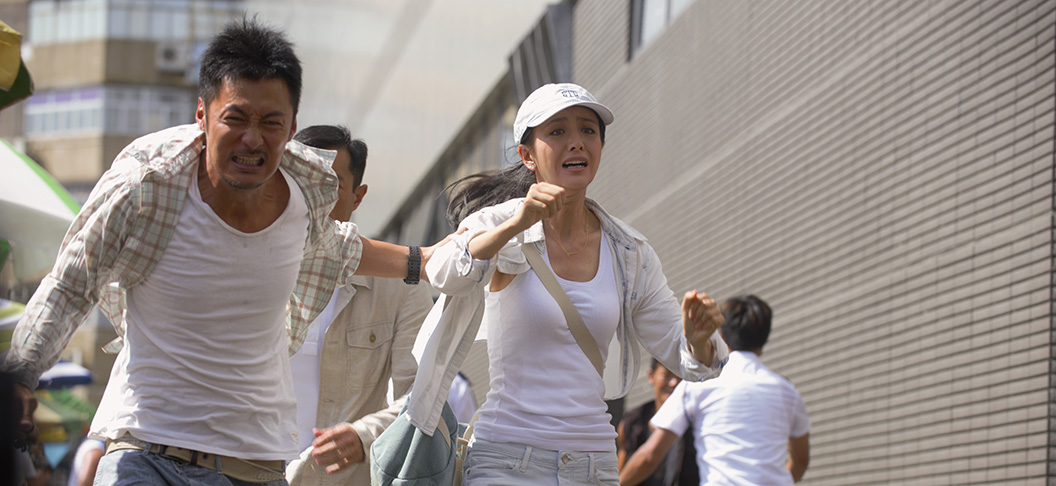
Running, Wild City, 2015
Like a lot of Lam’s ouevre, Wild City draws on several classic film noir tropes. Tong Liya plays the beautiful and mysterious woman with a dark past. Louis Koo is the disgraced former cop with the impulsive, loose cannon half-brother (Shawn Yue) whose nuts he repeatedly has to pull from the fire. The bad guys, led by the moody Joseph Chang (here playing against type as a Taiwanese gangster) are ruthless yet possess a strong sense of loyalty and brotherhood. The nighttime streets of Hong Kong are dark and slicked with rain and Lam’s camera roams restlessly with its characters through the city’s environs.
As with Lam’s past films, the characters are nuanced and shaded, with the good guys displaying flaws and the bad guys showing grief and remorse. Lam also includes his trademark social critique—the very first image of the film is of a Hong Kong 1000 dollar bill that dissolves into a nighttime skyline of the city. The film then cuts to a street-level view of crowds of people in the city at night, lingering on an image of a homeless woman living in a cardboard box, with Louis Koo’s voiceover stating, “We are all driven by one issue: money.” The plot turns on the rampant greed ruining the lives of the characters as well as destroying Hong Kong, and much of the narrative focuses on the looming presence of a shiny suitcase full of gold and currency, with its corrosive influence a metaphor for capitalism’s corrupt effects. The film also reflects Hong Kong’s current state of anxiety, with several characters expressing the difficulty in finding a place to call home.

Pile-up, WIld City, 2015
No one directs an action sequence like Ringo Lam and Wild City includes a crackling car chase, violent murders, and hand-to-hand beatdowns in close quarters. There are also swaggering triads, corrupt lawyers and businessmen, and other denizens of Lam’s nocturnal Hong Kong universe that add a general sense of foreboding to the proceedings. Yet at the same time Lam allows for a glimmer of hope in the darkness, and the film’s conclusion is perhaps less dark and cynical than his past work. I wouldn’t go so far as to say that Lam has mellowed but SPOILER not everything completely goes south like it might have in his past films.
If you’ve never experienced a Ringo Lam Hong Kong movie before, now is the time. Wild City won’t stay in theaters long, so this is your chance to witness some of what made Hong Kong the center of the moviemaking universe back in the day. And if the film does well enough, Lam will be able to get financing to direct more movies and we won’t have to wait eight years for his next joint to drop.
directed by Ringo Lam
opens July 31, 2015
Century 20 Daly City
1901 Junipero Serra Blvd
Daly City, CA 94015
Four Star
2200 Clement St
San Francisco, CA 94121
and selected theaters in North America
Willing: New Lav Diaz film at Yerba Buena Center for the Arts

Immersive, From What Is Before, 2014
I did not come willingly to Lav Diaz. My personal cinematic preferences run to fast and economical 90 minute Hong Kong action films—one of my favorite films is Johnnie To’s 84-minute gangster flick The Mission, which manages to complete its main narrative arc in about 50 minutes, with a 30 minute coda tying up the loose ends. So the idea of sitting through a film by a director known for his ten-hour epics wasn’t high on my list of things to do, and while I wasn’t exactly kicking and screaming when I was talked into attending my first Lav Diaz film, I did approach it with some trepidation. But after experiencing that film, the 4.5 hour Norte: The End of History, I was hooked.
I actively sought out my second Lav Diaz experience (which is the best way to describe viewing his films), the 2014 documentary Storm Children: Book One, which I thought was pretty brilliant. Despite its relatively brief running time of 2.5 hours the film is still an immersive experience, shot in black-and-white and with very little spoken dialog. As in Norte, Diaz uses extremely long, mostly stationary shots to emphasize the action within the frame, which at times consists of very little action at all. Recording the aftermath of 2013’s Typhoon Yolanda (also known as Haiyan) on the seaside village of Tacloban, Diaz’s technique makes the viewer become an active participant in the revelations of the film. The documentary opens with a long static shot of cars driving through water that has all but submerged the roadway, the sound of the swishing tires comprising most of the soundtrack. Following this, Diaz’s camera observes a couple kids as they attempt to fish something out of a fast-moving stream of flotsam below a bridge. This takes possibly twenty and up to thirty minutes of screen time. Another sequence documents more kids digging a mysterious hole in a great mound of sand or shale, very gradually unearthing various items that are never really identified. Again, this sequence runs for very many minutes with almost no camera movement or edits. The effect of these extremely long static takes induces an almost palpable shift in the ways one views a film—instead of the brief and restless, cursory absorption of a surfeit of visual information, the viewer sinks into reading a few simple yet significant actions. This type of perception is almost hypnotic and literally alters the consciousness of the audience, making the viewer’s experience highly visceral and immersive.

Participatory, Storm Children: Book One, 2013
Diaz’s slow-burning technique also allows viewer to make significant narrative and visual discoveries at their own pace—he lays out the information without overtly drawing attention to it, which allows viewers to puzzle out the meaning themselves. A great deal of the latter part of Storm Children takes place near the shoreline where kids play amongst huge ships. It takes a while to realize that the ships are all aground, some many, many yards onto dry land, and that the typhoon’s force beached them with its immense strength and violence. It’s a thrilling and singular way to receive cinematic information and adds a depth and level of intellectual and visceral participation to the viewing experience like no other.

Willing, From What Is Before, 2014
Thus it’s with high expectations that I go now to my next Lav Diaz screening. Upcoming as part of the Yerba Buena Center for the Arts New Filipino Cinema series, From What is Before (Mula sa kung ano ang noon), which won the top prize at the 2014 Locarno Film Festival, screens June 27 and 28. A black-and-white narrative about the early days of dictator Ferdinand Marcos’ regime and its effects on a remote village in the Philippines, the film again utilizes very long, almost static shots and black and white cinematography. As with previous Diaz films the telling is as important as the tale, and the tale here, the advent of Marcos’ despoiling of the Philippines, is very important indeed. It’s a rare chance to go through the immersive experience of a Lav Diaz theatrical film screening and is not to be missed.
From What is Before (Mula sa kung ano ang noon)
dir. Lav Diaz, 338 minutes
June 27 & 28, 2015
2pm
Yerba Buena Center for the Arts
I Would Die 4 U: Black Coal, Thin Ice at the San Francisco International Film Festival
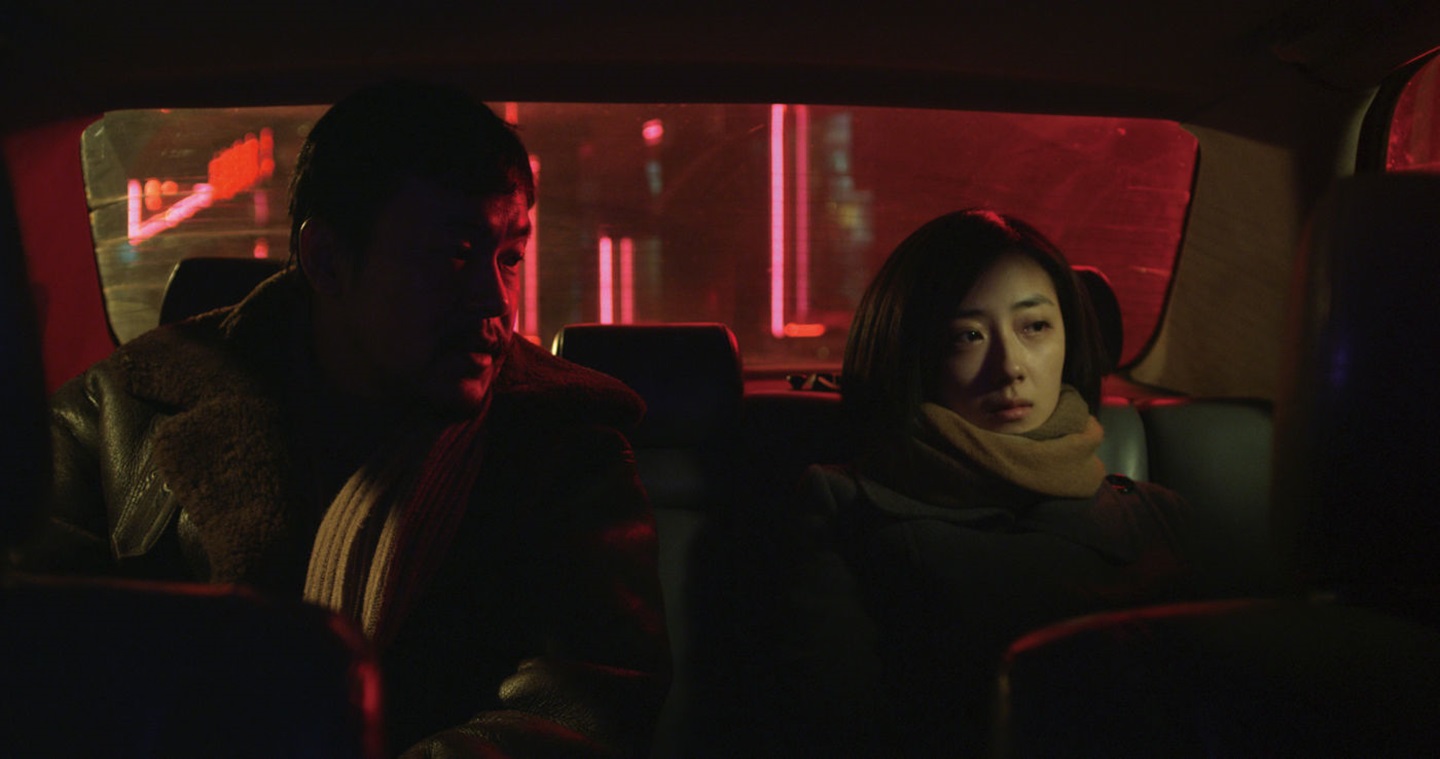
Complicit, Black Coal, Thin Ice, 2014
Just got back into town and am diving into the thick of things at this year’s San Francisco International Film Festival, now running through May 7. I’m leaving town again on Sunday so I’m cramming as many screenings into the next five days as I can manage. Luckily there are plenty of great films to see. I’m hoping to make it to the Viggo Mortenson vehicle Jauja, by Argentine director Lisandro Alonso and featuring Viggo in a role that’s tailor-made for him as a Danish military engineer caught up in unrest in 19th-century Patagonia. Viggo he gets to acts in two of his native tongues, Danish and Spanish, and the film is a magical-realist version of the historical events it depicts.
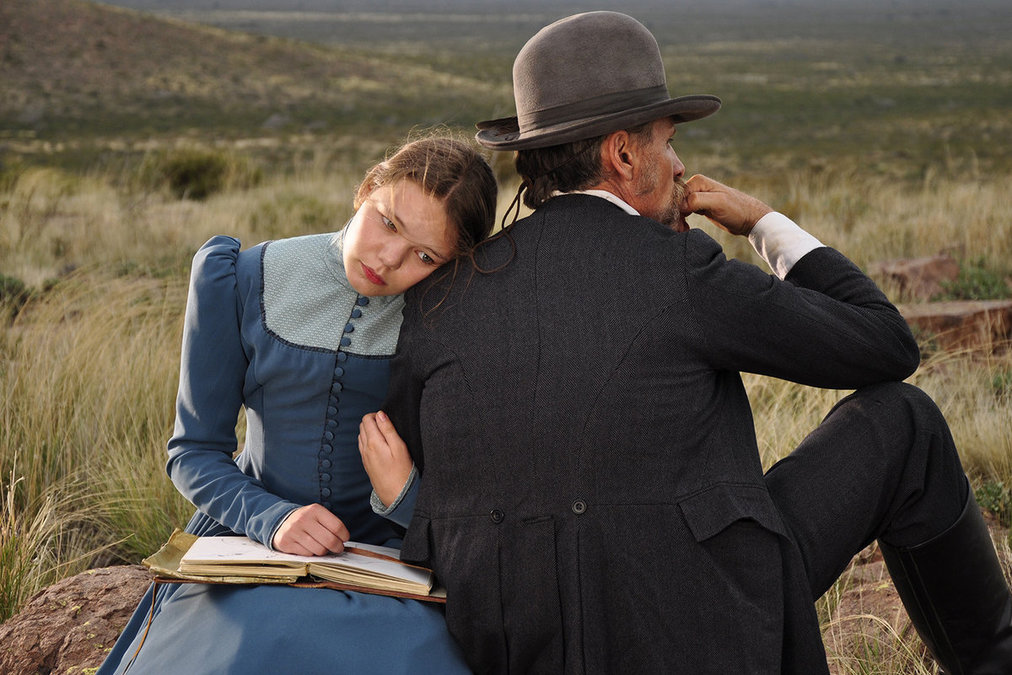
Viggo Mortensen, polyglot, Jauja, 2014
Also on the docket is the 3-D version of Tsui Hark’s The Taking of Tiger Mountain, Hong Kong director Peter Chan’s child-abduction drama Dearest, and City of Gold, the documentary about Pulitzer-prize winning Los Angeles food critic and mensch Jonathan Gold. If I were in town next week I’d surely go see the South Korean thriller A Hard Day but I’m hopeful that it will make it to a theatrical release stateside sometime soon. SFIFF also plays host to Jenni Olsen’s newest feature-length experimental documentary/essay film The Royal Road, which looks at butch longing and unrequited love against the backdrop of El Camino Real, the historic king’s road that stretches nearly the length of California. Indian director Chaitanya Tamhane’s independent feature Court also screens this week, taking a character-based, neo-realist look at the absurdities of the Mumbai judicial system and its surrounding social and cultural milieu, with results that are about as anti-Bollywood as you can get.
Mumbai legalities, Court, 2015
One of my favorite films from last year, director Diao Yinan’s neo-noir Black Coal, Thin Ice, has one more screening this week at the festival and it’s definitely a don’t-miss movie. From the very start, with shots of random body parts mixed in among train cars of coal shipping throughout the frozen northern regions of China, the film puts a distinctive spin on the classic noir structure. The film follows Zhang (Liao Fan), a less-than-scrupulous cop, as he becomes more and more deeply involved in the mysterious disappearances and murders of various hapless men, all of whom eventually seem to be tied to a classic black-widow character, played by the amazing Taiwanese actress Guey Lun-Mei.

Bleakness, Black Coal, Thin Ice, 2014
Looping back and forth in time and place, with bursts of intense and unexpected violence, the movie effortlessly transfers the noir genre to the China’s bleak and wintry industrial north, making great use of the icy landscape and the characters’ corresponding desperation and hopelessness. Both Liao and Guey won acting awards (at the Berlin Film Festival and the Golden Horse Awards respectively) for their performances in this film and they embody the moral messiness and ambiguity of the best noir characters. As in all great noirs, everyone is complicit and no one is innocent, and the most innocuous situation, whether in a beauty parlor or at an ice skating rink, can suddenly change into a deadly trap.
So although I’m missing the big galas and parties at the beginning and end of the fest I’m still catching the meat of the event this week. As always the festival is a chance to see some of the best recent global cinema on the big screen.
58th San Francisco International Film Festival
through May 7, 2015


Recent Comments