Posts filed under ‘hong kong’



Constant Sorrow: Tracing Shadow film review
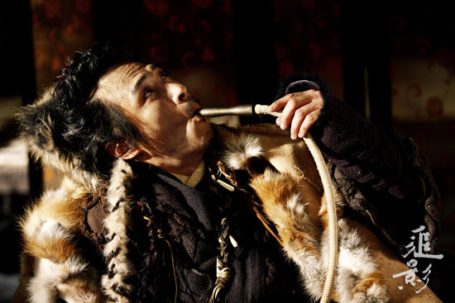
Francis Ng contemplates filmmaking, Tracing Shadow, 2009
Dear Francis,
Just wanted to let you know that I saw your new movie, Tracing Shadow, and I’m sorry to say that I didn’t really like it very much. Although it had some killer martial arts sequences, the art direction was divine, and you yourself looked quite lovely in your braided hair extensions and little mustache, the movie as a whole really stank. Unfortunately, since you’re the director as well as the star of the film, there’s no one else to blame for the slipshod pacing, unimaginative blocking and framing, egregious mugging and overacting (Xie Na being the absolute worst offender on that account), and aggravating, abrupt shifts in tone and mood throughout the movie. You yourself put in a less-than-thrilling performance, which I didn’t think you were capable of doing. And both you and your love interest, Pace Wu, have really nice cheekbones, but there isn’t a whole lot of chemistry between the two of you otherwise.

Pace Wu and bone structure, Tracing Shadow, 2009
Ever since it was announced several months ago I’ve been looking forward to this film, since you’re my favorite actor and your last wuxia movie, The White Dragon, is a great little flick. But somewhere along the way something went terribly wrong. It’s a shame, since the movie has the bones of a much better film. The storyline is classically drawn, with martial-arts masters converging on a village in search of a lost treasure map. But the film’s execution is so off-kilter and confused that it feels bad regional theater. At times it seemed like two or three different pictures competing for screen time—the slapstick comedy, the martial-arts action film, the dramatic mystery—with none given enough time or attention to cohere successfully. I felt myself wishing that you’d stuck to a straight-ahead dramatic treatment of the material, ala the film’s supposed inspiration, King Hu’s classic Dragon Inn, instead of using the story for laughs.
Your past directorial efforts, although flawed, showed flashes of brilliance and promise. But all three of your other movies were small-scale affairs rather than big-budget extravaganzas like Tracing Shadow. 9413 was an intense crime drama that showed a feel for mood and intensity as well as some cinematic chops. What Is A Good Teacher brought out some good, quirky moments from its youthful cast. Dancing Lion had some great improvisational set pieces. But all of those also had top-drawer actors, yourself included, to move things along, whereas the cast of Tracing Shadow–a TV show hostess, a model, and the son of a famous man–is, to put it delicately, pretty weak.

Xie Na and Jaycee Chan mug for the camera, Tracing Shadow, 2009
I’m truly sorry that the film turned out so badly. I really wanted you to achieve your dream of directing a successful movie. I don’t know exactly why things went so wrong–I’m not sure if it was the strain of holding together a big-budget costume picture, the complexity of mixing so many genres, or the pressure of living up to the hype of a high-profile project. I wonder if there was pressure from your financial backers (Huayi Brothers) to make the film as accessible, i.e., lowbrow, as possible, too, or if that decision was yours. At any rate, I hope that you get another chance to direct a film and that you’re more successful next time. This time I’m afraid you lost your way.
Sincerely,
your biggest fan
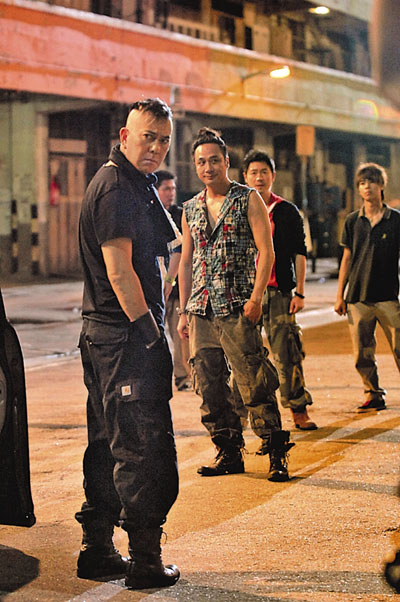
Anthony Wong with Francis Ng in happier times, Laughing Gor: Turning Point, 2009
PS: Congratulations on Laughing Gor: Turning Point—I’ve heard that it’s really good and that it’s doing great box office, too, which hopefully takes some of the sting out of Tracing Shadow’s disappointing ticket sales.
UPDATE: Go here for a much nicer, more positive review of the movie.
Kinda Like A Big Deal: The Beast Stalker, Full Alert and Greatness in Hong Kong Movies

Nick Cheung and wonky eye, The Beast Stalker, 2008
Just saw The Beast Stalker (Dante Lam, 2008) at the San Francisco International Film Festival and, although it held up pretty well and wasn’t an embarrassment, it wasn’t quite all that. Introduced by the Film Festival as “perhaps the best Hong Kong action film since Johnnie To’s Election,” this gritty thriller demonstrates that the former Crown Colony can still crank out hard-ass crime dramas. But the field has been mighty thin in Hong Kong of late and in other, more fruitful years, The Beast Stalker might’ve been just one of the crowd.
Former teen heartthrob Nicolas Tse plays a tough cop (!) haunted by the death of a child hostage he accidentally kills in a chaotic shootout/car crash involving malevolent gangsters, innocent bystanders and much shattered glass. Nick Cheung plays a kidnapper-for-hire in charge of snatching the dead girl’s twin sister whose lawyer mother is involved in prosecuting the crime. Their meshing stories play out in a dizzying spiral of guilt, honor, fate and obligation.
The Beast Stalker has several full-on child-in-extreme-danger moments and the cast realistically sports facial scars and other mementos of mortal peril, but somehow the film falls short of greatness. Nic Tse, further distancing himself from his youthful idol years, shrieks angrily at his subordinates, but he still can’t nail the crying scenes. Likewise, Nick Cheung, who won Best Actor statues from both the Hong Kong Film Critics’ Association and the Hong Kong Film Awards for this role, glowers menacingly but doesn’t quite bring the extra layer of pathos and complexity that might have deepened his portrayal. As my pal Laura, aka redbean, aka longtime Hong Kong movie fanatic, noted, “Anthony Wong would’ve eaten this role alive.” Unfortunately Anthony wasn’t cast and in this case Nick Cheung only makes a so-so substitute.
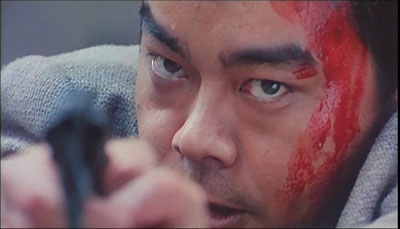
Lau Ching-Wan shoots straight, Full Alert, 1997
I recently purchased a copy of Ringo Lam’s brilliant crime thriller Full Alert (1997), which bears some similarities to The Beast Stalker in its depiction of the complex relationship between a cop and a criminal. But Full Alert has the inestimable actors Lau Ching-Wan and Francis Ng in the lead roles and their sublime skills breathe life into their stock characters and make the film’s cat-and-mouse story vibrant and believable. Francis brilliantly creates a strangely sympathetic yet reprehensible character and Lau Ching-Wan’s finely tuned fits of anger and frustration show a cop dangerously on the edge of sanity. The final confrontation between these two driven characters beautifully brings their fraught relationship to a stunning conclusion. On the other hand, The Beast Stalker’s antagonistic pair never fully reach the heights suggested by their intertwined destinies and their anticipated showdown is merely a tease.

Nick & Nic mix it up, The Beast Stalker, 2008
Full Alert and The Beast Stalker both have magnificent car chases as their centerpieces, the work of car-choreography specialist Bruce Law. The action direction in The Beast Stalker, however, unfortunately succumbs to the closeups and nausea-inducing jerky camerawork now in fashion, whereas Ringo Lam understood the need for distance and framing in an action sequence. Attesting to its greatness, Full Alert more than stands the test of repeated viewings, even more than a decade after its release. The Beast Stalker is a exciting, smartly-made movie but if, as several critics have suggested, this is one of the best of recent Hong Kong films, then the bar has been seriously lowered.
Dante Lam will soon have another chance to make a great Hong Kong movie. His next project, Most Wanted Terrorist, has just announced its cast, which includes the dream team of Lau Ching-Wan, Anthony Wong and Francis Ng, along with Nick Cheung. Hopefully Nick Cheung can keep pace with his illustrious co-stars, as they’re widely held to be among the best actors of their generation. He did just fine opposite Anthony and Francis in Exiled, and even in The Beast Stalker he showed glimmers of potential. but if he’s not careful the rest of the cast is going to blow him out of the water.
Interestingly, Dante Lam has indicated that he will forgo any Mainland Chinese financing for Most Wanted Terrorist in order to preserve a Hong Kong sensibility in the film. Several recent HK/China co-productions, including Sammi Cheng’s recent Lady Cop and Papa Crook, have suffered from the restrictions of Mainland film censors, so Lam’s decision to avoid PRC money is an interesting one. With Hong Kong film financing languishing due to the economic recession it’s a bold and risky move, but Lam is determined to retain his artistic freedom without having to answer to the Mainland government.
Let’s hope Most Wanted Terrorist gives everyone involved the chance to strut their stuff to their fullest capabilities. With its killer cast and seasoned director, if all goes well, we could once again see greatness in Hong Kong films next year.
The Beast Stalker opens Friday, May 15 at one of the last places in the Bay Area to see Hong Kong movies on the big screen, the 4-Star Theater, 23rd Avenue and Clement Street, San Francisco.
All For The Winner: 28th Hong Kong Film Awards

Crocodile tears? Xu Jiao wins Best New Performer for CJ7
Just a quick note about this year’s Hong Kong Film Awards, which took place this Saturday. Wilson Yip’s biopic Ip Man, about the martial arts legend, took Best Picture, with Ann Hui winning Best Director for The Way We Are, her docudrama about the New Territories town of Tin Shui Wai. The Way We Are, with its mostly non-professional cast, also won three other awards including Best Actress, Best Supporting Actress, and Best Screenplay. Nick Cheung (The Beast Stalker) nabbed his first Best Actor statue, adding it to his award from the Hong Kong Film Critics’ Society. Cute little girl Xu Jiao won Best New Performer for her crossdressing turn as Stephen Chow Sing-Chi’s son in Chow’s sci-fi blockbuster CJ7. Unfortunately, according to the Golden Rock’s liveblog she gave a horribly fake acceptance speech that included fake crying. I guess child stars are the same all over the world.
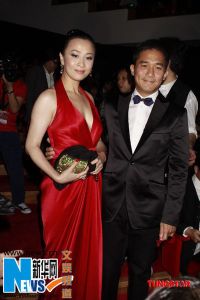
Carina Lau & Tony Leung burn up the red carpet, HKFA 2009
Interestingly, in a repeat of the Golden Horse Awards last year, John Woo’s lavish epic Red Cliff was shut out of the major acting and directing awards (including Tony Leung Chi-Wai’s failure to win his sixth Best Actor award). Red Cliff did clean up in several creative categories such as Best Art Direction and Best Visual Effects, winning five awards. Apparently this year’s nominations were only for Red Cliff 1—Red Cliff 2 will be eligible again next year so maybe then it will make out a little better in the major awards. Ironically, Red Cliff is probably the only film among the award winners that will receive international distribution.

Simon Yam in brown satin, Hong Kong Film Awards, 2009
Poor Simon Yam, nominated for Best Actor for Johnnie To’s Sparrow, went home empty-handed again. But he got to wear a natty two-toned sharkskin suit, white spats, and a spider-motif tie, and looked way too dashing for a man in his fifties. Sadly, Sparrow also lost (to Red Cliff) for Best Film Score, which just goes to show that not everyone appreciated its awesome Martin Denny/Michel Legrand/Henry Mancini homage.
For a full listing of the awards go here.
For lots more pix of celebrity finery go here.
For a great liveblog of the event go here.
And here’s the trailer for Sparrow, for a sample of its excellent soundtrack:
Get It While It’s Hot: The 2009 San Francisco International Asian American Film Festival
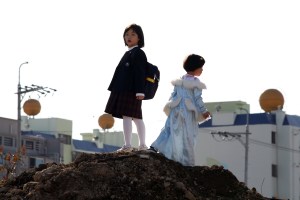
Hee Yeon Kim and Song Hee, Treeless Mountain, 2009
The 2009 version of the San Francisco International Asian American Film Festival starts next week (March 12) and runs until March 22 in San Francisco, Berkeley, and San Jose. Herein follows some of the movies I previewed from the festival, which is in its 27th year and will include 108 films in its ten-day run. The SFIAAFF is the biggest and one of the oldest of its type and kicks off the season for Asian American festivals around the country. Even if you don’t see something you like described below there are plenty of other treats to be had—go to the SFIAAFF website for more details. And buy your tickets early—shows sell out fast and some of these movies will never have another theatrical screening in the Bay Area again.

Ha Jung-Woo and Jeon Do-Yeon duke it out, My Dear Enemy, 200
My Dear Enemy, Lee Yoon-Ki
Powered by a charming, engaging performance by the talented Ha Jung-Woo, who may be becoming one of my favorite actors, this romantic drama follows two former lovers as they travel the streets of Seoul trying to settle a debt. Ha plays a ne’er-do-well ladies man and unemployed gambler whose fed-up ex-girlfriend (Jeon Do-Yeon, recent Best Actress winner at the 2007 Cannes Film Festival) finds him at the racetrack and demands repayment of a loan she’d made him before their breakup. The film skips lightly from one situation to the next, along the way commenting on life, relationships, intimacy, and dreams. One memorable scene features a newlywed couple whose husband is obsessed with his wife’s past lovers; another takes place at a barbeque party with a Korean motorcycle club. Throughout the film Ha and Jeon maintain a wary relationship with each other, trying to resist falling into old patterns while keeping from strangling each other.

Kim Yoon-Suk has a rough night, The Chaser, 2008The Chaser, Na Hong-Jin
A Korean movie of a completely different sort than My Dear Enemy, The Chaser also starts the versatile and charismatic Ha Jung-Woo, this time as a psychotic serial killer on the loose in Seoul. Brutally violent, with a touch of horror film layered on its crime-drama scenario, the film is a cat-and-mouse game between Ha’s nasty murderer and Kim Yoon-Suk’s world-weary pimp. The film features some gorgeous night-photography and good performances from its two lead actors but with a bit too much fetishized violence even for me, as well as too much psychosexual posturing, The Chaser doesn’t manage to transcend its genre into greatness.

Balmy Alley, Fruit Fly, 2009
Fruit Fly, HP Mendoza
Mendoza’s follow-up to the divine Colma: The Musical, and his directorial debut, Fruit Fly follows the story of Bethesda, a nice Filipina performance artist from Maryland (duh) who’s looking for her biological parents. Set amongst San Francisco’s queer boho crowd, the film lacks Colma’s poignancy and sympathetic characters, as well as Colma director Richard Wong’s cinematic flair. Fruit Fly makes good use of its San Francisco setting, including scenes in Balmy Alley, Dolores Park and various other real-life, non-touristy locations, and it has a great title sequence and nice graphics throughout, but it doesn’t quite have the urgency of Colma’s coming-of-age story, with Bethesda’s search for her birth mother shunted to the side in favor of backstage antics involving a vain magician and a few too many musical numbers with the quirky patrons of a gay bar.
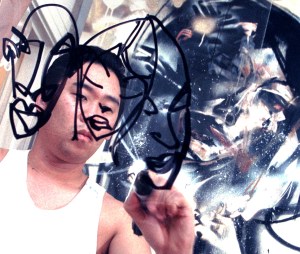
David Choe, insane, Dirty Hands, 2009
Dirty Hands: The Art and Crimes of David Choe, Harry Kim
A lively and comprehensive portrait of batshit-crazy bad-boy Korean American artist David Choe, Dirty Hands follows Choe from his beginnings as a grafitti artist and tagger in Los Angeles to his current status as a blue-chip gallery artist. Choe is an insane mo-fo, but in a productive, creative way, channeling his self-described kleptomaniac, sex-addict, bipolar, OCD personality into a highly successful career as an illustrator and painter. Choe energetically narrates his own story, describing his experiences as an illustrator for porn magazines, his stint in a Japanese jail (for punching a plain-clothes cop), his discovery of and subsequent disillusionment with God, and his various trips to the Congo and other non-industrialized parts of the world. The doc goes easy on its wacky subject, skimming over the misogyny and messed-up violence in Choe’s art in favor of portraying him as a happy lunatic, but it’s a compelling portrait nonetheless. We also meet his long-suffering girlfriend, his family, and his friends, all of whom think Choe is the best thing since sliced bread. The focus is a bit too Giant Robot-hipster-Asiaphile-friendly to be a truly great film but it does a good job of capturing Choe’s insane outlook on life. As he succinctly notes, “If I’m normal in real life it fucks up my art.”

Que paso? Nuevo Dragon City, 2008
The Secret Lives Of Urban Space
This program of short films includes a couple intriguing selections. Sergio de la Torre’s Nuevo Dragon City focuses on a group of Mexican Chinese teens who gradually barricade themselves in an appliance store. Shot without dialog with beautiful cinematography, their mysterious actions lead to serenity. No answers are given for their inexplicable acts but the imagery is lovely and the mood is profound.
Chris Chong’s Block B is a single static long shot of a high-rise housing project in Malaysia, moving from darkness to daylight and back through to night. The film’s bare-bones structure forces the viewer to focus on small mundanities during its twenty-minute running time—a woman drops a piece of laundry from a balcony and it flutters down the side of the building. Children run from one side of the frame to the other. Conversations in Malay emerge and retreat. At some point fireworks go off. Though some might find it incomprehesible, the film is beautiful and intriguing and truly challenges the way that we are accustomed to watching the moving image.

Two good kid actors, Children of Invention, 2008
Children of Invention, Tse Chun; Treeless Mountain, So Yong Kim
One of two “recession dramas” that I previewed, this engaging film looks at the tribulations of a Chinese American family in Boston falling through the cracks of the economic crisis. A single mom with two young kids gets caught up in “multi-level marketing,” a fancy name for a pyramid scheme that preys on immigrants and poor people. After mom gets thrown in jail as a material witness, the two kids are forced to fend for themselves. As the Top Ramen runs out and no adults are in sight, what will happen to our young protagonists? The movie has good, non-cloying performances by its two kid actors, following their fate in a realistic, unsentimental way.
A similar fate faces the two kids in the second recession drama, Treeless Mountain, So Yong Kim’s follow-up to her subtle and intriguing debut film In Between Days. Set in South Korea, the film follows two young sisters whose mother leaves them with an alcoholic auntie when she can no longer support them. Said auntie turns out to be an indifferent caretaker and the girls eventually end up catching, roasting and selling grasshoppers to local schoolkids to assuage their hunger and to make ends meet. Then things really start to go downhill. The movie is grim and beautiful, with an observational style that never veers into melodrama or histrionics, and its conclusion demonstrates the redemption of small kindnesses in the face of hardship.

The late, great Chris Iijima, A Song For Ourselves, 2009
A Song For Ourselves, Tad Nakamura
This short documentary centers on Chris Iijima, the seminal sansei musician who, along with Charlie Chin and Nobu Miyamoto, recorded A Grain of Sand, one of the most significant albums from the 1970s Asian American movement. Layered and emotional, the film looks at Iijima’s community activism, his music, and his later career as a lawyer and professor in Hawaii until his untimely death in 2005. Nakamura follows up on the promise of his earlier docs, Yellow Brotherhood and Pilgrimage, investigating the ties of family, friends, community, and creativity in a moving, resounding portrait of a singular personality.

Lam Yiu-Sing, future idol? High Noon, 2008
High Noon, Heiward Mak
24-year-old Heiward Mak brings it in her debut feature that follows a group of teenage Hong Kong schoolboys as they do drugs, chase girls, fight, eat and get into trouble. Shot on video, with frenetic computer graphics, the movie nicely captures the disposable lifestyle of post-millennial youth. The movie gets bonus points for featuring a sex scandal spread virally via cellphones (the internet is so five years ago). As the characters’ mischief escalates into more serious business, Mak’s strong visual sense and her sure direction of her peers makes the film a quintessential look at teenagers slamming up against their own mortality. Interestingly, Mak almost won the Hong Kong Film Critics Society’s 2008 Best Director award for this flick, nearly upsetting 30-year-veteran Ann Hui for the distinction. Side note: As I watched the movie I couldn’t help wondering which of the cute boys would be picked for this year’s idol status by the relentless Hong Kong media machine. Probably the dreamy one with the orange hair, though lead actor Lam Yiu-Sing has a quiet charm as well.
How Can I Miss You When You Won’t Go Away? Edison Chen Sex Scandal

Edison and Ah Gil, cropped, 2008
After several months of quiescence, the Edison Chen sex photo scandal has reared its salacious head again. I’ve resisted writing about it because God knows you can get plenty of information about it elsewhere, but recently this blog has been slammed with hits from people searching “edison chen sex photos” and related terms, even though a previous post only briefly mentioned our boy Edison. It’s probably not significant traffic but it shows that the the subject is still one of the hottest ones on the internets even a year after the whole scandal broke in January 2008. Last year in China Edison Chen was most-searched subject on google and yahoo, ahead of the Beijing Olympics, facebook and iphone. Suffice to say that the Hong Kong public and the media were pretty overexcited by the whole event since it involved pop stars, nudity, adultery, and sex.
Now that Edison’s in a Vancouver court starting to spill the beans about the incident, his fellow erstwhile naked Hong Kong celebrities Gillian Chung and Cecilia Cheung have also started to surface and blab about the whole thing again. Full details as well as hundreds of images from the scandal can be easily found elsewhere but needless to say that last winter the Hong Kong media had a field day when naked sex pictures of several of their beloved idols flooded the internet, all from the misappropriated laptop of rising pretty-boy actor Edison Chen. After about a monthlong firestorm during which a seemingly endless number of the amateur-porny pictures popped up on the web, the whole incident climaxed (sorry) with a grim-faced Chen announcing his retirement from Hong Kong entertainment in order to devote time to “charity work” in Canada. Not to mention fleeing the pissed-off Hong Kong triad members who wanted to chop off one of his hands for killing the careers of several of golden-egg layers like Gillian and Cecilia.
Gillian, aka Ah Gil, aka one half of the phenomenally popular Cantopop girl group The Twins, is now testing the waters for a comeback after last year’s sleazy & unflattering pictures of her and little Edison in flagrante delicto annihilated her image as a squeaky clean Jade Girl. At a recent fashion shoot several smart-ass Hong Kong truck drivers heckled her as she left the photo studio, calling her “naïve Gil.” Maybe she needs to wait a bit longer until things die down some more.
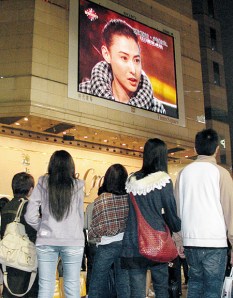
Cecilia talks Edison, February 2009
Meanwhile, Cecilia Cheung, aka 2003 Hong Kong Film Awards Best Actress, aka wife of fellow superstar Nic Tse, has come out of hiding with a high-profile interview on Hong Kong television in which she calls Edison a fake, a hypocrite and a liar. Hey, Cece, what do you really think about him?
For his part, Edison has claimed that he would do “anything” to protect “the ladies” involved, though exactly what that might entail is sketchy. In the meantime he’s publically named five of his partners in the pictures for the first time and claimed that several of the photos were actually taken by the women in question. Way to blame the victim, dude.

Edison cleans up his image, Singapore, February 2009
He’s also been quietly trying to revive his acting career–his 2008 movie The Sniper, which was delayed after last year’s naughty pictures surfaced, is playing at the Hong Kong International Film Festival next month and he recently made an appearance at a Singapore Carl’s Jr., though of course he’ll be donating all proceeds “to charity.” Edison’s mom has also spoken up in support of her boy, saying that Edison would rather go to jail to protect “the girls.” Huh, no kidding.
Anyways, I doubt that a media ho like Edison will be able to resist the spotlight for long. We’ll see how the Hong Kong public responds and if fans forgive and forget, or if they continue to excoriate poor Edison and his compatriots. Either way I guarantee the Hong Kong media will be all over this story until we’re all heartily sick of it.
More on this as it develops, or not, depending on how intense and tedious the media hype becomes.
UPDATE: A quick shout-out to the venerable Hong Kong Movie Database Daily News forum, which provided most of the links and images in this posting. Thanks for being you.

Anthony Wong says, "Keep clear of Hong Kong, Edison"
UPDATE 2: Okay, a quick update after a flurry of useless overreporting. Some killjoy has sent Edison Chen a bullet via the US Mail accompanied by a death threat stating, “We hope Edison Chen will take this warning seriously, otherwise his personal safety will be threatened,” and goes on to make more unfriendly remarks about Edison and his well-being. The ever-sensible Anthony Wong Chau-Sang, who is Edison’s godfather, commented, “This time they send a bullet, next time they send a bomb?… When I meet Edison for a meal he will have to wear a bullet-proof vest and helmet!” Anthony had previously warned Edison to stay out of Hong Kong or he’d kick his ass. Tough love from the Bunman.
Triumph In The Skies: A Different Kind of Tension

Francis Ng gazes soulfully, Triumph In The Skies, 2003
Gotta say that, despite myself, I really liked this series. It’s one of the most popular dramas ever made in Hong Kong and it made stars out of several of its younger cast members (notably the Solar 4 or S4—Bosco Wong, Sammul Chan, Ron Ng and Kenneth Ma) when it was first aired back in 2003. But it also made Francis Ng into a major idol, which, although he’d won acting awards and starred in many HK movies, he’d never been before in his home territory. His role as Sam Tong, the principled and upstanding pilot of the fictional Solar Airways, was a killer star vehicle for him and allowed him to showcase his great dramatic range to a hometown audience who had been mostly “meh” to the idea of him as a heroic figure.
The show is pretty expensive by TVB standards, with location shoots in Italy, Japan, and Australia, and has a huge and fairly decent cast including TVB queen Flora Chan as well as Francis as star-crossed lovers. Cinematography, art direction, lighting, and direction are all solid and the storyline isn’t too cringeful, although of course there are classic melodramatic moments including several hospital and near-death scenes, many love triangles, and various other common soapy contrivances. But a lot of the show concentrates on the professional training of airline pilots, which is presented in a surprisingly gripping manner and is deftly interwoven with the crisscrossing romantic storylines.

Fly me, Triumph In The Skies, 2003
The plot revolves around the lives of various people working for Solar Airways in Hong Kong’s International Airport, including pilots, flight attendants, and ground crews. Sam (Francis Ng) and Belle (Flora Chan), the main characters, meet by chance in Rome and, after chasing through the city in a series of coincidental meetings, hook up and have hot (off-screen) sex. But a plot contrivance drives them apart and the next time they see each other Belle is dating Sam’s best friend and fellow pilot Vincent (Joe Ma). The rest of the series pretty much follows Sam and Belle’s attempts to resolve the mess of their relationship and their unrequited desire for each other.

Flora & Francis get friendly, Triumph In The Skies, 2003
Francis Ng puts in an amazingly disciplined performance—he sustains his character over the course of 40 one-hour episodes and actually shows a believable growth and change, while remaining true to the character’s organic persona. He also proves that he can convincingly play a romantic lead and it’s difficult to imagine that this is the same performer who tore up the scenery playing hard-ass killers in movies like The Mission, Exiled, and Young And Dangerous. The character of Sam could have been an insufferable, controlling bore but Francis makes him intriguing, sympathetic and ultimately loveable despite his restrained personality. This is most evident in Sam’s relationship with Zoe, the younger woman who chases after him and eventually wins his affections. In the hands of a less skillful actor this May-December relationship could have gone horribly wrong but Francis convincingly moves from a reluctant target of Zoe’s affection to gradually becoming a willing partner in the relationship. The show also directly addresses the fifteen-year age difference between the two characters, with running commentary throughout the series on the difficulties of this seemingly mismatched pair finding harmony.
Francis makes Myolie into a decent actor, Triumph In The Skies, 2003
At some point the series basically becomes The Francis Ng Show, with long stretches of the plot devoted to his character’s activities. But it’s a credit to the screenwriters that when the focus shifts to other characters and their storylines the show remains engaging. Francis is clearly the best actor in the program but for the most part the rest of the cast holds up pretty well to his star-power and acting chops. He has an uncanny knack for intently listening to and playing off of his fellow actors, elevating and enhancing their performances by his subtle and effective responses. This almost seems to make the other actors get better as the show progresses, as they rise to the occasion of working with a truly talented performer. Ron Ng, one of the young turks who became a star after appearing in this show, starts out the series as a stilted and wooden performer. By the end of the series he’s learned some skills and exudes a decent amount of on-screen presence. Likewise, Myolie Wu as Zoe, one of Francis Ng’s love interests, begins the show by ceaselessly mugging and overacting her ingénue role–by the series’ end she’s become a much more nuanced and affecting performer. Her concluding scenes with Francis are fairly moving and I can’t help but think that she learned something by working with him. Francis gets to cry a few times, too, which he does with absolute conviction.
There is also an absolutely fabulous cameo by veteran HK actress Helen Law Lan, who was so great in Bullets Over Summer, as a complaining customer of Solar Airways. She and Francis have a couple divine scenes together which showcase their sublime comic timing and acting skills. Young and Dangerous fans will also spot Jerry Lamb, aka Piggy, who is very good in a supporting role.

Little Francis happy at last, Triumph In The Skies, 2003
SPOILER: Francis also gets the opportunity to be happy at the end of this show, and his joyous smiles at the program’s climax made me realize a couple things: a.) he’s got a really nice smile, and b.) I really can’t think of any movies I’ve seen him in where he gets to be genuinely joyful. I’ve seen at least fifty Francis Ng flicks by now and most of them are dark, violent crime dramas where he comes to a bad end. Even the ones where he doesn’t die don’t necessarily end happily (see The Mission; A War Named Desire; A Gambler’s Story). His comedies are a different story, but even so, being in a funny movie doesn’t necessarily mean that you get to be happy. I’m actually getting a little tired of seeing Francis die or be tormented at the end of movies and I definitely don’t want to watch any more movies where he’s the bad guy. Thankfully, he seems to be through with playing villains, though I suspect he’ll die in a few more of his films in the future. So it was great in TITS when he not only survives but lives happily ever after, and he gets to flash his beautiful, happy smile. END OF SPOILER
Follow your destiny, Triumph In The Skies, 2003
Strangely enough, the show also addresses, in a soap-opera fashion, the tensions between destiny and free will, delivering a surprisingly cogent and deeply felt commentary on the subject. It was interesting to find thoughtful observations on fatalism versus self-determination in a pop culture production but this was one of the strongest themes running through the show. One of the show’s characters, Belle, believes that life and love are preordained, but it is only through her attempts to take control of her life that she can save herself from despair. Another character, Zoe, feels that she can wrest control of her destiny through the sheer force of her will, but she has to give up control and surrender to her fate before her ultimate triumph. Sam, the character caught between them, is agnostic and rational but he too learns to balance between steering his own life’s path and giving in to forces beyond his control. Not only that but the show also has no real villain to speak of. Instead the characters struggle against their own inner demons and conflicts, and in the end most of them make choices that show honor and growth. This is a refreshing change of pace and, along with the show’s examination of fate and destiny, adds another level of pleasure to the viewing of the program that elevates it beyond the typical television drama.
Apparently audiences throughout Asia felt similarly enthusiastic about Triumph In The Skies. In its first broadcast in Hong Kong in 2003 it had more than a 35% share throughout the run of the series, meaning that more than one-third of all households watching television at the time were tuned in to it when it aired. During its rebroadcast last year in a late-night slot it gained almost a 10% share, nearly unheard of for such a time slot. In most polls it’s consistently rated as the favorite show of Hong Kong television audiences and rumors of a sequel (nixed by most of the cast, including Francis Ng) continue to swirl six years after its debut. It also finally made Francis Ng into a romantic leading man.

Francis and curry puff hairdo, Triumph In The Skies, 2003
NOTE: Francis Ng has a hella weird hairstyle in this show, kind of an asymmetrical pompadour that looks like a throwback to the 1950s crossed with a poodle. It gets a little less absurd and more toned-down as the show progresses but it’s definitely funny to see, especially in contrast to the ultrahip shaggy and dyed-out coifs of the rest of the cast. Of course Francis makes the retro hairdo work, and ultimately it becomes an unspoken commentary on the character’s somewhat anachronistic sense of honor and the way that he’s out of step with many of the other characters in the show. Not surprisingly, Francis purportedly designed the hairstyle himself–
UPDATE: Apparently back in December 2008 TVB put both Ron Ng & Myolie Wu on what they call the “retrenchment” list, which means they’ve moved back from lead to supporting roles. I’m not sure about the specifics but it looks like their fifteen minutes are over. Hasta la vista, baby–
UPDATE 2: For my comments and review of Triumph In The Skies 2 go here.
Salty Pork Hand
Learned a new phrase today that I love—salty pork hand. It’s the literal translation of the term for pervert in Cantonese and it’s been featured in the latest television idol kerfuffle in Hong Kong, wherein a blind gossip item has implicated a mysterious male TVB “artiste” in groping a couple female starlets. It’s got the internets abuzz over there, with top male stars like Joe Ma and Moses Chan avidly denying that they are the salty pork hand in question.
So who else is a salty pork hand?

Edison, Bobo Chun, and little edison, 2007
Edison Chen? For being a raging exhibitionist and non-consensually exposing his many girlfriends’ ungroomed pudenda to international scrutiny?
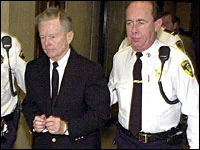
Father Geoghan busted, 1991
Father John Geoghan and too many of his fellow priests, for serially molesting little boys?
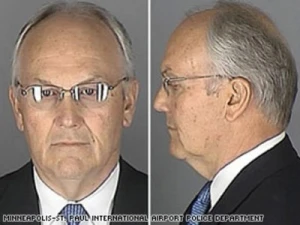
Sen. Larry Craig mugs for the camera
Sen. Larry Craig, for denying he likes sex in public toilets?

R. Kelly, prisonwear
R. Kelly, for liking it like that with underaged girls?
Who’s your nominee for salty pork hand?
UPDATE: Looks like whistleblower Kingdom Yuen (gotta love those English names the HK stars pick) has backed down from her original accusations and that TVB is trying to sweep the whole salty pork hand incident under the rug. Which means the speculation can continue unabated, of course, since Hong Kong pop culture loves a sex scandal. But it seems like without solid incriminating evidence this one may not get as much mileage as last year’s Edison Chen sex picture incident, which was the best scandal to come along in decades.
UPDATE 2: If anyone knows the Cantonese etymology for the term “salty pork hand,” please let me know. We are all dying to find out.
UPDATE 3: Looks like TVB’s Salty Pork Hand is Ellesmere Choi.
And my friend Jay Chan in Hong Kong translates the term as “salty wet hands.” Eeeewww.
UPDATE 4: Another “salty pork hand” has emerged on the Hong Kong scene, through another mysterious blind item. The start of a trend?
UPDATE 5: Wongsaurus over at LoveHKFilm breaks it down like this:
Not familiar with “salty pork” only “salty wet” but this sexual harassmen thing is obviously about non-consensual touching and groping.
Salty = Hom
Wet = Sup
Sow/Sou = Hand
Hom + Sup = Compound word (slangy) for Horny, Dirty (as in sexually dirty), pornographic, lewd and lascivious. [There are other more proper terminology for tawdry and sexual nasties and one example is uttered in the movie Crazy “N The City during the double-decker bus scene with Eason Chan, Chloe Chiu, and the masturbating pervert passenger.]
Please note that my romanization of Cantonese may not be accurate Yale or Wade-Giles.
Thus Hom + Sup + Sou suggests that someone did some nasty fondling. We’re all adults here so we leave it to your imagination.
Quickie fangirl post: teaser trailer for new Francis Ng 吳鎮宇wuxia movie Tracing Shadow 追影

Francis Ng & deadly chopsticks, Tracing Shadow 追影, 2009
Just wanted to fire off a fast post about the appearance of a new, very brief teaser trailer (see below) for the upcoming Francis Ng wuxia pic Chasing Shadows. Looks like the movie will be full of the old-school 1990s style wire-fu & special effects that I cut my teeth on back in the day.
The very first Hong Kong movie that I saw long ago at the Roxie Theater in San Francisco was A Chinese Ghost Story, with its amazing action choreography by the great Ching Siu-Tung. His trademark style includes lots of beautiful night photography, swirling fog, gravity-defying synchronized stunt performers, flowing robes, and flying people bounding over rooftops and through forests. He’s the action director for classics including Swordsman 2, New Dragon Inn, and House of Flying Daggers, among many more.
Chasing Shadows, in which Francis Ng not only stars but codirects, with Marco Mak, looks like a throwback to those glorious movies. According to news sources,
“As a form of tribute to past wuxia films, not only does the film contain various well-worn wuxia elements, but it also has the protagonist, his nemesis, and the four exponents named directly, onomatopoeically, metaphorically, in part or combination after the famed wuxia directors: Chang Cheh, Li Han Hsiang, Tsui Hark, Chor Yuen, Sammo Hung, Liu Chia Liang, Tong Gai and King Hu, possibly with some of them doing cameos.”
The movie also stars Jackie Chan’s son Jaycee Chan and Pace Wu. Ching Siu-Tung’s protege, Ma Yuk Sing, is the action choreographer for Chasing Shadows and Ching’s influence is pretty clear in the trailer.

The lady in red, Tracing Shadow 追影, 2009
Needless to say, my anticipation meter is off the charts with this one.
UPDATE: According to Twitch, as of late March the film’s title has been altered to “Tracing Shadow 追影,” which I’m not sure I like more than the original. “Chasing” seems a bit more active and dynamic than “tracing,” but I’m not the marketing expert so who am I to say? Looking forward to it at any rate & hoping it rocks.
Here’s the teaser trailer for your viewing pleasure. There’s a very short subliminal of Francis at the very end of the clip fyi.
UPDATE 2: New trailer for Tracing Shadow 追影 below, which lists a July 2009 release date. It’s mostly in Mandarin, except for one cryptic English intertitle that states “kung fu all star,” and seems to be living up to previous reports that the film will be a martial arts comedy. Francis Ng appears briefly about halfway through, getting water thrown in his face, striding across the screen, and later comically twitching his eyebrow. The rest of the trailer heavily features clips of Jaycee Chan, backed by a raucous electric guitar riff, no doubt aiming straight for the lucrative youth market. I’m sure I’m missing lots of other significant information due to my lack of Chinese-language skills–if anyone else wants to fill in the blanks it would be much appreciated.

Director Ng & cast at Tracing Shadow 追影 press conference, June 16, 2009
There’s also a lot of information in the Chinese press this week about the launching of the film’s website but the translation I got through google translate gives me a headache so I can offer little insight. But here’s a picture from the press conference. Francis has his hair in the little topknot he seems to have adopted for his role in Laughing Gor, which he’s shooting at the moment.
UPDATE 3: English translation about the press conference here, plus another view of Francis’ topknot.

Happy Francis with topknot, Tracing Shadow 追影 press conference, June 2009
UPDATE 4: Go here for The Making Of Tracing Shadow 追影. Caveat: it’s on youku.com, the Chinese streaming site, which sometimes loads awfully slow, and the video is all in Mandarin. But it’s got nice behind-the-scenes footage of the movie shoot, with interviews with all of the stars including Francis, Jaycee Chan, and Pace Wu. With the movie being released in just a couple weeks the hype is becoming deafening. Huayi Brothers are obviously banking on this to be a big summer hit and every other day there are more movie stills, interviews, and other fluff about the movie all over the Chinese press. It will be interesting to see the actual box office once the movie’s out.

Tracing Shadow 追影 movie poster, July 2009
UPDATE 5: Here’s the latest Tracing Shadow 追影 poster, and here’s the official website. Navigation is in English, though the movie clips, synopsis and other info are in Chinese. The gallery has tons of stills that showcase the movie’s fancy costumes and art direction, featuring lots of animal furs, elaborate upswept hairdos, and saturated blacks and reds.
twitchfilm.net also has the first English-language review of the film and it’s pretty favorable.
And here’s the cool little music video from the movie—it takes several scenes from the film and incorporates them into a comic-book style layout. The song is Zhui Ying 追影 and the singer is Cong Haonan 丛浩楠.

Francis Ng drowns his sorrows at Laughing Gor: Turning Point premiere
UPDATE 6: Alas, despite the massive hype, it looks like Tracing Shadow has tanked at the box office in mainland China. Apparently it went head-to-head with Wong Jing’s latest inane comedy, On His Majesty’s Secret Service, and lost big time–according to NetEase Enterntainment, OHMSS earned over $100 million yuan at the box office, while Tracing Shadow took in a measly $13 million. Not only that, but Wong Jing apparently claimed in an interview that he wasn’t afraid of duking it out with Tracing Shadow because Francis Ng’s earlier directorial efforts (9413; What Is A Good Teacher; and Dancing Lion) also tanked at the box office. Way to rub salt in the wound, dude! It’s especially painful because earlier Francis had predicted that Tracing Shadow would easily take in at least $100 million. No wonder Francis Ng looked so tweaky at the Laughing Gor: Turning Point premiere. He had probably just heard the bad news about ticket sales for Tracing Shadow.
The film opened today (Sept. 2) in Hong Kong to much less fanfare. Wonder if HK audiences will give their homeboy some support or if the movie will die a slow death in the Special Administrative Region as well.
UPDATE 7: Tracing Shadow just hit the torrent streams so that probably spells an end to any theatrical box office. Some commentators on twitter were less than charitable about the film.
tracing shadow is a very indiscriminate mess
tracing shadow is a lousy movie. i’m sad that I spent more than half an hour to get to this conclusion.
watched the film tracing shadow online, download a waste of time, a waste of computer hard-disk space
You know it’s bad when people who watch the movie for free are dissing it.
But Francis might take some comfort in the fact that On His Majesty’s Secret Service also got reamed by the tweeters:
this is really a rare year of lousy movies—tracing shadow and OHMSS are tied.
Strangely enough, Huayi Brothers might not be too fussed about Tracing Shadows less-than-stellar performance. The film presold to several Asian territories, so chances are that HB got its investment back even before it was released.
Takeshi then and now: The Warlords, Red Cliff and the aesthetics of dirt
His role in The House of Flying Daggers (2004, dir. Zhang Yimou) notwithstanding, Takeshi Kaneshiro has almost always appeared in modern-day movies. But in 2007 he was cast in two prominent historical dramas, The Warlords (dir. Peter Chan) and Red Cliff (dir. John Woo). How did Takeshi’s decidedly modern visage affect these two Hong Kong costume dramas? The results in each film are somewhat different and are a telling indication of perceptions of Chinese films in Asia and in the West.

Movie kings dress down, The Warlords, 2007
In The Warlords, Peter Chan’s gritty, realistic flick about a 19th century Qing Dynasty power struggle, Takeshi and his equally famous and glamorous co-stars Jet Li and Andy Lau are called upon to play their parts clad in animal skins and splattered with blood, sweat and mud. Jet Li reportedly gained weight and dirtied up to play his part (and was rewarded with his very first Best Actor statue at the 2008 Hong Kong Film Awards); he and the usually dapper Andy Lau also shaved their heads and grew scruffy beards for the film. At the start of the film Li vomits convincingly and Andy Lau has sex still dressed in his war togs.
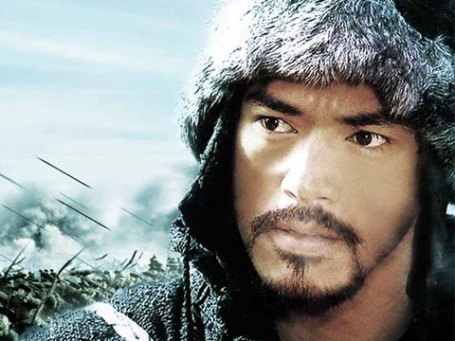
Takeshi in furs, The Warlords, 2007
Takeshi, however, did not shave his head, though he did sport a tidy beard. Still, it was hard to spot Takeshi-the-movie-star in this flick, due to the strength of the film’s mise-en-scene. The film’s blood-caked impalings, stabbings and general fisticuffs, and its evocative smoky-toned cinematography overcame Takeshi’s good looks and he managed to fit into the overall rough-hewn look of the movie despite being one of the most beautiful people on the planet.
In Red Cliff, however, the film’s art direction is much less down-and-dirty and much more stylized and this somehow makes Takeshi’s perfect nose and expensive haircut more anachronistic than in Peter Chan’s film. John Woo’s film aims for the heroic, not the realistic, and here Takeshi’s Prada-model gorgeousness shines a bit too brightly for a period piece. Although co-star Tony Leung Chi-Wai cuts no less a handsome figure, he’s a bit stronger actor and is a little more convincing as a third-century Chinese warrior. Tony also gets to wear armour and swing a sword in a big fighting scene, whereas Takeshi watches on the sidelines in pristine, flowing white robes without a hair out of place.

Pristine Takeshi, Red Cliff, 2008
Somehow Takeshi’s overt modernity works against him much more in Red Cliff than in The Warlords and this is underscored by each films’ respective directorial vision. Peter Chan’s film feels much more in step with current Chinese cinematic trends, moving away from superficial heroic images towards a deeper, more serious critique (in the same way that Johnnie To’s Election 1 & 2 completely deglamorized the Triad film, in contrast to the gauzy romantic fantasies of gangster brotherhood from Andrew Lau’s Young & Dangerous series). In comparison, John Woo’s film seems like a nostalgic, old-fashioned look backwards at classic Shaw Brothers and 1990s wuxia productions. Interestingly, a truncated version of Red Cliff is slated to open in the U.S. and Europe in 2009 while The Warlords has not received distribution outside of Asia. This perhaps reflects outdated perceptions of Hong Kong films in the West, where the most recognizable HK actor is the long-dead Bruce Lee and most viewers relate Chinese films to out-of-sync dubbing and chop-socky action pieces. Since precious few Western viewers keep abreast of current trends in Chinese cinema it stands to reason that John Woo’s conventionally retro, faintly Orientalist vision of history is more marketable outside of Asia than Peter Chan’s more contemporary presentation.
The Warlords was a big box office hit in Asia and, Red Cliff, Part 1 similarly broke box office records across Asia. Release of Red Cliff, Part 2 was moved up to capitalize on the success of Part 1 and it premiered in Beijing on Jan. 4. The Warlords cleaned up at both the 2007 Hong Kong Film Awards (eight awards including Best Picture, Best Director, and Best Actor) and the 2008 Golden Horse Awards (Best Picture, Best Director). Red Cliff, however, was shut out of the major awards at this year’s Golden Horse presentation, with only four nominations and no wins. Perhaps as with the Academy Awards and the last installment of the Lord of the Rings trilogy, Red Cliff, Part 2 will fare better at awards time than its predecessor. For now it remains to be seen whether it will duplicate the The Warlords’ hometown awards success.

 beyondasiaphilia
Recent Comments