Posts tagged ‘CNBLUE’
Music is love: CNBLUE’s 3logy album review
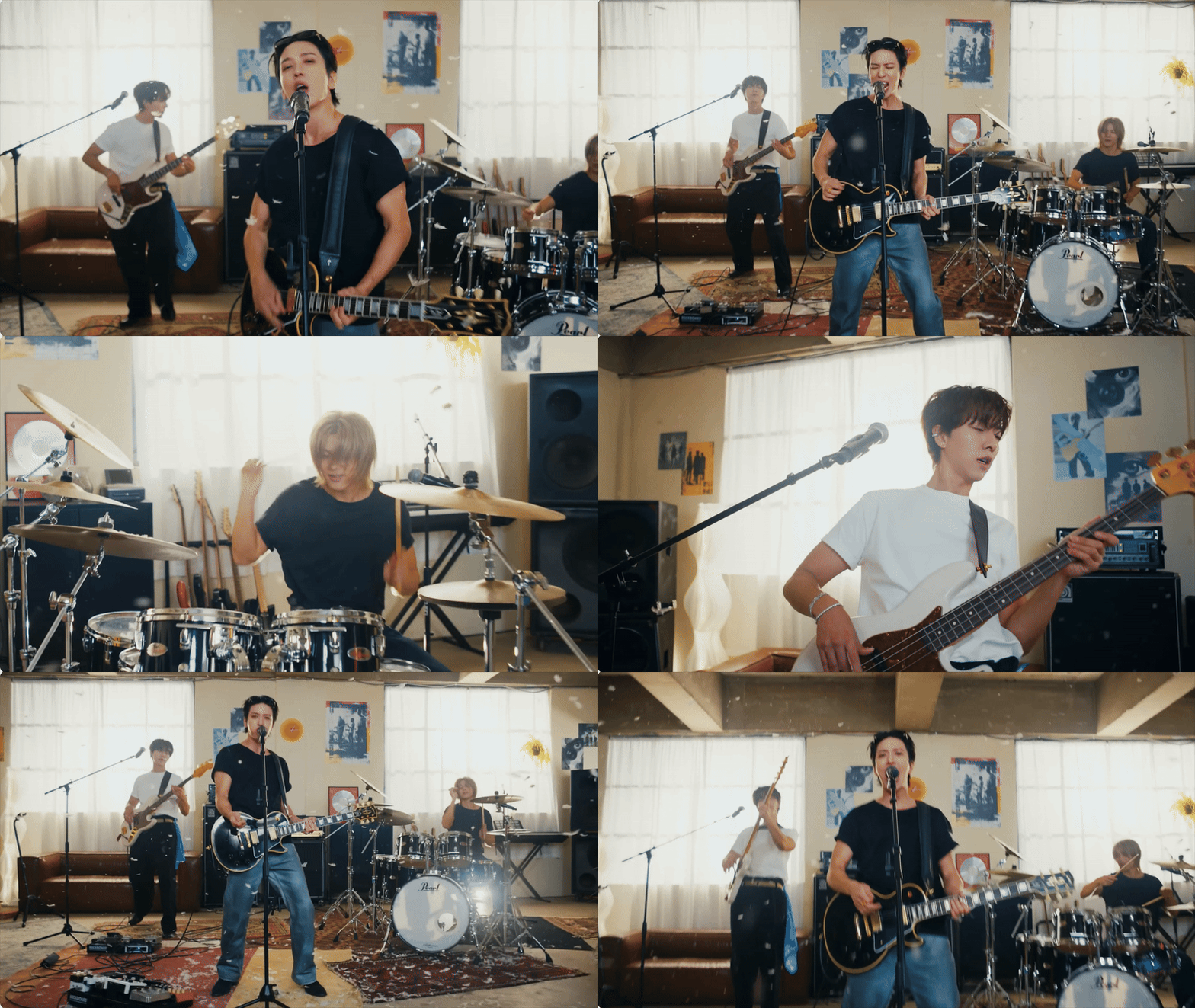
This album dropped just when I needed it, as the US government descends further into fascism and lawlessness. The fatigue from daily bad news is grinding so it’s nice to have a small respite from domestic terrorism at home and war crimes abroad. Music can’t solve the world’s problems but it can provide small relief from day-to-day rage and anxiety.
There has been so much CNBLUE content the past few years that I’ve been very negligent in reviewing all of their releases. But their latest album, 3logy, is so good that I would be remiss if I didn’t write about it.
3logy is CNBLUE’s third full-length release in South Korea (with many mini-albums, or EPs, released in between) and it showcases a clean, stripped-down sound that reflects CNBLUE’s focus on their live concert performances. Whereas previous recent releases have variously included strings, horns, trap beats, electronic percussion and the like, 3logy relies almost completely on band instrumentation–drums, guitar, bass, and a bit of keyboards. The result is a fresh sound that brings the band’s songsmithing to the fore.
The first song, Ready, Set, Go, is a high-energy track that jumps right in, with a hooky chorus and Yonghwa flexing his gorgeous power pop vocals. Lee Jungshin’s fast-paced, bouncing bassline effortlessly travels up and down and the chorus is wildly hooky and addictive. The title is a tribute to both Billy Idol‘s and L’Arc En Ciel’s respective Ready Steady Go tracks, and appropriately enough the song is a blend of 1970s UK power pop and classic J-rock.
The album’s title track, Killer Joy, continues in the rock vein.Words like infectious are overused but this hella catchy track is nothing short of virulent in the best possible way. All of the elements are there: Yonghwa hitting the high high falsetto. Earworm guitar riff. Singalong chant. It all combines to create a throwback to classic rock with punk undertones, with a driving beat, wailing guitars, and Yonghwa’s snarling rock vocals. I’m gonna say more about Yonghwa’s range in a little bit but just hold in your mind the way he sings on this track versus the way he sings on other tracks and you’ll begin to see how broad and deep his vocal technique and mastery has become. The way he bends the notes when he sings “And you’re losing your mind” is textbook rock vocals in all its wild glory.
The song’s lyrical metaphor is clear if you look for it. I may have a dirty mind but I’m pretty sure this is all about S-E-X
(english lyrics in italics)
You, holding your breath, are my target tonight
We locked and loaded then shot (Play on)
Nobody move, hands up high
Sweat running hot, everyone’s out of breath
Going down, you’re shocked
Please note that there is also panting interspersed in this verse.
The chorus continues in this vein:
Killer joy, I pull my melody
Shoot the melody into your heart, shot (Bang bang)
Killer joy, burn it all up, fire
Make it a night of frenzy, just for you, killer joy
Or it’s all about rock music. Which is all about S-E-X most of the time anyways.
Another thing that this song does beautifully is play with dynamics. After bopping along for a couple verses and choruses, following a boisterous singalong chant the song suddenly dips into an ethereal bridge that drops the energy down to a whisper. It then ramps right back up to rock speed, concluding with a reprise of the chorus before it ends with a blast of energy, with Yonghwa purring the English refrain, “My name killer joy.”
The next track, Lowkey, continues with the upbeat energy, but with a totally different vibe. Whereas the first two tracks were rock all the way, Lowkey is an awesome disco track anchored by a rhythmic guitar riff, a touch of horns and strings, and Yonghwa’s breezy vocals. Co-written by drummer Kang Minhyuk, the song is an effervescent bop.
The fourth track, To The Moon and Back, is one of the strongest on the album. Again switching up the mood and method, this track features a syncopated, jazzy melody. Yonghwa’s vocals again are completely different from the first three tracks, much deeper and more substantial, with gorgeous, textured vocal stacking. This contrasts beautifully with the spare, percolating arrangement, driven by Kang Minhyuk’s precise drumming, which creates a throwback sound that’s both retro and completely up-to-date.
I also love the lyrical conceit of celestial bodies orbiting around each other:
(english lyrics in italics)
Fly me to space just tell me anywhere
I will come to get you even if it is the stained shadow of the moon
I circle around you like a satellite
Oh I just wanna love you to the moon and back
The beginning and the end, the the earth and the sky, you are the reason for my everything my love
to the moon and back
The next track, Bliss, is pure pop heaven, with a sweet, hooky melody elevated by the pause at the end of each line of the chorus and rhyming in English.
(english lyrics in italics)
Every moment just give me a kiss
Never knew I could feel like this
Will you gift me tomorrow once again?
Cause you’re my bliss
The fact that this is the fourth track and still strong enough to be the title track attests to Yonghwa’s sublime songwriting prowess.
Still, A Flower was released before the rest of the album and it’s a fairly straightforward midtempo rock ballad that’s driven by its melancholy lyrics. The lilting melody belies the serious and somewhat bleak sentiments of the words, which are basically about rising up and surviving after facing crushing adversity. Back when they debuted back in 2010 CNBLUE was strong out of the gate, with chart-topping songs and wild popularity across Asia for several years, but after some pretty serious setbacks about five or six years ago they’ve had to rebuild their brand and their reputation from the ground up. After all of the struggles that they’ve gone through in their careers I’m sure this song hits hard for them.
(english lyrics in italics)
That name that vanished, love and faith have fallen into the mire
An eternal loneliness that cannot be avoided
But I am, but in the end, a flower blooming in a world held by fragrance
That’s how I am, in the end I’m a warm spring blooming on a tear-soaked ground
Hold me tight, a flower just like you
Flowers out of the asphalt are so tall
Grown amidst the sadness, but it was a flower after all
Yonghwa’s plaintive vocals, especially in the rhythmic prechorus, indelibly etch the song’s mood and message of resiliency amidst adversity.
The next track, Again, is another slower song, and it’s very simply constructed, mostly with rhythm guitar, a tiny touch of piano, and Yonghwa’s gossamer vocals. Yonghwa also belts out an incredible high note in the bridge that makes the whole song worthwhile, His sweet singing here contrasts most strikingly to his powerful rock wailing in Killer Joy and demonstrates his expansive stylistic range. This understated track shows the virtues of restraint, and the vocals and instruments intertwine delicately in the song’s outro. Interestingly enough, all three members are credited with writing and composing this song, which may be a first in their nearly seventeen years of existence.
The Temperature of Memory has a bit of an OST vibe to it, with its swelling, dramatic chorus and angsty lyrics. Once again Yonghwa’s sensitive vocals enliven the song as he plumbs the song’s emotions. The lyrics and composition are credited to bassist Lee Jungshin as well as Klozer, who has become CNBLUE’s regular keyboardist at most of their live shows. Although the band is nominally a trio, the onstage participation of Klozer as well as two alternating lead guitar sidemen (Jung Jaepil and Keun Park), mean that CNBLUE functions as a five-piece in concert. But the rules of kpop means that these sidemen are considered not full members of the band despite their steady and reliable contributions. But I digress–
The pace picks up for the last two tracks, ending the album on a high note. Little Things is another immaculate pop song with a light and cheerful melody and a catchy, bubbly chorus. Yonghwa’s vocals take yet another guise here, joyous and exuberant.
The album closes with the Korean version of Anthem of Life, which was released in Japan last year. It’s another jazzy track full of brassy horns, handclapping, and an uplifting message.
(english lyrics in italics)
Sing, singing it loud music is love
Filling the world with a grateful heart, shouting until my voice goes hoarse, so it rings out
Believe, loving yourself, keep on singing, more freely than anyone else
Warmly I sing, c’mon now, hear your voice
Although this is a great track, the production is so much busier and denser than the rest of the album that it feels a tiny bit out of place to me. But that’s a small criticism, since it fits the trajectory of the album as a whole and is a buoyant conclusion.
After watching CNBLUE laboriously rebuild over the past few years it’s nice to see such a strong and cohesive album from them. The quality of their output is not just consistent, it’s improving and growing, which is a great sign. As a respite from the turbulent times we live in, it’s nice to find artists who are moving forward and creating singular, reliably excellent work.
A Sleepless Night: CNBLUE North America tour review

NOTE: since this was such an epic event, my reflections on CNBLUE’s recent North America tour will be split into two parts.
CNBLUE rolled into North America last month for a whirlwind eleven-day tour of four lucky cities. It’s been eleven long years since CNBLUE toured the US so this was a big deal for their long-suffering fans who have been waiting more than a decade for them to return to these shores. I couldn’t make the first stop of the tour in Toronto but I was able to attend the other three shows and, needless to say, a good time was had by all.
CNBLUE was the very first South Korean band to have a world tour way back in 2013-14, which included two stops in the US, in New York City and Los Angeles, but since then they’ve concentrated their attention on Asia, to great success. But with the advent of the Kpop era in the West, after seemingly every other Korean act passing through the US, it was long past time that they came back. Because of the long gap since their last visit here, the fans were extra excited to see them. and vice versa, I think.
New York City
The word for the show in New York City is intense.
Their first US show was at the Knockdown Center in New York, a former glass factory in the middle of the industrial center of Maspeth, Queens. The venue is mostly known for its rave and DJ events, though other live acts including LCD Soundsystem, Frank Ocean, and Animal Collective, among others, have performed there. The big, flat space is spacious and industrial, with brick walls, exposed beam ceilings, and sliding barn doors. Capacity is about 2000 people, which is smaller than most of the venues that CNBLUE plays in Asia, where they average at least 10,000 people per show. I was lucky enough to be at the very front of the stage against the barricade but friends who were farther back at the bar said that the sightlines were good despite the lack of rake in the floor.
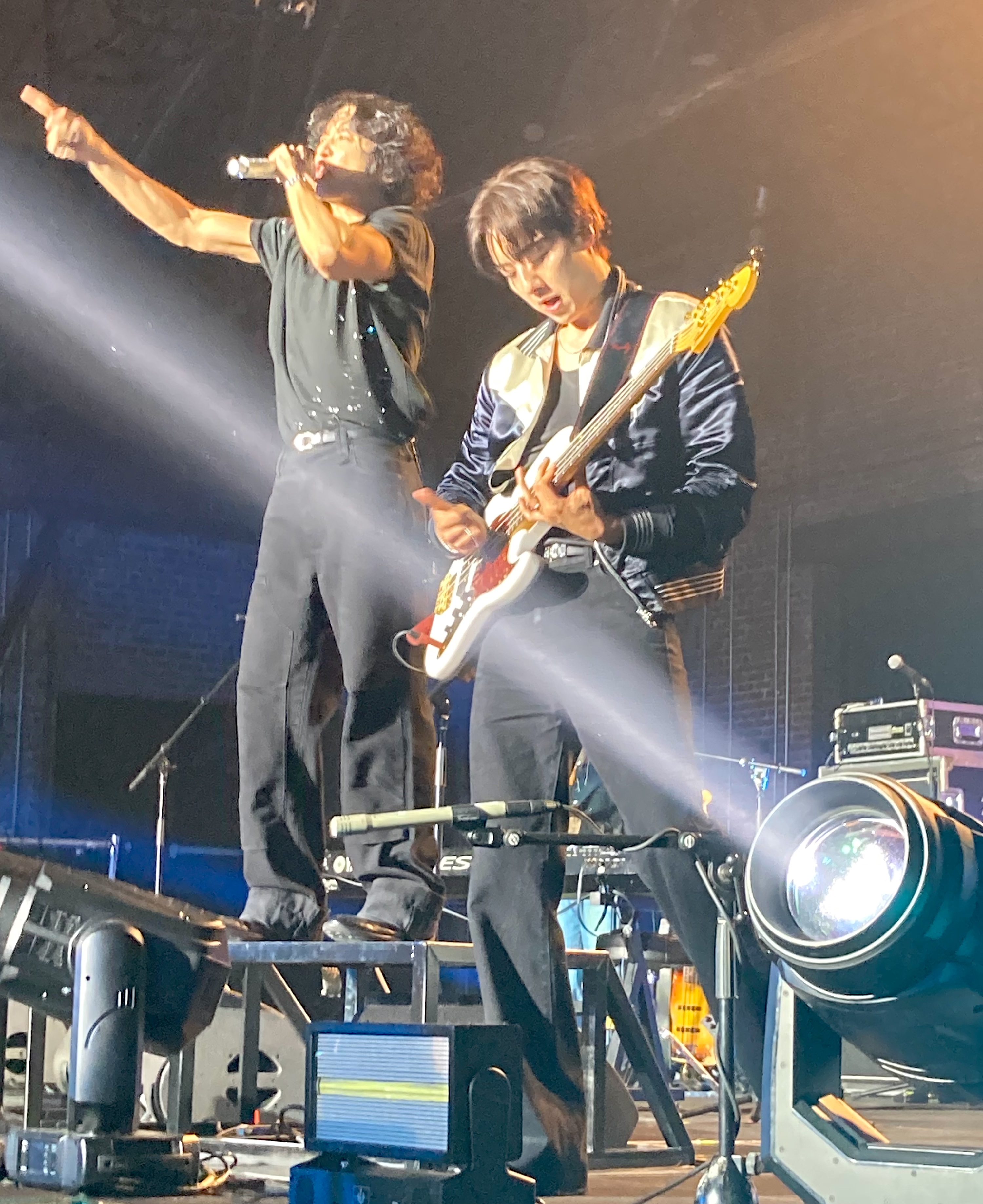
Due to various confusion in the line to enter there was some tension in the hall, but once the show got started it was a happy, high energy show. It was great to hear band leader Jung Yonghwa kibbutzing in pretty decent English and the relatively small venue meant that the audience was really close to the stage, so Yonghwa pretty much chatted with the fans throughout the show. He’s leveled up his English skills quite a bit and was able to carry on conversations and express complex thoughts fairly easily. In comparison, bassist Lee Jungshin’s English was somewhat rudimentary, with drummer Kang Minhyuk’s skills falling somewhere in between.
Due to meniscus surgery on his right knee, Yonghwa had a more than two-month layoff from performing live, which seemed to have been good for him as he was in very good voice, showing off his huge vocal range and ably singing everything from high-powered rock songs to tender ballads. One of the highlights of the show was a two-song mini-set of the ballads To.My Love and Then, Now, and Forever, where Yonghwa played piano and sang. After the conclusion of both songs the audience was rapturously silent for several seconds absorbing the sheer emotional beauty of his voice.

Yonghwa also belted out all the rock songs, effortlessly hitting ululating high notes on several of the band’s most energetic songs including In My Head, I’m Sorry, and Coffee Shop. The two-month layoff seems to have done wonders for his voice as it was strong, stable, and rich. He also looked a bit less bulked up than in recent tours, also possibly due to being laid up after his knee surgery. He also wasn’t able to run around quite as vigorously as in the past, and when he jumped he favored his right leg a bit, sometimes surreptitiously hopping on one foot, and he didn’t climb on top of the piano during Radio like he usually does. But he managed to exude a huge and infectious amount of energy and enthusiasm and within two songs he had the audience screaming and jumping along with him. Any fears that his knee injury would lessen the intensity of his performance were quickly laid to rest.
Minhyuk was alternately smiling and fierce throughout the show, holding down the beat with his steady, formidable drum skills. Jungshin strode around the stage on his long legs and provided able second vocals. Being so close to the stage I could more easily see the coordination between the band members as they hit their marks and the rapid musical changes, such as the jazzy break in Tattoo that they nailed perfectly.

Yonghwa also showed off even more of the lead guitar chops that he’s been working on lately. He’s getting pretty good and his guitar runs are notably faster and more varied than when I saw the band live six months ago in Seoul. Their usual sideman Jung Jaepil wasn’t available for this tour, so his brilliant lead guitar was absent, but that role was ably filled by Keun Park, who remained in the shadows but whose sparkling guitar fills greatly accentuated the arrangements. Also missing was CNBLUE’s usual fifth man, session keyboardist Klozer, whose work usually fattens up their live sound, but in the smaller and more intimate venues, with a more rock-based setlist, it wasn’t that critical. The three main members were easily able to fill up the hall with their presence and with their musical skills.

The setlist was a streamlined version of the concert that I saw back in Seoul last September, with fully six songs absent (Face To Face, Y Why, Feeling, Have A Good Night, Let Me Know, and Blue Stars), so the show roared along at top speed. The smaller venue also meant that steam jets replaced the firepots from their arena shows, but there were still confetti guns shooting out shredded paper bits at strategic moments. Despite the snafus getting into the venue the show turned out just fine, as CNBLUE performed with their usual skill and intensity, and everyone went home happy and satisfied.
Los Angeles
The word for the show in Los Angeles is energetic.
Unlike his styling in New York, where his hair was wild and curly, in LA Yonghwa had his hair straight and slicked back and he wore a black leather jacket and black trousers. It was a much slinkier, glamourous look than New York, where he seemed to be harkening back to The Ramones in his black t-shirt and jeans. Jungshin and Minhyuk also wore basic black.

Interestingly, during the sound check session, a short, three-song set for those audience members paying extra, Yonghwa wore loose Carhartt shorts which revealed the analgesic patches on his right knee. During the show he also stumbled slightly at one point toward the end of the set and needed a bit of a hand getting up off the stage after sitting down for the photo session. But other than that he didn’t seem too hampered by his recent knee surgery as he studiously avoided overly strenuous jumping and running. I think for most of the audience who might have been unaware of his recent injury he didn’t seem to be bothered at all and appeared to be his usual energetic self.

Yonghwa also repeated a version of the same ments as he had in New York, but he did it with such sincerity that it seemed very naturalistic. The man is a born entertainer, not least in his ability to convincingly deliver his lines night after night. As with the New York show, he kept up his running dialog with the audience almost exclusively in English, with a bit of Korean thrown in. He also expounded on his love for tacos, which he’d also eaten in New York. I hope someone takes him on a taco crawl through Boyle Heights the next time he’s here so he can have some real Mexican food. Yonghwa also threw out a few random Spanish phrases like “Te Amo” and “Hola!” He also dropped more slang, at various points in the show randomly shouting phrases like “Awesome!” “Bussin!” “Slay!” “Periodt!”and “Facts!” and at one point claimed “I am a language genius.” He also continued his swearing streak, at one point shouting “Make some fucking noise!” to the delight of the audience. Once again his jumping was much more restrained than usual, restricted to a few modest hops and spins. But that isn’t to say that he was standing still, as he was in constant motion during the entire show, whether dancing, swaying, tossing his mic, or waving his arms, as well as playing guitar or piano.
The sound was also a bit cleaner and much louder than in New York–I could feel the bass drum speaker reverberating through my body and my ears were ringing after the show. And at least from my vantage point, the audience seemed to have more Asian members as well, probably reflecting the Southern California demographics. As in New York the band’s engaging stage presence and humorous patter quickly had fans eating out of the palm of their hands and the floor shook when the audience jumped along with the music.
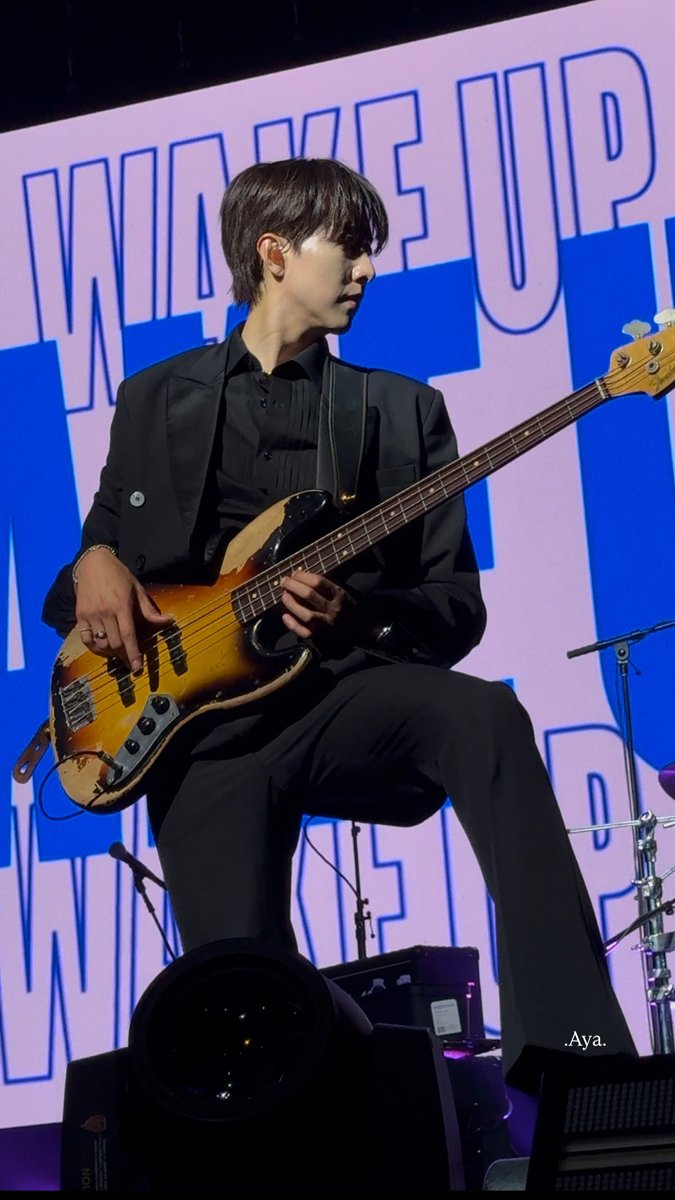
The band members also seemed a bit more relaxed at this show, either getting over their jet lag or their opening-night jitters, or just getting more into the groove of the tour. For me the highlight again was the piano-focused version of Then Now and Forever. Yonghwa put every ounce of emotion into this version and after the climactic vocal descension at the bridge he seemed to struggle a bit to hold back tears. Minhyuk played most of the song with his eyes closed, and he also seemed to be feeling the strong emotions of the song.
Also outstanding was the live version of their latest title track, A Sleepless Night. The song itself is a basic groove, following a simple three-chord progression, which allows the band to embellish and elaborate over it. Jungshin’s bassline in particular was strong and supple in this song, and I loved his slowed-down finger-picking that closed out the song.
San Francisco
The word for the show in San Francisco is ecstatic.
The concert in San Francisco was the loudest and mostest yet. CNBLUE put on a flawless three-hour show, full of high-energy, musical chops, emotion, humor, and gorgeous music. Opening up with six of their rockiest rock songs makes me think that they designed this setlist with North American audiences in mind, especially for those who might not be familiar with their more recent material. Though they made their name back in the day as kpop idols it felt like they wanted to update audiences to their more recent incarnation as a full-fledged rock band.
Seeing three different shows in a row, it was amusing how Yonghwa’s between-song patter followed the same script with slight variations, yet he delivered it so smoothly and naturally that it felt entirely spontaneous. He’s also so comfortable in his own skin onstage that the very few mistakes he made he shrugged off easily. At one point he started to say “ten percent” when he meant “one hundred percent,” but he quickly recognized his error and laughingly corrected himself. As on the previous stops he also deployed a few f-bombs and hell yesses, which you’re definitely not gonna hear in Japan or other Asian territories. His delight in this was very evident, like a small child tasting a sweet for the first time.
Since it was the last night of the tour he and the other two members left it all out on the stage and once again their enthusiasm and love of performing was infectious, as the audience lustily sang along throughout the show. The effects were not extensive, but the confetti was strategically abundant. At one point red and blue streamers shot from cannons at the front of the stage, draping dramatically on the riggings on the Warfield’s high ceilings. Yonghwa also slightly favored his right leg again, but he still managed to dance exuberantly and hype up the crowd, especially during the last set, which included their disco classic Cinderella. The high-powered rock song Between Us, the penultimate song of the show, took off like rocket fuel while Yonghwa danced like a dervish and adlibbed ecstatic high notes and harmonies.
During the first encore at the climax of an exuberant version of Can’t Stop Yonghwa belted out a high note that fully lasted fifteen seconds, and to be able to bust out a lengthy and stable extended high note after singing nearly twenty songs over the course of two and a half hours is a testament to his vast talents as a singer and a performer, and at that moment Yonghwa was clearly very pleased with himself. By the end of the show in San Francisco he was flying, and the audience reflected back his ecstasy. He also expressed his pleasure and satisfaction with the tour, commenting “We need to start again at Toronto, then New York, Los Angeles, San Francisco again.”
On this tour Yonghwa flexed his fluid and elastic vocals, but he’s also added in guitar solos on top of his rhythm guitar duties. As with his singing, his solos are innovative, fun, and precise. I hesitate to make the comparison but he’s approaching Prince territory in the range of his abilities, from stellar songwriting to blistering guitar work to wide-ranging, emotional, and powerful vocals, He also played the piano beautifully, danced joyfully, and projected to the balconies with ease. Jungshin on the bass effortlessly held down the beat and mixes up thumb popping, plucking, and slides up and down the frets. Kang Minhyuk as always was tireless on the drums.
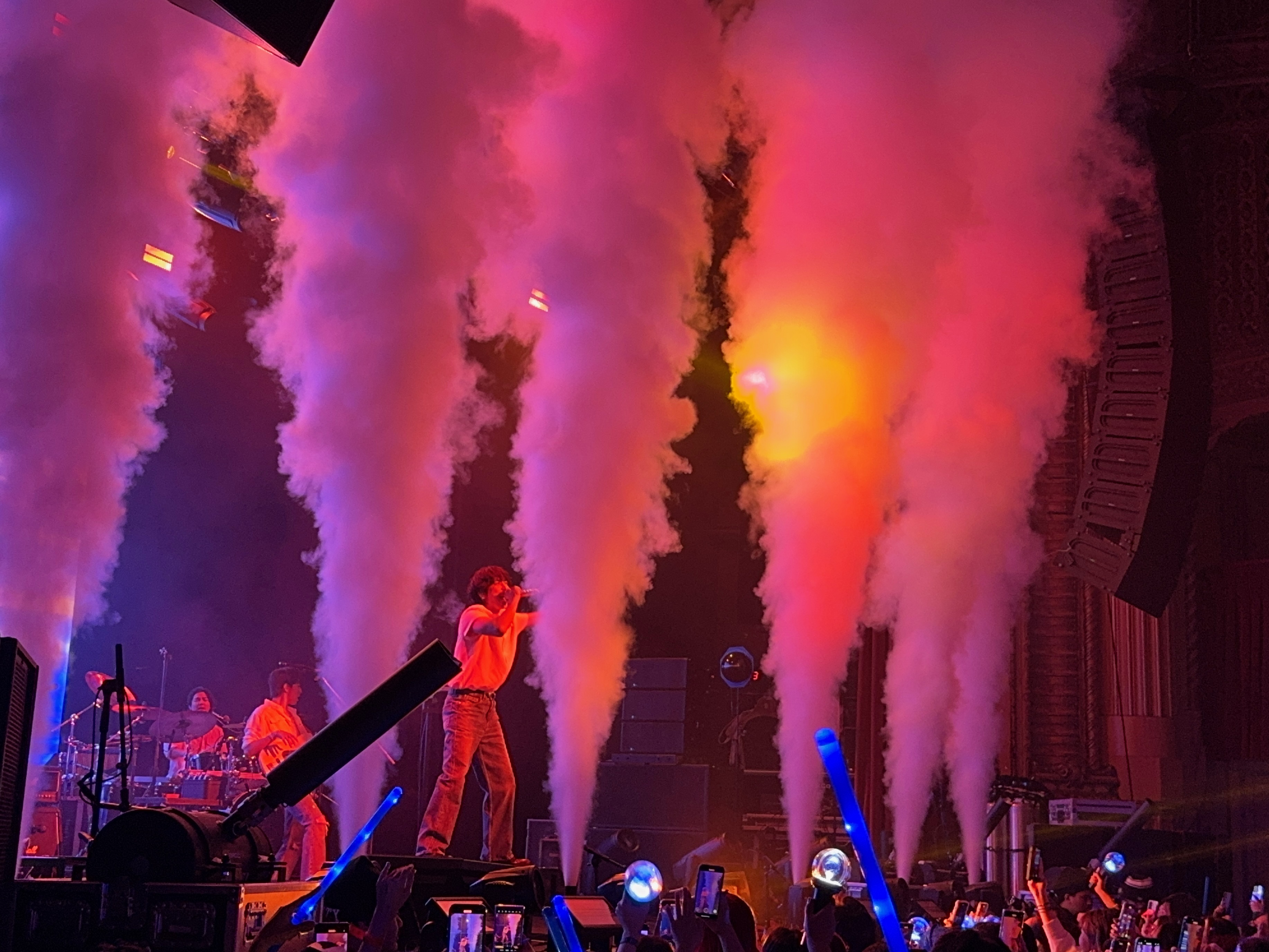
CNBLUE had a monster year last year, releasing a full-length album in Japan and a mini-album in Korea and playing more than sixty concerts, as well as their usual Korean celebrity activities, so by the end of 2024 they probably were pretty exhausted. And although the two-plus month layoff waiting for Yonghwa to recover from knee surgery may have at first seemed like a setback, in fact the enforced rest seems to have done them all well, so they entered this tour with guns blazing.
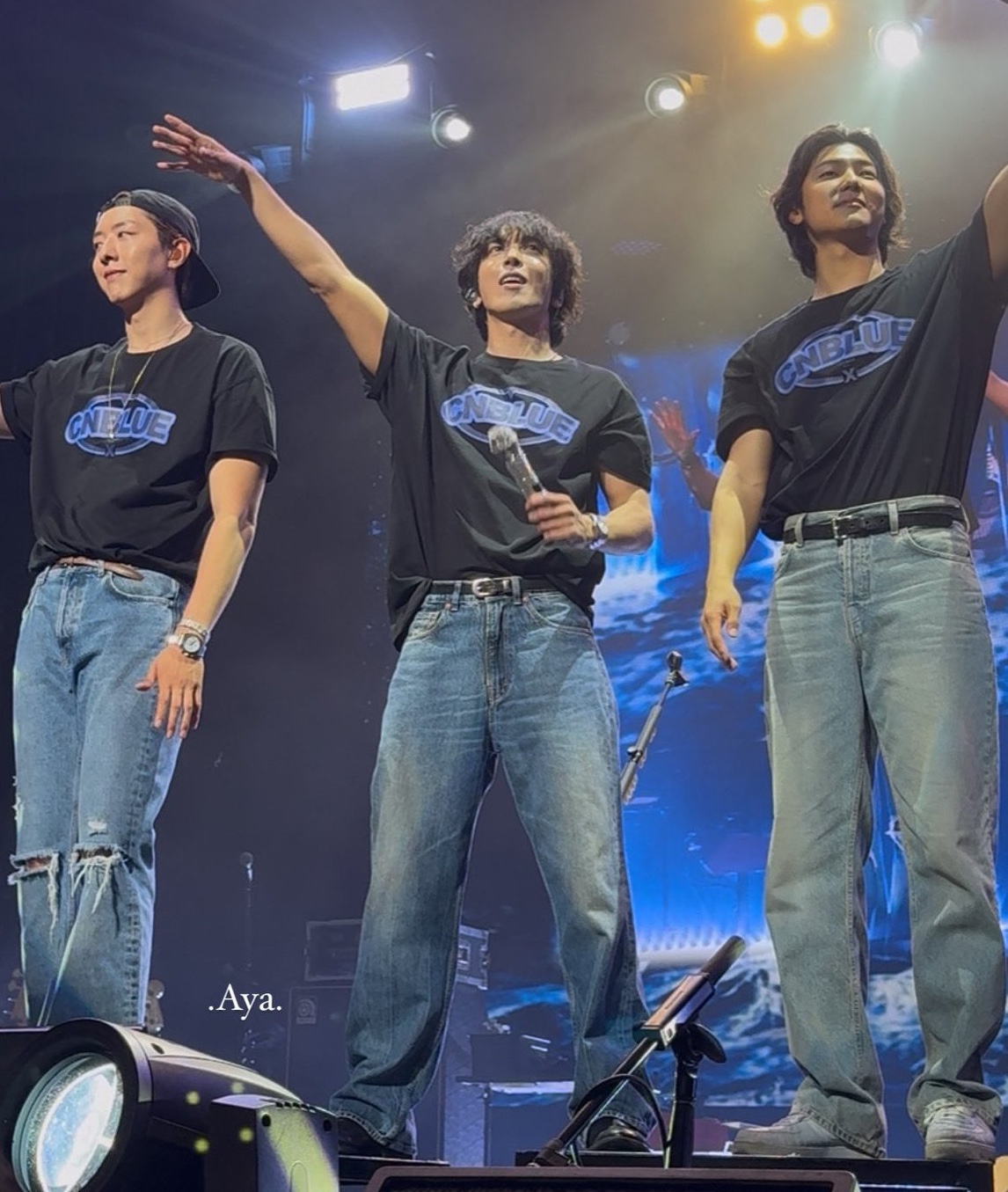
Though it’s been a long eleven years since their last shows here in the States, their return to North America went brilliantly. Judging from the rhapsodic responses of the audiences at the three shows I saw, as well as the band’s joyful delight at performing here, I don’t think it will be long before they’re back again.
Let’s Go Crazy: CNBLUE’s North America Strategy

After more than ten years, CNBLUE is finally touring North America again, with shows planned in April in Toronto, New York City, Los Angeles, and San Francisco. During those ten years the band has gone through a lot of changes, due to a two-year plus hiatus for their mandatory military service, the scandal-ridden departure of their lead guitarist, and the COVID-19 pandemic. But in the past couple years they’ve come back strong, with an especially stellar 2024, so now it seems they’re re-setting their sights on a more global presence.
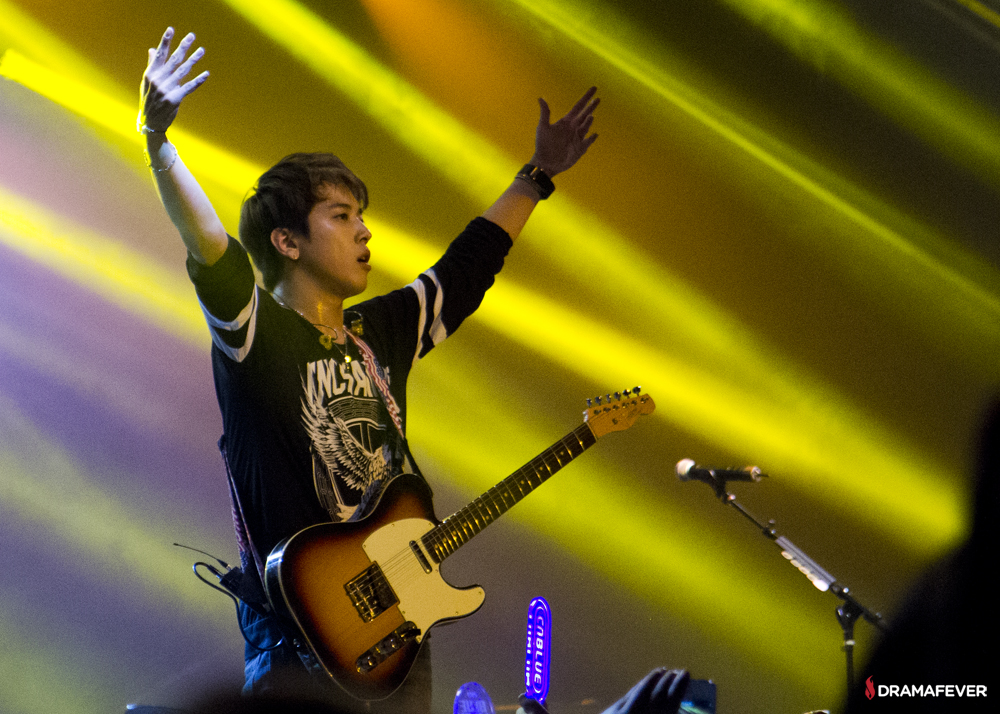
Although CNBLUE was the very first South Korean band to have a world tour way back in 2013-14, for the most part since then they’ve focused their attention on building audiences in Asia, which they’ve done to massive success. But that means they’ve only played a total of two shows in the US in their fifteen-plus years of existence (not counting a joint performance with their labelmates FTISLAND and a few stages at KCon). With the rise of Kpop in the US in the past several years, it seemed like everyone and their mother was touring here except CNBLUE, but now that’s about to be rectified. But as a band and not a dance group they have less appeal to mainstream Kpop audiences in the US, so they’re not likely to be a breakout success like BTS or Blackpink. Instead, it seems more likely that they’ll have to follow the lead of another Asian band that’s also hugely popular in their home country, One OK Rock from Japan.

OOR started touring the US way back in 2014, right around the time that CNBLUE last played in this country. But unlike CNBLUE, OOR has been coming back to the US on the regular, with follow up tours almost every year since then (except during the COVID-19 pandemic years of 2020-21). For most of those years they played in 3000-5000 capacity halls, but after more than ten years touring in the US, OOR is now moving into somewhat bigger venues here, including the 12,000-seat Prudential Arena in New Jersey. On the West Coast they’re playing in 8000-seat houses, but in most of the rest of the country they’re still playing 3000-5000 seat venues. So despite their vast popularity in Japan, where they routinely sell out the 55,000-seat Tokyo Dome for several nights in a row, OOR are still something of a niche attraction here in the US. But they’re gradually moving up, after many years of hard work touring in North America.
If they’re lucky, CNBLUE will follow a similar trajectory, and I’m sure they’re itching to jump in the game in North America. A further plot twist—sometime late last year CNBLUE’s frontman Jung Yonghwa torn his meniscus in his right knee and in mid-January underwent surgery to repair it. As of today he seems to be on the way to recovering, but for a little while it seemed a bit iffy if it would be a good idea for the North American tour would go forward, since Yonghwa’s signature stage presence includes continuously running and jumping on stage for upwards of three hours at at time.
But this tour is hopefully just the first of many to come, so if Yonghwa isn’t able to tear around the stage at full speed like he usually does it’s not the end of the world. This is just the first foray into a long-term commitment to expanding outside of Asia and if the example of OOR is a guideline it’s going to take a long time and several tours for them to successfully break into the US market. If their shows on this tour are somewhat less manic it’s okay, and CNBLUE will hopefully come back again next year or the year after when Yonghwa is back to his old self and can fully jump around. Despite the ten-year gap since their last show here, I have a feeling it’s not the last time CNBLUE will play in the US, and they’ll be back much quicker this time.
This tour is a little appetizer, so if they’re not able to be their fully hyped-up selves on stage it will be okay, since there will be other chances—this time they’re just dipping their toes in the water. As OOR has shown, this market is a tough nut to crack no matter how popular you are in Asia. There’s only one way to get to where OOR is and that’s through hard work and diligence, and if CNBLUE wants to succeed here they’re going to have to do the same and grind away at smaller venues until they build their fanbase here. This tour will be the first step in a long road, but I think it’s totally worth it, since they’re good enough to be globally popular and to compete in the world market. This time around Yonghwa will just have to come up with creative strategies to allow for his current physical state, which I’m sure he’ll do brilliantly. And above all, I have faith in the power of CNBLUE’s music. Their concerts are not only about running around on stage, but also about the sheer genius of their songs. That brilliance will shine through no matter what form their stage performance takes.
To buy tickets, go here:
Toronto, Ap. 16: https://www.ticketmaster.ca/cnblue-voyage-into-x-toronto-ontario-04-16-2025/event/1000624CAEC01BF6
NYC, Ap. 18: https://dice.fm/event/yolkla-cnblue-voyage-into-x-live-tour-18th-apr-knockdown-center-new-york-tickets
Los Angeles, Ap. 24: https://www.axs.com/events/846222/2025-cnblue-live-voyage-into-x-in-north-america-tickets
San Francisco, Ap. 27: https://www.axs.com/events/845376/cnblue-tickets
Where You Are: Searching For CNBLUE

The first time I went to Seoul in Spring 2016 Jung Yonghwa and CNBLUE were comfortably ensconced in the South Korean entertainment scene.

I ran across their images all over the place, and I heard their music everywhere, on sound systems in cafes and in the malls.

I even bought a cute little pair of socks with a cartoon Yonghwa on it.
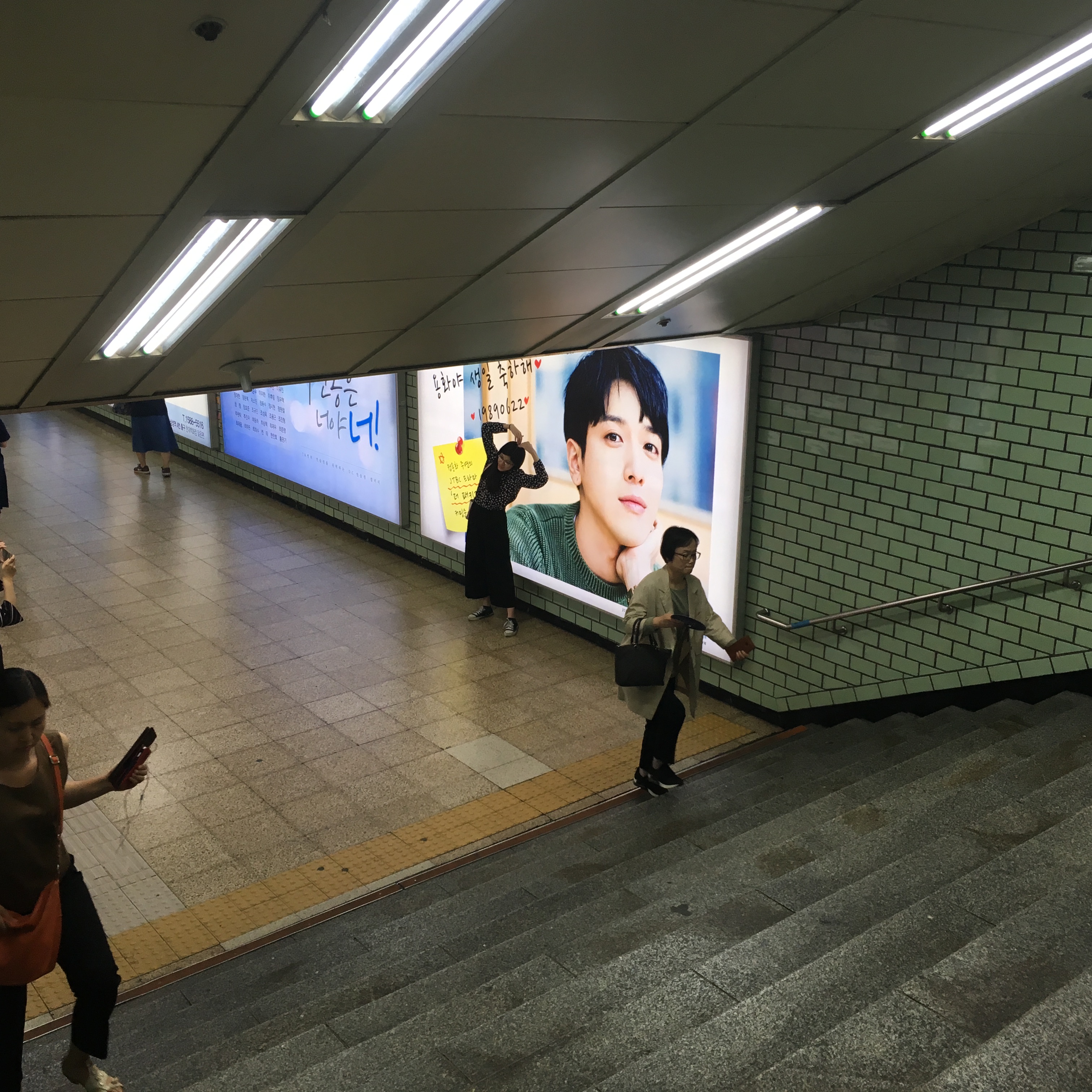
The next time I went to Seoul, in June 2017, CNBLUE was still there, with Yonghwa’s smiling face looking down from a billboard overlooking the freeway from Seoul to Incheon airport, and on both a large video wall as well as a birthday billboard for Yonghwa in the Gangnam subway station that was covered with sticky notes from his adoring fans.


Like any popular South Korean celebrity, Yonghwa’s face adorned skincare ads, calendars, posters and other random merch all over the city.
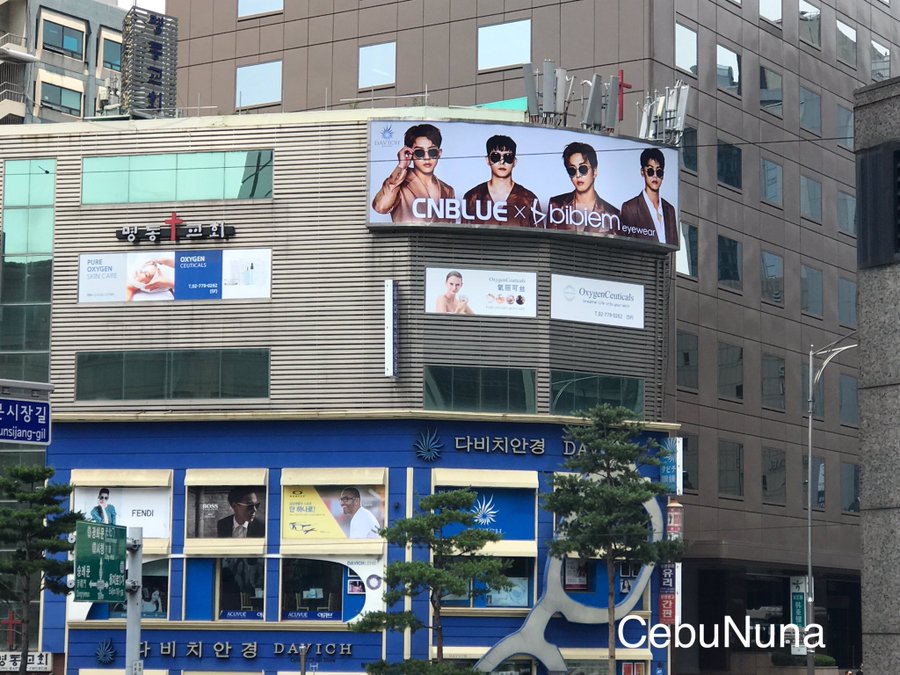
CNBLUE were also models for the South Korean eyeglass manufacturer BIBIEM and their bespectacled faces were on billboards overlooking the Myeongdong area.

In Fall 2019 when I went to Seoul again, CNBLUE had enlisted in the military and their presence was a mere whisper, but I still saw various posters, calendars, and other stray paraphernalia sporting their likenesses at the street markets and Kpop shops.
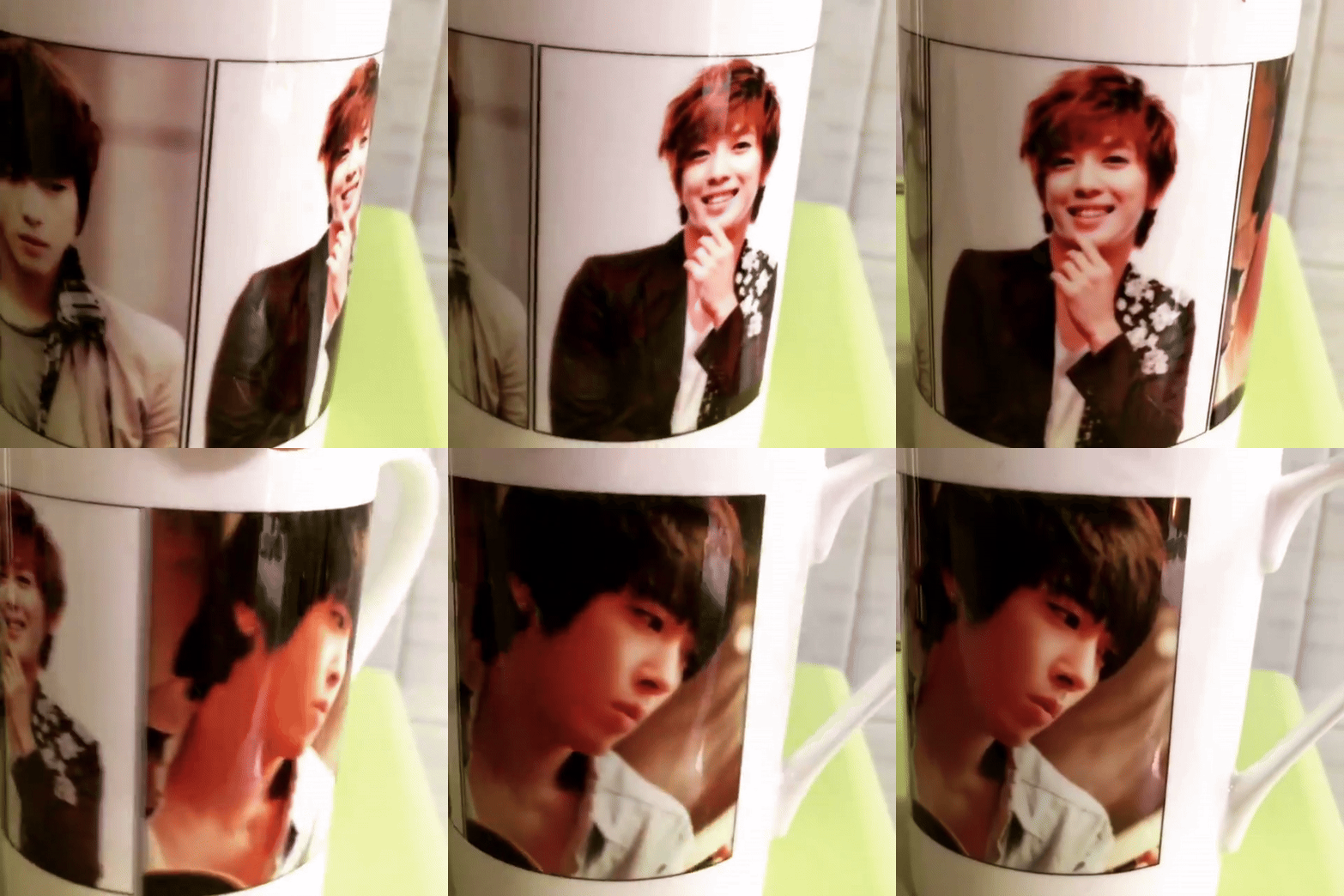
At one store I managed to dig up a coffee mug with Yonghwa’s face on it in a mall somewhere in Dongdaemun.
My most recent trip to Seoul was in Fall 2023. After spending five days all over town I didn’t see any sign of CNBLUE’s presence on the city’s streets. CNBLUE debuted back in 2010 and thirteen years is truly an eternity in Kpop years, so it wasn’t that surprising to find that their images had been supplanted by merch featuring newer, younger groups. But I still felt a bit of melancholy seeing how they’d seemingly vanished from the public consciousness despite consistently releasing brilliant music throughout the years.

But late 2023 also marked a turning point for the band. Yonghwa dropped a new solo mini-album, Your City, in September of that year and instead of promoting on the usual Kpop music shows such as Inkigayo and Music Bank he instead got onto the campus music festival circuit. He played one, then two, then four and eventually six or seven different college festivals that fall, showcasing his superlative live performance chops to audiences outside of the usual Kpop listeners or CNBLUE fans.

Possibly due to the buzz around those shows, CNBLUE was invited to the Someday Christmas festival in December, their first music festival in South Korea after more than a decade of existence, and they also blew the roof off of that venue, playing the only encore out of sets by several different acts.
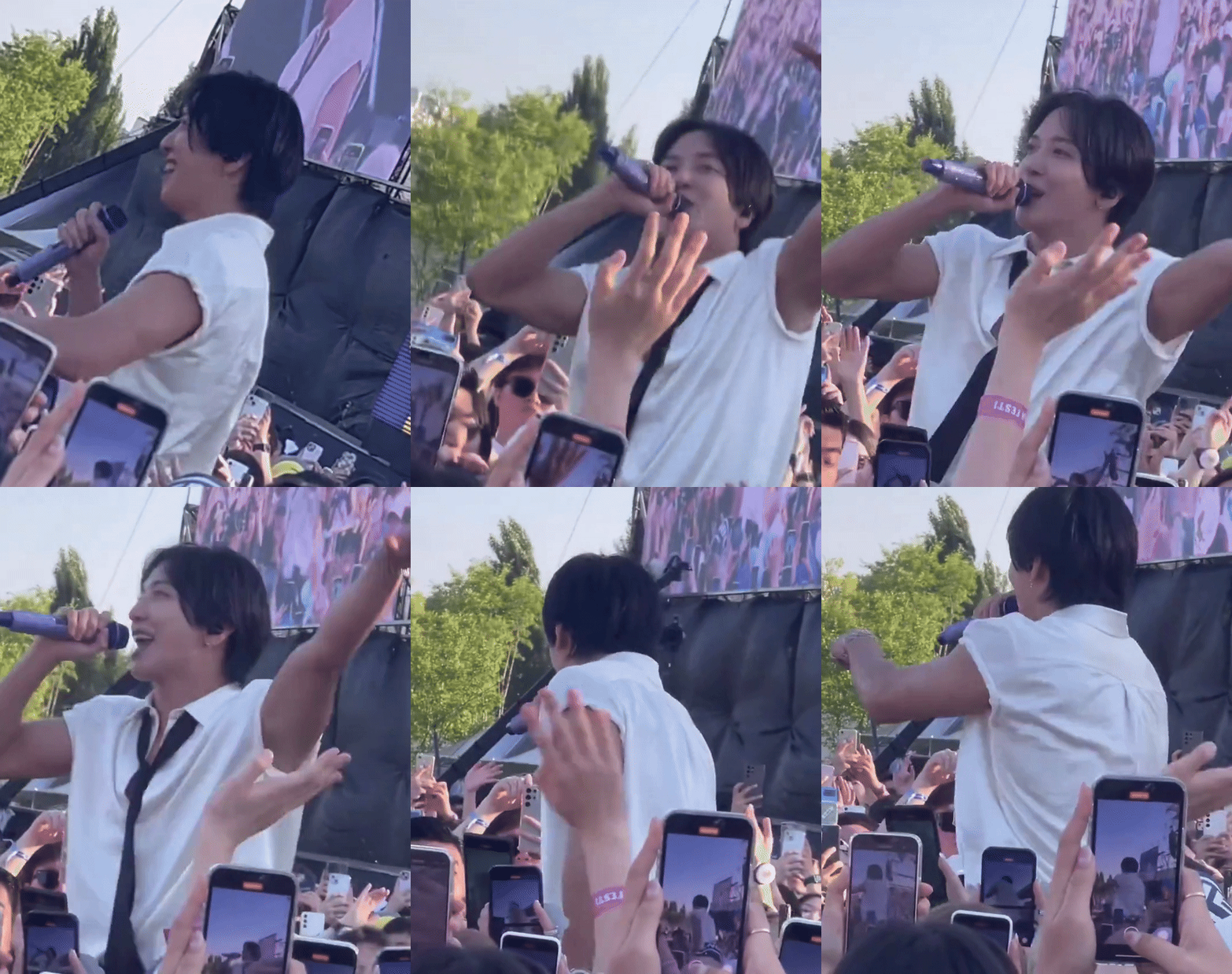
Earlier this summer they tore it up at the Peak Festival in Seoul and they’re scheduled for the Soundberry Festival, also in Seoul, upcoming later in July.
Yonghwa is one of the best and most versatile pop music composers in the world and he and CNBLUE have been popular for years in Japan and across Asia for their blistering live performances, but for some reason in South Korea they haven’t been able to fully shake their image as an idol band. By playing these indie and college music festivals they’re reinventing and reintroducing themselves to a South Korean audience who may have only thought of them as a Kpop group. CNBLUE is finally making the transition from being regarded as just a Kpop idol band to being recognized in South Korea as a legit live band and actual musical artists.
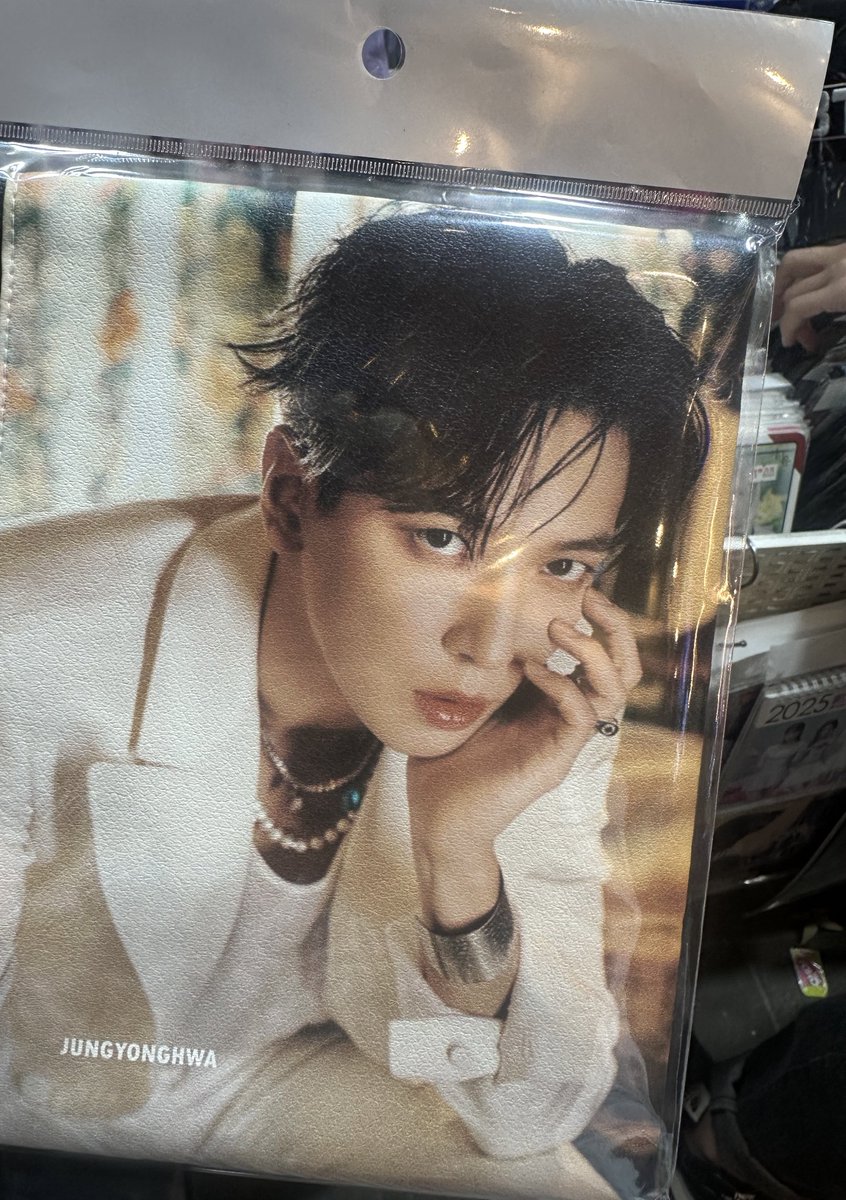

All of these recent shows in South Korea seem to have amped up CNBLUE’s and Yonghwa’s name recognition again in their home country. Recently a fan reported finding socks and other merch for sale once again with Yonghwa’s face on them in street markets in Seoul. Despite being a completely unscientific indicator of popularity or success, this somehow feels like a good omen to me.
You Only Live Twice: CNBLUE in Tokyo and Yonghwa in Hong Kong concert reviews, part 2

The second half of my CNBLUE/Yonghwa doubleheader took place the first week of July in Hong Kong. I hadn’t been to the former crown colony since 2019 so it was nice to visit again and see how things are faring there after the tumultuous pro-democracy protests of that year, followed by the onslaught of the COVID-19 pandemic, and the ongoing brutal human rights violations of the CCP. That’s a whole nother post, but needless to say the people of Hong Kong are very resilient despite all of the upheavals of the past few years.
But as far as the concert went, it exceeded expectations, as Yonghwa was in fine spirits, happy and energetic. After the many angsty performances of the past few years it was great to see him enjoying himself, both solo in Hong Kong and with CNBLUE in Tokyo. He’s most definitely got his swag back after several years of strife and uncertainty.

photo: @colori_KMH
After a few months of touring Yonghwa’s voice at the Hong Kong concert was sure and strong and he was clearly having a blast He wore his peacockiest outfits, including sparkly silver shoes, a striped pink satin shirt, and shimmery white trousers, as well as gorgeous suit jackets festooned with sparkling brooches and a fabulously blingy jeweled vest from the Alexander McQueen menswear collection. He also had a very faint pink wash over his bleached blond hair, which only accentuated his dandy-ness. He clearly came for the fun and wasn’t leaving until he got it.
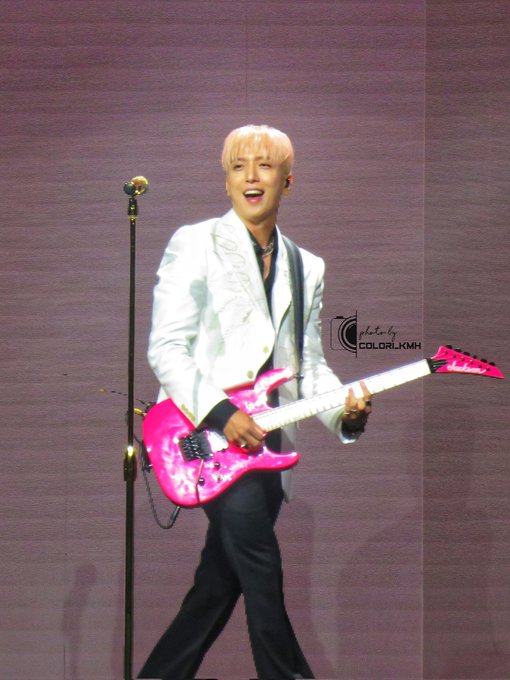
photo: @colori_KMH
This tour’s theme was All-Rounder and Yonghwa was determined to live up to the moniker. He played the guitar and keyboards, rapped, danced, hit some insane high notes, sang in Korean, English, and Mandarin, and showed off his many compositions that were variously deep house, trot, rock, pop, ballads, EDM, city pop, Latin, and jazz. He also made reference to his actor-dol status, performing songs from two of his k-dramas, SELL YOUR HAUNTED HOUSE and HEARTSTRINGS, as well as the marriage reality show WE GOT MARRIED.
Yonghwa’s also gotten much better at dancing since he first tried his hand at it some years ago. His footwork is much lighter, possibly as a result of his new boxing habit, and his time in the ring has loosened up his movements. Unlike he was with his earlier dancing efforts, he’s now loose and limber, with a bigger vocabulary of movement including head twitches, hip rolls, and shoulder dips. He’s feeling the music through his body, not just mechanically doing the moves.
The crowd in Hong Kong skewed much younger than in Tokyo, with many fans in their twenties as opposed to the older ladies that comprised much of the audience in Japan. There was also a whole lotta Mandarin being spoken in the audience even though the show was in Hong Kong, which meant either that a lot of fans from China had made the short trek to the former Crown Colony or that Mandarin is just more common in Hong Kong these days. In a nod to his sinophone fans Yonghwa covered JJ Lin’s sweet pop tune Little Dimples twice, once in the main body of the show and once as part of his marathon encore session. But this meant that the set was missing his glorious cover of the iconic trot song Million Roses (백만송의 장미), which he had previously re-arranged during his stint on K-Trot In Town, the popular variety show he was a main cast member for during the pandemic lockdown.
Notably, compared to shows in Japan, security at the Hong Kong concert was pretty laissez faire. There were security people posted at the end of the rows but none of them made much effort to keep fans from opening up the barriers and running closer to the stage. Security also ignored the many fans taking videos and photos during the show, unlike in Japan where recordings of any sort are punishable by expulsion from the venue. So when Yonghwa decided to come off the stage during Fireworks and subsequently got very close to the crowd, the rush of fans to the front of the hall got a bit dicey. Yonghwa quickly retreated back on stage well out of range. I think he was actually practicing crowd control, trying to calm down a potentially dangerous crowd crush situation.
Just like he and CNBLUE did in Tokyo, after twenty or so songs in his regular set Yonghwa sang several songs during a triple encore, and he was clearly having the time of his life interacting with his fans. He was beaming during all of the encore songs, including the usually very somber ballad One Fine Day. Whereas OFD used to be the final song in the setlist, on this tour he performed it about halfway through the show. It used to be all about Yonghwa preparing to leave, mostly for the military, but now that life is happier and less full of dread he seems content to perform it not as the mood-setter but as just another one of his great compositions. It’s not the theme for his life any more, I don’t think.
He used the second go-round of OFD to show off his pipes and it became a crazy singalong with the crowd swapping lines with him throughout the song. It was almost like he was treating the audience to the song’s high notes just because they loved them so much. He’d already sung the song once earlier in the show with the full theatrical angst that it deserved but I think the second version was actually better, in part because he was so relaxed and in part because the song somehow became happy and redemptive. He may also have been belting it out because it was the last song of the show and he didn’t have to save his voice.
It feels like Yonghwa is finally allowing himself to savor his life and appreciate his happy place, which is onstage performing in front of a huge crowd. Yonghwa is also one of the most relentless people I’ve ever come across and every concert is a step toward his life goals, whatever they may be at the moment. But he also seems to genuinely love being on stage and interacting with audiences as well, and he is a very generous performer, as evidenced by his extended encores in Hong Kong as well as with CNBLUE in Tokyo.
So Yonghwa’s main paradox remains: how can someone so good-looking be so multitalented as well? The casual observer might discount his musical aptitude but closer inspection reveals his prodigious abilities. When he was younger his looks may have unlocked the door, but his talent, perseverance, and hard work have kept it wide open.
You Only Live Twice: CNBLUE in Tokyo and Yonghwa in Hong Kong concert reviews, part 1

Part One: CNBLUE in Tokyo
This summer I had the privilege of replicating the CNBLUE/Jung Yonghwa concert double bill I’d experienced in 2017. I’d already planned to be in Taipei in late June, so when CNBLUE announced that the last concert of their Calling Zepp Tour would be in Tokyo right around then I made a quick decision to extend my itinerary. The recent years of military hiatus and COVID-19 CNBLUE concert-deprivation have made me jump at any chance to see them live. And then Yonghwa announced his All-Rounder tour would have a stop in Hong Kong at the beginning of July and I thought, what the heck, I’ll be in Asia anyway, so after calculating costs and counting my pennies I added a stopover in the former Crown Colony. After all the strife of the past four years I wasn’t about to miss a chance to see my favorite performers in concert-–you only live once, after all.
CNBLUE’s latest Japan tour took place on the Zepp circuit, a chain of small concert halls around the country that hold anywhere from 1,000-2,000 people with general seating tickets. As my friend Glenn recounted in his recap of two CNBLUE Zepp concerts from the tour, the smaller halls create a much more intimate environment than the 8,000-17,000 seat arenas that CNBLUE usually plays in Japan. The tour was a novel experience for fans as well as a way continue to rebuild the CNBLUE brand in Japan after their long hiatus during their military enlistments and during the COVID-19 shutdowns of the past few years. The show I attended at Tokyo Garden was in the largest venue of the tour with about 8,000 seats so it wasn’t quite as cozy as many of the previous stops. But as it was the last stop on the tour, by then CNBLUE was all limbered up and ready to rumble.

The band was definitely more confident and comfortable onstage than when I saw them back in November at Budokan, which were their first live shows after the military/COVID hiatus. By the time I saw them at Tokyo Garden they had a good ten shows under their belt and they had completely regained their swag.
The setlist for this tour was designed for maximum impact in the small Zepp venues, so the band came out swinging, opening with IN MY HEAD and then blazing through three more of their rockiest rock songs. The message was clear that they came for the high energy. Leader Jung Yonghwa busted out the hot pink Jackson guitar he’d debuted at Budokan, taking a few guitar solos to show he knows how. He had his game face on at the start as well, scowling and grimacing rock-star style. The sound in the hall quickly reached that satisfyingly massive roar that CNBLUE achieves when they’re playing their loudest, most rock songs.
Flexing their versatility, in the second set the band completely switched it up, playing three pop tunes that let Yonghwa practice his kawaii. On THIS IS Yonghwa demonstrated another aspect of his impeccable vocal skills as he flawlessly spit the song’s staccato lyrics. CNBLUE even showed off some of their dubious dancing skills during SHAKE, with much joking and smiling amongst the band members as well. They effectively worked the crowd, reflecting the years they’ve spent honing their entertainment chops on countless South Korean variety shows.
After another lengthy comment section they followed with yet another mood change, with a set of three more introspective songs including one of my favorites, the gorgeous trip-hop song SUPERNOVA. I’m happy to see this one added back into the setlist–-I’m wondering if it’s been absent due to the song’s tricky high notes, but recently converted second lead vocalist Jungshin was able to pull it off pretty well. The set concluded with ROYAL RUMBLE, one of their best songs and quite possibly their masterpiece. I’ve heard the song performed in Korean at a previous concert in Taipei but ROYAL RUMBLE in Japanese somehow hits different. The two sidemen guitarists played the intricate counterpoint that had been missing in previous live versions and the spare, repeating motif was mesmerizing, creating a hypnotic, somewhat claustrophobic mood that underscored the song’s bleak lyrics. Yonghwa as usual gave 1000% on the singing of the song, effortlessly moving between crooning, whispering, growling and belting. He puts his entire being into projecting the song’s emotion while maintaining absolute control over his vocals.
Bassist Jungshin’s performance contrasted most strongly of the three from the November Budokan shows. Back then it was his first couple live shows singing second lead and he was nervous as a cat, barely moving from his mic the entire concert, and his somewhat tentative vocals reflected his nervousness. At Tokyo Garden he sounded great and was relaxed and happy, roaming the stage freely and clowning with his bandmates. His basslines also were fire as he switched effortlessly between plucking and thumb-popping, demonstrating that his bass work is the spine of CNBLUE’s sound. Kang Minhyuk’s drumming was also on point, strong, precise, and full of imagination.
I had no idea what they were saying during the long comments between sets but the three were loose and funny the whole night. Jungshin in particular made everything hilarious. Though I don’t understand more than a handful of words in Japanese it seemed to me that Yonghwa has upped his nihongo game, speaking rapid-fire Japanese to the appreciative audience.
They were clearly at ease during this show, unlike the intense nervousness of their Budokan concerts back in November. The interplay between the three of them is one of very old friends who have literally gone through a war together and survived to emerge on the other side.
The band wrapped up the main part of the show with six of their most high-energy tunes, starting with a blistering version of their latest Japan single LET IT SHINE. The crackling guitar riff that opens the song gave an immediate jolt of energy, supplemented by a soulful Hammond organ sound by the backing keyboardist. It’s a testament to the continued quality of CNBLUE’s work that their most recent songs, LET IT SHINE, TRIGGER and MOON, are as strong and catchy as their longstanding classics like COFFEE SHOP and BETWEEN US.
The set also included their interactive jam song WAKE UP. At Budokan in November the no-cheering rules were still in effect at concerts in Japan but those have since been lifted, so Yonghwa was able to practice all of his favorite call-and-response games with the audience. The song, which in its original studio incarnation is only about three minutes long, went on for a good twelve minutes or so and included both Jungshin and Minhyuk stepping up to the mic to join Yonghwa on singing out phrases for the audience to mimic.
The staging at Tokyo Garden added a nice laser light element that reached out over the packed audience. However, the videos on the background screens looked a bit underwhelming and cheesy. There were no background videos for the prior ZEPP Tour shows so maybe an intern was tasked at putting these together at the last minute because they were very minimal and fairly bad and generic.
After concluding the last set the band came back onstage and proceeded to perform five songs during two lengthy encore sessions, encouraged by a very loud and raucous audience. The first encore included their traditional winding-down songs TRY AGAIN SMILE AGAIN and GLORY DAYS, but the enthusiastic crowd drew them back on stage for rounds of Happy Birthday in both English and Korean and presentations of cake and flowers to Yonghwa and Minhyuk, the birthday boys.
Yonghwa seemed to be so happy that he didn’t want to leave the stage, insisting on playing two more songs after that. His ear-to-ear smiles during the final encores were infectious and the whole venue was abuzz with good vibes and adoration. He seemed elated to have successfully concluded the tour and to have performed a complicated show to a very full house.

He and his bandmates also seemed happy and relieved to have completed a popular comeback tour in Japan, where their fanbase is the strongest. But even in their stronghold things have been in turmoil in the past few years, since the withdrawal of their former guitarist, Lee Jonghyun, who had been very popular in Japan and with some fans not supporting his departure. By playing in much smaller venues than they’re accustomed to, this tour was a way of regaining some of those fans and giving them the treat of seeing CNBLUE in close quarters. For the most part they were greeted with full houses and satiated audiences, so their strategy worked. In addition, I think I saw more male fans this time around (which is not to say that there were many of them). One sat next to me and seemed to enjoy the show, though he was less interested in the between-set clowning around. But maybe the band is starting to expand beyond its mostly-female fanbase and will be able to further grow its audience beyond its Kpop roots.
Hopefully CNBLUE will have continued success as they rebuild the brand after a few years of setbacks. It was touch and go for a while after Jonghyun departed the band in 2019 so it’s great that they’re still alive and kicking. The average lifespan of a kpop group is seven years or less so after more than thirteen years on the circuit CNBLUE continues to defy the odds.
Although they could probably have individual careers as actors and entertainers, such as Minhyuk most recently creating a buzz as the male lead in the hit Netflix drama CELEBRITY, it’s nice to see them focus on making music together again. While they’re entirely fine and skilled as actors, they are geniuses at music and live shows. And I’m definitely here for the music myself.
Next up: Part 2: Yonghwa in Hong Kong
A Tale of Two Tours: CNBLUE and One OK Rock In Japan

A special guest post by CNBLUE fan Glenn!
I was in Japan for a bit over a week in April 2023 and in that time was lucky enough to attend shows on tours by two different veteran acts – CNBLUE’s Calling Zepp tour and One OK Rock’s Luxury Disease stadium tour. Very different in their size and scale, but both exceedingly worthwhile.
Introduction
I suppose since I am Valerie’s guest here I should introduce myself. My name is Glenn and I am a 55-year-old man who lives in the DC suburbs of Northern Virginia. So, not exactly in the typical CNBLUE demographic. I first saw CNBLUE on the old MNET America cable channel about 8 years ago and I was immediately captivated by their music (and good looks). Until then I had only really been exposed to KPOP dance groups, so the idea of a real band playing their own instruments was fascinating. I dove headlong into their story, watching every youtube video and collecting as much of their back-catalog of CDs and DVDs as I could. Luckily, the many, many tour DVDs do a good job of capturing what the band is all about. Shortly after my intro I discovered that the WHITE Spring 2015 tour was going to be happening. In those days getting tickets was difficult but there was a fairly straightforward way to get them via secondary sources. So with that in mind I used one of the many little companies that work on behalf of foreigners to get a ticket to one of the Yokohama shows. I also became aware via the CNBLUE International Fans group on FB that someone had an extra ticket to the other Yokohama show. After an easy paypal transaction I had secured tickets to both and made my plans for a whirlwind weekend in Yokohama. It’s nice to have the tour DVD of a show I attended. So those are my general bona fides.

For the 2023 CNBLUE Calling Zepp tour I had already booked a trip to Asia before the tour was announced that included about a week in Tokyo for the first week of April. Given the byzantine world of Japanese concert ticketing I expected it would be difficult to get tickets since the initial lottery was only open to Japanese BOICE. which seems to basically require you to live in Japan (or be close friends with someone who does). Luckily when the winners of the first round of the lottery were announced several BOICE with extra tickets were advertising them on Twitter. Thanks to Valerie for making me aware of this! I contacted a few and was able to fairly quickly line up a ticket for night 2 in Nagoya and night 1 in Sapporo. Both were extremely helpful to me and I sent payment by PayPal, then had to go through the process of figuring out how to get a Japanese phone number to be able to use the electronic ticketing system. This also proved to be stressful but fairly straightforward.
With all of that out of the way, let’s (finally) get on with the show!
When this tour was announced I was initially a bit baffled. Why was a band that’s been playing arenas for years scaling way down to a tour of Zepp live house clubs? From what I can gather it was a chance to rebuild their audience and to reconnect with their biggest fans after being on hiatus for military service and after the loss of a band member.

I arrived in Nagoya a few hours before the second night’s show. I had seen the set list posted from the first night so had some idea what to expect. Zepp Nagoya holds about 1800 people. Signs were posted around the club and around the block for every 100 people. Everyone lined up by their ticket reference number. My number for this show was 1062. Around 5:30 I walked across the street from my hotel (Strings Hotel Nagoya – highly recommended if you’re going to a show here) to the club to see where I needed to go. Once doors opened at 6 PM the ticketing app made the tickets active and the line eventually started moving.

Despite my high number when I got inside the club I managed to be one of the last people to squeeze into the area about fifteen rows deep from the stage. Anticipation built as the 7 PM show time approached with audio of past CNBLUE shows playing over the club’s PA. Shortly after 7 PM the lights went down and Kang Minhyuk was first out to his drum kit. Now that they are a trio Minhyuk’s spot has moved to the front of the right side of the stage with bassist Lee Jungshin in his customary spot on the left and of course frontman Jung Yonghwa in the center. The sound is filled out on this tour by three extra musicians—two guitar players and a keyboard player who mostly were kept off on the fringes of the stage.
The show was arranged in short blocks of songs, the first of which was the “Rock” block that opened with IN MY HEAD. The sound in the club was a bit bass-heavy so having concert earplugs made a big difference in filtering the sound. Yonghwa’s vocals were loud and clear and Jungshin’s takeover of former band member Lee Jonghyun’s vocal parts was pretty seamless. It also felt like having Minhyuk that much closer to the audience really made the drums even more immediate. The block finished out with ONE TIME: RYU CAN DO IT, WHERE YOU ARE, and one of my favorites, TIME IS OVER. It was quite interesting to see how the set was constructed with some real out-of-left-field choices. I’m not sure I would have expected TIME IS OVER but I’m glad it was there.
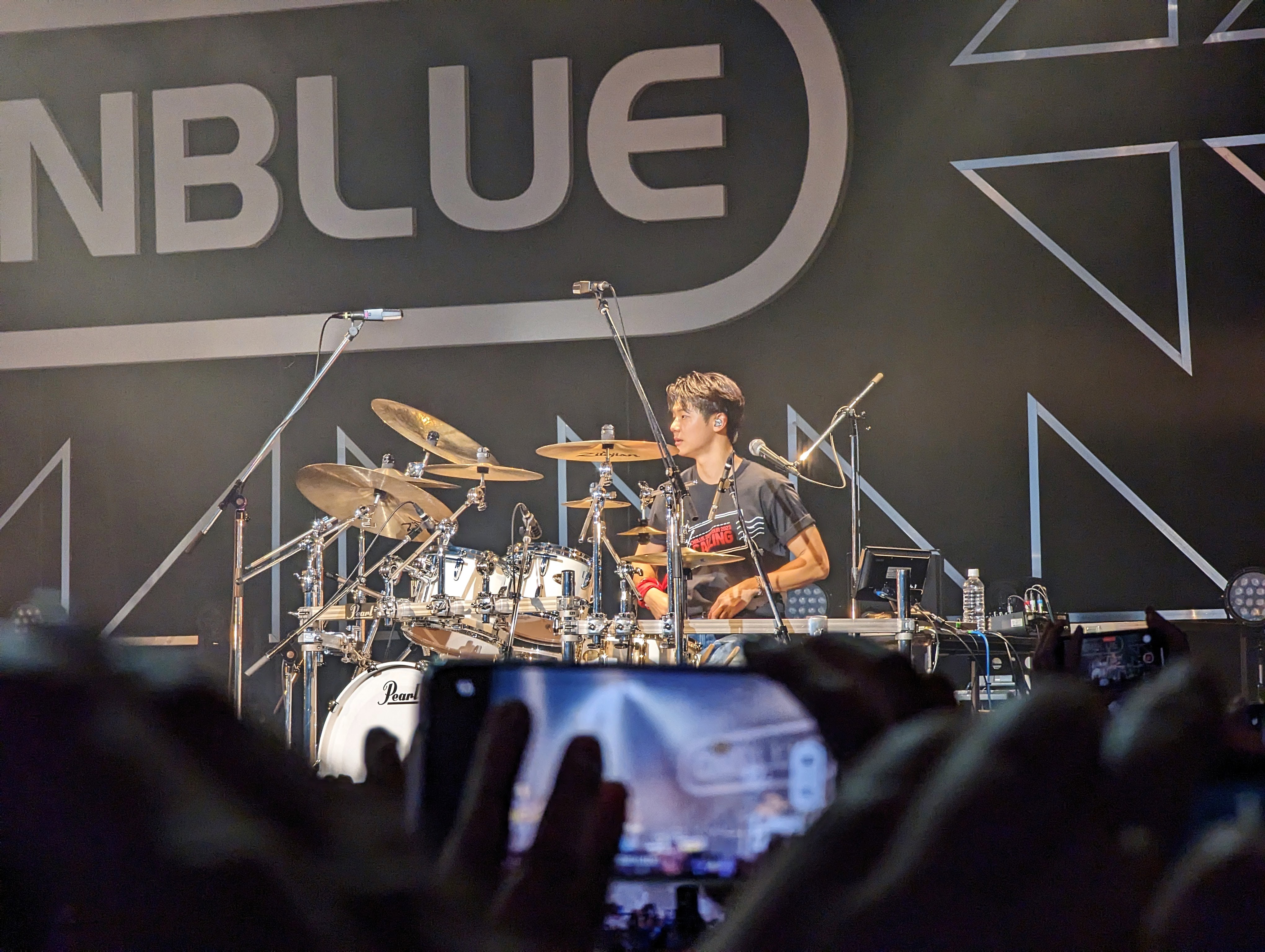
Then it was time for the first MC block. Since I don’t speak Japanese I don’t know exactly what was said but it was the usual introductions from the three of them welcoming everyone to the show and riffed on the word “Calling.” Yonghwa also mentioned that IN MY HEAD was their major label debut single.
Second was the “Dance” block that opened with FACE TO FACE (with Yonghwa mugging for the crowd), THIS IS, and SHAKE SHAKE. That was followed by the next MC block with a recap of the SHAKE SHAKE choreography.THIS IS also seemed like a pretty deep cut.The guys were all extremely relaxed with lots of laughter and gentle ribbing of each other.
Next was the “Emo” block that kicked off with SUPERNOVA—yet another track you wouldn’t have really expected. This part of the show was very strong, however I felt like at the end of this song the drums got a little out of sync with everyone else. It definitely sounded better at the Sapporo show. That was followed by one of the real highlights of the show for me which was ROYAL RUMBLE. I feel like this song is really underrated and Yonghwa really gets to exercise his vocal talents. The additional musicians also allow him to just sing this song without having to worry about anything else. The section closed out with MOON, with the very excited crowd enthusiastically clapping along.

The following MC section was time for Food Talk, a staple of every CNBLUE performance.
The next section has apparently been dubbed “Powerful” by YH and included LET IT SHINE, TRIGGER, and BETWEEN US. Again the crowd seemed to really enjoy this section of newer material followed by another MC.
And the main set closed out with the crowd-pleasing “Final” section that included some of their best-loved audience-participation songs: LADY, WAKE UP, COFFEE SHOP, and I’M SORRY. Honestly, these are probably four of the best live songs ever. Because they’ve played them so many times and are free to play around a little it’s really a joy between Yonghwa goofing around during LADY, followed by all of the various “Wake Up, Wake Up” call-and-responses that can really be played with. Since the club is small Yonghwa several times called for silence from the crowd and did his call without a microphone, which worked well in such an intimate setting. And then he coached Minhyuk in a couple of rounds of the same thing. For my money COFFEE SHOP might just be the perfect song. It’s just so fun in the live environment and the whole club was really dancing along. I’M SORRY will always be a crowd favorite, with Yonghwa’s overhead arm thing that looks like a little kid asking a truck driver to blow his horn.
Of course the band returned after a brief break to change into the tour t-shirts. Yonghwa delighted the crowd by telling everyone it was ok to get out our phones to take photos and videos of TRY AGAIN, SMILE AGAIN. As someone who’s been to lots of shows in North America over the years I have to say that the prevalence of smartphone photography has largely detracted from the concert experience. So being in a place where photography is strictly forbidden is kind of refreshing since it allows everyone a chance to concentrate on just enjoying the show. But for one song I guess we could all be distracted by trying to get as many good pictures as possible. After that we had time for thank you’s to the extra tour musicians and I presume to the tour and club staff and of course all of us for being there.
The show closed with GLORY DAYS, which I guess seems to be the new traditional closer. After that they took their bows and it was all over.
The show in Sapporo was basically exactly the same but with different Food Talk. The queues were organized slightly differently and I was number 485 for this show. Once inside I got the almost identical spot to the previous show. Zepp Sapporo holds about 2000 but I think this show was not quite sold out and there was a little more personal space on the floor which I really appreciated.

If I could suggest one thing to the band it would be to change up the set from show to show to make them all different. They have such an extensive catalog now that it would be easy to switch out at least four or five songs every show. I get that they like everything to be well-scripted, but my favorite artists over the years like James or REM always played a different show every night. So if you went to multiple shows it was always fresh and it kept the band on their toes. On a tour like this where there is no big video or light show it would be somewhat easier to do.
I had wondered how the smaller stage would affect Yonghwa’s manic energy and his running all over the place, but in general he was focused and had plenty of chances to get out his energy. He’s always been the consummate frontman and in a venue this size he’s really able to connect with everyone.

The chance to see the band in a venue this size was really exciting and I still can’t quite believe how lucky I was to see them twice on this tour. A huge thank you to the two Japanese fans who sold me the tickets and were so nice in looking after me to make sure I got the tickets and knew where to be. In such a crazy world these days it’s great to see that there are still people who are happy to help a complete stranger.

One OK Rock at Tokyo Dome
Sandwiched between these two shows I had a chance to see One OK Rock at Tokyo Dome. On a bit of a whim I checked when I arrived in Japan to see if there were any tickets available in the Pia website and sure enough there were. I had no idea where the seat was located but it was easy enough to buy my ticket.
Tokyo Dome shows are very well-organized. I found the appropriate entrance and asked if I was in the right place. The staff member tapped on my phone and then another person applied a little NFC device to the screen to verify my ticket and I was in. One of the nice things about shows in Japan are the early start times. CNBLUE was doors at 6 PM, show at 7 PM. One OK Rock was doors at 4 PM, show at 6 PM. I had arrived a little after 4 PM, which was obviously quite early. It turned out that my seat was in the outfield bleachers with a generally obstructed view of the stage and no view of the big video screens. I couldn’t even see Kanki Toyoma but could just see the front of his drum kit.
I will admit that, while I really enjoy their music, I am not as intimately familiar with their catalog. But I knew this would be an interesting experience. When we entered everyone was given a radio controlled LED bracelet. These were certainly an integral part of the overall light show.
The band were fresh off a North American arena tour opening for Muse, but of course they are so huge here in Japan that they can sell out consecutive nights at the biggest stadiums in the country. I believe Tokyo Dome holds about 50,000 people for concerts and the place was packed full by show time.
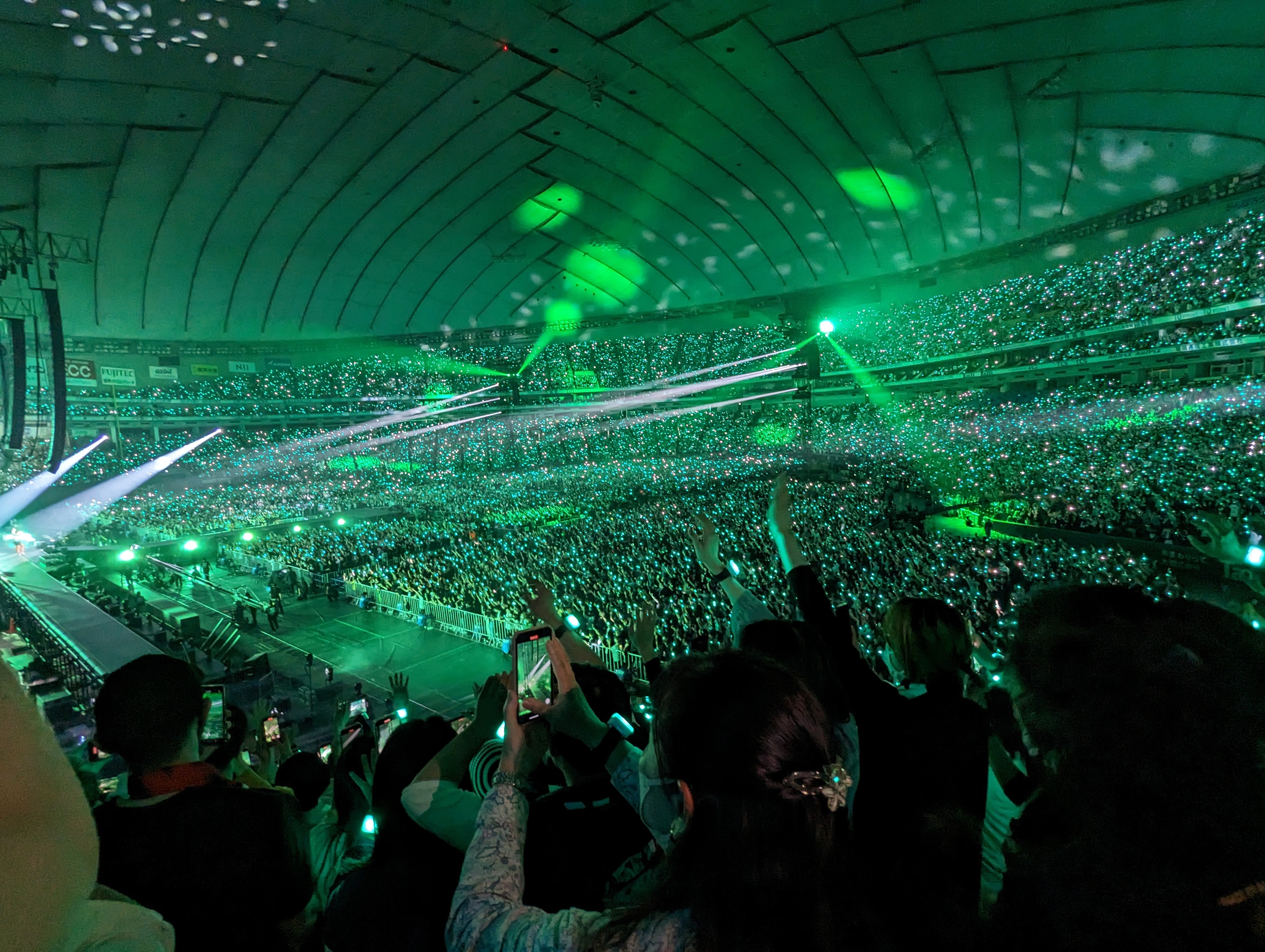
The lights went down a few minutes after 6 PM and the opening strains of WONDER hit the crowd, but only Tomoya was on the stage so everyone was a little confused. Then spotlights hit two raised platforms around 1st base and 3rd base with Yamashita Toru and Kohama Ryota atop them playing before eventually coming down and running to the stage. And then Moriuchi Taka was raised up to the stage extension in front of the stage to start singing. I am not really a fan of stadium shows but the band are veterans of big shows like this and know how to make BIG movements and grand entrances. There is clearly a lot of work that goes into putting together a show on this scale. They really brought out all of the pyro, fireworks, and dry ice aided lasers.
I won’t do a song by song of the show, but they played 25 songs over the course of nearly 3 hours including some quite long MC sections. Here’s a link to the set https://www.setlist.fm/setlist/one-ok-rock/2023/tokyo-dome-tokyo-japan-3bbb6490.html Apparently this show was recorded for the eventual live DVD.
The show was quite a spectacle as I expected. Once the bracelets got activated the whole audience became a giant mood light. Everyone was REALLY into the show with most people singing along to everything and most arms in the air. Permission was granted for everyone to photograph the encore.

Taka is another fantastic frontman who loves being dramatic with lots of grand gestures. They’ve played lots of very large venues through the years so he’s clearly had time to hone his craft and play to a venue this enormous. For such a little guy he really has a large presence in addition to his huge voice.
Among the interesting contrasts between these events was the breakdown of the crowd. At the two CNBLUE shows I attended I’d estimate that I saw a total of ten other men (besides the band, crew, and venue staff) and I think the average age was probably in the area of forty. At One OK Rock I think it was about 50/50 women to men with the crowd skewing younger to their twenties – although I did see one businessman in a suit who was probably in his sixties. I’m not really sure why CNBLUE doesn’t have much of a male fan following. Are they just too handsome?
Overall it was three great shows by two excellent bands. I’ll always prefer a more intimate venue, but the OOR stadium experience was worth doing.

Practical Information
Valerie (again!) suggested a company called Mobal (www.mobal.com) which will provide you with a Japanese SIM card and real Japanese Softbank or DOCOMO phone number. Just make sure your phone is unlocked. You can either pick the card up when you arrive in Japan or they will ship it to you for free. The cheapest short term plan is currently about 8000 JPY for thirty days which includes a phone number for calls and texting as well as 7 GB of data.
Once you receive the SIM you can request a specific date to activate your account and they suggest that activation may take up to a couple of days so getting it activated right before you arrive is a good idea.
You will need a Japanese phone number to create and verify your account with the Ticket Pia site (t.pia.jp) and their service called Cloak which allows you to receive ticket transfers from other users. Because I had never used this before and couldn’t actually register until I arrived in Japan there was some stress about whether I would be able to get it working. But the worry was unnecessary as I was able to register no problem. As part of the process you call a toll free number from your phone number to verify it. Once I had that set up I was able to receive the ticket transfers. Until I actually got into the show though there was still some question over how it worked. But just showing the ticket screen to the venue staff was all I needed to do and they quickly clicked the link they needed to and I was in.
For the One OK Rock show however I also needed another app called MOALA to use this ticket. The Google Play store told me this app wasn’t available to me (presumably because it’s a US phone even though I had my Japanese SIM installed), but I managed to install a sideload version that worked fine. Just search for something like “How to install the MOALA app” in your favorite search engine and you will find the apk to download and install.
I Don’t Take A Break, I Break Bricks: Rhetorical And Poetic Devices In CNBLUE Lyrics
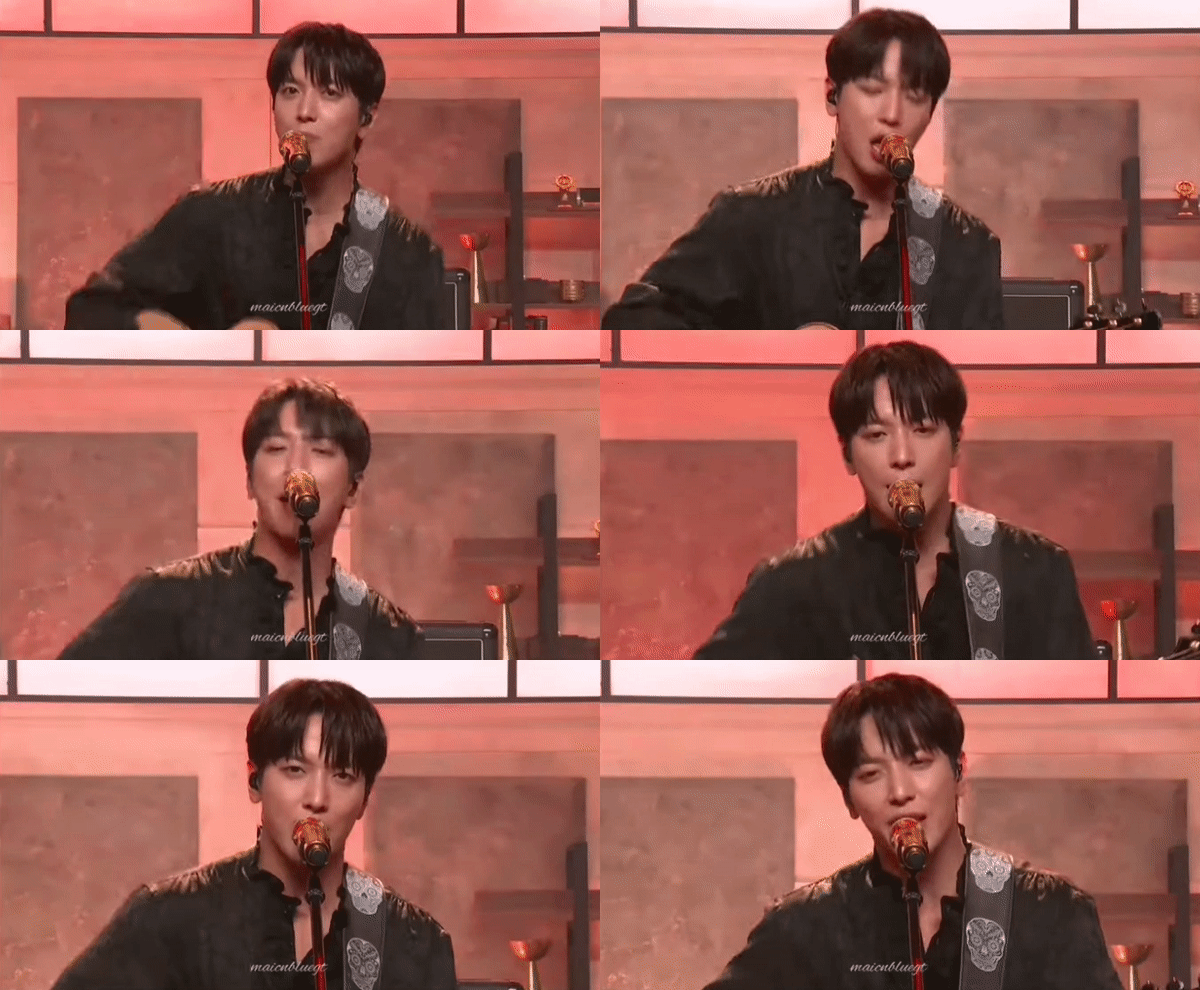
So since I’ve been spending the past 10 days in a quarantine hotel in Taipei as part of the social experiment that is Taiwan’s COVID-10 response, I have a lot of time on my hands. Around the fifth day of my quarantine I came across a twitter thread with examples of rhetorical devices in Taylor Swift lyrics, which inspired me to adapt the idea to a list of rhetorical and poetic devices in CNBLUE’s lyrics. CNBLUE’s leader and chief songwriter Jung Yonghwa, who writes in English and Japanese (in collaboration with Japanese translators) as well as his native Korean, has a distinctive way with words and it was interesting to analyze the craft he puts into his wordsmithing. I’m no rhetorician so some of my examples might not be quite right but I had a good time doing a deep dive into the lyrics of my favorite band.
Lyrics in translation from Korean or Japanese are in italics. All others are in their original English. All lyrics by Jung Yonghwa unless otherwise noted. A version of this originally appeared as a twitter thread. Some lyrics are from solo releases by Yonghwa. Many translations courtesy of justjyh.com
1. ALLITERATION: the succession of words with similar sounds
“Let’s stay sober tonight”
–Stay Sober
2. ANAPHORA: the repetition of a word or phrase in successive clauses.
“I think of you at the blowing wind
I think of you at the dazzling sunlight”
–Can’t Stop
“My heart stops at this cold love, my heart breaks into pieces
My breath stops at this sick love, my breath slowly dies”
–Cold Love
“Love is meant to be cruel
Love is meant to be piercing
Love is meant to be like fire”
–Love Is
3. ANTANACLASIS: The repetition of a word within a phrase or sentence in which the second occurrence utilizes a different meaning from the first.
I don’t take a break, I break bricks
–Ryu Can Do It
4. ANTIMETABOLE: The repetition of words in successive clauses in transposed order.
I see right through you the same
Same way you see right through me
–Brothers

5. APOSTROPHE: any instance when the speaker talks to a person or object that is absent from the poem.
Hello Hello Hello Mr.KIA
Don’t be such a snob
Don’t get on the high horse, man
–Mr. KIA
6. ASSONANCE: The repetition of similar vowel sounds in neighboring words.
“You shine a light so bright that it’s blinding
Like a firework that’s blooming in the sky”
–Summer Dream
7. ASYNDETON: the omission of conjunctions from a phrase or sentence.
“People become enemies, piercing, ripping, disappearing”
–Checkmate
8. BLASON: describes the physical attributes of a subject, usually female.
“It’s the stain of your lipstick
On the glass that you share with
Slowly crossin’ your legs
As you’re playin’ with your hair”
–Make You Mine
9. ENJAMBMENT: a line break that interrupts the flow of a sentence
“Slowly tracin’ all the droplets
As they’re drippin’ off your hair it’s
So amazing how you find
Another way to blow my mind”
–Make You Mine
10. EPISTROPHE (aka epiphora): the repetition of a word or expression at the end of successive phrases or verses.
“Can’t you be my light?
Please be my light”
–Lonely Night
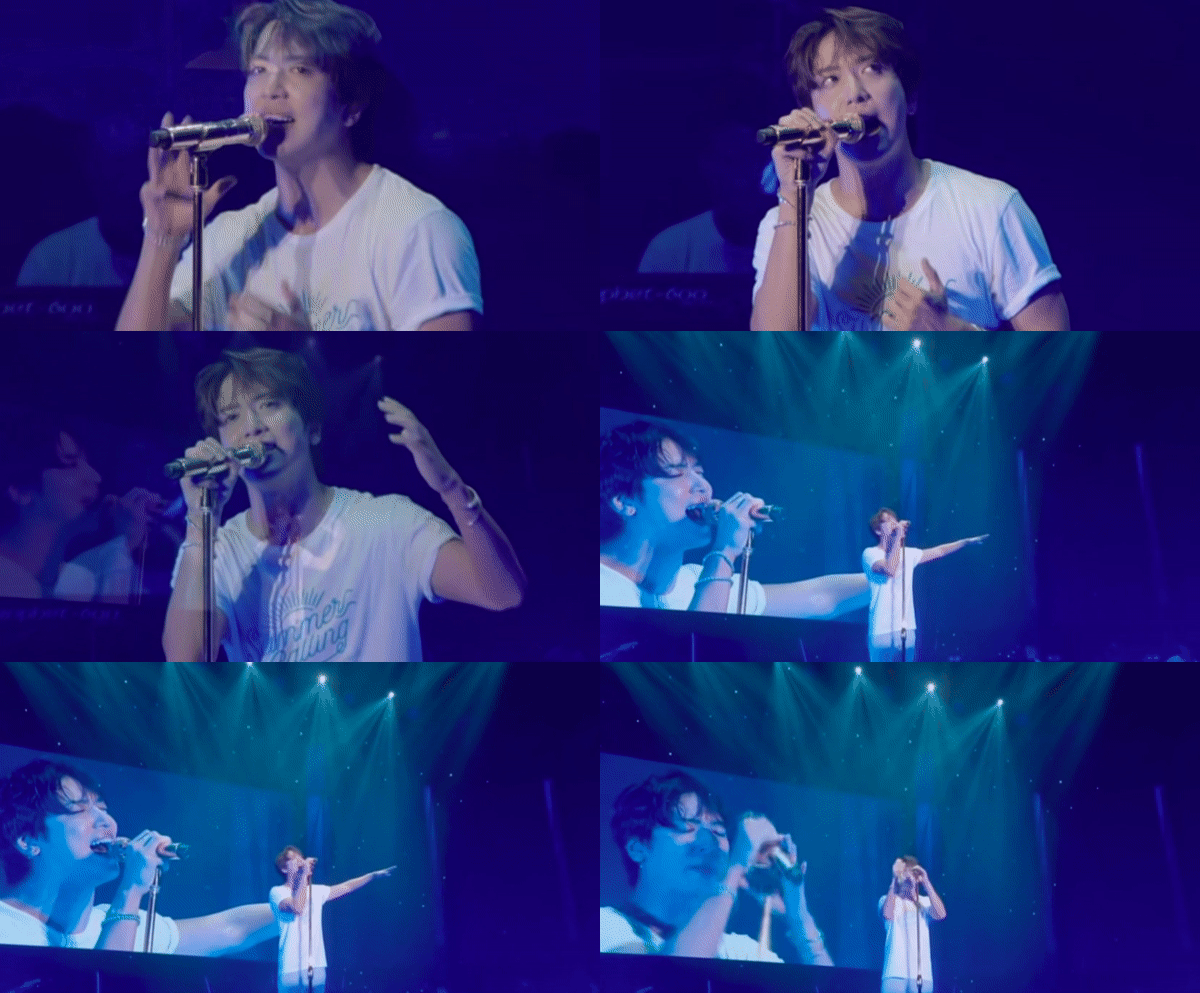
11. EPIZEUXIS: The repeated use of a word for vehemence or emphasis, generally in the same sentence.
“That day, that day, that day, that day, that day”
–One Fine Day
“I don’t know I don’t know I don’t know who I am who I am who I am”
–Till Then
12. EXTENDED or SUSTAINED METAPHOR; the use of a single metaphor or analogy throughout a poem.
“If life is nothing but a party
Your name is on the marquee”
–Life Is A Party
“Even if there are speed bumps to slow me down
I have to speed up again
I keep stopping, when I start to go, I stop again
I raise the speed but you tell me to stop”
–Navigation
“We’re like a puzzle
I want to put them together
Fitting vivid-colored pieces with each other”
–Puzzle
“Because the heart can act like a mirror
In a reflection of one another
The pieces coming together make the world brighter”
–Mirror

13. HYPERBOLE: The use of exaggerated terms for the purpose of emphasis or heightened effect.
“Even sweet rest is utterly bitter survival”
–Royal Rumble
“On the blackest of the nights
My heart burns blacker than the night”
–Tattoo
14. HYPERCATALECTIC: having an extra syllable or syllables at the end of a metrically complete verse
“It’s time of the season
I just wanna breathe it in”
–Summer Dream
15. HYPOCATASTASIS: An implied comparison or resemblance that does not directly name its referent (an implied SIMILE or METAPHOR).
“The streets of Paris speak to me”
–The Moment
16. INTERNAL RHYME: two rhyming words juxtaposed inside of the line
“What can I do to get you through
And make you change your mind?”
–Someone Else
17. LETTER-FOR-LETTER SPELLING
“D.I.A.M.O.N.D girl”
–Diamond Girl
18. METAPHOR: A comparison which directly relates one thing to another unrelated thing.
“Every night’s a breath of life when the city never sleeps”
–Life Is A Party
“We are the fire in the rain”
–Fire and Rain
“I’m your navigation”
–Navigation
19. METONYMY: the use of the name of one thing for that of another of which it is associated
“Only black and white, like the piano”
–Still
20. ONOMATOPOEIA: a word that sounds like the noise it describes
“Tick tock when I see you”
–Face To Face
21. PARALLELISM: the usage of repeating words and forms to give pattern and rhythm to a passage, either to juxtapose contrasting ideas or connect similar ideas.
“’Cause when I’m with you
You’re not with me”
–Someone Else

22. PARADOX: a statement that is seemingly contradictory or opposed to common sense and yet is perhaps true
“When I see you I can’t breathe, I need to see you to breathe”
–Between us
23. SIMILE: A stated comparison (usually formed with “like” or “as”) between two dissimilar things.
“Something in the way that you laugh is like a sunflower”
–Summer Dream
“Like a child
Just like heaven”
–Like A Child
“Like the water drops that soak the dry earth
You filled my insecure heart”
–Glory Days
“My past times are on film like a movie star”
–27 Years
“I can feel your lips settle down on mine like a butterfly”*
–Daisy
*lyric by Lee Jungshin
24. SLANT RHYME: two words located at the end of a line of poetry themselves end in similar—but not identical—consonant sounds or syllable
“Don’t know how to describe
What’s going on inside”
–The Moment
“Can you let me breath?
Can you let me dream?”
–Lonely Night
“Every day is a miracle
The colors are a spectacle”
–Summer Dream
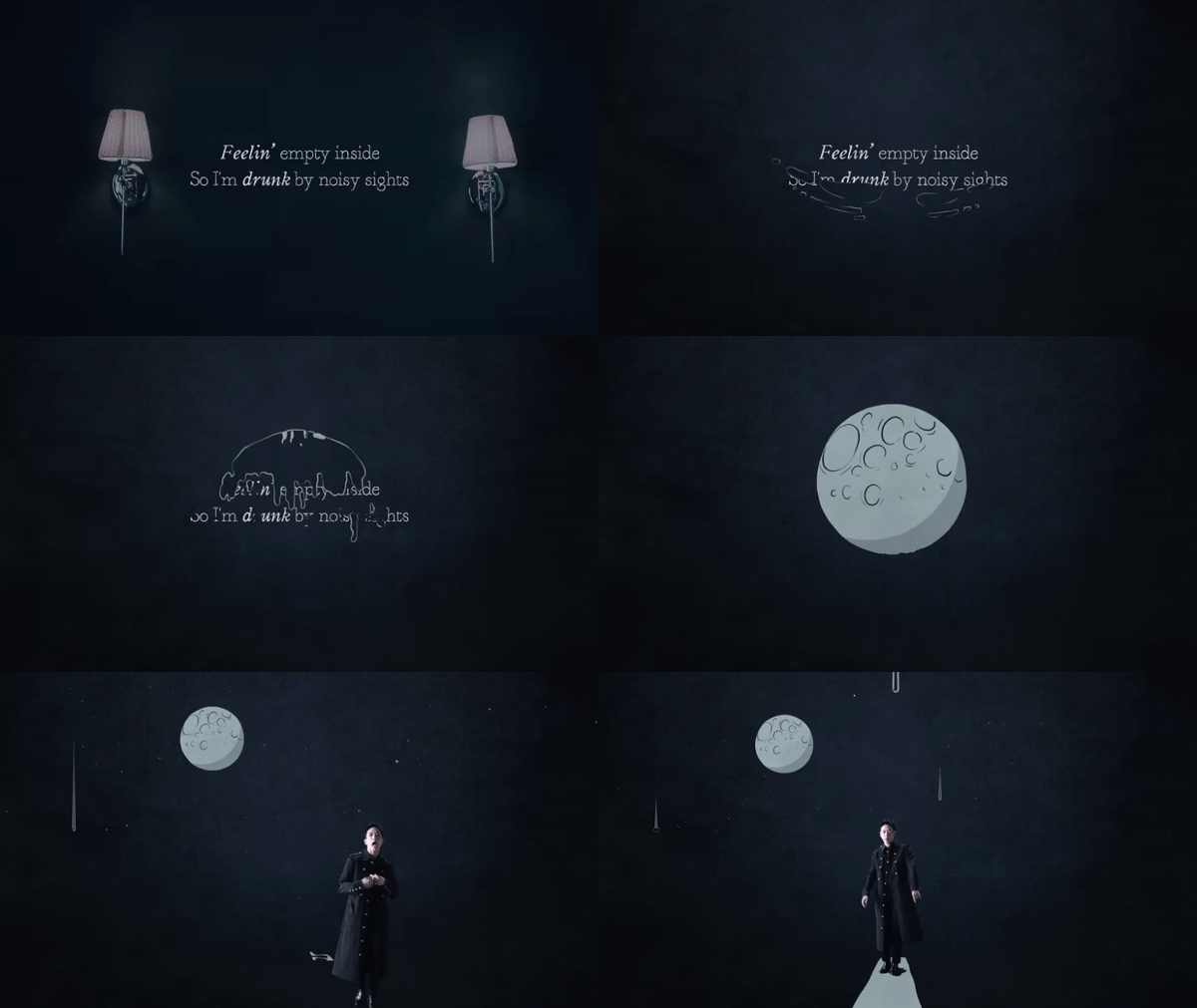
25. CONCEIT: a typically unconventional, logically complex, or surprising metaphor whose appeal is more intellectual than emotional
“People told me nothing’s easy, that’s why I go hard”
–Ryu Can Do It
“When the cloud covers the sky
And stars have closed their eyes”
–Supernova
“So I’m drunk by noisy sights”
–Jellyfish
You’re Playing Me Like A Fiddle: CNBLUE’s Wanted album review

Wanted, CNBLUE’s latest release, dropped this past October and as usual it’s solid all around. On this EP CNBLUE is going back to the 80s when power pop, punk rock’s cheerful sibling, ruled the world, or at least my playlist at the time. Wanted is a textbook example of what Nick Lowe dubbed Pure Pop—simple, upbeat, cleverly crafted pop songs. Once you hear a power pop classic such as 99 Luftballons, Back Of My Hand (I’ve Got Your Number), Starry Eyes, or Attitudes it never leaves your backbrain and the same is true of CNBLUE songs. This five-song EP is power pop at its finest, anchored by Jung Yonghwa’s reliably stellar songwriting and vocals.
Whereas their 2020 release, Re:Code, was moody and introspective, Wanted is bright and buoyant. It’s a throwback to CNBLUE’s earliest releases, with an added sophistication to their musicianship and songwriting. The lead track, Love Cut, is a fun and fabulous blend of so many things, including muscular stride piano runs, twangy, evocative guitar licks, brassy Mexican horn flourishes, a supple bassline, and world-class whistling that pays homage to countless Western soundtracks of yore. The track is a little bit Sparks, a little bit Ennio Morricone, a little bit Herb Alpert and the Tijuana Brass, and all CNBLUE. Yonghwa’s triplets in the pre-chorus and a swinging, half-time bridge that breaks up the beat makes this song all the more kicky and surprising.
Interestingly enough, if the lyrics are read straight up they’re fairly grim, as they lament a toxic relationship gone bad. Taken at face value the bridge reads as some serious stuff:
From the beginning
We were broken
Without a word, you trampled me
I used to laugh and cry at your words
But I’m not that person anymore
But Yonghwa’s plaintive, mournful delivery is almost parodic, like a sad clown miming sorrow. The rest of the track’s upbeat, fast-paced delivery and sassy instrumentation and production further flips the script, making the song’s seemingly overwrought storyline melodramatic and satirical.
Yonghwa also manages some fine and impressive bilingual lyrics. Whereas his very early attempts at writing in English resulted in a peculiar not-quite-there use of the language, here he’s able to seamlessly integrate English and Korean. The second line of the first verse has a killer bilingual Internal slant rhyme (Love or not/animyeon jangnangam) and another equally outstanding example shows up in the pre-chorus (lyrics originally in English in italics)
O ireon That’s my fault
tto igeon nae jalmot
The translation also works perfectly:
Oh, no, That’s my fault
Like how this is my fault as well
This is insanely clever and complex wordplay in two different languages.

The music video fits the song like a glove and in fact the song almost feels like a soundtrack it’s so cinematic. The deadpan way that Yonghwa and Jungshin lipsync their lines, the zooming, vertiginous camerawork, and the smooth-as-silk surfaces of the members’ faces are a video game come to life and it all perfectly matches the song’s inventive instrumentation. With this track CNBLUE is having a lot of fun, tossing out musical references at a mile a minute and behaving like animatronic versions of themselves on screen. The MV’s climax, where the band members whip out their deadly weapons which turn out to be—scissors? underscores the song and the MV’s self-reflexive, surreal, and witty presentation. The whole thing is a ridiculously entertaining simulacra that’s as fun to watch as it is to listen to.
In contrast to Love Cut’s dense, fat production, 99%, the second track, is stripped down to its most necessary elements, but the tune itself is so catchy that it doesn’t need much embellishment. I like the way the track gradually adds elements: guitar, drums, vocals, bass. Yonghwa’s singing is completely on trend as he spits staccato vocals just like everyone’s favorite trap singers. This breezy little number is the epitome of the perfect three-minute pop song and it promises to be completely amazing live.
Following 99%’s sharp, spiky groove, the third track, Hold Me Back, shifts gears to a more relaxed Bruno Mars-esque R&B sound, anchored by Yonghwa’s suave and effortless vocals. The only track written by bassist Lee Jungshin (Yonghwa penned the other four), the song’s finger-snapping, silky vibe boasts a laid-back beat by drummer Kang Minhyuk and a sleek pre-chorus piano and bass riff. Yonghwa’s vocals shine once again as he glides smoothly between his rich midrange to a sweet falsetto.
The next track, Nothing, is a throwback to vintage CNBLUE as this energetic tune sounds a bit like an updated version of their 2012 hit Hey You. The track’s intro is a jazzy guitar, in part to transition from the smooth slow jam of Hold Me Back. This impeccable and well-thought out flow from one track to the next is another feature of CNBLUE releases. Minhyuk’s light and powerful, intricate drumming is one of the highlights of this track. The original Korean title, Teori, literally translates to “bullshit,” demonstrating Yonghwa’s more relaxed attitude toward maintaining his previously perfect pop idol persona.
On Nothing as well as Love Cut Yonghwa has figured out how to best showcase Lee Jungshin’s voice. Whereas on last year’s Blue Stars track from Re:Code Jungshin’s lines were pretty close in tone and range to Yonghwa’s own, here the focus is on Jungshin’s lower, more growly baritone register, which contrasts more clearly with Yonghwa’s light tenor. One of the highlights of early CNBLUE songs was the interplay between Yonghwa’s and former guitarist Lee Jonghyun’s voices, so it’s nice to see that happening more successfully on this EP.
The album closes with the wistful and sweet midtempo ballad Time Machine, which creates an entire mood out of the simplest chord progression. Yonghwa’s mostly known for his power vocals but on this track he highlights the softer qualities of his voice. He gently croons most of the song, hitting a sweet high note in the bridge. Like the best pop music this track does exactly what it needs to do, no more, no less. It could have been cheesy or overwrought but in CNBLUE’s capable hands it’s instead beautiful and affecting.
The song’s repeated refrain, “Everything is the same, only time and the two of us have changed,” evokes a dreamy nostalgia. The sentiment is not unlike Yonghwa’s earlier ballad One Fine Day, with the singer lamenting the loss of love, but here the mood is sadness and remembrance as opposed to the fresh, searing pain of the first song. The feelings are still there but perhaps burnished by time and distance and the song’s soft, sweet melody echoes that feeling. The little bit of flute embellishing the last few bars of the song adds a lilting conclusion to the track.
One thing that stood out for me when I saw The Sparks Brothers documentary last year was the intelligence and care that Ron and Russell Mael put into their music. I feel like CNBLUE is the same—they are always making interesting, creative decisions about their music and they are thoughtful, imaginative, and rigorous in their craft. Not everything they do is a slam-dunk success but they are constantly making informed, intentional decisions about what they put out into the world. That to my mind is the definition of an artist.
I’m Sorry: The Low Point in Sell Your Haunted House

SPOILER ALERT: for up to Episode 13
I’m currently watching the outstanding South Korean drama Sell Your Haunted House, the fantasy thriller about a badass female exorcist and her conman partner, which is now airing on KBS2 and on various online international platforms. In addition to stellar performances by the cast, a strong script and excellent direction, killer art direction, and finely tuned worldbuilding, I’ve been impressed by the show’s impeccable demonstration of storytelling skills.

Right now the drama is at what is usually referred to as the low point or the crisis point in classic story structure. It’s the moment in the narrative when the main characters are facing their most difficult challenge and when the situation seems most dire. In the case of Sell Your Haunted House, Hong Ji-Ah (played with fierce and cool conviction by Jang Nara) has just discovered the truth about her mother’s death and she’s so shook that she’s decided to quit exorcising and abandon her past life. She also seems to be cutting ties with two of her most important relationships, with her business partner and mentor Secretary Joo and with her “special psychic” Oh In-Beom (a charming and lovely Jung Yonghwa). In other words, she’s rejecting all human contact and running away because her world has crumbled around her, which is a classic reaction to the low point in a narrative.
Of course she probably won’t actually run away and stop being an exorcist, as is shown later in the episode by her returning to help her distraught neighbor send off her dead son’s unrested spirit. She also reconciles with In-Beom, though she claims it’s for the sake of expediency, not because she’s permanently accepted him back into her life. But the last three episodes of the show will lead to the final confrontation with the bad guy, the evil real estate developer who’s the reason for most of the havoc in the story. This also follows classic storytelling form, as the low point usually precedes the narrative’s climactic events. Sell Your Haunted House has so far been flawlessly paced and plotted and I fully expect that its conclusion will be deeply satisfying, in no small part because the writers understand how storytelling works. Because the bones of the plot are so solid and the show is rooted in a strong narrative structure, I’m pretty sure that the grand finale will deliver. Now the only question is, will the main leads hook up at the end? Or will their potential romance be unrequited? Either way, I’m looking forward to seeing how the writers wrap it all up.
Watch Sell Your Haunted House on VIki, Viu, and Kocowa

 beyondasiaphilia
Recent Comments