Posts tagged ‘chinese films’
Boundless Oceans, Vast Skies: An interview with filmmakers Mabel Cheung and Alex Law

Court and spark, Tang Wei and Lau Ching-Wan, A Tale Of Three Cities (2014)
CAAMfest 2016 finished up last Sunday, but not before hosting the legendary Hong Kong director Mabel Cheung, screening her newest film A Tale of Three Cities, as well as her classic 1999 epic historical The Soong Sisters. I was lucky enough to sit down to talk with Mabel and her husband and filmmaking partner Alex Law (who directed Echoes of the Rainbow, among other excellent Hong Kong new wave films). Although Cheung and Law worked with mainland China film production entities back in the nineties when they made The Soong Sisters, in the decade and a half since then the Chinese-language film market has completely changed. I talked to them a bit about their experiences creating A Tale of Three Cities as a Hong Kong-China co-production, their thoughts on the constant migration of the Chinese people, and the intricacies of dealing with the Chinese censorship board, among other topics.

Chef or spy? A Tale Of Three Cities, 2015
BEYOND ASIAPHILIA: So I know you’re here for your new movie. Maybe you should talk a little bit about how you found the story and why were you interested in it?
MABEL CHEUNG: Well, It started as a documentary more than ten years ago. That’s the time when Jackie Chan suspected that he’s not his father’s son. And so he asked his father, and his father said “Well, I’m growing old so maybe I’ll tell you the story before I die. Otherwise it will be buried,” and so Jackie Chan had to go back to Australia, because his father works in the American Embassy there. So he asked us, “Would you be interested in coming along? To listen to the story? I’ll pay for everything,” he said (laughs). So he said, “Just make a family video. It’s not supposed to be a documentary.” So we went because it was the Chinese New Year holiday and it will be nice to spend the holiday with Jackie Chan.
So we went and listened to the story. But we didn’t expect that it was going to come out to be so dramatic.
Alex Law: Because at that time everybody in Hong Kong thought that Jackie Chan’s father was a chef because he’s pretty well known for his cooking. He likes to cook for his friends and (Jackie Chan’s) mother was like a household maid working for the American Embassy in Hong Kong. But suddenly it turned out his father was a spy and his mother was an opium smuggler (laughs)! It was so surprising!
BA: So the people who raised him were not his parents, or did they just have two different lives?
MC: They were his parents but they have different lives in China. They were each married to a different spouse. And each had two children from the previous husband and wife. And then they got married to each other eventually in Hong Kong, and Jackie Chan was the only child they had. Because of the war, you know, the spouses died
BA: I know that the film is set in China. Is it also in Hong Kong? A lot of your past movies were about people who are separated from their homeland who have to travel elsewhere. Is this also similar to that? Does this film also have an immigrant story?
MC/AL: Yeah, actually it’s an immigrant story except that it happens during wartime. They escape from Anhui to Shanghai and then to Hong Kong after 1949 when the communists took over. So it’s also a story of immigration. But then this always happens in Hong Kong. You know, Hong Kong is a place for all the immigrants. And then we immigrated elsewhere for different reasons.
MC: This happens all over and over, in Chinese history. In San Francisco they have a lot of illegal immigrants in the 19th century for railroad builders and gold-diggers, and then during the Qing dynasty in 1911 during Sun Yat-Sen’s time everybody escaped from China, then in 1949 the exodus, and then the Cultural Revolution, another exodus, and then in Hong Kong before 1997 everybody tried to immigrate as well.
AL: It’s a little like a merry-go-round, actually. People like to escape and then come back.
MC: And then they also emigrate to Shanghai and Beijing and the other way around.
BA: So from Hong Kong back to–
MC/BA: China!
MC: And now they are starting to emigrate to Taiwan.
AL: They seem to be tightening and tightening censorship and suddenly people disappear–
BA: In Hong Kong?
AL: Yes. Little things like that scare people.
BA: Are these mostly people of who are wealthy or middle class? Or do the working class escape also?
MC: No working class. In the past, of course, it is the working class during the Qing dynasty but now I think it’s people with money.
AL: Middle-upper class–
MC: They think of the future.
BA: Because they can’t afford to leave without money. So then the working classes are stuck.
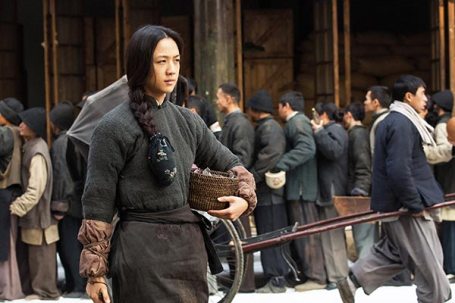
Mother’s generation, A Tale Of Three Cities, 2015
MC: We made this film for my parent’s generation because they all escaped–like Jackie Chan’s parents, they escaped from China to Hong Kong in the 1950s. And then we were born in Hong Kong. Their generation of people built modern Hong Kong. They have to start to build a home from zero and with no money, and they left everything behind in China. I think that people who could escape to Hong Kong at that time must be the best and the strongest.
BA: Is that the general consensus that the strongest came?
MC: I think so. If you look at Jackie Chan’s father, he’s very strong and very charismatic and you know that he can fight and shoot people, he can kill, and you know he’s a survivor.
BA: What about the ones who go to the US?
MC: I think so too. I mean people who survive. Of course the weaker ones would die or run away–
ALL: (laughs)
MC: Can they survive the poverty? The people who can survive and have families must be the strongest.
AL: A friend of mine told me that every time there’s a war— take for example, the second world war–he said that people who finally survive the concentration camps live the longest. They had long, long lives because they were so tough–they are the toughest people.
BA: What about the people who stayed in China?
MC: I think they survive all the different revolutions or whatever, the movements, so they are very I strong. Look at China now, there are very strong people.
BA: That’s pretty interesting if you think of all of this different migration going on through history.
MC: And now Europe. The same thing goes on, which is a more less the same at the ending of my film. People escape as they smuggle themselves on a fishing boat, and a lot of people are crammed at the bottom and a lot of people die even before they reached their destination.
BA: So why do you think you’re attracted to these kind stories?
MC: Because I want to make a film about my parent’s generation. I think I owe that generation a story. I didn’t have time to, for my mother. I didn’t listen to her story and then she died ten, eleven years ago. And at that time we already knew Jackie Chan’s father because we had made that documentary with him. And then we become friends afterwards. We drink and have dinner and we have a good time, and so he told us more stories about his lifetime.
MC: Jackie Chan’s mother passed away right after we finished the documentary.
BA: So was she able to see it?
AL: No, she was suffering from very serious Alzheimer’s and she could not quite know who’s who.
MC: Except Jackie Chan.
AL: Yeah, she would look at her son and she would smile a little bit. She looked at everybody else like, “Who are you? Who are you?”

Three divas, The Soong Sisters, 1999
BA: So this is the first co-production you’ve worked on with China?
MC: Not really. The Soong Sisters is also a co-production. It was at the beginning of co-production, before 1997.
AL: It was before the kind of co-production we have now. Because back then Hong Kong had all the money, all the people. So all the Hong Kong filmmakers would go to China to look for a studio to co-produce with and Hong Kong would provide all the money, the people, the creative people–
MC: And the boss. (laughs)
AL: And China would provide the location, the equipment, the props–
BA: Because the Chinese film industry wasn’t as big at that time–
AL: No, it wasn’t.
MC: And they didn’t have the money.
AL: Or the expertise.
MC: But now it’s definitely changed around.
AL: Yeah, now it’s the other way around.
BA: How has that affected the filmmaking process?
MC: Well, the censorship system is more or less a thing, except that now the Chinese production company controls everything so you have to report to them. Before, we had to report to the Hong Kong film company.
BA: Is there difference between what they expect?
MC: Actually, our film companies are very good and so we initiate the stories. They read the script and they liked it, so they didn’t interfere too much. And so we have the same creative freedom as we had before with The Soong Sisters. Even with casting and everything. We have the casting before and we submitted the scripts to the production company so they knew exactly what would happen. The cast, and the crew, everything we have already put together.
BA: So you put a package together? But then what when it goes to the Chinese censors?
MC: This is even better than The Soong Sisters. Back then the censors cut eighteen minutes from The Soong Sisters but this one they didn’t even cut anything. Just one or two places where I think the writing was wrong on the posters. Otherwise they didn’t touch the film.
BA: So then it was pretty smooth for you.
AL: It was much better than we thought or we feared.
BA: Had you heard that there would be problems? Or issues with co-production?
MC: Because of The Soong Sisters experience we were quite worried about the censorship.
BA: Because they cut so much before? But now you send the script out before you start shooting, right? To the SAPPRFT (State Administration of Press, Publication, Radio, Film and Television)?
MC: That was okay too. Because now I think it’s not so centralized. They allow the local government to decide. And the local government is usually friends with the film company. So sometimes for local productions they don’t even read the script. For local filmmakers, I think. Not for us–they have to read our script.
BA: Because you’re from Hong Kong?
MC: Yeah.
BA: Because I know that one of the things that I think some people worry about is that Hong Kong directors have to change scripts or the things that writings about because they’re working with Chinese censors.
MC: It’s not the censors but the production company. If you’re not a strong creative person and you are a director for hire, the production company will give you a script and you do it according to their wishes. But then there are also directors who submit their script to the production company and then they have creative freedom, if the production company accepts the scripts as they are.

Co-production dos and don’ts, The Soong Sisters, 1999
BA: Are there projects that you that you wanted to work on but you’re not able to do in China yet?
MC: Not really. Maybe because we can’t find investors mainly! (laughs)
AL: First of all, we more or less know what projects will pass or what will not pass.
BA: So you know ahead of time. You don’t submit into something that is not going to get approved.
AL: Yes, there are some taboos that they will never, never let you film, like too political, no ghost stories–
BA: That’s pretty curious to us in the US about the ghost stories. Why is that?
MC: They think maybe it will lead people to superstitions.
AL: It’s very funny. They will say, okay you cannot have a ghost in your movie but you can have a yao. Yao, meaning like a genie–let’s say an animal that turns into a genie. If you talk about a wolf that turns into human being, that is a yao, or a snake that turns into a very seductive woman, that is a yao. So you can have yao but you cannot have a ghost.
MC: I don’t really understand why, though. Yao can also turn people to superstitions.
AL: Yeah, for me yao is almost like a ghost because it does supernatural things.
MC: Maybe they think that a person cannot turn into a ghost.
AL: Right
BA: So it can be an animal turning into a person but not a person turning into a ghost.
MC: Because an animal turning into something is incredible. But the person turning into a ghost, people may believe it, maybe. I don’t know (laughs), I don’t know.
BA: Maybe you just don’t do it.
AL: Right. Nobody can quite understand that, but that’s what they say. No ghost. (laughs)
BA: Anything else? No politics right?
AL: No, no politics.
MC: No religious things–taboo.
BA: No religion? Nothing religious at all? Like even Buddhism?
MC: Better not!
(all laugh)
MC: I don’t know. I mean it’s different from time to time.
BA: No drug dealing?
MC: Drug dealing? Yes sometimes— drug dealing is allowed
BA: But you have to be punished right? (laughs) Oh! No gangsters!
MC: At the end, the police cannot be a bad person.
AL: It’s a little bit like in the 80s in Malaysia. They have similar censorship and so it was very funny because every time you have a bad cop, at the end in the movie you always see the bad cop’s twin brother coming in. It was like, “That was not me, that was my twin brother who was actually a gangster.”
MC: A bad cop must get killed or something. He must die at the end
BA: The police have to die if they’re bad?
AL: If he is a bad cop, he has to die!
BA: In Malaysia–so it’s same thing in China now?
MC: I think so. You remember the film Infernal Affairs.
BA: That’s right, they made a China version.
MC: A China version where Andy Lau died in the end!
AL: So funny! Another way to get around the system is that you always see the bad cop suddenly snaps awake and says, ”Oh! What a bad dream!”
BA/MC: (laughs)
MC: Yeah, if it is a dream then you can even have a ghost.
AL: I think so! I haven’t tried that. But as long as you have the bad cop waking up and saying, “I shouldn’t have done that, not even in my dream
BA: I remember there was a movie a couple of years ago where there were ghosts. Then it turned out to be a drug trip–
MC: Ah, like that person is crazy or something–
MC: Do you think the audience knows that there are restrictions?
MC: Oh, they know. They think it’s really a laugh!
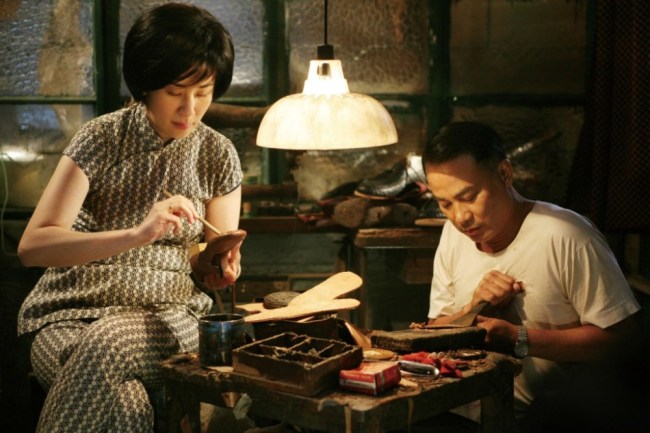
Hong Kong local, Echoes of the Rainbow, 2010
BA: What was the last time you made a film in Hong Kong? Was it Echoes Of The Rainbow? Do you still want to make films in Hong Kong that are only financed in Hong Kong?
MC: We never consciously say that we want to make films only in Hong Kong or in China or wherever because if you look at the films we produced, wherever it is suitable to make a film or wherever we have interesting topics or a good cast, we’ll make a film. At the beginning of our careers we made a film in New York, An Autumn’s Tale.
BA: I love that movie.
MC: And then we made a film in China, Eight Taels of Gold, which was before everybody did. Because that person went back to China, so we shot in China. So it’s a necessity of the location. I think as filmmakers we shouldn’t restrict ourselves to making films only in Hong Kong or China. I think we should widen our horizons and make films wherever there’s an interesting topic.
BA: Have you seen the film Ten Years?
MC: Not yet, but it is a big controversy in China.
AL: I think it was getting more and more popular in Hong Kong and then suddenly the cinema chain cut it because it was too popular.
MC: They got pressured from China.

The future, Ten Years, 2015
BA: How does that affect the filmmaking community when you find out something like that?
MC: I think the film director’s guild gave it a special jury award.
BA: I think it’s nominated for Best Picture also?
AL: Right
BA: That’s a very local film, right? Do you think that there is still an audience for very local films like that in Hong Kong?
MC: The box office is very good! I haven’t watched the film yet but it’s about ten years from now and the things that will happen to Hong Kong. The young people especially were very interested, and that reflects their fear and their concern about the future of Hong Kong.
BA: Do you think more films like that will be made and shown?
MC: For as long as they can make money then (laughs).
AL: There are still more other organizations, some people, who are you know worried about the future of Hong Kong, and then every now and then you would see these producers with the visions who will say okay you do it. Ten Years I think was produced by a religious organization in Hong Kong.
MC: They paid for it, but it was very cheap to make.
AL: It was done by five new directors on a shoestring budget.
BA: But then how did it get distributed? How do people find out?
MC: It was only shown in one cinema that’s for special films, independent films like that. So people heard about it and more and more people. Only it is shown in one cinema but I heard it’s full the a whole day, and so people heard about it and so more people lined up for the tickets and so it got bigger and bigger.
BA: And it spread to other theaters?
MC: Yes.
BA: And then it stopped.
MC: Right, and then it stopped.
BA: So that reflects a lot going on politically in Hong Kong as well, like the localization movement. How is that affecting people making movies in Hong Kong? Is it separate, the idea about politics and filmmaking? This one seems to b very close to that, but how about commercial filmmaking in Hong Kong?
MC: But in Hong Kong we don’t have the censorship problem so we can make any film. I think people will make any films they like while they can. You don’t know when the censorship system will come.
BA: Do you know if that’s making people make more of these kinds of movies right now because they can?
MC: I don’t know, actually. After Ten Years—
AL: People get more cautious?
MC: I don’t know about the commercial film companies—they would not dare to invest anymore in films like that but then of course there are independent filmmakers that who can make films like that in a very low budgets, or with volunteers.
BA: Does it seem like independent films get an audience in Hong Kong?
MC: It is not getting more and more popular–
AL: Ten Years was a minor hit and then it got bigger and bigger, when suddenly it was cut off from the cinemas
MC: Cut off because of the cinema owners, I think.
AL: Not because of the box office but because the owners or the distributors got worried.
MC: Because they also have business in China. So I think China can control people by the economy, with the business.
BA: So it doesn’t have to be threatening?
MC: No. They don’t even have to say anything. (laughs) That’s what they do with the rest of the world, too. Everybody who wants to do business with China has to kowtow, right? Even the queen has to get an invite (laughs).
BA: China is very powerful now, business-wise, but it’s unstable in a lot of ways.
MC: The economy is going down again.
AL: It never been stable, actually. In the past 100 years, China has never been stable. Although financially they are getting bigger and bigger. And even the film market is now number two in the world next to America. They say that in two to three years it will surpass the USA.
BA: Is that for mostly Chinese language-films that are locally produced in China?
MC: Yeah, I think the best-selling films. The Chinese films have surpassed the Hollywood films.
BA: Like the Chow Sing-Chi film (The Mermaid) is huge–
AL: Yeah.
MC: But then of course the Chinese government controls the release of Western films. They will not get the “golden time” (note: these are the times during the year such as the Spring Holiday when Western films are prohibited from screening in China).
AL: Sometimes when it (a Hollywood film) gets too big and too popular, they say stop, and then suddenly it disappears also!
BA: So how does that affect you all as filmmakers?
AL: It gets more difficult to get a producer to finance your film. Because they are worried and they only invest in films that they believe will make money.
MC: Yeah, the comedies and action films, they are safe.
BA: If you want to make something like this last film, for instance, that is less like an action film it’s harder to find financing?
MC: It’s always difficult to find investors for our films. For A Tale of Three Cities we spent about ten years trying to find an investor because it’s not a kind of mainstream thing and they don’t want to risk, you know.
There was one film company that expressed interest, and then we went into production. That was five years ago and we have the casting ready and everything. But then they calculated the budget and said it’s too high. Because it’s a film where people escape from one place to another we wanted to shoot in the actual locations–so from Anhui to Shanghai to Hong Kong and the big exodus and the illegal immigration and all the people and it’s is really expensive. They backed out because they think the budget is too high and they do not want to risk. Then we waited for another two years for Nansun Shi, who is a very good producer. She found us the money and so we started again.

Alex Law and Mabel Cheung, Crystal Bear Award, Berlin Film Festival, 2010
MC: Because Echoes Of The Rainbow is a low budget film it is easier and you get government sponsorship in Hong Kong but A Tale of Three Cities cost us like–
AL: 70 million–in American dollars that’s how much–a hundred? No, hmmm.
MC: It’s in renmenbi—70 million.
BA: So then Echoes was how much approximately?
MC: In Hong Kong dollars. It’s only–
AL: 12 million? 1 million USD
BA: But Echoes was very popular. It made back its money?
MC: Yes, yes.
BA: And won awards? But not anything like the Chow Sing-Chi movie.
MC/AL: (laughs)
BA: And that’s what they want right?
MC: With the investors, money is the first thing, you know. If they are not sure they will not invest. There are so many people who want to make movies.
BA: They all have these movie theaters now they have to fill, right?
MC: Oh, there are lots of films being made in the China. And maybe no more than half make it to cinemas.
AL: And maybe even less than that. The majority of Chinese movies don’t get shown theatrically and there’s so many films that you’ve never heard of.
BA: What did they do with them?
MC: They put them on the internet. Now the internet pays quite good money.
BA: But you want to make movies to be shown in theaters?
MC: Sometimes now people open the movies at the same time on the internet and also in the cinema.
BA: So then, do you think of yourself as a Hong Kong filmmaker? Or a Chinese filmmaker? Or just a filmmaker?
AL: I would say just a filmmaker
BA: But maybe twenty years ago you would say Hong Kong filmmaker?
AL: Yeah.
MC: Or basically a Hong Kong filmmaker who wants to be a filmmaker everywhere (laughs).
BA: I know some people make European co-productions—
MC: No, no.
BA: Then you have to find somebody French to be in your movie
MC/BA: (laughs)
BA: What do you think you’d like to do next? Do you have a project you’re working on? Or many projects probably?
MC: Yeah, we have ten scripts written already but we’re trying to get investors.
AL: Waiting for the producer–
MC: Actually every one of our film has problems with investors (laughs). So we’re used to it.
Different Drum: Three big Asian films to see instead of Star Wars
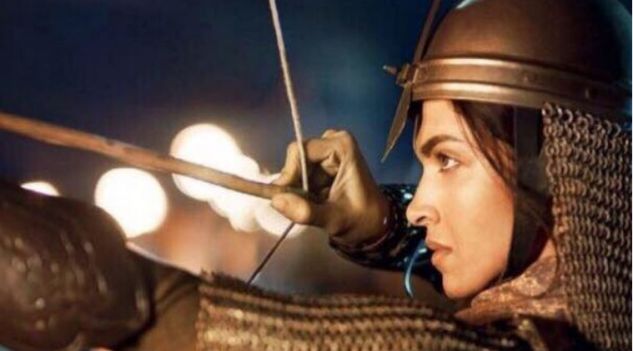
Deepika takes aim, Bajirao Mastani, 2015
The advent of the new S*** W*** release means that no other big Hollywood movies are opening this weekend, which has an added hidden bonus for fans of Asian cinema. Although most US multiplexes have booked the return of Han, Leia, and Chewie, theaters still need to fill out their calendar to give the illusion of choice for moviegoers. Aside from a few holdovers from past weeks and some other counterprogramming hoping to catch the overflow of those not fortunate enough to have gotten advance tix to SW, there are three big Asian movie spectacles opening up this weekend in San Francisco.

Shah Rukh Khan, Lord of all he surveys, Dilwale, 2015
Included among those are two huge Bollywood blockbusters featuring some of the biggest stars in India. Dilwale includes the legendary jodi of the baadshah of Bollywood, Shah Rukh Khan, and Kajol, the violet-eyed movie queen who has starred with him in several giant hits over the years. Dilwale purports to be a romance/action film and the trailer includes longing glances, exploding cars, automatic weapons, slapstick masala humor, and pretty European scenery, so it will either find a huge audience in South Asia and beyond or fall completely flat at the box office. SRK has a massive fanbase and a lot of goodwill banked over the years so despite the film’s apparent formulaicness I’m betting that the former rather than the latter will occur.

Ranveer brings it, Bajirao Mastani, 2015
Going head to head against Dilwale in India and here in North America is Bajirao Mastani, another lavish spectacle starring New Gen superstars Ranveer Singh (Lootera; Gunday), Deepika Padukone (Chennai Express; Tamasha), and Priyanka Chopra (Dil Dhadakne Do; Mary Kom). The latest historical epic from quirky visionary Sanjay Leela Bhansali (Saawariya; Devdas), Bajirao Mastani follows the story of the famous Maratha general Peshwa Bajirao and his two romantic interests, a warrior princess (Padukone) and Bajirao’s loyal wife (Chopra). As with all Bhansali films the art direction is completely gorgeous and over the top, this time utilizing a beige and sandstone palette accented by deep, saturated reds and greens. Real-life lovers Singh and Padukone were brilliant together in Bhansali’s 2013 Romeo and Juliet epic Goliyon Ki Raasleela Ram Leela and hopefully Bajirao Mastani recaptures some of their intense chemistry. Chopra is one of Bollywood’s best actresses, with presence, gravity, and beauty, and she’s also been making inroads in Hollywood lately, most recently as the star of the ABC action series Quantico.

Shu Qi, Tomb Raider, Mojin: The Lost Legend, 2015
Rounding out the clutch of Asian film spectacles opening this weekend is Mojin: The Lost Legend, another big-budget CGI spectacle from mainland China’s movie mill. This one is full of A-list Chinese stars including Chen Kun, Huang Bo, Shu Qi, and Angelababy, with an appearance by young Hong Kong actress Cherry Ngan (The Way We Dance) as a Japanese schoolgirl assassin. The storyline follows a pair of down-and-out adventurers, Hu Bayi (Chen Kun) and Wang Kaixuan (Huang Bo), former tomb raiders and treasure hunters who end up scraping by on the streets of New York City Chinatown in 1986. Somehow they are enlisted to rob a tomb they’d disastrously encountered twenty years prior, and the movie follows their exploits as they travel to Mongolia to find their fate. Shirley (Shu Qi) goes along for the ride based on poorly sketched and gratuitous romantic subplot with Hu.
Director Wu Ershan (Painted Skin: The Resurrection) continues his patented ADHD style of filmmaking, as the disjointed plot jumps back and forth in time from China to Mongolia to New York City. The film intersperses large swaths of nonsensical exposition with lackluster fighting and action scenes loaded with egregious CGI. The cast gamely attempts to inject some energy into the witless proceedings, with the usually excellent Huang Bo in particular trying to enliven things with scenery-chewing and profanity, but the film remains a paper-thin excuse for a string of not-very-spooky tomb-based action scenes and strangely juxtaposed set pieces. I actually enjoyed the maniacal weirdness of Wu Ershan’s first feature, The Butcher, the Chef and the Swordsman (2010) but here the scenario falls pretty flat, as the effects overwhelm the story and characterizations.
My favorite part of the movie is the flashback to the Cultural Revolution that includes clueless Red Guards giddily singing CCP propaganda songs and foolishly deriding ghosts and spirits for being counterrevolutionary, but this sequence of political irreverence is short-lived. The rest of the movie relies on a turgid plot and lack of characterization that is sorely lacking in wit or originality.
So if you’re not feeling The Force this week, these are a few options for cinematic spectacle instead. Catch ’em while you can.
UPDATE: Saw both Dilwale and Bajirao Mastani last week. Dilwale: not good. A few brief incandescent moments of SRK-Kajol magic surrounded by many long passages of utterly boring masala crap. I love SRK but this is a shyte movie.
Bajirao Mastani, on the other hand, is utterly enthralling. From its very first moment I was completely hooked. Top-notch art direction, costumes, songs, and performances, with Ranveer Singh bringing the swagga as Peshwa Bajirao, matched in fierceness and intensity by Deepika Padukone as his warrior princess lover. Priyanka Chopra as the third leg of the love triangle is strong and steady. The film is almost too gorgeous in its warm beige and red color palette, with crazy detailed costumes and the best pearl and jewel earrings on men that I’ve ever seen. The songs and choreography don’t stop, with old-school dance sequences featuring a cast of dozens in moving in fluid unison. A complete delight for the eyes and ears, with a passionate love story at its core. Highly recommended.
opens Dec. 18, 2015
Dilwale, dir. Rohit Shetty
Century San Francisco Centre 9 and XD
Bajirao Mastani, dir. Sanjay Leela Bhansali
Century San Francisco Centre 9
Mojin: The Lost Legend, dir. Wu Ershan
AMC Van Ness 14, San Francisco
I Would Die 4 U: Black Coal, Thin Ice at the San Francisco International Film Festival
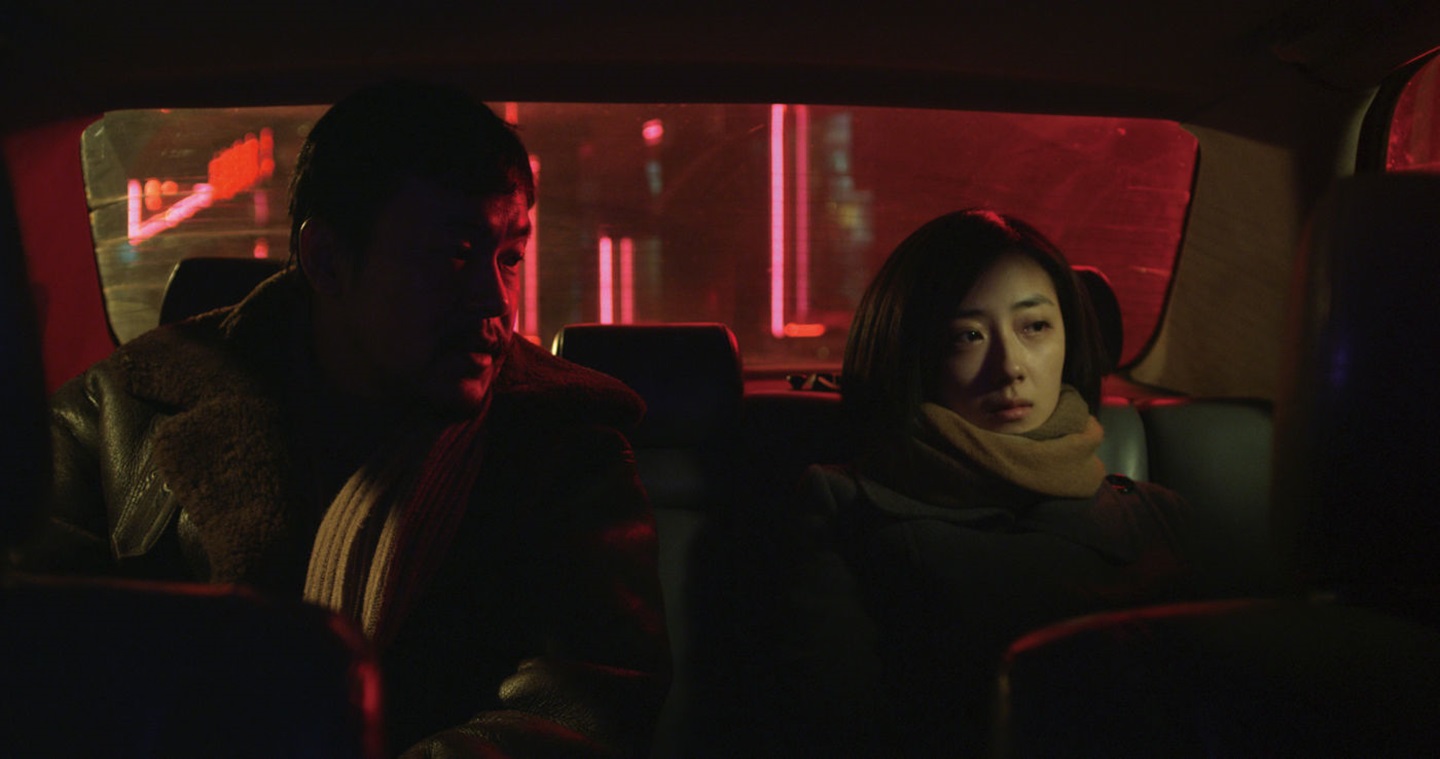
Complicit, Black Coal, Thin Ice, 2014
Just got back into town and am diving into the thick of things at this year’s San Francisco International Film Festival, now running through May 7. I’m leaving town again on Sunday so I’m cramming as many screenings into the next five days as I can manage. Luckily there are plenty of great films to see. I’m hoping to make it to the Viggo Mortenson vehicle Jauja, by Argentine director Lisandro Alonso and featuring Viggo in a role that’s tailor-made for him as a Danish military engineer caught up in unrest in 19th-century Patagonia. Viggo he gets to acts in two of his native tongues, Danish and Spanish, and the film is a magical-realist version of the historical events it depicts.

Viggo Mortensen, polyglot, Jauja, 2014
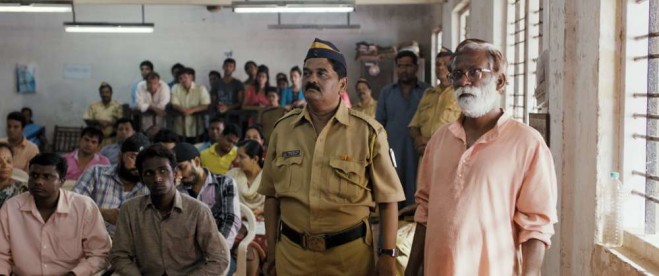
Also on the docket is the 3-D version of Tsui Hark’s The Taking of Tiger Mountain, Hong Kong director Peter Chan’s child-abduction drama Dearest, and City of Gold, the documentary about Pulitzer-prize winning Los Angeles food critic and mensch Jonathan Gold. If I were in town next week I’d surely go see the South Korean thriller A Hard Day but I’m hopeful that it will make it to a theatrical release stateside sometime soon. SFIFF also plays host to Jenni Olsen’s newest feature-length experimental documentary/essay film The Royal Road, which looks at butch longing and unrequited love against the backdrop of El Camino Real, the historic king’s road that stretches nearly the length of California. Indian director Chaitanya Tamhane’s independent feature Court also screens this week, taking a character-based, neo-realist look at the absurdities of the Mumbai judicial system and its surrounding social and cultural milieu, with results that are about as anti-Bollywood as you can get.
Mumbai legalities, Court, 2015
One of my favorite films from last year, director Diao Yinan’s neo-noir Black Coal, Thin Ice, has one more screening this week at the festival and it’s definitely a don’t-miss movie. From the very start, with shots of random body parts mixed in among train cars of coal shipping throughout the frozen northern regions of China, the film puts a distinctive spin on the classic noir structure. The film follows Zhang (Liao Fan), a less-than-scrupulous cop, as he becomes more and more deeply involved in the mysterious disappearances and murders of various hapless men, all of whom eventually seem to be tied to a classic black-widow character, played by the amazing Taiwanese actress Guey Lun-Mei.

Bleakness, Black Coal, Thin Ice, 2014
Looping back and forth in time and place, with bursts of intense and unexpected violence, the movie effortlessly transfers the noir genre to the China’s bleak and wintry industrial north, making great use of the icy landscape and the characters’ corresponding desperation and hopelessness. Both Liao and Guey won acting awards (at the Berlin Film Festival and the Golden Horse Awards respectively) for their performances in this film and they embody the moral messiness and ambiguity of the best noir characters. As in all great noirs, everyone is complicit and no one is innocent, and the most innocuous situation, whether in a beauty parlor or at an ice skating rink, can suddenly change into a deadly trap.
So although I’m missing the big galas and parties at the beginning and end of the fest I’m still catching the meat of the event this week. As always the festival is a chance to see some of the best recent global cinema on the big screen.
58th San Francisco International Film Festival
through May 7, 2015
Lost In Love: Back In Time movie review

Sentimental, Back In Time, 2014
Classic Chinese pop music, known as Cantopop or Mandopop depending on the dialect, is a bit of an acquired taste. It’s all smooth edges and soft sounds, designed to soothe and comfort, as opposed to, say, the techno-hip hop flavors of Kpop. It’s no surprise that Western imports like Air Supply, kings of the power ballad, are hugely popular in China and Hong Kong. There are of course exceptions to this, including the hard-rocking Cantopop kings Beyond, but the top of the charts in Hong Kong as well as on the mainland have since the 1980s been dominated by sleek pop balladeers such as Jacky Cheung, Faye Wong, and Andy Lau.
The cinematic equivalent of Canto/Mandopop would be Back In Time, (aka Fleet of Time), which recently played here in the U.S. as a day and date release with China. The film was number one at the box office in China before being bumped off the top spot by Jiang Wen’s Gone With The Bullets. Like a lot of Chinese pop music, Back In Time is competently crafted and pleasant to experience, but soft and cloying, without a lot of rough edges.
A slick weepy with attractive leads in Eddie Peng (most recently seen kicking ass in The Rise of the Legend and Unbeaten, among other manly roles) and Nini (chief flower in Zhang Yimou’s Flowers of War), Back In Time is unabashedly nostalgic as it traces the relationships of a group of friends from their high school days to adulthood. The main narrative follows the reminiscences of businessman Chen Xun (Peng) as he recalls his chaste adolescent romance with the Fang Hui (Nini), a transfer student to his secondary school. Although the two promise everlasting devotion, for the sake of narrative tension their romance hits the skids. Will they kiss and make up or will they forever be lost to one another? The film’s gauzy, soft-focus shots of billowing curtains, rain-slicked streets, snowy landscapes, and characters literally crying in their beer heighten the overall sentimentality of the proceedings.

Gauzy, Back In Time, 2014
The movie is also fairly apolitical, despite spanning a period of great change in Chinese history (roughly 1999 to the present day). Although China went through a lot during that time, almost none of this is present in the film (except a reference to Beijing’s winning bid to be the site of the 2008 Olympics). Instead the film focuses on its youthful love story, which strips the narrative of most of its historical context and content. Compared to Taiwan’s similarly structured Girlfriend/Boyfriend (2012), which actively incorporated student political demonstrations into its story, Back In Time only briefly touches on events that occurred during its timeline. The rest of the film takes place in a historical vacuum, with the passage of time primarily reflected in the changing hairstyles and cell phones of the protagonists (with wigs worn with varying degrees of success, including Eddie Peng’s ill-fitting late-90s mop and Nini’s curiously changing hair lengths).
Lead by the pretty leading pair played by Peng and Nini, the film’s cast is winning and earnest, though in the earlier parts of the movie some of the performers look way too old to be high school students. There are also a few confusing plot developments such as a hissy fit at an outdoor restaurant that escalates without explanation into a knock-down brawl, but none of them as contrived or annoying as those found in the Nicholas Tse/Gao Yuan Yuan romantic drama stinker, But Always. But Back In Time, though by no means racy, also deals fairly frankly with sexuality, a change from many similar melodramas of its ilk that’s worth a few points in my book. At times the overwrought emotionality of the movie just barely avoids self-parody and isn’t helped by the swelling violins and tinkly piano on the soundtrack. But it’s a watchable timepass, especially if you’re in the mood for a deeply emo cinematic experience.

Besties, Back In Time, 2014
With Back In Time, distributor China Lion continues to hit its stride. Unlike the typical Asian genre fare of gangster, martial arts, and wuxia films usually distributed in the U.S. and aimed at Western sensibilities, CL’s most recent releases aim straight for the Chinese expat community. Its last five titles released in 2014—Back In Time, Women Who Flirt, Love On A Cloud, Breakup Buddies, and But Always—are romantic dramas or comedies and feature performers popular in China but mostly unknown in the U.S. even among Asian film aficionados, with the exception of Nicholas Tse and possibly Zhou Xun. These movies also differ from the output of international arthouse favorites like Zhang Yimou or Chen Kaige and are solidly middlebrow and commercial, created to entertain and not to startle, and have found an audience in the U.S. Deadline.com notes, “China Lion has had success with romantic dramas imported from Chinese-speaking regions in the past. They handled Beijing Love Story ($428K cume) in February and other past titles include Love ($309K cume) and Love In The Buff ($256K cume).”
Back In Time (as well as the CL releases that immediately preceded and follow it, Pang Ho-Cheung’s Women Who Flirt and the Angelababy vehicle Love On A Cloud) demonstrates that China Lion has figured out a winning formula that works for its Chinese expat niche audience. Though many of these films may not be appealing to the typical Asian-film fanboy in the U.S., to Chinese audiences away from home they’re just like listening to the latest Jacky Cheung CD—they’re a soothingly familiar entertainment experience.
Tiger By The Tail: The Taking of Tiger Mountain movie review

Furry and fierce, Zhang Hanyu, The Taking of Tiger Mountain, 2015
Legendary director Tsui Hark has been a fixture on the Hong Kong cinema scene since the 1970s (except for a little hiccup in the 90s when he made a couple crappy Hollywood movies with Jean Claude Van Damme, but let’s not talk about that now). His string of significant cinema work started in 1979 with The Butterfly Murders, moved through the 1990s with a slew of indispensible films including A Better Tomorrow (producer), A Chinese Ghost Story (producer), and the Once Upon A Time In China series (director), and continues to the present day with a clutch of period action films including Detective Dee 1 & 2 and Flying Swords of Dragon Gate. His latest joint, The Taking of Tiger Mountain, just opened in the U.S. a week after its successful debut in China, where it’s the top film at the box office.
The film is based on a popular Beijing opera (from the novel Tracks in the Snowy Forest) that was one the Eight Model Plays sanctioned by Mao during the Cultural Revolution. The opera was adapted into a film in 1970 that Tsui Hark, along with most of China’s other 800 million people at the time, viewed as a youth. Tsui’s current adaptation is a co-production of the heavy-hitting commercial studio BONA Film Group and the August First Film Studio, which is the film-producing branch of China’s People’s Liberation Army, and the influence of these disparate financing sources shows in the finished product. While it mostly passes as an energetic action/adventure movie, Tiger Mountain also has the smell of Chinese military propaganda, which inhibits some of director Tsui’s more maverick instincts.

Heroic PLA, The Taking of Tiger Mountain, 2015
The story is based on a true incident that took place in 1946 during China’s civil war, in which a small platoon of PLA fighters overcame a much larger bandit crew (alluded to as affiliated with the Kuomintang, the PLA’s opposition during the civil war) that’s holed up in a mountain stronghold. The film opens with a framing device in which Jimmy (Han Geng), a young modern-day Chinese student in the U.S., sees a snippet of the 1970 Taking Tiger Mountain film. As his buddies laugh at the old-fashioned opera stylings, Jimmy smiles fondly and later watches the film on his phone as he travels home to Harbin. The movie then cuts to the main action as the PLA platoon struggles to protect a village from the KMT bandits while confronting a lack of food and supplies as well as the onset of winter. As the situation worsens the platoon’s leader, known only as 203, decides to storm the bandit’s hideout on Tiger Mountain, sending in Yang (Zhang Hanyu), a PLA intelligence agent, to infiltrate the gang. The main body of the film follows Yang as he works from within the bandits’ lair while his compatriots endeavor to attack the stronghold from without. After a somewhat slow setup the narrative picks up speed around the forty-minute mark once Yang makes his way into the good graces of the bandit leader, Hawk. Following much intrigue and double-crossing the film concludes with a rip-roaring battle in the snowy mountain as the heroic PLA troops clash with the diabolical KMT bandits.
Tiger Mountain was released in China in 3-D (although its U.S. release is only in 2-D), and the film’s first brief battle sequence feels a bit too gamish, with slo-mo bullet-cam shots and computer-animated blood spurts probably better appreciated stereoscopically, The later, more extended action sequences, including an outstanding siege of a small village, are more engaging and rely less on CGI and more on real hand-to-hand combat and kinetic fight choreography. The climatic battle sequence and a brief coda involving a runaway plane are both pretty thrilling and demonstrate Tsui’s sure hand with action, characters, and special effects.

Evil KMT, The Taking of Tiger Mountain, 2015
Tsui draws out solid performances throughout, although some of the film’s characters fall into standard war-movie types. Zhang Hanyu is dashing and resourceful as Yang, the fearless PLA spy sent to infiltrate the bandit camp, and he has several outstanding moments that convincingly demonstrate Yang’s ability to think on his feet. Tony Leung Ka-Fai plays a few years older in a bald-wig and hook nose as Hawk, the ruthless bandit leader, and it’s great to see him sink his teeth into the meaty character role. Lin Genxing is forthright, square-jawed, and handsome as the platoon’s captain but otherwise isn’t terribly compelling. Yu Nan doesn’t get to exercise her usual steely bravado since she’s mostly a captive throughout, though she does escape her bondage several times during the course of the film. Tong Liya as Little Dove, the doughty nurse, is predictably brave and lion-hearted. There’s also a cute little traumatized kid who gets to play a heroic role in the last battle as well as provide a manipulative emotional moment at the film’s climax.
As a Western viewer it’s a bit odd for me to root for the PLA since in my mind the Chinese army is forever linked with the 1989 brutality of Tiananmen Square, but PRC audiences undoubtedly have more positive associations with China’s military. Chinese viewers also probably feel a more visceral response to the strains of the familiar revolutionary opera on the soundtrack and find kinship with Jimmy and his nostalgic journey home to rediscover his family’s PLA roots.
In fact, Jimmy can be seen as a surrogate for Tsui himself, as at the outset of the film he recalls his nostalgic U.S. encounter with the original Taking Tiger Mountain film. Later, at the film’s conclusion, Jimmy is surrounded by a cadre of PLA soldiers and can only smile helplessly, submitting to the collective PLA memories, even as he tries to re-imagine a different version of the narrative’s conclusion. The PLA perspective, and by extension the August First version of the story, is too overwhelming to contradict.
Under different circumstances Tsui really could’ve cut loose but may have felt constrained by the sanctity of the material and/or by the military film office breathing down his neck. The film is much less irreverent and less of a pointed critique than some of his earlier productions that scathingly sent up organized religion (Green Snake), corrupt government officials (New Dragon Gate Inn), and colonial malfeasance (Once Upon A Time In China). Nonetheless, hints of Tsui’s signature style sneak in via the Road Warrior-esque bandit fashions including mohawks, facial tats, and various other quirky costuming choices that recall the art direction of Tsui’s earlier films including The Blade. Another glimpse of the film that might have been is an electrifying throwaway coda involving a speeding fighter jet, a long tunnel, and a very high precipice. Still, The Taking of Tiger Mountain is nowhere near as heinously patriotic as earlier glossy August First propaganda productions like The Founding of A Republic from a few years back. It’s to Tsui’s credit that he’s able to create a highly watchable and sometimes exhilarating film, however restricted he may have been by his material and his funding sources.
Love Hangover: Temporary Family and But Always movie reviews

Obligatory condom joke, Temporary Family, 2014
A couple Chinese-language romantico films made their way into the U.S. market this week and one works while the other doesn’t. Hong Kong release Temporary Family uses the backdrop of the superheated HK real estate market to frame its romantic comedy, while PRC rom-dram But Always flails about in China and the U.S. as it attempts to tell its story of lovers pining for each other across years and continents.
Hong Kong renaissance woman Cheuk Wan Chi (aka Goo-Bi GC aka Vincci aka G) directs Temporary Family, an amusing romcom starring A-listers Nick Cheung and Sammi Cheng, along with mainland Chinese starlet Angelababy and rapper/singer Oho (who sings the title track). A broad, hyperlocal comedy that sends up the tight housing crunch in the former Crown Colony, the movie also includes cameos by Heavenly King Jacky Cheung, TVB stars Myolie Wu and Dayo Wong, and Chinese film star Jiang Wu (as an ultrarich PRC real estate speculator) and, not surprisingly, the movie has been a huge hit in its home territory. Although the film tilts towards the slapstick at times it still manages to sustain its narrative tension for most of its running time and is an agreeable timepass. Nick Cheung (Lung) started his career back in the day as a Stephen Chow wannabe so it’s not surprising to find him successfully tempering his usual dramatic intensity in a lighter comedic role. Sammi Cheng pulls out her neurotic jilted lover persona most famously seen in Johnnie To’s huge romcom hit Needing You, this time playing Charlotte, a recent divorcee unable to break from the past. Angelababy plays Lung’s adopted daughter, a slouchy millennial who bounces aimlessly from one low-paying job to another. Oho rounds out the main characters as the awesomely named Very Wong, Lung’s intern and the scion of an unnamed rich man in China. The plot contrives to throw together this unlikely crew as temporary roommates in a luxury condo in Hong Kong’s toniest neighborhood as they attempt to cash in on the real estate market’s volatility.

The wacky crew, Temporary Family, 2014
The movie is chock full of local references and in-jokes (why do all the real estate agents have bleached blonde hair?) and follows the time-honored Hong Kong movie tradition of good-natured vulgarity, including a running joke about a stray pubic hair. Structurally the film recalls the slackly constructed, improvisational comedies of Hong Kong Lunar New Year films and, maybe due to director G’s relative inexperience (this is her second feature), at times scenes abruptly and inexplicably fade to black. Though the movie’s energy flags a bit about two-thirds in, the amiable cast powers through the rough patches and manages to pull out a reasonably entertaining conclusion including the sardonic last scene, as Lung and Charlotte finally find their bliss. Nick Cheung as the desperate realtor Lung is as always quite watchable. Sammi Cheng is somewhat less so, as her neuroticness precludes much lovability, which in turn spoils any chemistry she and Nick might have had.
The movie has been a big hit both in Hong Kong and the PRC, and it’s great to be able to see it here in the U.S. on the big screen, if only to ogle the panoramic shots of Hong Kong harbor and its skyline at night. I had no luck tracking down the U.S. distributor so I was a bit surprised when it popped up here at the Metreon, but I’m glad that I ran across its screening schedule in a random facebook post. It looks like some Chinese distributors are following China Lion and Wellgo’s lead in targeting the Chinese-speaking audience here in the States, although their choice of films is somewhat random. But I’ll take what I can get, especially if it means releases of non-action films like Temporary Family and Pang Ho-Cheung’s Aberdeen, which showed up without fanfare down in Santa Clara a month or so ago.
As bad as it looks, But Always, 2014
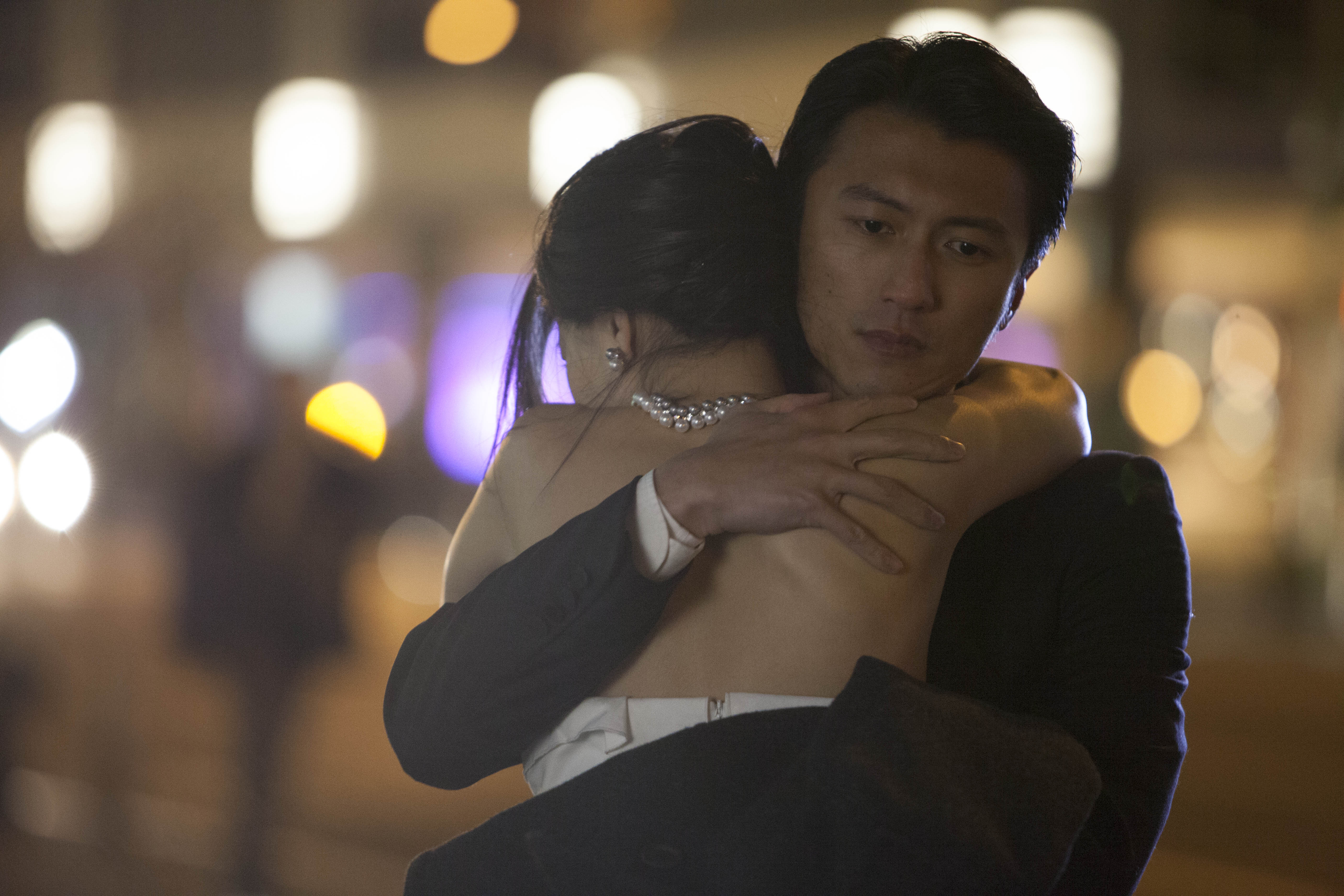
Like those two films, the Nic Tse/Gao Yuan Yuan romantic vehicle But Always had a day-and-date release here in the Bay, but the movie is no great shakes and is in fact one of the worst, most hackneyed and clichéd films I’ve had the misfortune to witness in a long while. Granted, I don’t go see a lot of romantic films, since my preference is for movies with guns and gangsters, but I know a bad movie when I see one. Not only is the storyline derivative and the narrative conflict forced, but the characters are poorly drawn and the film’s direction is sloppy and amateurish.
The movie starts in 2001 in New York City, then flashes back to 1970s Beijing where Anran (Gao Yuan Yuan) and Yongyuan (Nic Tse), are young kids. This is the best part of the film as the movie renders mid-century China as comfortably shabby and not yet touched by modern global capitalism. The movie then laboriously follows Anran and Yongyuan’s relationship through the years in both China and the U.S. as they hook up, fall apart, and reconcile numerous times for no apparent reason except to generate dramatic angst. The film trowels on the melodrama as suicide attempts, love triangles, jilted lovers, and other tragedies mount. The only things missing from the hit parade of drama trauma are amnesia, long-lost twins, and a car crash, though the ending surely tops these in its maudlin, fatalistic conclusion. Hint: the date and place of the lovers’ last rendezvous gives away the fantastically tragic coincidence at the film’s climax.

Pretty Nic, But Always, 2014
Nic Tse and Gao Yuan Yuan are nicely lit and photographed throughout, though Nic seems a bit embarrassed to be in such a crappy flick. It’s also funny to note that, being a PRC production, we get to see his a lot of his beautiful torso and cut abs but almost none of her naked skin except a decorous peek at her bare shoulder.
There’s nothing wrong with the old-time narrative of star-crossed lovers patiently waiting for each other through endless adversity and I’m all for a well-told version of a classic story, but this movie is not that. Instead it’s a lazy, clumsy rehash of tired tropes without any freshness, originality, wit, or style. Yeah, I didn’t like it much.
It’s All In The Movies: Film festival roundup
A dame and her gat, Dragnet Girl, 1933
It’s been a crazy past couple of months so I haven’t had time to update my posts recently, but I’ve finally got a bit of down time, so following are some highlights from some notable film festivals here in Cali.
Down the I-5 I stopped in for a couple screenings at the Los Angeles Asian Pacific Film Festival, which is one of my favorite jams of the year. I was only in the Southland for about 72 hours but I managed to see an outstanding double-bill of two recent Asian genre films at the CGV Cinema in Koreatown, one of the best movie-going venues in LA. CGV is part of a Seoul-based theater chain and its LA outpost usually screens a combination of South Korean movies with English subs and Hollywood movies with Korean subs in its three big state-of-the-art digital theaters. Add to that the cinema’s close proximity to the best of K-town’s nightlife, including dozens of noraebangs, soon dobu houses, Korean fried chicken joints, and soju bars and it all equals a great time in central LA.

Dustin Nguyen, poly-hyphenate, Once Upon A TIme in Vietnam, 2013
First up was Once Upon A Time In Vietnam (2013), directed, written by, and starring Dustin Nguyen, most famously seen in the U.S. opposite a very young Johnny Depp in the classic late-80s cop show 21 Jump Street. A Western/martial arts/steampunk mashup, OUATIV looks pretty, but ultimately is pretty clichéd. Dustin Nguyen gives himself the leading role as Dao, a mystery man who rides into to town (on a souped-up motorbike instead of a palamino) and stirs up the village’s heretofore placid existence, unearthing a past romance with the kindly local baker’s pretty wife Anh (Thanh Van Ngo) and continuing his vendetta with the gang of toughs who are tailing him. Although Nguyen’s Dao is a cool dude, the most truly badass character is Long, the ostensible villain, who is Dao’s archnemesis and romantic rival, played by veteran stuntman Roger Yuan. Despite the film’s good-looking cinematography, the movie is still a bit choppy and rough, with inconsistent art direction that showed its flaws on CGV’s thirty-foot tall, crystal-clear digital screen. The movie’s many gratuitous ass shots and Thanh Van Ngo’s peek-a-booby fighting costume were also pretty silly, though I’m sure some of the film’s target demographic appreciated them.
Andy being Andy, Firestorm, 2013
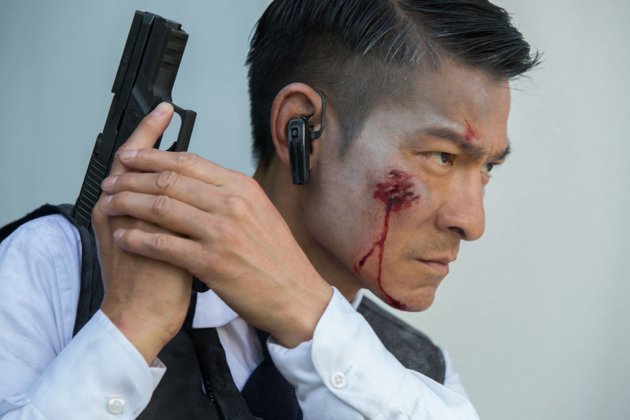
The second half of the double-bill was the hit Hong Kong action flick Firestorm (2013), starring the evergreen Andy Lau as a conflicted cop hunting down bad guys in the streets of Central. The movie subscribes to the tenet of bigger, faster, and louder, with more explosions, more gunfire, and more bleeding head wounds, and harkens back to the fine old tradition of Hong Kong movie excess, where anything worth doing is worth doing ten times as much. As with any action blockbuster it’s probably better not to be too critical of the gaping plot holes and odd character motivations and just go along for the ride, which is pretty spectacular by the end of the movie. Interestingly, the film’s most harrowing moments are not during the high-powered CGI explosions at the story’s climax but during a quieter though no less tension-filled moment earlier on. The sight of a small child trembling with terror as she tries to silence her screams provides a much more visceral impact than the many later shots of breaking glass and rupturing concrete. Owing a debt to Dante Lam’s emotionally shattered characters and John Woo’s angsty adversaries, first-time director Alan Yuan works in a bit more psychological complexity than the genre demands, which adds to the overall impact of the film. But the movie is also about things blowing up, which it does splendidly, and which I completely enjoyed seeing on the big screen at CGV.
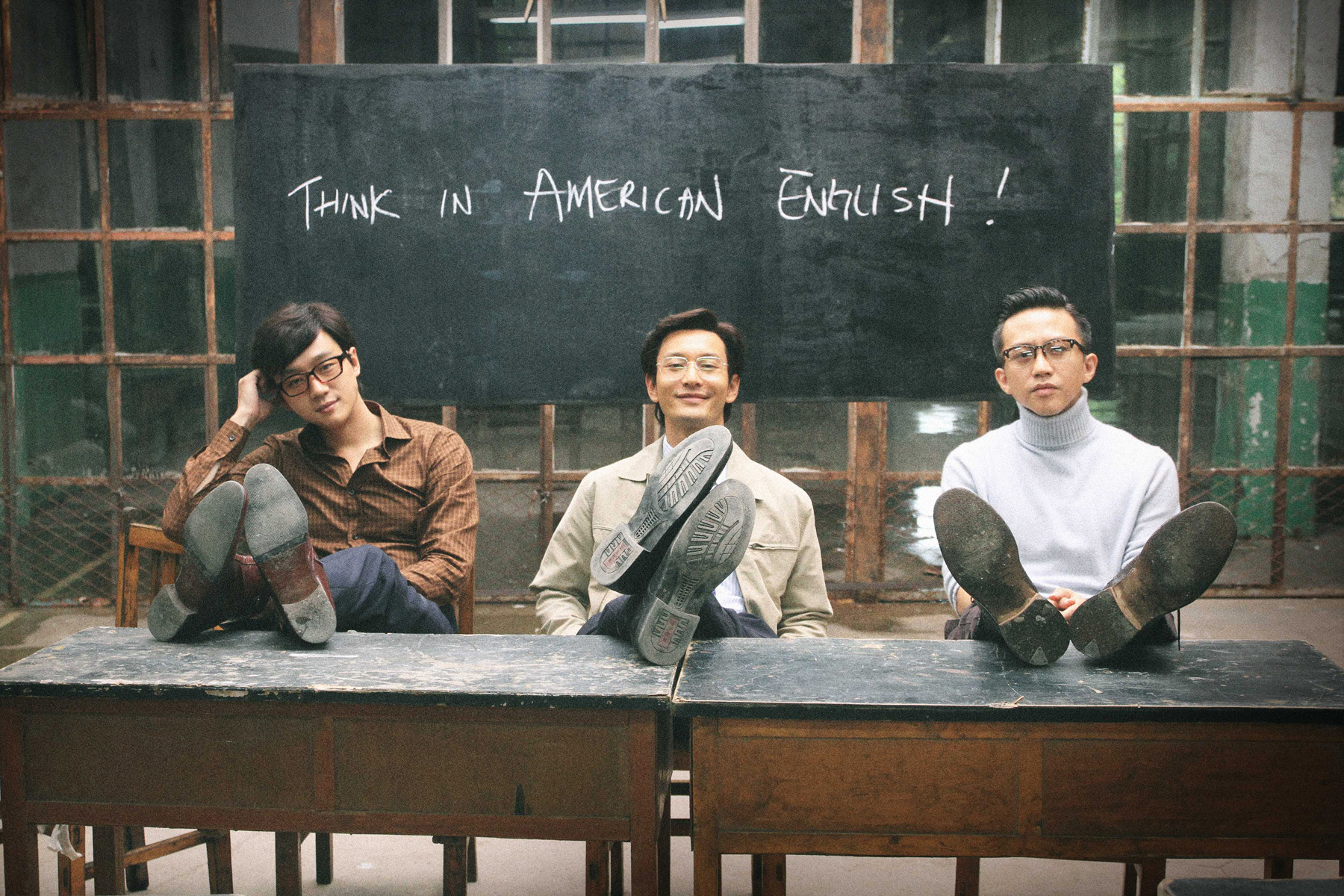
Chinese ingenuity, American Dreams in China, 2013
Back home in the Bay I caught a few shows at the San Francisco International Film Festival. Peter Chan’s latest Hong Kong/China co-production, American Dreams in China, was one of the biggest box office hits in the PRC in 2013. The comedy, which follows three friends across the span of several years and two continents, is a slick and engaging rags to riches tale that includes an underlying social commentary about the lives of Chinese immigrants to the U.S. and their tenuous relationship with the American Dream. Tong Dawei, Huang Xiaoming, and Deng Chao play school buddies whose lives and careers entwine as they struggle to make their fortune. All three pull off great performances, convincingly aging from their early twenties to mid-forties, and the interplay between them is authentic and believable, with coverboy Huang Xiaoming hiding his essential hotness behind several pairs of nerd-chic glasses. The movie also includes beautiful cinematography by Christopher Doyle, though it’s much more naturalistic and less self-consciously flashy than his renowned work with Wong Kar-wai, and the movie’s snappy editing keeps the story moving along briskly. Although the climax of the film is a strange paean to copyright infringement and intellectual property theft which perhaps reveals something about the state of China’s hypercompetitive market-based economy, director Chan overall makes astute observations about the characters’ relationship to each other and to the rapidly shifting state of Chinese culture in the PRC and the U.S. Especially revealing is a passage in which one of the characters, then a Chinese grad student in a U.S. college, is reduced to a humiliating, low-status job in a campus lab. The film thus belies the myth of the American dream that lures so many immigrants to the U.S.

Languid, Tamako In Moratorium, 2013
Tamako In Moratorium, an extremely droll and low-key Japanese comedy, is anchored by lead actress Atsuko Maeda as the titular character, a recent college graduate who’s moved back in with her divorced dad somewhere in a sleepy city in Japan. Dad runs a modest sporting goods store. Tamako spends most of her time sleeping, eating, and procrastinating, although this description makes it seem like she engages in activity, which mostly she doesn’t. Instead she eats microwaved vegetables from a plastic tub, grunts nonverbally at her dad’s attempts at conversation, and sleeps into the afternoon on her disheveled futon in her cluttered childhood bedroom. The film’s freeze frame moments capture the three seasons that Tamako aimlessly passes in her dad’s small house. The movie’s very slight and subtle dramatic tension is a nice antidote to the bombast of much commercial narrative cinema and, as the brilliant Maggie Lee at Variety points out, the movie’s style owes a lot to the great Yasujiro Ozu in its gentle, non-judgmental look at family dynamics.
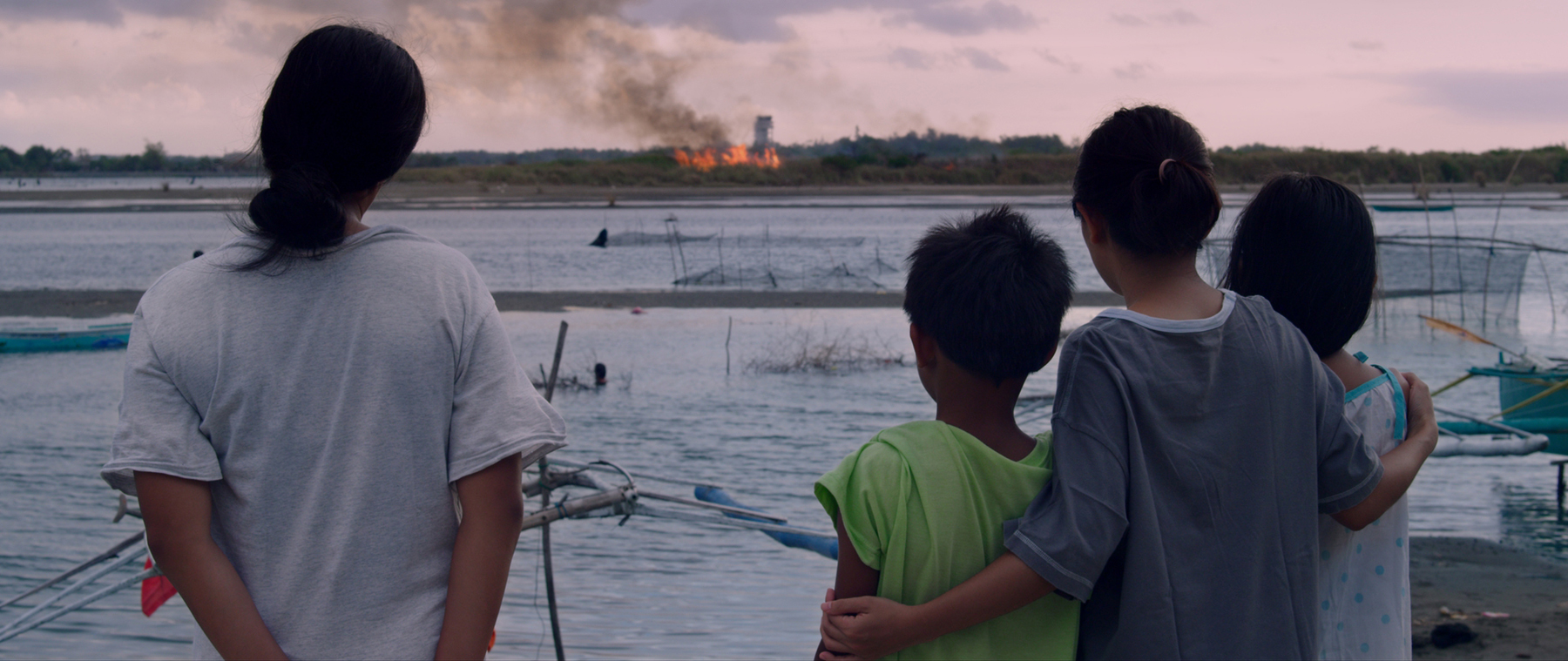
Surreality, Norte: The End of History, 2013
I also witnessed the four-hour Filipino opus Norte: The End of History, by long-form specialist Lav Diaz (his 2004 film Evolution of a Filipino Family was 10 hours long). Advance reviews called the film a masterpiece, which I think is a bit of an overstatement, but it held my attention for most of its running time. As I’ve noted in the past, most movies over 90 minutes long put me to sleep unless Hrithik Roshan is singing and dancing in them, but this once kept my interest, aided in no small part by its excellent wide-screen digital cinematography and an episodic structure that allows the narrative to unwind unhurriedly. This is not to say that the movie is slow, although much of it is shot in single master shots. But the action within the frame is always dynamic and, although the film opens with a ten-minute static shot of a group of armchair revolutionaries discussing morality, ethics, and politics, the movie becomes much more cinematic and less chatty as it goes along.
As Noel Vera notes in Film Comment, Norte is a continuation of director Diaz’s interest in themes and motifs from Dostoevsky, and the film has some of the epic feel of a Russian novel. The story revolves around several individuals involved in a murder case, including the actual killer, the man framed for the deed, the patsy’s wife, and their assorted friends and relatives. Like Dostoevsky’s work, the film touches on themes of fate and free will, the moral and ethical responsibilities of the individual, and injustice within a stratified social system. The performances are uniformly strong, including Sid Lucero as an unbalanced intellectual, Archie Alemania as the man wrongly accused of murder, and Angeli Bayani (who played the stoic maid in Ilo Ilo) as his longsuffering wife. Diaz’s use of long takes that incrementally zoom in or pan across the action allow the viewer to perceive the startlingly close relationship between cruelty and kindness. Although most of the film’s violence feels appropriate to the narrative, I was a bit bothered that the killing of a dog got at least twice as much screen time as a violent and disturbing rape.
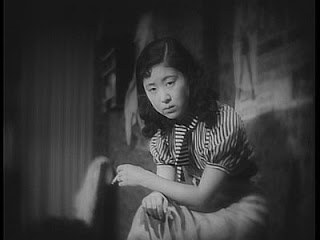
Smoking, Dragnet Girl, 1933
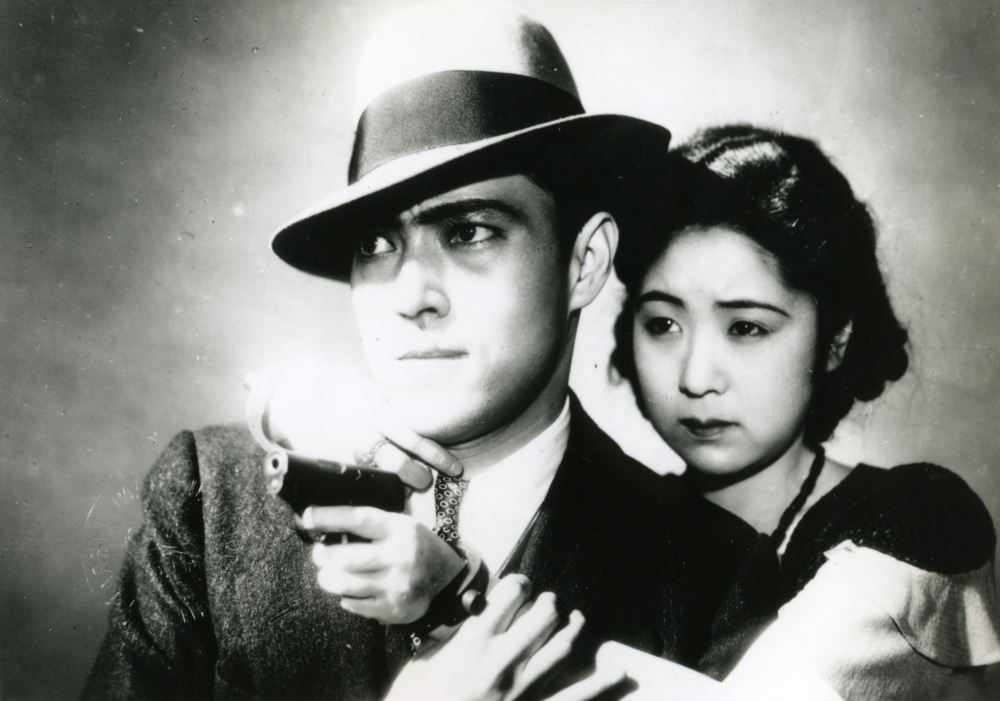
Lastly, I saw Dragnet Girl, an early Yasujiro Ozu joint, at the San Francisco Silent Film Festival. I saw my very first Ozu film, Woman of Tokyo, (also a silent gangster movie) a couple years ago at the Port Townsend Film Festival. That movie set me off on an Ozu kick and I spent the better part of early 2013 watching every Ozu movie I could get my hands on, almost all on DVD. It was a treat for me, then, to see Dragnet Girl on the big screen with live accompaniment at the Silent Film Festival. Although the film’s title implies gats, dames, and rat-a-tat action, the movie is more of a character study in line with Ozu’s later and more famous oeuvre, with long stretches of the film devoted to character relationships rather than shootouts. Guns do make an appearance, however, as well as heists, boxing rings, and small-time gangsters, along with the titular character, a secretary/gangster’s moll played by legendary actress and film director (and Kenji Mizoguchi muse) Kinuyo Tanaka. It was great to see the movie as it was meant to be viewed, on the big screen at the Castro Theater, and once again the Silent Film Festival proved its status as one of the premiere film fests in the Bay Area.
Rumour Has It: Caught In The Web movie review

Self-perception, Caught In The Web, 2012
Although local multiplexes and arthouses are stuffed to the gills with prestige Hollywood Oscar-bait at this time of year, for some reason there are also three new films by top Chinese directors opening this weekend in San Francisco. Bay Area Asian cinephiles can thus take a break from furry-footed halflings, lost-in-space astronauts, and ironic 1970s flashback films.
Chen Kaige’s Caught In The Web looks at the corrosive power of gossip, fueled by the virality of the internet. Gao Yuan Yuan stars as Ye Lanqiu, a woman who’s just received a terminal cancer diagnosis. Riding home on a city bus she sits in a daze, oblivious to the bus conductor chivvying her to give up her seat to an elderly man. As is per usual in this modern world, the encounter is recorded via cameraphone and uploaded to the web by an ambitious young Internet journalist, with the assistance of her hits-happy editor, who salivates with the prospect of posting a trending topic to her online news site. The video goes viral, with an ensuing outcry from China’s netizens, and Ye, dubbed “Sunglasses Girl” by nosy web-dwellers, soon becomes the target of a hyperaccelerated storm of controversy, with her life and character minutely scrutinized and critiqued.

Sunglasses girl, Caught In The Web, 2012
With 600 million registered users and 60 million active users per day on weibo, the Chinese version of twitter, China has a ridiculously busy online culture and the film cleverly indicts the hearsay, rumor, and conjecture spawned by that culture and the lightning-speed with which a person’s name can be dragged through the mud. By focusing on the interweb’s vicious gang mentality Chen, the director of Farewell, My Concubine, (one of the seminal critiques of Mao’s China), also obliquely references the Cultural Revolution’s practice of betrayals and outings and the rapidity with which lives can be destroyed and reputations ruined based on politics, whim, and speculation. Chen also takes aim at China’s nouveau riche, as Ye’s boss Shen Liushu, a corporate oligarch, is a bossy patriarch who lords his financial dominance over his conspicuously consuming wife. Chen Ruoxi, the Internet news editor, (played by Yao Chen, in real life aka the Queen of weibo) mirrors Shen’s arrogant ruthlessness as she estimates page hits and site visits while disregarding the human cost of her calculations.
Though it bogs down a bit in the second half with some treacly stuff about finding meaning in life while you can etc, it’s a pretty lively little flick that shows a reinvigorated Chen Kaige in good form. With 2012’s pretty-but-stilted historical drama Sacrifice it seemed like Chen was stuck in a rut, but Caught In The Web shows that he’s still got something to say, and can say it in a brisk, contemporary style. His social critique is as trenchant as when he made Farewell, My Concubine (1993) and Yellow Earth (1984) and he’s adapted his filmmaking style to match the up-to-the-minute subject matter—the film’s rapid-fire editing suits the amped-up topic as each scene is cut with overlapping sound, jump cuts and truncated dialogue that echoes the hyperfueled activity of the internet.
Also opening this weekend in SF are two other new films by well-regarded Chinese directors. The Roxie Theater screens A Touch of Sin by Jia Zhangke (Platform; Still Life) which got a five-star review from the NY Times and which intertwines four stories of contemporary China in a bleak allegory about the disintegration of human interconnectedness. Playing at the AMC Metreon, Personal Tailor, probably the most commercial of the three films from China opening this week, is directed by Feng Xiaogang (If You Are The One; Back to 1942; Aftershock), which means that despite its seemingly lighthearted topic about a company that brings its clients’ fantasies to life, it’s likely full of veiled social critique. It also stars the brilliant Ge You (Let The Bullets Fly), which is always a plus.
Caught In The Web opens Friday, January 3, 2014
Landmark’s Opera Plaza Cinemas, 601 Van Ness, San Francisco (415)771-0183
Landmark’s Shattuck Cinemas, 2230 Shattuck Avenue, Berkeley (510) 644-2992
U Got The Look: CAAMfest 2013
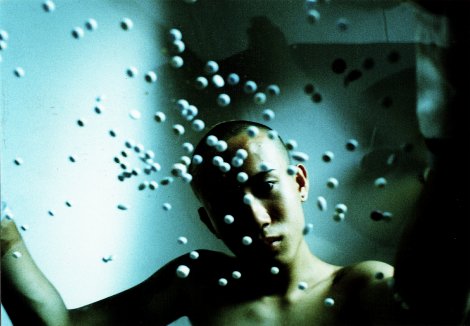
Teen dream, 15, dir. Royston Tan, 2003
Another year, another San Francisco Asian American International Film Festival, except now it’s been rebranded as CAAMfest, which certainly rolls off the tongue more easily than the previous moniker. The festival has added a tagline (film, music, food) that’s a nod to the increased presence of the audio and gustatory arts, but it doesn’t mean that movies are taking a backseat. As per usual there are more than a hundred new Asian and Asian American flicks in this year’s festival—below are a few preview picks.

Jeremy being Jeremy, Linsanity, dir. Evan Jackson Leong, 2013
Linsanity
I don’t need to tell you that this is a great Cinderella story, but filmmaker Evan Jackson Leong has taken the familiar material and shaped a charming and inspiring documentary about everyone’s favorite Asian American underdog. Jeremy Lin turns out to be funny, self-aware, and loquacious and Leong uses his longstanding access to his subject (he started shooting the film when Lin was at Harvard) to great effect. Interviews with Lin’s friends and family members, home videos of the budding basketball prodigy, and great coverage of the actual Linsanity phenomenon makes this a super-fun, captivating movie. The movie also touches on the racism and discrimination faced by Lin, the NBA’s first Asian American superstar, as well as Lin’s devout Christianity, but Lin is such a self-effacing guy and Leong so skillfully handles these elements that they work seamlessly into the whole picture.
Graceland
A solid film noir set in Manila and directed by Filipino American Ron Morales (Santa Mesa, 2008), Graceland looks at the repercussions of the kidnapping of a pair of young girls. Dark and moody, the film questions the morality of its various characters and, like the best noirs, no one is above scrutiny, everyone is guilty, and everyone has something to hide. The cast is lead by a nervous, sweaty performance by Arnold Reyes as the desperate father trying to save his daughter and who has many hard choices to make. The film also indicts the sex trade, corrupt policemen, and shady politicians—this is classic hardboiled stuff and well worth a look.
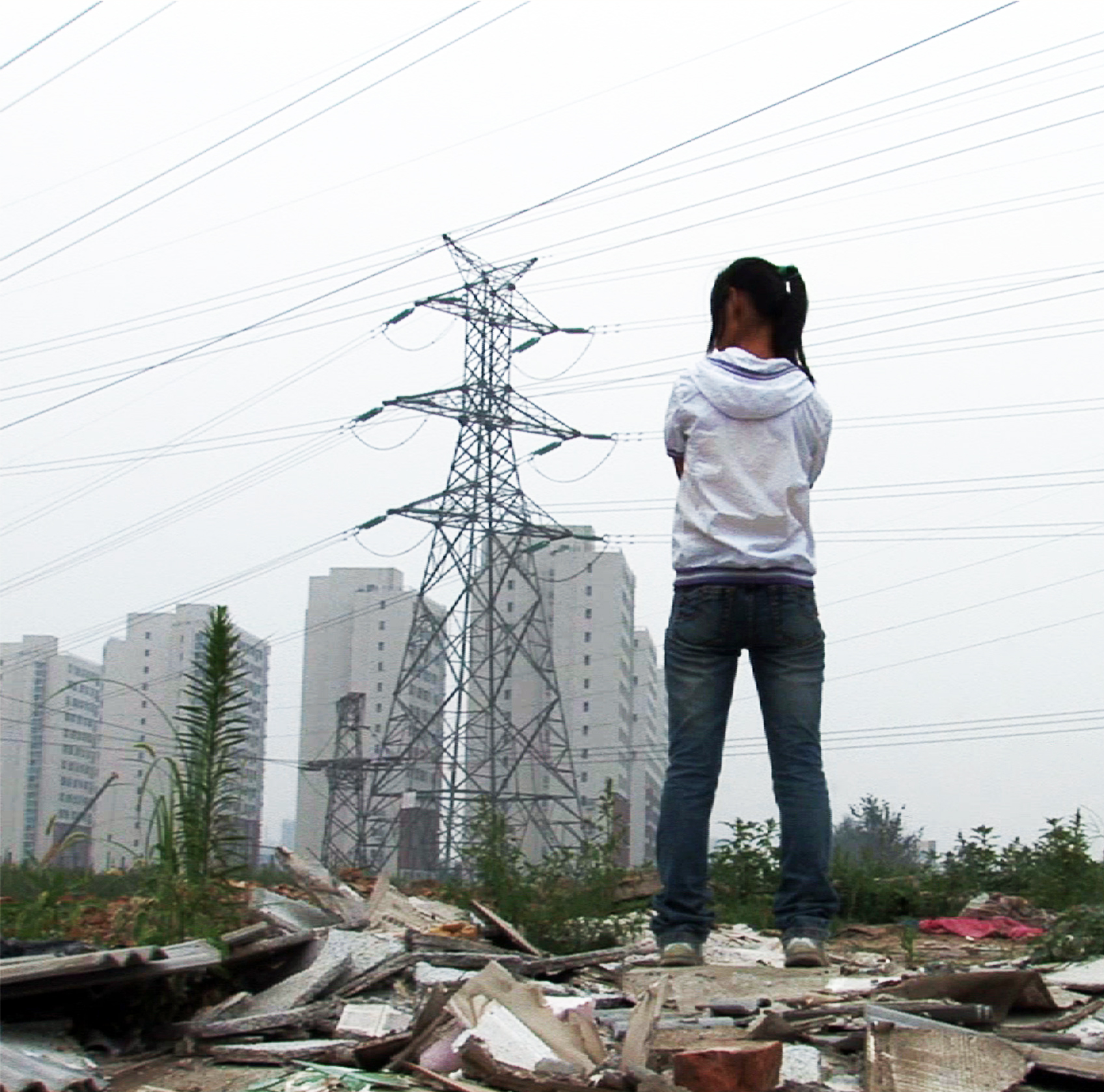
Hard times, When The Bough Breaks, dir. Ji Dan, 2012
When The Bough Breaks
Ji Dan’s verite documentary about a poor Chinese family living in a hovel on the outskirts of Beijing examines the effects of China’s rapidly expanding economy, which has ironically left many in dire economic and social straits. The father is a laborer, the daughters are adolescents trying to find money for themselves and/or their preteen brother to go to a decent school (one “sponsor,” a sick elderly man, offers to fund their education if they’ll sleep with him), and upward mobility is nowhere to be found. As if that wasn’t enough, Dad is a tyrannical drunk who verbally abuses his family at any opportunity, Mom is angry and fed up, and the teenagers are already learning to psychologically torment each other. Plus, the family’s eldest daughter has gone missing for some years after being lured into prostitution by the false promise of a factory job folding cardboard boxes. Overlong, somewhat shapeless, and leaning toward poverty porn, the film is interesting nonetheless due to the tenacity of the two younger daughters who grimly soldier on in the face of a bleak existence.
When Night Falls
Another film set in China, this narrative examines the notorious case of a young man who is driven to commit murder by that country’s oppressive police force. Ai Wei Wei made a documentary about the same case, but this film focuses on travails of the man’s mother as she tries to unravel her son’s unfortunate fate. The movie is composed primarily of long, stationary shots that emphasize the delicate action within the frame, lending a sense of oppression, immediacy, and intimacy to the film.
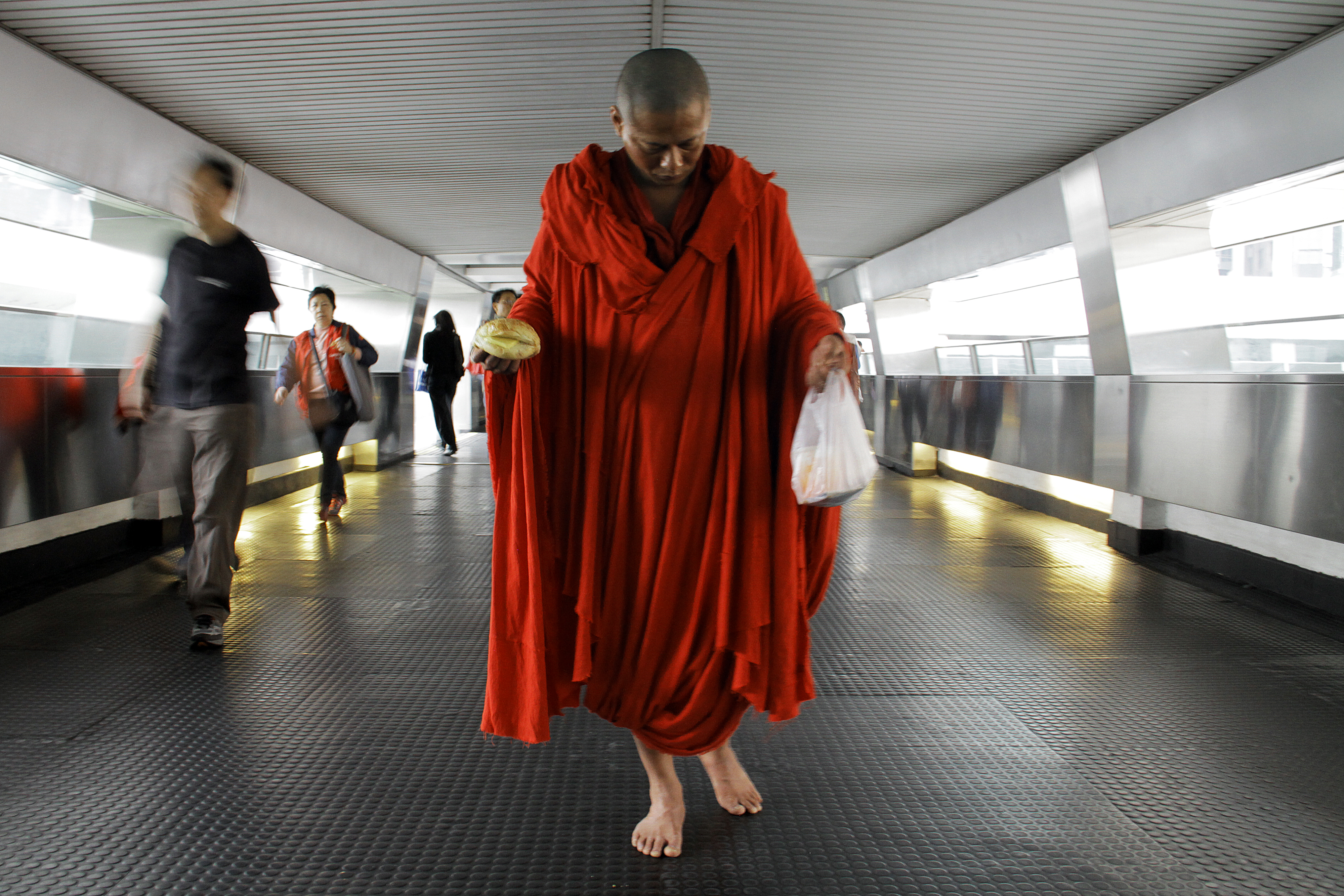
Walker, Beautiful 2012, dir. Tsai Ming-Liang, 2012
Also of note in the fest: Debbie Lum’s sharp and observant documentary, Seeking Asian Female, which is all about white dudes with yellow fever (full review here); The Land of Hope, Sion Sono’s second feature set in the Fukashima tsunami zone (full review here); the omnibus film Beautiful 2012, which includes Hong Kong director Ann Hui’s short narrative My Way, starring Francis Ng as a transgendered woman (!) (full review here), and Apichatpong Weerasethakul’s latest dreamwork, The Mekong Hotel. The festival is also presenting a brief retrospective of director Royston Tan, including Old Romances, his documentary elegy to old-time Singapore, the maniacal musical 881, and his debut feature 15, which looks at teenage angst, Singaporean-style. I’ll be interviewing the director onstage live at the Pacific Film Archive following the screening of 15, so be there!
CAAMfest
March 14-24, 2013
San Francisco and Berkeley, CA
full schedule and ticket information here.
Shot By Both Sides: Chen Kaige’s Sacrifice

The baby in question, Sacrifice, Chen Kaige, 2011
Sacrifice, Chen Kaige’s new movie, is now playing in San Francisco and while it’s a quality production, it seems a little dated, as well as being not quite up to the standard of past Chen flicks. But since Chen directed the epic masterpiece Farewell, My Concubine (1993), the bar for his films is pretty high. Sacrifice is certainly at least as worthwhile a watch as, say, Abraham Lincoln: Vampire Hunter, and most likely less insulting to your intelligence.But Sacrifice feels like a relic, caught between the old-timey expectations of international arthouse audiences and the contemporary realities of today’s Chinese film market.
My first encounter with Chen came back in the 80s when I saw Yellow Earth in New York City’s Chinatown. Chen, along with his fellow 5th generationist Zhang Yimou (who was also Yellow Earth’s cinematographer), had just busted out internationally and Yellow Earth was a huge departure from the social-realism of the Mao era. Beautiful and visually lush, with a cogent critique of China’s political and social climate, the movie was a worldwide arthouse hit and set the tone for Chinese films of the time. Chen went on to even more acclaim with Farewell, My Concubine, which famously combined Beijing Opera, 20th century Chinese history, and the divine histrionics of the immortal Leslie Cheung.
Since then Chen has directed a slew of films, though none as popular or critically beloved as FMC. Sacrifice follows in the footsteps of Chen’s most renowned flicks, but perhaps due to this it feels staid and outdated. It’s also to Chen’s disadvantage that his reputation precedes him as the director of the masterly FMC, since his films will be inevitably compared to that classic for the rest of his career.
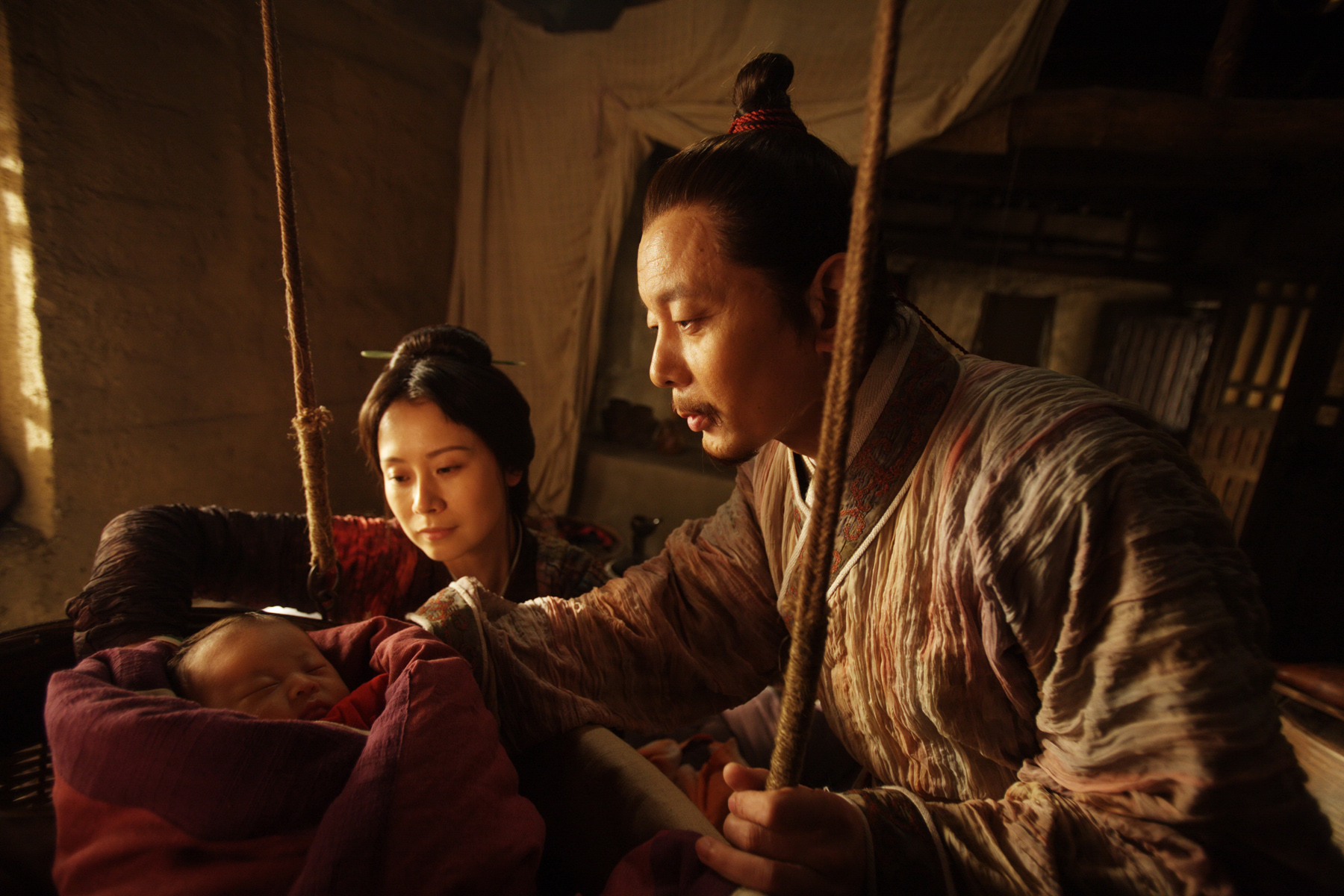
Identity theft, Sacrifice, Chen Kaige, 2011
Sacrifice is based on The Orphan of Zhao, the earliest Chinese play to be staged in Europe, and its storyline is an intricate hash of intrigue and revenge in feudal China. Set during the runup to the Warring States period, the movie follows Cheng Ying, a doctor who is caught up in court machinations. Ruthless warlord General Tu’an mercilessly slaughters his rival, General Zhao, and all 300 of Zhao’s close relatives save one, an infant son born during the chaos of the purge. Due to various byzantine plot twists, identity swaps, and other confusion, Cheng raises the surviving Zhao baby undetected in Tu’an’s court.
The first half of the movie gallops along pretty well, with court intrigue and carnage keeping things running at a brisk pace. But the film’s middle section is awfully slow and the film bogs down considerably at this point. By the end of the movie the pace picks up again, but it’s a long slog through the talky exposition in the middle section. Wang Xuiqi (who starred in Yellow Earth back in 1984) is awesome as the badass Tu’an and Ge You is also outstanding as Cheng, the doctor ground up in the court’s political gears. The secondary characters, however, are less interesting—pretty boy Huang Xiaoming (here with a decorative facial scar) is extraneous and a bit ridiculous and Fan Bing Bing adds another flower vase role to her resume. The final fight scene has some emotional heft since the characters’ relationship is well-established prior. Not so for the significant deaths earlier in the film, since those characters and their relationships are ciphers.

Wang Xiuqi, top dog, Sacrifice, Chen Kaige, 2011
The costumes, art direction, and cinematography are top-notch, but throughout the film Chen makes some janky directing and editing decisions. The identity reveal of a key character is pretty botched, and Chen somewhat clumsily employs flashbacks, dissolves, and intercutting, as well as a repeated fade-to-black motif that’s more distracting than insightful.
Sacrifice is not a bad film per se but it seems a bit old-fashioned given the current state of Chinese cinema. Here in the U.S. audiences seem to think that Chinese movies are all about ponderous costumed historical allegories like Sacrifice, but in China itself the scene is pretty different, with this year’s most popular Chinese-language films to date being Wu Er-Shan’s big-budget fantasy Painted Skin 2, the WWII action comedy Guns N’ Roses, and Mission Incredible: Adventures On The Dragon’s Trail, an animated movie about a goat.
Personally, I’m much more intrigued with Caught In The Web, Chen’s latest film now playing in Asia, that looks at China’s exploding online culture, but it probably won’t see the light of day here in the U.S. for months, if at all. One of Chen’s few modern-day movies, Caught In The Web feels timely and of-the-moment and is probably way too contemporary and edgy for the staid international arthouse demographic that follows Chen. There’s nothing inherently wrong with Sacrifice, and it’s the kind of stately historical Chinese costume drama that U.S. distributors love, but its aesthetic feels as stuffy as a Merchant-Ivory melodrama in the age of Cloverfield.
UPDATE: Looks like Caught In The Web will be playing at this year’s Toronto International Film Festival, which is great news. Here’s hoping it leads to more Stateside screenings—are you listening, SFIFF?

 beyondasiaphilia
Recent Comments