Posts tagged ‘asian american film’
Jump In My Car: New Wave documentary film review

Elizabeth Ai’s engaging documentary New Wave starts out as an examination of the significance of new wave music in the Vietnamese American community, then broadens its focus to be all about generational trauma, unresolved family dysfunction, and the long term damage from the Vietnam War on the Viet refugee community in the U.S.
The film intertwines the stories of two prominent members of the Vietnamese new wave scene, Lynda Trang Đài & Ian “DJ BPM” Nguyen, as well as that of filmmaker Elizabeth Ai. Foregrounded is much wonderful synth pop music, many fabulous archival photos of Viet teens with big teased-up hairdos, and lots of clips of jerky 80s dancing. But although the movie starts out being about the scene, it morphs into something completely different by the end of its runtime.

Extensive photos and clips of big-hair Vietnamese American kids grooving to the beat totally capture the vibe of the scene circa the early 1980s, right after the fall of Saigon, when many Viet refugees landed in the U.S. As the film notes, the parents were dealing with unaddressed PTSD from the war and many of the kids were left to their own devices, including the filmmaker. The film delves into Ai’s fraught relationship with her mother. who opened a series of successful nail salons and eventually became responsible for helping many other refugees to do the same in the US. But due to the demands of supporting her siblings and extended family, as well as complete strangers, Ai’s mother had no bandwidth for raising AI and her sister, so one of their young aunties took up the task. It was through this auntie that Ai was first exposed to the new wave scene as a child, which was roaring along in the Vietnamese community in the US at that time.

Having only peripheral knowledge of the Viet American party/music scene (mostly via Paris By Night), it was great to see an in-depth look at the career of Việt Kiều goddess Lynda Trang Đài, who made her debut as a teen covering new wave classics and gained fame as “the Vietnamese Madonna,” along the way revolutionizing images of Vietnamese American women performers. Adopting a more modern look than previous singers who performed in floor-length áo dài and sang traditional Vietnamese music, Lynda took the community by storm by singing in short skirts and crop tops and rolling on the floor during her high energy sets. However, the film demonstrates that all has not been roses for Đài as she too bears the responsibility of caring for an extended family as well as being under the scrutiny of the entire Vietnamese American community.
Ai sensitively handles Đài’s story as well as Nguyen’s tale of his relationship with his dad, detailing Nguyen’s youthful rebellion and his estrangement from his father, a well-known author who objected to his son’s interest in the new wave party scene.
The film effectively weaves together the stories of Đài, Nguyen, and Ai, using new wave as a backdrop to looking at the experiences of Vietnamese refugees in the U.S. Its abundance of archival images and clips, combined with dramatized re-enactments of the main characters’ youthful lives, turns what starts out as a fun trip down memory lane into a much richer story, full of sympathy for the main subjects. Ai’s direction possesses a perspective and a depth of understanding that can only come from someone who witnessed firsthand the events she’s documenting, which has long been hallmark of the best of Asian American cinema.
Let It Shine: 2023 San Diego Asian Film Festival

Just got back from a quick and dirty one-day trip to San Diego to attend the San Diego Asian Film Festival (SDAFF). SDAFF is the biggest film fest in North America focusing on Asian/American films and artistic director Brian Hu and his team consistently program an outstanding blend of art house, genre, and indie films. Since I ride for Lee Byung-hun, I got the impetus for my trip when I found out that SDAFF was screening his latest film, CONCRETE UTOPIA (which is also South Korea’s entry in the upcoming Academy Awards). I had a bit of airline credit I had to use by the end of the year, plus a few points to spend on a rental car and a hotel so I made the decision to take a jaunt to sunny San Diego.

I arrived Sunday morning just in time to have some excellent chicken jook and to see a few friends at the filmmakers’ brunch. SDAFF is known for its great hospitality and this year was no exception. Then it was off to the movies, starting with the shorts program Astral Projections. MANY MOONS (dir. Chisato Hughes) was the standout film in this program, an essay film about the 1880s forced expulsion of almost the entire Chinese population of Humboldt county. Since I’d made THE CHINESE GARDENS about a similar occurrence up in Port Townsend Washington back in 2013 the topic was of particular interest to me. Hughes did a great job layering interviews, text. archival images, and other visual elements to question the facts and fictions around this notorious event.

After another pit stop at the reception area for a couple slices of pizza and some butter cookies I then saw the nouveau martial arts film 100 YARDS. Set in 19th century Tianjian, the film is co-directed by brothers Xu Junfeng and Xu Haofang, the latter of whom is known for writing Wong Kar-Wei’s THE GRANDMASTER, and this movie similarly attempts to re-imagine and revisit the martial arts genre, but with less success. Although the smoky greys and browns of the mis en scene create a striking visual tableau and the costumes, props and set design were all great, there were way too many fights and not enough character development to hold my interest. It was hard for me to care much about the main character’s daddy issues, although Jacky Heung and Andy On brought the skilz to their fight scenes.

I then moved on to Yu Gu’s documentary, EAST WEST PLAYERS: A HOME ON STAGE. As Gu notes, she had less than an hour to cover nearly sixty years of the history of the legendary and influential Los Angeles-based Asian American theater company, but the film does an excellent job of doing just that. Gu pairs older and newer veterans of EWP such as George Takei, Daniel Dae Kim, James Hong, Tamlyn Tomita, and John Cho to discuss the significance of the troupe as a voice for Asian Americans in the theater. It was fun to see clips from the trove of archival footage of EWP as well.

By then I was contemplating how I would squeeze in time to grab a bite for dinner but decided to forgo eating to line up for the main event of my trip, CONCRETE UTOPIA. I first heard about this movie from my friend Anthony Yooshin Kim, who’d seen it at CGV in Los Angeles a few weeks prior. Unfortunately at that time there were no plans for a wider theatrical release in the US so when SDAFF announced it as part of its lineup I decided to catch it there, since I wanted to see it on the big screen. A dystopic story about the residents of the only apartment building left standing after a massive earthquake levels Seoul and starring A-listers including my man Lee Byung-hun, Park Bo-young, and Park Seo-jun (who makes his US debut in THE MARVELS this year), the movie did not disappoint. The film has everything that makes South Korean cinema so pleasurable—outstanding special effects, brilliant acting, imaginative storytelling, well-drawn, complex characters, and sharp social critique. Lee Byung-hun does an outstanding job modulating his character, making his character arc compelling and believable. Park Seo-jun and Park Bo-young are also great as a young couple whose lives and values are literally shaken up and turned upside down by the catastrophe. Despite its fantastical premise the movie never wavers in its examination of humanity under extreme duress.

CODA: This past week I had the fangirl pleasure of joining a zoom press conference for CONCRETE UTOPIA that featured Lee Byung-Hun and director Um Tae-hwa. It was fun to share the same virtual space as Lee, even if we didn’t directly interact. I tried to restrain my cyberstalker stanning as best I could but I’m not sure if I was entirely successful. CONCRETE UTOPIA is set to open in New York and Los Angeles on Dec. 8, and will go into wide release across North America the following weekend.
A More Constructive Use of Leisure Time: CAAMfest 2023 review
I had an interesting conversion recently with a friend who’s worked in the independent Asian American film community for a long time. He postulated that in some ways, Asian American film festivals have achieved everything they set out to do when they first started up back in the 1970s, which to him meant increasing the visibility and voices of Asian Americans in the US filmmaking landscape. In some ways I think he’s on target, with Everything Everywhere All At Once winning the Best Picture Oscar this year and streamers regularly programming Asian American content of all types. So where do we go from here? The 2023 CAAMfest shows all of the pros and cons of Asian American narrative plenitude.

CAAMfest opening night film, Joy Ride (dir. Adele Lim), is a great example of what happens when Asian American voices are mainstreamed—namely, that we’ve come far enough that we now have silly sex comedies from an Asian American perspective. I didn’t hate this movie and I did laugh in some parts but to my mind it was pretty predictable and pretty much lacking in emotional depth of any sort. The cast works hard and is charming and agreeable but all of their hard work can’t disguise the film’s sloppy story construction and gaping plot holes. Twenty years ago we all would’ve eaten this kind of movie up as progress but now that we’ve got a lot more options I feel less forgiving about this kind of simplistic execution. We don’t necessarily have to support representation for the sake of representation.

Similarly, Land of Gold (dir. Nardeep Khurmi), about a Sikh American long haul trucker who acquires a young Mexican American stowaway in his rig, is told in fairly conventional strokes. Currently airing on HBO Max, the film does feel like a made-for-TV movie in its standard narrative beats. Lead actor/director/writer Nardeep Khurmi is solid as the truck driver with some family issues to work out but I was very annoyed by child actor Caroline Valencia as the stowaway. She’s the kind of precocious and self-assured kid performer who feels like she’s been taking tap-dancing and voice lessons since she was wee and thus lacks any discernible authenticity as an actual child. But other reviewers have praised her performance and Land of Gold won both Best Narrative and the Audience Award at CAAMfest so what do I know? Again, twenty years ago this film would have been groundbreaking but now it seems less so to me. That said, I did love seeing the world of long-haul truckers and appreciated the small details, like the fact that every truck stop now serves Indian food and that there are homespun gurdwaras along the highway to allow the Sikh drivers to worship as needed.

More poetic and less formulaic is The Accidental Getaway Driver (dir. Sing J Lee), about an elderly Vietnamese driver for hire who gets caught up with three escaped convicts on the run in Southern California. The film does a good job connecting generational trauma with life on the lam, utilizing beautiful emotional dreamlike images and a gritty, dark mis en scene to create an unusual visual texture. Lead actor Hiệp Trần Nghĩa is great as Long, the driver who forms an unexpected bond with Tây (Dustin Nguyen), one of the convicts who is also Viet. Dustin Nguyen, who debuted as a teen star way back in the 1980s on 21 Jump Street, is excellent as the world-weary convict searching for a chosen family. He’s now sixty years old (!) and he’s come a long way from his heartthrob beginnings to become a sensitive and nuanced performer. Although at first it appears to be a crime film, with a noirish look and feel, the movie ultimately is about the relationships formed between the characters as they find solace and connections with each other.
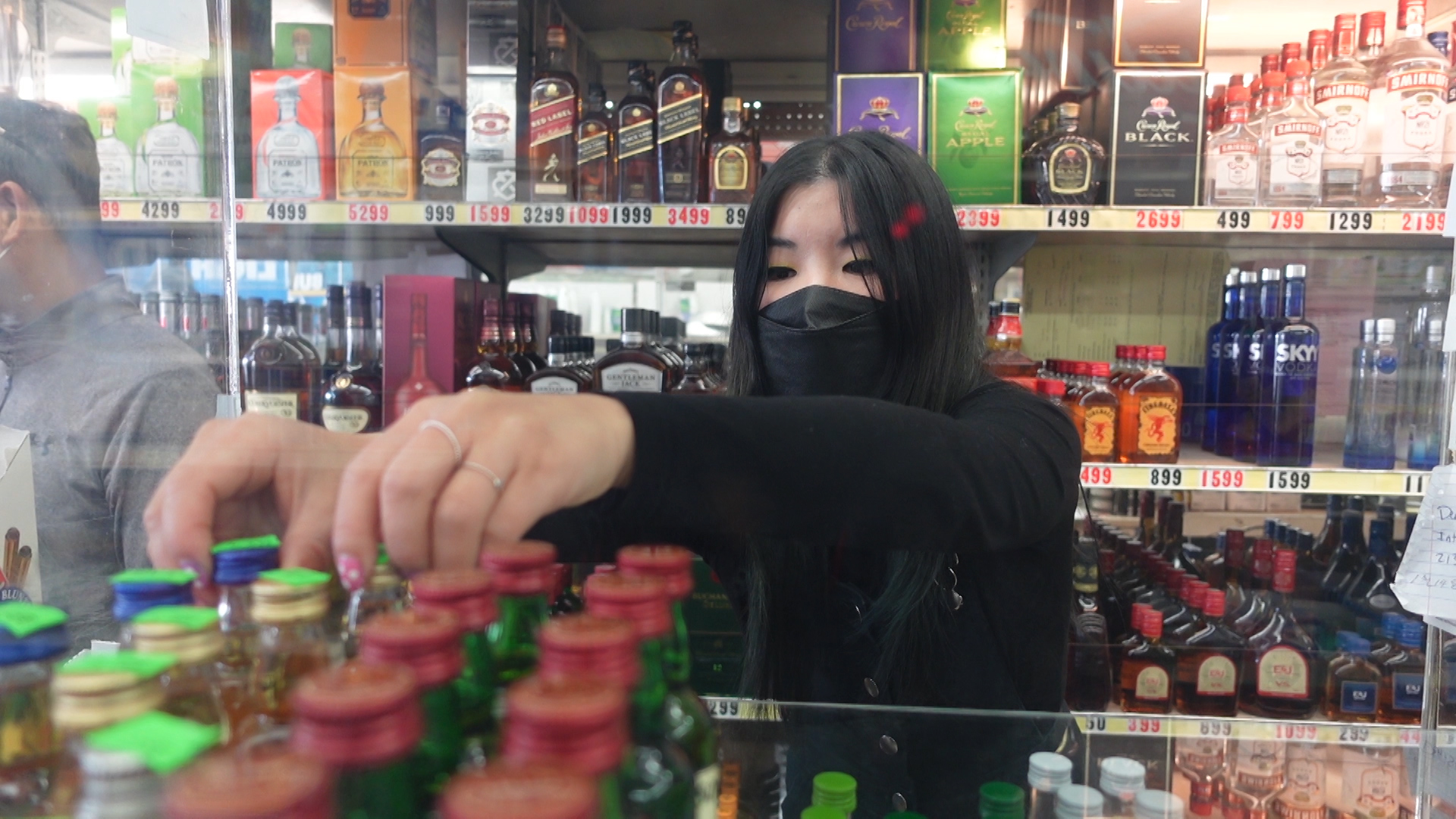
Liquor Store Dreams is So Yun Um’s debut feature documentary and she guides the film with a sure hand. The doc is an expansion of her short film Liquor Store Babies (2014) and the longer version allows Um to elaborate on several of the themes she touched on in her short. Um updates the story of her Korean immigrant parent’s immigration experiences in the US to include pandemic era, expanding her scope to include a thread on reconciliations between black & Korean communities in Los Angeles. Her kind and smiley Dad is a healing presence throughout the film.

Another example of how Asian American voices have reached the mainstream, Jeanette Lee vs was produced by ESPN for their 30 for 30 series of profiles of sports figures. Director Ursula Liang brings a decidedly Asian American perspective to the story of Korean American Jeanette Lee, aka The Black Widow, who in the 1990s was one of the most famous and popular professional pool players in the world. Liang describes the many obstacles Lee faced to reach success in her sport including childhood scoliosis and a battle with cancer later in life, as well as the racism and misogyny she dealt with throughout her career. Liang also includes a moving interview with Lee’s elderly mother who describes her fear that her daughter will predecease her. By focusing not only on Lee’s professional journey but her struggles with white supremacy and patriarchy Liang injects a bit of Asian Americanism into a doc made for a general audience.

Twelve Days, Hong Kong director Aubrey Lam’s dramatic romance had no edge. The story, about a doormat wife and her asshole husband, is an AITA post come to life. It’s hard to feel much sympathy for either character since both the husband and wife are ciphers with no interior lives or motivations. With all of the interesting indie films coming out of Hong Kong these days it’s telling that this sleek, vacuous and politically inoffensive piece of aggravation is what the Hong Kong Film Council chose to showcase.

The uncatagorizable hybrid feature Starring Jerry As Himself (dir. Law Chen) was one of my favorite films from the festival but it’s impossible to explain this film’s appeal without spoiling it. Suffice to say I found it entirely satisfying and completely unpredictable, with dramatic music, solid performances, and good cinematography that makes good use of its Florida location, where nothing is as it seems and everything is fleeting and unreadable.

Wisdom Gone Wild, Rea Tajiri’s latest experimental documentary, is a lovely, thoughtful, and surprising portrait of Rea’s aging mom and her progression into dementia. The film shows dementia as a blessing that can become a new language and way of perceiving and combines a gorgeous sound design with home movies, contemporary footage, archival photos, a spare voiceover and Rea’s mom’s own gems of perception. I especially liked the evocative use of midcentury songs such as Smoke Gets In Your Eyes and other standards from the American songbook. The film is a brilliant example of how to say more with less and how to have faith in your viewers’ ability to discern meaning without excessive explanation. To my mind it is really the best thing in this year’s festival. Wisdom Gone Wild’s freeform, improvisational structure, guided expertly by Rea’s accomplished, confident hand, results in a film that’s not afraid to take risks and make bold and surprising choices.
Rea Tajiri’s documentary is the kind of film that I want to see from Asian American cinema in the 21st century, and not just horny road trip movies. I hope that we don’t simply aspire to insert Asian American characters into the same old genre movies. I want to be confounded and surprised by Asian American movies, not shown the same stories we’ve seen before. Otherwise we may find Asian American filmmaking to be obsolete and irrelevant, as it becomes just another cog in the commercial moviemaking machine.
Love Fool: Fire Island at Frameline46 Film Festival

I recently caught Fire Island, Andrew Anh’s latest feature film, at the Frameline Film Festival here in San Francisco. As always the festival is the leadup to Pride Weekend, which is the last weekend of June and which culminates in the massive and legendary San Francisco Pride Parade. One of the most memorable Frameline screenings that I attended took place in 2013 on the same day that the Defense of Marriage Act was struck down by the Supreme Court, legalizing same-sex marriage in the United States. That night the Castro district was packed with joyous revelers celebrating the decision and we had to fight our way through crowds thronging the streets to get into the movie theater.
As fate would have it, the screening of Fire Island at Frameline also occurred right around the time of another landmark Supreme Court case, but this time it was night before the grim and regressive decision that reversed the landmark Roe vs. Wade decision that legalized abortion in the US. As I write this I can barely articulate my sorrow and rage and my continued despair as the US slides further toward fascism. Now that Roe v Wade has been overturned, Fire Island is either a beacon for the future or a time capsule of a way of life that will be threatened soon.

The film itself is delightful—a queer Asian American reworking of Jane Austen’s Pride and Prejudice set on the titular island that follows a friend group of five QTPOC who arrive at the legendary gay vacation mecca for a week of fun and frolic. Joel Kim Booster grounds the film as Noah, the pretty, somewhat jaded narrator of the story, with Bowen Yang as his sweetly vulnerable bestie Howie. Conrad Ricamora is droll and deadpan as Noah’s romantic foil, the upright and slightly repressed Will. James Scully as Charlie, Howie’s earnest love interest, is appropriately dorky and starry-eyed, with slightly absurd windswept hair. Margaret Cho as the lesbian den mother as usual lights up the screen. Most definitely a fun and kicky romcom, the film captures Fire Island’s cruisy, hedonistic vibe with many scenes of sleek beautiful cuties gyrating at underwear parties and swimming pools. Though the film casts a somewhat critical eye on the young, hairless, slender gay male standard of beauty, one of my quibbles about the movie is its lack of a lot of body diversity. But the film does critique the shallowness of the Fire Island scene and it doesn’t shy away from exploring the racism and classism Howie and Noah et al face in the snobby, mostly white Fire Island milieu.

Most significantly, Fire Island emphasizes the community minded mentality of Noah and Howie’s BIPOC chosen family. As director Andrew Ahn mentioned in the Q&A following the screening at the Castro, whereas David, the protagonist of his first feature film Spa Night, was pretty solitary, in Fire Island it’s all about the importance of supporting your tribe and *SPOILER* the film’s last scene interrupts Will and Noah’s first kiss to reestablish those collectivist connections. Fire Island is the saucy, community minded queer Asian American romcom we’ve all been waiting for and it’s great to see director Ahn successfully make the jump from indie film world to more mainstream productions. We need strong and articulate Asian American and queer voices like Ahn’s in Hollywood in order to combat the oppressive forces in the US that want to obliterate the progress toward liberation and justice that our communities have made in the past fifty years.
Note: There’s another melancholic aspect of this screening. The management of the Castro has recently been taken over by Another Planet Entertainment which plans to use the theater as a mixed-venue with an emphasis on live music. Will this be the last film I see there before the seats are ripped out and the floor is leveled? Over the years I’ve spent countless hours there watching movies so the possibility that the Castro will no longer primarily be a cinema is endlessly sad. There is movement afoot to prevent this, however, but whether the effort will succeed is yet unknown.
Queen of Hearts: An interview with Yellow Rose producer Cecilia R. Mejia

Yellow Rose (dir. Diane Paragas) is currently in the midst of its theatrical run in the US after taking the Asian American film festival circuit by storm in 2019. I talked with producer Cecilia R. Mejia about the film’s significance to herself and to the Asian American community at large.
BA: So it’s pretty exciting, to get theatrical distribution.
CM: When we got bought by Sony, it was exciting. And then with COVID, we didn’t know what was going to happen, but Sony said, we’re gonna do it anyway. So it’s been like a little weird, because we don’t know what the box-office numbers would have been if people felt safer to go to cinemas. But conversely, we also don’t know if they would have put us in that many theaters if COVID wasn’t happening.
BA: It’s funny because I had a film (Love Boat: Taiwan) that was playing at a lot of the same festivals as Yellow Rose, and it was always sold out before I could get a ticket. And it always won all the awards. I remember saying, “Yellow Rose is playing with my movie again–oh, well, there goes all the awards!” (laughs)
I teach Asian American film history, so that’s another reason I was super excited about this movie, because it’s a Fil-Am film, And the last Filipino American movie that I remember being in theaters might have been The Debut back in like 2000.
CM: I think they they also did it themselves–they self-distributed.
BA: That’s right, so it’s different because you got a major distribution deal. Are you the first Filipino American film to do that? Probably HP Mendoza did more like an indie route. He definitely wasn’t with Sony.
CM: I think it’s safe to say that we’re the first by major studio, so it’s super exciting to have that backing.
BA: What do you think contributed to you being able to get that kind of deal?
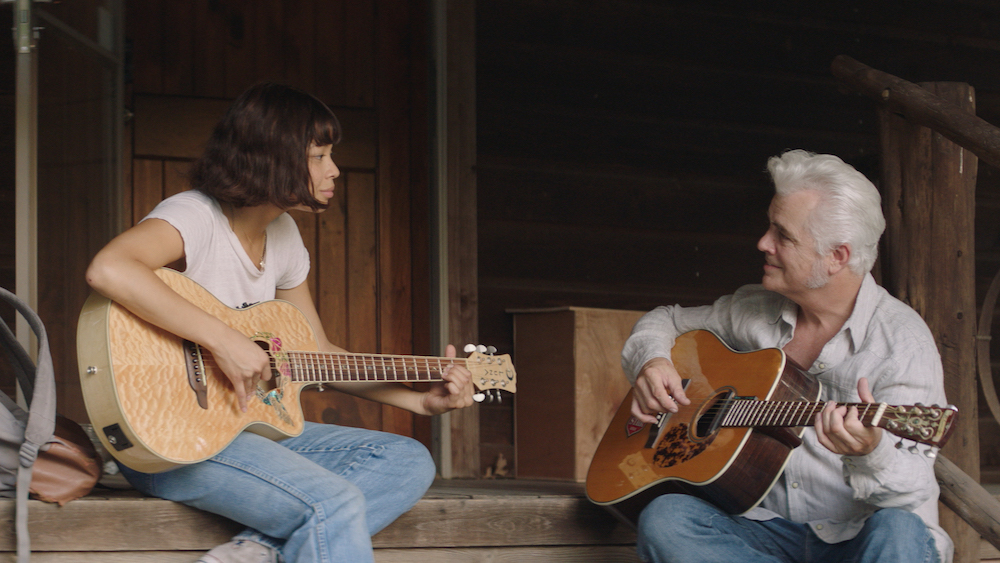
CM: I think some of it was the music. What makes our our film quite different is there’s the added element of the music and Sony also does music, so they also have the soundtrack that they’re pushing. I think what was appealing to them was, here’s this really interesting story about a community that’s never really seen on screen, and there is this element of country music, which is very popular.
BA: And Lea Salonga is in it too, right?
CM: Yes, she’s probably the most well-known Filipina in the world, along with Manny Pacquiao. She has a huge following. I think people really fall for Eva (Noblezada) too. People say to me, I feel like we’ve found a star.
BA: I’ve only heard good things about the movie. I mean, a film can be popular, but there’s always someone who’s hating on it. And I’ve never heard any hate for this movie.
CM: I know! We had a great festival run. We couldn’t have asked for a better opening than at Los Angeles Asian Pacific American Film Festival.
BA: How do you feel about like this giant Asian American film festival circuit? And how did that help out with getting more visibility for the movie?
CM: I think it helped a lot. I actually studied Asian American Studies in school, but I hadn’t really collaborated that much with other groups outside of Filipino Americans. And I thought, “I need to do that.” I feel like if we had been in those big festivals (like Tribeca), the film might not have been embraced the way that it was or understood the way that it was. It was just embraced by every community that we showed it in. And I just feel like it was nice to introduce some of our people and our crew members to the world of Asian film festivals because they hadn’t been part of any of that.
So I think I think it helped us because it gave us this boost and it helped build this community. I think the traction that we were getting at every festival was getting some buzz–people were talking about our film. Every time we were we were somewhere there was so much buzz.
BA: Yes, I think it was the buzziest movie last year at Asian American film festivals.

CM: Yes, and around this time of the year the festivals seem to all be around the same time. We had to divide and conquer–Diane was in Hawaii and San Diego. And I went to Philadelphia, Vancouver, Houston. It was like this whole circuit. And it was interesting, because we were all texting each other, “I think we won!”
BA: When you made the movie, I can’t imagine that you thought that it would be so popular. Do you remember what you were thinking when you started working on the film? Why did you decide you wanted to do this story?
CM: The backstory was that I have been working on this for almost a decade with Diane (Paredes), the director and writer. She herself has been working on this for more than 15 years and she had just sort of given up at some point and started her career as a commercial director, did a documentary. And then she decided, “I want to tell the story.” I was working with the Philippine American Legal Defense Fund at the time, was just out of grad school and I wanted to embed myself more in the public policy world. I was also working in and out of the UN, signing up people for DACA and working with Jose Antonio Vargas. And Diane came to our office to do research. She said, “I’m doing a film on an undocumented Filipino immigrant who loves country music,” and she showed me the look book. And I was so intrigued by it, because I’ve always been a lover of films, especially indie film. I didn’t think it was possible for me to infiltrate or be part of that world. So when she was showing it to me, I was really fascinated–I had never met a Filipino filmmaker before. So she asked me, “Do you want to do help me do research on it?”
So I was helping her and it snowballed. I was working on a really short documentary about undocumented Filipino immigrants who were detained, which we used as research. And then we were writing grants, and I was helping her reach out to the Filipino community and reaching out to different people. As the years were rolling on I started working as a full-time producer with her.
You mentioned The Debut–I had never seen a film that represented us since The Debut. I was waiting for something like that and so that was one of the driving forces for me–the whole backstory of a girl trying to find a home and understanding that experience from that perspective. So my goal was always to get the movie made, that was always kind of in my brain.

BA: Is there anything else that you personally really have gotten out of this experience? How has it changed your life?
CM: If I hadn’t worked on this film think I probably would be in some sort of government position, or heading towards public policy. But I’ve come to realize, especially in the last three years working with PJ (Raval) that there’s this medium of art and activism that is quite powerful. And if you watch someone like PJ navigate what he’s doing with his documentary Call Her Ganda, you see the impact of it. So this whole experience has helped me define where it is I want to go. It’s melded the things that I love most, as far as work is concerned–art, education, and philanthropy.
I think for most people film is a medium that reaches almost everyone. Whereas in public policy, you have to play politics more, and it’s also such a huge system. And you have to be like an ambassador or someone who works closely with an ambassador to get anything really done, otherwise, you’re just sort of kind of moving the machine and absorbing information. Whereas I think with film you’re able to do stuff quicker.
BA: Even though it takes like five years to finish a movie. (laughs)
CM: It’s not just this whole traditional medium of film, but art in general, I think, that has a way of changing culture in a way that nothing else can.
My goal is for people to leave the theater after watching this film and changing the way they think about immigration and about how they experience the Filipino community.
BA: Is there anything else you want to add before we finish?
CM: Yeah, there’s this. There was a review we’d read early on that was clearly written by a white woman. And she said that Yellow Rose was a white savior type of movie, because we have a lot of white characters. And I thought that was such an unfair comment, because I don’t think she did the research about who was behind the film. I also thought it was a dangerous review, because it also deters people from wanting to see the film, and supporting a community like ours, supporting filmmakers like Diane. So I thought, you know, how dangerous and irresponsible for a reviewer to do that. I don’t think people know the Filipino community, which is why maybe she said that, because she has no familiarity with it. So maybe since this month is Filipino American History Month, people maybe need educate themselves on who the Filipino American community is.
We had generally great reviews for the most part, but when I read that review, I thought, maybe because she saw Sony was behind it, maybe she didn’t know the backstory of how long it took for this movie and that it was actually the Filipino community that that funded this film. Or how historic it is to put Eva Noblezada and Lea Salonga in one film together, and someone like Princess Punzalan who’s an icon to the Filipino community, and the fact that Diane is the director and writer, and that this was a Filipino American-led film.
I think that that’s that’s something that mainstream viewers can’t understand, why it’s so important that these movies are there for us. It means more than just paying money for a ticket and watching something. We have our hearts and souls invested in these films.
BA: I just I just feel like every Asian American film that gets finished is like a miracle, honestly.
CM: Yeah, And I hate that some people say, well, we already had The Farewell. So literally, there’s that (Asian American film) for this decade. We’re two totally different stories!
Yellow Rose is currently showing at theaters across the US.
Rebel Without A Pause: Why we need GOOK

The Korean American view, GOOK, 2017
Just caught a matinee of Justin Chon’s film GOOK at the Alamo Drafthouse here in San Francisco. Although the movie is a bit rough around the edges for the most part it’s an absorbing and successfully mounted film that focuses on the Korean American perspective of a particularly fraught moment in US history.
The film follows Eli and Daniel, a pair of Korean American brothers who run a small and funky shoe store in Paramount, an unincorporated area bordering South Central Los Angeles. It’s set during the civil unrest in Los Angeles in 1992 following the acquittal of the four LAPD officers caught on camera beating unarmed motorist Rodney King, but most of that action takes place offscreen. Instead the film miniaturizes the conflicts that occurred during that time, focusing on a small group of individuals repping for the entire city of Los Angeles. Several times characters refer to action taking place in South Central but aside from a few digitally added columns of smoke on the distant horizon we don’t actually see any widespread violence. This is no doubt in part due to the film’s indie budget which probably precluded any large-scale set pieces of buildings on fire or shit getting fucked up. So we get a couple broken windows, some beatdowns, a few guns being fired into the air, and other incidents that gesture toward the greater unrest without actually staging any of the mass devastation and destruction that took place during that time.
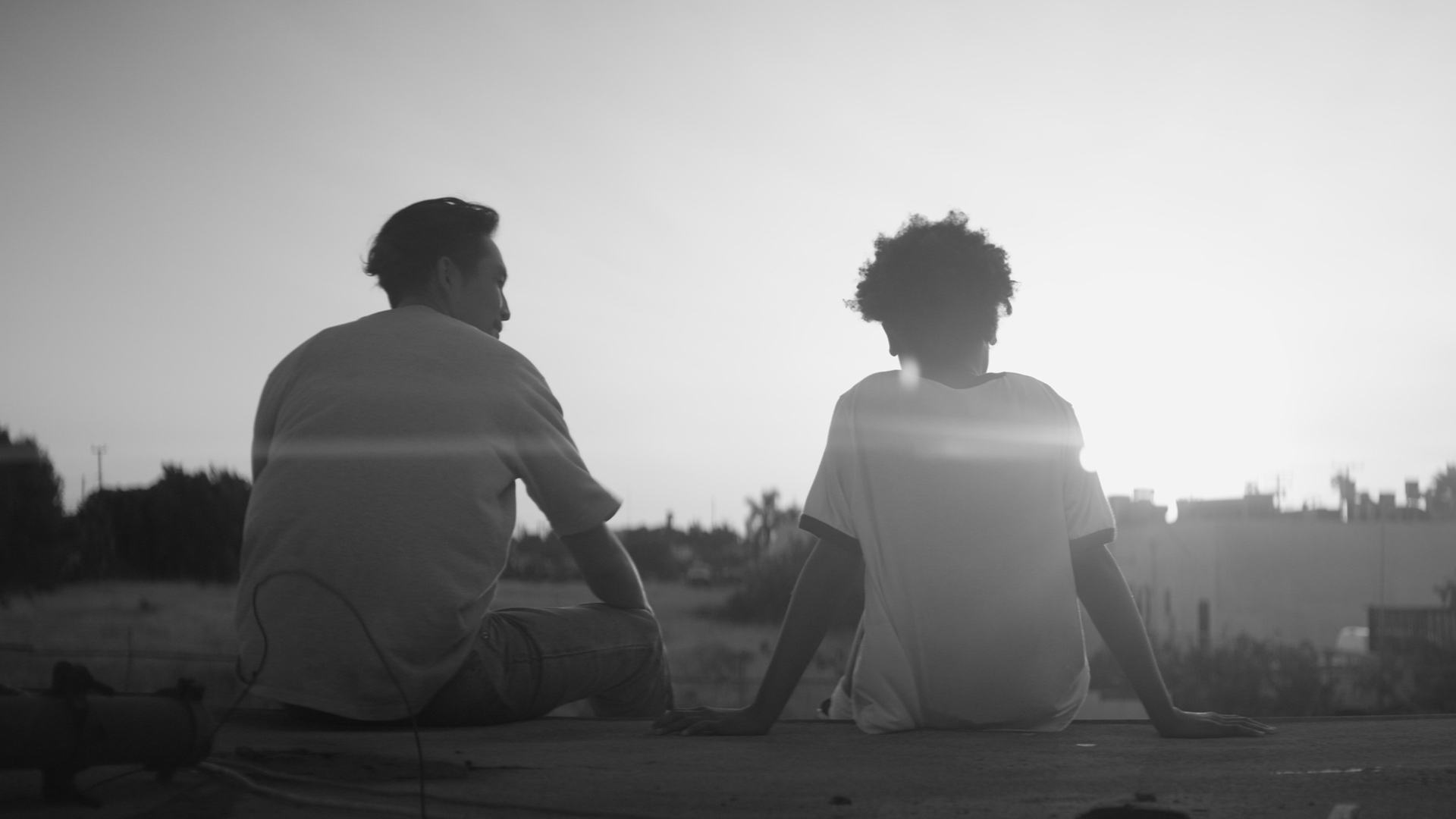
Time and place, GOOK, 2017
Justin Chon does a good job with his actors (himself included) and demonstrates that he has an eye for time and place in the worn-out, working class neighborhood he places his story in. He’s also got the 1990s kicks fetish down pat as one of the narrative threads turns on the acquisition of several pairs of expensive sneakers. The film’s art direction also works hard, with baggy jeans, overalls, and asymmetrical jheri-curl hairstyles capturing the period’s fashion sensibilities. Although I have some issues with the resolution of the character arc of Kamilla, the young African American teen who befriends Eli and Daniel, for the most part Chon directs with a steady hand and maintains a tone of tense wariness in the film’s multiethnic milieu.
And like MOONLIGHT, which the film in some way resembles, there are no white people in the movie, which attests to the racial and social stratification that led to the explosion of tensions in 1992 following the verdict that acquitted Officers Powell, Wind, Koons, and Briseno of beating Rodney King. Instead the film tells its story from a Korean American POV, one which has for the most part been lacking in mainstream depictions of the 1992 unrest. This omission is especially glaring considering the fact that the Korean American community suffered huge property losses during the unrest and that sa-i-gu, or April 29, is considered a watershed moment in the Korean American community.
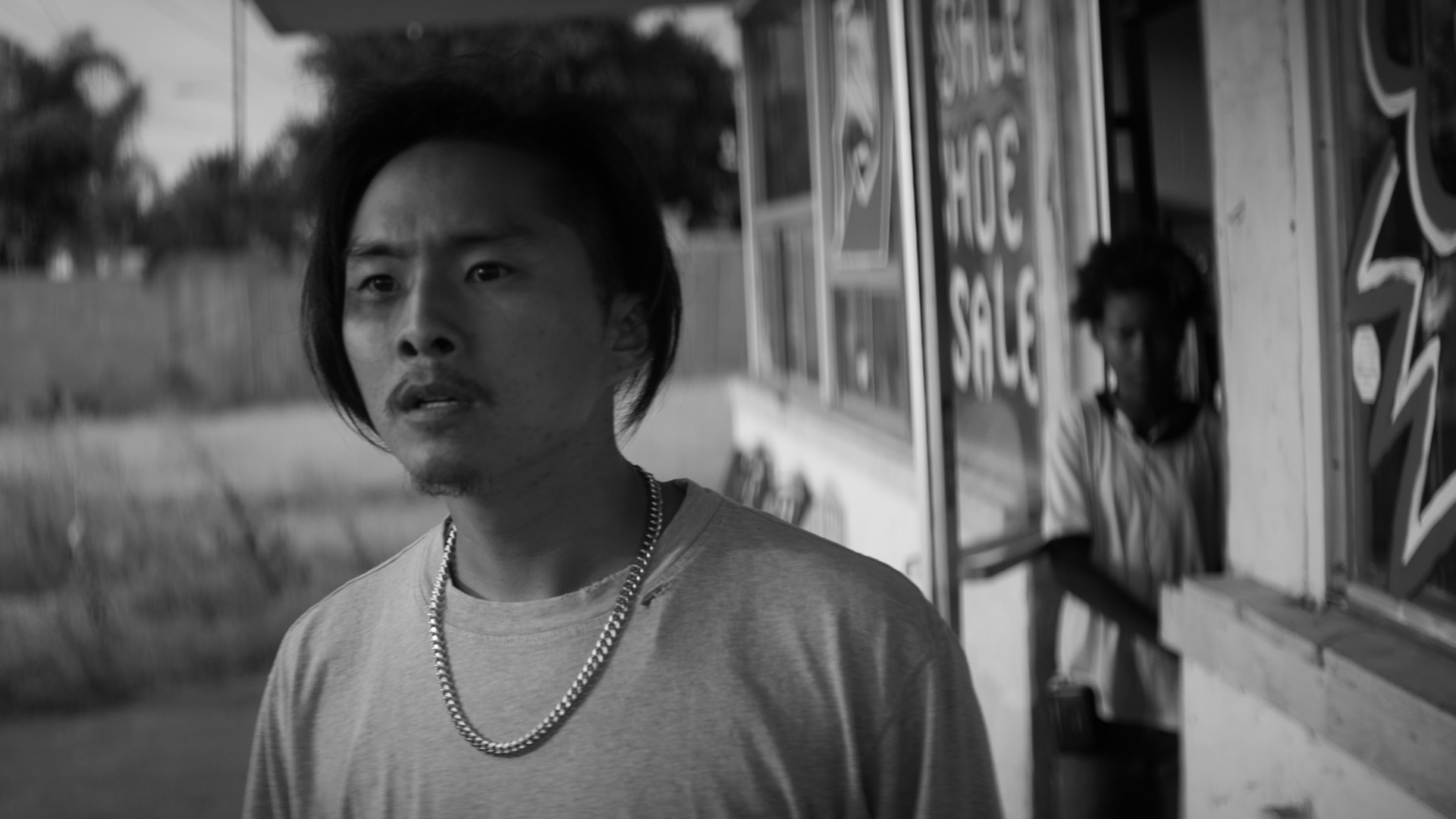
Important, GOOK, 2017
Even in the 21st century the focus on a Korean American perspective is especially important, and this was all the more apparent to me after watching the ads and trailers that preceded GOOK’s screening at the Alamo. The cinema is a hipster haven located in what used to be a predominantly Latino neighborhood, and I counted exactly one non-white person in the many trailers for the various indie films in the upcoming schedule. Likewise, the ironic midcentury aesthetic of the found footage in-house announcements were decidedly not very diverse. One short clip featured an all-white group of young people from the early 1960s dancing to African American style choreography. This moment was presented without a hint of irony and its glaring cultural appropriation felt decidedly tone-deaf.
So even though I feel like I say this a lot, it clearly bears repeating. Unconscious Eurocentric bias makes it all the more important to support films like GOOK. Now more than ever, as Trumpism threatens to turn back the hard-fought gains of the civil rights movement and its struggles for equality and social justice, we have to keep decentering the master narratives of white hegemony and bring Asian American voices to the fore.
Keep Your Head To The Sky: 2017 CAAMfest

Angsty emo, The Lockpicker, 2016
CAAMfest is just around the corner so I’m posting a few quick recos to help people wade through the massive program. As usual this year the festival is screening more than 100 films, plus music and food events, so finding your bliss can be a daunting process. Here are a few things that I’ve seen that I like. Get your tickets while they’re hot—they’re going fast!
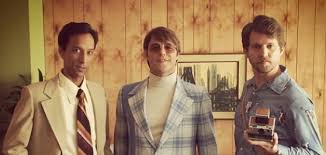
Wood paneling and wide ties, The Tiger Hunter, 2016
The Tiger Hunter, dir. Lena Khan
A sweet and amusing comedy set in the 1970s about an Indian guy who moves to the US to make his fortune, The Tiger Hunter is a crowd-pleaser that’s set as the CAAMfest opening night movie. Danny Pudi is appealing and genial as the son of the titular tiger hunter and the ensemble cast brings a goofy charm to the rest of the film. Speaking as someone who grew up in that inglorious decade I can also say that the 70s art direction is totally on point.
The Lockpicker, dir. Randall Okita
Randall Okita’s teen angst drama made my best-of list for 2016 and I’m sticking by that decision. Asian American narrative film directors have pretty much mastered the art of mimicking Hollywood movies these days, but The Lockpicker is a different animal altogether. Raw, unstructured, and brutally honest in its examination of some of the worst aspects of adolescence, the film is anchored by a charismatic and emo performance by first-time actor Keigian Umi Tang. As I’ve said before, as a parent of teenagers this movie terrified me in its depiction of the casual cruelty of ennui-stricken youth.

Sunkrish looking fly, Chee and T, 2016
Chee and T, dir. Tanuj Chopra
Tanuj Chopra’s latest flick is a wacky ride through the wilds of Palo Alto with a couple slightly sketchy desi dudes who exist on the fringes of Silicon Valley’s tech wonderland. Funny and frantic, with typical Tanuj Chopra hijinks including hallucinogenic drugs, ethically questionable characters, and surprising individuals who are not what they seem to be.
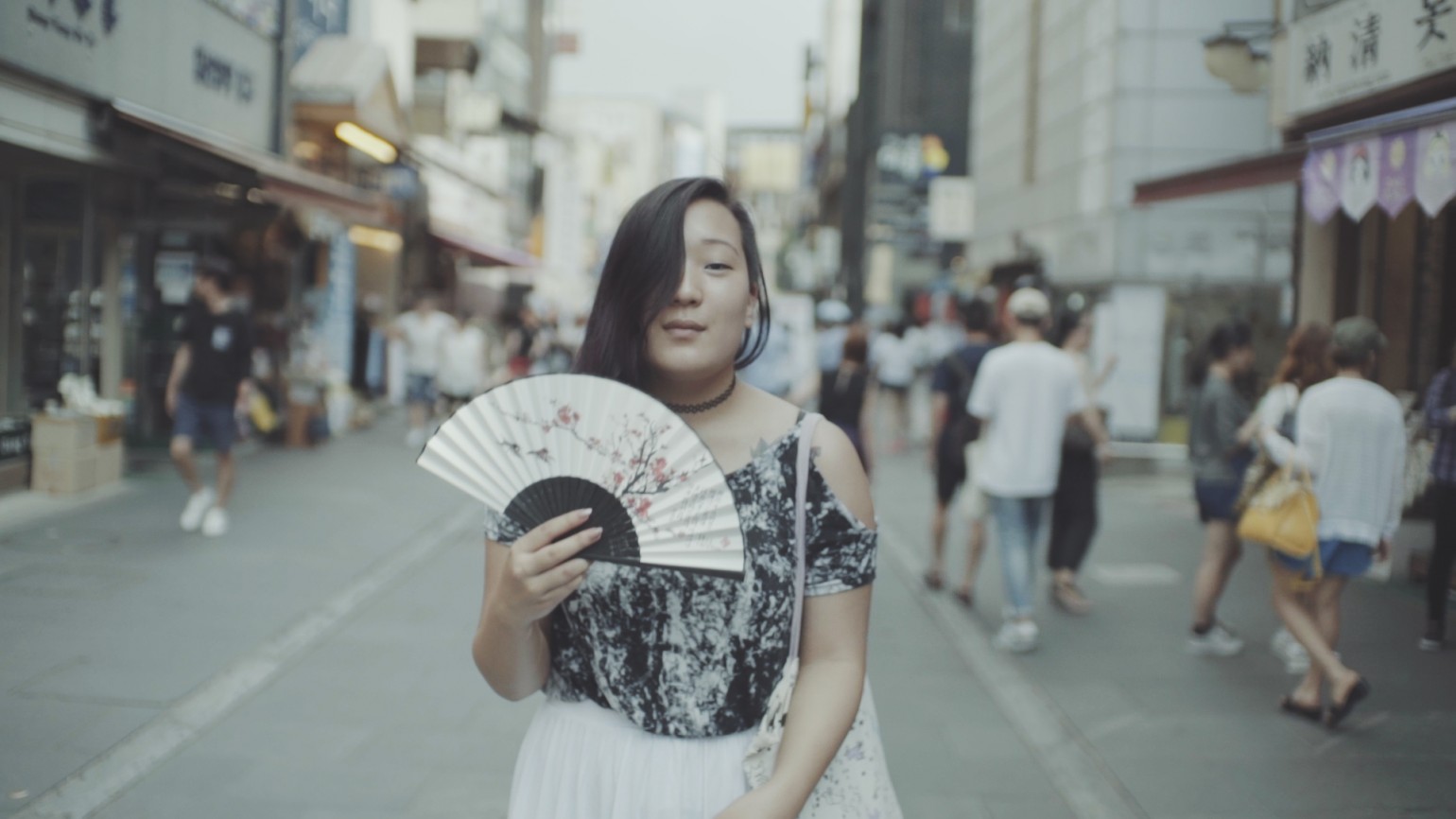
Search for self, AKA Seoul, 2016
AKA Seoul, dir. Jon Maxwell
An intriguing look at the experiences of a handful of twentysomething Korean adoptees as they return to Seoul to search for some of the answers to their family histories. Along the way they discover that uncovering the truth may not always be the best way to determine your destiny and that detours don’t necessarily mean derailment on the track tracks of life (wut?).
Basha Man, dir. Daniel Chein
A perceptive look at the conflict between capital and culture, this short documentary profiles a young tour guide and performer in a small village in western China. The film explores the difficulties in maintaining a cultural heritage in a rapidly commodifying world.
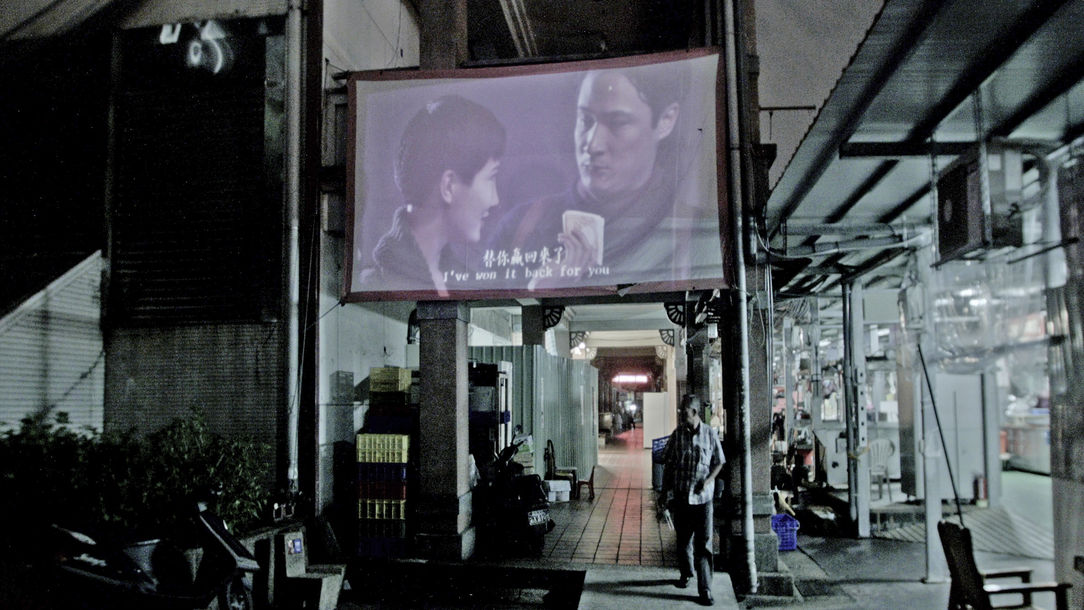
Francis cameo, Bruce Takes Dragon Town, 2015
Bruce Takes Dragon Town, dir. Emily Chao
Returning to Taiwan during Ghost Month takes on extra significance for a Taiwanese American filmmaker tracing her family’s migrations. This short experimental doc gets bonus points for featuring clips of the obscure Francis Ng film Banana Spirit.
It Is What It Is, dir. Cyrus Tabor
This short experimental documentary uses home movies, archival footage, and a personal narrative that attempts to unlock family secrets across generations and between continents. Dreamy, sad, and perplexing, with a blurry sheen of flawed memories that demonstrates the difficulties in finding the line between truth and fiction.
Death In A Day, dir. Lin Wang
A brief look at a significant moment in a young boy’s life, this sharply observed short narrative, told from the boy’s point of view, is full of subtlety and symbolism.
Hot, Cool & Vicious: Favorite movies, 2016

Learning to breathe, Moonlight, 2016
Before we get too deep into 2017 here’s a baker’s dozen of some of my most memorable cinematic viewing experiences from last year. My only requirement for this list is that the film had to be seen on the big screen, whether in a regular theatrical run or in a film festival. Though I spent a lot of time last year consuming media online and on DVD those viewings don’t count for this list. There is in no particular order except MOONLIGHT is number one.
1. Moonlight: Barry Jenkins’ masterful, virtuoso film has so many strong points that I could (and probably will) write an entire essay about it, but here I’ll just mention one thing. Jenkins knows exactly when to have his characters speak and when to keep them silent, enacting a complex choreography between dialog and subtext that emphasizes the film’s theme of the performativity of gender, identity, and masculinity.
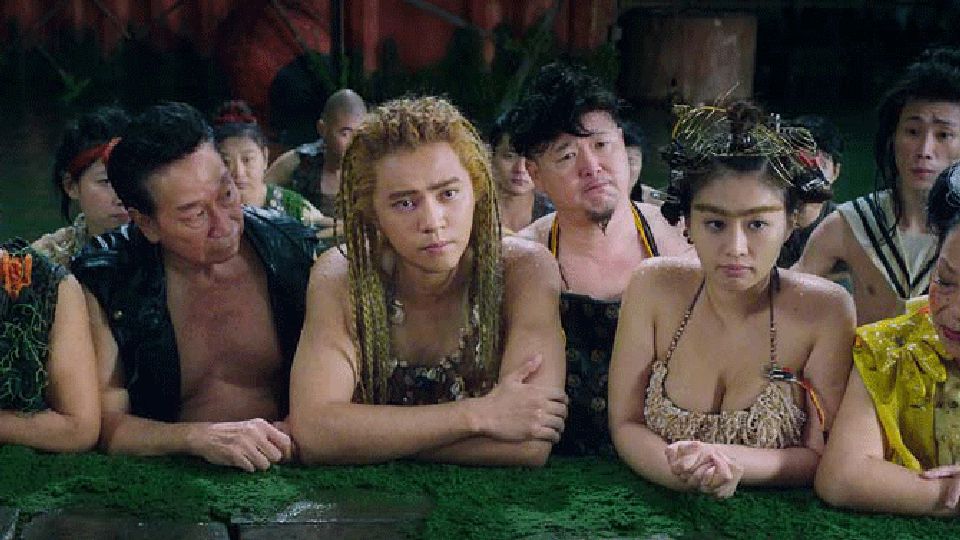
Posse, The Mermaid, 2016
2. The Mermaid: Stephen Chow Sing-Chi returns to slay the Asia box office with this incredibly loopy cinematic manifestation from the inside of his one-of-a-kind brain. In Hong Kong in the 1990s no one made comedies like Stephen Chow and it’s good to see he’s successfully crossed over to the greater Chinese film industry. Chow continues to combine a uniquely twisted worldview, a highly refined cinematic eye, lowbrow humor, a beautiful visual sense, cynicism and romanticism, maniacal wordplay, slapstick, random violence, and gross-out humor in a way that no other filmmaker can match.

Fleeing, Train To Busan, 2016
3. Train To Busan: Although ostensibly a zombie apocolypse flick, Yeon Sang-Ho’s film is also a melodrama, teen romance, road movie, and critique of capitalism all rolled into one thrilling ride. Gong Yoo anchors the film with his sensitive and vulnerable performance as a man caught up in a madness far beyond his imagining and control
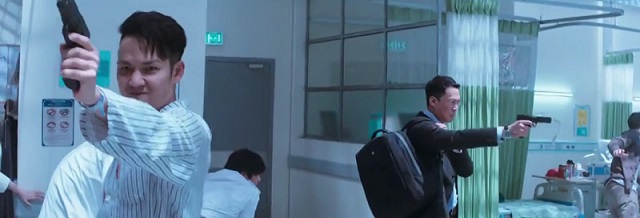
Meta, Three, 2016
4. Three: Johnnie To’s yearly masterpiece, which dissects the Hong Kong crime film vis a vis the hospital movie. Every shot and every scene is a meta commentary on its genre forerunners.

Despairing, Old Stone, 2016
5. Old Stone: Johnny Ma’s indie film is a scathing attack on the hypocrisy and idiocy of China’s Kafka-esque judicial system as it depicts one man’s attempt to escape a spiraling set of circumstances that threaten to ruin his life.
Viewed at the 2016 San Diego Asian Film Festival
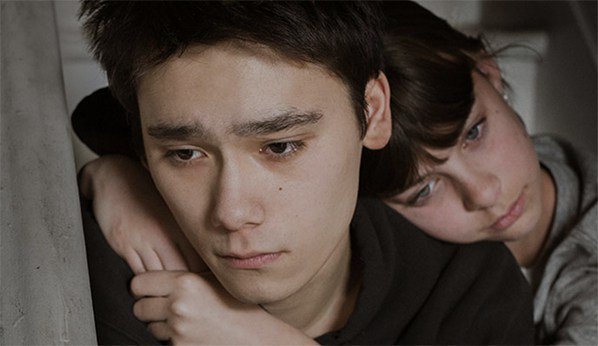
Real, The Lockpicker, 2016
6. The Lockpicker: Randall Okita’s bleak & angsty drama looks at a teenager dealing with loss, alienation, and anomie in snowy Toronto. The film is a very slow burn that pays off in the end. The casual cruelty of high school students rings very true and as a parent of a teen I found this movie to be terrifying. Led by a very strong performance by first-time actor Keigian Umi Tang, despite some confusing narrative moments the film sustains its tone of dread and anxiety throughout. Viewed at the 2016 San Diego Asian Film Festival
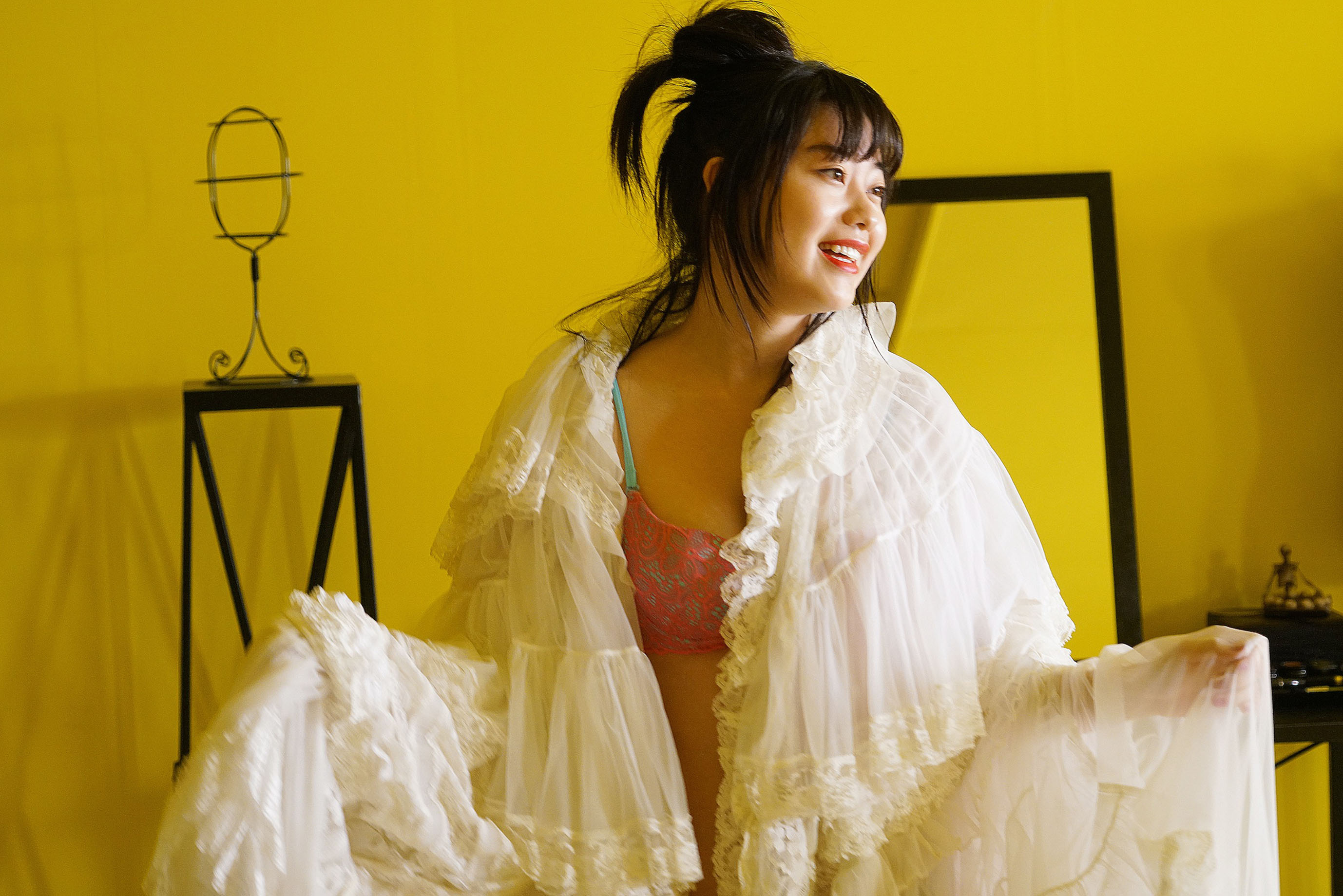
Yellow, Anti-Porno, 2016
7. Anti-Porno: Sion Sono’s playful and sexy pranking of Nikkatsu Studios’ Roman Porno films is made especially meaningful since it was produced by Nikkatsu itself. Viewed at the 2016 San Diego Asian Film Festival
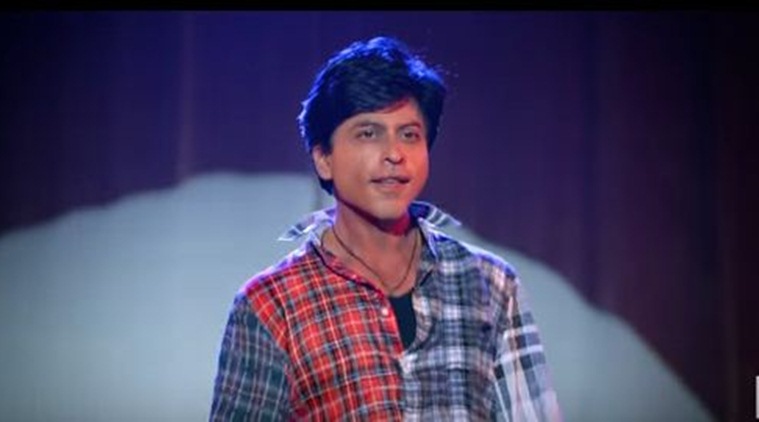
Doppelganger, Fan ,2016
8. Fan: Shah Rukh Khan, the Badshaah of Bollywood himself, leads this twisted, meta examination of stardom and fandom, playing a dual role as both the adored and the adorer in a dysfunctional symbiotic relationship between a movie actor and his biggest fan. SRK is fearless in this film, exposing more warts than many other superstars might be willing to reveal. Director Maneesh Sharma delves into the darker side of fame, with the full support of his willing star.
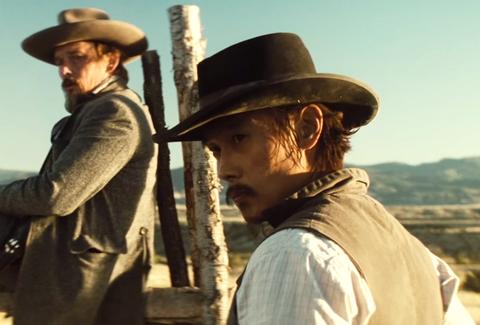
Masculinities, The Magnificent Seven, 2016
9. The Magnificent Seven: Antoine Fuqua directs a deeply subversive and radical film disguised as a Hollywood action movie. This joint shows that the subaltern can speak as well as shoot a gun. Bonus points for looking at alternate expressions of masculinity, male bonding, and homosocial love.
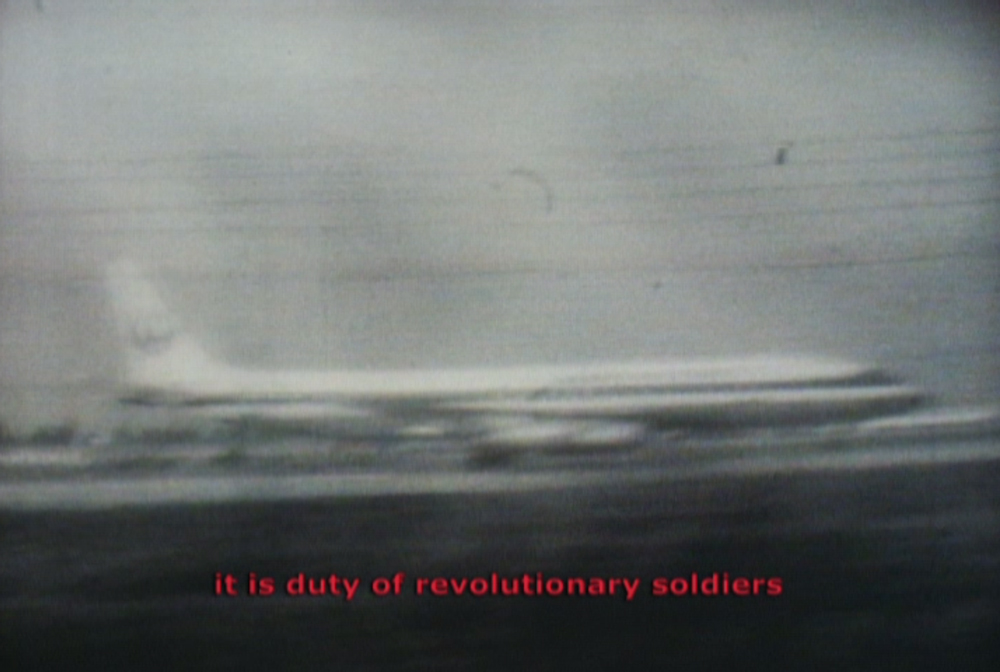
Histories, United Red Army (The Young Man Was, Part 1), 2016
10. United Red Army (The Young Man Was, Part 1): Naeem Mohaiemen’s experimental documentary deconstructs the audio recordings of the conversations between members of Japan’s militant revolutionary Red Army and Bangladeshi government negotiators after the group landed a hijacked plane at Dhaka in 1977, adding in Mohaiemen’s own wry recollections of the event that he witnessed as a child via television broadcasts. Viewed at the 2016 Third Eye South Asian Film Festival in San Francisco.
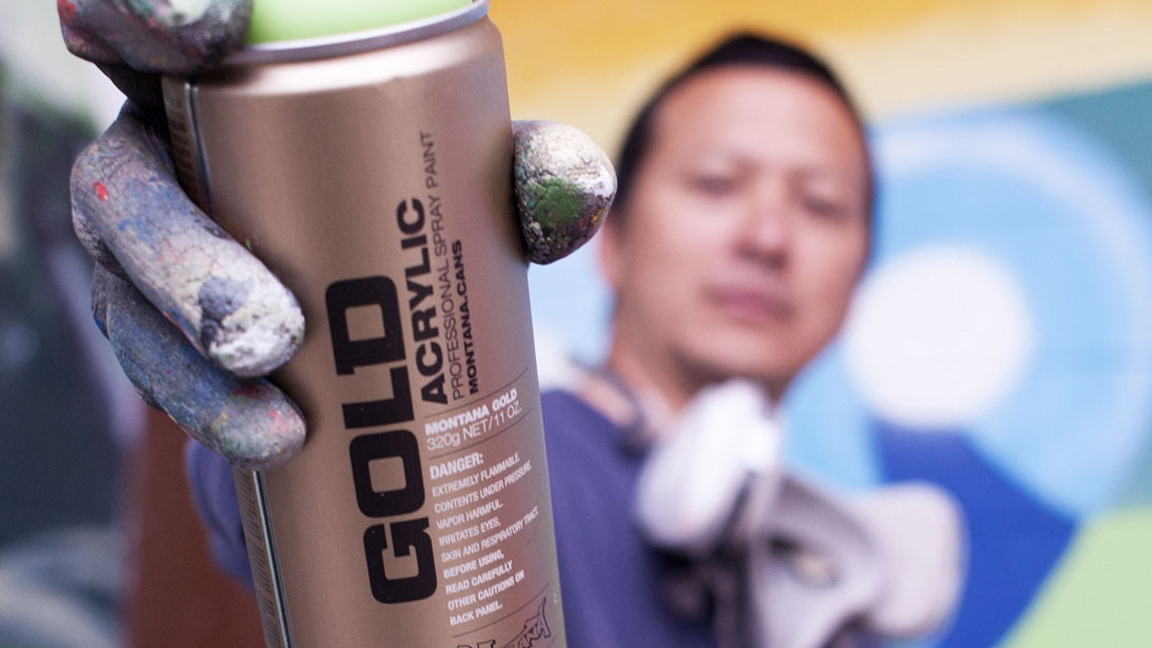
Writing, Mele Murals, 2016
11. Mele Murals: In this documentary about Native Hawai’ian mural artists Tadashi Nakamura creates a thoughtful rumination on giving up selfhood in order to serve community, art, and culture. Viewed at the 2016 CAAMfest in San Francisco
Charming, At Cafe 6, 2016
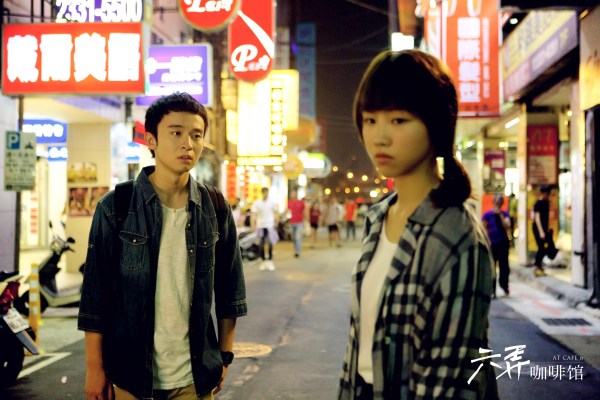
12. At Café 6: In yet another highly satisfying entry in Taiwan’s teen melodrama genre, director Neal Wu draws out excellent performances from his young cast. Though it doesn’t stray far from its genre conventions it hits all the right notes with subtlety and emotion, effectively looking at friendship, fate, love, and loss. After spending way too much time looking at the surgically enhanced beauty of so many K-drama stars it’s nice to see Cherry Ngan’s snaggle-toothed smile and Dong Zijian’s imperfect boy-next-door charms.

Off-balance, The Wailing, 2016
13. The Wailing: Na Hong-Jin’s creepy thriller had me off-balance throughout its running time, with its constantly changing POV and its refusal to adhere to genre conventions. Also in the mix is a strutting, scene-stealing performance from the ever-awesome Hwang Jung Min as a badass shaman, some incredibly disturbing man/dog violence, and boils and pustules galore. I was shuddering for days after seeing this one.
Honorable mentions: Line Walker; Spa Night; Equinox Flower; In A Lonely Place; We Are X
NOTE: An earlier version of this list appeared on sensesofcinema.com
Stay With Me: Spa Night movie review

Self-reflection, Spa Night, 2016
Andrew Ahn’s Spa Night, which looks at the struggles of a young Korean American man in Los Angeles coming to grips with his queerness, at first may seem like a throwback to pre-Stonewall “gay=guilt” cinematic tropes. But rather than a retrograde portrayal it instead represents a step forward in queer filmic representations, recognizing the significance of intersectional identities found in LGBTQ people of color.
Spa Night is a thoughtful and nuanced movie that goes beyond a lot of queer cinema’s current trend toward hot makeout sessions interspersed with romantic melodrama. Back in the day when New Queer Cinema took off back in the 1990s with movies like Go Fish (dir. Rose Troche 1994), The Hours and Times (dir. Christopher Münch, 1991), and Poison (Todd Haynes, 1991), among many others, it was important to show queer sex onscreen since it had been silenced and suppressed for so long. At that time just the act of boy-on-boy and girl-on-girl kissing signaled a radical moment. But now it’s almost become a cliché—I wrote a couple years ago about how every film I saw at Frameline Festival included the obligatory buffed dudes/cute chicks in tank tops stripping off and faking same-sex sex. Even mainstream television has queer couples tongue-locking all the time, so although homophobia remains rampant in US culture at large, it’s not as rare as it was back in the nineties to see LGBT coupling onscreen.

Intersectionality, Spa Night, 2016
So in some ways Spa Night may seem relatively tame in relation to mainstream queer cinema (and it’s great that there is a such a thing, btw). Instead of a standard coming-out story where boy or girl announces his or her queerness to the world and such announcement is revelatory and life-affirming, Spa Night presents a much more layered and densely observed look at a young Korean American man’s gradual recognition of his sexuality. The film’s realization of the main character’s mixed feelings, confusion, and shame may seem like a reversion to the old days when any gay character was a tragic homosexual destined for unhappiness and grief. But Spa Night acknowledges that coming to terms with one’s sexual orientation is not the end of confusion but often just the first step to self-realization.
With abeoji and eomeoni, Spa Night, 2016
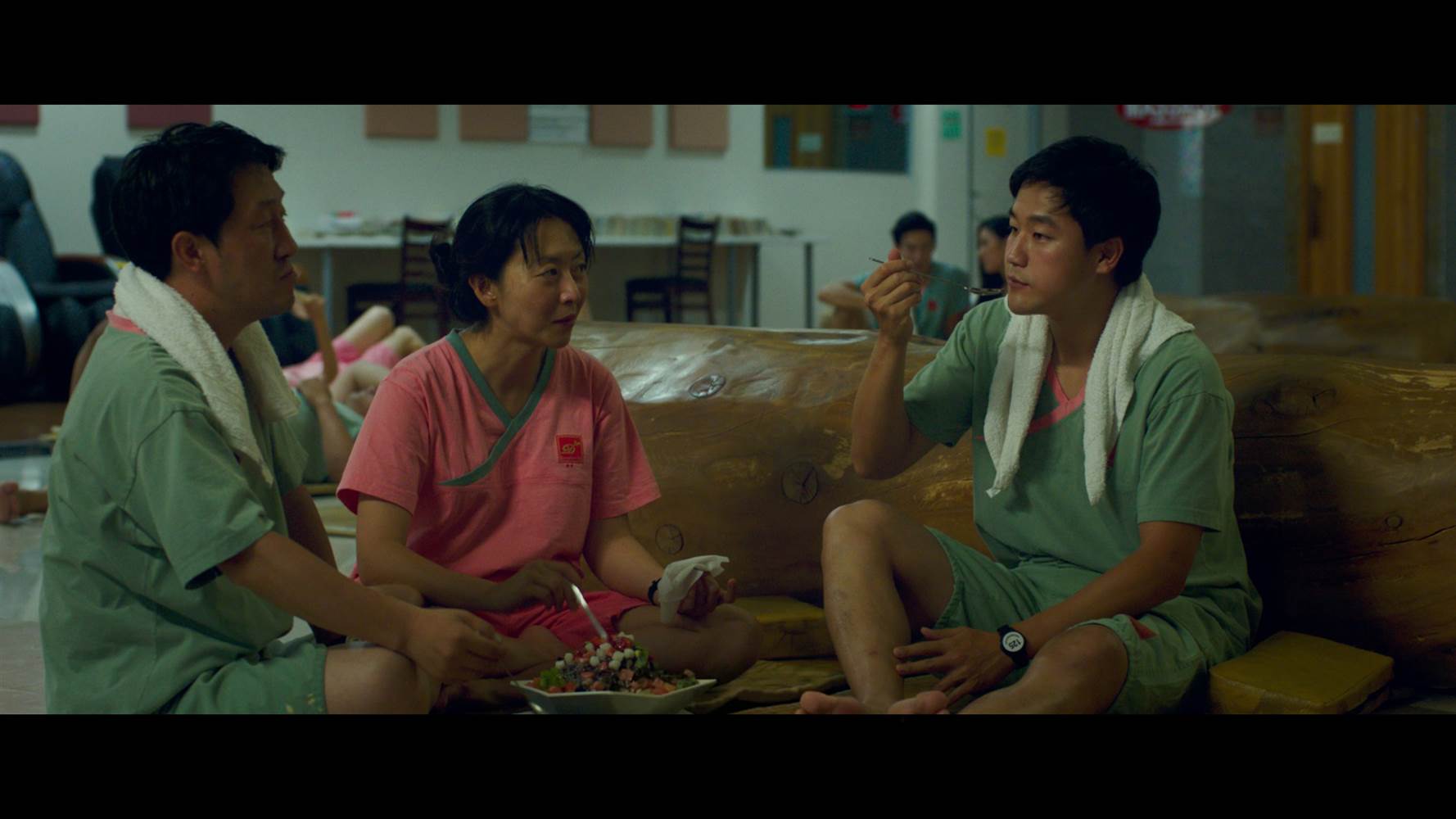
The film depicts the complexities of a gay man coming to terms with his sexuality within a traditional Korean immigrant family. Set mostly in a bathhouse in Los Angeles’s Koreatown the film is not without several steamy suggestions of gay longing and desire, but for the most part the action is implied rather than explicit. David, the main character played by Joe Seo, grapples with maintaining a balance between his family obligations and the burgeoning realization of his sexual desires. Presented without judgment or blame, the film instead simply delineates David’s attempts to fulfill his family duties and his parents’ wishes for him to marry and carry on the family name while gradually recognizing his own sexual identity. The film recognizes David’s struggle to reconcile these sometimes oppositional forces. It also acknowledges that the simple pre- and post-coming out binary may not work within the bounds of a non-Western cultural context, as David’s filial piety, family responsibilities, cultural expectations, and other culturally specific concerns come into play.
Although it may not seem as edgy as its predecessors in New Queer Cinema in fact Spa Night is a step forward for the genre. The film recognizes the very different tensions that queer Asian Americans may face as they balance a multiplicity of identities, histories, and expectations.
Shining Star: CAAMfest 2016

Art, life, and community, Mele Murals, 2016
It’s March so that must mean it’s time for CAAMfest, San Francisco’s annual Asian American film festival. As with past iterations, the ten-day fest includes a generous helping of documentaries, narratives, shorts, and animation from Asian and Asian American and diasporic directors.
Notable this year is the strong slate of Asian American documentaries, including the Opening Night film Tyrus, directed by Pam Tom (Two Lies), which looks at Chinese American animator Tyrus Wong, the man behind Disney’s Bambi, among other iconic characters. Also of note are Breathin’: The Eddy Zheng Story (dir. Ben Wang), which follows the life of the titular Chinese American poet and prison activist; Daze of Justice, (dir. Mike Siv) which looks at the trial of Khmer Rouge war criminals in Cambodia, and Ninth Floor (dir. Mina Shum), an examination of the historic 1969 occupation of Sir George Williams University in Montreal by Jamaican student activists.
Another doc of note is Tadashi Nakamura’s latest, Mele Murals. Nakamura (Jake Shimabukuro: Life On Four Strong; A Song For Ourselves) has again produced a winner in this beautiful and moving story about two Hawai’ian artists who gradually learn about themselves, their art, and their culture. Commissioned to lead the creation of a large-scale mural on the walls of a public school in Waimea, graffiti artists Estria Miyashiro and John “Prime” Hina gradually immerse themselves in Waimea’s history, culture, and community through their involvement with the mural project. As the project progresses Prime discovers a heretofore unexpressed connection with his Hawai’ian heritage, while Estria learns to overcome his ego and his need to be “the artist.” Featuring some beautiful digital cinematography, Nakamura’s film includes a remarkable sensitivity to and empathy with his subjects. Prime talks about growing up shuttling between his divorced parents and the resultant disconnect with his history and culture, and Estria develops an understanding of the importance of respecting the wishes of the group over individual needs and desires. Director Nakamura understands how human beings interact with place and the land and he often frames his shots with a lot of sky and horizon, placing the people as part of the landscape and not just centering the human experience. The final scene is powerful and moving and all I can say is MIC DROP.
It’s lit, Grass, 2016
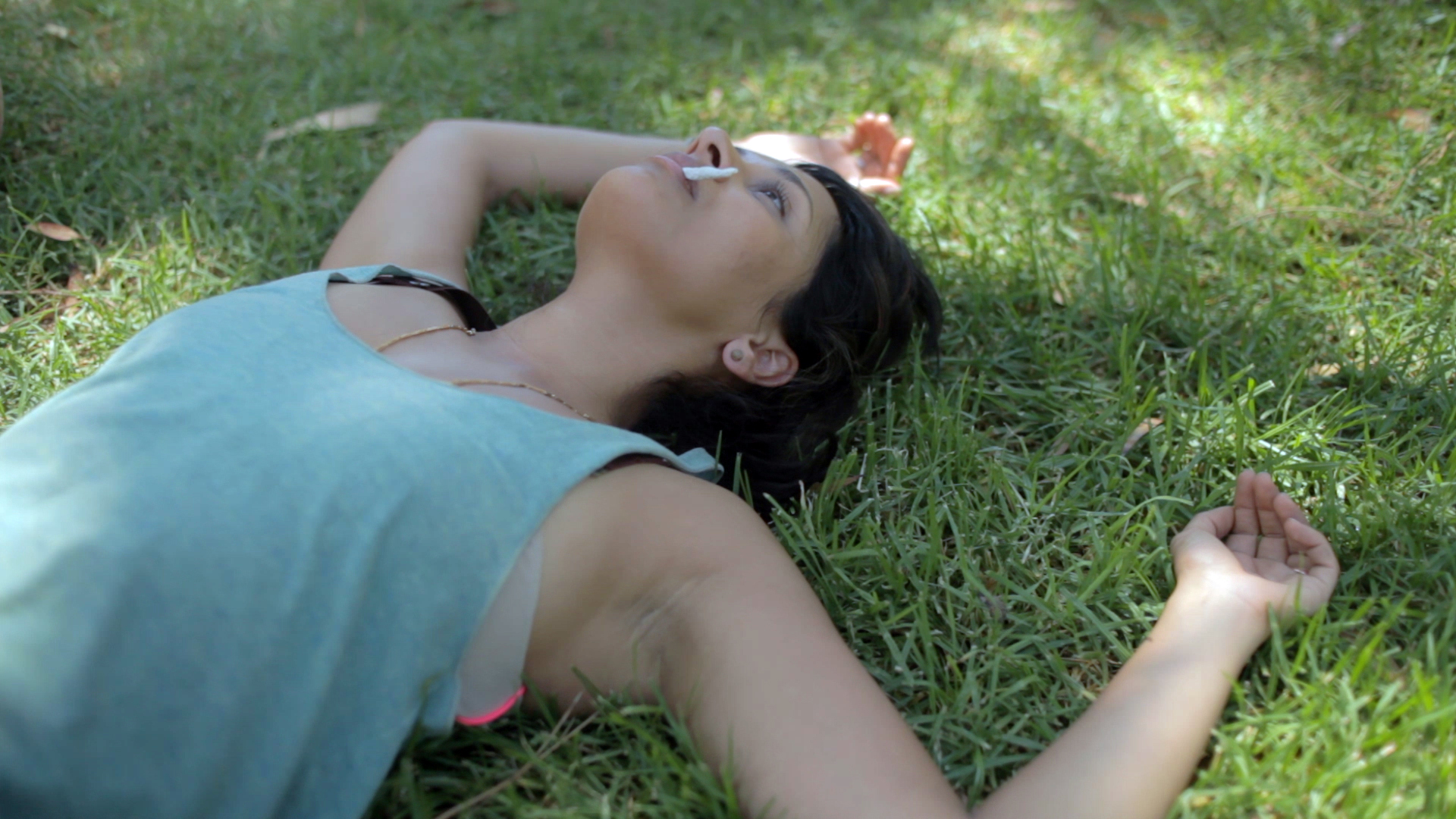
Another fun film is Tanuj Chopra’s Grass, a narrative about a day in the life of two weedheads as they smoke a huge amount of cannabis and hang out in a park in Los Angeles. The plot, such as it is, follows Cam and her buddy Jinky as they contemplate a backpack full of buds that Cam’s boyfriend Austin has given them to deliver to a third party. Cam and Jinky can’t help sampling a bit of the goods and one thing leads to another as they gradually imbibe more and more of Austin’s weed. Mostly comprised of the absurdist running commentary by the increasingly lit protagonists, the film features spot-on dialog that effectively simulates the sensation of smoking many joints over a short period of time. Emily C. Chang and Pia Shah are hilarious as the stoned protagonists as they gradually become higher and more paranoid throughout the day. Chopra breaks up the two gals’ crazy rambling and obsessive discussions about pizza with a synthy score, hallucinatory bumpers featuring food porn and blooming time-lapse plants, and a few well-placed digital effects to heighten the generally baked proceedings.
Crushed, The Kids, 2015
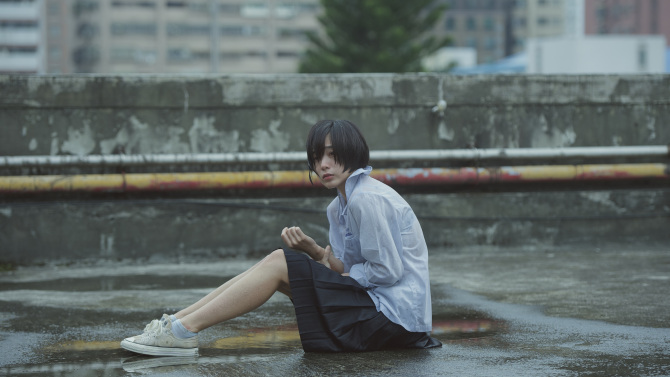
For those looking for films on the Asian tip, Taiwanese director Sunny Yu’s narrative The Kids is a poignant and effective drama about two teens facing adversity as they try to make their way in an adult world. Set in working-class Taipei, the film includes heartfelt and unaffected performances by the two young leads. The actors portray adolescent parents of an infant daughter who are slowly being crushed by the weight of grownup responsibilities. And for those looking for a more commercial Asian cinematic experience, CAAMfest is showing the South Korean historical The Royal Tailor, which stars the hot and charming Ko Soo as Lee Gong-jin, a rakish fashion designer who turns the Joseon court upside-down and who becomes romantically entangled with the young queen (played by ingénue Park Shin-Hye, star of hit K-dramas The Heirs, You’re Beautiful, and Pinocchio).
This is only the tip of the iceberg of CAAMfest’s bounteous programming slate, which also includes music shows, panels, and food events. Tickets are selling fast so go here to get yours before they’re gone.

 beyondasiaphilia
Recent Comments