Drunk In Love: Asian Males in Hiroshima Mon Amour and The Crimson Kimono

Object of desire, Hiroshima Mon Amour, 1959
As Asian American film scholar Celine Parreñas Shimizu notes, there is “a long tradition in Hollywood movies of iconic portrayals of Asian American men (as) rapacious and brutal, pedophiliac, criminal, treacherous and also romantic, and quaint. Sexuality and gender act as forces in the racialization of Asian American men.” Sadly, despite tiny steps towards improvement, Asian male representation in Hollywood still remains timidly entrenched in stereotypes. Sure, John Cho is the leading man in Selfie, (although he’s already starting to be a bit stalkerish), and Glenn (Steven Yeun) from The Walking Dead is still alive and human (though there are persistent rumors of his imminent demise), but on the big screen the ridiculously hot Lee Byung-Hun is still playing the bad guy (most recently in the upcoming Terminator: Genisys) instead of fulfilling all of our fantasies as a romantic lead.

Romantico, The Crimson Kimono, 1959
Strangely enough, our modern era is in some ways more regressive than, say, 1959. Althought the 1950s weren’t known for their progressive portrayals of Asian Americans in Western films, in that year Asian men appeared as objects of desire in two significant movies. In 1959 the Hawai’ian born Sansei actor James Shigeta made his big-screen debut in Sam Fuller’s film The Crimson Kimono, playing a Los Angeles detective assigned to the case of a murder of an exotic dancer. The film is an engaging cop movie but it’s most notable for its portrayal of a love triangle involving Shigeta, his white partner Sgt. Charlie Bancroft, and Bancroft’s girlfriend Christina, who is also white. Unlike most such romantic conflicts involving an Asian man opposite a white guy, in this case Shigeta got the girl, which made The Crimson Kimono a groundbreaking anomaly in Hollywood. James Shigeta was a co-winner of the 1960 Golden Globe Award for Most Promising Male Newcomer and he would go on to a moderately successful career as a romantic lead for a few years but he never became the superstar that his good looks and charisma would indicate. Like most Asian American men in Hollywood up until and after that time Shigeta ran into the impenetrable glass ceiling of racism.

Dreamboat, Hiroshima Mon Amour, 1959
1959 also saw the depiction of another desirable Asian male, in Alain Resnais’ Hiroshima Mon Amour. In that film Eiji Okada plays the intensely romantic Lui, a Japanese architect who has a brief and torrid affair with a Frenchwoman played by Emmanuelle Riva (seen most recently in Michael Haneke’s Amour). With a screenplay by noted Asiaphile Marguerite Duras (L’Amant/The Lover; Un barrage contre le Pacifique/The Sea Wall), Resnais’ film depicts Lui as suave, tender, and desirable, which contrasts greatly with the ways that Hollywood has typically portrayed Asian men. Okada is particularly swoonworthy as he and Riva’s character passionately discuss love, war, genocide, and beauty, against the backdrop of the site of first the atomic bomb attack. With the ruins of Genbaku Dome in the background, the film also utilizes a nonlinear narrative structure that links the European front, as exemplified by a long flashback set in France, to the Pacific theater, with Hiroshima repping for all of Japan. Set some fifteen years after the end of World War II, the film emphasizes the human cost of the war even many years after its ceasefire, as both Lui and Elle have been scarred by the loss of loved ones in the conflict. Elle fetishizes both her late German lover and Lui, as she is drawn to them due to their difference and otherness.
Now releasing theatrically for the first time in years in a new 4K digital restoration, Hiroshima Mon Amour remains fresh and relevant both thematically and stylistically (it’s regarded as one of the most influential films of the early Nouvelle Vague, or the French New Wave). It’s also an example of an early representation of an Asian male as not a caricature, a villain, or a clown, but as a fully fleshed out, highly desirable romantic lead. Now if only Hollywood could get a clue and do the same in the 21st century.
Opens October 31
3290 Sacramento St.
San Francisco CA
(415) 346-2228
Cool Like That: Who We Be book review

Jeff Chang’s latest book, Who We Be: The Colorization of America (St. Martin’s Press), dropped last week and it arrives as the United States is in the midst of another particularly fraught period of racial politics. As recent events in Ferguson, MO have indicated, Chang’s book argues that we as a country and a culture are a long way from becoming the post-racial society supposedly heralded by the election of Barack Obama, yet despite the seemingly dire straits that we’re in, all is not hopeless. In WWB Chang recounts the effects of the changing demographics in the U.S. since the mid-twentieth century, from desegregation through multiculturalism to the shooting of Trayvon Martin and beyond, investigating the ways in which visual culture intersects with current and historical events.
WWB is an amazing tome, encompassing topics as broad as the civil rights movement and as focused as Budweiser’s “Wassup” ad campaign. The book is an outstanding look at the ways in which we as a people in the United States since the mid-twentieth century have moved through a sea change of perceptions, representations, and reflections of racial relations.
Beginning in the 1960s, Chang’s book interweaves topics as diverse as the Republican Party’s “Southern Strategy,” the 2001 World Trade Center attacks, the subprime mortgage scandal, Occupy Wall Street, and the psychology of advertising. Chang focuses on a range of culture creators including cartoonist Morrie Turner, whose comic strip Wee Pals featured a multiracial cast of kids, Faith Ringgold, an early advocate for the Black Arts Movement, Daniel Martinez, known for his performance art/museum tag/culture bomb from the 1993 Whitney Bienniel, and Shepard Fairey, designer of both the Andre The Giant “Obey” street art campaign and the 2008 Obama “Hope” image.

Jeff Chang in situ, photo Keith Villaluz
Chang does a great job exploring the ways in which real life, visual art, and commerce interact and influence each other. For instance, Chang explores a proto-multiculti Coke ad campaign from the early 70s that tried to latch onto the youth culture and nascent ethnic studies movement of the time but that didn’t mention any of the harsher realities of, say, the Watts riots. Another section of the book drills down into the racism and elitism of the 1980s and 90s New York visual arts scene, including a particularly culturally tone-deaf incident surrounding the white artist responsible for “The Nigger Drawings.” Chang closely examines this volatile period during which contemporary arts gatekeepers like the New York Times, gallery directors, and curators were forced to confront their biases against creative work by artists of color and queer artists, which reached a crescendo during the controversial 1993 Whitney Bienniel, which was vilified by the art establishment as “a theme park of the oppressed.” Chang then discusses the ways in which these so-called culture wars in turn lead to the commercialized multiracialism of the United Colors of Benetton “Colors” magazine and ad campaign.
Chang also astutely looks at what he calls “the paradox of the post-racial moment,” wherein the U.S can elect Barack Obama president, yet still has trouble reconciling Obama’s biracial identity. Chang’s analysis is particularly keen when exploring the current confused state of race relations in the U.S., describing what he calls the tendency for many people to be “colormute,” that is, to avoid talking about race for fear of being accused of racism. He ironically notes the convoluted logic behind those who frown on discussing race in any way, stating, “If bad people had used race to divide and debase . . . then good people would be polite to never acknowledge race at all. It was better not to say anything than to risk being seen as a racist.”
Chang concludes his book with two contrasting case studies–a detailed look at George Zimmerman’s murder of Trayvon Martin and the rise of the DREAM Act, the proposed federal legislation that addresses the citizenship status of undocumented young people brought to the U.S. while children. By juxtaposing these two cases Chang emphasizes the fact that, while the Martin killing demonstrates that the U.S. remains far from being a post-racial society, there is still reason for hope, as seen in the increased activism by immigrant youth of color under the DREAM Act.
Chang’s writing is clear and accessible, and his analysis is thoughtful, concise, and innovative. Though by no means a dis on the theory queens among us (and you know who you are), after recently wading through a few visual culture publications, it’s a pleasure and a relief to read an author who writes with clarity without sacrificing intelligent intellectual commentary. Who We Be is a significant and essential addition to the study of contemporary U.S. art, culture, and politics.
Jeff Chang is on a book tour to promote WWB! Find out more here.
Que Caramba Es La Vida: Mill Valley Film Festival 2014
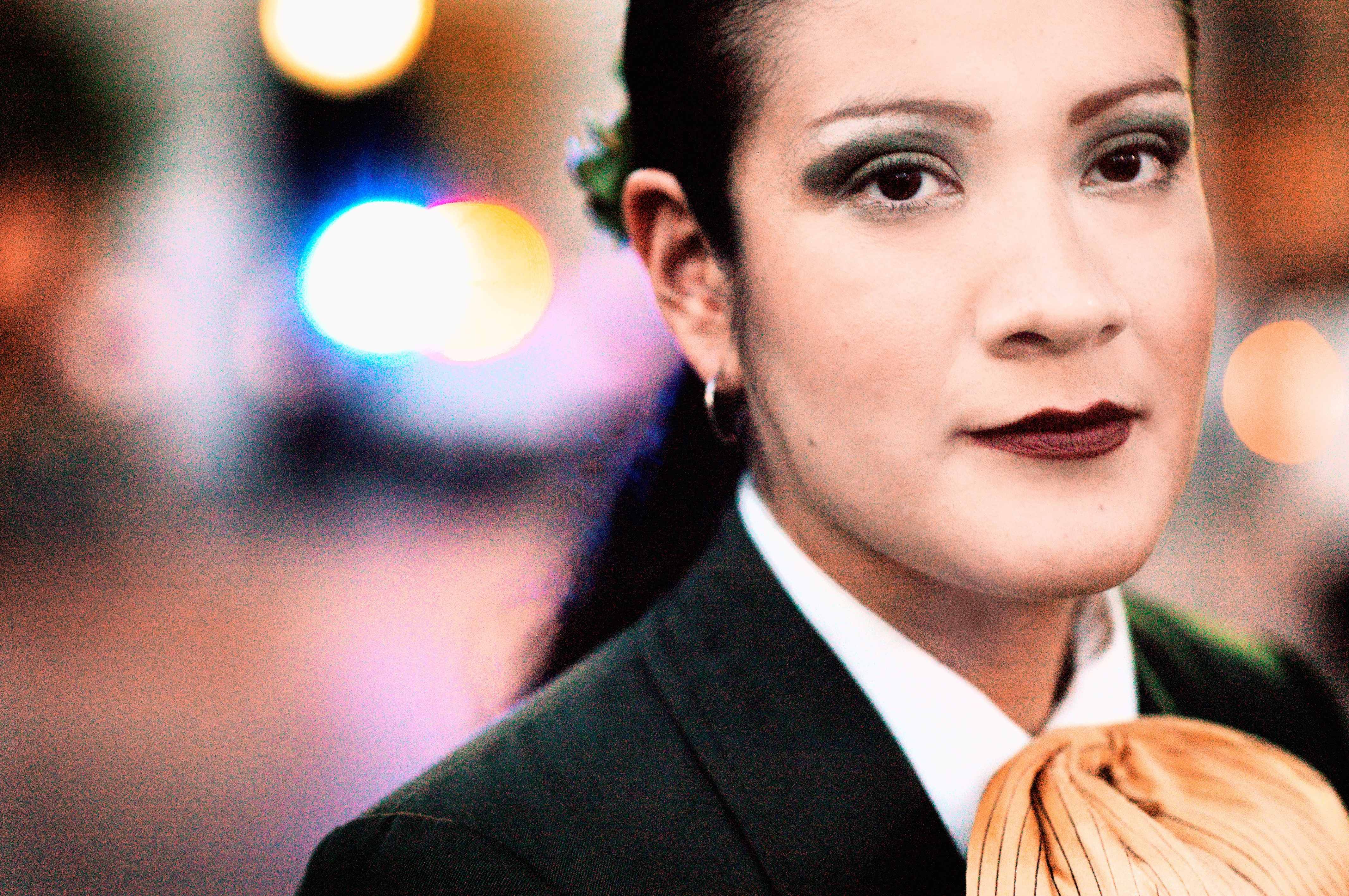
Maria del Carmen, Que Caramba Es Mi Vida, 2014
The Mill Valley Film Festival’s 2014 edition starts this weekend and as per usual it’s a star-studded affair, with guest appearances by the likes of Hilary Swank, Jason Reitman, Billy Joe Armstrong, Ellie Fanning, Laura Dern, Metallica, and many more Hollywood glitterati. The program also boasts an outstanding lineup of documentaries, including several by local filmmakers, so the reasons for driving across the Golden Gate Bridge (or the Richmond/San Rafael Bridge, depending on your homebase) are manifold.

Lupita (Las Estrellas), Que Caramba Es La Vida. 2014
This year the festival is spotlighting Spanish-language cinema from around the world, including the excellent documentary Que Caramba Es La Vida, an intriguing portrait of the fierce and talented women mariachis of Mexico City. Directed by veteran German filmmaker Doris Dörrie, the movie documents the experiences of several female performers working to make a mark in a field dominated by men. The film is shot mostly verite-style with no narration, as each of the women describes how she came to be a mariachi and why she continues in the business. Some come from mariachi families, with parents or grandparents who performed before them, while others are the first in their families to perform. A particularly compelling story is that of Maria del Carmen, a mariachi singer who lives with her single mom and young daughter in a small apartment in Mexico City. Del Carmen’s mother recalls that even as a girl, her daughter Maria had a voice “that went right through you,” and this is pretty apparent after hearing del Carmen soulfully belt out a couple songs in the Plaza Garabaldi, which is home to scores of mariachi bands plying their trade every night. The film depicts del Carmen’s everyday performance prep routine, as her mom and daughter help her with her makeup and hair, as well as revealing her concerns for her daughter’s future as a female growing up working-class in Mexico. The movie also follows Las Pioneras, a group of older female mariachi groups whose members who are now in their sixties and seventies and who started out as mariachis in the 1950s as teenagers and young women. The last quarter of the movie follows the Dia de los Muertes celebrations in Mexico City, neatly contextualizing the mariachi tradition. Que Caramba Es La Vida effectively looks at some of the social and cultural milieu surrounded the women, including the effects of drug dealers, misogyny, poverty, and crime on their ability to keep performing.

Rodrigo y Gabriela, For Those About To Rock, 2014
Mexican music of a different sort is profiled in For Those About To Rock: The Story of Rodrigo y Gabriela. Rock journalist and first-time director Alejandro Franco narrates his very accessible portrait of the popular Mexico City guitar duo, from their roots in the capital listening to thrash and heavy metal like Megadeth, Metallica, and Slayer as teenagers. Both subjects are fluent in English and were raised in middle-class Mexican families, so their stories for the most part are very different from their mariachi counterparts in Dörrie’s film. The film is a standard biopic of a successful musical outfit so, unless you’re a big Rodrigo y Gabriela fan, the movie is less compelling than Dorrie’s movie. The film starts out strong, quickly and succinctly contextualizing the Mexico rock music scene, but bogs down in the middle as it becomes a fairly linear recounting of R&G’s career.Although the film is about musicians, one of its shortcoming is that there isn’t actually enough of R&G’s music in the earlier part of film, so if you’re unfamiliar with the duo you might not know what the fuss is all about. The film makes the mistake of telling and not showing, which weakens its impact—there are a lot of talking heads explaining things and not enough things happening instead. Whereas Que Caramba takes place on the streets and in the plazas of Mexico City, For Those About To Rock happens mostly in recording studios, backstage, and at clubs, and concerts, and is more of a fannish tribute about legend-building than an incisive look at the duo. There is also not much dramatic tension—the director refers to the story as a “fairy tale’ and it’s presented as such, with R&G destined to achieve their rock star ambitions. The viewer learns very little about either musician’s personal life or any deep, compelling reasons for why they make music other than “it’s fun”, and the film lacks a strong sense of a cultural context for who they are and where they came from. The film ends with about ten minutes of live concert footage that only underscores the relative paucity of music in the rest of the film, which may be enough of a reason for admirers of Rodrigo y Gabriela to watch the film.
The Mill Valley Film Festival eleven days beginning on Oct. 2 in various theaters in and around Mill Valley. Go here for complete schedule and ticket information.
Ruffneck: Keaton, Laurel, and Hardy at the SF Silent Film Festival
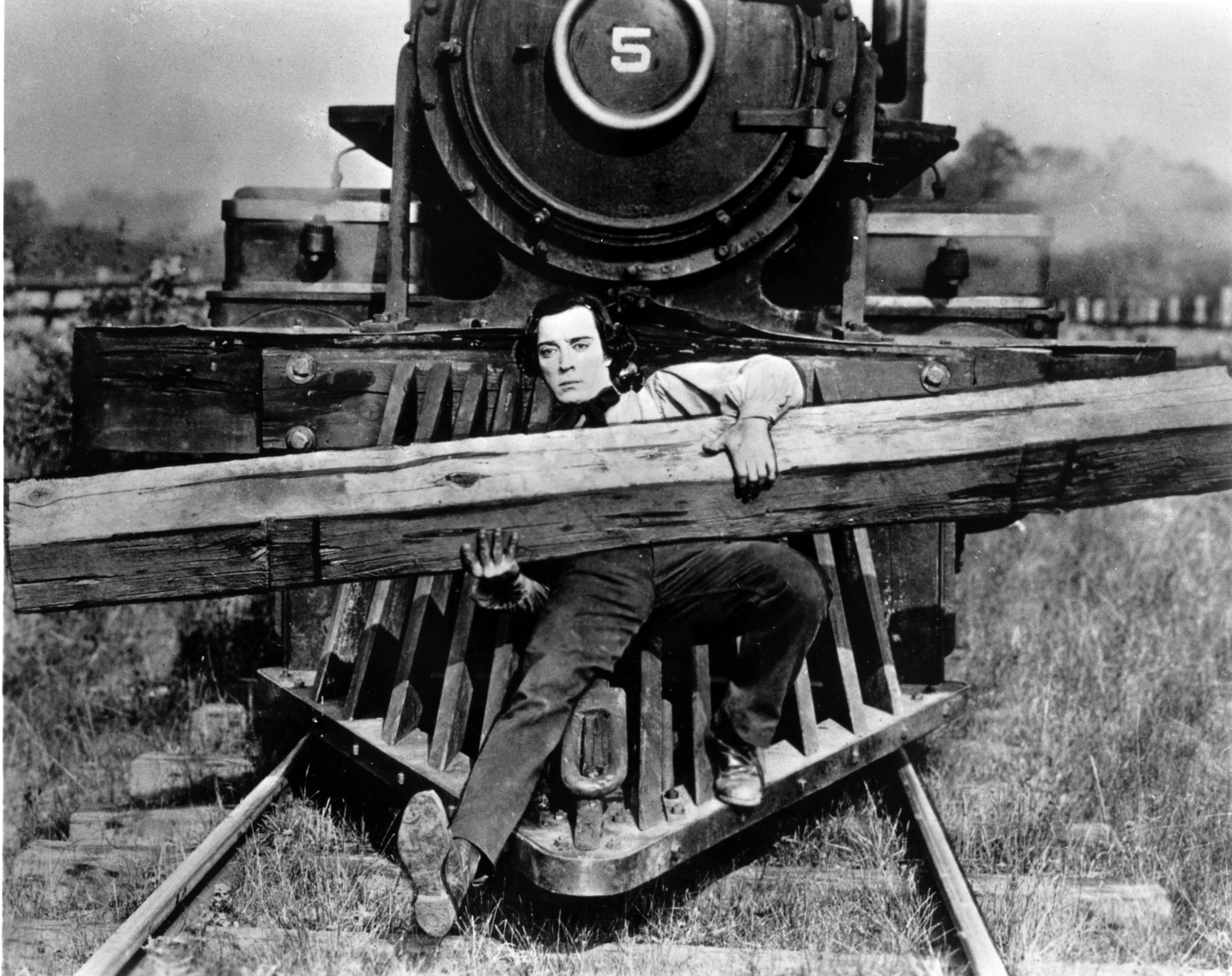
A boy and his log, The General, 1926
Buster Keaton’s The General is one of those movies that are on every cinephile’s best-of list, and with good reason. Elegantly structured, coolly executed, and funny as hell, the film was Keaton’s own favorite, although it was the movie that almost ruined his reputation when it first came out. It took a long time to shoot, was prohibitively expensive, and absolutely did not make bank when it was released—Keaton’s rep as a comedic star took a big hit and his studio reined him in after The General‘s box office failure. The movie was anything but well-received when it was released in 1926, although it’s now considered a classic.
The storyline follows a railroad engineer and wannabe Confederate soldier during the Civil War (nimbly played by the diminutive Keaton) who traces the theft of his beloved railroad engine, named The General, behind Union lines. The movie features some of the most beautifully choreographed stunts of the silent era, involving huge piles of rolling logs, steam engines on collision course, and the spectacular demise of a full-size locomotive. The sight of an actual train engine falling many dozens of feet from a bridge to a riverbed is still amazingly impressive, even in this age of CGI and digitally created special effects. The film is Keaton at his best, with its stripped down, symmetrically structured narrative, its large-scale, dangerous, and perfectly executed stunts, and its underdog hero struggling within a vastly unsympathetic world.

Tearing it up, Two Tars, 1926
Silent film comedy of an entirely different sort are the Laurel and Hardy two-reeler short films, Two Tars (1928) and Big Business (1929). Two Tars follows a day in the life of a couple of sailors on leave in Los Angeles as they go joy-riding among the California chaparral with a couple of dames. Although Stan and Ollie play sailors, all of the action in the twenty-minute movie takes place on a pair of landlocked Southern California roadways. Featuring Laurel and Hardy’s signature physicality and escalation of destruction, the short also includes some very suggestive digital manipulation of a gumball machine as well as several excellent Stan Laurel pratfalls. The short concludes with an epic traffic jam that would make Godard proud that illustrates the primal allure of large-vehicle destruction, the weaponization of cow pies and rotten tomatoes, and a gal getting a faceful of black ink.

Up at the plate, Big Business, 1929
Big Business is even more of a felon’s wet dream, as a small misunderstanding rapidly escalates into complete mayhem, resulting in an entire house vandalized down to its spinet piano and brick chimney. L&H play door-to-door Christmas tree salesmen plying their wares in the sunny, overexposed 1920s Southern California suburbs, which were about as sparsely populated as the high desert at the time. The two get into a scrap with a feisty homeowner and soon the axes are out and windows, doors, and a Model T fall victim to the OTT belligerence of the battling adversaries. The humor derives from the extreme reactions of both Stan and Ollie as well as their antagonist, played with righteous fury by L&H regular James Finlayson.
All three of these comedy classics are screening as part of Silent Autumn, the San Francisco Silent Film Festival’s one-day event on Sept. 20 at the glorious Castro Theater. Also notable are screenings of new restorations of The Son of the Sheik, starring the beautiful Rudolph Valentino, and the German expressionist classic, The Cabinet of Dr. Caligari. As per usual with all SFSFF events, each program includes live accompaniment, by silent film score maestro Donald Sosin as well as the always innovative Alloy Orchestra. Go here for complete schedule and ticket info.
Rock The Boat: The Pirates movie review

Swashbuckling, The Pirates, 2014
The third of three big South Korean historical blockbusters to reach our shores in the past couple months, The Pirates may be my favorite of the bunch. Along with The Admiral: Roaring Currents and Kundo: Age of the Rampant, which also played this summer in the U.S., The Pirates is among the top ten highest grossing movies this year in its home territory.
An easy-to-watch romp that doesn’t take itself too seriously, The Pirates is free of the self-conscious weirdness of Kundo and the self-important mythologizing of The Admiral and balances slapstick, swordfights, and adventures on the high seas. Add into the mix several wacky characters, lots of silly humor, and a hunt for a magical whale and her baby and you have a recipe for big-screen fun.

Buccaneering, The Pirates, 2014
The Pirates a rip-roaring good time that makes no pretentions toward historical accuracy or cinematic innovation, and is unfettered by any attempts at realism or the need to hew to biographical details. The movie instead is a great addition to a long list of buccaneer films that started way back in the silent era and continued onward through Errol Flynn, Douglas Fairbanks Senior and Junior, and Johnny Depp, among many others. The pirate genre transfers quite neatly to the Joseon period, with mangy hair-extensions, hoop earrings, broadswords, and facial tats all easily making the cultural transition. A bonus is lots of slapstick humor courtesy of a group of inept bandits led by rogue soldier Crazy Tiger (Kim Nam-gil) and a seasick former pirate who can’t convince his mates that whales are larger than a tea table. Unlike this summer’s other two South Korean blockbusters, which were distinctly androcentric, The Pirates includes a strong female protagonist. Played with a badass frown by Son Ye-jin, who’s best-known for her role as an early Alzheimer’s patient opposite Jung Woo-Sung in the classic tearjerker A Moment To Remember, Yeo-Wol is a pirate queen who can swing a sword with the best of them.
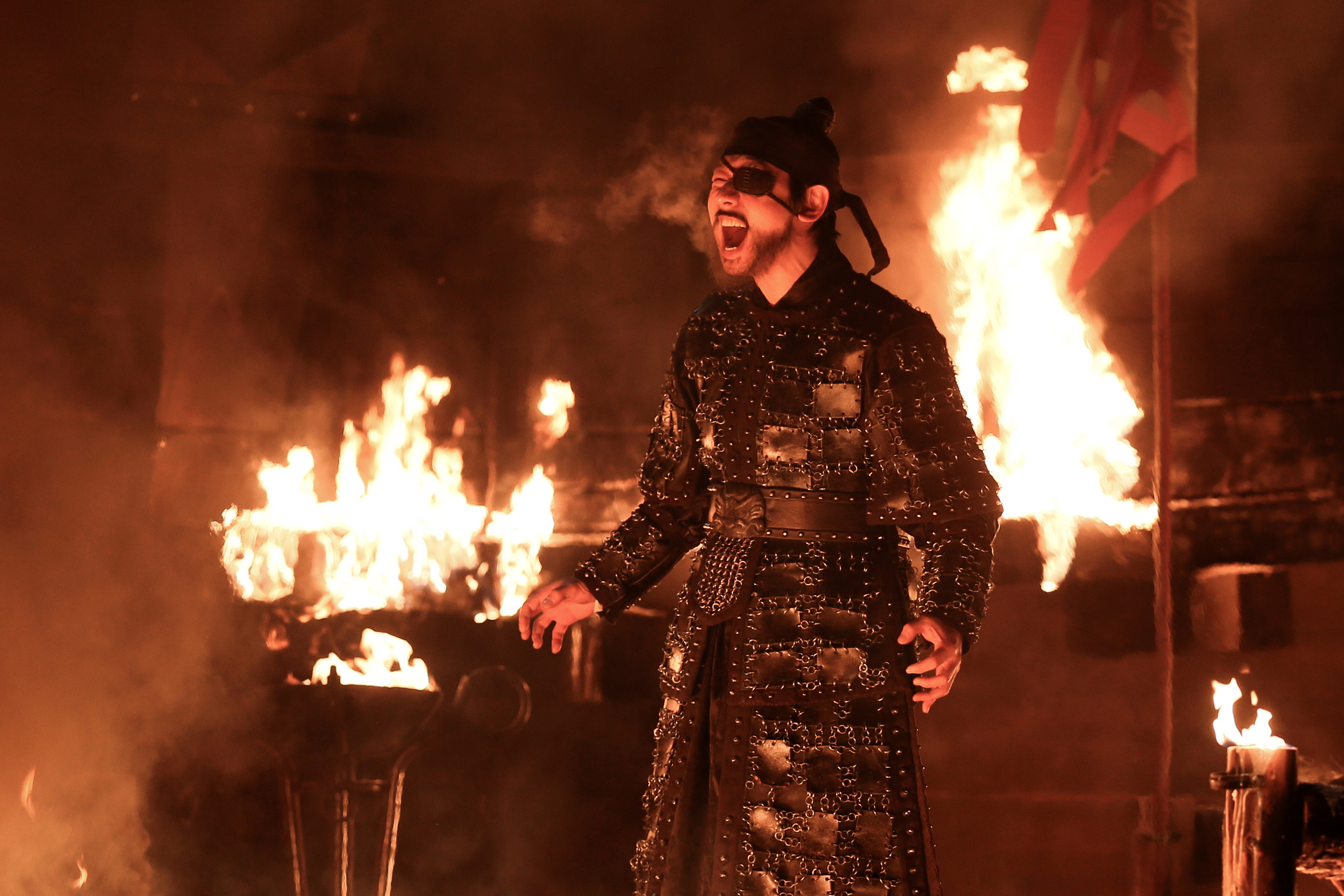
Burning, The Pirates, 2014
There are also several super-fun set pieces, including one that would put a smile on Buster Keaton’s face that features a huge wooden water wheel chasing a cart laden with explosives down a very long hill. Director Seok-hoon Lee has mostly worked on romcoms in the past and The Pirates reflects this as, unlike Kundo or The Admiral, the screen violence is moderate and the bloodletting mild and the focus of the film is the banter between the various characters rather than weighty issues such as revenge, bloodlust, patriotism, or war. The movie is a great piece of escapist fun that moves smoothly between humor, action, and adventure, and is an outstanding way to round off an excellent summer of South Korean flicks in the U.S.
AMC Cupertino Square 16
Love Hangover: Temporary Family and But Always movie reviews

Obligatory condom joke, Temporary Family, 2014
A couple Chinese-language romantico films made their way into the U.S. market this week and one works while the other doesn’t. Hong Kong release Temporary Family uses the backdrop of the superheated HK real estate market to frame its romantic comedy, while PRC rom-dram But Always flails about in China and the U.S. as it attempts to tell its story of lovers pining for each other across years and continents.
Hong Kong renaissance woman Cheuk Wan Chi (aka Goo-Bi GC aka Vincci aka G) directs Temporary Family, an amusing romcom starring A-listers Nick Cheung and Sammi Cheng, along with mainland Chinese starlet Angelababy and rapper/singer Oho (who sings the title track). A broad, hyperlocal comedy that sends up the tight housing crunch in the former Crown Colony, the movie also includes cameos by Heavenly King Jacky Cheung, TVB stars Myolie Wu and Dayo Wong, and Chinese film star Jiang Wu (as an ultrarich PRC real estate speculator) and, not surprisingly, the movie has been a huge hit in its home territory. Although the film tilts towards the slapstick at times it still manages to sustain its narrative tension for most of its running time and is an agreeable timepass. Nick Cheung (Lung) started his career back in the day as a Stephen Chow wannabe so it’s not surprising to find him successfully tempering his usual dramatic intensity in a lighter comedic role. Sammi Cheng pulls out her neurotic jilted lover persona most famously seen in Johnnie To’s huge romcom hit Needing You, this time playing Charlotte, a recent divorcee unable to break from the past. Angelababy plays Lung’s adopted daughter, a slouchy millennial who bounces aimlessly from one low-paying job to another. Oho rounds out the main characters as the awesomely named Very Wong, Lung’s intern and the scion of an unnamed rich man in China. The plot contrives to throw together this unlikely crew as temporary roommates in a luxury condo in Hong Kong’s toniest neighborhood as they attempt to cash in on the real estate market’s volatility.

The wacky crew, Temporary Family, 2014
The movie is chock full of local references and in-jokes (why do all the real estate agents have bleached blonde hair?) and follows the time-honored Hong Kong movie tradition of good-natured vulgarity, including a running joke about a stray pubic hair. Structurally the film recalls the slackly constructed, improvisational comedies of Hong Kong Lunar New Year films and, maybe due to director G’s relative inexperience (this is her second feature), at times scenes abruptly and inexplicably fade to black. Though the movie’s energy flags a bit about two-thirds in, the amiable cast powers through the rough patches and manages to pull out a reasonably entertaining conclusion including the sardonic last scene, as Lung and Charlotte finally find their bliss. Nick Cheung as the desperate realtor Lung is as always quite watchable. Sammi Cheng is somewhat less so, as her neuroticness precludes much lovability, which in turn spoils any chemistry she and Nick might have had.
The movie has been a big hit both in Hong Kong and the PRC, and it’s great to be able to see it here in the U.S. on the big screen, if only to ogle the panoramic shots of Hong Kong harbor and its skyline at night. I had no luck tracking down the U.S. distributor so I was a bit surprised when it popped up here at the Metreon, but I’m glad that I ran across its screening schedule in a random facebook post. It looks like some Chinese distributors are following China Lion and Wellgo’s lead in targeting the Chinese-speaking audience here in the States, although their choice of films is somewhat random. But I’ll take what I can get, especially if it means releases of non-action films like Temporary Family and Pang Ho-Cheung’s Aberdeen, which showed up without fanfare down in Santa Clara a month or so ago.
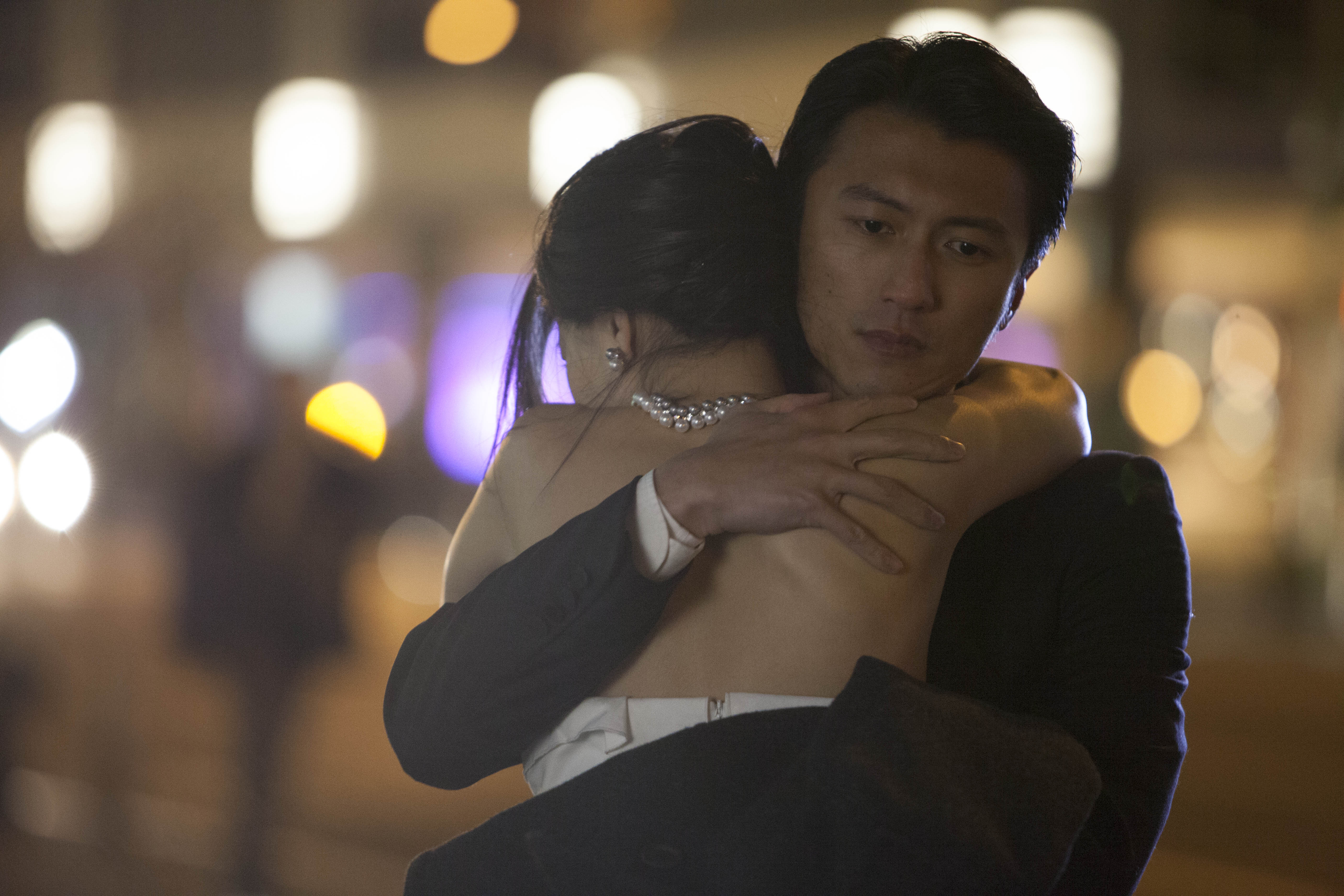
As bad as it looks, But Always, 2014
Like those two films, the Nic Tse/Gao Yuan Yuan romantic vehicle But Always had a day-and-date release here in the Bay, but the movie is no great shakes and is in fact one of the worst, most hackneyed and clichéd films I’ve had the misfortune to witness in a long while. Granted, I don’t go see a lot of romantic films, since my preference is for movies with guns and gangsters, but I know a bad movie when I see one. Not only is the storyline derivative and the narrative conflict forced, but the characters are poorly drawn and the film’s direction is sloppy and amateurish.
The movie starts in 2001 in New York City, then flashes back to 1970s Beijing where Anran (Gao Yuan Yuan) and Yongyuan (Nic Tse), are young kids. This is the best part of the film as the movie renders mid-century China as comfortably shabby and not yet touched by modern global capitalism. The movie then laboriously follows Anran and Yongyuan’s relationship through the years in both China and the U.S. as they hook up, fall apart, and reconcile numerous times for no apparent reason except to generate dramatic angst. The film trowels on the melodrama as suicide attempts, love triangles, jilted lovers, and other tragedies mount. The only things missing from the hit parade of drama trauma are amnesia, long-lost twins, and a car crash, though the ending surely tops these in its maudlin, fatalistic conclusion. Hint: the date and place of the lovers’ last rendezvous gives away the fantastically tragic coincidence at the film’s climax.

Pretty Nic, But Always, 2014
Nic Tse and Gao Yuan Yuan are nicely lit and photographed throughout, though Nic seems a bit embarrassed to be in such a crappy flick. It’s also funny to note that, being a PRC production, we get to see his a lot of his beautiful torso and cut abs but almost none of her naked skin except a decorous peek at her bare shoulder.
There’s nothing wrong with the old-time narrative of star-crossed lovers patiently waiting for each other through endless adversity and I’m all for a well-told version of a classic story, but this movie is not that. Instead it’s a lazy, clumsy rehash of tired tropes without any freshness, originality, wit, or style. Yeah, I didn’t like it much.
Kings of the Wild Frontier: Roaring Currents and Kundo review
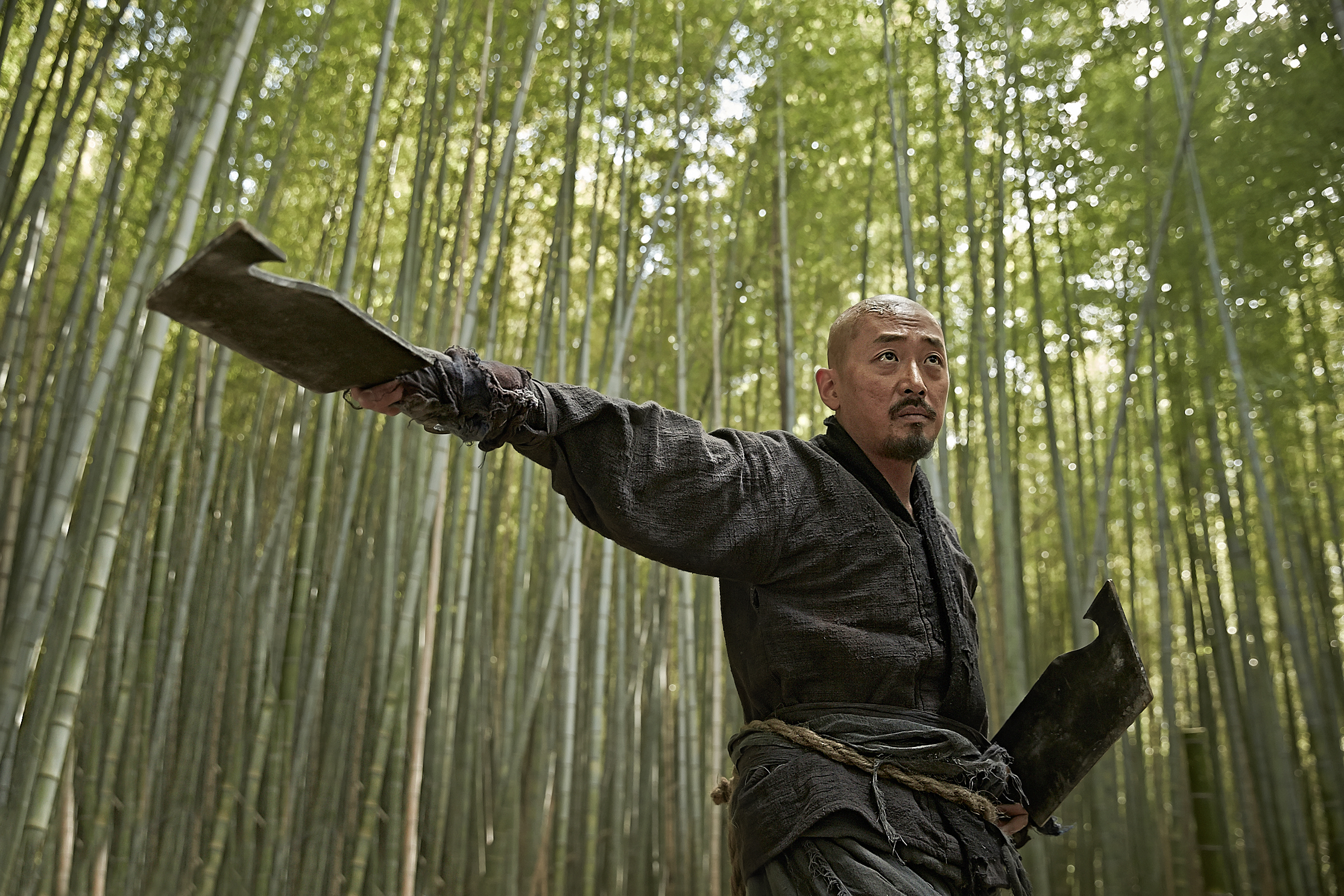
Slice and dice, Kundo: Age of the Rampant, 2014
Three huge South Korean historical actions films have been breaking box office records in their home territory this summer, and we lucky dogs here in the U.S. also have a chance to see them on the big screen.
The first one that rolled through town, opening in San Francisco on Aug. 15, was The Admiral: Roaring Currents. Though no longer playing in SF proper (it’s still showing in Santa Clara and Dublin) the film had a good two-week run at Metreon and Century Daly City. I saw a matinee at Metreon before it closed and was pretty swept up by the sheer muscular grandeur of dozens of sixteenth-century wooden ships in close battle around a raging whirlpool. The movie is a tightly made film full of rousing action, noble sacrifices, and heroic nationalism, as the Joseon navy, reduced to twelve ships after a series of disastrous battles, goes at it against a Japanese invading force of more than two hundred ships. Since it’s all about Korean national pride against the evil imperial Japanese military, the Koreans are scrappy underdogs with mud-streaked faces and rough-hewn sea vessels, while the Japanese are sneering, spit-and-polished marauders in gilt-trimmed ships.
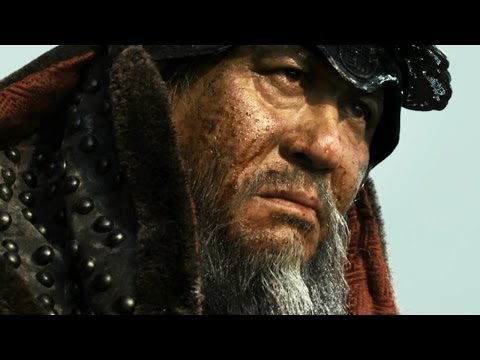
Ruff and tuff, The Admiral: Roaring Currents, 2014
Based on the true exploits of the titular character, legendary Joseon naval commander Yi Sun-Shi, the loosely follows the Battle of Myeongnyang, which took place in 1597 at a strategically important strait off the coast of modern-day Korea. The film spends about half its two-hour running time setting up the various characters and their narratives, then jumps into a series of battles and skirmishes that take up the second hour of the film. These sequences are loads of fun, with wooden-ship ramming, whirlpools, hand-to-hand combat, flying arrows, cannonballs, and flaming boats full of explosives, but the focus remains on the stalwart Admiral Yi, played with gravity and authority by the redoubtable Choi Min-Sik (Oldboy). Also good are Jin Goo as Joseon scout Im Jun-yeong and Cho Jin-woong as Japanese baddie Wakisaka Yasuharu. Director Kim Han-min, whose last film War of The Arrows (2011) was also an hyperkinetic historical, keeps everything moving along at a brisk pace, with escalating skirmishes building to a rip-roaring climax. Roaring Currents is now the highest grossing movie of all time in South Korea, breaking the record previously held by Avatar.
The second South Korean costumed adventure, Kundo: Age of the Rampant (what?) opened this Friday in the U.S. and it also follows a bunch of scrappy underdogs fighting the power. This time the story is set in the 19th century Korea and follows a Robin-hoodlike group named Kundo who stand up for the oppressed peasantry against corrupt nobles and their politician lapdogs.
The film is much more loosely plotted and constructed than Roaring Currents, and director Yoon Jong-bin has a jokey, self-conscious directing style that recalls Takashi Miike without the sadism and misogyny. Yoon riffs on classic Westerns, with a twangy, guitar-based Morricone-esque theme song and good and bad buys fighting on horseback, but adds in some nice swordplay choreography and decent hand-to-hand, sword-on-cleaver action, as well as a good helping of Hong Kong-style martial arts. His cartoonlike direction includes extreme zooms in and out, jump cuts and speed-ramping, and a villain who is only missing a waxed mustached to twirl. The script included lots of anachronistic cursing that translates in the subtitles as a bunch of f-bombs, which only adds to the Brechtian fun.
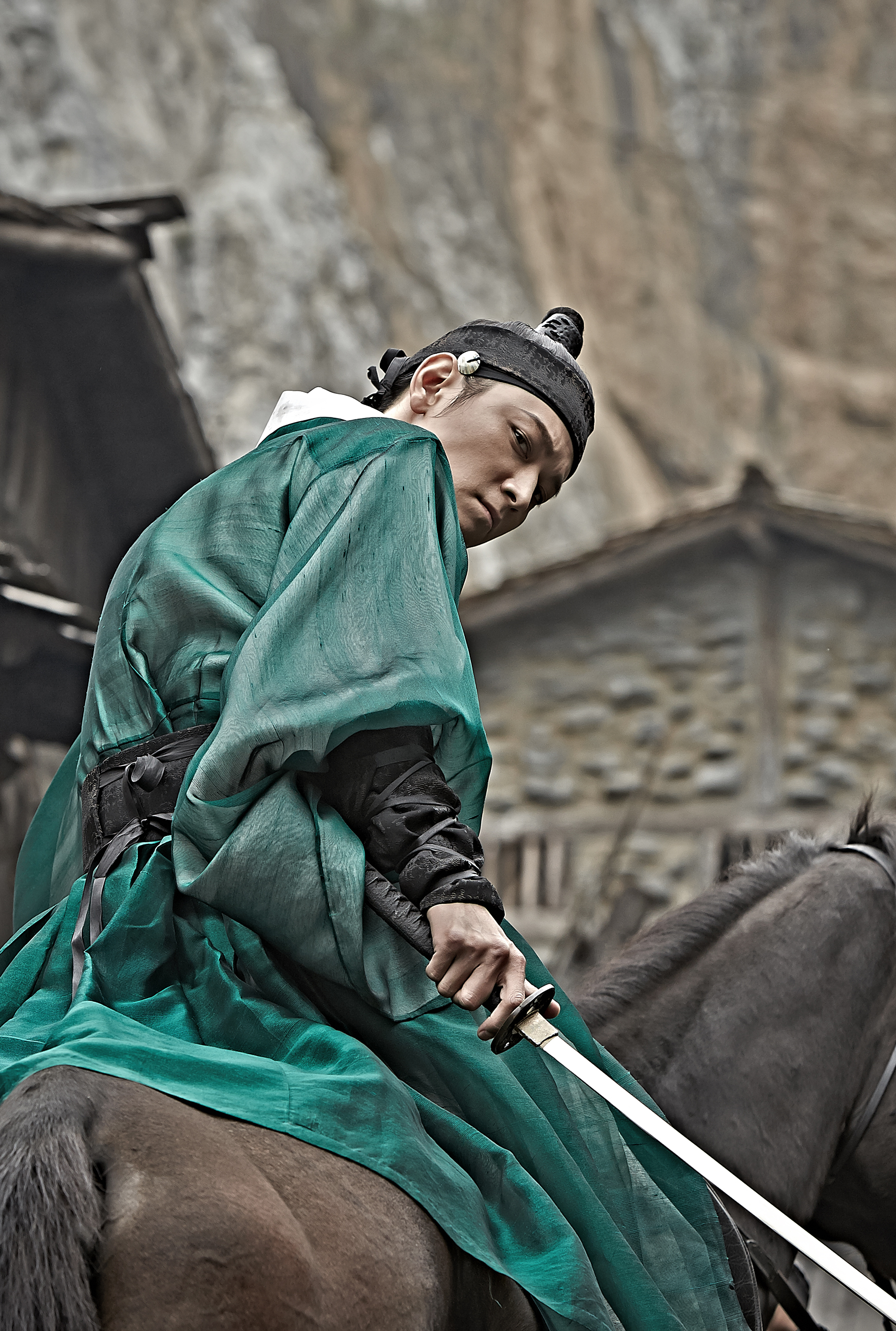
Feline, Kundo: Age of the Rampant, 2014
Though somewhat rambling in its narrative, the film is ultimately an entertaining eastern Western, anchored by Ha Jung Woo as Dolmuchi, a doofy butcher who mixes it up with Jo Yoon, the unacknowledged bastard son of the corrupt local nobleman running Dolmuchi’s district. At 36 years old, Ha is way too old to convincingly play an eighteen-year-old, especially compared to his dewy-eyed adversary, played by Kang Dong-won who with his feline androgyny is entirely plausible as a nineteen-year-old. Nevertheless Ha is fun and fierce as the bumbling butcher turned hero who is recruited by the Kundo vigilantes as they stick up for the rights of the peasants against the corrupt and exploitative nobles. The film gestures toward empowering the common people but ultimately it’s just a lot of silly fun that’s entirely worth seeing on the big screen.
The third of this year’s South Korean historical blockbuster trilogy, The Pirates, arrives in U.S. theaters on Sept. 12 and a review will be forthcoming once I see it. When it rains, it pours, though I’m certainly not complaining.
The Admiral: Roaring Currents
Regal Hacienda Crossing Stadium 20 & IMAX
5000 Dublin Blvd.
Dublin CA
AMC Cupertino Square 16
10123 N. Wolfe Rd.
Cupertino CA 95014
Kundo: Age of the Rampant
AMC Cupertino Square 16
10123 N Wolfe Rd
Cupertino, CA 95014
Century 20 Daly City
1901 Junipero Serra Blvd
Daly City, CA 94015
Four Star Theatre
2200 Clement St
San Francisco, CA 94121
Typical Girls: Kenji Mizoguchi film series at the Pacific Film Archive
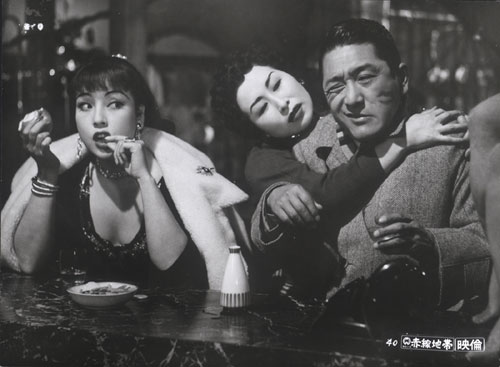
Making ends meet, Street of Shame, 1956
The Pacific Film Archive in Berkeley comes through once again with another outstanding series, this time focusing on legendary Japanese filmmaker Kenji Mizoguchi. Running through the end of August, this set gives you the chance to see much of Mizoguchi’s amazing oeuvre on the big screen and in glorious 35mm.
Along with Akira Kurosawa and Yasajiro Ozu, film historians consider Mizoguchi one of the Holy Trinity of golden-age Japanese filmmakers—the work of these seminal directors spanned much of the early and mid-twentieth century and has received massive critical attention. Among those three, however, Mizoguchi’s star has dimmed a bit, due in part to the somewhat unrelenting bleakness of his films. But his portrayals of the plight of women in a patriarchal society are pretty key, and his intricate camerawork and direction are still fresh and revelatory. The PFA series is a great chance to witness Mizoguchi’s masterful use of the filmic medium to examine the effects of a brutal and uncaring society on individuals caught in its strictures.
Mizoguchi’s brilliant use of the camera is in full effect throughout the series. Famous for including a minimum of close-ups and often shooting his scenes in extended master shots (a style dubbed “one scene, one cut”), he performs a kind of cinematographic butoh, with ultra-slow, beautifully choreographed push-ins, pans, and dollies that mesh with the characters’ actions and dialog in an intricate, intertwined choreography.
The PFA series include most of Mizoguchi’s well-known jidai-geki (historical dramas) like the popular ghost story Ugetsu, winner of the Silver Lion Award for Best Direction at the 1953 Venice Film Festival, and The Life of Oharu, a masterpiece that’s a sad tale of a woman’s oppression, told with clockwork precision and driven by a bravura performance by Kinuyo Tanaka. In addition to his more famous historicals, the PFA is also screening several of Mizoguchi’s modern-day films. Mizoguchi is recognized for his period pieces, yet like his compatriot Akira Kurosawa he also directed several films that scathingly examine issues and problems of 20th-century Japan. As with his period films, these modern-day movies often center on the plight of women in a straight-laced society. Osaka Elegy (1936) is a bleak, brilliant, and economical portrayal of the social strictures that constrained women in a pre-feminist age. Elegy is buoyed by Mizoguchi’s sympathetic portrayal of the female protagonist, surrounded by exploitative, weak, or cowardly male figures who lend little support when the heroine falls on hard times. A proto-noir filled with deep shadows and geometric compositions, the film displays Mizoguchi’s mastery of the medium even in the 1930s.
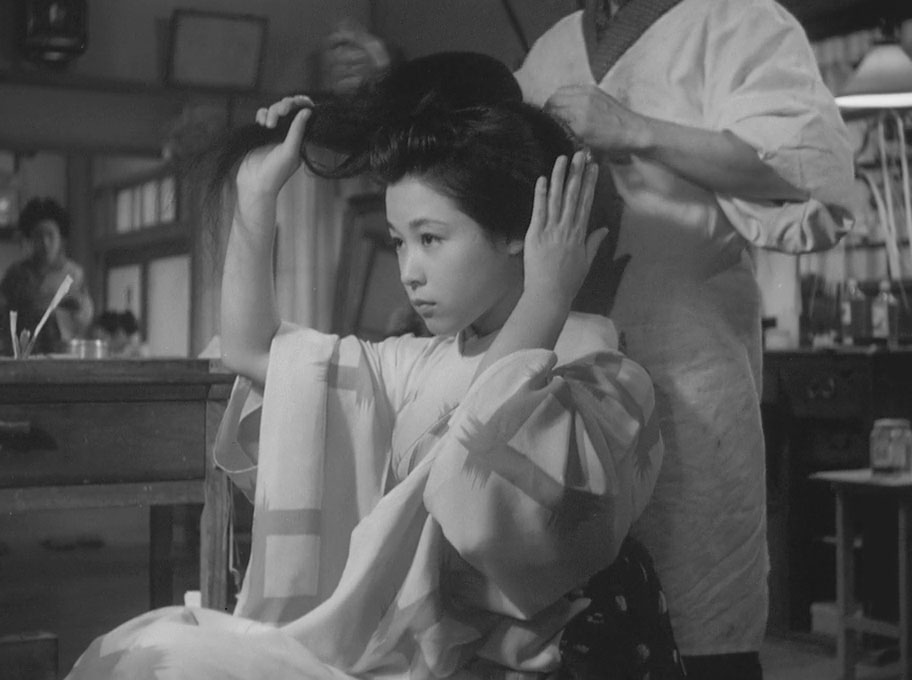
Coiffed, A Geisha, 1953
Also from 1936, Sisters of the Gion is a surprisingly modern and unsympathetic take on the hard-knock geisha life, full of Mizoguchi’s gliding camerawork and one-take marvels. Hard-as-nails Omacha and her more sensitive sibling Umekichi are two low-end geisha in the Gion, Kyoto’s licensed pleasure district, who are struggling to make ends meet by landing “patrons,” customers who are mostly old wizened married guys. The film is a cutting indictment of the capitalist system that’s all about the money and is a good example of a Mizoguchi keikō-eiga (tendency film), which literally displays his socialist tendencies. Omacha is the deal-maker, trying to manipulate the system to escape the oppression of poverty, sexism, and misogyny, while Umekichi desperately believes that the system will work in her favor. The PFA series screens Mizoguchi’s remake of Sisters of the Gion, A Geisha (1953), which updates the story to postwar occupied Japan and which stars the famed Ayako Wakao in one of her first film roles.
The PFA series concludes with Mizoguchi’s last movie, Street of Shame (1956), which is an excellent example of Mizoguchi’s use of film to examine social problems. The story concerns a group of prostitutes in postwar Tokyo who struggle to overcome an andocentric culture insensitive to the needs of women. In a role that’s a departure from her parts in the period films Rashomon and Ugetsu, Machiko Kyo plays Mickey, a material girl who’s not above stealing her co-workers’ customers or blithely overextending her credit at local shops. Ayako Wakao as Yasumi is a no-nonsense working girl who plans to escape the brothel by becoming a moneylender and shopkeeper. The men in the film are for the most part weak, craven, or venal, preying on the female protagonists and only valuing them for their bodies or their beauty, or despising them for their vocation. Yet Mizoguchi makes it clear that the women are prostitutes only because they are given little other choice in society. In one amusing scene one of the women who’s left the profession to marry a small-town cobbler returns to the brothel. She laments that marriage is worse than selling her body to strangers as her husband forces her to work in the shop from morning to night, then expects dinner and sex at the end of the day. Mizoguchi’s narrative uses the women’s plights as a critique of capitalism, an exploration of the uncertainty and despair of post-war Japan, and an indictment of the constraints of a patriarchal society.
While many of Mizoguchi’s films are available on DVD, Mizoguchi is absolutely a big-screen director. His subtle use of the camera and his epic portrayals of women and men struggling to overcome their fate deserve to be appreciated in a movie theater and, as usual for this excellent venue, the PFA serves up his films as they were meant to be seen.
Kenji Mizoguchi: A Cinema of Totality
June 19, 2014 – August 29, 2014
Pacific Film Archive
2575 Bancroft Way
Berkeley CA 94720
Gotta Eat: 2014 Frameline LGBT Film Festival
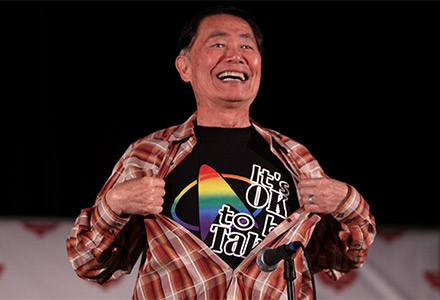
Superhero, To Be Takei, 2014
Frameline’s San Francisco International LGBT Film Festival is upon us once again and it’s a monster. Now in its thirty-eight edition, the festival includes dozens of films from around the world screening over nearly two weeks at several venues around town.
This year’s Asian/American contingent includes about a half-dozen feature films and a smattering of shorts from Asia, the U.S, and the U.K. But this year is also all about George Takei, Star Trek’s Mr. Sulu and, more recently, a social media rockstar who’s the recipient of the 2014 Frameline Award and the subject of the festival’s centerpiece presentation, To Be Takei, directed by Jennifer Kroot (whose last project, It Came From Kuchar, similarly documented another queer media icon, underground filmmaker George Kuchar).
George Takei also has a small but significant cameo in David Au’s debut feature, Eat With Me, which also screens at this year’s festival. It’s been more than twenty years since The Wedding Banquet looked at gayness in the Asian American community and Eat With Me hews closely to the themes and concerns of that influential Ang Lee joint. The story follows the relationship between indeterminate Asian American mom Emma, played by Sharon Omi, and her grown son Elliot (Teddy Chen Culver), a cook at a nondescript Chinese restaurant, as Emma comes to terms with her own homophobia while Elliot finds a way to make his sexuality okay with his family and culture.
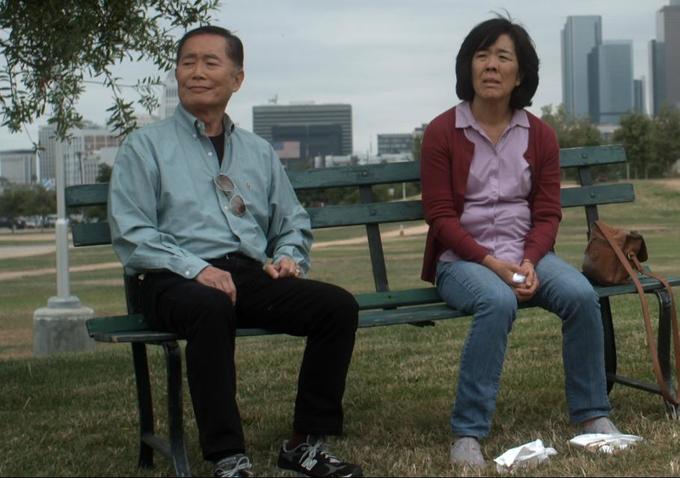
Tête-à-tête, Eat With Me, 2014
Although the film is somewhat soft around the edges, it’s secret weapon is Sharon Omi, who is a treasure—a veteran of Asian American theater companies in San Francisco and Los Angeles, she’s always had an impish grin and a dead-on sense of comic timing that’s in full effect in this movie. Although the film is in no way revolutionary, Omi’s performance completely rocks. The rest of the cast is also solid and director Au pulls some charming performances from them, though they’re pretty much coming-out-film stock characters–Elliot the gay son is at odds with his mom; Ian, Elliot’s too-good-to-be-true love interest, is hot, sensitive, and has a sexy British accent; and next-door-neighbor divorcee/yogini Maureen (Nicole Sullivan of MADtv) is the quirky and offbeat. It’s also nice to see another Asian American acting stalwart, Ken Narasaki (and Omi’s real-life husband), in a small role as Emma’s curmudgeonly spouse.
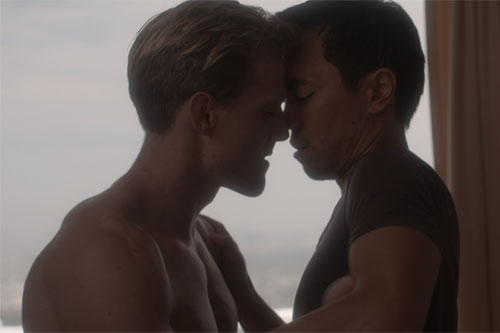
Snogging, Eat With Me, 2014
The film also includes the reliable motif of cute boys tearing off their tank tops and snogging at regular intervals during the film. Just like you can expect a song and dance number every thirty minutes in a Bollywood movie, in gay indie films you can pretty much set your watch by when the attractive lead characters will start a makeout session, and Eat With Me is no exception, as Elliot strips down and hooks up on a regular basis throughout the movie.
The rest of the Frameline fest is chock full of film-watching delights that will surely consume the next eleven days of my life. Along with the Kenji Mizoguchi series at the Pacific Film Archive that also starts this Thursday, the World Cup in Brazil, and the A’s and Giants duking it out for the best record in baseball, my summer vacation is shaping up just fine.
Frameline 38: San Francisco International LGBT Film Festival
June 19-29, 2014
Castro, Victoria, Victoria Theaters in San Francisco
Elmwood Rialto in Berkeley
It’s All In The Movies: Film festival roundup
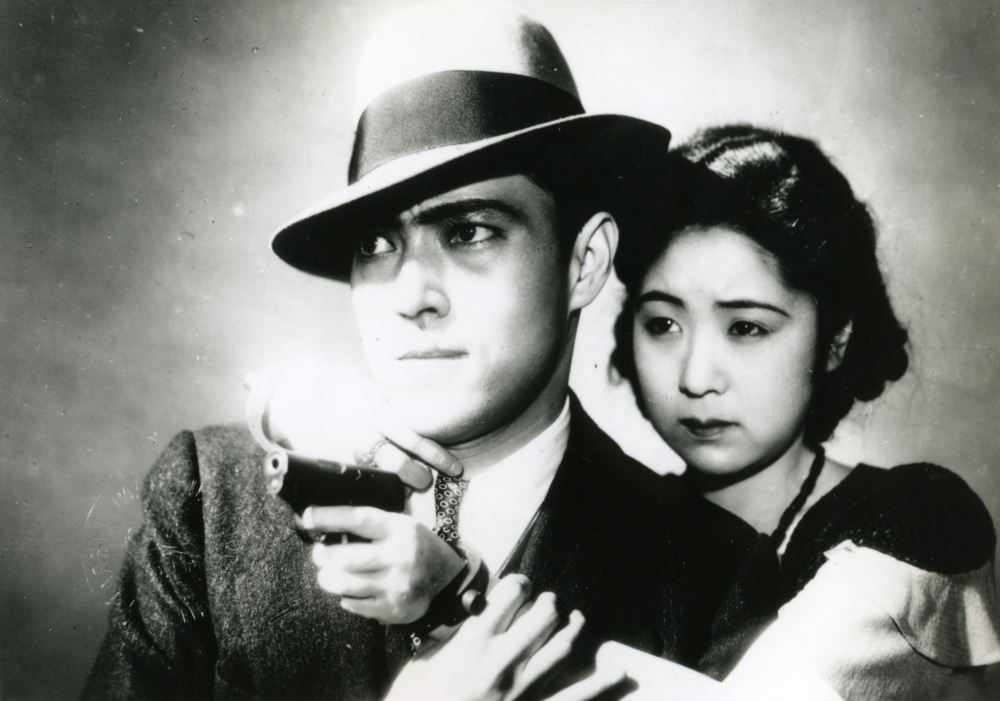
A dame and her gat, Dragnet Girl, 1933
It’s been a crazy past couple of months so I haven’t had time to update my posts recently, but I’ve finally got a bit of down time, so following are some highlights from some notable film festivals here in Cali.
Down the I-5 I stopped in for a couple screenings at the Los Angeles Asian Pacific Film Festival, which is one of my favorite jams of the year. I was only in the Southland for about 72 hours but I managed to see an outstanding double-bill of two recent Asian genre films at the CGV Cinema in Koreatown, one of the best movie-going venues in LA. CGV is part of a Seoul-based theater chain and its LA outpost usually screens a combination of South Korean movies with English subs and Hollywood movies with Korean subs in its three big state-of-the-art digital theaters. Add to that the cinema’s close proximity to the best of K-town’s nightlife, including dozens of noraebangs, soon dobu houses, Korean fried chicken joints, and soju bars and it all equals a great time in central LA.

Dustin Nguyen, poly-hyphenate, Once Upon A TIme in Vietnam, 2013
First up was Once Upon A Time In Vietnam (2013), directed, written by, and starring Dustin Nguyen, most famously seen in the U.S. opposite a very young Johnny Depp in the classic late-80s cop show 21 Jump Street. A Western/martial arts/steampunk mashup, OUATIV looks pretty, but ultimately is pretty clichéd. Dustin Nguyen gives himself the leading role as Dao, a mystery man who rides into to town (on a souped-up motorbike instead of a palamino) and stirs up the village’s heretofore placid existence, unearthing a past romance with the kindly local baker’s pretty wife Anh (Thanh Van Ngo) and continuing his vendetta with the gang of toughs who are tailing him. Although Nguyen’s Dao is a cool dude, the most truly badass character is Long, the ostensible villain, who is Dao’s archnemesis and romantic rival, played by veteran stuntman Roger Yuan. Despite the film’s good-looking cinematography, the movie is still a bit choppy and rough, with inconsistent art direction that showed its flaws on CGV’s thirty-foot tall, crystal-clear digital screen. The movie’s many gratuitous ass shots and Thanh Van Ngo’s peek-a-booby fighting costume were also pretty silly, though I’m sure some of the film’s target demographic appreciated them.
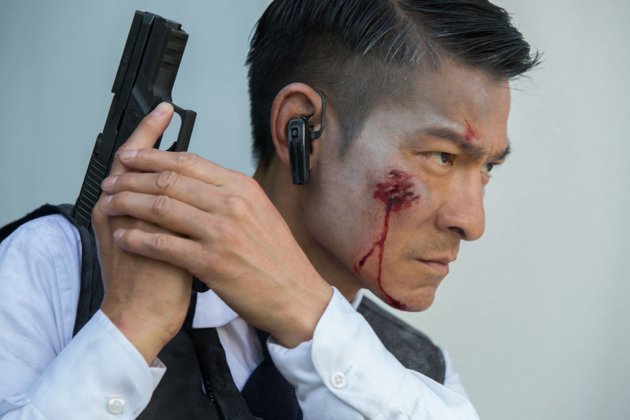
Andy being Andy, Firestorm, 2013
The second half of the double-bill was the hit Hong Kong action flick Firestorm (2013), starring the evergreen Andy Lau as a conflicted cop hunting down bad guys in the streets of Central. The movie subscribes to the tenet of bigger, faster, and louder, with more explosions, more gunfire, and more bleeding head wounds, and harkens back to the fine old tradition of Hong Kong movie excess, where anything worth doing is worth doing ten times as much. As with any action blockbuster it’s probably better not to be too critical of the gaping plot holes and odd character motivations and just go along for the ride, which is pretty spectacular by the end of the movie. Interestingly, the film’s most harrowing moments are not during the high-powered CGI explosions at the story’s climax but during a quieter though no less tension-filled moment earlier on. The sight of a small child trembling with terror as she tries to silence her screams provides a much more visceral impact than the many later shots of breaking glass and rupturing concrete. Owing a debt to Dante Lam’s emotionally shattered characters and John Woo’s angsty adversaries, first-time director Alan Yuan works in a bit more psychological complexity than the genre demands, which adds to the overall impact of the film. But the movie is also about things blowing up, which it does splendidly, and which I completely enjoyed seeing on the big screen at CGV.
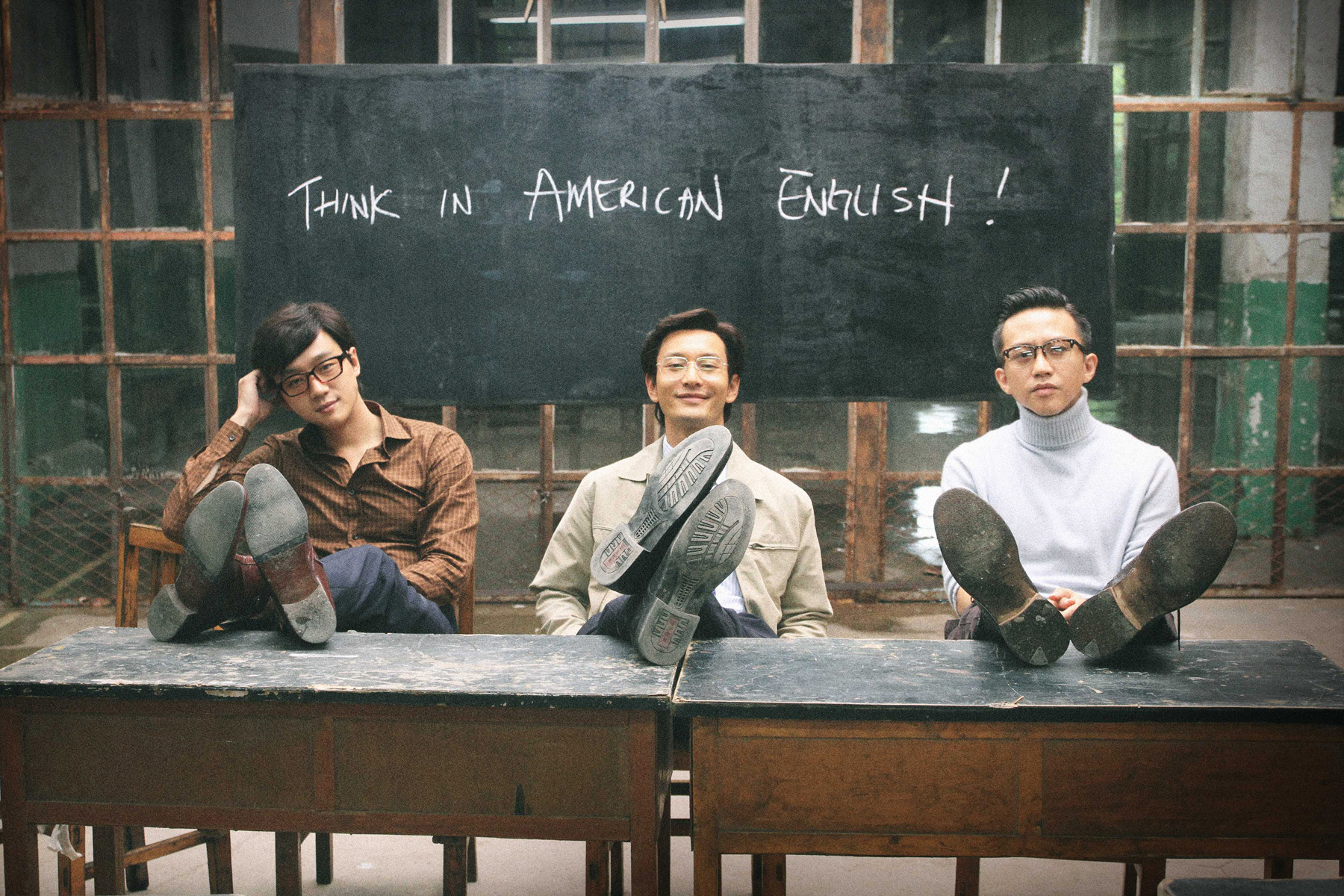
Chinese ingenuity, American Dreams in China, 2013
Back home in the Bay I caught a few shows at the San Francisco International Film Festival. Peter Chan’s latest Hong Kong/China co-production, American Dreams in China, was one of the biggest box office hits in the PRC in 2013. The comedy, which follows three friends across the span of several years and two continents, is a slick and engaging rags to riches tale that includes an underlying social commentary about the lives of Chinese immigrants to the U.S. and their tenuous relationship with the American Dream. Tong Dawei, Huang Xiaoming, and Deng Chao play school buddies whose lives and careers entwine as they struggle to make their fortune. All three pull off great performances, convincingly aging from their early twenties to mid-forties, and the interplay between them is authentic and believable, with coverboy Huang Xiaoming hiding his essential hotness behind several pairs of nerd-chic glasses. The movie also includes beautiful cinematography by Christopher Doyle, though it’s much more naturalistic and less self-consciously flashy than his renowned work with Wong Kar-wai, and the movie’s snappy editing keeps the story moving along briskly. Although the climax of the film is a strange paean to copyright infringement and intellectual property theft which perhaps reveals something about the state of China’s hypercompetitive market-based economy, director Chan overall makes astute observations about the characters’ relationship to each other and to the rapidly shifting state of Chinese culture in the PRC and the U.S. Especially revealing is a passage in which one of the characters, then a Chinese grad student in a U.S. college, is reduced to a humiliating, low-status job in a campus lab. The film thus belies the myth of the American dream that lures so many immigrants to the U.S.
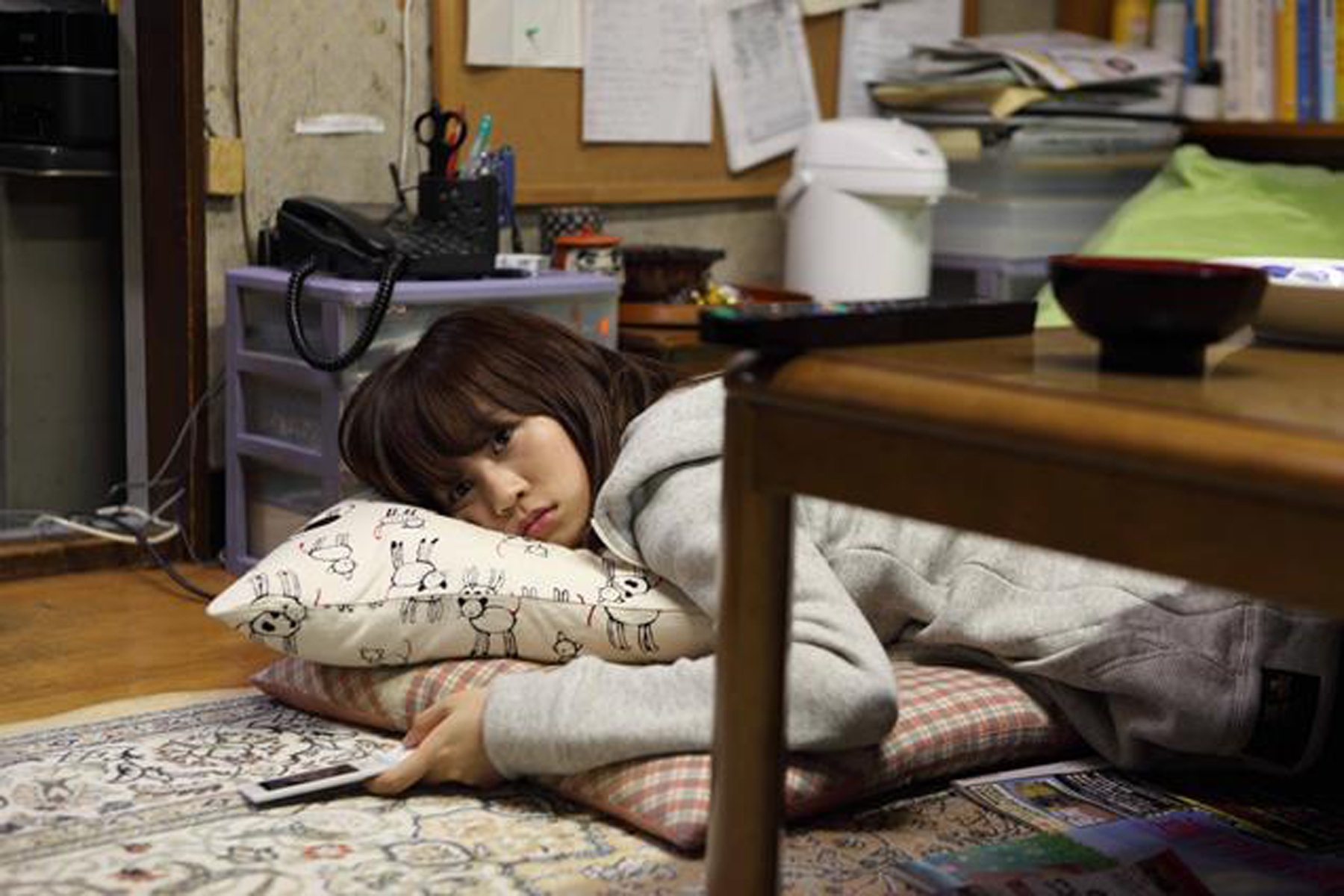
Languid, Tamako In Moratorium, 2013
Tamako In Moratorium, an extremely droll and low-key Japanese comedy, is anchored by lead actress Atsuko Maeda as the titular character, a recent college graduate who’s moved back in with her divorced dad somewhere in a sleepy city in Japan. Dad runs a modest sporting goods store. Tamako spends most of her time sleeping, eating, and procrastinating, although this description makes it seem like she engages in activity, which mostly she doesn’t. Instead she eats microwaved vegetables from a plastic tub, grunts nonverbally at her dad’s attempts at conversation, and sleeps into the afternoon on her disheveled futon in her cluttered childhood bedroom. The film’s freeze frame moments capture the three seasons that Tamako aimlessly passes in her dad’s small house. The movie’s very slight and subtle dramatic tension is a nice antidote to the bombast of much commercial narrative cinema and, as the brilliant Maggie Lee at Variety points out, the movie’s style owes a lot to the great Yasujiro Ozu in its gentle, non-judgmental look at family dynamics.
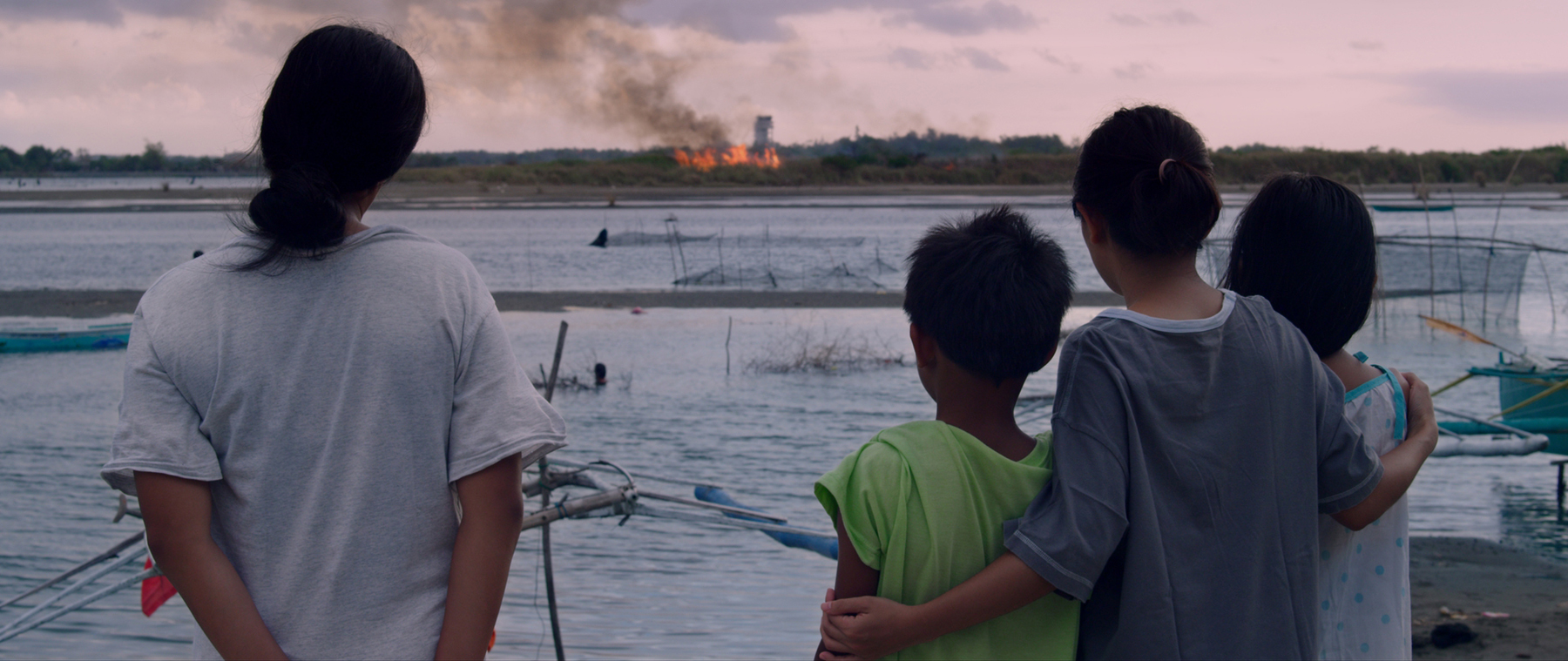
Surreality, Norte: The End of History, 2013
I also witnessed the four-hour Filipino opus Norte: The End of History, by long-form specialist Lav Diaz (his 2004 film Evolution of a Filipino Family was 10 hours long). Advance reviews called the film a masterpiece, which I think is a bit of an overstatement, but it held my attention for most of its running time. As I’ve noted in the past, most movies over 90 minutes long put me to sleep unless Hrithik Roshan is singing and dancing in them, but this once kept my interest, aided in no small part by its excellent wide-screen digital cinematography and an episodic structure that allows the narrative to unwind unhurriedly. This is not to say that the movie is slow, although much of it is shot in single master shots. But the action within the frame is always dynamic and, although the film opens with a ten-minute static shot of a group of armchair revolutionaries discussing morality, ethics, and politics, the movie becomes much more cinematic and less chatty as it goes along.
As Noel Vera notes in Film Comment, Norte is a continuation of director Diaz’s interest in themes and motifs from Dostoevsky, and the film has some of the epic feel of a Russian novel. The story revolves around several individuals involved in a murder case, including the actual killer, the man framed for the deed, the patsy’s wife, and their assorted friends and relatives. Like Dostoevsky’s work, the film touches on themes of fate and free will, the moral and ethical responsibilities of the individual, and injustice within a stratified social system. The performances are uniformly strong, including Sid Lucero as an unbalanced intellectual, Archie Alemania as the man wrongly accused of murder, and Angeli Bayani (who played the stoic maid in Ilo Ilo) as his longsuffering wife. Diaz’s use of long takes that incrementally zoom in or pan across the action allow the viewer to perceive the startlingly close relationship between cruelty and kindness. Although most of the film’s violence feels appropriate to the narrative, I was a bit bothered that the killing of a dog got at least twice as much screen time as a violent and disturbing rape.
Smoking, Dragnet Girl, 1933
Lastly, I saw Dragnet Girl, an early Yasujiro Ozu joint, at the San Francisco Silent Film Festival. I saw my very first Ozu film, Woman of Tokyo, (also a silent gangster movie) a couple years ago at the Port Townsend Film Festival. That movie set me off on an Ozu kick and I spent the better part of early 2013 watching every Ozu movie I could get my hands on, almost all on DVD. It was a treat for me, then, to see Dragnet Girl on the big screen with live accompaniment at the Silent Film Festival. Although the film’s title implies gats, dames, and rat-a-tat action, the movie is more of a character study in line with Ozu’s later and more famous oeuvre, with long stretches of the film devoted to character relationships rather than shootouts. Guns do make an appearance, however, as well as heists, boxing rings, and small-time gangsters, along with the titular character, a secretary/gangster’s moll played by legendary actress and film director (and Kenji Mizoguchi muse) Kinuyo Tanaka. It was great to see the movie as it was meant to be viewed, on the big screen at the Castro Theater, and once again the Silent Film Festival proved its status as one of the premiere film fests in the Bay Area.


Recent Comments