Posts filed under ‘movies’
Unfaithful: Mistress Dispeller film review

I just saw Elizabeth Lo’s new documentary feature, Mistress Dispeller, this past weekend and was intrigued and engrossed throughout. Lo uses stylized visual techniques to expand the documentary medium while never losing sight of the humanity of her subjects.
The film’s concept is interesting as it follows Ms. Wang, whose business in China specializes in hiring out to help to break up extramarital affairs. Her particular skills are engaged by Mrs. Li, a middle-aged woman who has discovered her husband is having an affair with Fei Fei, a younger woman from a nearby city. Beyond the novelty of the premise, Elizabeth Lo’s unobtrusive camera emulates a narrative fiction film and plays out like a parlor drama.
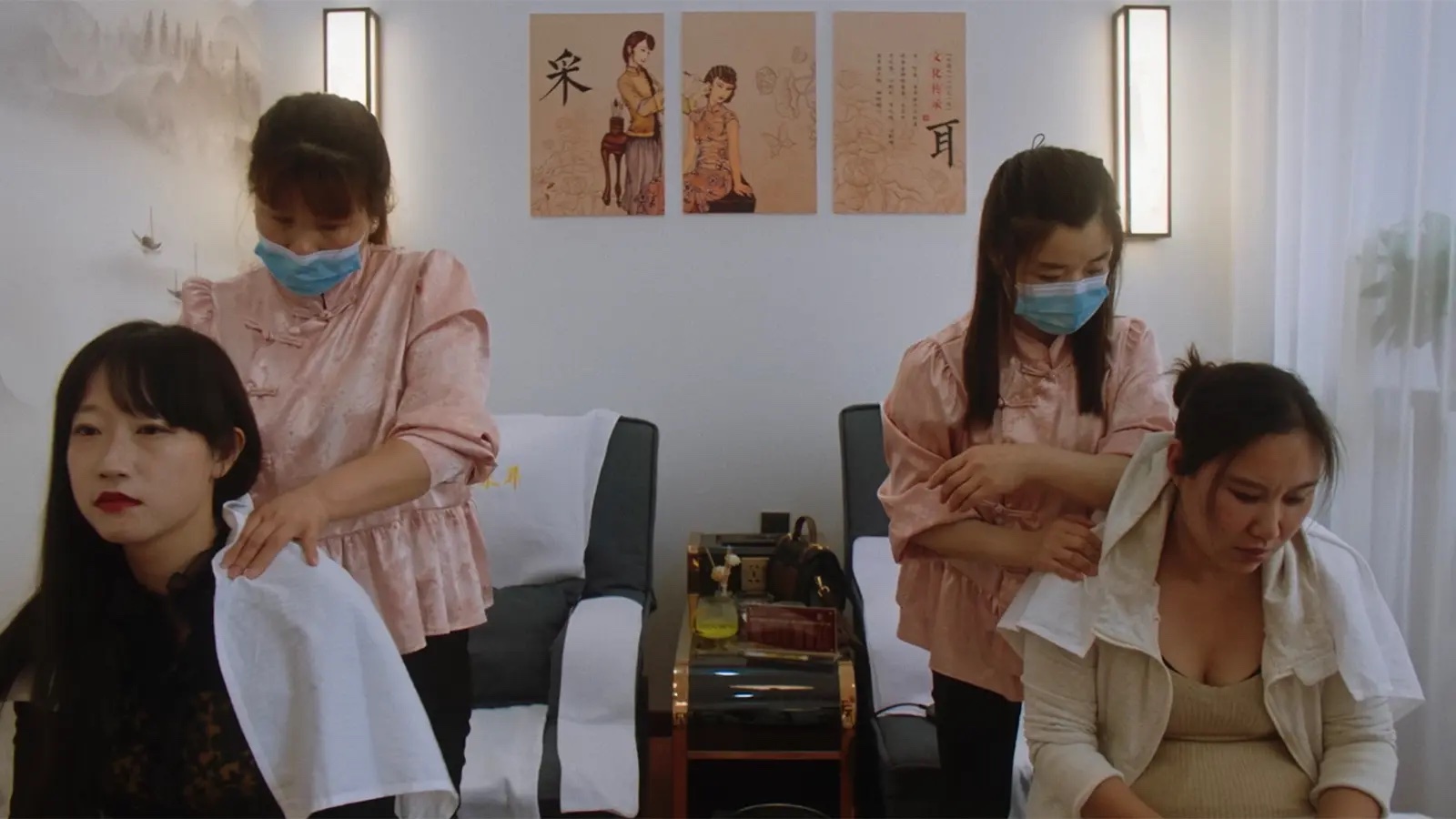
Lo’s last film, Stray, also used unconventional cinematic techniques, as it told the story of Istanbul’s stray dog population from the perspective of the dogs. That premise seems high-concept but Lo broadened its scope by also looking at the state of Istanbul’s refugee population. Similarly, Mistress Dispeller has a hooky concept, but Lo delves deeper than its seemingly sensationalistic premise. It would be easy to demonize the cheating husband or his girlfriend but Lo gives these characters a complexity that evades simple dichotomies. Although the basic love-triangle premise sounds like a reality show, there is no villain edit. Lo presents all of the main characters sympathetically and with complexity.

Lo also expands the visual style historically followed by many documentary filmmakers. Although her approach is related to cinema vérité, in the tradition of Frederick Wiseman and others who unobtrusively follow their subjects and who eschew narration, voiceover, or other techniques that guide the viewer, Lo’s film is a far cry from Wiseman’s oeuvre. Unlike Wiseman’s handheld camera and rough, 16mm aesthetic, Lo for the most part locks down her camera at a medium distance, or inserts aesthetically captured close-ups and establishing shots. Perhaps owing more to Jia Zhangke than Wiseman, Lo blurs the line between documentary and fiction film.
NOTE: I’m always happy to see movies at the Roxie, not in small part due to its outstanding popcorn, complete with freshly drawn butter and optional nutritional yeast. During the contentious battle to save the Castro its once-excellent popcorn had pretty much gone to shyte and now after its renovation I’m not optimistic it will be restored to its culinary glory. This leaves the Roxie, the Balboa, the New Parkway in Oakland, and other indie cinemas to carry on the Bay’s glorious fresh movie popcorn tradition.
Love Buzz: 2025 Mill Valley Film Festival
The 2025 Mill Valley Film Festival is upcoming this weekend and there is a treasure trove of Asian and Asian American films on the docket. Among these are some of the buzziest films from the current film festival season.
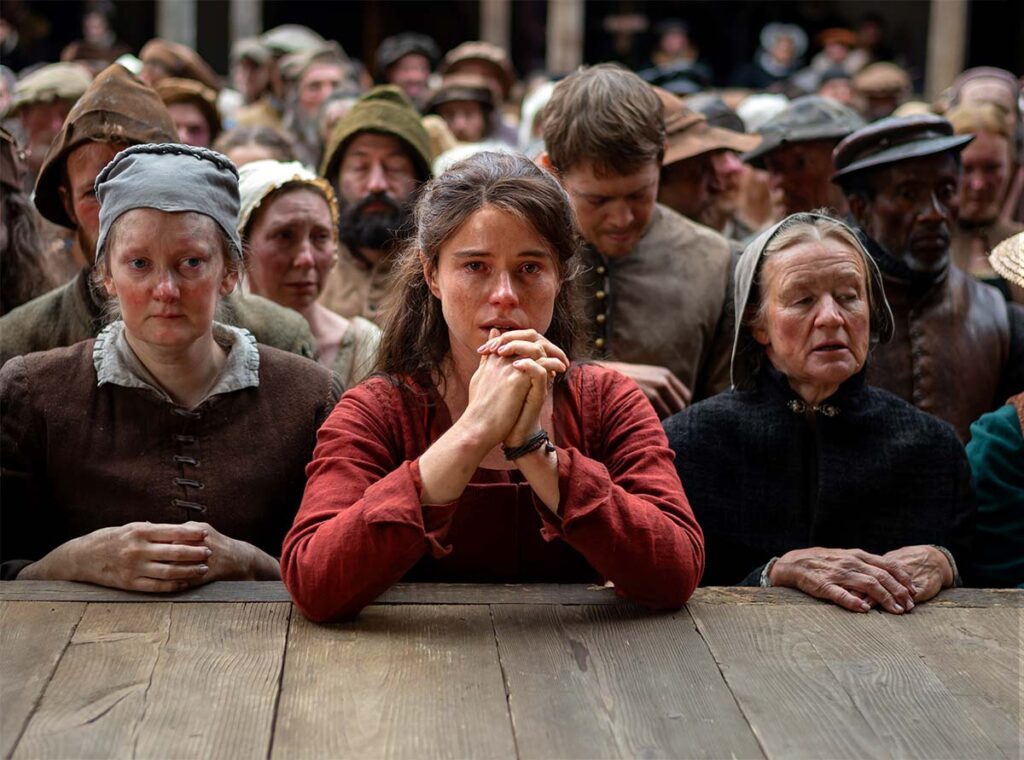
The festival’s opening night film is Hamnet, Chloe Zhao’s interpretation of the backstory of the creation of Hamlet. Zhao has a decidedly singular vision and the film promises to be an eye-opening and unexpected journey. Hamnet premiered at the Telluride Film Festival a few weeks ago and as with all of Zhao’s films it garnered a lot of attention for its unconventional vision and storytelling.

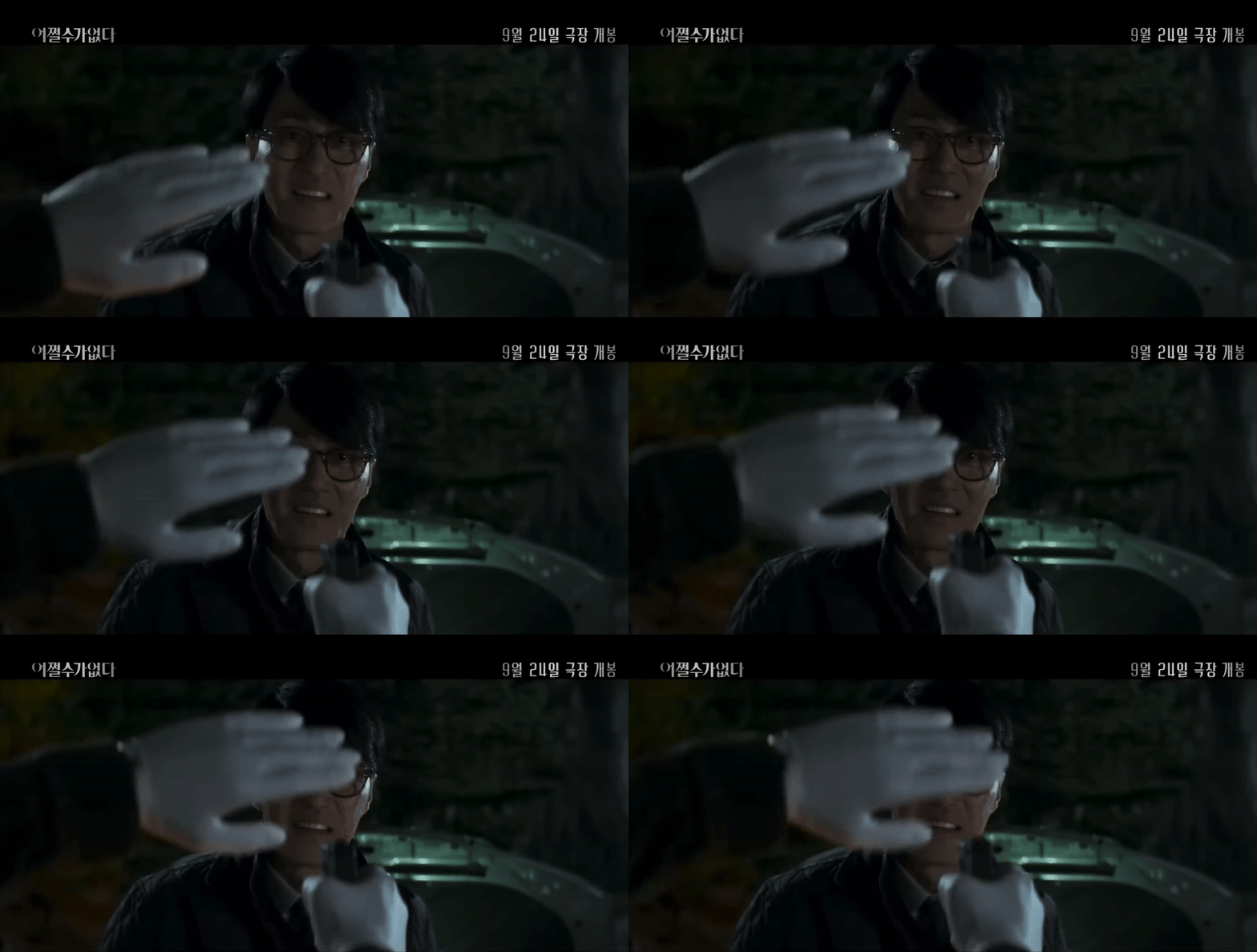
Probably one of the most talked-about films at the recent Venice Film Festival, Park Chan-Wook’s newest joint No Other Choice has its Bay Area premiere at MVFF ahead of its theatrical release later this year. With an A-list cast toplined by Lee Byung-Hun (Squid Game; Mr. Sunshine; A Bittersweet Life) and Son Ye-Jin (Crash Landing On You: The Pirates), the film is a black comedy about a white-collar worker (Lee) whose world is turned upside down when he suddenly loses his cushy corporate job. As expected in a Park film, things go sideways quickly. No Other Choice garnered a long standing ovation (reported as anywhere from six to nine minutes) at Venice and has presold to 200 countries.

Taiwan represents at MVFF with Left-Handed Girl (dir. Shih-Ching Tsou), another festival favorite that premiered at Cannes. Set in the night markets of Taipei, the film follows a single mother and her two daughters as they navigate life in the big city. The film is Taiwan’s nominee at the Academy Awards for Best International Feature.

Diamond Diplomacy (dir. Yuriko Gamo Romer) looks at the popularity of baseball in Japan as well as among the Japanese American community, exploring the ways that the game reflected and facilitated US-Japan relations both on and off the field. An encyclopedic look at its topic, the film spans more than 150 years from just after the Civil War to the present day, with appearances by Babe Ruth, Joe DiMaggio, Ichiro Suzuki, Masanori Murakami, and many more. The film is an intriguing examination of how sports, politics, celebrity, and soft power intertwine.
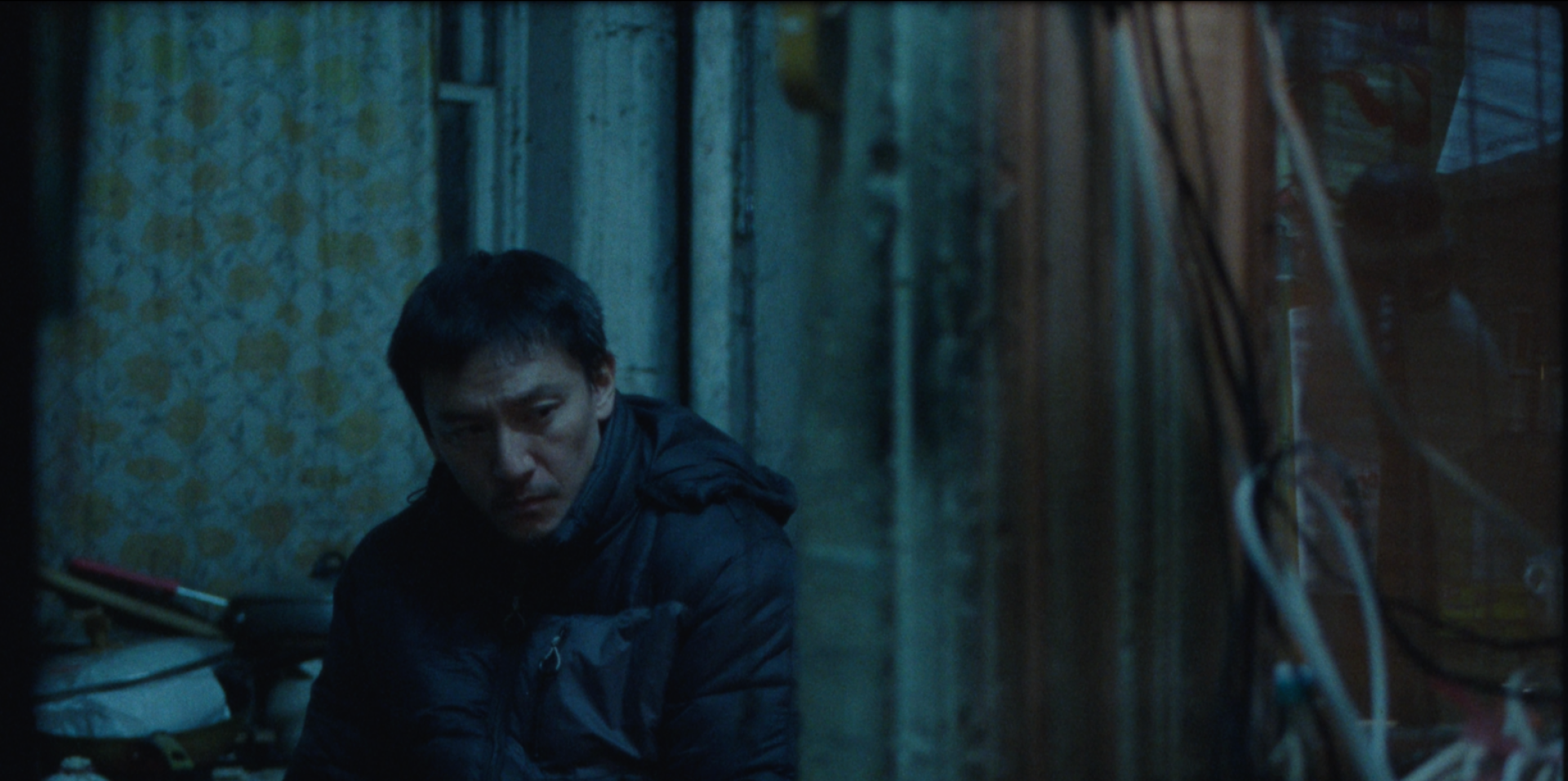
Chang Chen (A Brighter Summer Day; Crouching Tiger, Hidden Dragon; The Soul) stars in Lloyd Lee Choi’s directorial debut, Lucky Lu, which also premiered at Cannes. The film follows a New York City delivery driver, played by Chang, through a harrowing series of events as he roams the city in search of an acquaintance who’s run off with a large sum of his money.
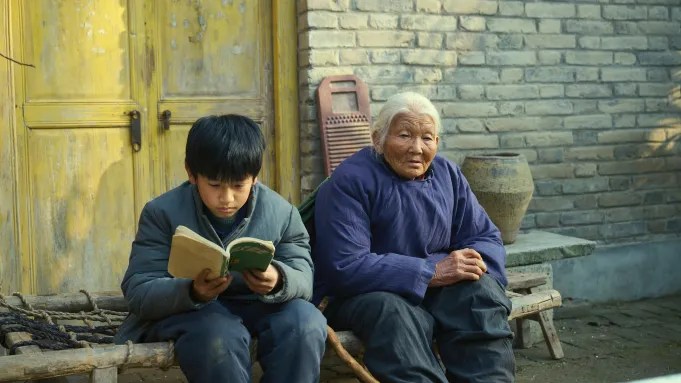
Living The Land premiered at the Berlinale last February where director Huo Meng won the Silver Bear for best directing. The film is set in 1991 and looks at life in a small village in China as its inhabitants live through the vast changes in the country at the time.
Along with these feature films there are a plethora of shorts by Asian and Asian American directors among the festival’s several shorts programs. It’s a great chance to see these films in the friendly confines of MVFF, since unlike the feature films many of them might not get widespread distribution.
All in all, this year’s MVFF is an excellent opportunity to catch the newest and hottest Asian/American movies.
Don’t Let Me Be Misunderstood: Carol Doda Topless At The Condor film review

San Francisco’s North Beach is right next to Chinatown, so growing up in the Bay Area I vividly remember seeing the giant neon sign at the Condor Club at Columbus and Broadway every time my family made the trek to the city for a wedding banquet or a red egg party. I always wondered who the woman in the billboard was and why she had bright red lightbulbs on her bra but of course it was not to be discussed with my parents or any other adults who happened to be driving the car. Once I got older I learned who Carol Doda was in a general sort of way but I didn’t know too many details about her life or how she came to have her likeness in lights at a club in North Beach, so I was happy to learn more via the new documentary, CAROL DODA TOPLESS AT THE CONDOR (dir. Marlo McKenzie and Jonathan Parker), which takes its name from that very neon sign that mystified me as a kid. Doda started her career as a go-go dancer and cocktail waitress there back in the early 1960s and when she became the first performer to go topless in 1964 she became a sensation.
The film does a good job evoking the time and place when San Francisco was the hippest place around. In the early 60s the beatniks were fading away and the hippies had not yet taken over, but San Francisco was still the place to go for vacationing Midwesterners looking for edgy entertainment. Doda was at the center of the scene and people lined up around the block to see her dance and sing in her g-string. The film tells her story through interviews with Doda’s contemporaries as well as from archival interviews with Doda herself (she died in 2015) and features copious amounts of archival footage from back in the day.

For the most part, like most biographical documentaries the film emphasizes the positive. It hints at a bit of the darker side of Doda’s story including her unhappy marriage at a young age and her estrangement from her children from that marriage and there is one scary shot of the very large needle used for silicone breast enhancement (Doda went from a 34B cup to a 44DD using silicone). There’s also a harrowing tale of a fellow dancer who developed gangrene in her breasts because the silicone blocked her milk ducts when she tried to nurse her infant, but the film isn’t an expose of the wrongdoings of the boob job industry. Instead it focuses on the perspective of Doda and the other dancers interviewed who describe the financial and personal freedom that topless (and later bottomless/nude) dancing afforded them. The movie frames Doda as a proto-feminist who actively chose her profession and places her in the context of the sexual revolution, the Summer of Love, and the women’s liberation movement, arguing for the agency and self-determination of Doda and her fellow dancers.
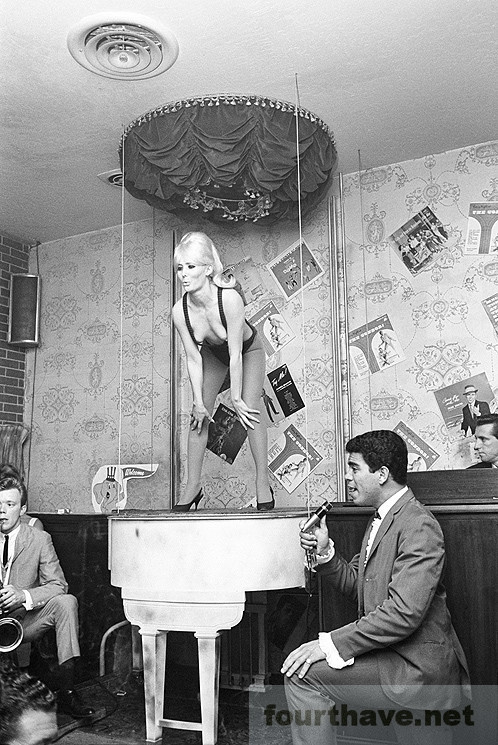
The film also traces the rise and fall of North Beach, which by the 1980s had become a much seedier place, as illustrated by the questionable death of Jimmy “The Beard” Ferrozzo, one of the managers at the Condor. Ferrozzo had some unfortunate encounters with organized crime and in 1983 he was crushed to death after hours one night by the hydraulic piano that Doda danced on top of in her show. The film also points out that in the 60s, couples and businessmen made up a big part of the audience at Doda’s shows, but by the 80s it was primarily single dudes, probably in raincoats.
All in all the film is a fascinating, wide-ranging and entertaining look at the era, with Carol Doda literally emboding that era. It’s a fun watch and it satisfied my curiosity about that giant neon sign and the woman that it represented.
Let It Shine: 2023 San Diego Asian Film Festival

Just got back from a quick and dirty one-day trip to San Diego to attend the San Diego Asian Film Festival (SDAFF). SDAFF is the biggest film fest in North America focusing on Asian/American films and artistic director Brian Hu and his team consistently program an outstanding blend of art house, genre, and indie films. Since I ride for Lee Byung-hun, I got the impetus for my trip when I found out that SDAFF was screening his latest film, CONCRETE UTOPIA (which is also South Korea’s entry in the upcoming Academy Awards). I had a bit of airline credit I had to use by the end of the year, plus a few points to spend on a rental car and a hotel so I made the decision to take a jaunt to sunny San Diego.

I arrived Sunday morning just in time to have some excellent chicken jook and to see a few friends at the filmmakers’ brunch. SDAFF is known for its great hospitality and this year was no exception. Then it was off to the movies, starting with the shorts program Astral Projections. MANY MOONS (dir. Chisato Hughes) was the standout film in this program, an essay film about the 1880s forced expulsion of almost the entire Chinese population of Humboldt county. Since I’d made THE CHINESE GARDENS about a similar occurrence up in Port Townsend Washington back in 2013 the topic was of particular interest to me. Hughes did a great job layering interviews, text. archival images, and other visual elements to question the facts and fictions around this notorious event.

After another pit stop at the reception area for a couple slices of pizza and some butter cookies I then saw the nouveau martial arts film 100 YARDS. Set in 19th century Tianjian, the film is co-directed by brothers Xu Junfeng and Xu Haofang, the latter of whom is known for writing Wong Kar-Wei’s THE GRANDMASTER, and this movie similarly attempts to re-imagine and revisit the martial arts genre, but with less success. Although the smoky greys and browns of the mis en scene create a striking visual tableau and the costumes, props and set design were all great, there were way too many fights and not enough character development to hold my interest. It was hard for me to care much about the main character’s daddy issues, although Jacky Heung and Andy On brought the skilz to their fight scenes.

I then moved on to Yu Gu’s documentary, EAST WEST PLAYERS: A HOME ON STAGE. As Gu notes, she had less than an hour to cover nearly sixty years of the history of the legendary and influential Los Angeles-based Asian American theater company, but the film does an excellent job of doing just that. Gu pairs older and newer veterans of EWP such as George Takei, Daniel Dae Kim, James Hong, Tamlyn Tomita, and John Cho to discuss the significance of the troupe as a voice for Asian Americans in the theater. It was fun to see clips from the trove of archival footage of EWP as well.

By then I was contemplating how I would squeeze in time to grab a bite for dinner but decided to forgo eating to line up for the main event of my trip, CONCRETE UTOPIA. I first heard about this movie from my friend Anthony Yooshin Kim, who’d seen it at CGV in Los Angeles a few weeks prior. Unfortunately at that time there were no plans for a wider theatrical release in the US so when SDAFF announced it as part of its lineup I decided to catch it there, since I wanted to see it on the big screen. A dystopic story about the residents of the only apartment building left standing after a massive earthquake levels Seoul and starring A-listers including my man Lee Byung-hun, Park Bo-young, and Park Seo-jun (who makes his US debut in THE MARVELS this year), the movie did not disappoint. The film has everything that makes South Korean cinema so pleasurable—outstanding special effects, brilliant acting, imaginative storytelling, well-drawn, complex characters, and sharp social critique. Lee Byung-hun does an outstanding job modulating his character, making his character arc compelling and believable. Park Seo-jun and Park Bo-young are also great as a young couple whose lives and values are literally shaken up and turned upside down by the catastrophe. Despite its fantastical premise the movie never wavers in its examination of humanity under extreme duress.

CODA: This past week I had the fangirl pleasure of joining a zoom press conference for CONCRETE UTOPIA that featured Lee Byung-Hun and director Um Tae-hwa. It was fun to share the same virtual space as Lee, even if we didn’t directly interact. I tried to restrain my cyberstalker stanning as best I could but I’m not sure if I was entirely successful. CONCRETE UTOPIA is set to open in New York and Los Angeles on Dec. 8, and will go into wide release across North America the following weekend.
A More Constructive Use of Leisure Time: CAAMfest 2023 review
I had an interesting conversion recently with a friend who’s worked in the independent Asian American film community for a long time. He postulated that in some ways, Asian American film festivals have achieved everything they set out to do when they first started up back in the 1970s, which to him meant increasing the visibility and voices of Asian Americans in the US filmmaking landscape. In some ways I think he’s on target, with Everything Everywhere All At Once winning the Best Picture Oscar this year and streamers regularly programming Asian American content of all types. So where do we go from here? The 2023 CAAMfest shows all of the pros and cons of Asian American narrative plenitude.

CAAMfest opening night film, Joy Ride (dir. Adele Lim), is a great example of what happens when Asian American voices are mainstreamed—namely, that we’ve come far enough that we now have silly sex comedies from an Asian American perspective. I didn’t hate this movie and I did laugh in some parts but to my mind it was pretty predictable and pretty much lacking in emotional depth of any sort. The cast works hard and is charming and agreeable but all of their hard work can’t disguise the film’s sloppy story construction and gaping plot holes. Twenty years ago we all would’ve eaten this kind of movie up as progress but now that we’ve got a lot more options I feel less forgiving about this kind of simplistic execution. We don’t necessarily have to support representation for the sake of representation.

Similarly, Land of Gold (dir. Nardeep Khurmi), about a Sikh American long haul trucker who acquires a young Mexican American stowaway in his rig, is told in fairly conventional strokes. Currently airing on HBO Max, the film does feel like a made-for-TV movie in its standard narrative beats. Lead actor/director/writer Nardeep Khurmi is solid as the truck driver with some family issues to work out but I was very annoyed by child actor Caroline Valencia as the stowaway. She’s the kind of precocious and self-assured kid performer who feels like she’s been taking tap-dancing and voice lessons since she was wee and thus lacks any discernible authenticity as an actual child. But other reviewers have praised her performance and Land of Gold won both Best Narrative and the Audience Award at CAAMfest so what do I know? Again, twenty years ago this film would have been groundbreaking but now it seems less so to me. That said, I did love seeing the world of long-haul truckers and appreciated the small details, like the fact that every truck stop now serves Indian food and that there are homespun gurdwaras along the highway to allow the Sikh drivers to worship as needed.

More poetic and less formulaic is The Accidental Getaway Driver (dir. Sing J Lee), about an elderly Vietnamese driver for hire who gets caught up with three escaped convicts on the run in Southern California. The film does a good job connecting generational trauma with life on the lam, utilizing beautiful emotional dreamlike images and a gritty, dark mis en scene to create an unusual visual texture. Lead actor Hiệp Trần Nghĩa is great as Long, the driver who forms an unexpected bond with Tây (Dustin Nguyen), one of the convicts who is also Viet. Dustin Nguyen, who debuted as a teen star way back in the 1980s on 21 Jump Street, is excellent as the world-weary convict searching for a chosen family. He’s now sixty years old (!) and he’s come a long way from his heartthrob beginnings to become a sensitive and nuanced performer. Although at first it appears to be a crime film, with a noirish look and feel, the movie ultimately is about the relationships formed between the characters as they find solace and connections with each other.
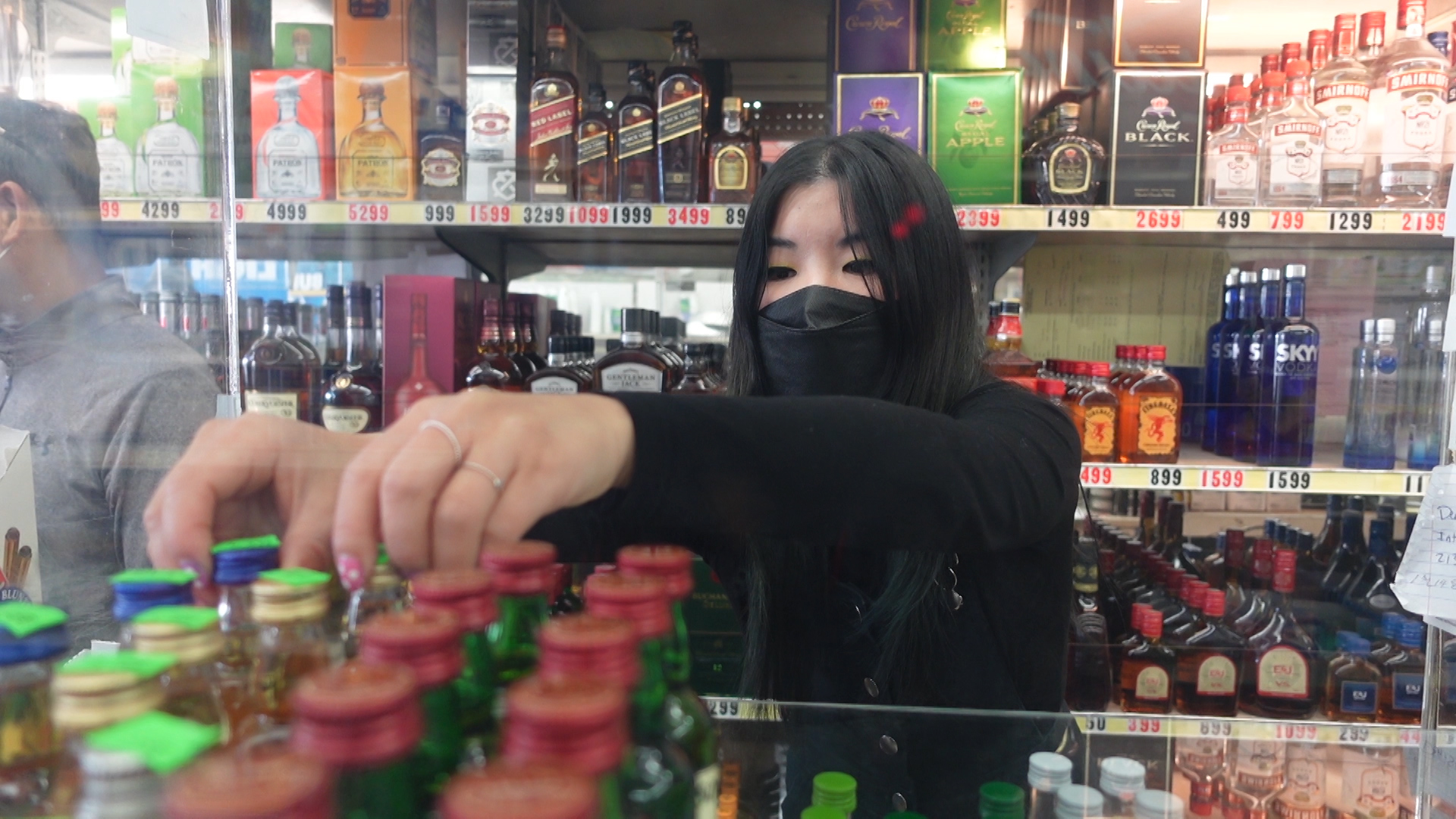
Liquor Store Dreams is So Yun Um’s debut feature documentary and she guides the film with a sure hand. The doc is an expansion of her short film Liquor Store Babies (2014) and the longer version allows Um to elaborate on several of the themes she touched on in her short. Um updates the story of her Korean immigrant parent’s immigration experiences in the US to include pandemic era, expanding her scope to include a thread on reconciliations between black & Korean communities in Los Angeles. Her kind and smiley Dad is a healing presence throughout the film.

Another example of how Asian American voices have reached the mainstream, Jeanette Lee vs was produced by ESPN for their 30 for 30 series of profiles of sports figures. Director Ursula Liang brings a decidedly Asian American perspective to the story of Korean American Jeanette Lee, aka The Black Widow, who in the 1990s was one of the most famous and popular professional pool players in the world. Liang describes the many obstacles Lee faced to reach success in her sport including childhood scoliosis and a battle with cancer later in life, as well as the racism and misogyny she dealt with throughout her career. Liang also includes a moving interview with Lee’s elderly mother who describes her fear that her daughter will predecease her. By focusing not only on Lee’s professional journey but her struggles with white supremacy and patriarchy Liang injects a bit of Asian Americanism into a doc made for a general audience.

Twelve Days, Hong Kong director Aubrey Lam’s dramatic romance had no edge. The story, about a doormat wife and her asshole husband, is an AITA post come to life. It’s hard to feel much sympathy for either character since both the husband and wife are ciphers with no interior lives or motivations. With all of the interesting indie films coming out of Hong Kong these days it’s telling that this sleek, vacuous and politically inoffensive piece of aggravation is what the Hong Kong Film Council chose to showcase.

The uncatagorizable hybrid feature Starring Jerry As Himself (dir. Law Chen) was one of my favorite films from the festival but it’s impossible to explain this film’s appeal without spoiling it. Suffice to say I found it entirely satisfying and completely unpredictable, with dramatic music, solid performances, and good cinematography that makes good use of its Florida location, where nothing is as it seems and everything is fleeting and unreadable.

Wisdom Gone Wild, Rea Tajiri’s latest experimental documentary, is a lovely, thoughtful, and surprising portrait of Rea’s aging mom and her progression into dementia. The film shows dementia as a blessing that can become a new language and way of perceiving and combines a gorgeous sound design with home movies, contemporary footage, archival photos, a spare voiceover and Rea’s mom’s own gems of perception. I especially liked the evocative use of midcentury songs such as Smoke Gets In Your Eyes and other standards from the American songbook. The film is a brilliant example of how to say more with less and how to have faith in your viewers’ ability to discern meaning without excessive explanation. To my mind it is really the best thing in this year’s festival. Wisdom Gone Wild’s freeform, improvisational structure, guided expertly by Rea’s accomplished, confident hand, results in a film that’s not afraid to take risks and make bold and surprising choices.
Rea Tajiri’s documentary is the kind of film that I want to see from Asian American cinema in the 21st century, and not just horny road trip movies. I hope that we don’t simply aspire to insert Asian American characters into the same old genre movies. I want to be confounded and surprised by Asian American movies, not shown the same stories we’ve seen before. Otherwise we may find Asian American filmmaking to be obsolete and irrelevant, as it becomes just another cog in the commercial moviemaking machine.
Summum bonum: 2023 SFFILM festival

The 2023 edition of the SFFILM Festival took place this year in mid-April , with in person screenings in San Francisco and the East Bay. This was a streamlined version of the festival, with just two or three screenings of most films and taking place at just three venues, the Castro and CGV Cinemas in San Francisco and BAM/PFA in Berkeley, plus one show on Opening Night at the Grand Lake in Oakland. The number of programs was down from 105 in 2023 and 130 in 2022 to 96 this year. It was a bit trickier catching films but I managed to see three excellent non-fiction films, each of which challenged documentary filmmaking conventions.

With King Coal, director Elaine McMillion Sheldon creates a poetic elegy to Appalachia, at once dreamlike and hard as nails. The film is a stylistic departure from her earlier verite-style films Heroin(e) and Recovery Boys, both of which looked at the opioid crisis in the region where she was born and raised. King Coal blends observational filmmaking with several staged, unscripted sequences featuring two young girls and was shot in the heart of the heartland where coal mining was the backbone of the economy for decades. The film is a fascinating hybrid that sympathetically portrays the plight of a region that has long been exploited for its natural resources, at great human cost. King Coal does make the case that white working class people are victims of capitalism, which may skirt a bit too close to arguments about “economic anxiety,” ignoring the presence of white privilege. But McMillion Sheldon’s cinematic vision is so compelling and so lyrically realized that in this case I’m willing to overlook a little bit of societal myopia.
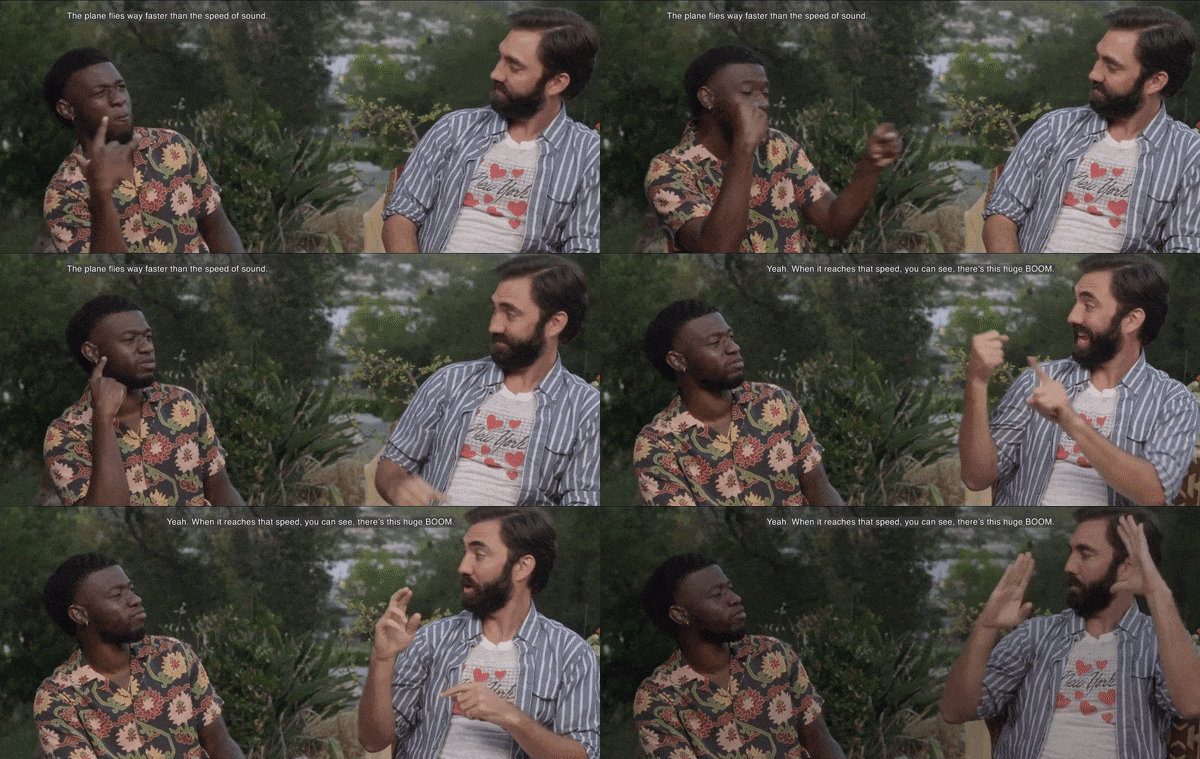
In The Tuba Thieves director Alison O’Daniel, who is hard of hearing, creates a film that questions the presence and absence of sound from the perspective of mostly Deaf characters. As might be expected from its title, the film takes as a jumping off point a series of thefts of tubas from Los Angeles area schools over the span of a few years, but its scope is wide-ranging and only tangentially touches on those events. The Tuba Thieves consists of several short vignettes that look at sound and silence, including a dramatization of the premiere of John Cage’s 4’33” to a somewhat bemused audience in upstate New York, archival footage of the organizers of Prince’s 1984 concert at Gallaudet University (the famous institution for Deaf and hard of hearing students), a recreation of a concert at the legendary San Francisco punk venue The Deaf Club, and parallel narrative threads focusing respectively on a Deaf drummer and a hearing teenager in a marching band whose tubas are among the stolen items referenced in the film’s title. O’Daniels’ film makes creative use of open captioning, creating poetically descriptive titles that enhance and embellish the sounds and dialog in the film.
Another particularly telling element is the recurring discussion of sonic booms, which are created when an aircraft travels faster than the speed of sound. Instead of including the actual sound of the phenomenon, O’Daniels instead shows pictures of planes breaking the sound barrier. In these ways the film privileges the perceptions and points of view of the Deaf and hard of hearing community. The result is a fascinating take that draws attention to what most hearing people take for granted—the way that sound interacts with the environment and with daily life.

Milisuthando, Milisuthando Bongela’s semi-autobiographical eponymous essay film, is a long and dense look at South Africa just before and just following the end of apartheid. Comprised of much archival and broadcast footage, personal reminiscences, some sit-down interviews, and the filmmaker’s own astute observations in voiceover, the film explores South Africa’s fraught and convoluted history of race relations. Milisuthando examines a multitude of topics including Nelson Mandela, white guilt and white privilege, school integration, and the perils and pleasures of interracial friendships, among many others. Bongela allows many passages in her film to run a bit longer than may be comfortable to viewers accustomed to the rapid pace of most commercial films, a technique that works to good effect in both stimulating introspection and creating discomfort. It’s a good film and one that I plan to revisit to tease out more of its nuances.
NOTE: SFFILM had most of its San Francisco screenings at CGV Cinemas (formerly the AMC 14), an outpost of the huge South Korean cinema chain, which opened in 2021 in the middle of the pandemic. The theater was my go-to whenever I wanted to see a blockbuster Hollywood or Korean movie all by myself and the handful of times I saw a film there there were usually about a half-dozen other customers in attendance. Once or twice I was the only person in the entire theater (and possibly in the entire multiplex) and for some reason the venue either didn’t have or never turned on the air-con, which made it much less appealing to go to. For whatever reason, business has continued to not be good and in late February CGV announced that it would be closing the San Francisco branch as of March 1, with sporadic events such as SFFILM continuing in the space. With the future of the Castro Theater still in limbo and the closure of the last movie theater in downtown Berkeley in January 2023, big-screen moviegoing in the Bay may be very limited in the future.
Deeper Into Movies: San Francisco Jewish Film Festival 42

The San Francisco Jewish Film Festival just completed its 2022 run, which marked a return to in-person programming after two pandemic years during which the festival was almost exclusively online. As usual the programming spanned a wide range of genres and films.

The festival opened with the Israeli narrative, Karaoke, which looks at a middle-aged Tel Aviv married couple whose lives are upended when a swinging bachelor moves into the penthouse of their apartment building. The film is a subtle study of a seemingly banal and ordinary couple, unobtrusively revealing its story with restraint and insight. There’s a whisper of queerness that’s too understated to be called a twist but the information adds complexity to the overall effect of the film.

Another narrative, Haute Couture, is much more conventional and much less successful in its storytelling. Although beautifully shot and nicely acted, the film lacks much depth in its characterizations and is at its core deeply problematic. The story follows Esther, a seamstress in the Dior fashion house who meets Jade, a streetwise young French Arab woman, and takes her under her wing by giving her an apprenticeship at Dior. Though on the surface Haute Couture seems forward-looking by including actual Arab characters in a film set in France, most of the characters’ various cultural identities are plot devices that are quickly skimmed over, including a token trans character who primarily serves as window dressing. Even Esther’s Jewish identity is quickly introduced but ultimately irrelevant to her actions. Esther also utters some pretty egregiously racist comments, but the film uses the old trope of including an even more racist character to make Esther seem less offensive by comparison. Structurally, the movie races from one contrived plot point to the next, and Jade’s worshipful acceptance of her “rescue” from her ghetto roots reeks of white saviorism.
More successful were several documentary and essay film selections in the festival. JFF Director of Programming Jay Rosenblatt is a noted experimental filmmaker (his most recent accolade being an Academy Award nomination for Best Short Documentary) so it’s no surprise that the festival included films that depart from the standard narrative or documentary fare.

Oakland resident Pratibha Parmar’s My Name Is Andrea explores the life and legacy of radical feminist theorist Andrea Dworkin. Dworkin’s a controversial figure and has been reduced to a cartoon character over the years so revisting her work is a revelation, and the film showcases her charismatic presence and her unrelenting examinations of misogyny in contemporary US culture. Parmar re-enacts key moments in Dworkin’s life as played by several different actors including Ashley Judd and Christine Lahti, interspersed with archival footage of Dworkin herself in all her astute, well-spoken, and passionate glory. The film is visceral, gripping and ultimately brilliant and makes a strong case for the continued relevance of Dworkin’s perspective and theories on violence against women—she ain’t wrong, people.

A more conventional documentary, Bernstein’s Wall (dir. Douglas Tirola) looks at the life of legendary composer and conductor Leonard Bernstein as told almost exclusively in Bernstein’s own words. The film is archival archival archival, with Tirola taking a trove of footage and shaping it into a cohesive, engaging narrative. Although Bernstein himself never spoke publicly about his queerness, the film also includes excerpts from private missives between various intimates including mentor Aaron Copeland, Bernstein’s siblings, and his depressed wife, who describes herself as “the governess.” Nicely done and eminently watchable, the movie paints a respectful picture of Bernstein as a driven, ambitious, and somewhat frustrated artist whose consuming career may not have been very kind to some of the people closest to him.

In A Reel War: Shalal, director Karnit Mandel describes her experience trying to track down the whereabouts of the lost film archives of the Palestinian Liberation Organization that were seized by Israel during the 1982 Lebanon war. This incisive essay film emphasizes the importance of images in cultural memory and the way that cultural erasure and forced amnesia act as a forms of imperialism.

Babi Yar: Context, focuses on the genocide of the Jews in Ukraine during World War II. Ukrainian director Sergei Loznitsa (winner of the JFF Freedom of Expression Award) makes the case that residents of Ukraine were complicit in one of the most infamous Nazi atrocities, the 1941 massacre of nearly 34,000 Jews who over the course of two days were shot and buried in the Babi Yar ravine near the city of Kyev. The film, which is completely without narration, tells its story exclusively through archival footage and a reconstructed sound design. Although the evidence is circumstantial, Loznitsa deftly makes the argument for Ukranian complicity through footage such as the hero’s welcome that Nazi officials recieved in Ukraine and cheerful Ukranian women and children digging mysterious trenches. These are later followed by chilling testimony of both Jewish survivors and German perpetrators of the executions who described the massive scale of death. Although the film skirts toward atrocity porn, it nonetheless makes a cogent argument for the Ukranian collaboration in the “holocaust by bullets” that occurred at Babi Yar.
Love Is The Only Way (愛是唯一): Taiwan Showcase at Frameline 45

Frameline 45 is in full swing and this year’s festival marks a return to limited in-person screenings, along with a full slate of programs available to stream online.
This year’s program includes a segment focusing on films from Taiwan. The first Asian nation to legalize same-sex marriage, Taiwan is one of the most queer-friendly countries in the region, as evidenced by its large and popular Pride parade every year.

Frameline 45 includes several features and shorts from the island country, including the gender-bending Shakespeare adaptation As We Like It (揭大歡喜), directed by Hung-i Chen and Muni Wei. Loosely based on As You Like It, The Bard’s iconic cross-dressing play, the film takes place in a slightly futuristic Ximending, one of Taipei’s artsy hipster neighborhoods, which in the film is a no-internet, gender-free zone. In a twist on the Shakespearean tradition of excluding women from performing on the stage, the entire cast is female. The players are cute and charming queer folks working on relationship issues and the film’s mood and tone are a sweet celebration of finding true love.

On a much more poignant tip is Dear Tenant (親愛的房客), directed by Cheng Yu-chieh (鄭有傑), which is a delicate and sensitive story of a man caring for his dead lover’s son and sick mother. When the mother passes away the legal complications of his unclear status act to prevent him from continuing to care for the son. The film is nicely wrought, with sensitive performances from the leads including Mo Tzu-yi (莫子儀), and Chen Shu-fang (陳淑芳), both of whom acting awards at the 57th Golden Horse Awards last year, as well as Runyin Bai as the 9-year-old You-Yu. Neither overly sentimental nor melodramatic, this dramatic narrative explores the gray areas of the law and biases against gay couples when the custody of a child is involved.
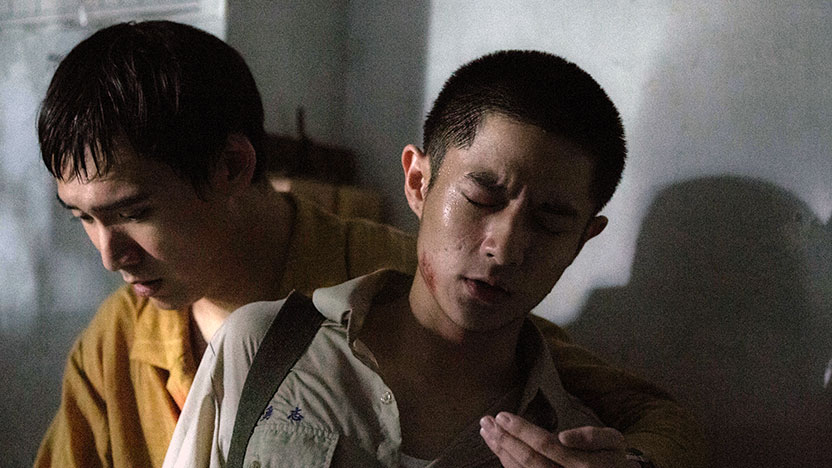
The short film program Taiwan Shorts, which is streaming for free, includes four films that are very different from each other. Unnamed (未命名) directed by Gao Hong & Chang Chun-Yu looks at the fluidity of queer identity through a naming conceit, with fun performances from the two young leads. Taiwan Pride for the World (世界驕傲在台灣), directed by Larry Tung, documents Taipei’s 2020 Pride Parade which due to the COVID-19 pandemic was possibly the only one to take place in the world that year. At the time Taiwan had a very low incidence of coronavirus and LGBTQ+ organizers there decided to hold a parade in honor of those around the world who couldn’t. Since then Taiwan’s COVID-19 situation has reversed so it’s bittersweet to view this film from a June 2021 perspective.
Hidden (迷藏), directed by Kuo Hsuan-Chi, follows a young teenage boy as he struggles to navigate the waters of his sexuality while trying to avoid predatory online hookups and catfishers. Undercurrent (宵禁), directed by Weng Yu-Tong, is almost dialog-free, creating a moody, smexy atmosphere. The film follows the smoldering cigarettes and smoldering desires of two young men playing cat-and-mouse during martial law in Kaoshiung.
Each of these films gave me the Taiwan feelz, as they emphasize the specific culture, language, geography, and architecture of Taiwan. The films include shots of the distinctive tile-covered buildings, the humidity and fog, the green mountains, the scooter-covered streets, and the neighbors bringing garbage out to the garbage truck in pink plastic bags, which are details that all scream Taiwan. The films are a window into Taiwan’s singular vibe and delineate the many distinctive elements that make up the island nation.
All films in the Taiwan showcase, which also includes Arvin Chen’s outstanding 2013 romcom Will You Still Love Me Tomorrow, will be streaming through June 27, 2021 on Frameline’s online platform.
Talent Is An Asset: 2021 SXSW Online, part one: Film Festival

When the COVID-19 tsunami hit the U.S. back in March 2020 Austin’s SXSW film and music festival was one of its first casualties. The entire event was dependent on live performances and screenings and with the country going into lockdown there was no chance it could happen that year, so the whole shebang was cancelled outright. But subsequent film festivals began pivoting to fully online and this year SXSW was an entirely online event, including films, music, conference panels, and networking. Luckily for me, this format also gave me the chance to attend my first SXSW and I ingested a huge amount of content from the comfort of my own home. Because of the sheer volume of performances that I consumed Imma split my review into the film side and the music side, starting with the cinematic treats I watched.
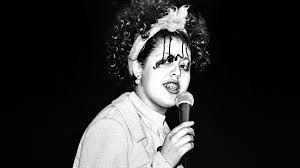
The festival included two documentaries about influential and innovative pop stars that have flown somewhat under the mainstream radar. Poly Styrene: I Am A Cliche looked at the life of the leader and vocalist of the legendary UK punk band X-Ray Spex. As a baby punk back in the 80s one of the best things about early punk and new wave was the presence of women of color such as Pearl E. Gates, Pauline Black from Selecter, and Poly Styrene. Poly was not only a punk icon but also a woman of color icon and it was great for me to have a Black woman role model who could belt it out with the best of them. The film traces Poly’s meteoric brilliance as the leader of X-Ray Spex at age 19, as well as her struggles with mental illness and her involvement with the Hare Krishna sect later in life. Told from the POV of her daughter Celeste Bell, who is credited as the film’s co-writer and co-director, the film interweaves her narration with a plethora of archival footage and photos. As a mixed-heritage child (or half-caste, the term that was in common usage at the time) raised by a single mother in 1960s Britain, Poly (nee Marianne Joan Elliott-Said) faced a fair amount of casual racism and ostracization. The film shows the range of Poly’s artistic endeavors outside of her singing career, including several passages from her journals (read by Ruth Negga), as well as her unique and idiosyncratic fashion sense which she developed in her teens and which she highlighted in her years as the face of X-Ray Spex. Celeste Bell’s somewhat mournful narration adds a gravitas to the film as she searches for the truth of her mother’s life and legacy. But throughout it all the story is driven by the power of Poly’s clarion voice and poetic vision.

The Sparks Brothers, directed by Edgar Wright (Shaun of the Dead; Baby Driver) explores the iconic cult band Sparks, utilizing a ton of archival footage, interviews with the band’s many admirers including Bjork, Giorgio Morodor, Todd Rundgren, and many more, accompanied by Sparks’ excellent and eclectic pop music. Emulating the cheeky and off-kilter attitude of its subjects, the film follows Russell and Ron Mael, the two brothers who founded Sparks, from their childhood in Southern California through their long and winding musical career. The film captures the brothers’ sardonic style as seemingly British invasion cult darlings (belied by their SoCal roots) with their first hit in the UK, This Town Ain’t Big Enough for Both of Us, through their survival in the fickle world of rock music in the more than four decades since. I’ve always been a fan of Sparks and their unique and twisted pop stylings, led by Russell Mael’s dramatic and operatic high tenor and Ron Mael’s sophisticated keyboards and songwriting, so this movie was a fascinating look at their career trajectory. Always ahead of the pop music curve, the film demonstrates the Mael brothers’ influence on disco, new wave, EDM, synth pop and much more. It also shows how their highly visual and cinematic presentation, with the more traditionally rock styled Russell contrasting with Ron’s odd Hitler/Chaplin persona, made them a perfect fit for the MTV era, when they scored their new wave hits The Number One Song In Heaven and Beat The Clock. Throughout the film their wit and intelligence shine through.
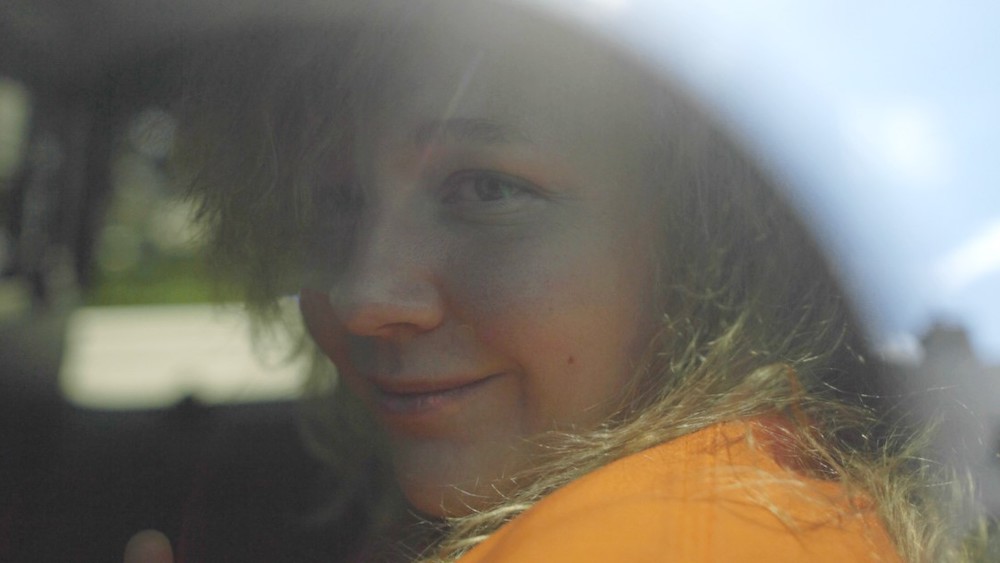
Two other docs in the festival looked at politics and current events. The United States vs. Reality Winner is a procedural agitprop doc ala CitizenFour, Laura Poitras’ Oscar-winning film about Edward Snowden, another famous whistleblower. Snowden even makes an appearance in this film, as do several other commentators who contextualize Winner’s case. The film follows Winner’s mom as she tries to get a fair trial for her daughter who has had the book thrown at her for exposing Russia’s influence on the 2016 US presidential elections. As with CitizenFour and other films of its ilk, The United States vs. Reality Winner has a definite opinion and relentlessly pursues it.

In contrast, Nanfu Wang’s documentary In The Same Breath, which looks at the beginnings of the coronavirus pandemic in Wuhan and in the US, is all about doubt and questioning and its lack of clear answers reflects the confusing times we’re still enmeshed in.Included in the film is some stunning security camera footage of the very earliest days of the pandemic in Wuhan that shows how quickly the virus spread and how unprepared health officials were in their initial response. The film beautifully expresses the ambiguity and uncertainty of the COVID-19 era while sounding a warning about the inherent untrustworthiness of governments both in China and the US.
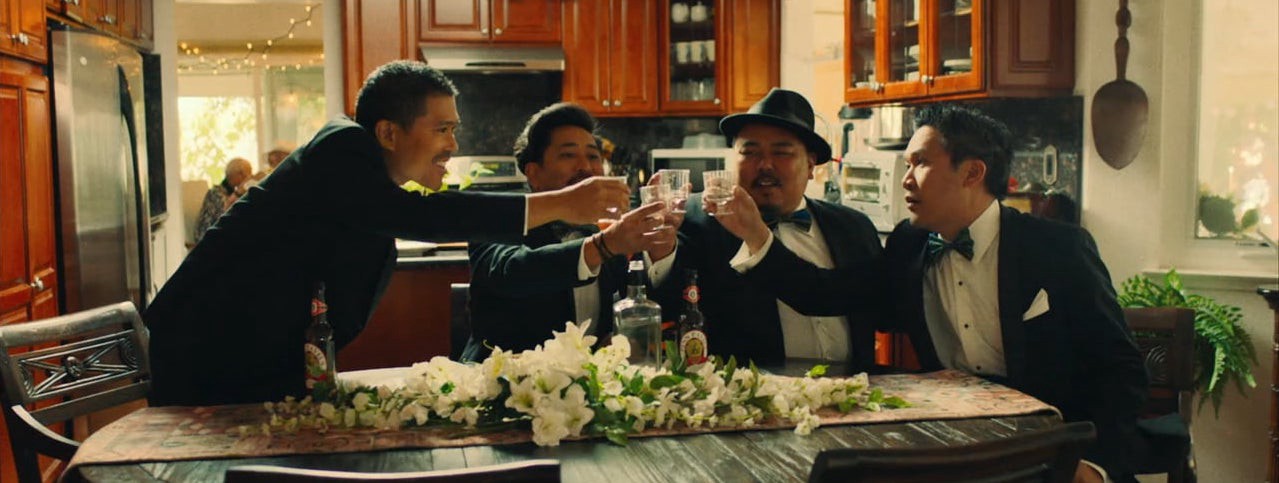
The Fabulous Filipino Brothers, Dante Basco’s directorial debut, is in some ways a spiritual successor to the iconic 2001 Asian American film The Debut. That movie, which starred Dante and also included appearances by his three brothers Dion, Derek, and Darion and sister Arianna, is much beloved in the Filipino American community for its lighthearted look at FilAm culture, traditions, and identity. The Fabulous Filipino Brothers is is similarly Filipino AF and it was interesting to watch more than 20 years after The Debut made its premiere. It’s set in Pittsburg, CA and loosely revolves around an upcoming wedding in a big-ass Filipino family. Many Bascos were involved in the making of this film, including the four Basco brothers in lead roles, with narration by Arianna. The film is a bit rough around the edges and never transcends its sitcom aesthetic, but all four brothers are talented performers and each does well in their respective vignettes. Their agile comic timing and ability to hold the screen makes me wonder why their careers didn’t take off after the success of The Debut, but as usual the answer is probably racism. A humorous side note: one of the characters is in a depressive funk which he deals with by composing atonal electronic music that sounds a bit like some of the stuff I heard at the SXSW music festival.

I also caught a couple excellent short films of the many that were included in the festival. Águilas, by Kristy Guevara-Flanagan and Maite Zubiaurre, follows a group of volunteers who scour the Sonoran desert near the Arizona border looking for the remains of those who have died attempting to migrate on foot to the US. A short, intense look at those who carry out this grim duty, the film is suffused with empathy for the people who have lost their lives traveling from their home countries as well as those who search for their last remains.
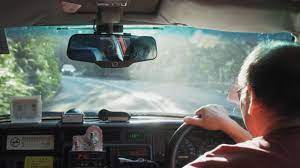
Red Taxi, by an anonymous director, utilizes interviews with cab drivers on both sides of the Hong Kong-Shenzen border that were shot during the massive 2019 Hong Kong protests. The short documentary provides an interesting contrast between the pragmatic hopefulness of the Hong Kong cabbies and their PRC counterparts, who for the most part don’t have much sympathy for people of Hong Kong who were speaking out against the government at the time. It’s an interesting snapshot of the times and shows the divide in opinion on either side of the border without judging or taking sides. It’s also telling that the director has chosen to be anonymous, reflecting fears of the oppressive new National Security Law in Hong Kong that effectively punishes residents for speaking out in any way against the Beijing regime.
Next up: Part two, in which I attempt to encapsulate the huge number of international performers I saw on the music side of this year’s SXSW.
The Beautiful Ones: Wong Kar-Wai retrospective at BAM/PFA
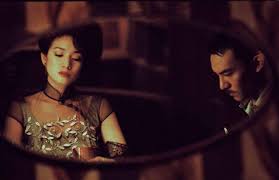
A cinematic treat dropped at the end of 2020 as the Lincoln Center in New York launched World of Wong Kar Wai, its retrospective of mostly 4K restorations of Hong Kong New Wave auteur Wong Kar Wai. The bulk of the series has traveled to various venues including the Berkeley Art Museum/Pacific Film Archive, where nine films are currently available for online viewing through February 28, 2021. The Roxie Theater in San Francisco is also showing seven films from the series through Feb. 25, 2021, including a screening of In The Mood For Love on Valentine’s Day at the Fort Mason Flix drive-in. Although it’s great that the films are available to view in all of their restored 4K glory, it’s bittersweet that audiences aren’t able to watch them on the big screen where they belong due to the ongoing COVID-19 crisis in the US.

I watched the BAM/PFA series in chronological order, and it was interesting to see the development of Wong’s signature style. His debut feature, As Tears Go By (1988), is a gangster film that stars Andy Lau Tak-Wah as Wah, a low-level triad in Mongkok who is constantly vexed by his triad brother Fly (Jacky Cheung), whose struggle with toxic masculinity conventions leads to much rash and insecure behavior.
Although the film loosely follows the trajectory of classic gangland films such as Mean Streets, in which the poor life decisions of one character leads to the downfall of his sworn brother, Wong’s filmmaking style had already begun to establish itself. The audacity of some of the shots, such as the focus on the sharpness of Andy Lau’s jawline or the beauty of a cigarette burning blue in the dark, heralds Wong’s trademark visual characteristics, as does his use of slow motion action, neon lights and silhouettes. The film also includes the breathtaking sexiness of Maggie Cheung and Andy Lau in their underwear wrestling on a bed in a hotel room, another element of Wong’s emerging style as he begins to sketch out his aesthetic.
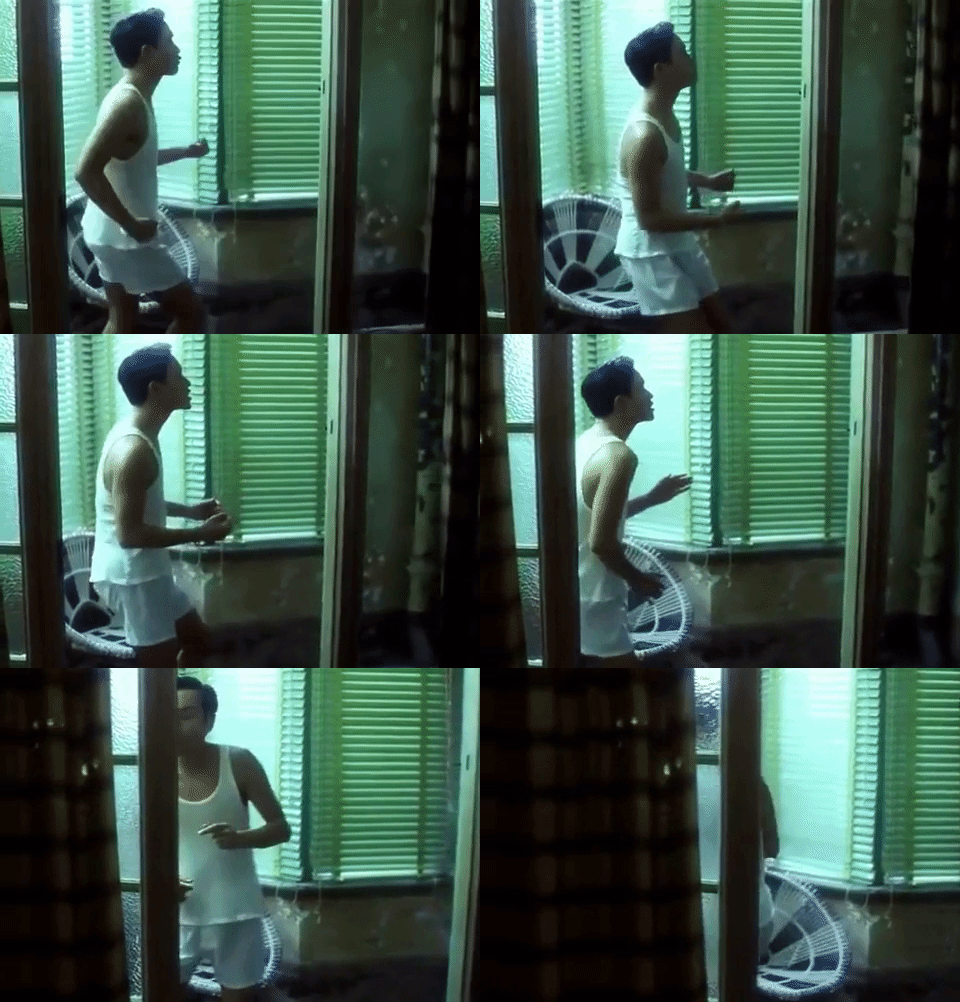
Wong’s stylistic elements came into sharper focus with his second feature, Days of Being Wild (1990). It’s a bit overwhelming to have a film populated with so many gorgeous movie stars at their physical peak, led by the sheer charisma and stunning beauty of Leslie Cheung in his prime and it really should be illegal to be that good-looking. Carina Lau holds her own as the feisty bar girl who gets involved with him. Maggie Cheung is mostly mopey and jilted in this one, though by the end of the movie she’s found her peace. Andy Lau is once again shockingly good-looking and photogenic–never has such a bone structure been so lovingly photographed. Jacky Cheung again plays the sad sack best friend, but here he’s much more restrained and nuanced. The movie closes with the famous mystery scene with Tony Leung Chiu-Wai in a very small hotel room preparing to go somewhere where he’ll need two packs of cigarettes and a deck of cards.

Chungking Express (1994) is still as fresh and exciting as the first time that I saw it more than 25 years ago. Light and airy, quirky and charming, with pitch-perfect performances, it captures Hong Kong’s day-to-day life without malice or darkness. Wong’s film explores the transience of life and the fleeting relationships in a big city where anything can happen and the world is open and free. Cinematographer Christopher Doyle establishes the iconic Wong Kar-Wai look with his lighting design alternating between the moody, neon-lit style of the first story and the bright, natural lighting of the second story. Once again Wong’s cast of topline movie stars, including Tony Leung Chiu-Wai, Brigette Lin Ching-Hsia, Faye Wong, and a 20-year-old Takeshi Kaneshiro, adds glamor and razzle-dazzle to the film.
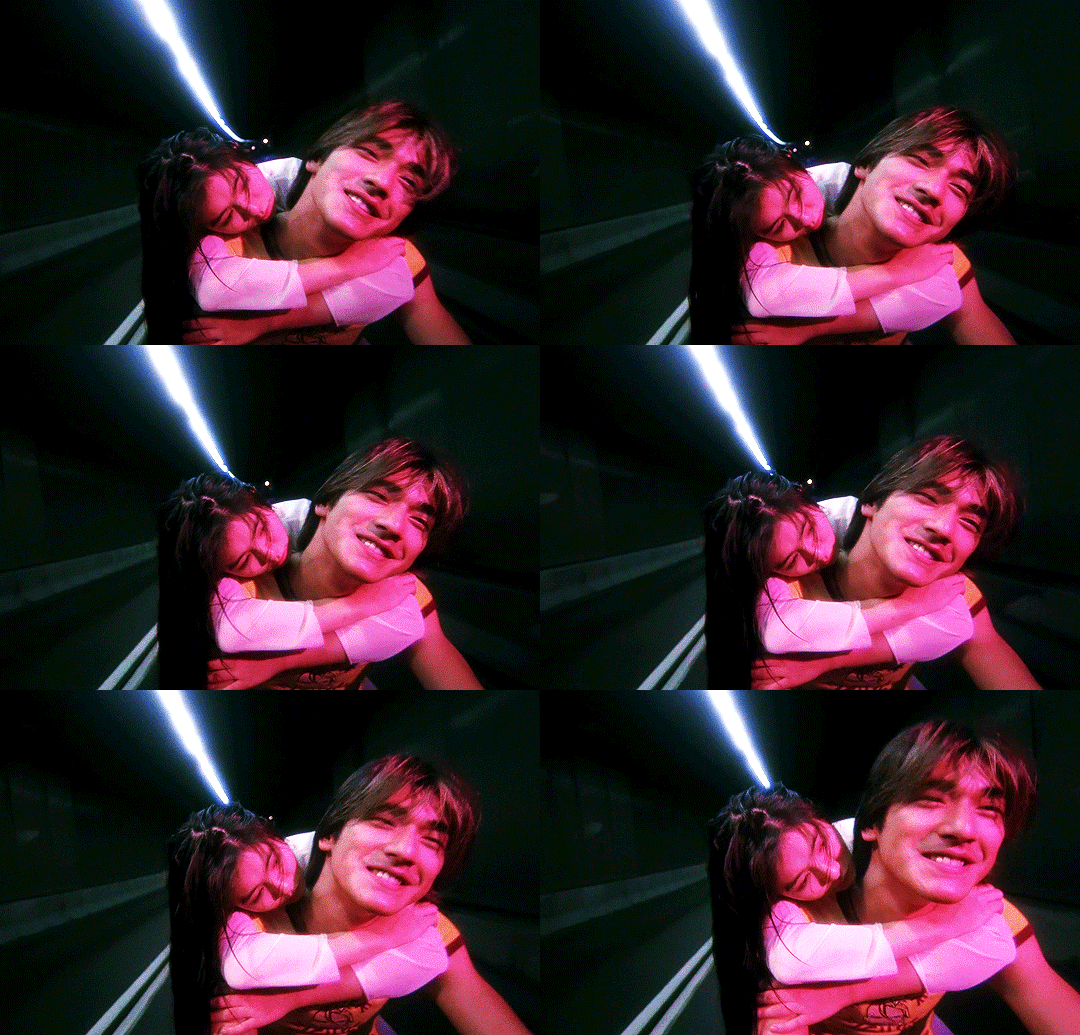
Fallen Angels (1995) is a much messier and less compact film than Chungking Express, full of neon lights, dutch angles, and rain-slicked streets. If Chungking Express was Wong’s renaissance masterpiece then Fallen Angels is his baroque turn, where all of his directorial tics are turned up to eleven. Karen Mok is in it too briefly and Leon Lai too much, but as in Chungking Express Takeshi Kaneshiro is quirkily incandescent. His character’s story is good enough to stand alone, with able support from a wacky Charlie Yeung and Chan Man-lei as his stalwart dad.
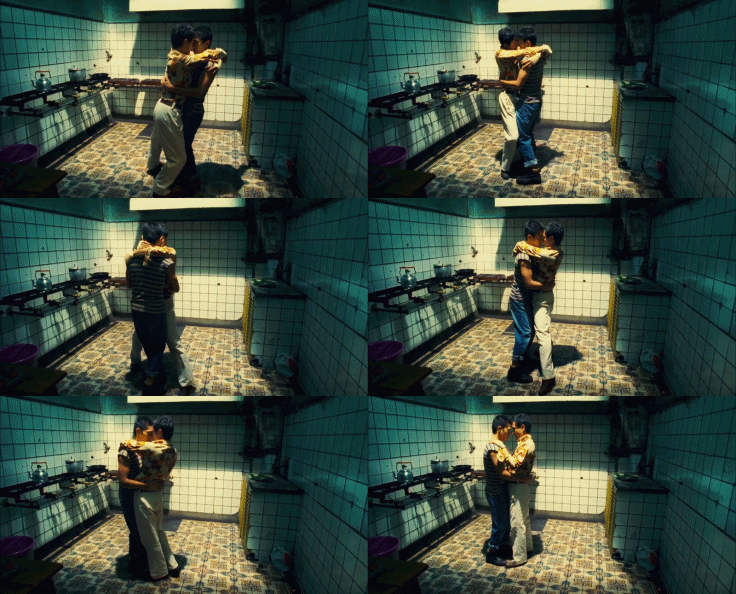
Although as full of visual bravado as Fallen Angels, Happy Together (1997) is a stronger film because its character development is more complex. Tony Leung Chiu-Wai is at his angsty best, conveying a kaleidoscope of emotions with a few flashes of his eyes, while Leslie Cheung is devastatingly effective as his mercurial lover. A gorgeous, moody film full of humanity, compassion, and sadness, this is Wong at his poetic best.

Trippy and elliptical, Ashes of Time Redux (1994/2008) holds up better than I recall from my initial viewing when the film was first released. All of the beautiful people are in this one (except for Andy Lau), including Jacky, Brigette, Charlie, Maggie, Carina, both big and little Tony, and Leslie as the lead character and narrator. Side note: why didn’t Heavenly King number four (Aaron Kwok) ever make an appearance in a Wong Kar-Wai movie? Too short and stocky? These things keep me up at night.
The odd narrative works if you let go of any expectation of linearity and it’s now quite amusing to see so many A-listers with their million-dollar faces obscured by matted hair, but there you go. Although when the film was first released martial arts purists were horrified by the blurry camerawork that wasted Sammo Hung’s action choreography, now it seems to all fit together with the tangled hair and blowing sands and Christopher Doyle’s grainy, oddly saturated cinematography.
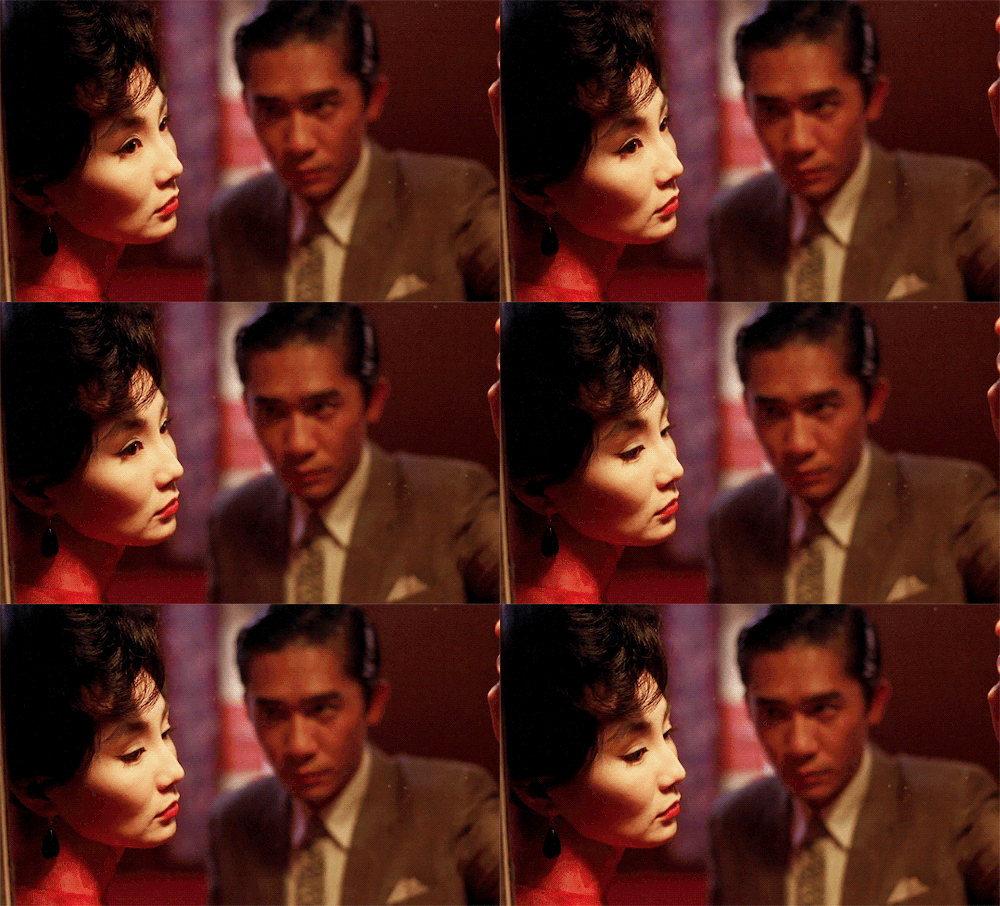
In The Mood For Love (2000) is perhaps Wong’s most acclaimed film, and justly so. All elements of the movie, from mise en scene to acting to cinematography to direction and editing, are stellar, led by Tony Leung and Maggie Cheung’s performances as star-crossed lovers. As with all of the 4K restorations in the series the digital remaster is sharp and beautiful, with the film’s saturated jewel tones shining through.

2046 (2004) is an example of what happens when a filmmaker is given an unlimited budget and full artistic freedom as the movie is obtuse, too long by at least thirty minutes, and could jettison its entire science fiction framing device. However, the main part of the film, set in the late 1960s and a loose sequel to In The Mood For Love, is great, with Tony Leung now a womanizing cad following his failed relationship in the earlier film. Zhang Ziyi as his call girl lover is dynamic and magnetic, matching Tony’s acting chops beat for beat . Along the way Gong Li, Carina Lau, and Faye Wong make appearances, though their characters don’t have much arc to speak of.
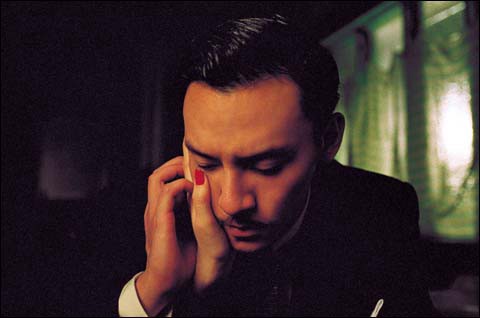
The BAM/PFA and the Roxie series both include the little-seen one-hour film The Hand (2004), which was a revelation to me as it was the only film in the program that I hadn’t yet seen. Originally released as part of the three-part omnibus Eros (along with segments by Michelangelo Antonioni and and Stephen Soderbergh), The Hand is a gorgeous meditation on class and gender divisions and unrequited love, and Wong goes all in with his cheongsam fetish. Gong Li as a courtesan falling on hard times and Chang Chen as her longtime admirer are amazing and the opening scene that the film takes its name from is a stunningly kinky set piece. The film makes a strong argument that Wong Kar-Wai should only make films set in the 1960s as the evocative art direction, from hair to costumes to set design, is on point and breathtaking.
Although this series emphasizes his auteurship, Wong Kar-Wai didn’t operate in a vacuum. His work was nurtured by the strongest film industry in Asia at the time, one that churned out hundreds of movies every year that were exported all over the region. In some way Wong’s films gave an entre into Hong Kong cinema to snobby cineastes who might have disdained genre directors like John Woo or Tsui Hark. This retrospective brings back memories of that brief shining moment when Hong Kong was the center of the cinematic world. It’s especially melancholy to consider through the lens of 2020/21, when the city has been so drastically changed by China’s brutal repression of free speech there.
Existence Is Longing: Wong Kar Wai
Berkeley Art Museum/Pacific Film Archive
December 11, 2020–February 28, 2021
Roxie Virtual Cinema
Available until February 25
Roxie Cinema
San Francisco
Drive-in screening of In The Mood For Love
Sunday, Feb. 14, 7pm
Fort Mason Flix

 beyondasiaphilia
Recent Comments