Don’t Let Me Be Misunderstood: Carol Doda Topless At The Condor film review

San Francisco’s North Beach is right next to Chinatown, so growing up in the Bay Area I vividly remember seeing the giant neon sign at the Condor Club at Columbus and Broadway every time my family made the trek to the city for a wedding banquet or a red egg party. I always wondered who the woman in the billboard was and why she had bright red lightbulbs on her bra but of course it was not to be discussed with my parents or any other adults who happened to be driving the car. Once I got older I learned who Carol Doda was in a general sort of way but I didn’t know too many details about her life or how she came to have her likeness in lights at a club in North Beach, so I was happy to learn more via the new documentary, CAROL DODA TOPLESS AT THE CONDOR (dir. Marlo McKenzie and Jonathan Parker), which takes its name from that very neon sign that mystified me as a kid. Doda started her career as a go-go dancer and cocktail waitress there back in the early 1960s and when she became the first performer to go topless in 1964 she became a sensation.
The film does a good job evoking the time and place when San Francisco was the hippest place around. In the early 60s the beatniks were fading away and the hippies had not yet taken over, but San Francisco was still the place to go for vacationing Midwesterners looking for edgy entertainment. Doda was at the center of the scene and people lined up around the block to see her dance and sing in her g-string. The film tells her story through interviews with Doda’s contemporaries as well as from archival interviews with Doda herself (she died in 2015) and features copious amounts of archival footage from back in the day.

For the most part, like most biographical documentaries the film emphasizes the positive. It hints at a bit of the darker side of Doda’s story including her unhappy marriage at a young age and her estrangement from her children from that marriage and there is one scary shot of the very large needle used for silicone breast enhancement (Doda went from a 34B cup to a 44DD using silicone). There’s also a harrowing tale of a fellow dancer who developed gangrene in her breasts because the silicone blocked her milk ducts when she tried to nurse her infant, but the film isn’t an expose of the wrongdoings of the boob job industry. Instead it focuses on the perspective of Doda and the other dancers interviewed who describe the financial and personal freedom that topless (and later bottomless/nude) dancing afforded them. The movie frames Doda as a proto-feminist who actively chose her profession and places her in the context of the sexual revolution, the Summer of Love, and the women’s liberation movement, arguing for the agency and self-determination of Doda and her fellow dancers.

The film also traces the rise and fall of North Beach, which by the 1980s had become a much seedier place, as illustrated by the questionable death of Jimmy “The Beard” Ferrozzo, one of the managers at the Condor. Ferrozzo had some unfortunate encounters with organized crime and in 1983 he was crushed to death after hours one night by the hydraulic piano that Doda danced on top of in her show. The film also points out that in the 60s, couples and businessmen made up a big part of the audience at Doda’s shows, but by the 80s it was primarily single dudes, probably in raincoats.
All in all the film is a fascinating, wide-ranging and entertaining look at the era, with Carol Doda literally emboding that era. It’s a fun watch and it satisfied my curiosity about that giant neon sign and the woman that it represented.
I Fall To Pieces: Bay Spa Korean Spa review

I just finished a two-week residency at the lovely Lucas Artists Program at Villa Montalvo in Saratoga, CA, where I worked on art, ate delicious food, and got to know a lot of deer. One of the little side perks of being in the South Bay was visiting Bay Spa, the newest Korean spa to open in the area. Located in Santa Clara, Bay Spa is just a bit too far for me to drive to from my house in San Francisco but it’s a quick 20-minute drive from Saratoga, so when January’s chilly damp had me craving a scrub and a soak, I booked a session there.
My scrub appointment was at the very start of the business day so when I arrived there were relatively few patrons on site. After a quick orientation tour of the facilities I left my clothes in the locker, took a shower, and happily immersed myself in the hot tub to soften up my epidermis. Unfortunately, some of the clientele didn’t shower before getting into the tub (which I’ve also witnessed at other Kspas in the US) so once I saw that I climbed out and dried off. Wash yourselves off before getting into a communal tub, people! It’s not a bathtub, ffs.
My scrub ajumma was about 10 minutes late so I was sad and lonely as the last person waiting in the hot tub area, but once she arrived and started the exfoliation my mood was much improved. After a vigorous thirty minutes my skin was rejuvenated and I happily moved on to the various dry sauna rooms in the jjimjilbang. There were a couple people having what they probably thought was an unobtrusive whispered conversation in the Himalayan salt room but in the small, quiet space it was really annoying, so I vacated and took up a brief occupancy in the jade room. But it was a very modestly sized sauna with only a couple small jade statues in the corners so I moved on to the last hot sauna, the clay room. The clay room was nice and quiet and had only one other person in it so I was able to fully enjoy the heat and silence. I finished up in the ice room, which woke me up and made me realize that it was time for a snack.
Bay Spa’s restaurant was open for business and the menu had everything from kalguksu to bingsu, but I opted for what I always get at the Kspa, which is spicy ramyeon. The broth was rich and flavorful, the noodles nice and chewy, and the three little dishes of banchan were tasty (though I didn’t finish the buckwheat jelly cubes, sorry). I did enjoy the kimchi and the spicy fish cake, which were a nice complement to the noodle soup. The noodle soup may or may not have been a very expensive bowl of Shin Ramyun Black but in my highly relaxed state I didn’t care.
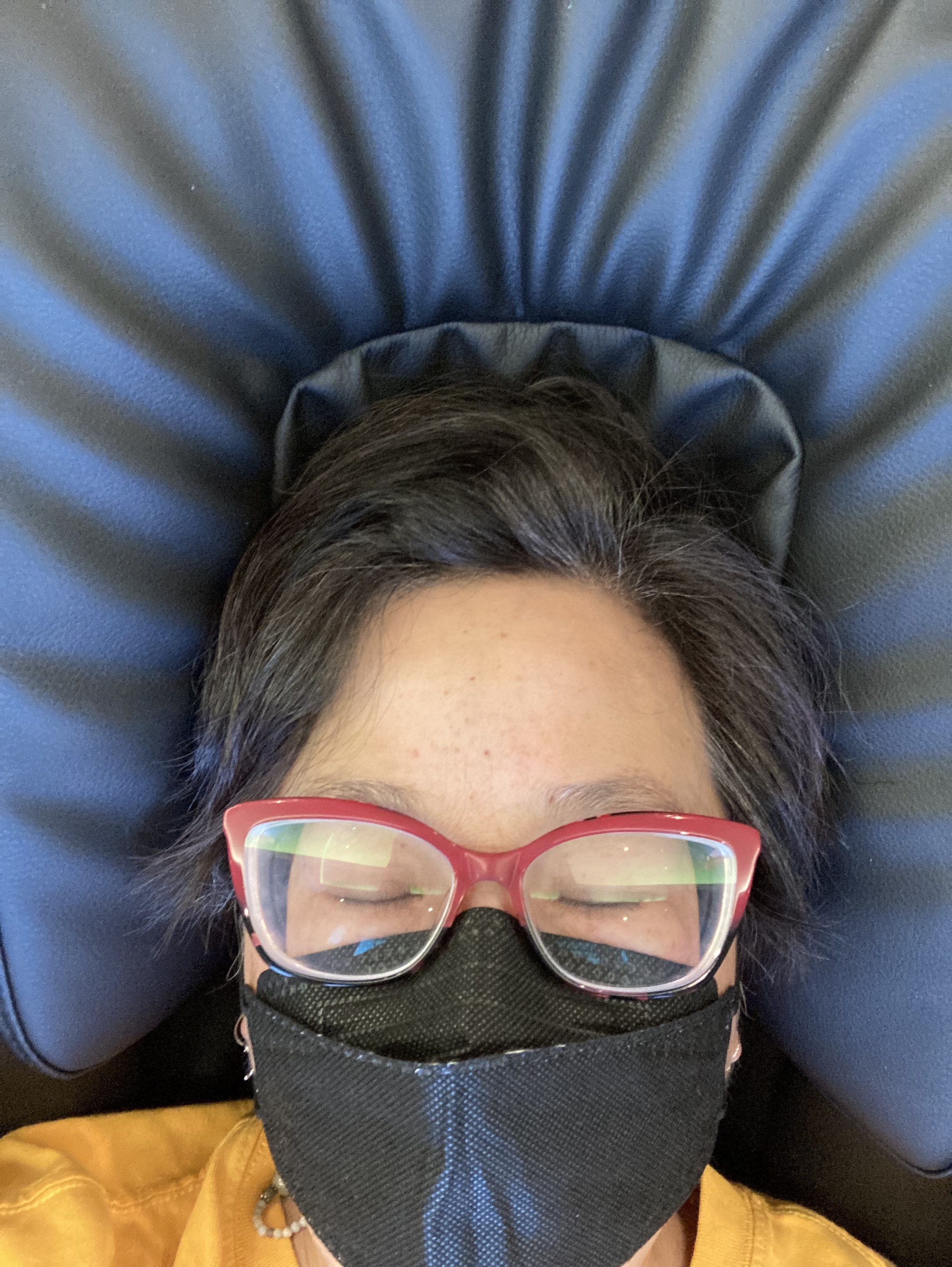
Following my tasty noodle snack I found my way to the massage chair room, which is a luxe bonus element of Bay Spa. There are probably about twenty or thirty of these fancy automatic massage chairs in the room, each of which has several preset options as well as customized settings. I did two 20-minute sets in a row, using the “relaxation” preset first, followed by the “yoga stretch” preset. Both were slightly different and a bit terrifying, since at several points in each session the chair clamps down firmly on your arms or legs. I suppressed my imagination and tried not to think about the possibility of the machine chair crushing my extremities and managed to relax and enjoy the sensation of the chair gently kneading and pummeling up and down my spinal column.
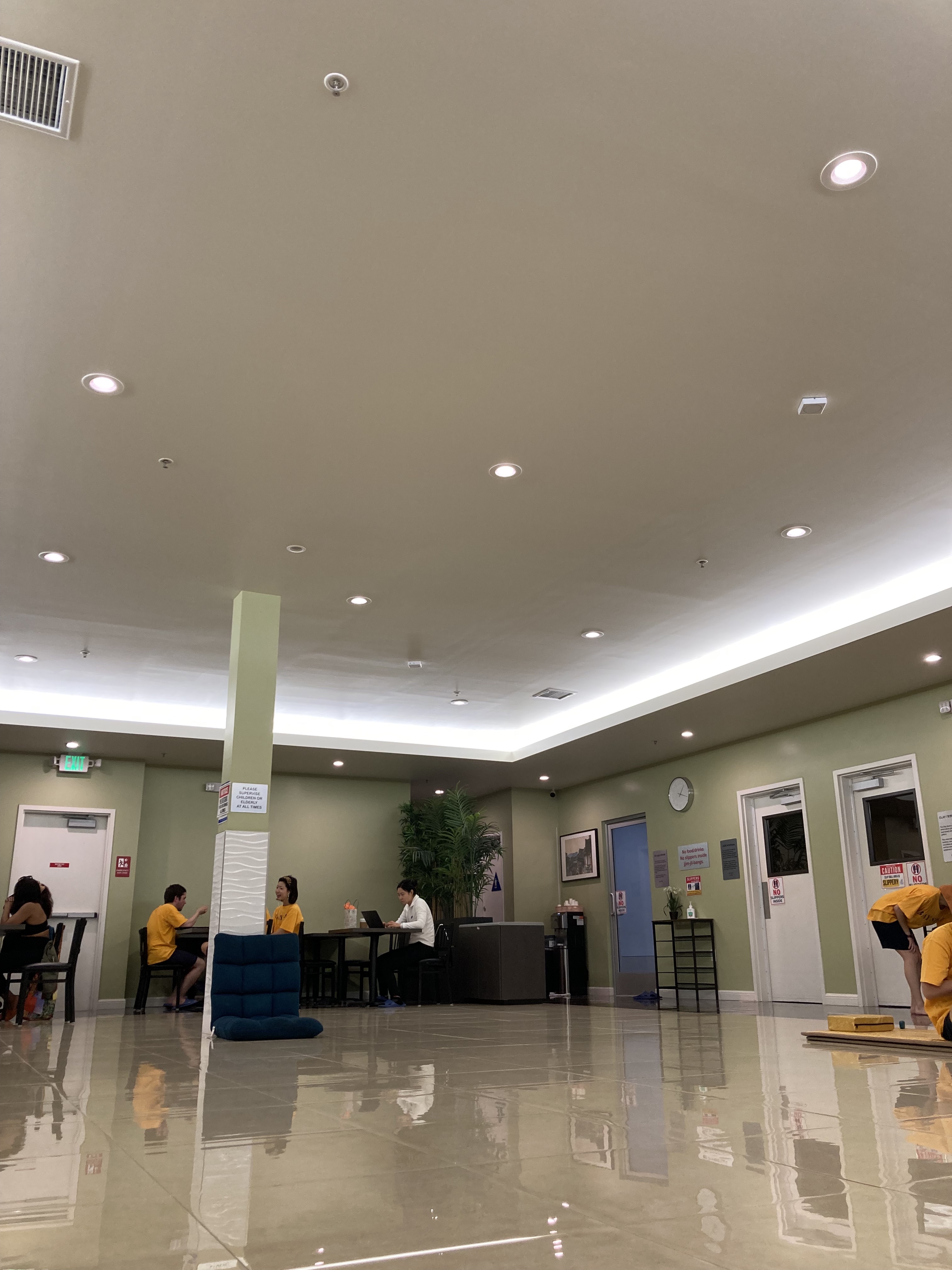
By this point I was pretty darn torpid so I wandered back to the main jjimjilbang and set up a sleeping pad and a pillow in the corner of the room to take a nice little nap. The heated floor greatly facilitated my snooze and when I woke up I felt refreshed and rejuvenated. By then it was around 1pm and the place had filled up quite a bit, since it was MLK day. There were a few school-aged kids in the jjimjilbang quietly playing video games on their devices, groups of friends eating in the restaurant, and other folks chilling on the sleeping mats.
I had a craving for soft-serve ice cream so I peeled myself off of the heated floor, got dressed, left a nice tip for my awesome scrub ajumma, and headed out to Mochiya-Ren in San Jose’s Mitsuwa Marketplace, which is about a 10-minute drive from Bay Spa. And to cap it all off I stopped by the Hmart to pick up a bottle of soju and some wasabi peas for appetizers back up at Montalvo. All in all a very nice pan-Asian way to spend the day.
Let It Shine: 2023 San Diego Asian Film Festival
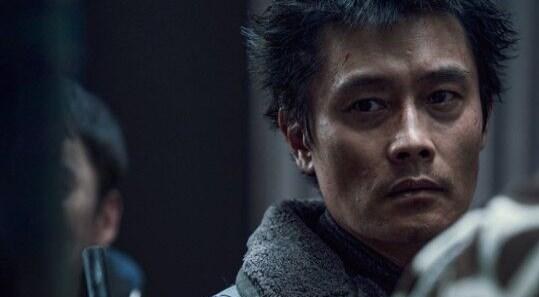
Just got back from a quick and dirty one-day trip to San Diego to attend the San Diego Asian Film Festival (SDAFF). SDAFF is the biggest film fest in North America focusing on Asian/American films and artistic director Brian Hu and his team consistently program an outstanding blend of art house, genre, and indie films. Since I ride for Lee Byung-hun, I got the impetus for my trip when I found out that SDAFF was screening his latest film, CONCRETE UTOPIA (which is also South Korea’s entry in the upcoming Academy Awards). I had a bit of airline credit I had to use by the end of the year, plus a few points to spend on a rental car and a hotel so I made the decision to take a jaunt to sunny San Diego.

I arrived Sunday morning just in time to have some excellent chicken jook and to see a few friends at the filmmakers’ brunch. SDAFF is known for its great hospitality and this year was no exception. Then it was off to the movies, starting with the shorts program Astral Projections. MANY MOONS (dir. Chisato Hughes) was the standout film in this program, an essay film about the 1880s forced expulsion of almost the entire Chinese population of Humboldt county. Since I’d made THE CHINESE GARDENS about a similar occurrence up in Port Townsend Washington back in 2013 the topic was of particular interest to me. Hughes did a great job layering interviews, text. archival images, and other visual elements to question the facts and fictions around this notorious event.

After another pit stop at the reception area for a couple slices of pizza and some butter cookies I then saw the nouveau martial arts film 100 YARDS. Set in 19th century Tianjian, the film is co-directed by Xu Junfeng and Xu Haofang, who’s known for writing Wong Kar-Wei’s THE GRANDMASTER, and this movie similarly attempts to re-imagine and revisit the martial arts genre, but with less success. Although the smoky greys and browns of the mis en scene create a striking visual tableau and the costumes, props and set design were all great, there were way too many fights and not enough character development to hold my interest. It was hard for me to care much about the main character’s daddy issues, although Jacky Heung and Andy On brought the skilz to their fight scenes.
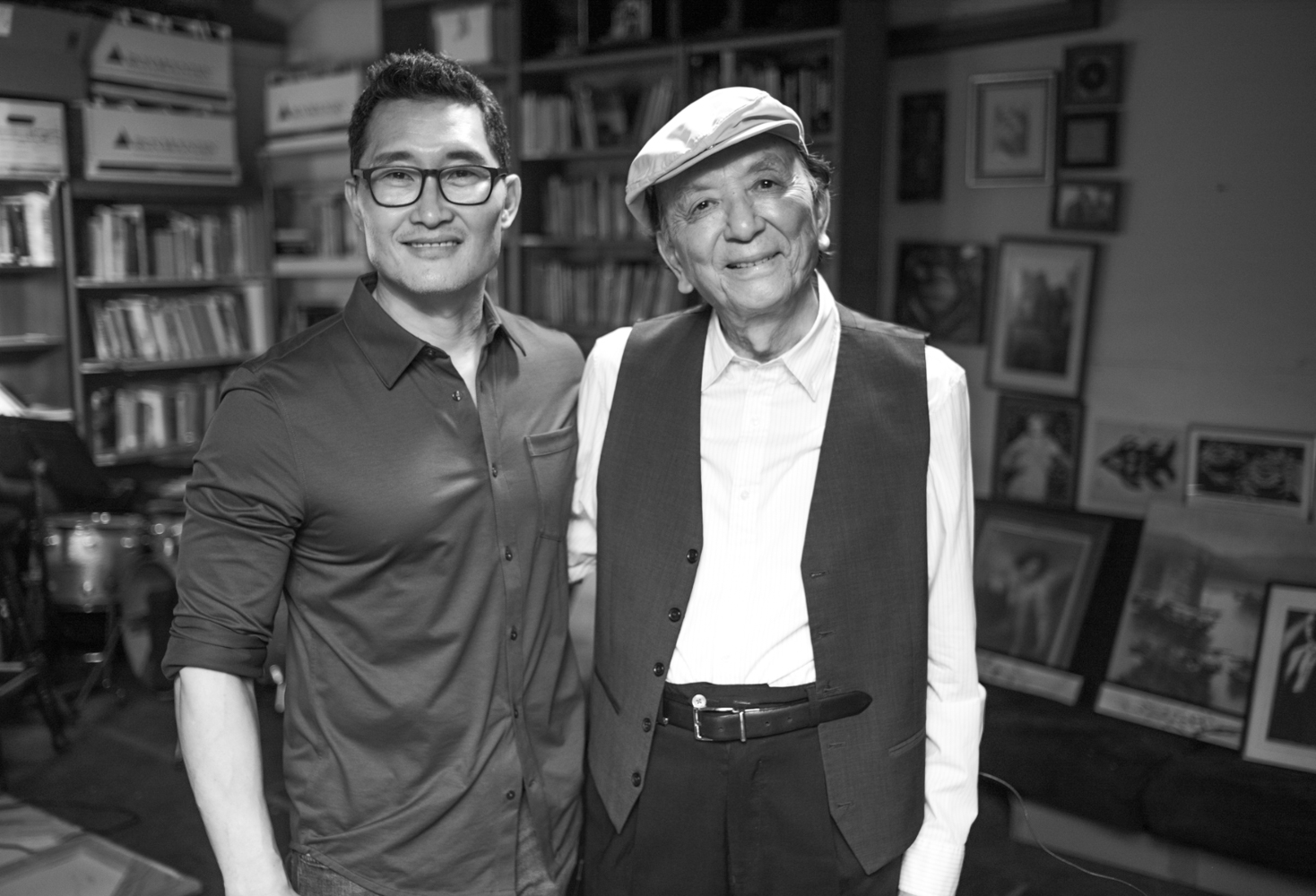
I then moved on to Yu Gu’s documentary, EAST WEST PLAYERS: A HOME ON STAGE. As Gu notes, she had less than an hour to cover nearly sixty years of the history of the legendary and influential Los Angeles-based Asian American theater company, but the film does an excellent job of doing just that. Gu pairs older and newer veterans of EWP such as George Takei, Daniel Dae Kim, James Hong, Tamlyn Tomita, and John Cho to discuss the significance of the troupe as a voice for Asian Americans in the theater. It was fun to see clips from the trove of archival footage of EWP as well.
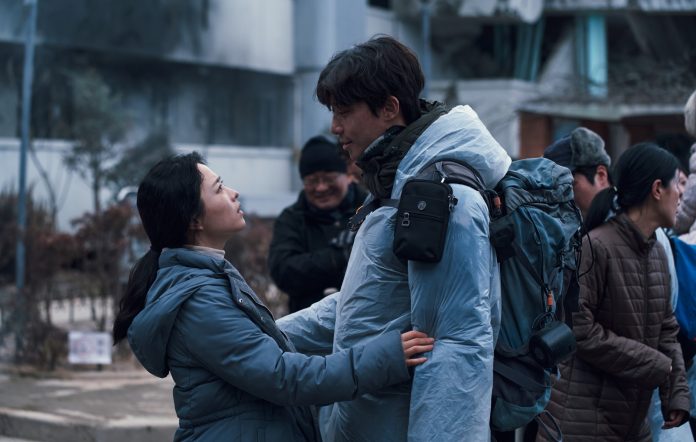
By then I was contemplating how I would squeeze in time to grab a bite for dinner but decided to forgo eating to line up for the main event of my trip, CONCRETE UTOPIA. I first heard about this movie from my friend Anthony Yooshin Kim, who’d seen it at CGV in Los Angeles a few weeks prior. Unfortunately at that time there were no plans for a wider theatrical release in the US so when SDAFF announced it as part of its lineup I decided to catch it there, since I wanted to see it on the big screen. A dystopic story about the residents of the only apartment building left standing after a massive earthquake levels Seoul and starring A-listers including my man Lee Byung-hun, Park Bo-young, and Park Seo-jun (who makes his US debut in THE MARVELS this year), the movie did not disappoint. The film has everything that makes South Korean cinema so pleasurable—outstanding special effects, brilliant acting, imaginative storytelling, well-drawn, complex characters, and sharp social critique. Lee Byung-hun does an outstanding job modulating his character, making his narration arc compelling and believable. Park Seo-jun and Park Bo-young are also great as a young couple whose lives and values are literally shaken up and turned upside down by the catastrophe. Despite its fantastical premise the movie never wavers in its examination of humanity under extreme duress.
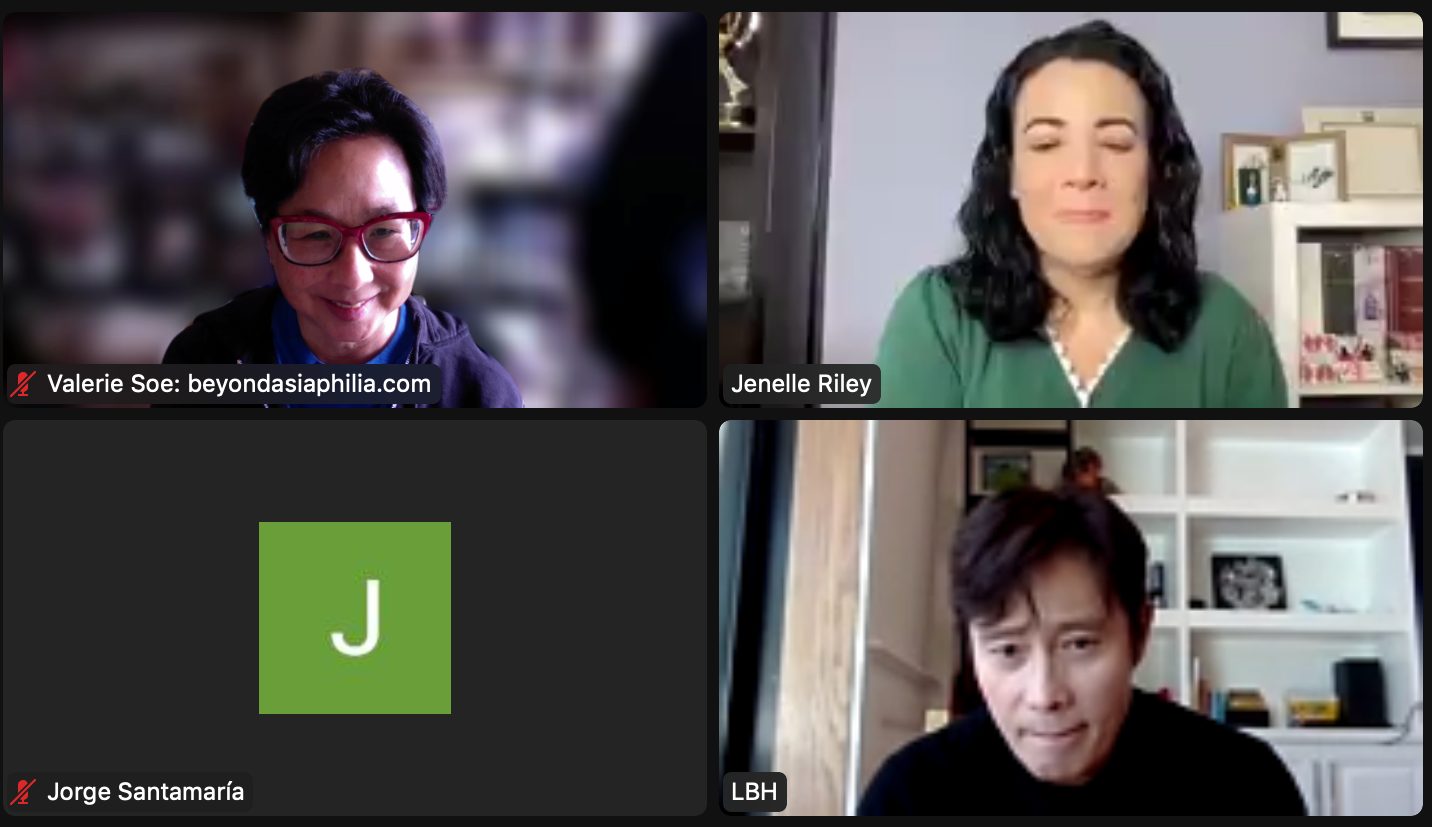
CODA: This past week I had the fangirl pleasure of joining a zoom press conference for CONCRETE UTOPIA that featured Lee Byung-Hun and director Um Tae-hwa. It was fun to share the same virtual space as Lee, even if we didn’t directly interact. I tried to restrain my cyberstalker stanning as best I could but I’m not sure if I was entirely successful. CONCRETE UTOPIA is set to open in New York and Los Angeles on Dec. 8, and will go into wide release across North America the following weekend.
You Only Live Twice: CNBLUE in Tokyo and Yonghwa in Hong Kong concert reviews, part 2
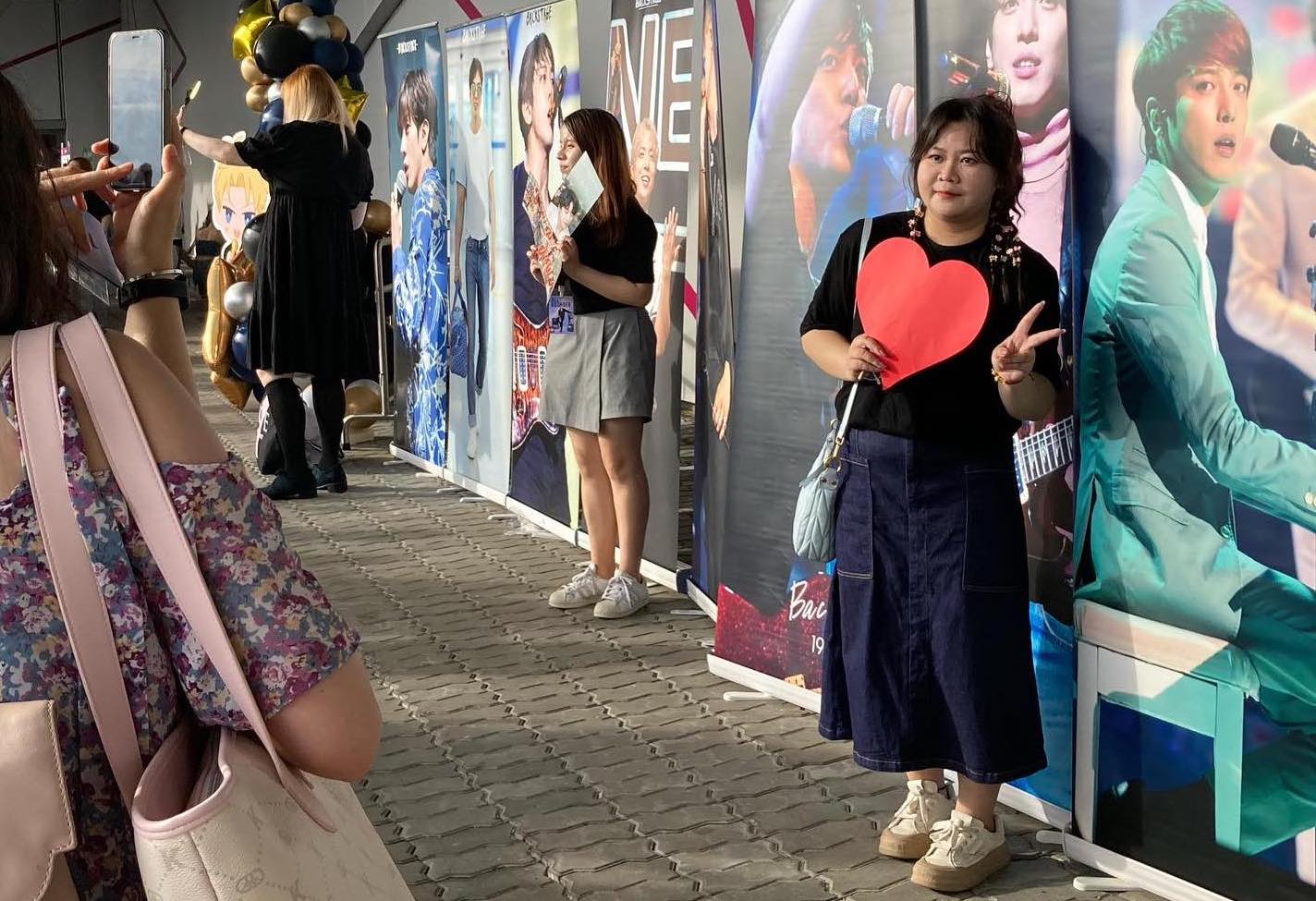
The second half of my CNBLUE/Yonghwa doubleheader took place the first week of July in Hong Kong. I hadn’t been to the former crown colony since 2019 so it was nice to visit again and see how things are faring there after the tumultuous pro-democracy protests of that year, followed by the onslaught of the COVID-19 pandemic, and the ongoing brutal human rights violations of the CCP. That’s a whole nother post, but needless to say the people of Hong Kong are very resilient despite all of the upheavals of the past few years.
But as far as the concert went, it exceeded expectations, as Yonghwa was in fine spirits, happy and energetic. After the many angsty performances of the past few years it was great to see him enjoying himself, both solo in Hong Kong and with CNBLUE in Tokyo. He’s most definitely got his swag back after several years of strife and uncertainty.

photo: @colori_KMH
After a few months of touring Yonghwa’s voice at the Hong Kong concert was sure and strong and he was clearly having a blast He wore his peacockiest outfits, including sparkly silver shoes, a striped pink satin shirt, and shimmery white trousers, as well as gorgeous suit jackets festooned with sparkling brooches and a fabulously blingy jeweled vest from the Alexander McQueen menswear collection. He also had a very faint pink wash over his bleached blond hair, which only accentuated his dandy-ness. He clearly came for the fun and wasn’t leaving until he got it.

photo: @colori_KMH
This tour’s theme was All-Rounder and Yonghwa was determined to live up to the moniker. He played the guitar and keyboards, rapped, danced, hit some insane high notes, sang in Korean, English, and Mandarin, and showed off his many compositions that were variously deep house, trot, rock, pop, ballads, EDM, city pop, Latin, and jazz. He also made reference to his actor-dol status, performing songs from two of his k-dramas, SELL YOUR HAUNTED HOUSE and HEARTSTRINGS, as well as the marriage reality show WE GOT MARRIED.
Yonghwa’s also gotten much better at dancing since he first tried his hand at it some years ago. His footwork is much lighter, possibly as a result of his new boxing habit, and his time in the ring has loosened up his movements. Unlike he was with his earlier dancing efforts, he’s now loose and limber, with a bigger vocabulary of movement including head twitches, hip rolls, and shoulder dips. He’s feeling the music through his body, not just mechanically doing the moves.
The crowd in Hong Kong skewed much younger than in Tokyo, with many fans in their twenties as opposed to the older ladies that comprised much of the audience in Japan. There was also a whole lotta Mandarin being spoken in the audience even though the show was in Hong Kong, which meant either that a lot of fans from China had made the short trek to the former Crown Colony or that Mandarin is just more common in Hong Kong these days. In a nod to his sinophone fans Yonghwa covered JJ Lin’s sweet pop tune Little Dimples twice, once in the main body of the show and once as part of his marathon encore session. But this meant that the set was missing his glorious cover of the iconic trot song Million Roses (백만송의 장미), which he had previously re-arranged during his stint on K-Trot In Town, the popular variety show he was a main cast member for during the pandemic lockdown.
Notably, compared to shows in Japan, security at the Hong Kong concert was pretty laissez faire. There were security people posted at the end of the rows but none of them made much effort to keep fans from opening up the barriers and running closer to the stage. Security also ignored the many fans taking videos and photos during the show, unlike in Japan where recordings of any sort are punishable by expulsion from the venue. So when Yonghwa decided to come off the stage during Fireworks and subsequently got very close to the crowd, the rush of fans to the front of the hall got a bit dicey. Yonghwa quickly retreated back on stage well out of range. I think he was actually practicing crowd control, trying to calm down a potentially dangerous crowd crush situation.
Just like he and CNBLUE did in Tokyo, after twenty or so songs in his regular set Yonghwa sang several songs during a triple encore, and he was clearly having the time of his life interacting with his fans. He was beaming during all of the encore songs, including the usually very somber ballad One Fine Day. Whereas OFD used to be the final song in the setlist, on this tour he performed it about halfway through the show. It used to be all about Yonghwa preparing to leave, mostly for the military, but now that life is happier and less full of dread he seems content to perform it not as the mood-setter but as just another one of his great compositions. It’s not the theme for his life any more, I don’t think.
He used the second go-round of OFD to show off his pipes and it became a crazy singalong with the crowd swapping lines with him throughout the song. It was almost like he was treating the audience to the song’s high notes just because they loved them so much. He’d already sung the song once earlier in the show with the full theatrical angst that it deserved but I think the second version was actually better, in part because he was so relaxed and in part because the song somehow became happy and redemptive. He may also have been belting it out because it was the last song of the show and he didn’t have to save his voice.
It feels like Yonghwa is finally allowing himself to savor his life and appreciate his happy place, which is onstage performing in front of a huge crowd. Yonghwa is also one of the most relentless people I’ve ever come across and every concert is a step toward his life goals, whatever they may be at the moment. But he also seems to genuinely love being on stage and interacting with audiences as well, and he is a very generous performer, as evidenced by his extended encores in Hong Kong as well as with CNBLUE in Tokyo.
So Yonghwa’s main paradox remains: how can someone so good-looking be so multitalented as well? The casual observer might discount his musical aptitude but closer inspection reveals his prodigious abilities. When he was younger his looks may have unlocked the door, but his talent, perseverance, and hard work have kept it wide open.
You Only Live Twice: CNBLUE in Tokyo and Yonghwa in Hong Kong concert reviews, part 1
Part One: CNBLUE in Tokyo
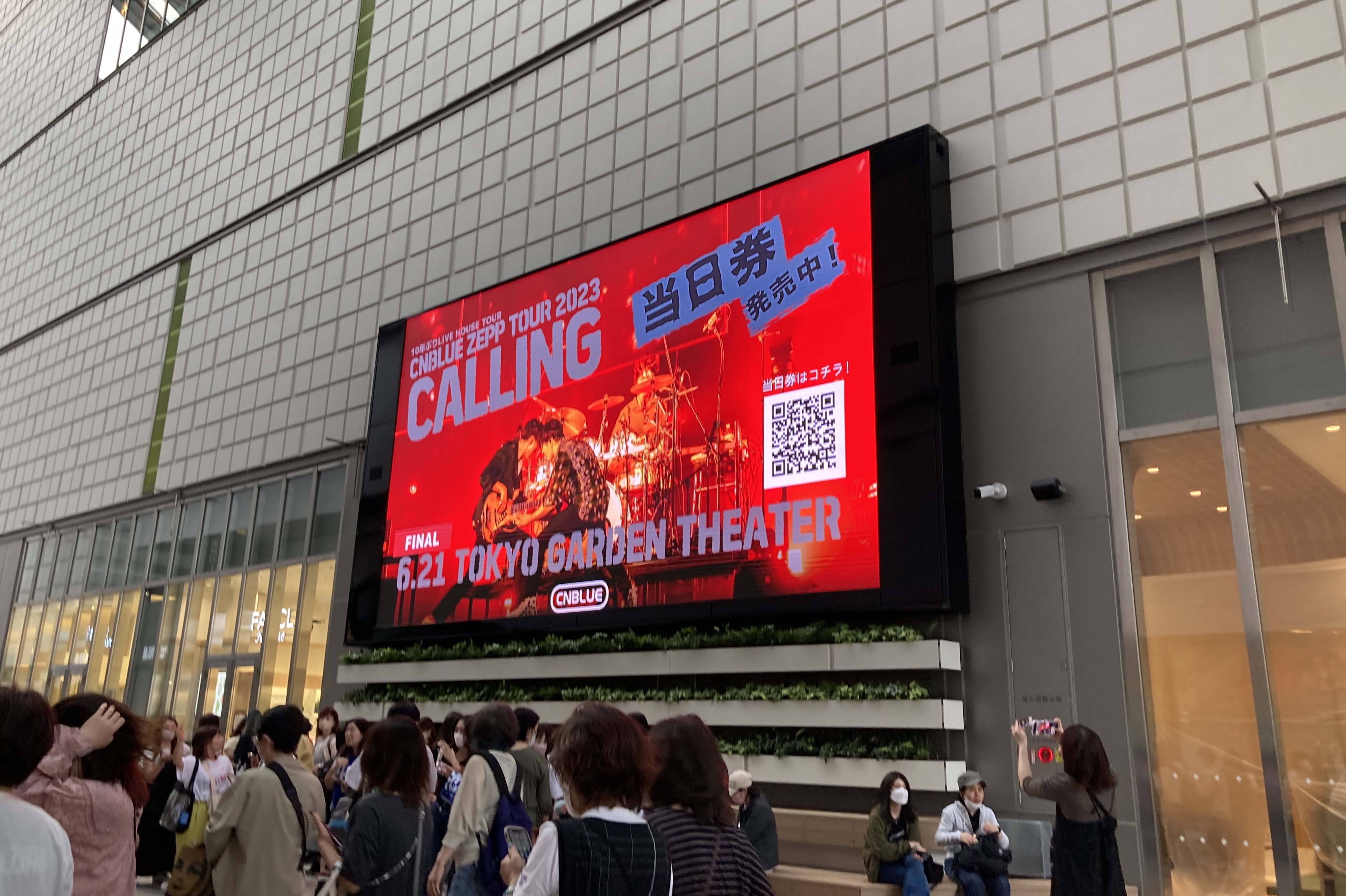
This summer I had the privilege of replicating the 2017 CNBLUE/Jung Yonghwa concert double bill I’d experienced in 2017. I’d already planned to be in Taipei in late June, so when CNBLUE announced that the last concert of their Calling Zepp Tour would be in Tokyo right around then I made a quick decision to extend my itinerary. The recent years of military hiatus and COVID-19 CNBLUE concert-deprivation have made me jump at any chance to see them live. And then Yonghwa announced his All-Rounder tour would have a stop in Hong Kong at the beginning of July and I thought, what the heck, I’ll be in Asia anyway, so after calculating costs and counting my pennies I added a stopover in the former Crown Colony. After all the strife of the past four years I wasn’t about to miss a chance to see my favorite performers in concert-–you only live once, after all.
CNBLUE’s latest Japan tour took place on the Zepp circuit, a chain of small concert halls around the country that hold anywhere from 1,000-2,000 people with general seating tickets. As my friend Glenn recounted in his recap of two CNBLUE Zepp concerts from the tour, the smaller halls create a much more intimate environment than the 8,000-17,000 seat arenas that CNBLUE usually plays in Japan. The tour was a novel experience for fans as well as a way continue to rebuild the CNBLUE brand in Japan after their long hiatus during their military enlistments and during the COVID-19 shutdowns of the past few years. The show I attended at Tokyo Garden was in the largest venue of the tour with about 8,000 seats so it wasn’t quite as cozy as many of the previous stops. But as it was the last stop on the tour, by then CNBLUE was all limbered up and ready to rumble.
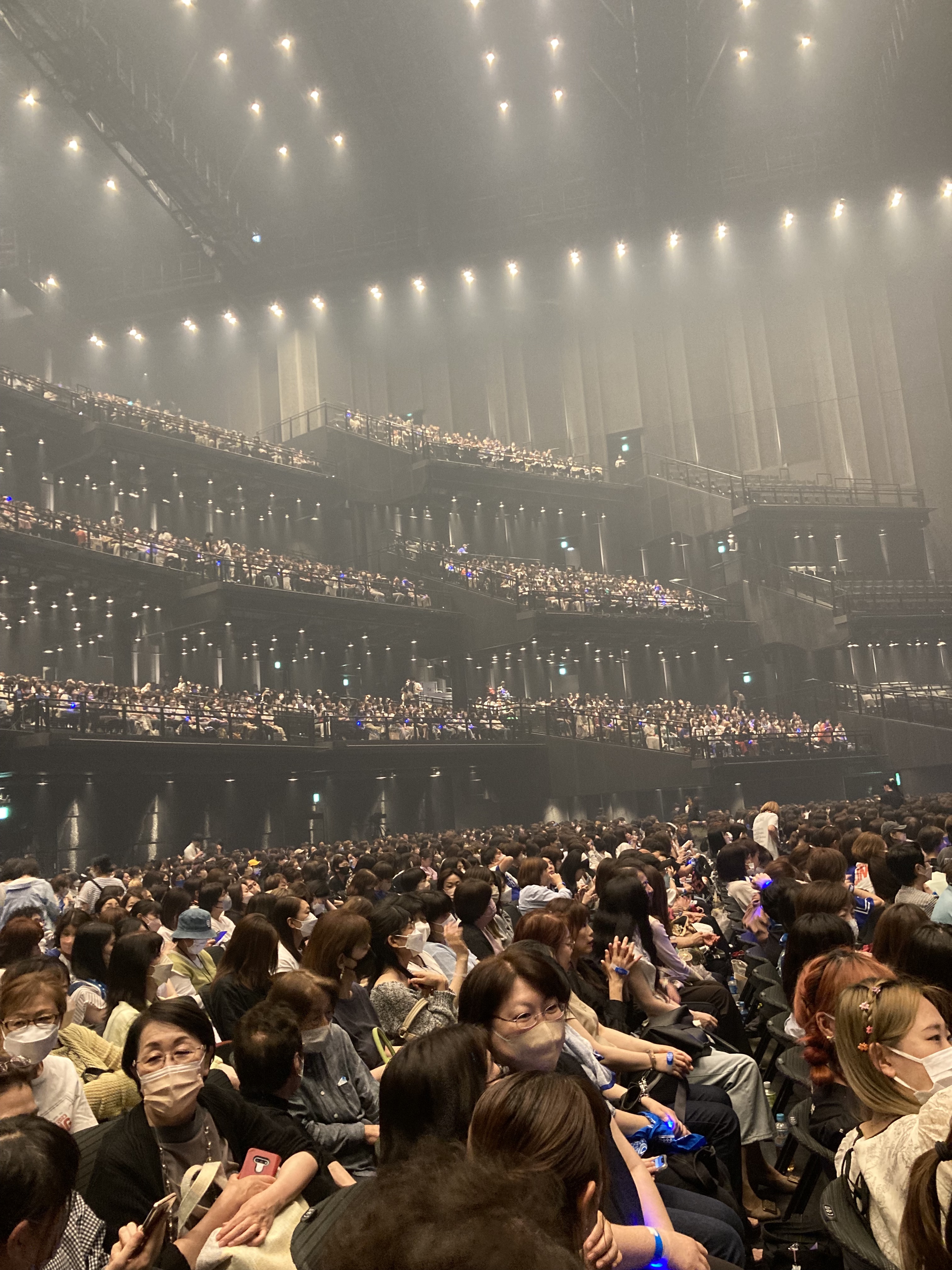
The band was definitely more confident and comfortable onstage than when I saw them back in November at Budokan, which were their first live shows after the military/COVID hiatus. By the time I saw them at Tokyo Garden they had a good ten shows under their belt and they had completely regained their swag.
The setlist for this tour was designed for maximum impact in the small Zepp venues, so the band came out swinging, opening with IN MY HEAD and then blazing through three more of their rockiest rock songs. The message was clear that they came for the high energy. Leader Jung Yonghwa busted out the hot pink Jackson guitar he’d debuted at Budokan, taking a few guitar solos to show he knows how. He had his game face on at the start as well, scowling and grimacing rock-star style. The sound in the hall quickly reached that satisfyingly massive roar that CNBLUE achieves when they’re playing their loudest, most rock songs.
Flexing their versatility, in the second set the band completely switched it up, playing three pop tunes that let Yonghwa practice his kawaii. On THIS IS Yonghwa demonstrated another aspect of his impeccable vocal skills as he flawlessly spit the song’s staccato lyrics. CNBLUE even showed off some of their dubious dancing skills during SHAKE, with much joking and smiling amongst the band members as well. They effectively worked the crowd, reflecting the years they’ve spent honing their entertainment chops on countless South Korean variety shows.
After another lengthy comment section they followed with yet another mood change, with a set of three more introspective songs including one of my favorites, the gorgeous trip-hop song SUPERNOVA. I’m happy to see this one added back into the setlist–-I’m wondering if it’s been absent due to the song’s tricky high notes, but recently converted second lead vocalist Jungshin was able to pull it off pretty well. The set concluded with ROYAL RUMBLE, one of their best songs and quite possibly their masterpiece. I’ve heard the song performed in Korean at a previous concert in Taipei but ROYAL RUMBLE in Japanese somehow hits different. The two sidemen guitarists played the intricate counterpoint that had been missing in previous live versions and the spare, repeating motif was mesmerizing, creating a hypnotic, somewhat claustrophobic mood that underscored the song’s bleak lyrics. Yonghwa as usual gave 1000% on the singing of the song, effortlessly moving between crooning, whispering, growling and belting. He puts his entire being into projecting the song’s emotion while maintaining absolute control over his vocals.
Bassist Jungshin’s performance contrasted most strongly of the three from the November Budokan shows. Back then it was his first couple live shows singing second lead and he was nervous as a cat, barely moving from his mic the entire concert, and his somewhat tentative vocals reflected his nervousness. At Tokyo Garden he sounded great and was relaxed and happy, roaming the stage freely and clowning with his bandmates. His basslines also were fire as he switched effortlessly between plucking and thumb-popping, demonstrating that his bass work is the spine of CNBLUE’s sound. Kang Minhyuk’s drumming was also on point, strong, precise, and full of imagination.
I had no idea what they were saying during the long comments between sets but the three were loose and funny the whole night. Jungshin in particular made everything hilarious. Though I don’t understand more than a handful of words in Japanese it seemed to me that Yonghwa has upped his nihongo game, speaking rapid-fire Japanese to the appreciative audience.
They were clearly at ease during this show, unlike the intense nervousness of their Budokan concerts back in November. The interplay between the three of them is one of very old friends who have literally gone through a war together and survived to emerge on the other side.
The band wrapped up the main part of the show with six of their most high-energy tunes, starting with a blistering version of their latest Japan single LET IT SHINE. The crackling guitar riff that opens the song gave an immediate jolt of energy, supplemented by a soulful Hammond organ sound by the backing keyboardist. It’s a testament to the continued quality of CNBLUE’s work that their most recent songs, LET IT SHINE, TRIGGER and MOON, are as strong and catchy as their longstanding classics like COFFEE SHOP and BETWEEN US.
The set also included their interactive jam song WAKE UP. At Budokan in November the no-cheering rules were still in effect at concerts in Japan but those have since been lifted, so Yonghwa was able to practice all of his favorite call-and-response games with the audience. The song, which in its original studio incarnation is only about three minutes long, went on for a good twelve minutes or so and included both Jungshin and Minhyuk stepping up to the mic to join Yonghwa on singing out phrases for the audience to mimic.
The staging at Tokyo Garden added a nice laser light element that reached out over the packed audience. However, the videos on the background screens looked a bit underwhelming and cheesy. There were no background videos for the prior ZEPP Tour shows so maybe an intern was tasked at putting these together at the last minute because they were very minimal and fairly bad and generic.
After concluding the last set the band came back onstage and proceeded to perform five songs during two lengthy encore sessions, encouraged by a very loud and raucous audience. The first encore included their traditional winding-down songs TRY AGAIN SMILE AGAIN and GLORY DAYS, but the enthusiastic crowd drew them back on stage for rounds of Happy Birthday in both English and Korean and presentations of cake and flowers to Yonghwa and Minhyuk, the birthday boys.
Yonghwa seemed to be so happy that he didn’t want to leave the stage, insisting on playing two more songs after that. His ear-to-ear smiles during the final encores were infectious and the whole venue was abuzz with good vibes and adoration. He seemed elated to have successfully concluded the tour and to have performed a complicated show to a very full house.

He and his bandmates also seemed happy and relieved to have completed a popular comeback tour in Japan, where their fanbase is the strongest. But even in their stronghold things have been in turmoil in the past few years, since the withdrawal of their former guitarist, Lee Jonghyun, who had been very popular in Japan and with some fans not supporting his departure. By playing in much smaller venues than they’re accustomed to, this tour was a way of regaining some of those fans and giving them the treat of seeing CNBLUE in close quarters. For the most part they were greeted with full houses and satiated audiences, so their strategy worked. In addition, I think I saw more male fans this time around (which is not to say that there were many of them). One sat next to me and seemed to enjoy the show, though he was less interested in the between-set clowning around. But maybe the band is starting to expand beyond its mostly-female fanbase and will be able to further grow its audience beyond its Kpop roots.
Hopefully CNBLUE will have continued success as they rebuild the brand after a few years of setbacks. It was touch and go for a while after Jonghyun departed the band in 2019 so it’s great that they’re still alive and kicking. The average lifespan of a kpop group is seven years or less so after more than thirteen years on the circuit CNBLUE continues to defy the odds.
Although they could probably have individual careers as actors and entertainers, such as Minhyuk most recently creating a buzz as the male lead in the hit Netflix drama CELEBRITY, it’s nice to see them focus on making music together again. While they’re entirely fine and skilled as actors, they are geniuses at music and live shows. And I’m definitely here for the music myself.
Next up: Part 2: Yonghwa in Hong Kong
A More Constructive Use of Leisure Time: CAAMfest 2023 review
I had an interesting conversion recently with a friend who’s worked in the independent Asian American film community for a long time. He postulated that in some ways, Asian American film festivals have achieved everything they set out to do when they first started up back in the 1970s, which to him meant increasing the visibility and voices of Asian Americans in the US filmmaking landscape. In some ways I think he’s on target, with Everything Everywhere All At Once winning the Best Picture Oscar this year and streamers regularly programming Asian American content of all types. So where do we go from here? The 2023 CAAMfest shows all of the pros and cons of Asian American narrative plenitude.

CAAMfest opening night film, Joy Ride (dir. Adele Lim), is a great example of what happens when Asian American voices are mainstreamed—namely, that we’ve come far enough that we now have silly sex comedies from an Asian American perspective. I didn’t hate this movie and I did laugh in some parts but to my mind it was pretty predictable and pretty much lacking in emotional depth of any sort. The cast works hard and is charming and agreeable but all of their hard work can’t disguise the film’s sloppy story construction and gaping plot holes. Twenty years ago we all would’ve eaten this kind of movie up as progress but now that we’ve got a lot more options I feel less forgiving about this kind of simplistic execution. We don’t necessarily have to support representation for the sake of representation.

Similarly, Land of Gold (dir. Nardeep Khurmi), about a Sikh American long haul trucker who acquires a young Mexican American stowaway in his rig, is told in fairly conventional strokes. Currently airing on HBO Max, the film does feel like a made-for-TV movie in its standard narrative beats. Lead actor/director/writer Nardeep Khurmi is solid as the truck driver with some family issues to work out but I was very annoyed by child actor Caroline Valencia as the stowaway. She’s the kind of precocious and self-assured kid performer who feels like she’s been taking tap-dancing and voice lessons since she was wee and thus lacks any discernible authenticity as an actual child. But other reviewers have praised her performance and Land of Gold won both Best Narrative and the Audience Award at CAAMfest so what do I know? Again, twenty years ago this film would have been groundbreaking but now it seems less so to me. That said, I did love seeing the world of long-haul truckers and appreciated the small details, like the fact that every truck stop now serves Indian food and that there are homespun gurdwaras along the highway to allow the Sikh drivers to worship as needed.

More poetic and less formulaic is The Accidental Getaway Driver (dir. Sing J Lee), about an elderly Vietnamese driver for hire who gets caught up with three escaped convicts on the run in Southern California. The film does a good job connecting generational trauma with life on the lam, utilizing beautiful emotional dreamlike images and a gritty, dark mis en scene to create an unusual visual texture. Lead actor Hiệp Trần Nghĩa is great as Long, the driver who forms an unexpected bond with Tây (Dustin Nguyen), one of the convicts who is also Viet. Dustin Nguyen, who debuted as a teen star way back in the 1980s on 21 Jump Street, is excellent as the world-weary convict searching for a chosen family. He’s now sixty years old (!) and he’s come a long way from his heartthrob beginnings to become a sensitive and nuanced performer. Although at first it appears to be a crime film, with a noirish look and feel, the movie ultimately is about the relationships formed between the characters as they find solace and connections with each other.

Liquor Store Dreams is So Yun Um’s debut feature documentary and she guides the film with a sure hand. The doc is an expansion of her short film Liquor Store Babies (2014) and the longer version allows Um to elaborate on several of the themes she touched on in her short. Um updates the story of her Korean immigrant parent’s immigration experiences in the US to include pandemic era, expanding her scope to include a thread on reconciliations between black & Korean communities in Los Angeles. Her kind and smiley Dad is a healing presence throughout the film.

Another example of how Asian American voices have reached the mainstream, Jeanette Lee vs was produced by ESPN for their 30 for 30 series of profiles of sports figures. Director Ursula Liang brings a decidedly Asian American perspective to the story of Korean American Jeanette Lee, aka The Black Widow, who in the 1990s was one of the most famous and popular professional pool players in the world. Liang describes the many obstacles Lee faced to reach success in her sport including childhood scoliosis and a battle with cancer later in life, as well as the racism and misogyny she dealt with throughout her career. Liang also includes a moving interview with Lee’s elderly mother who describes her fear that her daughter will predecease her. By focusing not only on Lee’s professional journey but her struggles with white supremacy and patriarchy Liang injects a bit of Asian Americanism into a doc made for a general audience.
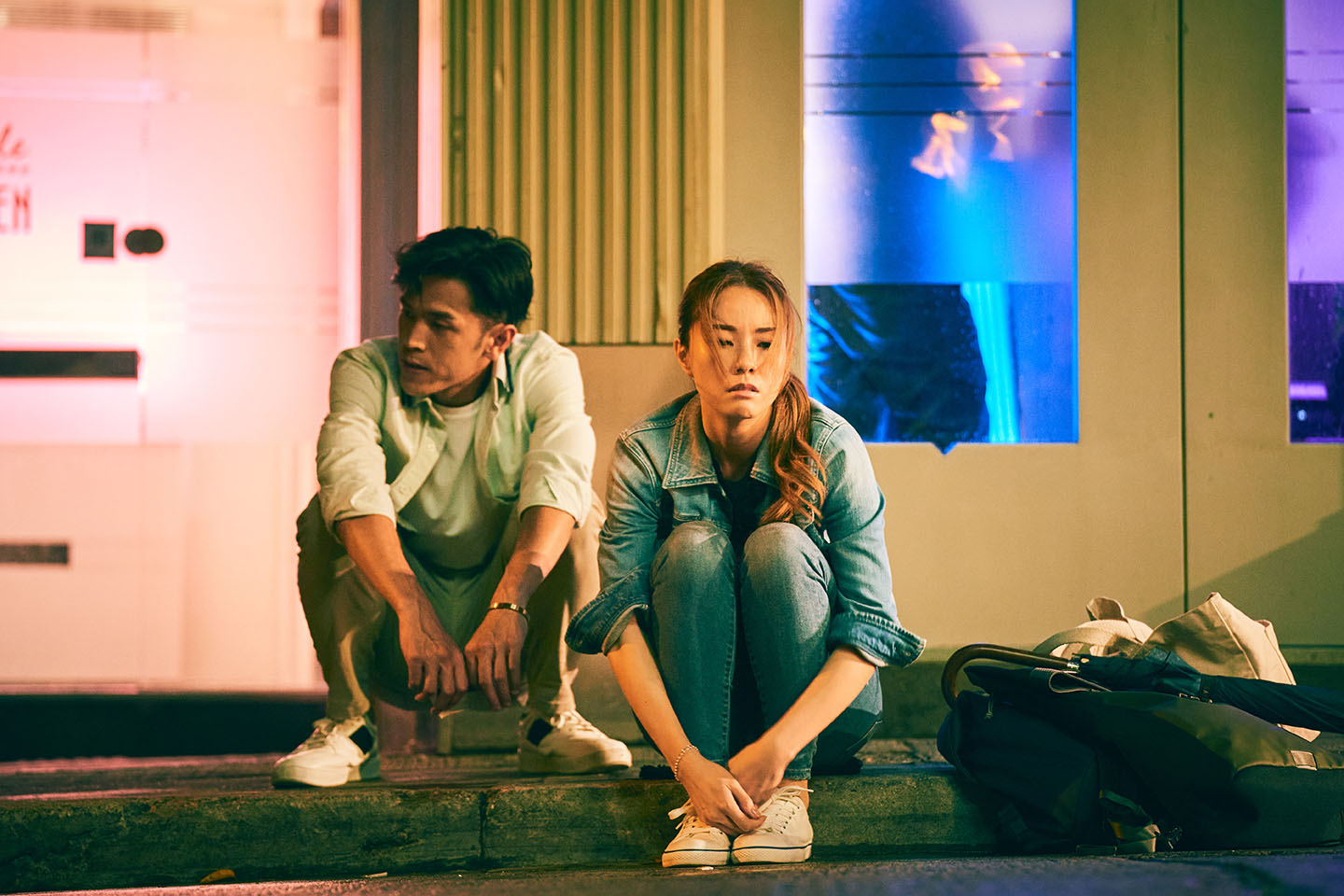
Twelve Days, Hong Kong director Aubrey Lam’s dramatic romance had no edge. The story, about a doormat wife and her asshole husband, is an AITA post come to life. It’s hard to feel much sympathy for either character since both the husband and wife are ciphers with no interior lives or motivations. With all of the interesting indie films coming out of Hong Kong these days it’s telling that this sleek, vacuous and politically inoffensive piece of aggravation is what the Hong Kong Film Council chose to showcase.

The uncatagorizable hybrid feature Starring Jerry As Himself (dir. Law Chen) was one of my favorite films from the festival but it’s impossible to explain this film’s appeal without spoiling it. Suffice to say I found it entirely satisfying and completely unpredictable, with dramatic music, solid performances, and good cinematography that makes good use of its Florida location, where nothing is as it seems and everything is fleeting and unreadable.

Wisdom Gone Wild, Rea Tajiri’s latest experimental documentary, is a lovely, thoughtful, and surprising portrait of Rea’s aging mom and her progression into dementia. The film shows dementia as a blessing that can become a new language and way of perceiving and combines a gorgeous sound design with home movies, contemporary footage, archival photos, a spare voiceover and Rea’s mom’s own gems of perception. I especially liked the evocative use of midcentury songs such as Smoke Gets In Your Eyes and other standards from the American songbook. The film is a brilliant example of how to say more with less and how to have faith in your viewers’ ability to discern meaning without excessive explanation. To my mind it is really the best thing in this year’s festival. Wisdom Gone Wild’s freeform, improvisational structure, guided expertly by Rea’s accomplished, confident hand, results in a film that’s not afraid to take risks and make bold and surprising choices.
Rea Tajiri’s documentary is the kind of film that I want to see from Asian American cinema in the 21st century, and not just horny road trip movies. I hope that we don’t simply aspire to insert Asian American characters into the same old genre movies. I want to be confounded and surprised by Asian American movies, not shown the same stories we’ve seen before. Otherwise we may find Asian American filmmaking to be obsolete and irrelevant, as it becomes just another cog in the commercial moviemaking machine.
A Tale of Two Tours: CNBLUE and One OK Rock In Japan

A special guest post by CNBLUE fan Glenn!
I was in Japan for a bit over a week in April 2023 and in that time was lucky enough to attend shows on tours by two different veteran acts – CNBLUE’s Calling Zepp tour and One OK Rock’s Luxury Disease stadium tour. Very different in their size and scale, but both exceedingly worthwhile.
Introduction
I suppose since I am Valerie’s guest here I should introduce myself. My name is Glenn and I am a 55-year-old man who lives in the DC suburbs of Northern Virginia. So, not exactly in the typical CNBLUE demographic. I first saw CNBLUE on the old MNET America cable channel about 8 years ago and I was immediately captivated by their music (and good looks). Until then I had only really been exposed to KPOP dance groups, so the idea of a real band playing their own instruments was fascinating. I dove headlong into their story, watching every youtube video and collecting as much of their back-catalog of CDs and DVDs as I could. Luckily, the many, many tour DVDs do a good job of capturing what the band is all about. Shortly after my intro I discovered that the WHITE Spring 2015 tour was going to be happening. In those days getting tickets was difficult but there was a fairly straightforward way to get them via secondary sources. So with that in mind I used one of the many little companies that work on behalf of foreigners to get a ticket to one of the Yokohama shows. I also became aware via the CNBLUE International Fans group on FB that someone had an extra ticket to the other Yokohama show. After an easy paypal transaction I had secured tickets to both and made my plans for a whirlwind weekend in Yokohama. It’s nice to have the tour DVD of a show I attended. So those are my general bona fides.

For the 2023 CNBLUE Calling Zepp tour I had already booked a trip to Asia before the tour was announced that included about a week in Tokyo for the first week of April. Given the byzantine world of Japanese concert ticketing I expected it would be difficult to get tickets since the initial lottery was only open to Japanese BOICE. which seems to basically require you to live in Japan (or be close friends with someone who does). Luckily when the winners of the first round of the lottery were announced several BOICE with extra tickets were advertising them on Twitter. Thanks to Valerie for making me aware of this! I contacted a few and was able to fairly quickly line up a ticket for night 2 in Nagoya and night 1 in Sapporo. Both were extremely helpful to me and I sent payment by PayPal, then had to go through the process of figuring out how to get a Japanese phone number to be able to use the electronic ticketing system. This also proved to be stressful but fairly straightforward.
With all of that out of the way, let’s (finally) get on with the show!
When this tour was announced I was initially a bit baffled. Why was a band that’s been playing arenas for years scaling way down to a tour of Zepp live house clubs? From what I can gather it was a chance to rebuild their audience and to reconnect with their biggest fans after being on hiatus for military service and after the loss of a band member.

I arrived in Nagoya a few hours before the second night’s show. I had seen the set list posted from the first night so had some idea what to expect. Zepp Nagoya holds about 1800 people. Signs were posted around the club and around the block for every 100 people. Everyone lined up by their ticket reference number. My number for this show was 1062. Around 5:30 I walked across the street from my hotel (Strings Hotel Nagoya – highly recommended if you’re going to a show here) to the club to see where I needed to go. Once doors opened at 6 PM the ticketing app made the tickets active and the line eventually started moving.

Despite my high number when I got inside the club I managed to be one of the last people to squeeze into the area about fifteen rows deep from the stage. Anticipation built as the 7 PM show time approached with audio of past CNBLUE shows playing over the club’s PA. Shortly after 7 PM the lights went down and Kang Minhyuk was first out to his drum kit. Now that they are a trio Minhyuk’s spot has moved to the front of the right side of the stage with bassist Lee Jungshin in his customary spot on the left and of course frontman Jung Yonghwa in the center. The sound is filled out on this tour by three extra musicians—two guitar players and a keyboard player who mostly were kept off on the fringes of the stage.
The show was arranged in short blocks of songs, the first of which was the “Rock” block that opened with IN MY HEAD. The sound in the club was a bit bass-heavy so having concert earplugs made a big difference in filtering the sound. Yonghwa’s vocals were loud and clear and Jungshin’s takeover of former band member Lee Jonghyun’s vocal parts was pretty seamless. It also felt like having Minhyuk that much closer to the audience really made the drums even more immediate. The block finished out with ONE TIME: RYU CAN DO IT, WHERE YOU ARE, and one of my favorites, TIME IS OVER. It was quite interesting to see how the set was constructed with some real out-of-left-field choices. I’m not sure I would have expected TIME IS OVER but I’m glad it was there.

Then it was time for the first MC block. Since I don’t speak Japanese I don’t know exactly what was said but it was the usual introductions from the three of them welcoming everyone to the show and riffed on the word “Calling.” Yonghwa also mentioned that IN MY HEAD was their major label debut single.
Second was the “Dance” block that opened with FACE TO FACE (with Yonghwa mugging for the crowd), THIS IS, and SHAKE SHAKE. That was followed by the next MC block with a recap of the SHAKE SHAKE choreography.THIS IS also seemed like a pretty deep cut.The guys were all extremely relaxed with lots of laughter and gentle ribbing of each other.
Next was the “Emo” block that kicked off with SUPERNOVA—yet another track you wouldn’t have really expected. This part of the show was very strong, however I felt like at the end of this song the drums got a little out of sync with everyone else. It definitely sounded better at the Sapporo show. That was followed by one of the real highlights of the show for me which was ROYAL RUMBLE. I feel like this song is really underrated and Yonghwa really gets to exercise his vocal talents. The additional musicians also allow him to just sing this song without having to worry about anything else. The section closed out with MOON, with the very excited crowd enthusiastically clapping along.

The following MC section was time for Food Talk, a staple of every CNBLUE performance.
The next section has apparently been dubbed “Powerful” by YH and included LET IT SHINE, TRIGGER, and BETWEEN US. Again the crowd seemed to really enjoy this section of newer material followed by another MC.
And the main set closed out with the crowd-pleasing “Final” section that included some of their best-loved audience-participation songs: LADY, WAKE UP, COFFEE SHOP, and I’M SORRY. Honestly, these are probably four of the best live songs ever. Because they’ve played them so many times and are free to play around a little it’s really a joy between Yonghwa goofing around during LADY, followed by all of the various “Wake Up, Wake Up” call-and-responses that can really be played with. Since the club is small Yonghwa several times called for silence from the crowd and did his call without a microphone, which worked well in such an intimate setting. And then he coached Minhyuk in a couple of rounds of the same thing. For my money COFFEE SHOP might just be the perfect song. It’s just so fun in the live environment and the whole club was really dancing along. I’M SORRY will always be a crowd favorite, with Yonghwa’s overhead arm thing that looks like a little kid asking a truck driver to blow his horn.
Of course the band returned after a brief break to change into the tour t-shirts. Yonghwa delighted the crowd by telling everyone it was ok to get out our phones to take photos and videos of TRY AGAIN, SMILE AGAIN. As someone who’s been to lots of shows in North America over the years I have to say that the prevalence of smartphone photography has largely detracted from the concert experience. So being in a place where photography is strictly forbidden is kind of refreshing since it allows everyone a chance to concentrate on just enjoying the show. But for one song I guess we could all be distracted by trying to get as many good pictures as possible. After that we had time for thank you’s to the extra tour musicians and I presume to the tour and club staff and of course all of us for being there.
The show closed with GLORY DAYS, which I guess seems to be the new traditional closer. After that they took their bows and it was all over.
The show in Sapporo was basically exactly the same but with different Food Talk. The queues were organized slightly differently and I was number 485 for this show. Once inside I got the almost identical spot to the previous show. Zepp Sapporo holds about 2000 but I think this show was not quite sold out and there was a little more personal space on the floor which I really appreciated.

If I could suggest one thing to the band it would be to change up the set from show to show to make them all different. They have such an extensive catalog now that it would be easy to switch out at least four or five songs every show. I get that they like everything to be well-scripted, but my favorite artists over the years like James or REM always played a different show every night. So if you went to multiple shows it was always fresh and it kept the band on their toes. On a tour like this where there is no big video or light show it would be somewhat easier to do.
I had wondered how the smaller stage would affect Yonghwa’s manic energy and his running all over the place, but in general he was focused and had plenty of chances to get out his energy. He’s always been the consummate frontman and in a venue this size he’s really able to connect with everyone.

The chance to see the band in a venue this size was really exciting and I still can’t quite believe how lucky I was to see them twice on this tour. A huge thank you to the two Japanese fans who sold me the tickets and were so nice in looking after me to make sure I got the tickets and knew where to be. In such a crazy world these days it’s great to see that there are still people who are happy to help a complete stranger.

One OK Rock at Tokyo Dome
Sandwiched between these two shows I had a chance to see One OK Rock at Tokyo Dome. On a bit of a whim I checked when I arrived in Japan to see if there were any tickets available in the Pia website and sure enough there were. I had no idea where the seat was located but it was easy enough to buy my ticket.
Tokyo Dome shows are very well-organized. I found the appropriate entrance and asked if I was in the right place. The staff member tapped on my phone and then another person applied a little NFC device to the screen to verify my ticket and I was in. One of the nice things about shows in Japan are the early start times. CNBLUE was doors at 6 PM, show at 7 PM. One OK Rock was doors at 4 PM, show at 6 PM. I had arrived a little after 4 PM, which was obviously quite early. It turned out that my seat was in the outfield bleachers with a generally obstructed view of the stage and no view of the big video screens. I couldn’t even see Kanki Toyoma but could just see the front of his drum kit.
I will admit that, while I really enjoy their music, I am not as intimately familiar with their catalog. But I knew this would be an interesting experience. When we entered everyone was given a radio controlled LED bracelet. These were certainly an integral part of the overall light show.
The band were fresh off a North American arena tour opening for Muse, but of course they are so huge here in Japan that they can sell out consecutive nights at the biggest stadiums in the country. I believe Tokyo Dome holds about 50,000 people for concerts and the place was packed full by show time.

The lights went down a few minutes after 6 PM and the opening strains of WONDER hit the crowd, but only Tomoya was on the stage so everyone was a little confused. Then spotlights hit two raised platforms around 1st base and 3rd base with Yamashita Toru and Kohama Ryota atop them playing before eventually coming down and running to the stage. And then Moriuchi Taka was raised up to the stage extension in front of the stage to start singing. I am not really a fan of stadium shows but the band are veterans of big shows like this and know how to make BIG movements and grand entrances. There is clearly a lot of work that goes into putting together a show on this scale. They really brought out all of the pyro, fireworks, and dry ice aided lasers.
I won’t do a song by song of the show, but they played 25 songs over the course of nearly 3 hours including some quite long MC sections. Here’s a link to the set https://www.setlist.fm/setlist/one-ok-rock/2023/tokyo-dome-tokyo-japan-3bbb6490.html Apparently this show was recorded for the eventual live DVD.
The show was quite a spectacle as I expected. Once the bracelets got activated the whole audience became a giant mood light. Everyone was REALLY into the show with most people singing along to everything and most arms in the air. Permission was granted for everyone to photograph the encore.

Taka is another fantastic frontman who loves being dramatic with lots of grand gestures. They’ve played lots of very large venues through the years so he’s clearly had time to hone his craft and play to a venue this enormous. For such a little guy he really has a large presence in addition to his huge voice.
Among the interesting contrasts between these events was the breakdown of the crowd. At the two CNBLUE shows I attended I’d estimate that I saw a total of ten other men (besides the band, crew, and venue staff) and I think the average age was probably in the area of forty. At One OK Rock I think it was about 50/50 women to men with the crowd skewing younger to their twenties – although I did see one businessman in a suit who was probably in his sixties. I’m not really sure why CNBLUE doesn’t have much of a male fan following. Are they just too handsome?
Overall it was three great shows by two excellent bands. I’ll always prefer a more intimate venue, but the OOR stadium experience was worth doing.

Practical Information
Valerie (again!) suggested a company called Mobal (www.mobal.com) which will provide you with a Japanese SIM card and real Japanese Softbank or DOCOMO phone number. Just make sure your phone is unlocked. You can either pick the card up when you arrive in Japan or they will ship it to you for free. The cheapest short term plan is currently about 8000 JPY for thirty days which includes a phone number for calls and texting as well as 7 GB of data.
Once you receive the SIM you can request a specific date to activate your account and they suggest that activation may take up to a couple of days so getting it activated right before you arrive is a good idea.
You will need a Japanese phone number to create and verify your account with the Ticket Pia site (t.pia.jp) and their service called Cloak which allows you to receive ticket transfers from other users. Because I had never used this before and couldn’t actually register until I arrived in Japan there was some stress about whether I would be able to get it working. But the worry was unnecessary as I was able to register no problem. As part of the process you call a toll free number from your phone number to verify it. Once I had that set up I was able to receive the ticket transfers. Until I actually got into the show though there was still some question over how it worked. But just showing the ticket screen to the venue staff was all I needed to do and they quickly clicked the link they needed to and I was in.
For the One OK Rock show however I also needed another app called MOALA to use this ticket. The Google Play store told me this app wasn’t available to me (presumably because it’s a US phone even though I had my Japanese SIM installed), but I managed to install a sideload version that worked fine. Just search for something like “How to install the MOALA app” in your favorite search engine and you will find the apk to download and install.
Summum bonum: 2023 SFFILM festival

The 2023 edition of the SFFILM Festival took place this year in mid-April , with in person screenings in San Francisco and the East Bay. This was a streamlined version of the festival, with just two or three screenings of most films and taking place at just three venues, the Castro and CGV Cinemas in San Francisco and BAM/PFA in Berkeley, plus one show on Opening Night at the Grand Lake in Oakland. The number of programs was down from 105 in 2023 and 130 in 2022 to 96 this year. It was a bit trickier catching films but I managed to see three excellent non-fiction films, each of which challenged documentary filmmaking conventions.

With King Coal, director Elaine McMillion Sheldon creates a poetic elegy to Appalachia, at once dreamlike and hard as nails. The film is a stylistic departure from her earlier verite-style films Heroin(e) and Recovery Boys, both of which looked at the opioid crisis in the region where she was born and raised. King Coal blends observational filmmaking with several staged, unscripted sequences featuring two young girls and was shot in the heart of the heartland where coal mining was the backbone of the economy for decades. The film is a fascinating hybrid that sympathetically portrays the plight of a region that has long been exploited for its natural resources, at great human cost. King Coal does make the case that white working class people are victims of capitalism, which may skirt a bit too close to arguments about “economic anxiety,” ignoring the presence of white privilege. But McMillion Sheldon’s cinematic vision is so compelling and so lyrically realized that in this case I’m willing to overlook a little bit of societal myopia.

In The Tuba Thieves director Alison O’Daniel, who is hard of hearing, creates a film that questions the presence and absence of sound from the perspective of mostly Deaf characters. As might be expected from its title, the film takes as a jumping off point a series of thefts of tubas from Los Angeles area schools over the span of a few years, but its scope is wide-ranging and only tangentially touches on those events. The Tuba Thieves consists of several short vignettes that look at sound and silence, including a dramatization of the premiere of John Cage’s 4’33” to a somewhat bemused audience in upstate New York, archival footage of the organizers of Prince’s 1984 concert at Gallaudet University (the famous institution for Deaf and hard of hearing students), a recreation of a concert at the legendary San Francisco punk venue The Deaf Club, and parallel narrative threads focusing respectively on a Deaf drummer and a hearing teenager in a marching band whose tubas are among the stolen items referenced in the film’s title. O’Daniels’ film makes creative use of open captioning, creating poetically descriptive titles that enhance and embellish the sounds and dialog in the film.
Another particularly telling element is the recurring discussion of sonic booms, which are created when an aircraft travels faster than the speed of sound. Instead of including the actual sound of the phenomenon, O’Daniels instead shows pictures of planes breaking the sound barrier. In these ways the film privileges the perceptions and points of view of the Deaf and hard of hearing community. The result is a fascinating take that draws attention to what most hearing people take for granted—the way that sound interacts with the environment and with daily life.

Milisuthando, Milisuthando Bongela’s semi-autobiographical eponymous essay film, is a long and dense look at South Africa just before and just following the end of apartheid. Comprised of much archival and broadcast footage, personal reminiscences, some sit-down interviews, and the filmmaker’s own astute observations in voiceover, the film explores South Africa’s fraught and convoluted history of race relations. Milisuthando examines a multitude of topics including Nelson Mandela, white guilt and white privilege, school integration, and the perils and pleasures of interracial friendships, among many others. Bongela allows many passages in her film to run a bit longer than may be comfortable to viewers accustomed to the rapid pace of most commercial films, a technique that works to good effect in both stimulating introspection and creating discomfort. It’s a good film and one that I plan to revisit to tease out more of its nuances.
NOTE: SFFILM had most of its San Francisco screenings at CGV Cinemas (formerly the AMC 14), an outpost of the huge South Korean cinema chain, which opened in 2021 in the middle of the pandemic. The theater was my go-to whenever I wanted to see a blockbuster Hollywood or Korean movie all by myself and the handful of times I saw a film there there were usually about a half-dozen other customers in attendance. Once or twice I was the only person in the entire theater (and possibly in the entire multiplex) and for some reason the venue either didn’t have or never turned on the air-con, which made it much less appealing to go to. For whatever reason, business has continued to not be good and in late February CGV announced that it would be closing the San Francisco branch as of March 1, with sporadic events such as SFFILM continuing in the space. With the future of the Castro Theater still in limbo and the closure of the last movie theater in downtown Berkeley in January 2023, big-screen moviegoing in the Bay may be very limited in the future.
Deeper Into Movies: San Francisco Jewish Film Festival 42

The San Francisco Jewish Film Festival just completed its 2022 run, which marked a return to in-person programming after two pandemic years during which the festival was almost exclusively online. As usual the programming spanned a wide range of genres and films.

The festival opened with the Israeli narrative, Karaoke, which looks at a middle-aged Tel Aviv married couple whose lives are upended when a swinging bachelor moves into the penthouse of their apartment building. The film is a subtle study of a seemingly banal and ordinary couple, unobtrusively revealing its story with restraint and insight. There’s a whisper of queerness that’s too understated to be called a twist but the information adds complexity to the overall effect of the film.

Another narrative, Haute Couture, is much more conventional and much less successful in its storytelling. Although beautifully shot and nicely acted, the film lacks much depth in its characterizations and is at its core deeply problematic. The story follows Esther, a seamstress in the Dior fashion house who meets Jade, a streetwise young French Arab woman, and takes her under her wing by giving her an apprenticeship at Dior. Though on the surface Haute Couture seems forward-looking by including actual Arab characters in a film set in France, most of the characters’ various cultural identities are plot devices that are quickly skimmed over, including a token trans character who primarily serves as window dressing. Even Esther’s Jewish identity is quickly introduced but ultimately irrelevant to her actions. Esther also utters some pretty egregiously racist comments, but the film uses the old trope of including an even more racist character to make Esther seem less offensive by comparison. Structurally, the movie races from one contrived plot point to the next, and Jade’s worshipful acceptance of her “rescue” from her ghetto roots reeks of white saviorism.
More successful were several documentary and essay film selections in the festival. JFF Director of Programming Jay Rosenblatt is a noted experimental filmmaker (his most recent accolade being an Academy Award nomination for Best Short Documentary) so it’s no surprise that the festival included films that depart from the standard narrative or documentary fare.

Oakland resident Pratibha Parmar’s My Name Is Andrea explores the life and legacy of radical feminist theorist Andrea Dworkin. Dworkin’s a controversial figure and has been reduced to a cartoon character over the years so revisting her work is a revelation, and the film showcases her charismatic presence and her unrelenting examinations of misogyny in contemporary US culture. Parmar re-enacts key moments in Dworkin’s life as played by several different actors including Ashley Judd and Christine Lahti, interspersed with archival footage of Dworkin herself in all her astute, well-spoken, and passionate glory. The film is visceral, gripping and ultimately brilliant and makes a strong case for the continued relevance of Dworkin’s perspective and theories on violence against women—she ain’t wrong, people.

A more conventional documentary, Bernstein’s Wall (dir. Douglas Tirola) looks at the life of legendary composer and conductor Leonard Bernstein as told almost exclusively in Bernstein’s own words. The film is archival archival archival, with Tirola taking a trove of footage and shaping it into a cohesive, engaging narrative. Although Bernstein himself never spoke publicly about his queerness, the film also includes excerpts from private missives between various intimates including mentor Aaron Copeland, Bernstein’s siblings, and his depressed wife, who describes herself as “the governess.” Nicely done and eminently watchable, the movie paints a respectful picture of Bernstein as a driven, ambitious, and somewhat frustrated artist whose consuming career may not have been very kind to some of the people closest to him.

In A Reel War: Shalal, director Karnit Mandel describes her experience trying to track down the whereabouts of the lost film archives of the Palestinian Liberation Organization that were seized by Israel during the 1982 Lebanon war. This incisive essay film emphasizes the importance of images in cultural memory and the way that cultural erasure and forced amnesia act as a forms of imperialism.

Babi Yar: Context, focuses on the genocide of the Jews in Ukraine during World War II. Ukrainian director Sergei Loznitsa (winner of the JFF Freedom of Expression Award) makes the case that residents of Ukraine were complicit in one of the most infamous Nazi atrocities, the 1941 massacre of nearly 34,000 Jews who over the course of two days were shot and buried in the Babi Yar ravine near the city of Kyev. The film, which is completely without narration, tells its story exclusively through archival footage and a reconstructed sound design. Although the evidence is circumstantial, Loznitsa deftly makes the argument for Ukranian complicity through footage such as the hero’s welcome that Nazi officials recieved in Ukraine and cheerful Ukranian women and children digging mysterious trenches. These are later followed by chilling testimony of both Jewish survivors and German perpetrators of the executions who described the massive scale of death. Although the film skirts toward atrocity porn, it nonetheless makes a cogent argument for the Ukranian collaboration in the “holocaust by bullets” that occurred at Babi Yar.
Love Fool: Fire Island at Frameline46 Film Festival

I recently caught Fire Island, Andrew Anh’s latest feature film, at the Frameline Film Festival here in San Francisco. As always the festival is the leadup to Pride Weekend, which is the last weekend of June and which culminates in the massive and legendary San Francisco Pride Parade. One of the most memorable Frameline screenings that I attended took place in 2013 on the same day that the Defense of Marriage Act was struck down by the Supreme Court, legalizing same-sex marriage in the United States. That night the Castro district was packed with joyous revelers celebrating the decision and we had to fight our way through crowds thronging the streets to get into the movie theater.
As fate would have it, the screening of Fire Island at Frameline also occurred right around the time of another landmark Supreme Court case, but this time it was night before the grim and regressive decision that reversed the landmark Roe vs. Wade decision that legalized abortion in the US. As I write this I can barely articulate my sorrow and rage and my continued despair as the US slides further toward fascism. Now that Roe v Wade has been overturned, Fire Island is either a beacon for the future or a time capsule of a way of life that will be threatened soon.

The film itself is delightful—a queer Asian American reworking of Jane Austen’s Pride and Prejudice set on the titular island that follows a friend group of five QTPOC who arrive at the legendary gay vacation mecca for a week of fun and frolic. Joel Kim Booster grounds the film as Noah, the pretty, somewhat jaded narrator of the story, with Bowen Yang as his sweetly vulnerable bestie Howie. Conrad Ricamora is droll and deadpan as Noah’s romantic foil, the upright and slightly repressed Will. James Scully as Charlie, Howie’s earnest love interest, is appropriately dorky and starry-eyed, with slightly absurd windswept hair. Margaret Cho as the lesbian den mother as usual lights up the screen. Most definitely a fun and kicky romcom, the film captures Fire Island’s cruisy, hedonistic vibe with many scenes of sleek beautiful cuties gyrating at underwear parties and swimming pools. Though the film casts a somewhat critical eye on the young, hairless, slender gay male standard of beauty, one of my quibbles about the movie is its lack of a lot of body diversity. But the film does critique the shallowness of the Fire Island scene and it doesn’t shy away from exploring the racism and classism Howie and Noah et al face in the snobby, mostly white Fire Island milieu.

Most significantly, Fire Island emphasizes the community minded mentality of Noah and Howie’s BIPOC chosen family. As director Andrew Ahn mentioned in the Q&A following the screening at the Castro, whereas David, the protagonist of his first feature film Spa Night, was pretty solitary, in Fire Island it’s all about the importance of supporting your tribe and *SPOILER* the film’s last scene interrupts Will and Noah’s first kiss to reestablish those collectivist connections. Fire Island is the saucy, community minded queer Asian American romcom we’ve all been waiting for and it’s great to see director Ahn successfully make the jump from indie film world to more mainstream productions. We need strong and articulate Asian American and queer voices like Ahn’s in Hollywood in order to combat the oppressive forces in the US that want to obliterate the progress toward liberation and justice that our communities have made in the past fifty years.
Note: There’s another melancholic aspect of this screening. The management of the Castro has recently been taken over by Another Planet Entertainment which plans to use the theater as a mixed-venue with an emphasis on live music. Will this be the last film I see there before the seats are ripped out and the floor is leveled? Over the years I’ve spent countless hours there watching movies so the possibility that the Castro will no longer primarily be a cinema is endlessly sad. There is movement afoot to prevent this, however, but whether the effort will succeed is yet unknown.

 beyondasiaphilia
Recent Comments