Posts tagged ‘san diego asian film festival; sion sono; movies;’
Let It Shine: 2023 San Diego Asian Film Festival

Just got back from a quick and dirty one-day trip to San Diego to attend the San Diego Asian Film Festival (SDAFF). SDAFF is the biggest film fest in North America focusing on Asian/American films and artistic director Brian Hu and his team consistently program an outstanding blend of art house, genre, and indie films. Since I ride for Lee Byung-hun, I got the impetus for my trip when I found out that SDAFF was screening his latest film, CONCRETE UTOPIA (which is also South Korea’s entry in the upcoming Academy Awards). I had a bit of airline credit I had to use by the end of the year, plus a few points to spend on a rental car and a hotel so I made the decision to take a jaunt to sunny San Diego.

I arrived Sunday morning just in time to have some excellent chicken jook and to see a few friends at the filmmakers’ brunch. SDAFF is known for its great hospitality and this year was no exception. Then it was off to the movies, starting with the shorts program Astral Projections. MANY MOONS (dir. Chisato Hughes) was the standout film in this program, an essay film about the 1880s forced expulsion of almost the entire Chinese population of Humboldt county. Since I’d made THE CHINESE GARDENS about a similar occurrence up in Port Townsend Washington back in 2013 the topic was of particular interest to me. Hughes did a great job layering interviews, text. archival images, and other visual elements to question the facts and fictions around this notorious event.

After another pit stop at the reception area for a couple slices of pizza and some butter cookies I then saw the nouveau martial arts film 100 YARDS. Set in 19th century Tianjian, the film is co-directed by brothers Xu Junfeng and Xu Haofang, the latter of whom is known for writing Wong Kar-Wei’s THE GRANDMASTER, and this movie similarly attempts to re-imagine and revisit the martial arts genre, but with less success. Although the smoky greys and browns of the mis en scene create a striking visual tableau and the costumes, props and set design were all great, there were way too many fights and not enough character development to hold my interest. It was hard for me to care much about the main character’s daddy issues, although Jacky Heung and Andy On brought the skilz to their fight scenes.

I then moved on to Yu Gu’s documentary, EAST WEST PLAYERS: A HOME ON STAGE. As Gu notes, she had less than an hour to cover nearly sixty years of the history of the legendary and influential Los Angeles-based Asian American theater company, but the film does an excellent job of doing just that. Gu pairs older and newer veterans of EWP such as George Takei, Daniel Dae Kim, James Hong, Tamlyn Tomita, and John Cho to discuss the significance of the troupe as a voice for Asian Americans in the theater. It was fun to see clips from the trove of archival footage of EWP as well.

By then I was contemplating how I would squeeze in time to grab a bite for dinner but decided to forgo eating to line up for the main event of my trip, CONCRETE UTOPIA. I first heard about this movie from my friend Anthony Yooshin Kim, who’d seen it at CGV in Los Angeles a few weeks prior. Unfortunately at that time there were no plans for a wider theatrical release in the US so when SDAFF announced it as part of its lineup I decided to catch it there, since I wanted to see it on the big screen. A dystopic story about the residents of the only apartment building left standing after a massive earthquake levels Seoul and starring A-listers including my man Lee Byung-hun, Park Bo-young, and Park Seo-jun (who makes his US debut in THE MARVELS this year), the movie did not disappoint. The film has everything that makes South Korean cinema so pleasurable—outstanding special effects, brilliant acting, imaginative storytelling, well-drawn, complex characters, and sharp social critique. Lee Byung-hun does an outstanding job modulating his character, making his character arc compelling and believable. Park Seo-jun and Park Bo-young are also great as a young couple whose lives and values are literally shaken up and turned upside down by the catastrophe. Despite its fantastical premise the movie never wavers in its examination of humanity under extreme duress.

CODA: This past week I had the fangirl pleasure of joining a zoom press conference for CONCRETE UTOPIA that featured Lee Byung-Hun and director Um Tae-hwa. It was fun to share the same virtual space as Lee, even if we didn’t directly interact. I tried to restrain my cyberstalker stanning as best I could but I’m not sure if I was entirely successful. CONCRETE UTOPIA is set to open in New York and Los Angeles on Dec. 8, and will go into wide release across North America the following weekend.
Hot, Cool & Vicious: Favorite movies, 2016

Learning to breathe, Moonlight, 2016
Before we get too deep into 2017 here’s a baker’s dozen of some of my most memorable cinematic viewing experiences from last year. My only requirement for this list is that the film had to be seen on the big screen, whether in a regular theatrical run or in a film festival. Though I spent a lot of time last year consuming media online and on DVD those viewings don’t count for this list. There is in no particular order except MOONLIGHT is number one.
1. Moonlight: Barry Jenkins’ masterful, virtuoso film has so many strong points that I could (and probably will) write an entire essay about it, but here I’ll just mention one thing. Jenkins knows exactly when to have his characters speak and when to keep them silent, enacting a complex choreography between dialog and subtext that emphasizes the film’s theme of the performativity of gender, identity, and masculinity.
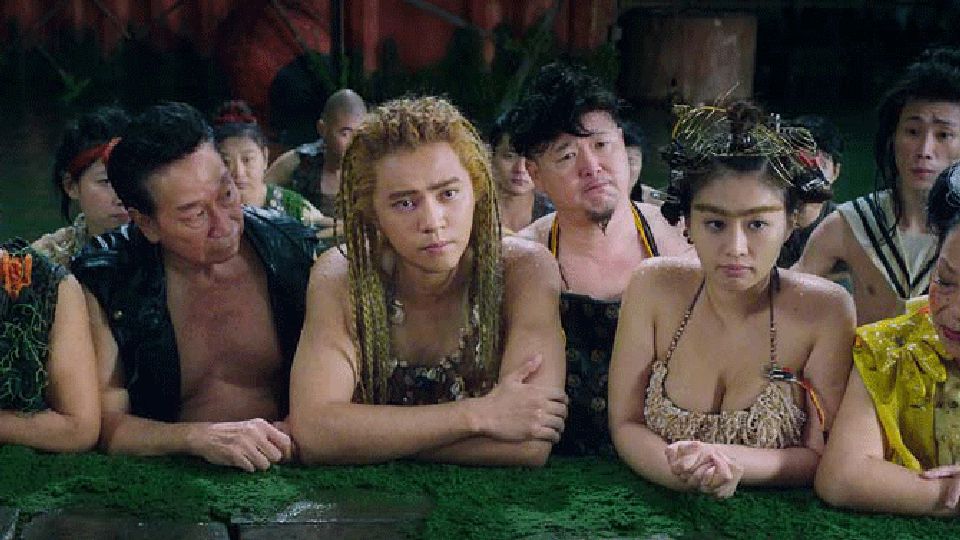
Posse, The Mermaid, 2016
2. The Mermaid: Stephen Chow Sing-Chi returns to slay the Asia box office with this incredibly loopy cinematic manifestation from the inside of his one-of-a-kind brain. In Hong Kong in the 1990s no one made comedies like Stephen Chow and it’s good to see he’s successfully crossed over to the greater Chinese film industry. Chow continues to combine a uniquely twisted worldview, a highly refined cinematic eye, lowbrow humor, a beautiful visual sense, cynicism and romanticism, maniacal wordplay, slapstick, random violence, and gross-out humor in a way that no other filmmaker can match.

Fleeing, Train To Busan, 2016
3. Train To Busan: Although ostensibly a zombie apocolypse flick, Yeon Sang-Ho’s film is also a melodrama, teen romance, road movie, and critique of capitalism all rolled into one thrilling ride. Gong Yoo anchors the film with his sensitive and vulnerable performance as a man caught up in a madness far beyond his imagining and control
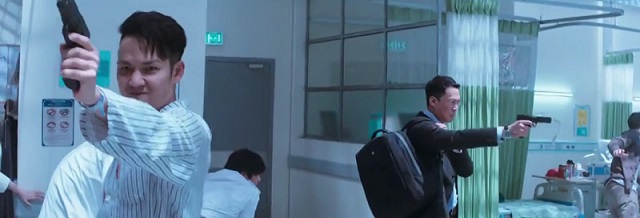
Meta, Three, 2016
4. Three: Johnnie To’s yearly masterpiece, which dissects the Hong Kong crime film vis a vis the hospital movie. Every shot and every scene is a meta commentary on its genre forerunners.

Despairing, Old Stone, 2016
5. Old Stone: Johnny Ma’s indie film is a scathing attack on the hypocrisy and idiocy of China’s Kafka-esque judicial system as it depicts one man’s attempt to escape a spiraling set of circumstances that threaten to ruin his life.
Viewed at the 2016 San Diego Asian Film Festival
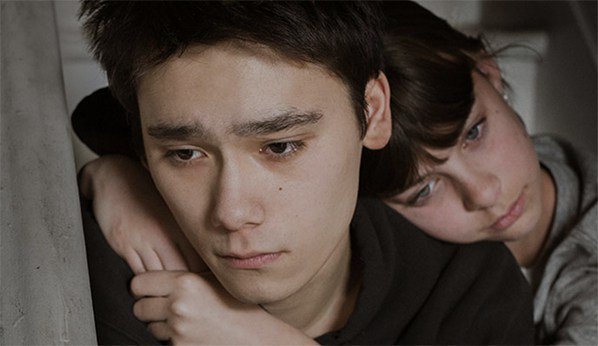
Real, The Lockpicker, 2016
6. The Lockpicker: Randall Okita’s bleak & angsty drama looks at a teenager dealing with loss, alienation, and anomie in snowy Toronto. The film is a very slow burn that pays off in the end. The casual cruelty of high school students rings very true and as a parent of a teen I found this movie to be terrifying. Led by a very strong performance by first-time actor Keigian Umi Tang, despite some confusing narrative moments the film sustains its tone of dread and anxiety throughout. Viewed at the 2016 San Diego Asian Film Festival
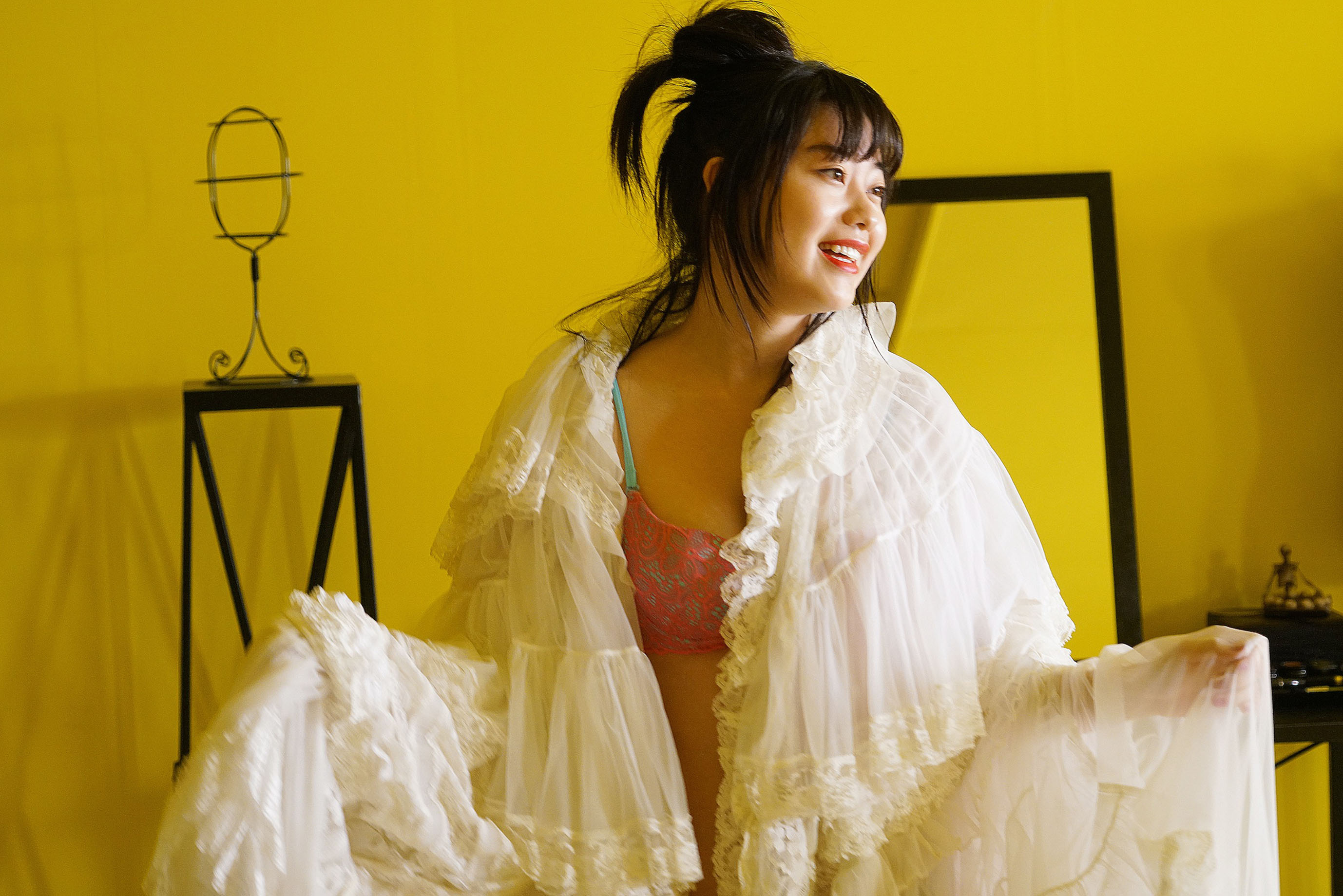
Yellow, Anti-Porno, 2016
7. Anti-Porno: Sion Sono’s playful and sexy pranking of Nikkatsu Studios’ Roman Porno films is made especially meaningful since it was produced by Nikkatsu itself. Viewed at the 2016 San Diego Asian Film Festival
Doppelganger, Fan ,2016
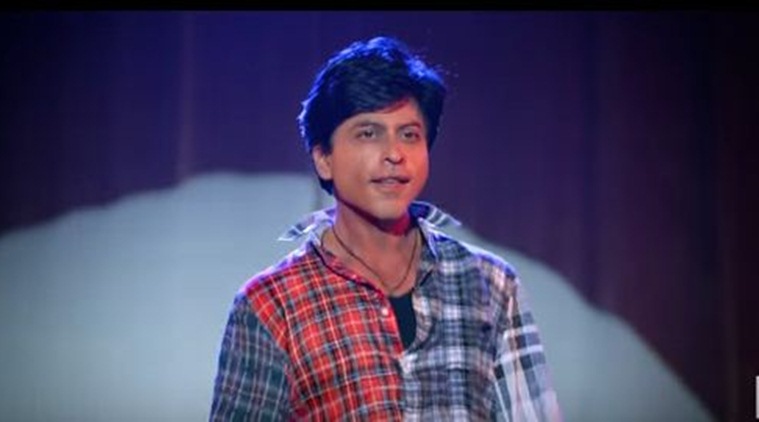
8. Fan: Shah Rukh Khan, the Badshaah of Bollywood himself, leads this twisted, meta examination of stardom and fandom, playing a dual role as both the adored and the adorer in a dysfunctional symbiotic relationship between a movie actor and his biggest fan. SRK is fearless in this film, exposing more warts than many other superstars might be willing to reveal. Director Maneesh Sharma delves into the darker side of fame, with the full support of his willing star.
Masculinities, The Magnificent Seven, 2016
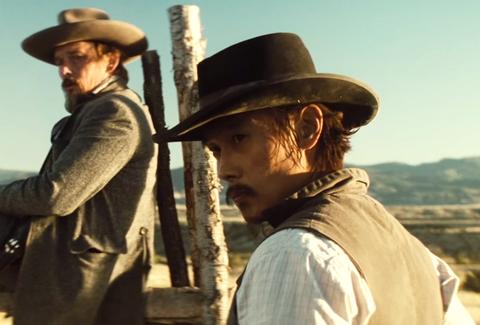
9. The Magnificent Seven: Antoine Fuqua directs a deeply subversive and radical film disguised as a Hollywood action movie. This joint shows that the subaltern can speak as well as shoot a gun. Bonus points for looking at alternate expressions of masculinity, male bonding, and homosocial love.
Histories, United Red Army (The Young Man Was, Part 1), 2016
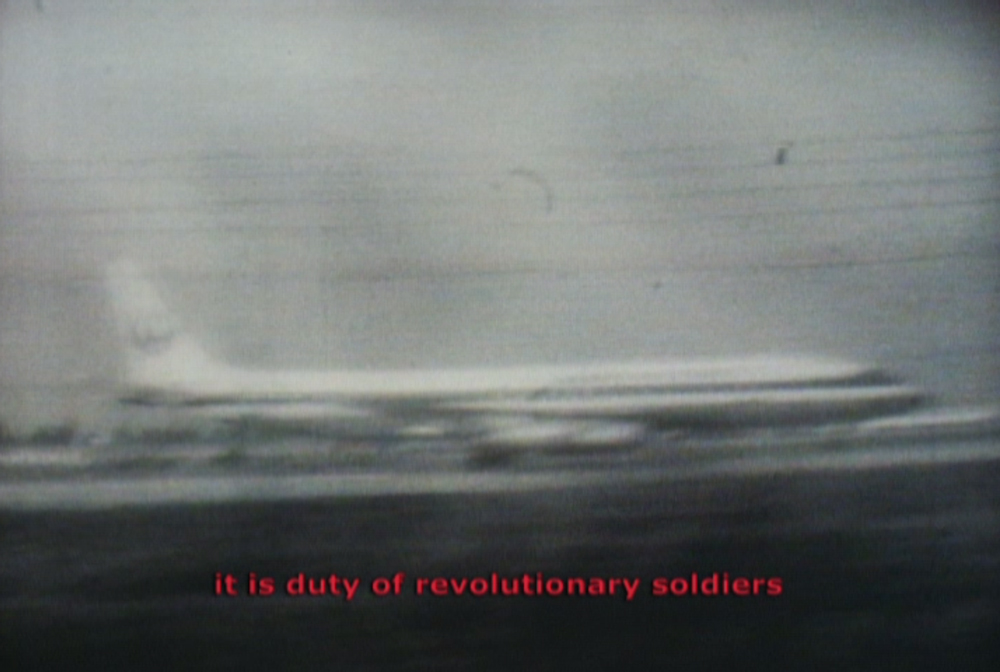
10. United Red Army (The Young Man Was, Part 1): Naeem Mohaiemen’s experimental documentary deconstructs the audio recordings of the conversations between members of Japan’s militant revolutionary Red Army and Bangladeshi government negotiators after the group landed a hijacked plane at Dhaka in 1977, adding in Mohaiemen’s own wry recollections of the event that he witnessed as a child via television broadcasts. Viewed at the 2016 Third Eye South Asian Film Festival in San Francisco.
Writing, Mele Murals, 2016
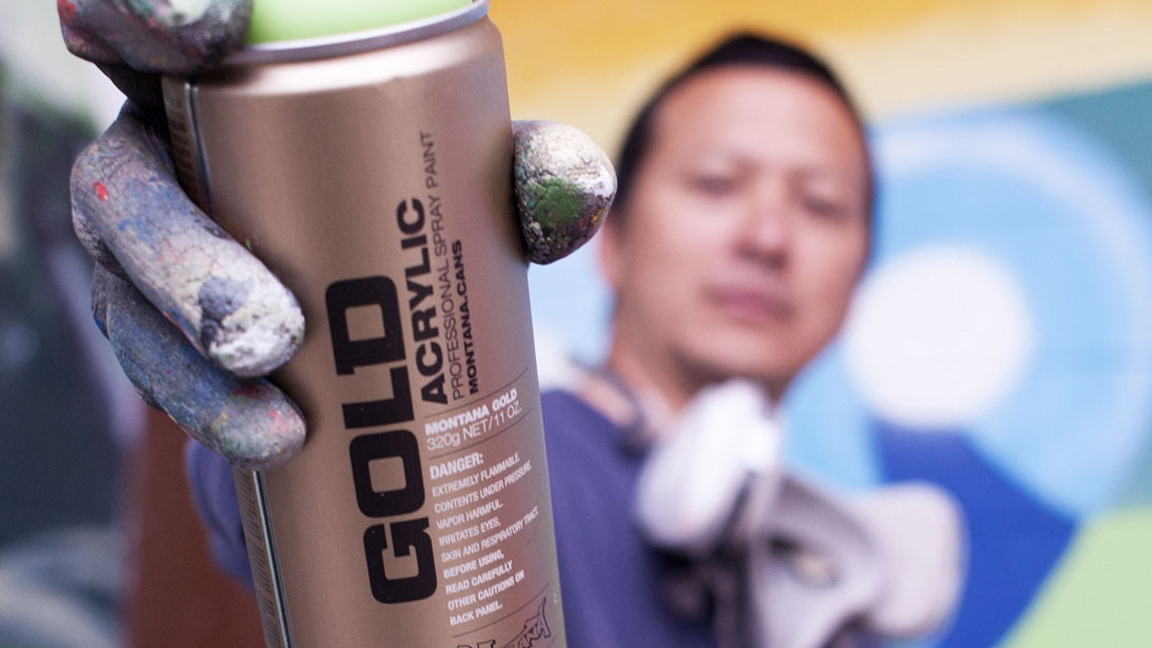
11. Mele Murals: In this documentary about Native Hawai’ian mural artists Tadashi Nakamura creates a thoughtful rumination on giving up selfhood in order to serve community, art, and culture. Viewed at the 2016 CAAMfest in San Francisco
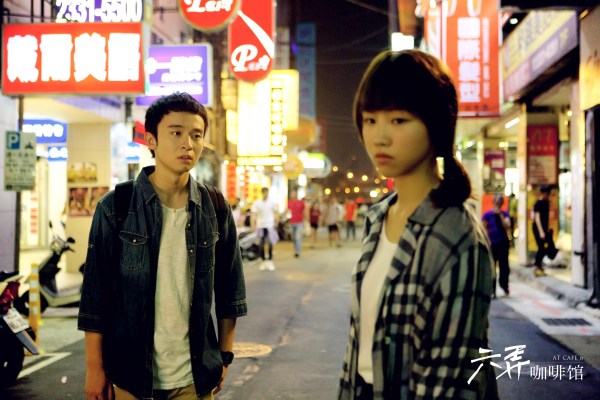
Charming, At Cafe 6, 2016
12. At Café 6: In yet another highly satisfying entry in Taiwan’s teen melodrama genre, director Neal Wu draws out excellent performances from his young cast. Though it doesn’t stray far from its genre conventions it hits all the right notes with subtlety and emotion, effectively looking at friendship, fate, love, and loss. After spending way too much time looking at the surgically enhanced beauty of so many K-drama stars it’s nice to see Cherry Ngan’s snaggle-toothed smile and Dong Zijian’s imperfect boy-next-door charms.

Off-balance, The Wailing, 2016
13. The Wailing: Na Hong-Jin’s creepy thriller had me off-balance throughout its running time, with its constantly changing POV and its refusal to adhere to genre conventions. Also in the mix is a strutting, scene-stealing performance from the ever-awesome Hwang Jung Min as a badass shaman, some incredibly disturbing man/dog violence, and boils and pustules galore. I was shuddering for days after seeing this one.
Honorable mentions: Line Walker; Spa Night; Equinox Flower; In A Lonely Place; We Are X
NOTE: An earlier version of this list appeared on sensesofcinema.com
The Pleasure Principle: San Diego Asian Film Festival

Kim Young Geon and aloha shirt, Young Gun In The Time, 2012
I’m suffering from severe film festival withdrawal right now after a whirlwind weekend at the San Diego Asian Film Festival, where I screened my latest short experimental documentary, The Chinese Gardens. SDAFF is a great festival, with a massive schwag bag, karaoke and lots of free food and drink in the guest lounge, and a jam-packed schedule full of outstanding film product. I flew in Saturday morning and returned Monday and in about 36 hours I saw more films than I usually see in a week, all on the big screen. Not only is SDAFF one of the biggest Asian American film fests, showcasing the newest and best Asian American movies, it also features a slew of outstanding Asian films as well. In my brief visit I saw docs, narratives, experimental films, shorts, features, horror, extreme, sci-fi, romcoms and more. Herewith are some of the highlights.

Jake and schoolkids, Jake Shimabukuro: Life On Four Strings, 2012
Tad Nakamura’s Jake Shimabukuro: Life on Four Strings follows the life and career of the ukelele wiz and the hour-long film is nice way for the director to stretch out a bit and work on a longer-form piece after three fine short documentaries, Yellow Brotherhood, Pilgrimmage, and the outstanding Chris Iijma bio, A Song For Ourselves. It’s all about relationships with Tad’s movies, which is why, even though I’m pretty much a heartless beyotch, they always make me cry. As with Nakamura’s previous shorts, the latest film possesses some really touching moments such as Shimabukuro’s mom talking about raising two kids as a single mom, and Shimabukuro’s manager seeing her hometown of Sendai hard hit by the Japanese tsunami. Shimabukuro’s a charismatic performer and his easy magnetism translates well to the screen. It’s quite something to see him grow from a gawky teenager to a seasoned performer holding his own at the LA Philharmonic. Nakamura’s editing skilz and his ability to capture emotion on screen, as well as the imaginative AfterEffects graphics work by Michael Velazquez, make the film more than a standard biopic. Nakamura also has a fine sense of place and community, as evidenced in his earlier short docs, and in the new pic Tad locates Shimabukuro firmly in his native Hawai’i, showing Shimabukuro’s respect and understanding for his instrument and its significance in Hawai’ian culture.
Due to various scheduling conflicts I was only was able to catch the middle hour of Sion Sono’s Land of Hope and I was very sorry I couldn’t see the whole thing. Following last year’s Himizu, this is Sono’s second movie set in Japan’s tsunami zone. The story involves several characters as they search for missing family members and deal with fears of radiation downwind from the fictional town of Nakashima (a mashup of Nagasaki and Hiroshima that stands in for real-life Fukashima). More low-key than some of Sono’s earlier horrorist fare like Exte (Hair Extensions) or his magnum opus, Love Exposure, Land of Hope ruthlessly mocks the Japanese government’s inadequate response to the tsunami and reactor meltdown while emphasizing the human cost of those disasters. The film was just starting to get extremely strange with a pregnant woman wandering the streets in a hazmat suit when I had to move on to the next screening, Painted Skin: The Resurrection.

Pretty Aloys Chen Kun, Painted Skin: The Resurrection, 2012
The highest-grossing Chinese-language film in the PRC to date, PS:TR is a chick flick/costume drama/war epic/fantasy film. Director Wuershan manages to dial back the DFX extremes he displayed in The Butcher, the Chef, and the Swordsman (which I quite liked, btw) and focuses instead on various interpersonal relationships including not one but two exogamous human/demon romances. The three-way affair between Zhou Xun, Vicki Zhao Wei, and Aloys Chen Kun must rank up there with Maggie Cheung/Brigitte Lin/Tony Leung Ka-Fei in Dragon Gate Inn as one of the most gorgeous love triangles ever captured on celluloid. An elaborate costume fantasy, PS:TR is a lot of fun, with Zhou, Zhao, and Chen playing it straight as the variously star-crossed lovers, and Mini Yang and William Feng providing comic relief. As per usual Aloys Chen is a fine piece of eye candy but here he lacks the range and charm he showed in Flying Swords of Dragon Gate. Vicki Zhao Wei does well as a long-suffering and unrequited scarred princess, and Zhou Xun as a fox demon manages to simultaneously convey longing, avariciousness, lust, and cunning while at the same time making her character strangely sympathetic. Mini Yang is cute and charming as a spritely bird demon, the first role I’ve seen her in where she was more than a flower vase, and William Feng as her comic foil is equally deft in his role.
Debbie Lum’s documentary Seeking Asian Female looks at the phenomenon of yellow fever, or white guys with a thing for Asian women. Although it takes a little while to get over the ickiness of Steven, the self-deluded main character who’s an Asiaphile with a particular obsession for Chinese women, I think Lum did the right thing in focusing on this guy. Steven is a not particularly good-looking, 60-something, twice-divorced, childlike dreamer living in a small walk-up apartment in Burlingame and making a modest living working at the SFO parking lot. Yet despite his lack of physical attractiveness, money, social status, or property he’s still apparently enough of a catch to draw several young Chinese women into online associations with him. The film makes a cogent statement about the power imbalance inherent in such relationships as even a lowly parking lot attendant in the U.S. can be desirable enough to attract women in developing countries like China.

Sandy spells it out, Seeking Asian Female, 2012
Once Steven’s prospective bride Sandy arrives from China things start to get interesting, as she has reasons of her own for wanting this marriage of convenience. Lum lightly touches on the plight of “leftover women” in China, those females who haven’t yet married by age 30, but where the film is best is when it explores the subtle power dynamic between a white first-world man and a woman from rural China. The film avoids preachiness or polemics yet its point is pretty clear—at one point Lum asks the clueless Steven just what Sandy is gaining from their relationship and he’s completely stumped. It’s possibly the closest he comes to realizing the vast power imbalance in their relationship and understanding the great advantage he has over his captive bride-to-be.
Yet despite its hot-button subject matter, Lum’s film never overtly judges the motivations of her two characters, although there are many opportunities to do so, and the film thus allows viewers to come to their own conclusions about the situation. For the most part the film also avoids easy romanticism and is fairly clear-eyed about the motivations of its main characters, contrasting Steven’s continued avowances of adoration for his newly met fiancée with Sandy’s much more practical view of the situation. My only quibble is with the very end of the film, where the story succumbs to sentiment and falls back on romantic love as the resolution to its narrative. After the film has successfully dismantled the Western idealization of romance it’s a bit of a letdown to have such a conventional conclusion to the story. But the rest of the film is so sly and watchable and possesses such a sharp and intelligent social and political critique that I’m willing to overlook this lapse.
I concluded my rapidfire film festival junket with a couple super-low budget digital features. Fresh young Korean director Oh Young-doo’s Young Gun In The Time is clever and inventive, with a great lead performance by Kim Young Geon as the titular character, a goofy young gumshoe with a cyborg hand who has a penchant for Hawai’ian shirts. The plot involves some kind of convoluted time travel, along with a murder mystery, a love story, and several excellent fight scenes, plus a sexpot boss and many ponytailed thugs including one whose weapon of choice is a retractable metal tape measure. Of course the time travel paradoxes make absolutely no sense but it’s fun to see where Oh goes with his conceit, and despite its miniscule US$30,000 budget the movie’s got a ton of zany digital effects, split screens, and other filmic tomfoolery that keeps everything moving along at an entertaining clip.

Oh shit, Henge, 2012
Japanese director Ohata Hajime’s Henge is another example of making the most from limited resources. Also shot on digital video, the film is follows a young couple whose marriage is hard-pressed when the husband starts to metamorphosize into a manical. bloodthirsty beast intent on mayhem. A nutty gojira/love story/werewolf tale that ends up with a guy in a rubber suit terrorizing Japan, the film overcomes its modest means and runs on sheer primal energy, led by a muscular, demented performance by Kazunari Aizawa as the man/beast. Henge questions whether true love knows no bounds, even when your spouse may be a throat-ripping, flesh-eating monster.
The 2012 San Diego Asian Film Festival continues through Nov. 9, so even though I’ve left the building there are many more cinematic delights still to be had. Check out the full schedule here.

 beyondasiaphilia
Recent Comments