Posts tagged ‘movies’
Unfaithful: Mistress Dispeller film review

I just saw Elizabeth Lo’s new documentary feature, Mistress Dispeller, this past weekend and was intrigued and engrossed throughout. Lo uses stylized visual techniques to expand the documentary medium while never losing sight of the humanity of her subjects.
The film’s concept is interesting as it follows Ms. Wang, whose business in China specializes in hiring out to help to break up extramarital affairs. Her particular skills are engaged by Mrs. Li, a middle-aged woman who has discovered her husband is having an affair with Fei Fei, a younger woman from a nearby city. Beyond the novelty of the premise, Elizabeth Lo’s unobtrusive camera emulates a narrative fiction film and plays out like a parlor drama.
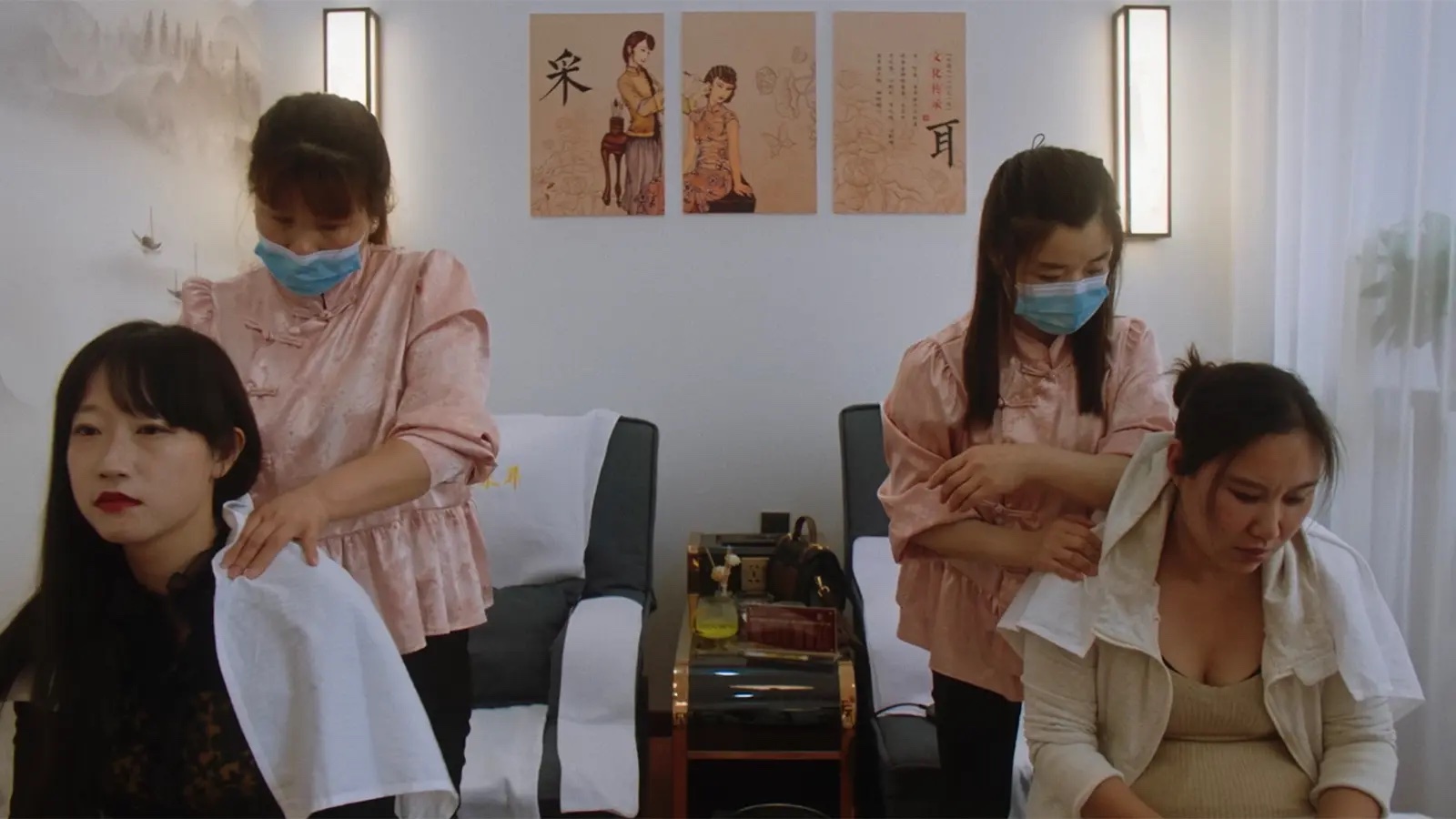
Lo’s last film, Stray, also used unconventional cinematic techniques, as it told the story of Istanbul’s stray dog population from the perspective of the dogs. That premise seems high-concept but Lo broadened its scope by also looking at the state of Istanbul’s refugee population. Similarly, Mistress Dispeller has a hooky concept, but Lo delves deeper than its seemingly sensationalistic premise. It would be easy to demonize the cheating husband or his girlfriend but Lo gives these characters a complexity that evades simple dichotomies. Although the basic love-triangle premise sounds like a reality show, there is no villain edit. Lo presents all of the main characters sympathetically and with complexity.

Lo also expands the visual style historically followed by many documentary filmmakers. Although her approach is related to cinema vérité, in the tradition of Frederick Wiseman and others who unobtrusively follow their subjects and who eschew narration, voiceover, or other techniques that guide the viewer, Lo’s film is a far cry from Wiseman’s oeuvre. Unlike Wiseman’s handheld camera and rough, 16mm aesthetic, Lo for the most part locks down her camera at a medium distance, or inserts aesthetically captured close-ups and establishing shots. Perhaps owing more to Jia Zhangke than Wiseman, Lo blurs the line between documentary and fiction film.
NOTE: I’m always happy to see movies at the Roxie, not in small part due to its outstanding popcorn, complete with freshly drawn butter and optional nutritional yeast. During the contentious battle to save the Castro its once-excellent popcorn had pretty much gone to shyte and now after its renovation I’m not optimistic it will be restored to its culinary glory. This leaves the Roxie, the Balboa, the New Parkway in Oakland, and other indie cinemas to carry on the Bay’s glorious fresh movie popcorn tradition.
Love Buzz: 2025 Mill Valley Film Festival
The 2025 Mill Valley Film Festival is upcoming this weekend and there is a treasure trove of Asian and Asian American films on the docket. Among these are some of the buzziest films from the current film festival season.
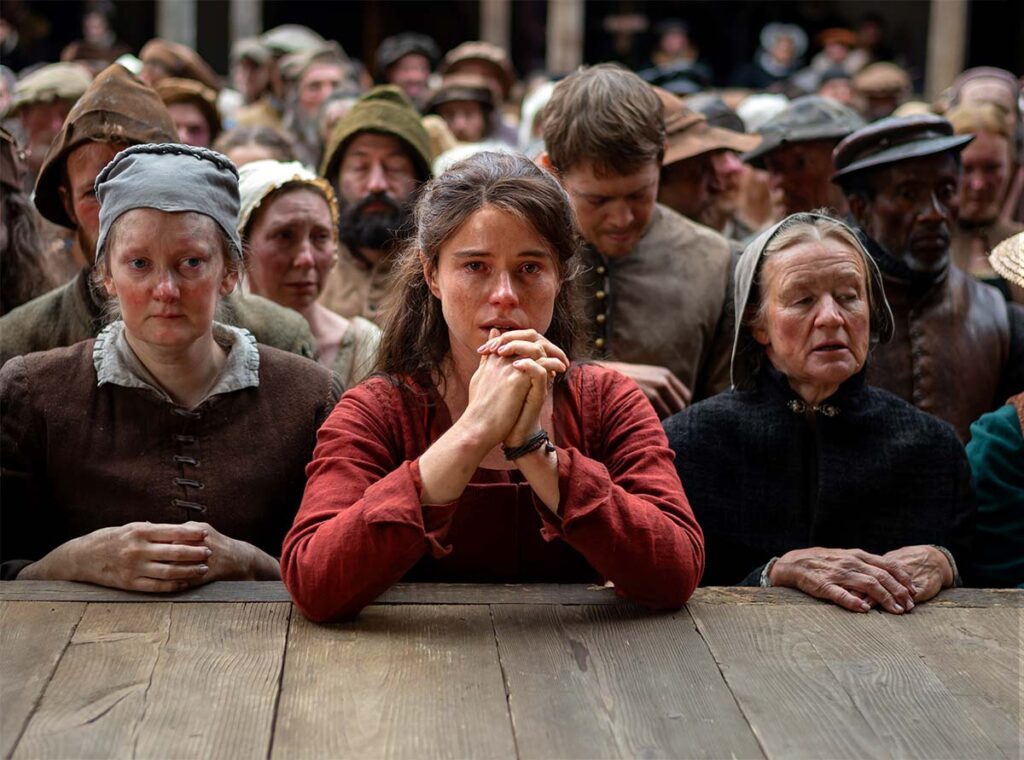
The festival’s opening night film is Hamnet, Chloe Zhao’s interpretation of the backstory of the creation of Hamlet. Zhao has a decidedly singular vision and the film promises to be an eye-opening and unexpected journey. Hamnet premiered at the Telluride Film Festival a few weeks ago and as with all of Zhao’s films it garnered a lot of attention for its unconventional vision and storytelling.

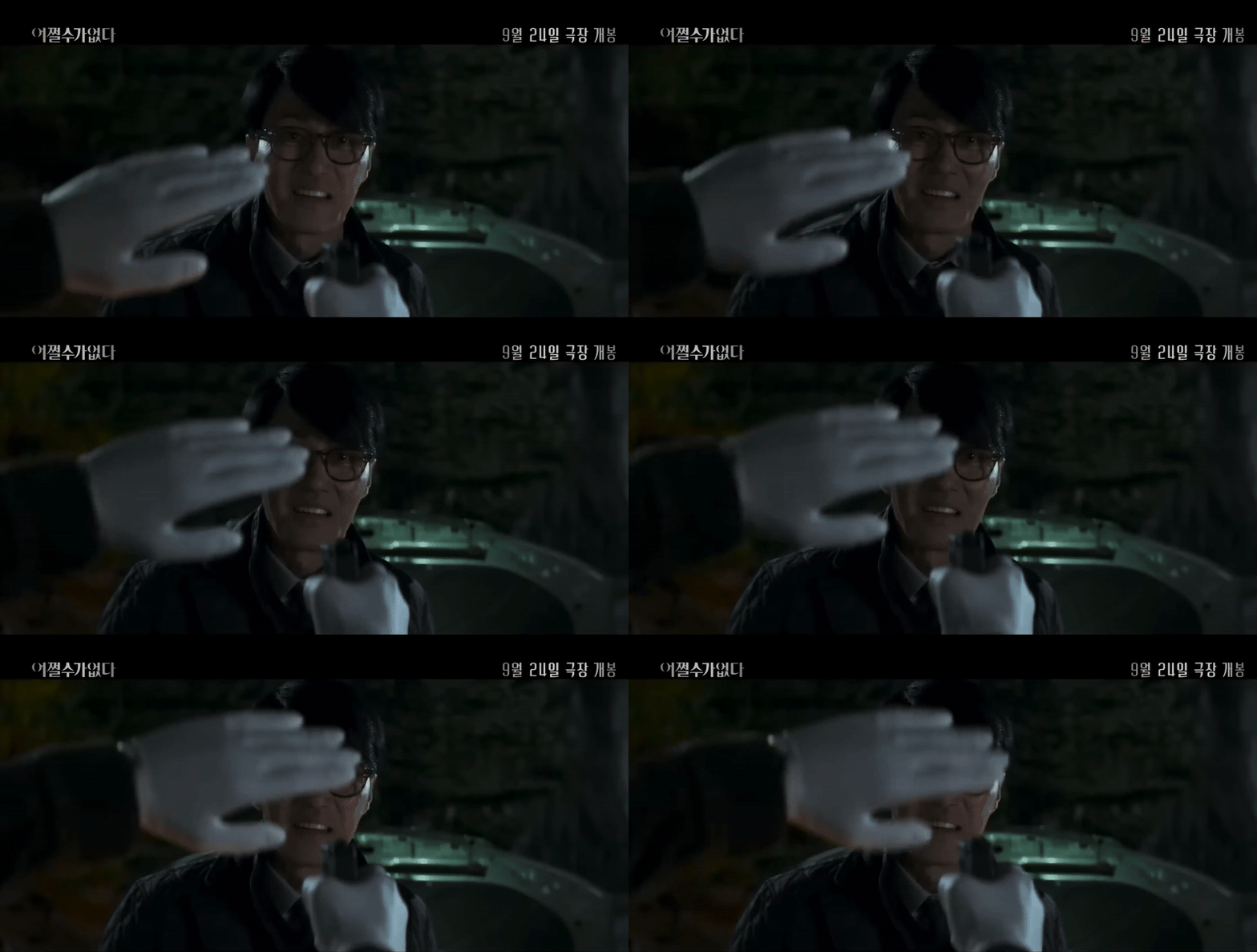
Probably one of the most talked-about films at the recent Venice Film Festival, Park Chan-Wook’s newest joint No Other Choice has its Bay Area premiere at MVFF ahead of its theatrical release later this year. With an A-list cast toplined by Lee Byung-Hun (Squid Game; Mr. Sunshine; A Bittersweet Life) and Son Ye-Jin (Crash Landing On You: The Pirates), the film is a black comedy about a white-collar worker (Lee) whose world is turned upside down when he suddenly loses his cushy corporate job. As expected in a Park film, things go sideways quickly. No Other Choice garnered a long standing ovation (reported as anywhere from six to nine minutes) at Venice and has presold to 200 countries.

Taiwan represents at MVFF with Left-Handed Girl (dir. Shih-Ching Tsou), another festival favorite that premiered at Cannes. Set in the night markets of Taipei, the film follows a single mother and her two daughters as they navigate life in the big city. The film is Taiwan’s nominee at the Academy Awards for Best International Feature.

Diamond Diplomacy (dir. Yuriko Gamo Romer) looks at the popularity of baseball in Japan as well as among the Japanese American community, exploring the ways that the game reflected and facilitated US-Japan relations both on and off the field. An encyclopedic look at its topic, the film spans more than 150 years from just after the Civil War to the present day, with appearances by Babe Ruth, Joe DiMaggio, Ichiro Suzuki, Masanori Murakami, and many more. The film is an intriguing examination of how sports, politics, celebrity, and soft power intertwine.
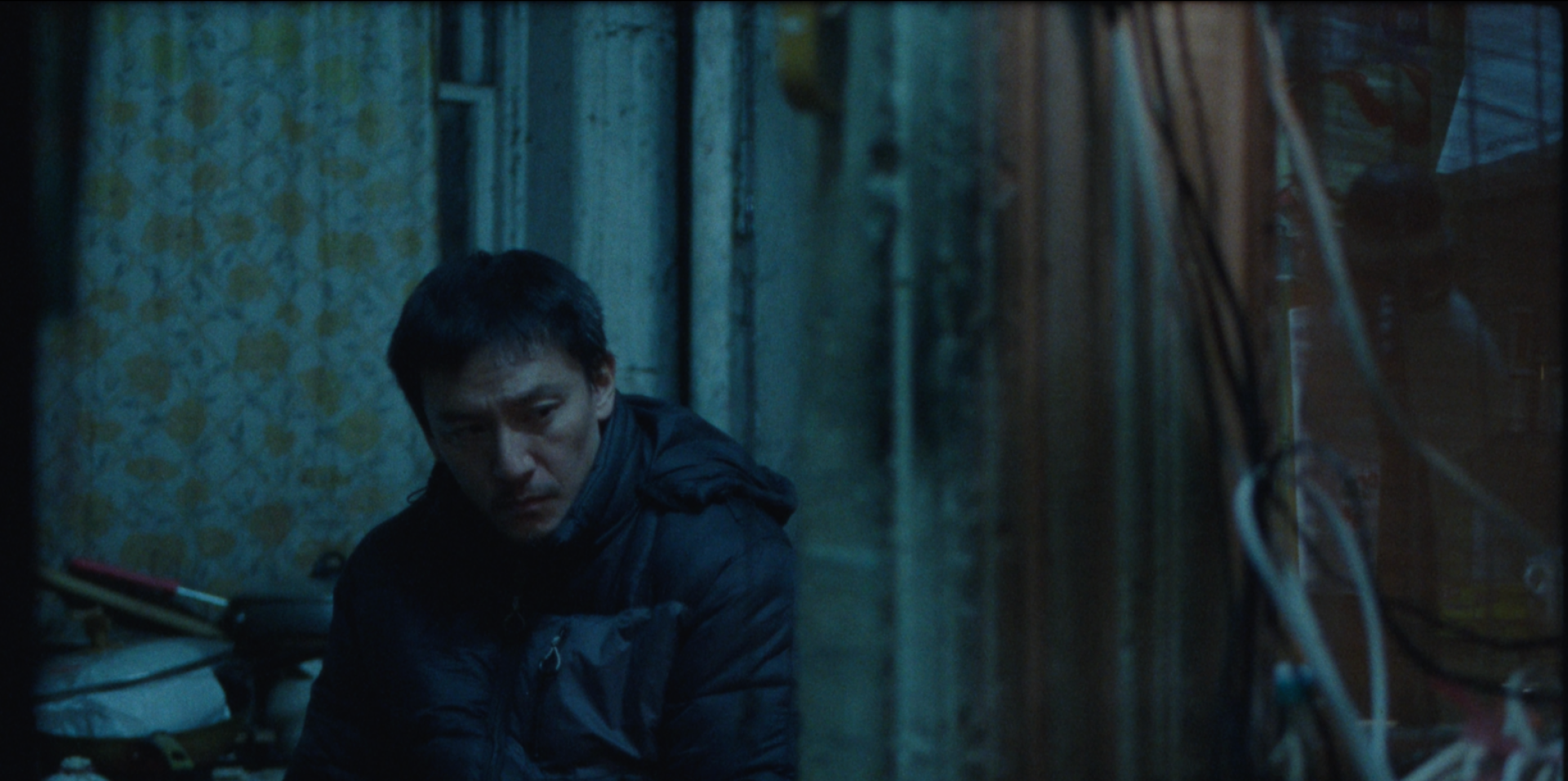
Chang Chen (A Brighter Summer Day; Crouching Tiger, Hidden Dragon; The Soul) stars in Lloyd Lee Choi’s directorial debut, Lucky Lu, which also premiered at Cannes. The film follows a New York City delivery driver, played by Chang, through a harrowing series of events as he roams the city in search of an acquaintance who’s run off with a large sum of his money.
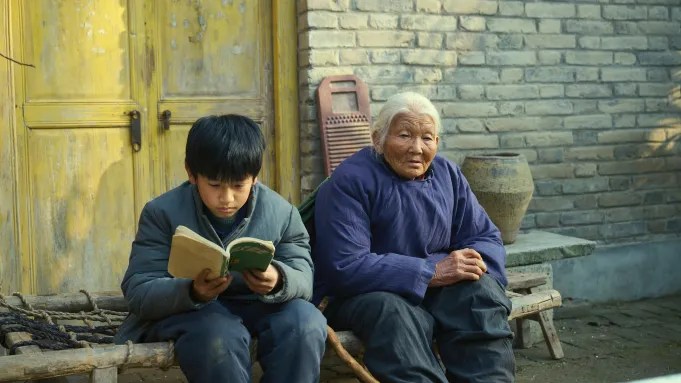
Living The Land premiered at the Berlinale last February where director Huo Meng won the Silver Bear for best directing. The film is set in 1991 and looks at life in a small village in China as its inhabitants live through the vast changes in the country at the time.
Along with these feature films there are a plethora of shorts by Asian and Asian American directors among the festival’s several shorts programs. It’s a great chance to see these films in the friendly confines of MVFF, since unlike the feature films many of them might not get widespread distribution.
All in all, this year’s MVFF is an excellent opportunity to catch the newest and hottest Asian/American movies.
Rise Up: Frameline San Francisco International LGBTQ+ Film Festival review

Because shit is so chaotic in the US right now I almost forgot about the Frameline LGBTQ+ film festival this year, but fortunately a friend reminded me that it was happening. I was lucky enough to do a quick pivot and catch a few select films at the festival.
The Hong Kong indie film Queerpanorama, directed by Jun Li, was definitely the edgeist of the films I saw. I’ve seen two of Jun Li’s previous films, Tracey (2021) and Drifting (2021), both of which focus on people on the margins of society in Hong Kong, and Queerpanorama follows in the same vein.
The premise is simple: A young guy in Hong Kong has a series of one-nighters with a variety of men. He asks them a bit about their life story before sex, then assumes their identities with the next hookup. It’s actually more benign than it sounds, without being overly dramatic or sensationalistic and in some ways it shows how we take on parts of everyone we encounter. It’s also about finding connections in a busy, anonymous city. The film captures the loneliness of modern life, as embodied by the fragility and strength of lead actor Jayden Cheung’s delicate physicality.
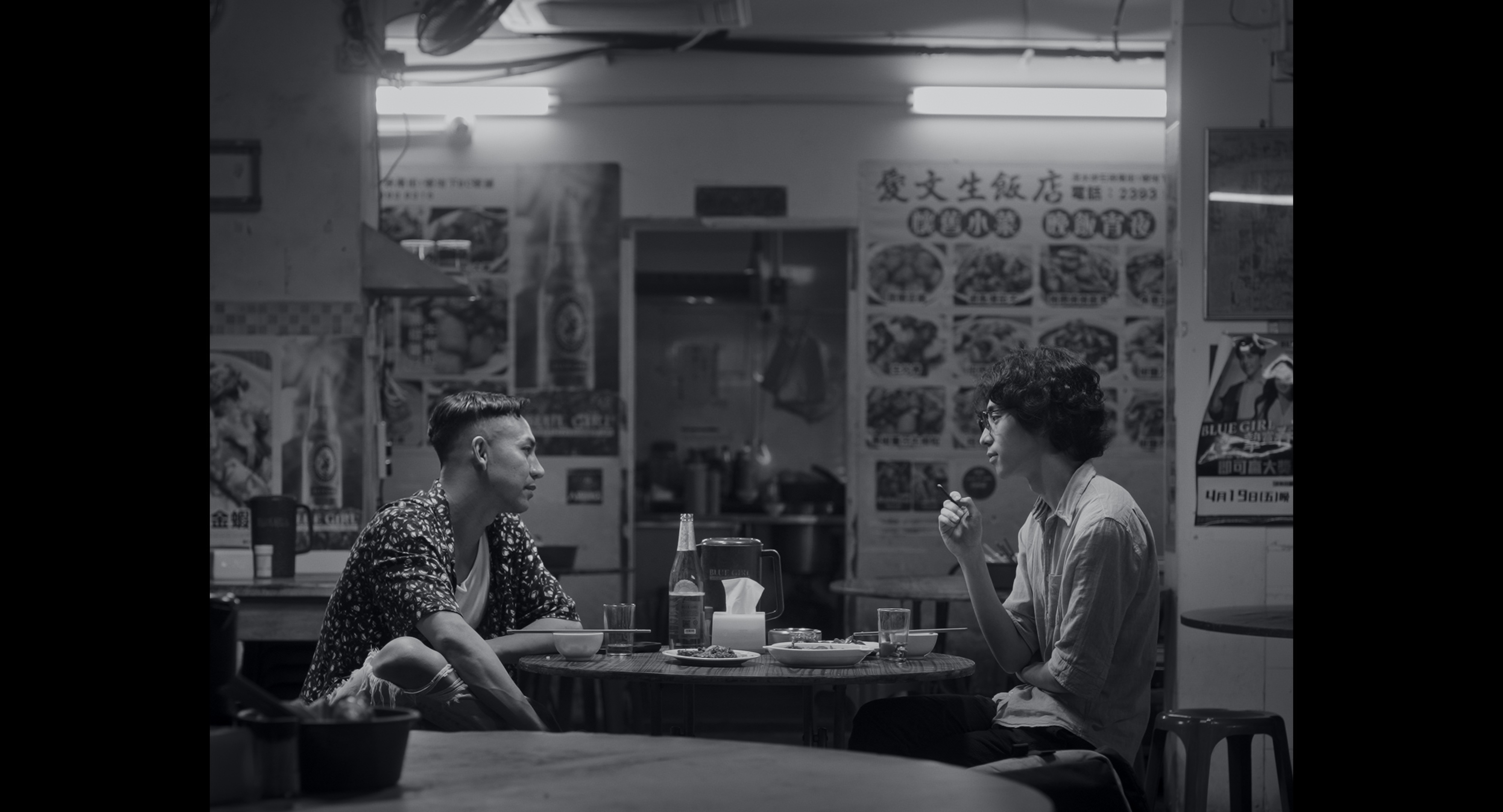
The conversations in the film are quite tender, often contrasting with the vigorous sex scenes that follow them, and the film emphasizes that the talking and the fucking are just two different ways of trying to connect. At the same time, the main character always keeps his distance, pointedly mentioning his boyfriend as well as specifying that each encounter is a one-off. The character endlessly circles, never fully engaging despite the physical intimacy, underscoring the difficulty of truly engaging in these times.

Taiwan’s Silent Sparks (dir. Ping Chu) is much more conventionally styled, a moody and brooding film that recalls classic film noir, but queer. An ex-con gets out of prison and tries to adjust to life on the outside but the world of crime keeps calling to him. The twist here is that the film explores the homosociality of prison and gangster films and reveals the unspoken homoeroticism in many of them. It’s a classic crime film setup but it says the quiet part out loud.
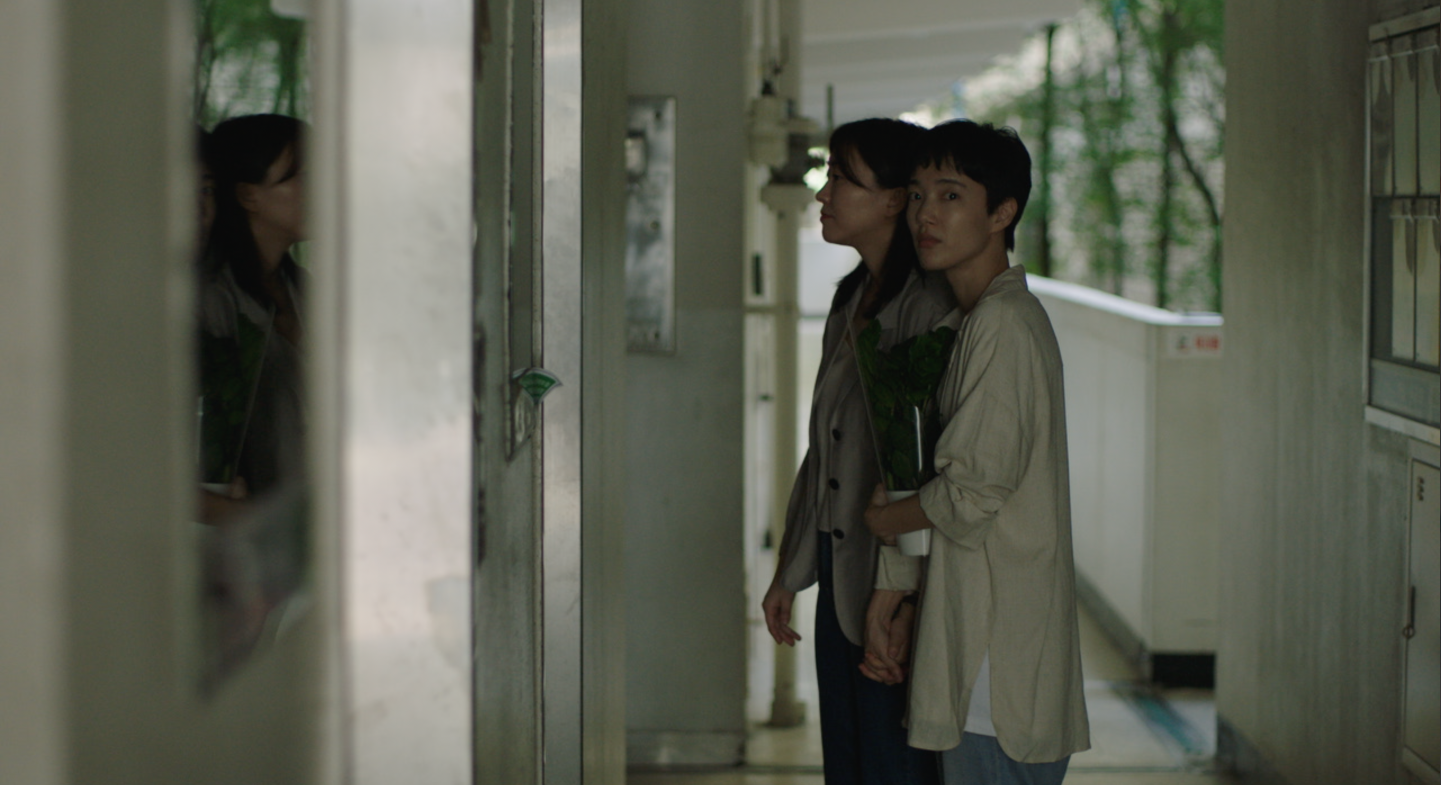
The South Korean narrative Lucky, Apartment (dir. Kangyu Garam) follows a lesbian couple in Seoul dealing with societal expectations, metaphorically represented by a very stinky apartment just below theirs. The film cleverly connects past and present and ultimately demonstrates the significance of chosen family and creating community across generations. Director Kangyu Garam uses a light touch in her critique of homophobia, societal pressures to marry, gender roles, and other issues facing queer women in Korea.

Jota Mun’s documentary Between Goodbyes follows Mieke, a queer South Korean adoptee as she navigates between her Korean family and her life in the Netherlands, where she was raised by a deeply religious single mother. A much harsher critique of the capitalist system that promoted Korean adoptions than Deann Borshay Liem’s groundbreaking Korean adoptee film First Person Plural (2000), the film is an intersectional look at the ongoing impact of international adoption.
I also caught the shorts program It’s a Family Affair, which included a handful of Asian films.

Tara (dir. Ashutosh S. Shankar) follows the story of a transfemme in India who starts dating a hunky new man, but the kicker is that his family isn’t opposed to her based on her trans identity but on the fact that she’s dalit and he’s brahmin. The film is a sensitive look at caste-based prejudice in India.
Correct Me If I’m Wrong (dir. Hao Zhou) is a quirky little look at the lengths a Chinese family will go to in order to straighten up the girly boy scion of the family, including various traditional remedies that attempt to cure what ails him. The results, however, are dubious.

Grandma Nai Who Played Favorites (dir. Chheangkea) is a droll and entertaining tale of the foibles of the ghost of a Cambodian grandma who reappears to comment on her queer grandson’s impending nuptials to a woman.

The highlight of the festival for me was Rashaad Newsome and Johnny Symons documentary Assembly, which follows the creation of Newsome’s multi-layered Afrofuturist performance piece of the same name. Although Newsome and Symons are very different types of filmmakers their collaboration on Assembly somehow managed to effectively mesh their very disparate aesthetics. During these grim times in the US and beyond it was a tonic to see a piece of art that addressed difficult questions with joy, hope and beauty. I entered the film in a very dark state of mind and left afterwards uplifted and inspired.
During his introduction to Queerpanorarma, director Jun Li spoke about the optimism and happiness he witnessed visiting Frameline in 2015 when the community was celebrating the legalization of gay marriage, as compared to now, when things both in Hong Kong and the US are much more dire. We are definitely in some rough waters right now but events such as Frameline offer hope that creativity, joy, and passion will somehow see us through.
Jump In My Car: New Wave documentary film review

Elizabeth Ai’s engaging documentary New Wave starts out as an examination of the significance of new wave music in the Vietnamese American community, then broadens its focus to be all about generational trauma, unresolved family dysfunction, and the long term damage from the Vietnam War on the Viet refugee community in the U.S.
The film intertwines the stories of two prominent members of the Vietnamese new wave scene, Lynda Trang Đài & Ian “DJ BPM” Nguyen, as well as that of filmmaker Elizabeth Ai. Foregrounded is much wonderful synth pop music, many fabulous archival photos of Viet teens with big teased-up hairdos, and lots of clips of jerky 80s dancing. But although the movie starts out being about the scene, it morphs into something completely different by the end of its runtime.

Extensive photos and clips of big-hair Vietnamese American kids grooving to the beat totally capture the vibe of the scene circa the early 1980s, right after the fall of Saigon, when many Viet refugees landed in the U.S. As the film notes, the parents were dealing with unaddressed PTSD from the war and many of the kids were left to their own devices, including the filmmaker. The film delves into Ai’s fraught relationship with her mother. who opened a series of successful nail salons and eventually became responsible for helping many other refugees to do the same in the US. But due to the demands of supporting her siblings and extended family, as well as complete strangers, Ai’s mother had no bandwidth for raising AI and her sister, so one of their young aunties took up the task. It was through this auntie that Ai was first exposed to the new wave scene as a child, which was roaring along in the Vietnamese community in the US at that time.

Having only peripheral knowledge of the Viet American party/music scene (mostly via Paris By Night), it was great to see an in-depth look at the career of Việt Kiều goddess Lynda Trang Đài, who made her debut as a teen covering new wave classics and gained fame as “the Vietnamese Madonna,” along the way revolutionizing images of Vietnamese American women performers. Adopting a more modern look than previous singers who performed in floor-length áo dài and sang traditional Vietnamese music, Lynda took the community by storm by singing in short skirts and crop tops and rolling on the floor during her high energy sets. However, the film demonstrates that all has not been roses for Đài as she too bears the responsibility of caring for an extended family as well as being under the scrutiny of the entire Vietnamese American community.
Ai sensitively handles Đài’s story as well as Nguyen’s tale of his relationship with his dad, detailing Nguyen’s youthful rebellion and his estrangement from his father, a well-known author who objected to his son’s interest in the new wave party scene.
The film effectively weaves together the stories of Đài, Nguyen, and Ai, using new wave as a backdrop to looking at the experiences of Vietnamese refugees in the U.S. Its abundance of archival images and clips, combined with dramatized re-enactments of the main characters’ youthful lives, turns what starts out as a fun trip down memory lane into a much richer story, full of sympathy for the main subjects. Ai’s direction possesses a perspective and a depth of understanding that can only come from someone who witnessed firsthand the events she’s documenting, which has long been hallmark of the best of Asian American cinema.
Experimental film in the time of coronavirus: CROSSROADS 2024 film festival recap

The Crossroads 2024 experimental film festival happened at Gray Area in San Francisco Aug. 30-Sept. 1, 2024, and it was excellent. I soaked up a lot of movies and saw a lot of friends so it was a very fine and enjoyable event. My very subjective diaristic experience below.
Day One
Got my new COVID vaccine on Friday afternoon so I was expecting a hangover sometime after that but by the time early evening had rolled around I was still feeling okay. So I headed over to Gray Area for the Opening Night screening, which was mobbed with experimental film stans. It was good to see such a big turnout for something that is relatively niche.

Program One included Simon Liu’s latest maximalist extravaganza, Single File (2023). Opening with an image of two people looking out the window at Hong Kong’s cityscape, the film is a frenetic, densely layered kaleidoscope overlaid with a percussive electronic soundtrack. The words Promise Rebuild flicker onscreen towards the start of the film and towards the end the film includes images of a large mass of people in the streets, which would now be illegal in Hong Kong. Created in the aftermath of the 2019 protests and the 2020 implementation of the repressive National Security Law in Hong Kong that criminalizes dissent, the film reflects this moment in the Special Administrative Region when oppositional voices have paused but not ceased and where they wait for a more opportune and less dangerous time to speak.
Day Two
Vaccine hangover kicked in and I felt mildly achy and feverish so I spent the day on the couch watching Korean dramas, which in some ways are stylistically the farthest I could get from experimental films. Hoped to feel better for Day Three on Sunday. However, although I couldn’t attend in person, I did manage to catch several of the films via the magic of online press screeners.

Among those I enjoyed Niyaz Saghari’s Ripple Effect (2024), an elegy to Iranian martyr Navid Afkari, who was executed by the Iranian government for participating in protests in 2018. The film opens with the brief quote, “The diver plunges into sea (death), but also into life (eternity), where he will discover the primordial waters of life” (Pierre Lévêque), and the film’s central imagery is a rephotographed clip of Afkari diving into a pool of water, suggesting that even in death Afkari remains a symbol of resistance.

I also liked Bisagras (2024), by Venezuelan filmmaker Luis Arnías, which was filmed in Senegal and Brazil and which utilizes contrasty black and white footage, with some negative imagery, to explore the linkages between slavery and colonialism in Africa and the Americas.The film’s ambient soundtrack is a nice change from a lot of the angsty noise-based soundtracks from a lot of the other films in the festival.
Day Three
COVID vaccine hangover completely gone as of Saturday night so I rallied to see three more shows on Crossroad’s final day at Gray Area. Consuming that much experimental content made it all a blur but I did enjoy new work by Deborah Stratman and TT Takemoto.

I appreciated the economical interweaving of images, text, and sound in Stratman’s Otherhood (2023). Rather than overexplaining, Stratman gives the viewer the benefit of the doubt, which creates a much more satisfying viewing experience.

TT Takemoto’s latest gem, For Jina (2024) is an ethereal blend of hand-manipulated film imagery combined with a dense, evocative soundtrack. The film is a tribute to Mahsa “Jina” Amini, an Iranian woman who died in police custody in 2018 after being arrested and beaten for wearing an “improper” hijab. Takemoto lifts the emulsion from photos and footage of Iranian women protesting after Amini’s death as part of the Woman, Life, Freedom movement as well as from the 1979 Women’s Day marches in Tehran, re-affixes it to clear leader, colorizes it with nail polish and then digitizes and slows down the footage to highlight the fleeting moments they’ve captured in the process. The film’s final image is of a woman defiantly shouting, suggesting that her voice will not be silenced. Though more fragmentary than some of their longer pieces, this short still demonstrates Takemoto’s sure hand with re-imaging found images and their continued interest in memorializing and elevating historical events that are threatened with erasure.
All in all, this year’s Crossroads was a great chance to see many experimental films as well as catch up with the many experimental filmmakers who were in attendance. As well as watching movies, these kinds of events are all about building community and I appreciated the chance to hang out, eat tortas, and shoot the breeze. It’s always a pleasure to get out and get away from my individual screens at home and to interact with real live people, along with watching movies on the big screen.
NOTE: Through Oct. 12 go here to watch Crossroads Online Echo, a streaming selection of Crossroads programming. Free!
Don’t Let Me Be Misunderstood: Carol Doda Topless At The Condor film review

San Francisco’s North Beach is right next to Chinatown, so growing up in the Bay Area I vividly remember seeing the giant neon sign at the Condor Club at Columbus and Broadway every time my family made the trek to the city for a wedding banquet or a red egg party. I always wondered who the woman in the billboard was and why she had bright red lightbulbs on her bra but of course it was not to be discussed with my parents or any other adults who happened to be driving the car. Once I got older I learned who Carol Doda was in a general sort of way but I didn’t know too many details about her life or how she came to have her likeness in lights at a club in North Beach, so I was happy to learn more via the new documentary, CAROL DODA TOPLESS AT THE CONDOR (dir. Marlo McKenzie and Jonathan Parker), which takes its name from that very neon sign that mystified me as a kid. Doda started her career as a go-go dancer and cocktail waitress there back in the early 1960s and when she became the first performer to go topless in 1964 she became a sensation.
The film does a good job evoking the time and place when San Francisco was the hippest place around. In the early 60s the beatniks were fading away and the hippies had not yet taken over, but San Francisco was still the place to go for vacationing Midwesterners looking for edgy entertainment. Doda was at the center of the scene and people lined up around the block to see her dance and sing in her g-string. The film tells her story through interviews with Doda’s contemporaries as well as from archival interviews with Doda herself (she died in 2015) and features copious amounts of archival footage from back in the day.

For the most part, like most biographical documentaries the film emphasizes the positive. It hints at a bit of the darker side of Doda’s story including her unhappy marriage at a young age and her estrangement from her children from that marriage and there is one scary shot of the very large needle used for silicone breast enhancement (Doda went from a 34B cup to a 44DD using silicone). There’s also a harrowing tale of a fellow dancer who developed gangrene in her breasts because the silicone blocked her milk ducts when she tried to nurse her infant, but the film isn’t an expose of the wrongdoings of the boob job industry. Instead it focuses on the perspective of Doda and the other dancers interviewed who describe the financial and personal freedom that topless (and later bottomless/nude) dancing afforded them. The movie frames Doda as a proto-feminist who actively chose her profession and places her in the context of the sexual revolution, the Summer of Love, and the women’s liberation movement, arguing for the agency and self-determination of Doda and her fellow dancers.
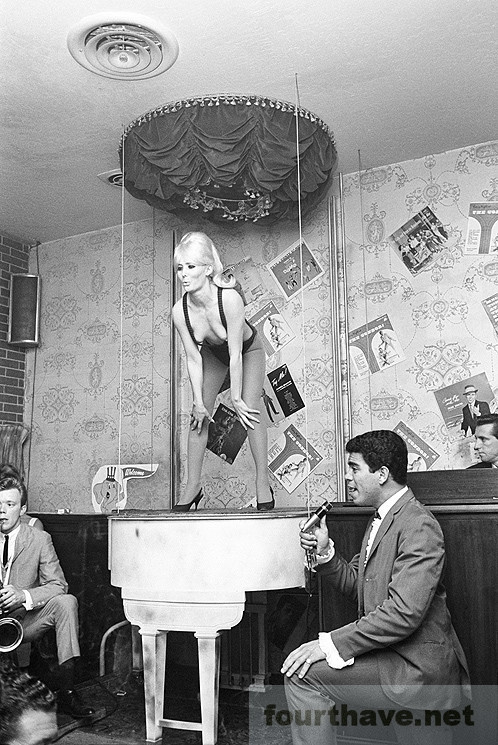
The film also traces the rise and fall of North Beach, which by the 1980s had become a much seedier place, as illustrated by the questionable death of Jimmy “The Beard” Ferrozzo, one of the managers at the Condor. Ferrozzo had some unfortunate encounters with organized crime and in 1983 he was crushed to death after hours one night by the hydraulic piano that Doda danced on top of in her show. The film also points out that in the 60s, couples and businessmen made up a big part of the audience at Doda’s shows, but by the 80s it was primarily single dudes, probably in raincoats.
All in all the film is a fascinating, wide-ranging and entertaining look at the era, with Carol Doda literally emboding that era. It’s a fun watch and it satisfied my curiosity about that giant neon sign and the woman that it represented.
The Beautiful Ones: Wong Kar-Wai retrospective at BAM/PFA
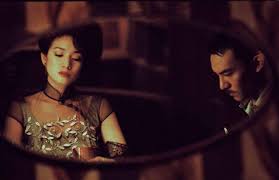
A cinematic treat dropped at the end of 2020 as the Lincoln Center in New York launched World of Wong Kar Wai, its retrospective of mostly 4K restorations of Hong Kong New Wave auteur Wong Kar Wai. The bulk of the series has traveled to various venues including the Berkeley Art Museum/Pacific Film Archive, where nine films are currently available for online viewing through February 28, 2021. The Roxie Theater in San Francisco is also showing seven films from the series through Feb. 25, 2021, including a screening of In The Mood For Love on Valentine’s Day at the Fort Mason Flix drive-in. Although it’s great that the films are available to view in all of their restored 4K glory, it’s bittersweet that audiences aren’t able to watch them on the big screen where they belong due to the ongoing COVID-19 crisis in the US.

I watched the BAM/PFA series in chronological order, and it was interesting to see the development of Wong’s signature style. His debut feature, As Tears Go By (1988), is a gangster film that stars Andy Lau Tak-Wah as Wah, a low-level triad in Mongkok who is constantly vexed by his triad brother Fly (Jacky Cheung), whose struggle with toxic masculinity conventions leads to much rash and insecure behavior.
Although the film loosely follows the trajectory of classic gangland films such as Mean Streets, in which the poor life decisions of one character leads to the downfall of his sworn brother, Wong’s filmmaking style had already begun to establish itself. The audacity of some of the shots, such as the focus on the sharpness of Andy Lau’s jawline or the beauty of a cigarette burning blue in the dark, heralds Wong’s trademark visual characteristics, as does his use of slow motion action, neon lights and silhouettes. The film also includes the breathtaking sexiness of Maggie Cheung and Andy Lau in their underwear wrestling on a bed in a hotel room, another element of Wong’s emerging style as he begins to sketch out his aesthetic.
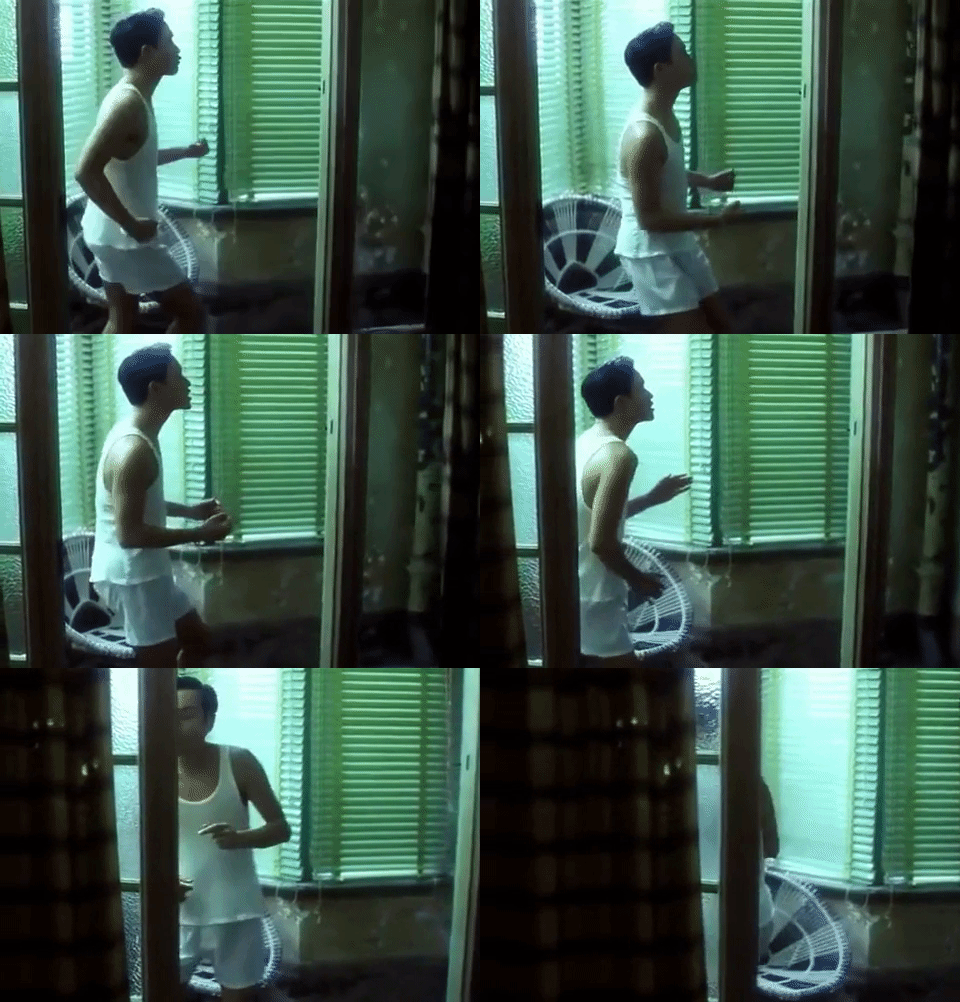
Wong’s stylistic elements came into sharper focus with his second feature, Days of Being Wild (1990). It’s a bit overwhelming to have a film populated with so many gorgeous movie stars at their physical peak, led by the sheer charisma and stunning beauty of Leslie Cheung in his prime and it really should be illegal to be that good-looking. Carina Lau holds her own as the feisty bar girl who gets involved with him. Maggie Cheung is mostly mopey and jilted in this one, though by the end of the movie she’s found her peace. Andy Lau is once again shockingly good-looking and photogenic–never has such a bone structure been so lovingly photographed. Jacky Cheung again plays the sad sack best friend, but here he’s much more restrained and nuanced. The movie closes with the famous mystery scene with Tony Leung Chiu-Wai in a very small hotel room preparing to go somewhere where he’ll need two packs of cigarettes and a deck of cards.

Chungking Express (1994) is still as fresh and exciting as the first time that I saw it more than 25 years ago. Light and airy, quirky and charming, with pitch-perfect performances, it captures Hong Kong’s day-to-day life without malice or darkness. Wong’s film explores the transience of life and the fleeting relationships in a big city where anything can happen and the world is open and free. Cinematographer Christopher Doyle establishes the iconic Wong Kar-Wai look with his lighting design alternating between the moody, neon-lit style of the first story and the bright, natural lighting of the second story. Once again Wong’s cast of topline movie stars, including Tony Leung Chiu-Wai, Brigette Lin Ching-Hsia, Faye Wong, and a 20-year-old Takeshi Kaneshiro, adds glamor and razzle-dazzle to the film.
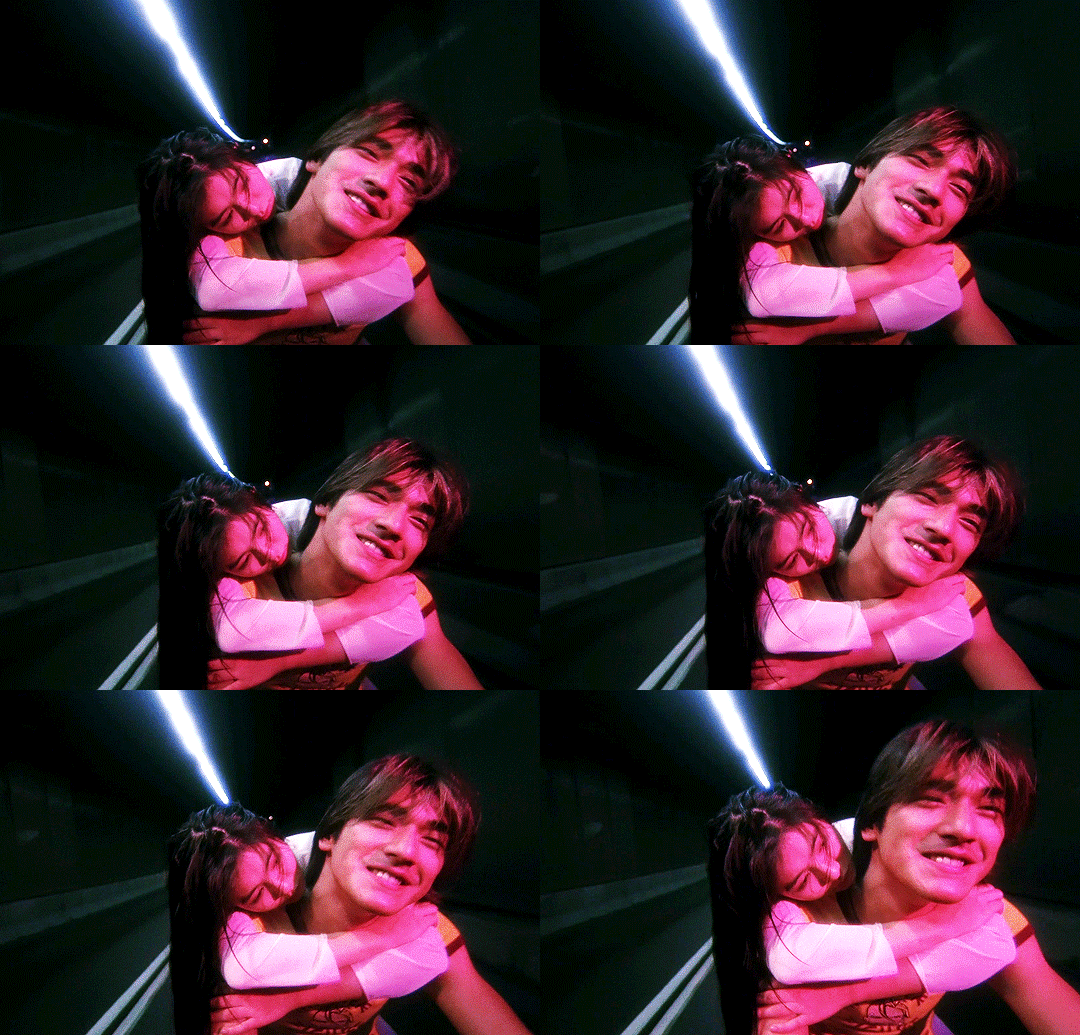
Fallen Angels (1995) is a much messier and less compact film than Chungking Express, full of neon lights, dutch angles, and rain-slicked streets. If Chungking Express was Wong’s renaissance masterpiece then Fallen Angels is his baroque turn, where all of his directorial tics are turned up to eleven. Karen Mok is in it too briefly and Leon Lai too much, but as in Chungking Express Takeshi Kaneshiro is quirkily incandescent. His character’s story is good enough to stand alone, with able support from a wacky Charlie Yeung and Chan Man-lei as his stalwart dad.
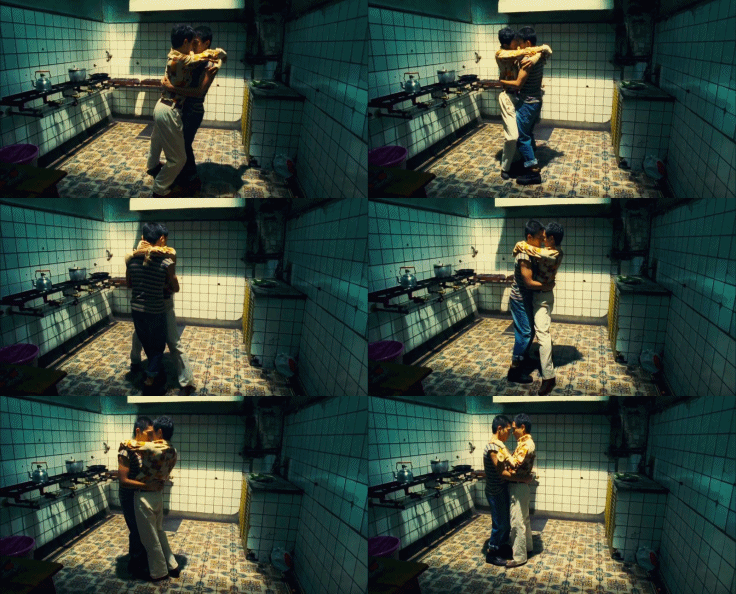
Although as full of visual bravado as Fallen Angels, Happy Together (1997) is a stronger film because its character development is more complex. Tony Leung Chiu-Wai is at his angsty best, conveying a kaleidoscope of emotions with a few flashes of his eyes, while Leslie Cheung is devastatingly effective as his mercurial lover. A gorgeous, moody film full of humanity, compassion, and sadness, this is Wong at his poetic best.

Trippy and elliptical, Ashes of Time Redux (1994/2008) holds up better than I recall from my initial viewing when the film was first released. All of the beautiful people are in this one (except for Andy Lau), including Jacky, Brigette, Charlie, Maggie, Carina, both big and little Tony, and Leslie as the lead character and narrator. Side note: why didn’t Heavenly King number four (Aaron Kwok) ever make an appearance in a Wong Kar-Wai movie? Too short and stocky? These things keep me up at night.
The odd narrative works if you let go of any expectation of linearity and it’s now quite amusing to see so many A-listers with their million-dollar faces obscured by matted hair, but there you go. Although when the film was first released martial arts purists were horrified by the blurry camerawork that wasted Sammo Hung’s action choreography, now it seems to all fit together with the tangled hair and blowing sands and Christopher Doyle’s grainy, oddly saturated cinematography.
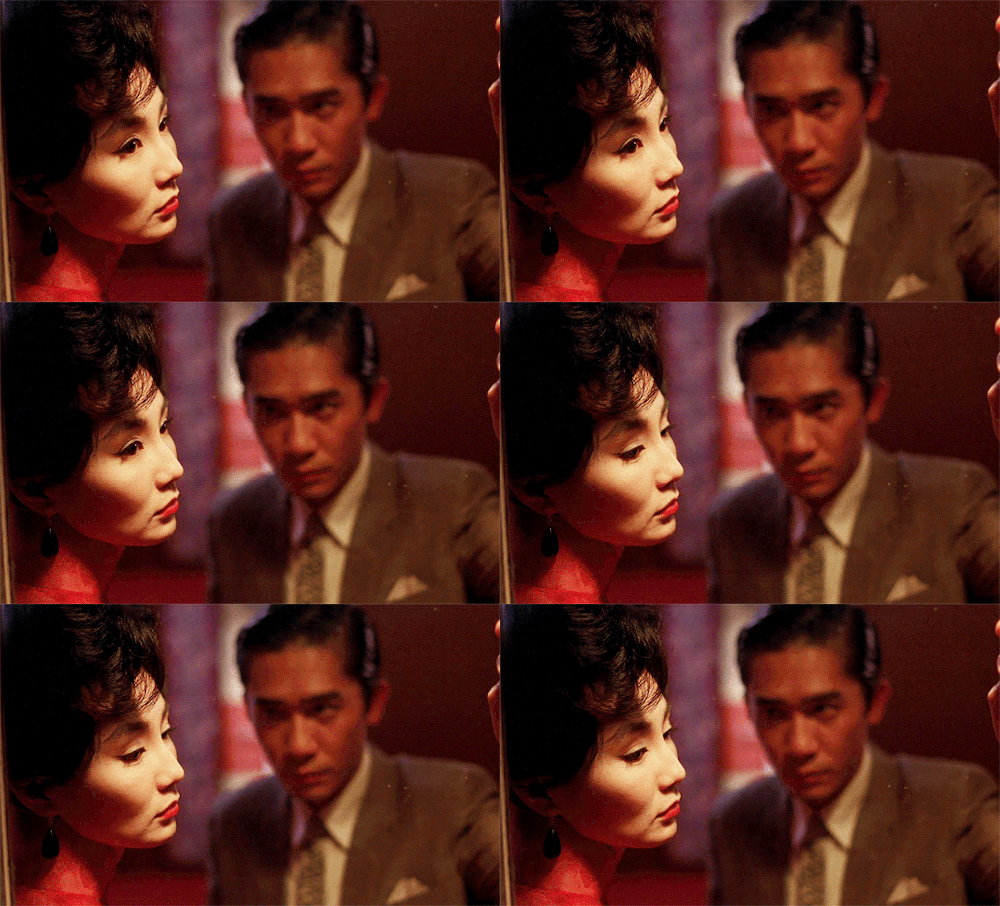
In The Mood For Love (2000) is perhaps Wong’s most acclaimed film, and justly so. All elements of the movie, from mise en scene to acting to cinematography to direction and editing, are stellar, led by Tony Leung and Maggie Cheung’s performances as star-crossed lovers. As with all of the 4K restorations in the series the digital remaster is sharp and beautiful, with the film’s saturated jewel tones shining through.

2046 (2004) is an example of what happens when a filmmaker is given an unlimited budget and full artistic freedom as the movie is obtuse, too long by at least thirty minutes, and could jettison its entire science fiction framing device. However, the main part of the film, set in the late 1960s and a loose sequel to In The Mood For Love, is great, with Tony Leung now a womanizing cad following his failed relationship in the earlier film. Zhang Ziyi as his call girl lover is dynamic and magnetic, matching Tony’s acting chops beat for beat . Along the way Gong Li, Carina Lau, and Faye Wong make appearances, though their characters don’t have much arc to speak of.
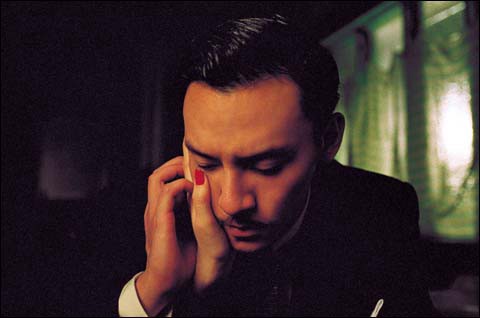
The BAM/PFA and the Roxie series both include the little-seen one-hour film The Hand (2004), which was a revelation to me as it was the only film in the program that I hadn’t yet seen. Originally released as part of the three-part omnibus Eros (along with segments by Michelangelo Antonioni and and Stephen Soderbergh), The Hand is a gorgeous meditation on class and gender divisions and unrequited love, and Wong goes all in with his cheongsam fetish. Gong Li as a courtesan falling on hard times and Chang Chen as her longtime admirer are amazing and the opening scene that the film takes its name from is a stunningly kinky set piece. The film makes a strong argument that Wong Kar-Wai should only make films set in the 1960s as the evocative art direction, from hair to costumes to set design, is on point and breathtaking.
Although this series emphasizes his auteurship, Wong Kar-Wai didn’t operate in a vacuum. His work was nurtured by the strongest film industry in Asia at the time, one that churned out hundreds of movies every year that were exported all over the region. In some way Wong’s films gave an entre into Hong Kong cinema to snobby cineastes who might have disdained genre directors like John Woo or Tsui Hark. This retrospective brings back memories of that brief shining moment when Hong Kong was the center of the cinematic world. It’s especially melancholy to consider through the lens of 2020/21, when the city has been so drastically changed by China’s brutal repression of free speech there.
Existence Is Longing: Wong Kar Wai
Berkeley Art Museum/Pacific Film Archive
December 11, 2020–February 28, 2021
Roxie Virtual Cinema
Available until February 25
Roxie Cinema
San Francisco
Drive-in screening of In The Mood For Love
Sunday, Feb. 14, 7pm
Fort Mason Flix
Queen of Hearts: An interview with Yellow Rose producer Cecilia R. Mejia

Yellow Rose (dir. Diane Paragas) is currently in the midst of its theatrical run in the US after taking the Asian American film festival circuit by storm in 2019. I talked with producer Cecilia R. Mejia about the film’s significance to herself and to the Asian American community at large.
BA: So it’s pretty exciting, to get theatrical distribution.
CM: When we got bought by Sony, it was exciting. And then with COVID, we didn’t know what was going to happen, but Sony said, we’re gonna do it anyway. So it’s been like a little weird, because we don’t know what the box-office numbers would have been if people felt safer to go to cinemas. But conversely, we also don’t know if they would have put us in that many theaters if COVID wasn’t happening.
BA: It’s funny because I had a film (Love Boat: Taiwan) that was playing at a lot of the same festivals as Yellow Rose, and it was always sold out before I could get a ticket. And it always won all the awards. I remember saying, “Yellow Rose is playing with my movie again–oh, well, there goes all the awards!” (laughs)
I teach Asian American film history, so that’s another reason I was super excited about this movie, because it’s a Fil-Am film, And the last Filipino American movie that I remember being in theaters might have been The Debut back in like 2000.
CM: I think they they also did it themselves–they self-distributed.
BA: That’s right, so it’s different because you got a major distribution deal. Are you the first Filipino American film to do that? Probably HP Mendoza did more like an indie route. He definitely wasn’t with Sony.
CM: I think it’s safe to say that we’re the first by major studio, so it’s super exciting to have that backing.
BA: What do you think contributed to you being able to get that kind of deal?
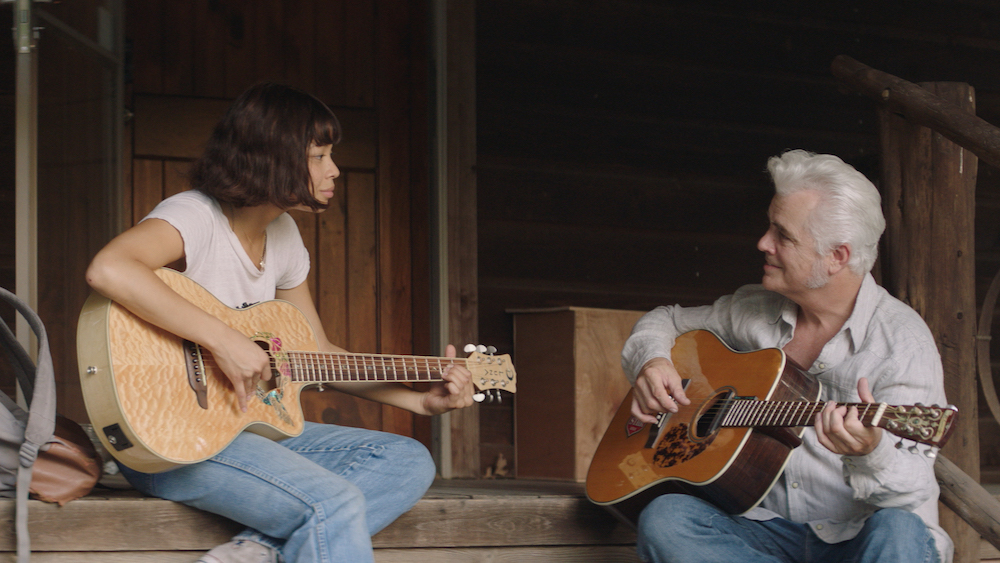
CM: I think some of it was the music. What makes our our film quite different is there’s the added element of the music and Sony also does music, so they also have the soundtrack that they’re pushing. I think what was appealing to them was, here’s this really interesting story about a community that’s never really seen on screen, and there is this element of country music, which is very popular.
BA: And Lea Salonga is in it too, right?
CM: Yes, she’s probably the most well-known Filipina in the world, along with Manny Pacquiao. She has a huge following. I think people really fall for Eva (Noblezada) too. People say to me, I feel like we’ve found a star.
BA: I’ve only heard good things about the movie. I mean, a film can be popular, but there’s always someone who’s hating on it. And I’ve never heard any hate for this movie.
CM: I know! We had a great festival run. We couldn’t have asked for a better opening than at Los Angeles Asian Pacific American Film Festival.
BA: How do you feel about like this giant Asian American film festival circuit? And how did that help out with getting more visibility for the movie?
CM: I think it helped a lot. I actually studied Asian American Studies in school, but I hadn’t really collaborated that much with other groups outside of Filipino Americans. And I thought, “I need to do that.” I feel like if we had been in those big festivals (like Tribeca), the film might not have been embraced the way that it was or understood the way that it was. It was just embraced by every community that we showed it in. And I just feel like it was nice to introduce some of our people and our crew members to the world of Asian film festivals because they hadn’t been part of any of that.
So I think I think it helped us because it gave us this boost and it helped build this community. I think the traction that we were getting at every festival was getting some buzz–people were talking about our film. Every time we were we were somewhere there was so much buzz.
BA: Yes, I think it was the buzziest movie last year at Asian American film festivals.

CM: Yes, and around this time of the year the festivals seem to all be around the same time. We had to divide and conquer–Diane was in Hawaii and San Diego. And I went to Philadelphia, Vancouver, Houston. It was like this whole circuit. And it was interesting, because we were all texting each other, “I think we won!”
BA: When you made the movie, I can’t imagine that you thought that it would be so popular. Do you remember what you were thinking when you started working on the film? Why did you decide you wanted to do this story?
CM: The backstory was that I have been working on this for almost a decade with Diane (Paredes), the director and writer. She herself has been working on this for more than 15 years and she had just sort of given up at some point and started her career as a commercial director, did a documentary. And then she decided, “I want to tell the story.” I was working with the Philippine American Legal Defense Fund at the time, was just out of grad school and I wanted to embed myself more in the public policy world. I was also working in and out of the UN, signing up people for DACA and working with Jose Antonio Vargas. And Diane came to our office to do research. She said, “I’m doing a film on an undocumented Filipino immigrant who loves country music,” and she showed me the look book. And I was so intrigued by it, because I’ve always been a lover of films, especially indie film. I didn’t think it was possible for me to infiltrate or be part of that world. So when she was showing it to me, I was really fascinated–I had never met a Filipino filmmaker before. So she asked me, “Do you want to do help me do research on it?”
So I was helping her and it snowballed. I was working on a really short documentary about undocumented Filipino immigrants who were detained, which we used as research. And then we were writing grants, and I was helping her reach out to the Filipino community and reaching out to different people. As the years were rolling on I started working as a full-time producer with her.
You mentioned The Debut–I had never seen a film that represented us since The Debut. I was waiting for something like that and so that was one of the driving forces for me–the whole backstory of a girl trying to find a home and understanding that experience from that perspective. So my goal was always to get the movie made, that was always kind of in my brain.

BA: Is there anything else that you personally really have gotten out of this experience? How has it changed your life?
CM: If I hadn’t worked on this film think I probably would be in some sort of government position, or heading towards public policy. But I’ve come to realize, especially in the last three years working with PJ (Raval) that there’s this medium of art and activism that is quite powerful. And if you watch someone like PJ navigate what he’s doing with his documentary Call Her Ganda, you see the impact of it. So this whole experience has helped me define where it is I want to go. It’s melded the things that I love most, as far as work is concerned–art, education, and philanthropy.
I think for most people film is a medium that reaches almost everyone. Whereas in public policy, you have to play politics more, and it’s also such a huge system. And you have to be like an ambassador or someone who works closely with an ambassador to get anything really done, otherwise, you’re just sort of kind of moving the machine and absorbing information. Whereas I think with film you’re able to do stuff quicker.
BA: Even though it takes like five years to finish a movie. (laughs)
CM: It’s not just this whole traditional medium of film, but art in general, I think, that has a way of changing culture in a way that nothing else can.
My goal is for people to leave the theater after watching this film and changing the way they think about immigration and about how they experience the Filipino community.
BA: Is there anything else you want to add before we finish?
CM: Yeah, there’s this. There was a review we’d read early on that was clearly written by a white woman. And she said that Yellow Rose was a white savior type of movie, because we have a lot of white characters. And I thought that was such an unfair comment, because I don’t think she did the research about who was behind the film. I also thought it was a dangerous review, because it also deters people from wanting to see the film, and supporting a community like ours, supporting filmmakers like Diane. So I thought, you know, how dangerous and irresponsible for a reviewer to do that. I don’t think people know the Filipino community, which is why maybe she said that, because she has no familiarity with it. So maybe since this month is Filipino American History Month, people maybe need educate themselves on who the Filipino American community is.
We had generally great reviews for the most part, but when I read that review, I thought, maybe because she saw Sony was behind it, maybe she didn’t know the backstory of how long it took for this movie and that it was actually the Filipino community that that funded this film. Or how historic it is to put Eva Noblezada and Lea Salonga in one film together, and someone like Princess Punzalan who’s an icon to the Filipino community, and the fact that Diane is the director and writer, and that this was a Filipino American-led film.
I think that that’s that’s something that mainstream viewers can’t understand, why it’s so important that these movies are there for us. It means more than just paying money for a ticket and watching something. We have our hearts and souls invested in these films.
BA: I just I just feel like every Asian American film that gets finished is like a miracle, honestly.
CM: Yeah, And I hate that some people say, well, we already had The Farewell. So literally, there’s that (Asian American film) for this decade. We’re two totally different stories!
Yellow Rose is currently showing at theaters across the US.
Marry The Night: 43rd Hong Kong International Film Festival
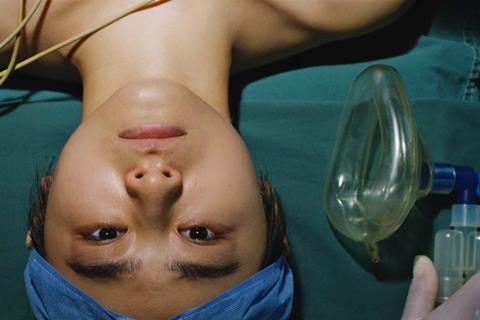
Stylized, A Dog Barking At The Moon, 2019
NOTE: Because of the crunch of completing Love Boat: Taiwan for the past six months or so I’m very behind on my postings here. Starting with this entry I’m going to try to catch up as best I can with the backlog, so apologies for the anachronistic timings.
This past March I took my first trip back to Hong Kong in nearly two years, after I spent last year dealing with a life-threatening illness, for the 43rd Hong Kong International Film Festival. Because this year there were no weekday matinee screenings, with programming most days beginning after 6pm, my screening schedule was somewhat less frenetic than in past years, but I still saw many great movies in just under a week of viewing. In no particular order here are some of the films I caught.
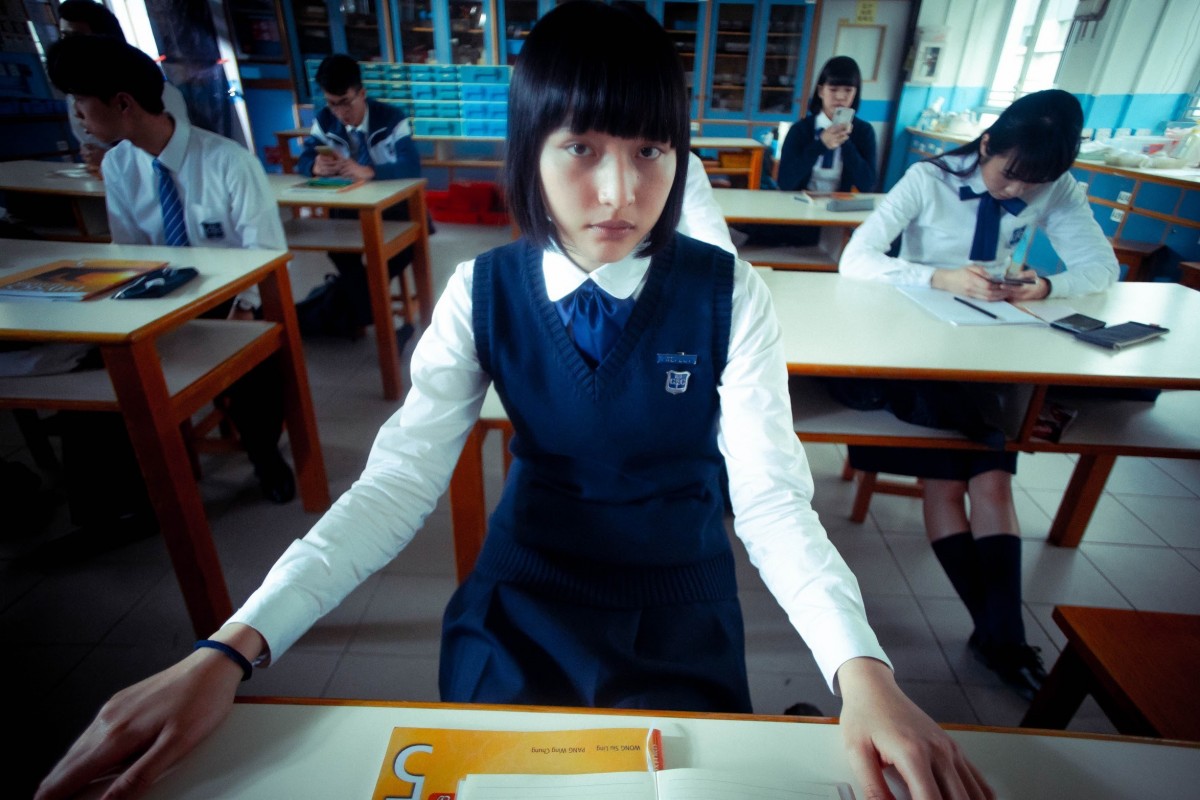
Sharper, G-Affairs, 2019
G-Affairs (2019), Lee Cheuk-pan’s directorial debut, is an interesting amalgamation of styles and tropes from past and present Hong Kong cinema, but with a sharper edge than many recent commercial films from the territory. Sex, crime, violence, and corruption permeate the proceedings as this bleak and nihilistic view of Hong Kong society follows several characters including a corrupt cop (Chapman To), a world-weary prostitute (Huang Lu), and a troubled teenaged student (Hanna Chan) whose teacher sexually exploits her. The film implicates those with power and authority who continually fail the younger characters, suggesting the betrayal of Hong Kong’s youthful dreams in the decades following the 1997 handover.
Backstage, First Night Nerves, 2019
A completely different sort of Hong Kong movie, Stanley Kwan’s First Night Nerves (2019) is an excellent example of what used to be called a women’s film, with a female-centric plot and strong women characters. Sleek and assured, Kwan’s backstage drama, his first feature film in nearly a decade, stars Cantopop divas Sammi Cheng and Gigi Lai as rival actresses. The film includes clever dialogue that references the tensions between Hong Kong and China and harkens back to the heyday of 1990s Hong Kong cinema.
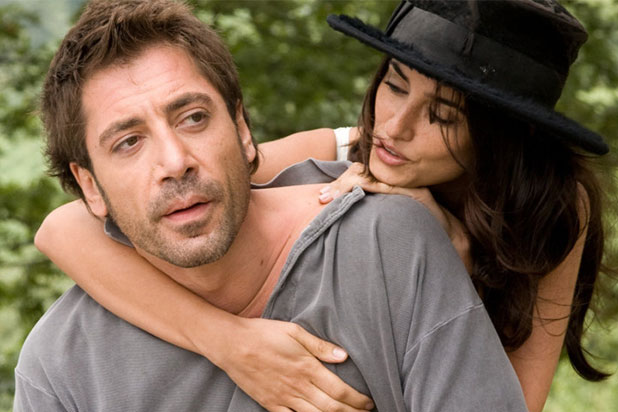
Complex, Everybody Knows, 2019
Everybody Knows (2019), Asghar Farhadi’s latest joint, is as usual full of moral ambiguity and complexity but a bit more plotty than his other films, including his Oscar-winners A Separation and The Salesman. A family reunion at a wedding in Spain dredges up past secrets and unresolved conflicts that come to a head when the daughter of one of the attendees is kidnapped. As usual Farhadi creates finely drawn, complex and ambiguous characters full of flaws and virtues, and draws out excellent performances from his cast, most notably the outstanding turn by Javier Bardim. His co-star and fellow international star Penelope Cruz is also good, although at times a bit too florid in her rendering of a mother desperately seeking her disappeared daughter. The screening I attended at HKIFF proved why seeing movies in a theater will always be superior to watching them online as the audience was totally into the film and gasped and laughed at the plot twists and reveals, thus enacting that ineffable cinema viewing experience.
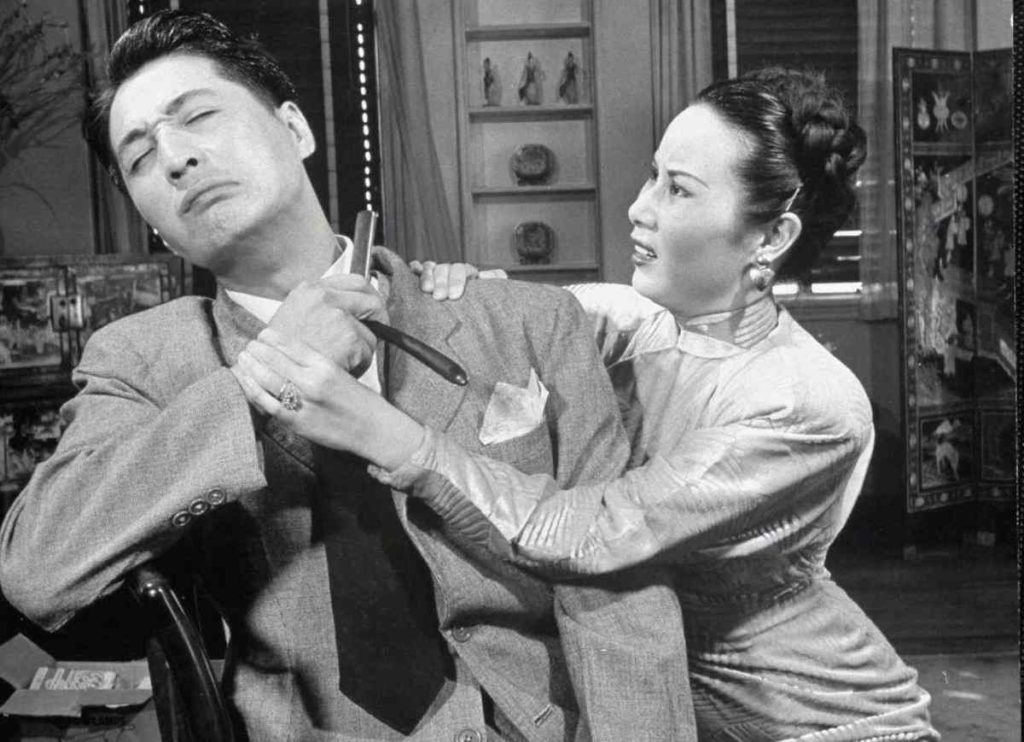
Iconic, Barber Takes a Wife, 1947
The festival also featured a clutch of four restored films starring the iconic Shanghainese actress Li Lihua. I was able to catch two of them including Barber Takes a Wife, a beautiful and charming screwball comedy from 1947. Full of snappy clothes and snappy dialog, led by the queen of the arched eyebrow Li Lihua, who is vivacious and charismatic, the film reflects the sheen and sophistication of pre-revolution Shanghai. In contrast, Bright Day (dir. Cao Yu, 1948) is full of social realism. There’s a bit too much exposition at the start but the movie eventually resolves itself well. Li is not quite as radiant as in Barber Takes a Wife but she is nonetheless lively and engaging. Director Cao’s background was in theater and the film is somewhat less cinematic than it could be, though there are flashes that are more filmic in the use of camera, lighting, and editing.
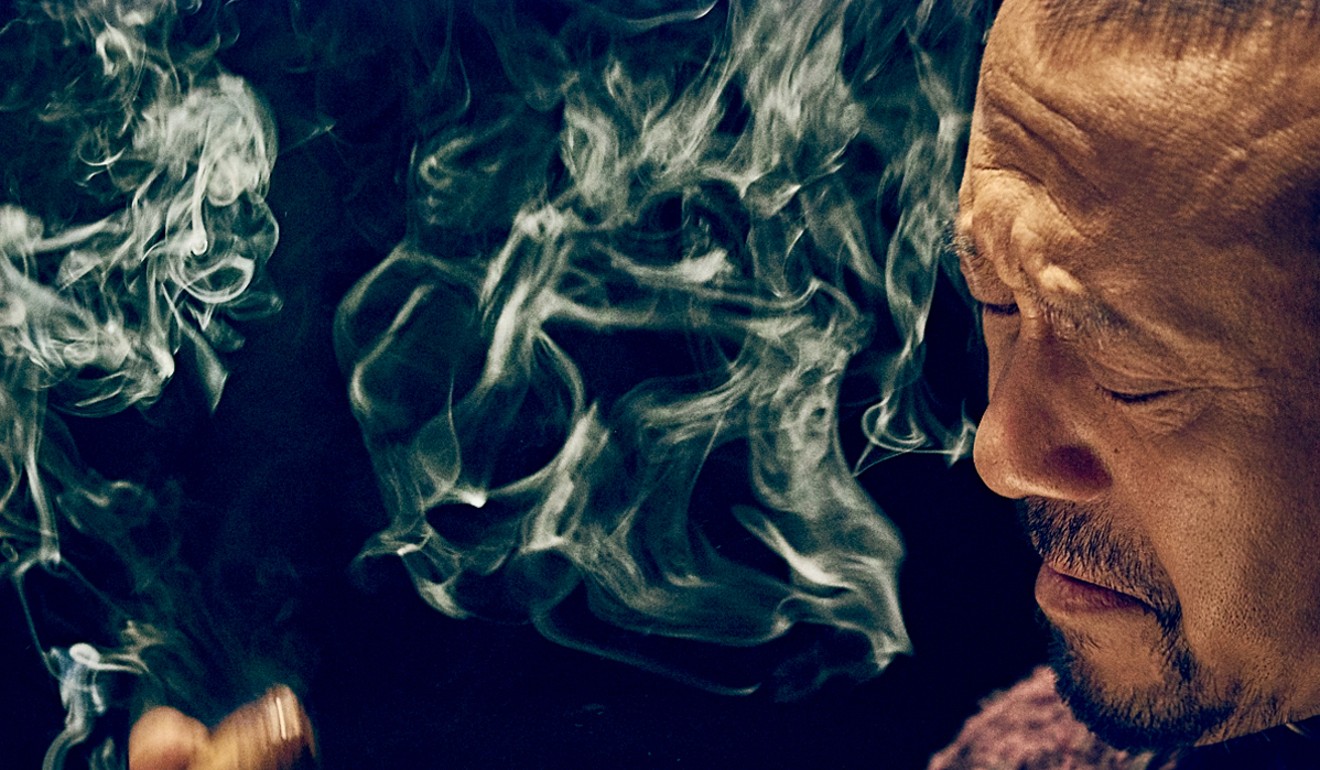
Pranking, Hidden Man, 2018
After my viewing of Jiang Wen’s Hidden Man (2018) at the film festival I thought it was a mess of a movie and I feel asleep despite (maybe because of) the film’s overblown action and hyperactive structure? Eddie Peng plays a similar role as Lee Byung-Hun in the Korean drama Mr. Sunshine, a returning expat who fled to the US as a child to escape violence and who is on a mission to avenge the deaths of those close to him. But I thought that Hidden Man never found its focus and jumped maniacally from person to place to topic, and that the characters were shallowly drawn. I also thought that the anachronistic cultural references and puns seemed forced and overly smirky.
But although I didn’t love this film the first time I saw it, on the recommendation of Ross Chen from lovehkfilm.com I watched it again on the plane ride back home from Hong Kong. Somehow it was better the second time around once I realized that Jiang Wen is a big joker who is pranking his audience throughout the movie. Some of the action choreography is quite good too and Eddie Peng looks good with his shirt off. And the way the film casually kills off major characters is very interesting, as if Jiang is making a mockery of the viewer’s suspension of disbelief.
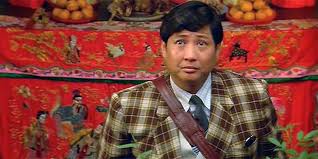
Vulnerable, Eight Taels of Gold, 1989
The festival also included a focus on the legendary Hong Kong actor, producer, director, and action choreographer Sammo Hung, who is probably most famous for his collaborations with his “brothers” Jackie Chan and Yuen Biao in classic martial arts films such as The Prodigal Son, Wheels On Meals, and Project A. I caught his starring turn in Mabel Cheung’s bittersweet drama Eight Taels of Gold (1989), which is really the best movie ever. Touching, vulnerable, and beautifully directed by Cheung, the film showcases Sammo’s acting chops as he plays a Chinese expat who’s spent many years in the US whose relationship with his cousin (Sylvia Chang) becomes complicated when he accompanies her to her wedding in their home village in China. Poignant, emotional, and humanistic, the film focuses on different side of Hung that contrasts with his more familiar comedic martial arts/action persona.
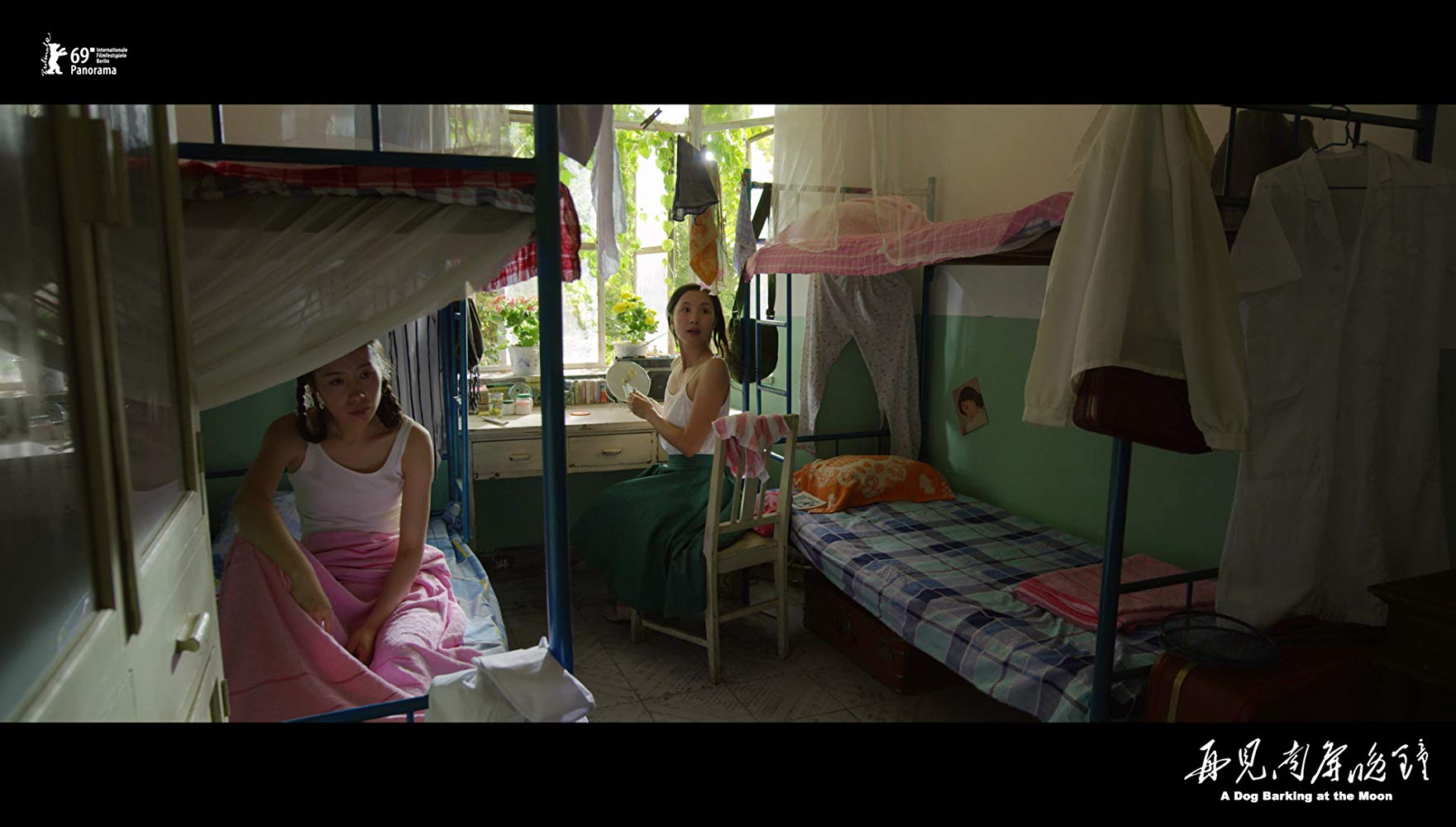
Bold, A Dog Barking At The Moon, 2019
Xiang Zi’s debut feature, A Dog Barking At The Moon (2019) is a stylized film that also has strong characters and an interesting plotline about a Chinese woman returning home to her dysfunctional family. Zi makes some bold stylistic choices, including theatrical interludes and overly mannered camera placements, and for the most part they work as they are self-conscious without being distracting. However, the narrative is very full and includes repressed sexual longing, homophobia, and cult indoctrinations, among other angsty developments. But the mother’s attraction to the cult and her ultimate motivations are believable and the Zi’s risky directorial decisions work more often than they don’t.
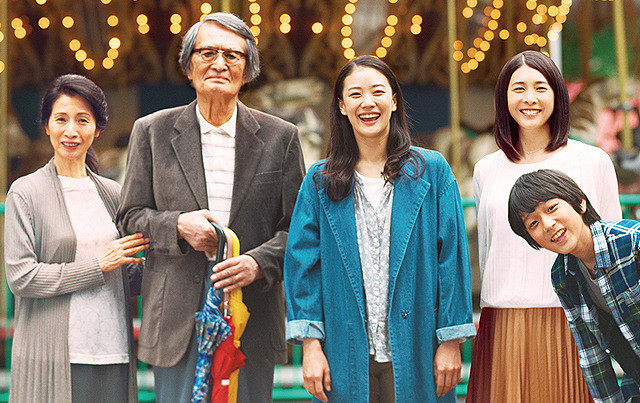
Conventional, A Long Goodbye, 2019
A Long Goodbye (2019), a family melodrama from Japan, is stylistically the opposite of A Dog Barking At The Moon. Director Nakano Ryota’s film, which follows a family as its patriarch gradually succumbs to Alzheimer’s disease, is conventionally presented and relies on strong acting and invisible direction for its impact. Leaning towards tearjerker, it skates close to melodrama without actually fully falling into the abyss.
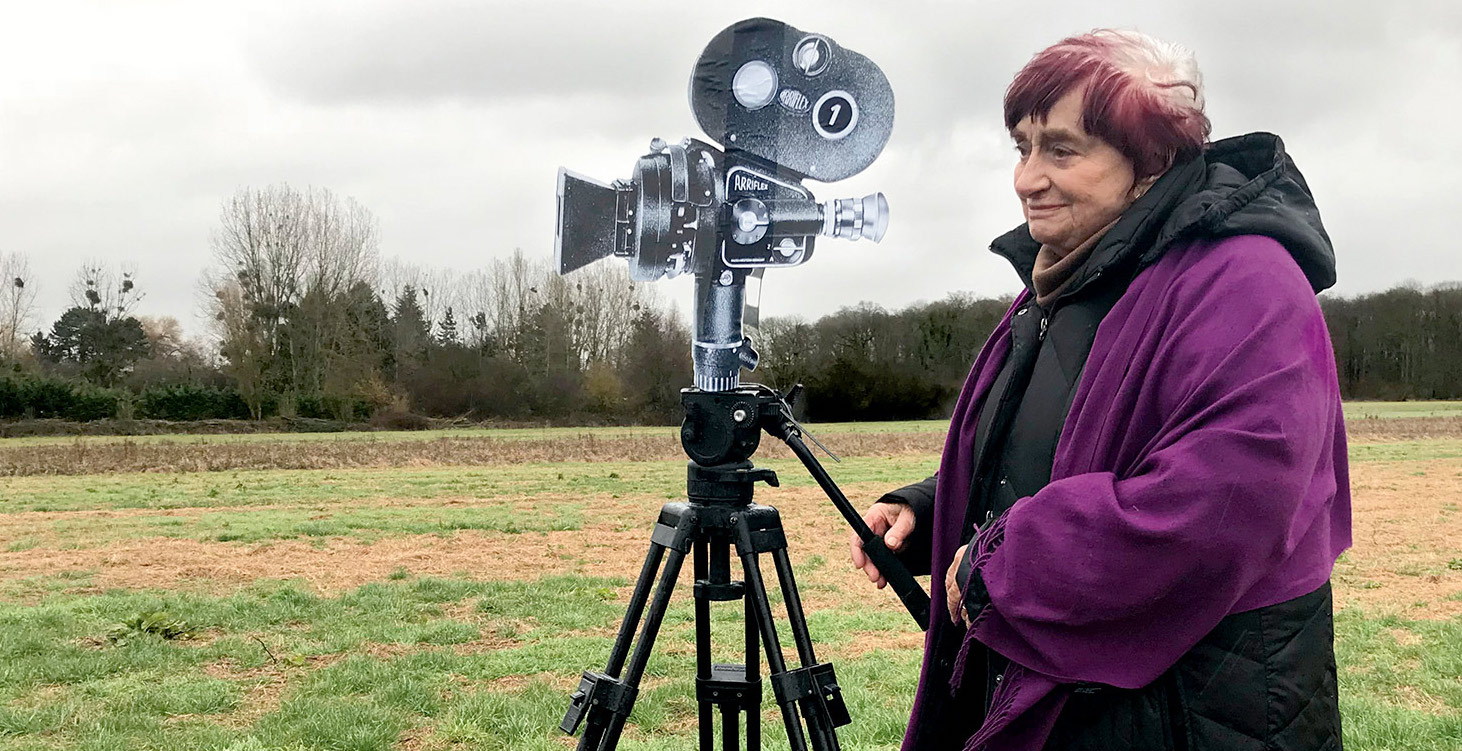
Groundbreaking,Varda by Agnes, 2019
Fittingly, the last film I saw at this year’s festival was Varda by Agnes (2019), which was a brilliant and prescient elegy to the groundbreaking nouvelle vague filmmaker wherein Varda herself looks back on her long and storied career. As well as being a noted director Varda was also an accomplished photographer and visual artist—later in life she worked in multi-channel media installations. I saw this a day after Varda’s death and it was an outstanding self-tribute that provided a fascinating look into the director’s creative process.
Postscript: As I write this in June 2019 the people of Hong Kong have been protesting and demonstrating against a draconian extradition law that may be a turning point in the territory’s relationship with its overlords in Beijing. Will Hong Kong be able to maintain its “one country, two systems” existence, which has already been severely diminished, or will Beijing further erode the civil liberties of the restive region? As the hundreds of thousands of people who have taken to the streets in the past couple weeks have proven, Hong Kong isn’t going down without a fight.
New Power Generation: Jia Zhangke and Lunar New Year films 2019
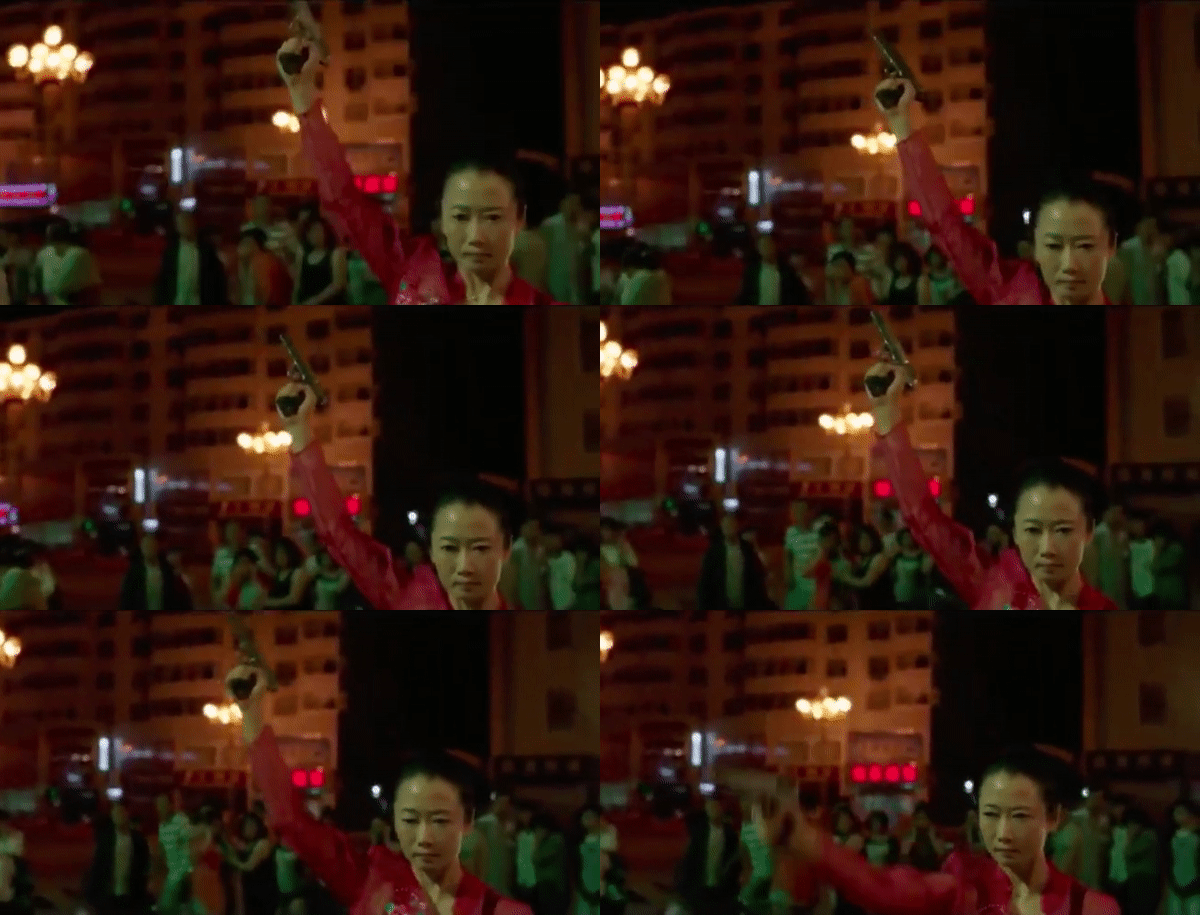
Jiang hu, Ash Is Purest White, 2018
This has been an interesting few weeks in Chinese-language cinema screenings here in the Bay. This is due in part to the recent Lunar New Year/Spring Festival holiday in China and related territories, during which a whole slew of new movies were released to capitalize on the extended vacays of most people during that time. Because of the glut in product and the large Chinese-speaking population in the Bay Area, a select few of those releases made it across the Pacific to San Francisco movie houses. Coupled with an extended series of films by one of China’s premier arthouse directors, this meant that I managed to catch many Sinophone films in the month of February.
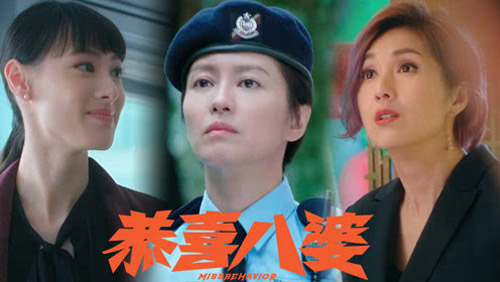
Cameos, Missbehavior, 2019
I started my Lunar New Year viewings with Pang Ho-Cheung’s Missbehavior, one of two Hong Kong films that made it to San Francisco in February. (Sadly, I missed the other one, Felix Chong’s action thriller Integrity, due to scheduling conflicts). Pang is Hong Kong’s 21st century bad-boy auteur who’s racked up a number of well-received hits including Isabella, Vulgaria, Aberdeen, and his Love In A Puff series that stars Miriam Cheung and Shawn Yue. Miss Behavior is a low-budget quickie that carries on in the best tradition of New Year’s films, with a big cast with many famous people making cameos, a lighthearted comic tone, and a lowbrow sensibility including an extended sequence of the glamorous Dada Chen discussing her bowel movements. Though it’s not one of Pang’s deepest or most thoughtful films (the setup involves a group of friends frantically trying to locate a bottle of breast milk) the narrative is actually very well-constructed and it moves along at a good clip, briskly shuffling its many characters in and out and climaxing with a free-for-all in a big ol’ shopping mall after hours.
Spectacular, The Wandering Earth, 2019
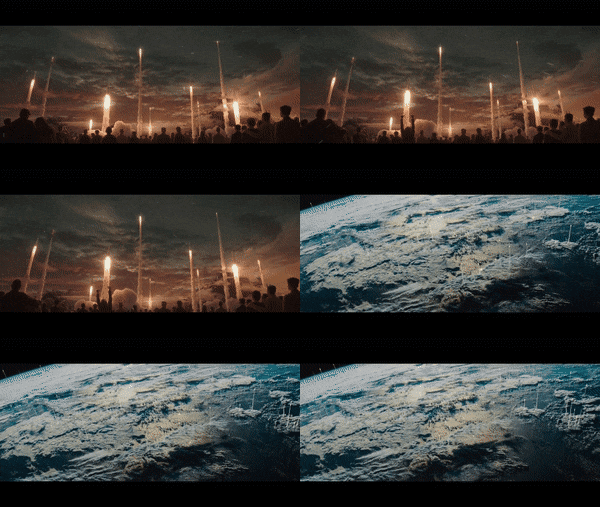
On the other end of the production-values spectrum is China’s very first foray into the big-budget science fiction genre, The Wandering Earth (Frant Gwo). Based on a short story by well-known Chinese author Liu Cixin, the movie is a big, spectacular piece of moviemaking that rivals anything that Hollywood has put out lately. Although there are no aliens, the film does include huge vistas of spinning planets, individuals at peril in space and planetside, spaceships and other hardware exploding, random science-babble, and other markers of every sci-fi movie of recent vintage. The production design is also on point, portraying an Earth of the near future as dark, chaotic, and polluted (not unlike modern-day Beijing).
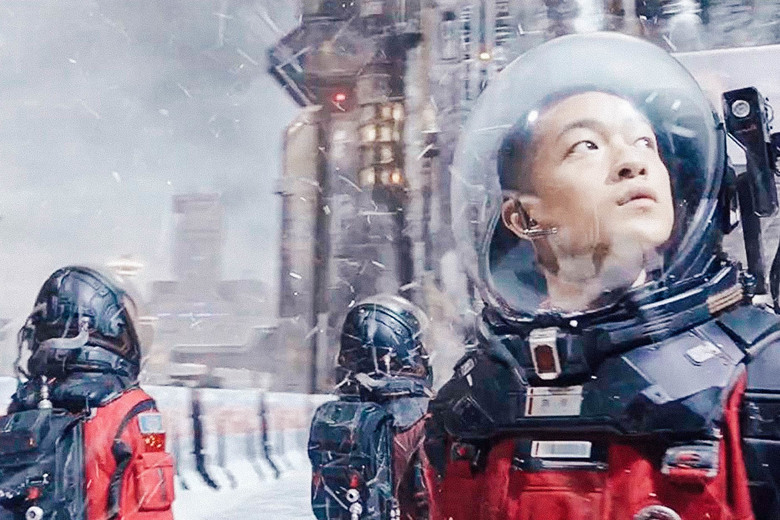
Collectivism, The Wandering Earth, 2019
But at heart it’s a Chinese production, emphasizing collectivism over individuality and the importance of very long-range goals. Also of note is the absence of almost any US presence to speak of—in China’s futuristic vision everyone speaks Mandarin, Russian, French or Japanese, and most of the planetside action takes place in China or other Asian countries. A massive box office hit in China, the film grossed more than US$300 million in its first weekend of release and has gone on to an impressive haul of more than US$650 million worldwide in just under four weeks.
And on a different tip entirely was the Jia Zhangke series at SFMOMA and BAM/PFA that included Jia himself in person at two of the screenings (a delayed plane flight prevented him making a scheduled third appearance at a show earlier in the series). The series included every one of Jia’s feature films (documentaries and narratives both), as well as films by other directors that have had some direct influence on his work.
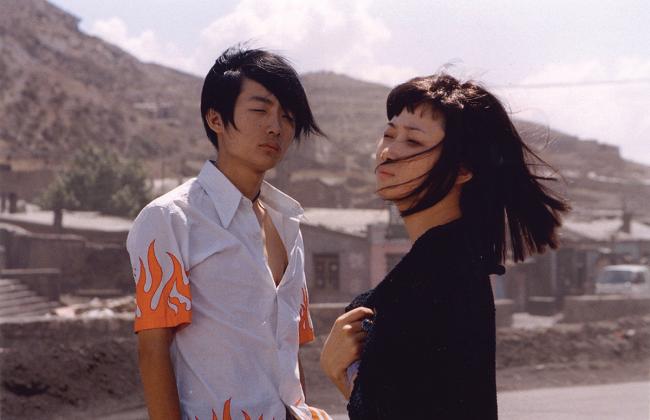
Underbelly, Unknown Pleasures, 2002
Some of the pairings worked really well together such as the double-bill including Jia’s Unknown Pleasures (2002) and Hou Hsiao-hsien’s The Boys From Fengkuei (1983), both of which looked at aimless young people wandering through life. Jia’s film explores the seamy side of China, with Jia using the under-construction highway between Datong & Beijing as a visual metaphor for the rough underbelly of China’s economic miracle. A prequel of sorts to Jia’s latest film, Ash Is Purest White (2018), it follows an emo pretty boy in love triangle with the chanteuse Qiao Qiao (played by Jia’s wife and frequent collaborator Zhao Tao) and her boyfriend, a low-rent loan shark mobster.
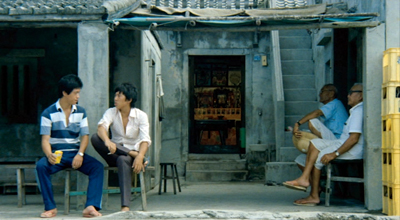
Ennui, The Boys From Fengkuei, 1983
In contrast, Hou’s film is quiet and still compared to the barely restrained chaos of Jia’s movie. As opposed to the undercurrent of grinding industrial cacophony in Unknown Pleasures, the sound of lapping waves is an aural backdrop to most of the action in a small seaside town where group of young dudes hang out and try to find meaning in their lives. They eventually end up in Kaohshiung, the closest city to their tiny coastal burg, where more ennui and confusion awaits.
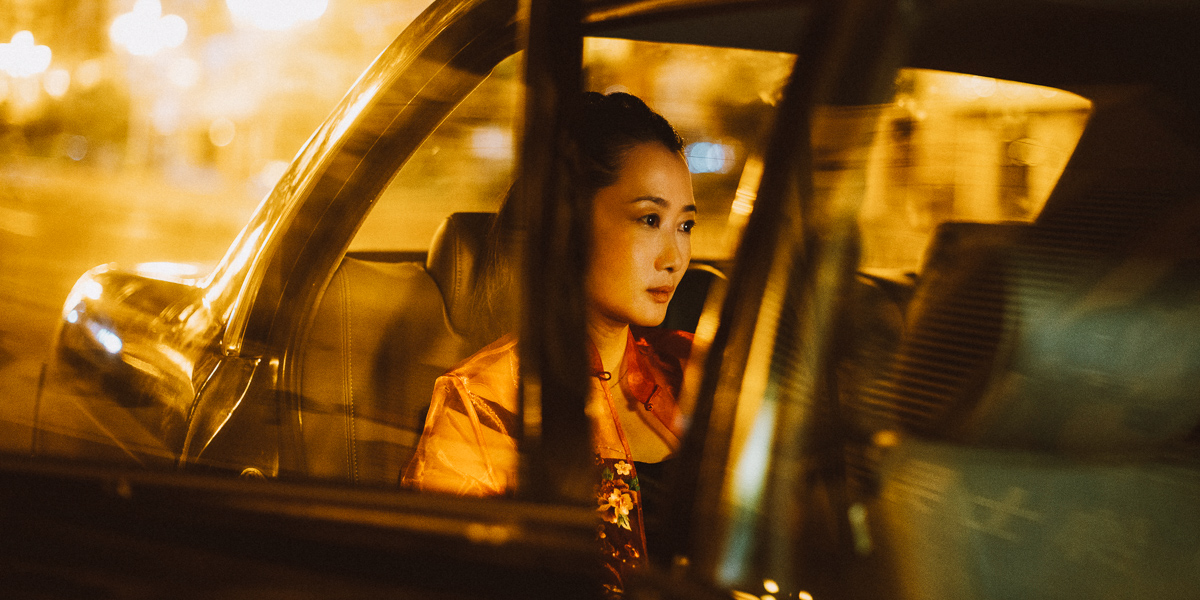
Rivers and lakes, Ash Is Purest White, 2018
Other film matchups at SFMOMA were more loosely connected—for instance, according to the programmers Tokyo Story (Yasujiro Ozu, 1953) was paired with 24 City (Jia Zhangke, 2009) for the sole reason that both films are about cities. Similarly, the programmers grouped I Wish I Knew (Jia Zhangke, 2010), Spring In A Small Town (Fei Mu, 1948), and Flowers of Shanghai (Hou Hsiao-hsien, 1998), three wildly disparate movies, because they are all set in Shanghai. But the smart pairing of Johnny To’s Election (2005) and Jia’s Ash Is Purest White cleverly focused on the jiang hu, the criminal underworld in both Hong Kong and China.
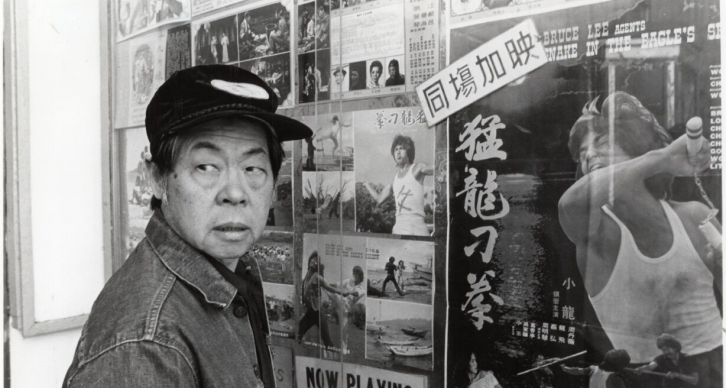
Chinatown new wave, Chan Is Missing, 1982
The series also matched up Jia films with non-Asian movies, such as Robert Bresson’s Pickpocket with Jia’s Xiao Wu (a show that Jia introduced himself at SFMOMA). And props for including Chinese American director Wayne Wang’s Chan Is Missing (1982), which evokes the nouvelle vague by way of San Francisco’s Chinatown.
I’m happy that I was able to squeeze in a bunch of screenings in the mini-hiatus from editing my film, Love Boat: Taiwan, because the next four weeks or so will be solely dedicated to finishing up the movie for its world premiere in early May. More info soon on this, but please go here if you want to find out about Love Boat: Taiwan and how you can support it .
Ash Is Purest White opens theatrically on March 15 at Landmark’s Embarcadero Center Cinema in San Francisco and Landmark’s Shattuck Cinema in Berkeley, and on March 22 at AMC Mercado in Santa Clara, CNMK Fremont 8 in East Bay, and CNMK Milpitas 20 in San Jose.

 beyondasiaphilia
Recent Comments