Posts tagged ‘asian american films’
Love Buzz: 2025 Mill Valley Film Festival
The 2025 Mill Valley Film Festival is upcoming this weekend and there is a treasure trove of Asian and Asian American films on the docket. Among these are some of the buzziest films from the current film festival season.
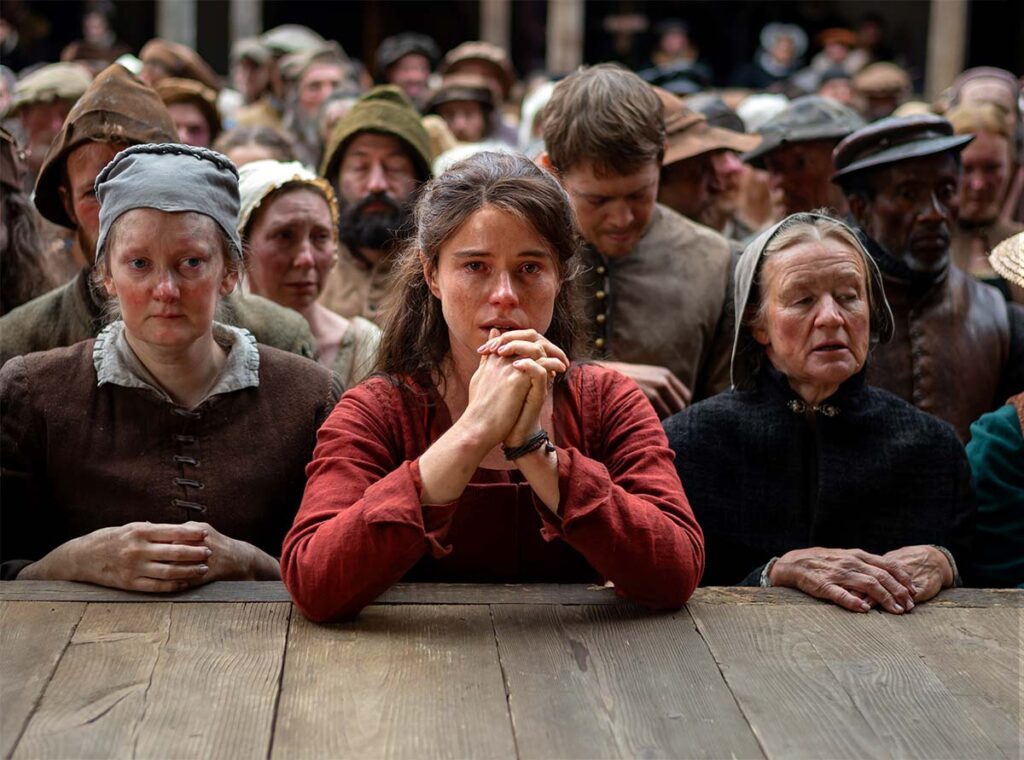
The festival’s opening night film is Hamnet, Chloe Zhao’s interpretation of the backstory of the creation of Hamlet. Zhao has a decidedly singular vision and the film promises to be an eye-opening and unexpected journey. Hamnet premiered at the Telluride Film Festival a few weeks ago and as with all of Zhao’s films it garnered a lot of attention for its unconventional vision and storytelling.

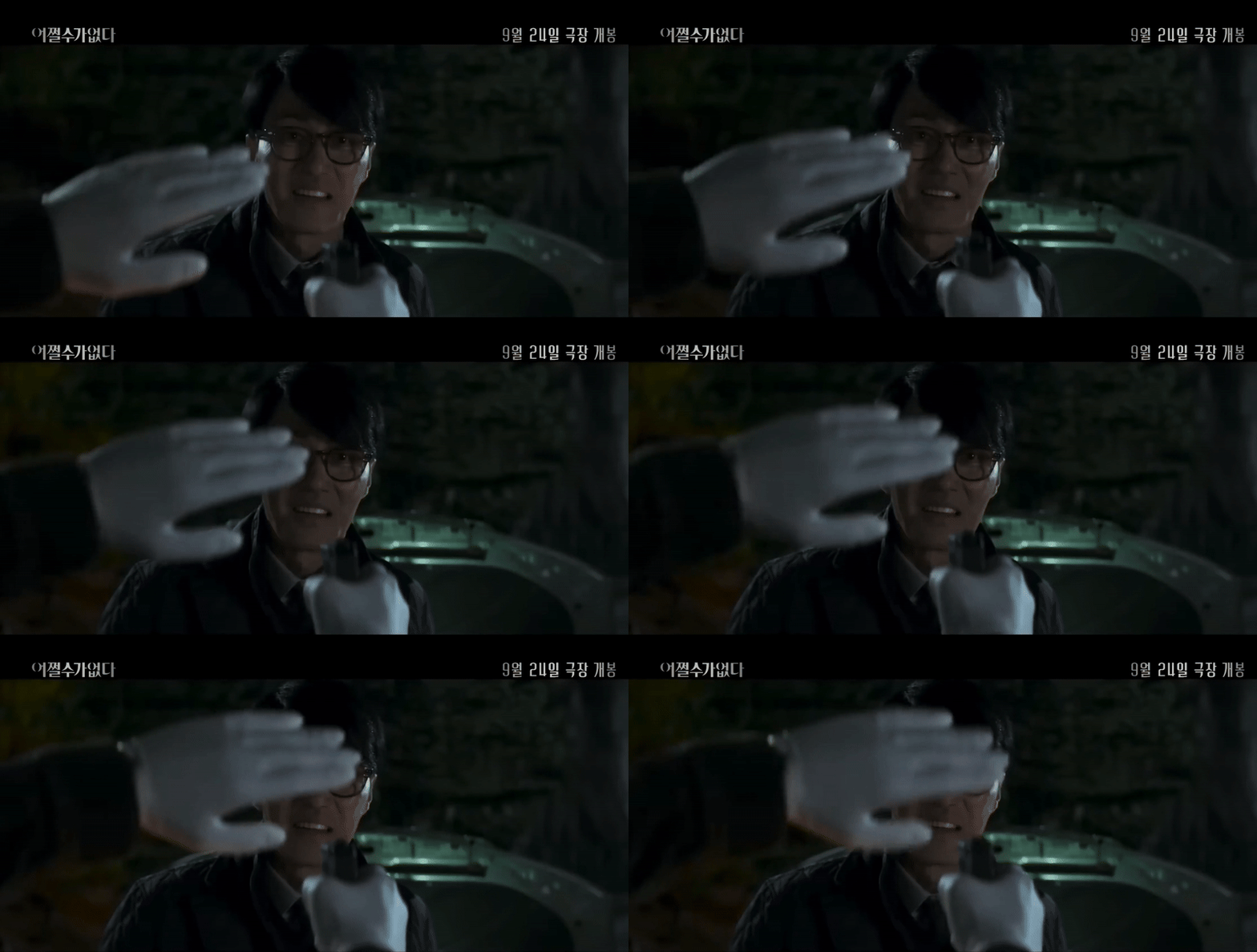
Probably one of the most talked-about films at the recent Venice Film Festival, Park Chan-Wook’s newest joint No Other Choice has its Bay Area premiere at MVFF ahead of its theatrical release later this year. With an A-list cast toplined by Lee Byung-Hun (Squid Game; Mr. Sunshine; A Bittersweet Life) and Son Ye-Jin (Crash Landing On You: The Pirates), the film is a black comedy about a white-collar worker (Lee) whose world is turned upside down when he suddenly loses his cushy corporate job. As expected in a Park film, things go sideways quickly. No Other Choice garnered a long standing ovation (reported as anywhere from six to nine minutes) at Venice and has presold to 200 countries.

Taiwan represents at MVFF with Left-Handed Girl (dir. Shih-Ching Tsou), another festival favorite that premiered at Cannes. Set in the night markets of Taipei, the film follows a single mother and her two daughters as they navigate life in the big city. The film is Taiwan’s nominee at the Academy Awards for Best International Feature.

Diamond Diplomacy (dir. Yuriko Gamo Romer) looks at the popularity of baseball in Japan as well as among the Japanese American community, exploring the ways that the game reflected and facilitated US-Japan relations both on and off the field. An encyclopedic look at its topic, the film spans more than 150 years from just after the Civil War to the present day, with appearances by Babe Ruth, Joe DiMaggio, Ichiro Suzuki, Masanori Murakami, and many more. The film is an intriguing examination of how sports, politics, celebrity, and soft power intertwine.
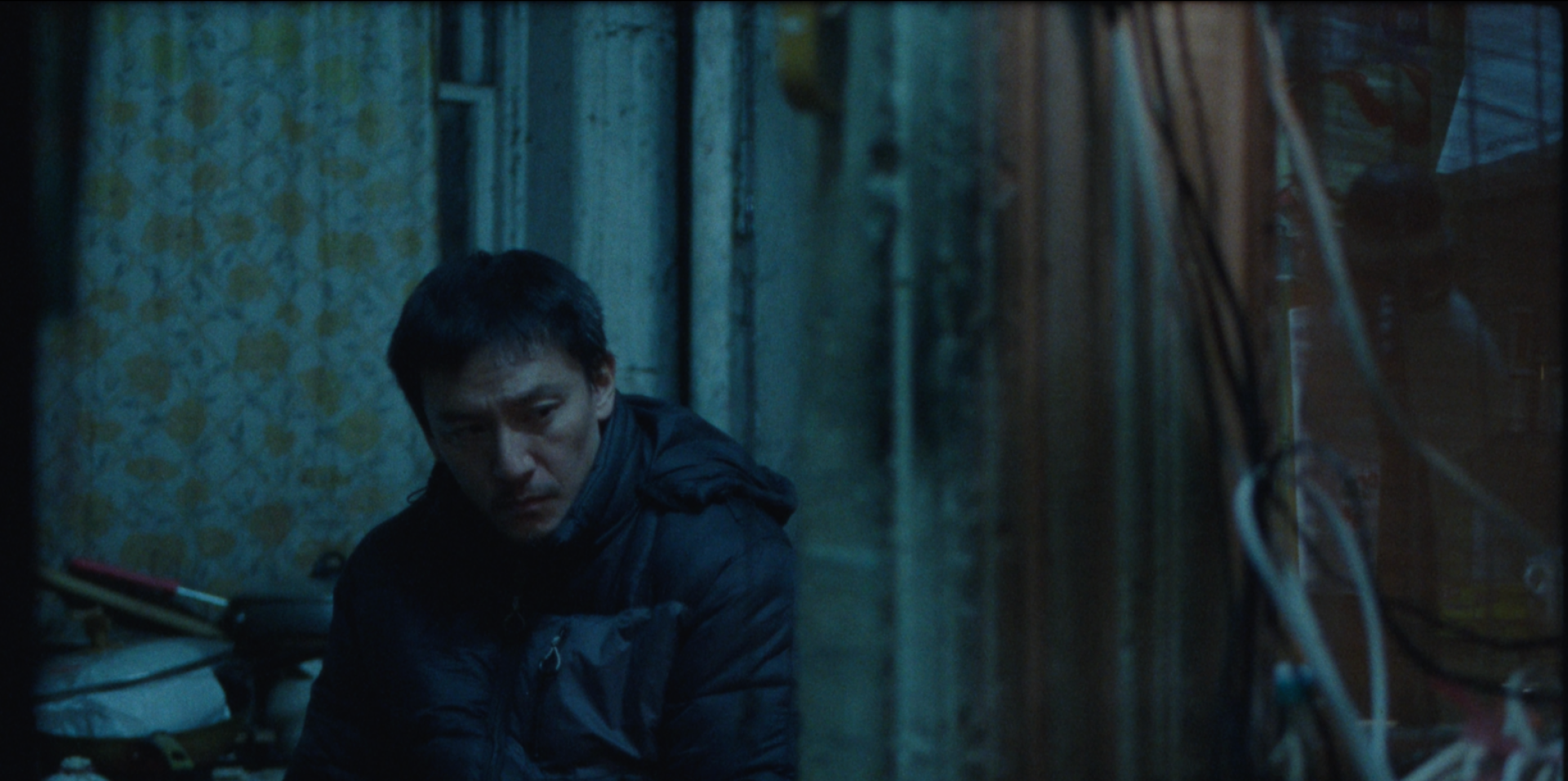
Chang Chen (A Brighter Summer Day; Crouching Tiger, Hidden Dragon; The Soul) stars in Lloyd Lee Choi’s directorial debut, Lucky Lu, which also premiered at Cannes. The film follows a New York City delivery driver, played by Chang, through a harrowing series of events as he roams the city in search of an acquaintance who’s run off with a large sum of his money.
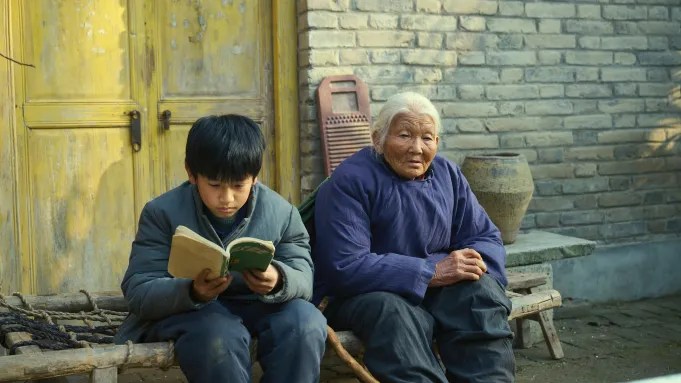
Living The Land premiered at the Berlinale last February where director Huo Meng won the Silver Bear for best directing. The film is set in 1991 and looks at life in a small village in China as its inhabitants live through the vast changes in the country at the time.
Along with these feature films there are a plethora of shorts by Asian and Asian American directors among the festival’s several shorts programs. It’s a great chance to see these films in the friendly confines of MVFF, since unlike the feature films many of them might not get widespread distribution.
All in all, this year’s MVFF is an excellent opportunity to catch the newest and hottest Asian/American movies.
Let It Shine: 2023 San Diego Asian Film Festival

Just got back from a quick and dirty one-day trip to San Diego to attend the San Diego Asian Film Festival (SDAFF). SDAFF is the biggest film fest in North America focusing on Asian/American films and artistic director Brian Hu and his team consistently program an outstanding blend of art house, genre, and indie films. Since I ride for Lee Byung-hun, I got the impetus for my trip when I found out that SDAFF was screening his latest film, CONCRETE UTOPIA (which is also South Korea’s entry in the upcoming Academy Awards). I had a bit of airline credit I had to use by the end of the year, plus a few points to spend on a rental car and a hotel so I made the decision to take a jaunt to sunny San Diego.

I arrived Sunday morning just in time to have some excellent chicken jook and to see a few friends at the filmmakers’ brunch. SDAFF is known for its great hospitality and this year was no exception. Then it was off to the movies, starting with the shorts program Astral Projections. MANY MOONS (dir. Chisato Hughes) was the standout film in this program, an essay film about the 1880s forced expulsion of almost the entire Chinese population of Humboldt county. Since I’d made THE CHINESE GARDENS about a similar occurrence up in Port Townsend Washington back in 2013 the topic was of particular interest to me. Hughes did a great job layering interviews, text. archival images, and other visual elements to question the facts and fictions around this notorious event.

After another pit stop at the reception area for a couple slices of pizza and some butter cookies I then saw the nouveau martial arts film 100 YARDS. Set in 19th century Tianjian, the film is co-directed by brothers Xu Junfeng and Xu Haofang, the latter of whom is known for writing Wong Kar-Wei’s THE GRANDMASTER, and this movie similarly attempts to re-imagine and revisit the martial arts genre, but with less success. Although the smoky greys and browns of the mis en scene create a striking visual tableau and the costumes, props and set design were all great, there were way too many fights and not enough character development to hold my interest. It was hard for me to care much about the main character’s daddy issues, although Jacky Heung and Andy On brought the skilz to their fight scenes.

I then moved on to Yu Gu’s documentary, EAST WEST PLAYERS: A HOME ON STAGE. As Gu notes, she had less than an hour to cover nearly sixty years of the history of the legendary and influential Los Angeles-based Asian American theater company, but the film does an excellent job of doing just that. Gu pairs older and newer veterans of EWP such as George Takei, Daniel Dae Kim, James Hong, Tamlyn Tomita, and John Cho to discuss the significance of the troupe as a voice for Asian Americans in the theater. It was fun to see clips from the trove of archival footage of EWP as well.

By then I was contemplating how I would squeeze in time to grab a bite for dinner but decided to forgo eating to line up for the main event of my trip, CONCRETE UTOPIA. I first heard about this movie from my friend Anthony Yooshin Kim, who’d seen it at CGV in Los Angeles a few weeks prior. Unfortunately at that time there were no plans for a wider theatrical release in the US so when SDAFF announced it as part of its lineup I decided to catch it there, since I wanted to see it on the big screen. A dystopic story about the residents of the only apartment building left standing after a massive earthquake levels Seoul and starring A-listers including my man Lee Byung-hun, Park Bo-young, and Park Seo-jun (who makes his US debut in THE MARVELS this year), the movie did not disappoint. The film has everything that makes South Korean cinema so pleasurable—outstanding special effects, brilliant acting, imaginative storytelling, well-drawn, complex characters, and sharp social critique. Lee Byung-hun does an outstanding job modulating his character, making his character arc compelling and believable. Park Seo-jun and Park Bo-young are also great as a young couple whose lives and values are literally shaken up and turned upside down by the catastrophe. Despite its fantastical premise the movie never wavers in its examination of humanity under extreme duress.

CODA: This past week I had the fangirl pleasure of joining a zoom press conference for CONCRETE UTOPIA that featured Lee Byung-Hun and director Um Tae-hwa. It was fun to share the same virtual space as Lee, even if we didn’t directly interact. I tried to restrain my cyberstalker stanning as best I could but I’m not sure if I was entirely successful. CONCRETE UTOPIA is set to open in New York and Los Angeles on Dec. 8, and will go into wide release across North America the following weekend.
New Power Generation: Jia Zhangke and Lunar New Year films 2019
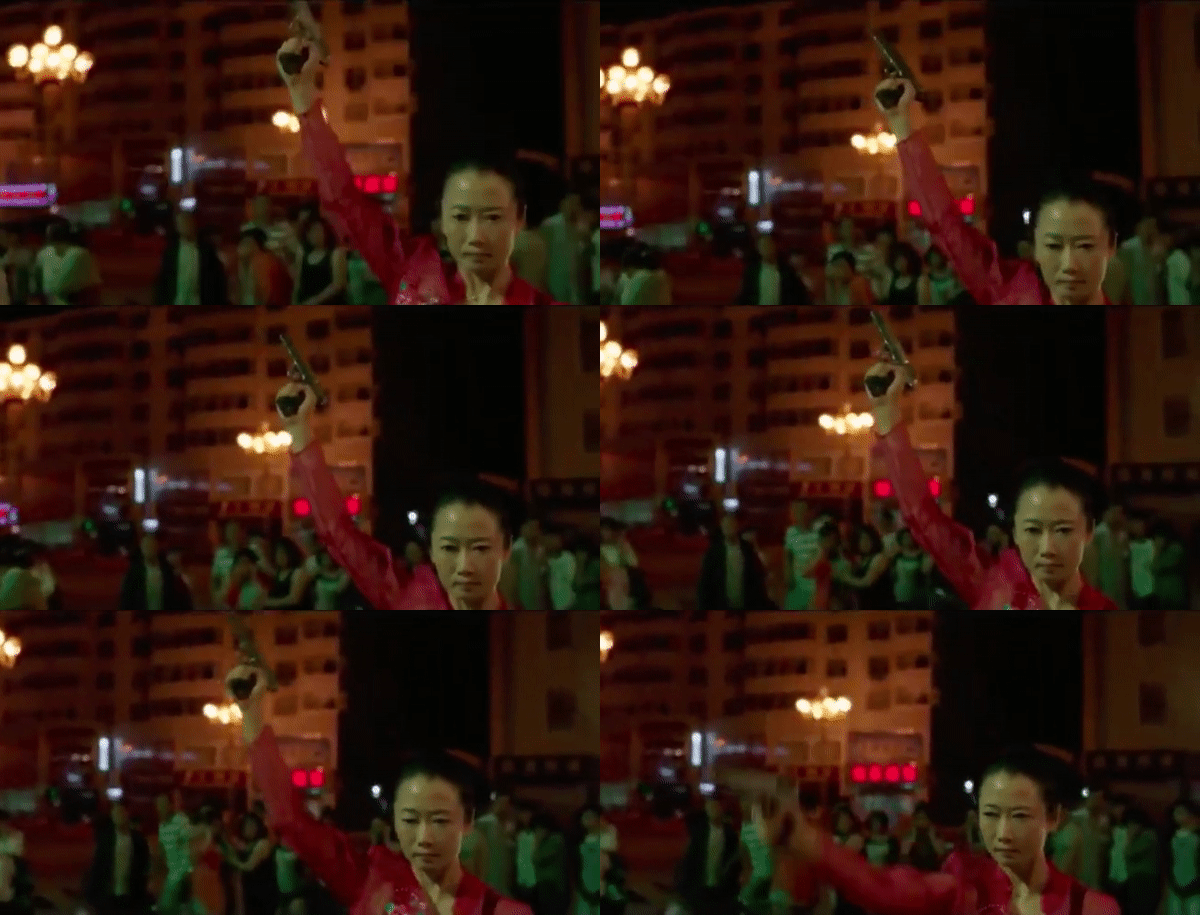
Jiang hu, Ash Is Purest White, 2018
This has been an interesting few weeks in Chinese-language cinema screenings here in the Bay. This is due in part to the recent Lunar New Year/Spring Festival holiday in China and related territories, during which a whole slew of new movies were released to capitalize on the extended vacays of most people during that time. Because of the glut in product and the large Chinese-speaking population in the Bay Area, a select few of those releases made it across the Pacific to San Francisco movie houses. Coupled with an extended series of films by one of China’s premier arthouse directors, this meant that I managed to catch many Sinophone films in the month of February.

Cameos, Missbehavior, 2019
I started my Lunar New Year viewings with Pang Ho-Cheung’s Missbehavior, one of two Hong Kong films that made it to San Francisco in February. (Sadly, I missed the other one, Felix Chong’s action thriller Integrity, due to scheduling conflicts). Pang is Hong Kong’s 21st century bad-boy auteur who’s racked up a number of well-received hits including Isabella, Vulgaria, Aberdeen, and his Love In A Puff series that stars Miriam Cheung and Shawn Yue. Miss Behavior is a low-budget quickie that carries on in the best tradition of New Year’s films, with a big cast with many famous people making cameos, a lighthearted comic tone, and a lowbrow sensibility including an extended sequence of the glamorous Dada Chen discussing her bowel movements. Though it’s not one of Pang’s deepest or most thoughtful films (the setup involves a group of friends frantically trying to locate a bottle of breast milk) the narrative is actually very well-constructed and it moves along at a good clip, briskly shuffling its many characters in and out and climaxing with a free-for-all in a big ol’ shopping mall after hours.

Spectacular, The Wandering Earth, 2019
On the other end of the production-values spectrum is China’s very first foray into the big-budget science fiction genre, The Wandering Earth (Frant Gwo). Based on a short story by well-known Chinese author Liu Cixin, the movie is a big, spectacular piece of moviemaking that rivals anything that Hollywood has put out lately. Although there are no aliens, the film does include huge vistas of spinning planets, individuals at peril in space and planetside, spaceships and other hardware exploding, random science-babble, and other markers of every sci-fi movie of recent vintage. The production design is also on point, portraying an Earth of the near future as dark, chaotic, and polluted (not unlike modern-day Beijing).
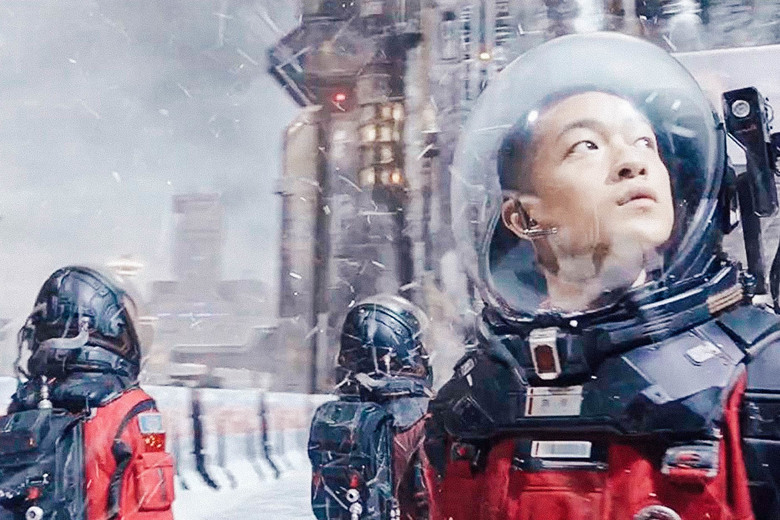
Collectivism, The Wandering Earth, 2019
But at heart it’s a Chinese production, emphasizing collectivism over individuality and the importance of very long-range goals. Also of note is the absence of almost any US presence to speak of—in China’s futuristic vision everyone speaks Mandarin, Russian, French or Japanese, and most of the planetside action takes place in China or other Asian countries. A massive box office hit in China, the film grossed more than US$300 million in its first weekend of release and has gone on to an impressive haul of more than US$650 million worldwide in just under four weeks.
And on a different tip entirely was the Jia Zhangke series at SFMOMA and BAM/PFA that included Jia himself in person at two of the screenings (a delayed plane flight prevented him making a scheduled third appearance at a show earlier in the series). The series included every one of Jia’s feature films (documentaries and narratives both), as well as films by other directors that have had some direct influence on his work.
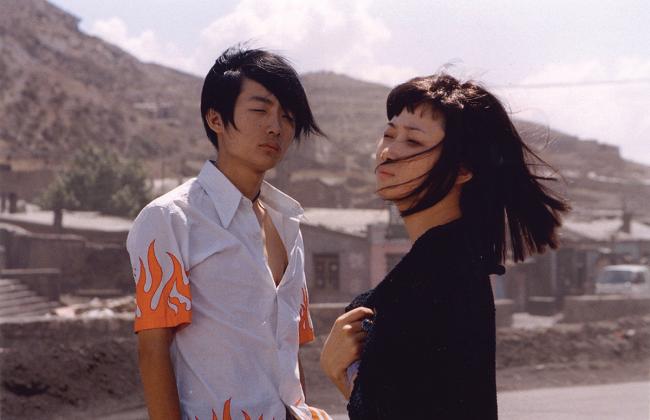
Underbelly, Unknown Pleasures, 2002
Some of the pairings worked really well together such as the double-bill including Jia’s Unknown Pleasures (2002) and Hou Hsiao-hsien’s The Boys From Fengkuei (1983), both of which looked at aimless young people wandering through life. Jia’s film explores the seamy side of China, with Jia using the under-construction highway between Datong & Beijing as a visual metaphor for the rough underbelly of China’s economic miracle. A prequel of sorts to Jia’s latest film, Ash Is Purest White (2018), it follows an emo pretty boy in love triangle with the chanteuse Qiao Qiao (played by Jia’s wife and frequent collaborator Zhao Tao) and her boyfriend, a low-rent loan shark mobster.
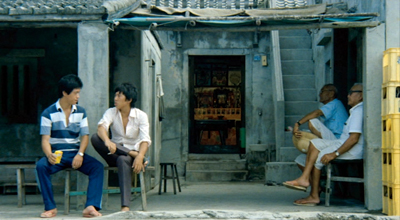
Ennui, The Boys From Fengkuei, 1983
In contrast, Hou’s film is quiet and still compared to the barely restrained chaos of Jia’s movie. As opposed to the undercurrent of grinding industrial cacophony in Unknown Pleasures, the sound of lapping waves is an aural backdrop to most of the action in a small seaside town where group of young dudes hang out and try to find meaning in their lives. They eventually end up in Kaohshiung, the closest city to their tiny coastal burg, where more ennui and confusion awaits.
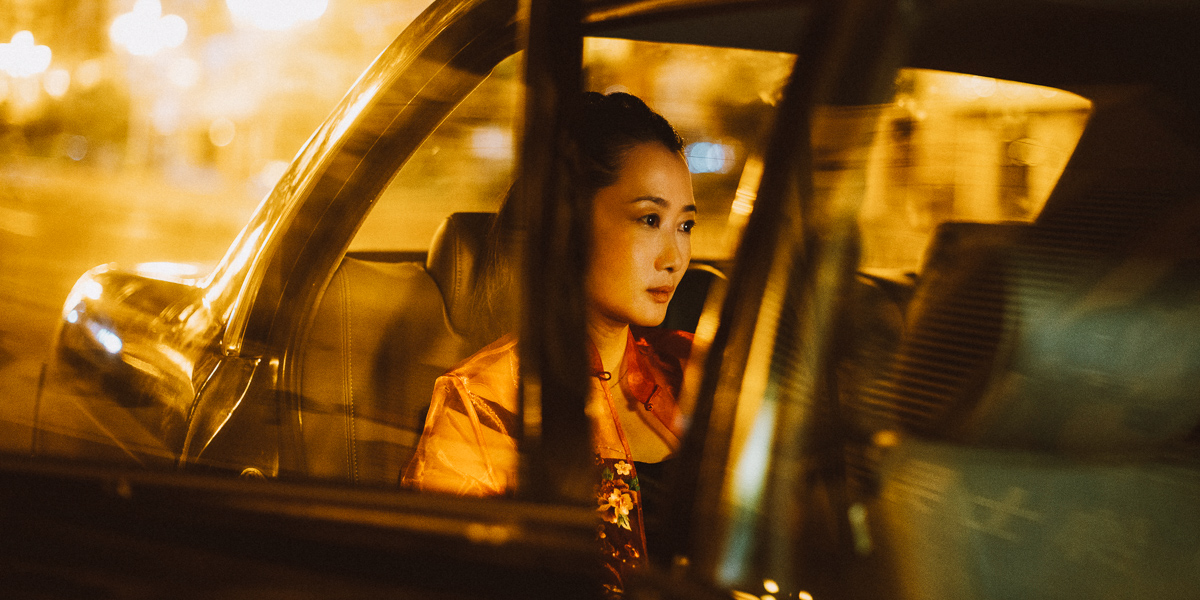
Rivers and lakes, Ash Is Purest White, 2018
Other film matchups at SFMOMA were more loosely connected—for instance, according to the programmers Tokyo Story (Yasujiro Ozu, 1953) was paired with 24 City (Jia Zhangke, 2009) for the sole reason that both films are about cities. Similarly, the programmers grouped I Wish I Knew (Jia Zhangke, 2010), Spring In A Small Town (Fei Mu, 1948), and Flowers of Shanghai (Hou Hsiao-hsien, 1998), three wildly disparate movies, because they are all set in Shanghai. But the smart pairing of Johnny To’s Election (2005) and Jia’s Ash Is Purest White cleverly focused on the jiang hu, the criminal underworld in both Hong Kong and China.
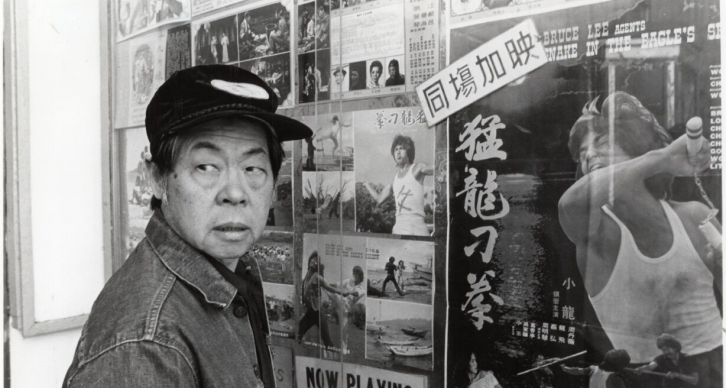
Chinatown new wave, Chan Is Missing, 1982
The series also matched up Jia films with non-Asian movies, such as Robert Bresson’s Pickpocket with Jia’s Xiao Wu (a show that Jia introduced himself at SFMOMA). And props for including Chinese American director Wayne Wang’s Chan Is Missing (1982), which evokes the nouvelle vague by way of San Francisco’s Chinatown.
I’m happy that I was able to squeeze in a bunch of screenings in the mini-hiatus from editing my film, Love Boat: Taiwan, because the next four weeks or so will be solely dedicated to finishing up the movie for its world premiere in early May. More info soon on this, but please go here if you want to find out about Love Boat: Taiwan and how you can support it .
Ash Is Purest White opens theatrically on March 15 at Landmark’s Embarcadero Center Cinema in San Francisco and Landmark’s Shattuck Cinema in Berkeley, and on March 22 at AMC Mercado in Santa Clara, CNMK Fremont 8 in East Bay, and CNMK Milpitas 20 in San Jose.

 beyondasiaphilia
Recent Comments