President Obama President Obama President Obama President Obama
I just like hearing, reading, thinking and saying that phrase.
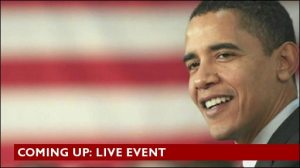
44th US president
I got up this morning to watch the inauguration today at 9am PST and I have to say that it was a pretty fun experience. Our new leader looked very presidential in his black suit and red tie, alternating between smiling and furrowed-brow seriousness. He also mixed in an occasional laugh, most notably during his sweaing-in when he and Supreme Court Chief Justice John Roberts got tangled up in the wording of the oath, and even threw down an “Amen!” during Rev. Joseph Lowery‘s benediction.
As fantastic as this was to watch, tears for me came not during Obama’s swearing-in per se, but during two quick cutaways during the proceedings. The first was a shot of Rep. John Lewis from Georgia, the veteran civil rights activist whose skull was fractured by Alabama State Troopers on the bridge in Selma in 1965 and whose endorsement of Obama during the Democratic primary was a turning point in the campaign. The second was a brief reaction shot of a teary-eyed, anonymous elderly African American woman watching the ceremony from Memphis, TN. Both Rep. Lewis and the elderly woman personally knew the pain of living as second-class citizens in their own country, whose oppression was based solely on the color of their skin. And both had lived to see this historic day, when an African American was sworn in as President of the United States.
My two daughters watched the inauguration with me and when I explained to my 8-year-old that at one time African Americans (and by extension other people of color) were legally discriminated against based solely on their race, she could hardly believe me. It was incredible to her that someone at some time in this country had to use different bathrooms and drinking fountains and were forbidden to eat in restaurants and ride in the front of the bus because they weren’t white, and that this had been sanctioned by law. My daughter’s innocent disbelief, together with the moment I saw Rep. Lewis and his unnamed compatriot in Memphis on television, made me realize what a a great abyss we as a country had crossed today. Not that we’ve reached the promised land by any means, but it somehow seems a bit closer than it did just a little while ago.
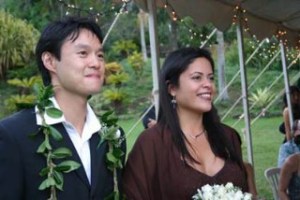
Konrad Ng & Maya Soetero Ng, The First In-Laws
Note: It was nice to see some diversity in the television coverage of the inauguration today, in crowd shots on the street in D.C. and across the country. It was also fun to see Asian Americans represented in the First Family, with both Maya Soetoro-Ng, Obama’s half-sister, and her husband Konrad Ng sitting directly behind the new President. Cute couple–
UPDATE: Check out Danny Plotnick’s great review of the pre-inauguration party at the Lincoln Memorial that featured Stevie Wonder, Bruuuce Springstein, Beyonce, and Pete Seeger, especially his dish of the bombastic Bono.
UPDATE 2: Jay Z’s got a special version of Young Jeezy’s “My President Is Black” that he freestyled at an inauguration afterparty in DC. Looking for the full lyrics online–here’s a sample:
“My president is black, in fact he’s half white/So even in a racist mind he’s half right/If you’ve got a racist mind it’s alright/My president is black, but his house is all white!”
Where is the love? The Asian guy in Milk
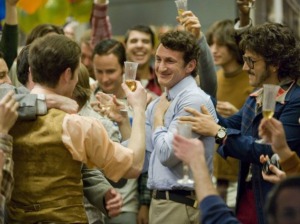
Kelvin Yu as Michael Wong is not in this picture, Milk, 2008
Don’t get me wrong—I really liked Milk, the new Sean Penn biopic about San Francisco’s own gay martyr and political icon. As someone who was (just barely) old enough to remember the actual events portrayed as they happened (or do I just remember watching The Times of Harvey Milk?), I thought the movie did a great job depicting the sexy, exhilarating place that was the 1970s Castro district as well as the political intrigue of San Francisco’s City Hall. Gus Van Sant’s not afraid of lots of gratuitous boy-kissing and as far as I’m concerned there can never be enough shots of James Franco’s bare ass. As a Bay Area native, the real-life San Francisco locations resonated for me and the final scene of the candlelight procession brought this heartless beyotch to tears.
But a little fly in the ointment, as usual, was the depiction of the film’s Asian American character, Michael Wong, who was one of Harvey’s inner circle. Apparently the real-life Wong’s extensive diaries from the time were an invaluable resource for the filmmakers, but those expecting a breakthrough Asian American male role in this film will be disappointed. Kelvin Yu as Wong is little more than a flower vase, pretty much relegated to window dressing despite the fact that he’s supposed to be one of Harvey Milk’s closest advisors. Throughout the film Milk affectionately calls Wong “Lotus Blossom,” which is cute but a little too close to the usual emasculated Asian male epithets for my liking. Kelvin Yu claims that the character is “biting, caustic, acidically comedic and intelligent,” but too few of those characteristics come through in the final cut. Instead we see Wong on the sidelines supporting Milk, with precious few actual interactions between the two. There are also makeout scenes galore for most of the characters major and minor, but Wong doesn’t seem to rate a kiss from anyone, male or female.
Some of this may stem from lingering issues resulting from the infamous casting call for the character, which described Wong as “asexual” and “the ultimate dork. Very, very nerdy.” Kelvin Yu states that Gus Van Sant eventually decided against portraying Wong as sexless and dorky, and apparently the real-life Wong has given the depiction his stamp of approval, but in the finished product Wong is still bland and mostly invisible.
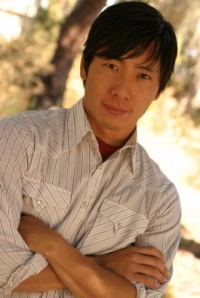
Dork or not? Kelvin Yu
It doesn’t help that the good-looking Yu was made homely, with Ugly Betty glasses and an unflattering haircut (although this is apparently is true to the real Wong’s actual appearance at the time).
I’m trying to overcome the tendency to nit-pick any Asian American portrayals I see in Hollywood movies but it’s a hard habit to break, especially when those images are still few and far between. Here’s hoping John Cho fares better in Star Trek—
UPDATE: For a longer take on the film in general, see Sunny Vergara’ s nice little dissection.
San Francisco politics: The inauguration of Eric Mar

Jade and Eric Mar on the campaign trail, 2008
Just went to Eric Mar’s inauguration to the San Francisco Board of Supervisor’s down at City hall today. I’ve known Eric, his wife Sandy & Eric’s twin brother Gordon since we were all undergrads back at the dawn of time, so it was really great to see him sworn in today. I’m a sucker for speeches that thank family members and I was especially choked up when Eric mentioned his late father, who died four years ago right around the time my own dad passed. Eric’s daughter Jade is just three months older than my older daughter so seeing Jade out of school and all decked out in her party duds to see her dad sworn in was also a kick for me.
Eric’s been a long-time activist and organizer in the Asian American community and he’s been a tireless advocate for the disenfranchised since our college days long ago. He’s been on the San Francisco School Board for the past eight years and this past November survived a bruising campaign to represent San Francisco’s 1st District, which comprises the inner Richmond. He and fellow progressive David Chiu were targeted by San Francisco’s downtown business establishment and were both subjected to smear campaigns that impugned their character, their patriotism and their personal lives. Today both were sworn in as Supervisors (Chiu from the Chinatown/North Beach district) in large part due to a huge grassroots support from their neighborhoods. Together with incumbent Carmen Chu this marks the first time that three Chinese Americans have simultaneously been on the Board of Supervisors in San Francisco history.
As icing on the cake, David Chiu was also elected President of the board today. The process of his election was an interesting example of SF politicking—it took eight ballots to break the deadlock between Sup. Sophie Maxwell, who was supported by allies of Mayor Gavin Newsom, and the progressive candidate, who was at first David Avalos, then David Chiu. Eric Mar played a key part in brokering the deal that sent Chiu to the President’s seat. With Maxwell and Avalos in a near deadlock, with neither able to gain a majority for for several rounds, Eric switched his vote from Avalos to Chiu. He followed up his vote-switch with a cogent and articulate plea for supporting Chui as a President not only for Chinese Americans but for all San Franciscans. Veteran progressives Ross Mirkarimi and Chris Daly, who had withheld their support for Avalos, then switched their votes to Chiu, giving him the majority and electing him Board President. It was a subtle and interesting moment of political intrigue, clearly delineating the lines between various factions on the Board. It also indicated the political modus operandi of various Board members, as well as their possible future alliances. Mirkarimi and Daly clearly enjoy the bold power play—Eric Mar’s style is much more subtle and close to the vest. The five supervisors who supported Sophie Maxwell are an obvious voting bloc allied with Mayor Newsom—the remaining six supes are more loosely allied, with sub-alliances within the larger group. Interestingly enough, Daly did not support his former aide John Avalos in his bid for Board president but eventually threw his weight behind Chiu. Time will tell if the lines of allegiance will become more clearly drawn in the future, or if Board alliances continue to fluctuate throughout the next term.
UPDATE: here’s more information via my friend and colleague Malcom Collier.
Hello Valerie
Nice blog but not quite accurate – my fault maybe as I had a mental block when you were talking to me at city hall. In late 1990s we had three Chinese Americans on the Board – Leland Yee, Mabel Teng, and Michael Yaki. Yaki is 1/2 Chinese American, 2/8 Japanese American, and 1/8 Hawaiian Native. So unless you want to leave out the mixed folks, today is not the first time with three CAs on Board.
In case you are interested, I looked up the terms:
Mabel Teng, 1995-2001 – she was the first Asian American, not just the first AA woman, to win a city wide election to the board without being appointed to the position first. All previous persons won after being appointed first and running as incumbants.
Leland Yee, 1996-2001
Michael Yaki, 1997-2002
George Chinn (I think that is the spelling) was the first Chinese American to serve on the Board, appointed 1973. Gordon J. Lau appointed to the board 1977 and later elected, but not city wide – there were district elections then. Tom Hsieh Sr. won citywide after being appointed to a vacancy in 1986, then won elections in 1988 and 1992.
UPDATE 2: My buddy Danny Plotnick has another take on the board president election which takes the pols to task for their flagrant manipulation of the system. Change we can believe in or more of the same?
UPDATE 3: The effervescent sociologist, scholar and person-about-town Grace Yoo takes another look at the event, and the post-party spreads, on her brand-new blog.
The end of the world as we know it: crunchyroll deletes user-uploaded files.
 The new year brought an unwelcome surprise to the 4.8 million people who belong to the on-line video streaming site crunchyroll.com, sometimes referred to as the Asian youtube (though it was founded by UC Berkeley undergrads and it’s based in San Francisco). Since its launch in 2006 until Jan. 1, 2009 the site had hosted music and games as well as literally thousands of films, anime, and Asian dramas. Almost all of its content was illegally uploaded by members, meaning that anyone could stream from a huge selection of material at absolutely no cost. As expected from such a massive, unrestricted site, depending on the source material and the skill of the uploader, image quality ranged from good to crappy.
For example, due to the ineptitude of the member who posted it, the site’s version of Exiled had Mandarin and Cantonese audio tracks running
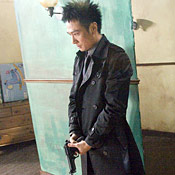
Gratuitous Francis Ng pic, Exiled, 2006
simultaneously, which led to a surreal viewing experience to say the least. Other movies had serious sync problems or were uploaded from vcds, but almost all of the material had English subs and the streaming was fast and reliable, so it was a great place to indulge in a lot of no-cost Asian movie watching. (In contrast, watching a non-subbed movie on youku.com, the Chinese-language streaming site, is slow torture. Aside from the language barrier, the site streams like cold molasses and a ninety-minute movie can take twice that to get through.)
Free is always a good price and I can attest to crunchyroll’s addictive quality–it enabled my Francis Ng binge from last month and I was able to watch at least a dozen of his movies, including a couple not yet available in the US on dvd such as Shamo and One Last Dance. I was also able to wallow in all 35 episodes of one of Francis’s turgid HK melodramas, The Great Adventurer, wasting a week of my life wending through its labyrinthine storyline.
Crunchyroll’s dilemma began when the site started offering higher quality streams for members who “donated” six dollars per month. Because of its legal murkiness, this opened the site to potential licensing lawsuits, as it began profiting from copyrighted materials it didn’t own. Suddenly it wasn’t one big happy filesharing family—with nearly 5 million members someone was making some coin, and the site recently made moves to correct this possible legal sinkhole. No doubt realizing the thin ice such flagrant copyright violations implied, at the start of 2009 crunchyroll purged its entire stock of non-licensed programming and began to host only legally licensed shows. Gone were all of the Korean, Hong Kong, and Japanese soap operas, the extensive library of films and anime, and everything else that made the site imperative for obsessive Asian media-watchers. As expected, most of the membership let out a collective shriek, but in order to further cover its ass legally, the site will likely not add back those titles. It’s instead instituted a subscription system that, in cooperation with anime distributors, will allow paying customers to selectively view whatever shows the site can license.
As for those of us who gorged on free movies and dramas, the ride is over. Of course it was too good to last—I’m glad I was able to enjoy it while I could. Here’s hoping another similar site crops up soon.
UPDATE: Oops, busted! Looks like Huayi Bros, the big-time Chinese film producer and distributor, is going after several Chinese-language sites for illegally hosting the brand new Mainland China film, If You Are The One, which was released on Dec. 18 and has already hit the intertubes. Named in the lawsuit are Sina.com, Sohu.com, Youku.com, Tudou.com and VOC. Maybe crunchyroll pulled out of the illegal filesharing game just in time.
UPDATE 2: Interesting analysis here about how China’s latest crackdown on Internet smut may be a harbinger of larger things to come. Good discussion of the issue in relation to the recession, politics and the social compact of China’s economic boom.
Takeshi then and now: The Warlords, Red Cliff and the aesthetics of dirt
His role in The House of Flying Daggers (2004, dir. Zhang Yimou) notwithstanding, Takeshi Kaneshiro has almost always appeared in modern-day movies. But in 2007 he was cast in two prominent historical dramas, The Warlords (dir. Peter Chan) and Red Cliff (dir. John Woo). How did Takeshi’s decidedly modern visage affect these two Hong Kong costume dramas? The results in each film are somewhat different and are a telling indication of perceptions of Chinese films in Asia and in the West.

Movie kings dress down, The Warlords, 2007
In The Warlords, Peter Chan’s gritty, realistic flick about a 19th century Qing Dynasty power struggle, Takeshi and his equally famous and glamorous co-stars Jet Li and Andy Lau are called upon to play their parts clad in animal skins and splattered with blood, sweat and mud. Jet Li reportedly gained weight and dirtied up to play his part (and was rewarded with his very first Best Actor statue at the 2008 Hong Kong Film Awards); he and the usually dapper Andy Lau also shaved their heads and grew scruffy beards for the film. At the start of the film Li vomits convincingly and Andy Lau has sex still dressed in his war togs.
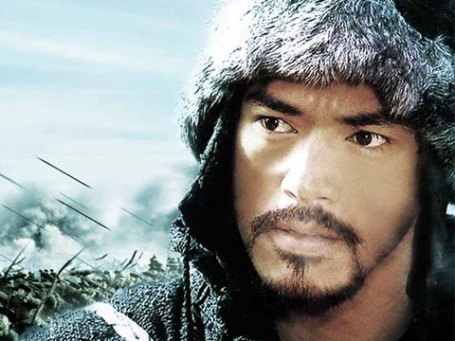
Takeshi in furs, The Warlords, 2007
Takeshi, however, did not shave his head, though he did sport a tidy beard. Still, it was hard to spot Takeshi-the-movie-star in this flick, due to the strength of the film’s mise-en-scene. The film’s blood-caked impalings, stabbings and general fisticuffs, and its evocative smoky-toned cinematography overcame Takeshi’s good looks and he managed to fit into the overall rough-hewn look of the movie despite being one of the most beautiful people on the planet.
In Red Cliff, however, the film’s art direction is much less down-and-dirty and much more stylized and this somehow makes Takeshi’s perfect nose and expensive haircut more anachronistic than in Peter Chan’s film. John Woo’s film aims for the heroic, not the realistic, and here Takeshi’s Prada-model gorgeousness shines a bit too brightly for a period piece. Although co-star Tony Leung Chi-Wai cuts no less a handsome figure, he’s a bit stronger actor and is a little more convincing as a third-century Chinese warrior. Tony also gets to wear armour and swing a sword in a big fighting scene, whereas Takeshi watches on the sidelines in pristine, flowing white robes without a hair out of place.

Pristine Takeshi, Red Cliff, 2008
Somehow Takeshi’s overt modernity works against him much more in Red Cliff than in The Warlords and this is underscored by each films’ respective directorial vision. Peter Chan’s film feels much more in step with current Chinese cinematic trends, moving away from superficial heroic images towards a deeper, more serious critique (in the same way that Johnnie To’s Election 1 & 2 completely deglamorized the Triad film, in contrast to the gauzy romantic fantasies of gangster brotherhood from Andrew Lau’s Young & Dangerous series). In comparison, John Woo’s film seems like a nostalgic, old-fashioned look backwards at classic Shaw Brothers and 1990s wuxia productions. Interestingly, a truncated version of Red Cliff is slated to open in the U.S. and Europe in 2009 while The Warlords has not received distribution outside of Asia. This perhaps reflects outdated perceptions of Hong Kong films in the West, where the most recognizable HK actor is the long-dead Bruce Lee and most viewers relate Chinese films to out-of-sync dubbing and chop-socky action pieces. Since precious few Western viewers keep abreast of current trends in Chinese cinema it stands to reason that John Woo’s conventionally retro, faintly Orientalist vision of history is more marketable outside of Asia than Peter Chan’s more contemporary presentation.
The Warlords was a big box office hit in Asia and, Red Cliff, Part 1 similarly broke box office records across Asia. Release of Red Cliff, Part 2 was moved up to capitalize on the success of Part 1 and it premiered in Beijing on Jan. 4. The Warlords cleaned up at both the 2007 Hong Kong Film Awards (eight awards including Best Picture, Best Director, and Best Actor) and the 2008 Golden Horse Awards (Best Picture, Best Director). Red Cliff, however, was shut out of the major awards at this year’s Golden Horse presentation, with only four nominations and no wins. Perhaps as with the Academy Awards and the last installment of the Lord of the Rings trilogy, Red Cliff, Part 2 will fare better at awards time than its predecessor. For now it remains to be seen whether it will duplicate the The Warlords’ hometown awards success.
One Last Dance revisted
Just rewatched One Last Dance (2005, dir. Max Makowski) last night and liked it much more upon another viewing. It starts a bit slowly but once Francis Ng shows up, playing a world-weary contract killer in nocturnal Singapore, the film’s focus snaps into place and he carries the movie after that. The film’s non-linear narrative is much easier to follow the second time around and, although there are some rough patches in the movie, there are also several pretty interesting moments. Notable among these are a scene in which Francis’s hitman character evades several security cameras at a Singapore train station and an amusing exchange with a prepubescent girl in which she and Francis discuss the meaning of life. Francis also gets into a staring contest (guess who wins?) and, as mentioned in a previous post, has a classic scene in which he extracts information with the help of plastic wrap, scotch tape and a fork.
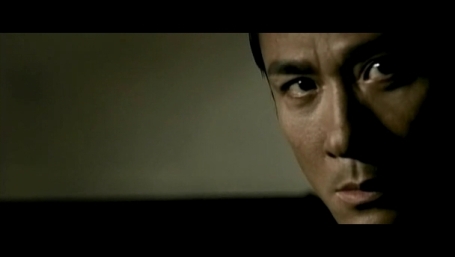
Francis as a hitman, One Last Dance, 2005
The film wraps up its unconventional structure fairly well by the end of the movie and Francis delivers another subtle and nuanced performance that occasionally explodes into swift and efficient violence. There are a few moments of slapstick humor that some Western viewers might find jarring but anyone familiar with the rapid-fire genre-switching found in many Asian films should be able to deal with it. Definitely worth a look.
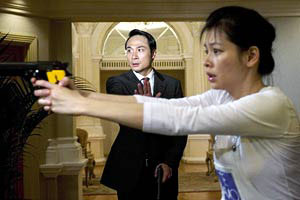
Francis helps Vivian Hsu with her aim, One Last Dance, 2005
Interestingly enough, Brazilian-born director Makowski has been attached to direct a couple Hollywood films on the strength of this picture, though it never received stateside distribution. Makowski’s slated to direct the live-action version of Voltron as well as a big-screen version of the lamentable 1970s television series Kung Fu. Also attached, though his role is yet to be clarified, is none other than Francis Ng. Surely he’s too old play Caine–hopefully they’ll find him a better part than the old blind guy with the pebbles in his hand.
three more francis ng movies
Best to worst
The White Dragon, dir. Wilson Yip, 2004
Francis plays a blind swordsman opposite spoiled and vain rich girl Cecilia Cheung in this 21st century martial arts redux. Full of jokey anachronisms and mo le tau humor, the film is nonetheless affecting due to the charisma and chemistry of the two leads. Francis channels Zatoichi with a twist–he’s a sensitive and noble, lovelorn guy.

Francis with bangs, The White Dragon, 2005
He also battles a very bad haircut but miraculously manages to become more and more attractive, even though he spends half the film with his eyes rolled up in his head. The scene where he discovers that Cecilia thinks he’s handsome is classic–charming, funny and convincing. Kudos to Cecilia Cheung (who won Best Actress at the HK Film Awards) for keeping her bratty character light and appealing. Wilson Yip continues his schizophrenic directing career, combining wuxia, comedy, romance and satire in classic HK style.
Dancing Lion, dir. Marco Mak & Francis Ng, 2007
Kinda dumb, unfortunately. Sitcom-style humor about a dysfunctional family that starts a lion dancing business and becomes a HK phenomenom. Francis co-directs and stars as a forty-year-old hip hop wannabe dope.

Francis and bling, Dancing Lion, 2007
Anthony Wong is amazing as a 72-year-old lion dance master–he’s very fun to watch in an otherwise dippy film.
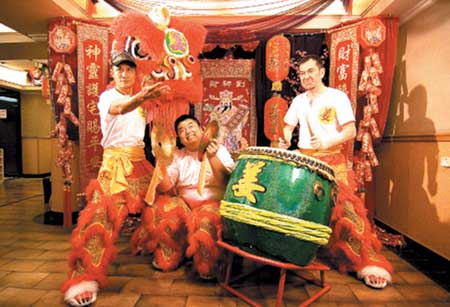
Francis & Anthony in furry pants, Dancing Lion, 2007
Himalaya Singh, dir. Wai Kar-Fei, 2005
“Hey, you ever been to India?” “No, why?” “Wanna make a movie there?” “Well, what’s there?” “I dunno, elephants, cobras, yoga.” “Okay, sounds great. Think Francis & Lau Ching Wan will want to go?” “Yeah, and maybe Cecilia.” “Okay, let’s do it.” “And we need to find some Indian guys who can speak Cantonese.”

Cultural insensitivity, HK style, Himalaya Singh, 2005
The Gory Details: 26 Francis Ng 吳鎮宇 Movies in 4 Weeks
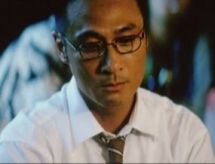
Francis Ng as a naughty triad boss, Infernal Affairs II
In response to some of you who have asked me to elaborate on the 26 Francis Ng movies I watched in four weeks, here are some bullet reviews of them. As a bit of background, many of you know that I’ve got a thing for Hong Kong films and that in 1997 I made an experimental documentary called Beyond Asiaphilia that outlined my love for Chow Yun-Fat, Jet Li and other HK movie kings. At that time I was seeing about 3-4 HK movies a week, almost all in Bay Area movie theaters such as the Great Star, the World, the 4-Star and the UC Theater. All of those but the 4-Star have since shut down and, since the 1997 handover and economic crisis, the HK movie industry is a shadow of its former self. Hong Kong used to produce upwards of 300 films per year–today its output is around 50-100 films.
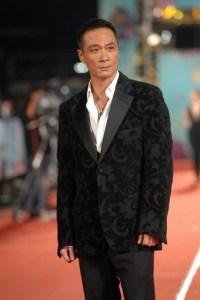
Francis Ng swaggers into the Golden Horse Awards, 2006
Because of this, and because my first daughter was born in 2000, my HK movie viewing declined steeply. I still managed to keep up with the latest Johnny To and Wong Kar-Wai films but most of the HK film scene passed me by.
Hence I was unaware of the rise of Francis Ng as a leading man, which started to take place around 1999 when he won several Best Actor awards for films such as The Mission, Bullets Over Summer, and 2000 AD.
When I was watching HK movies in the mid-nineties, I knew Francis Ng mostly for his quirky character work in movies like Young & Dangerous. Seeing his body of work this month, from films made after 2000, made me realize that he has grown far beyond those roles as an actor and as a movie star.
But apparently what pushed Francis into HK idol stardom was his role in the hit HK television drama Triumph In The Skies, where he played an upstanding, straitlaced airline pilot.
I’m not sure exactly what spurred this past month’s obsessive viewing of so many Francis Ng movies but he’s so good and watchable in almost everything he’s in, and he’s made so many movies, that it wasn’t hard to find several of them to watch.
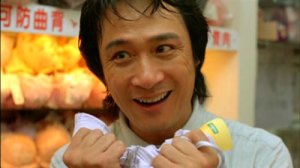
Wacky Francis and bra, Crazy ‘n’ the City, 2005
He’s also grown into his face in the past 10 years and, depending on the movie and the hairstyle, can be ridiculously good-looking or insanely strange.
He’s blessed with a fine, photogenic bone structure, and has a mobile, expressive face and an agile grace that makes him a perfect screen performer.

Cross-eyed Francis, Juliet In Love, 1999
His eyes are also just slightly crossed, which adds an odd, somewhat feline quality to his looks.
Number of times Francis plays a cop: 2
Number of movies in which Francis dies: 14
Number of times Francis gets the girl: 10
- The Mission–Francis in feral, intense mode. Great movie which also stars Anthony Wong, Roy Cheung, & Lam Suet as hard-guy bodyguards to a timid mob boss.
- Exiled–Francis as one of a group of cool hired guns. Reunites most of the cast from The Mission with brilliant director Johnny To.
- Infernal Affairs 2–Prequel to Infernal Affairs. One of the best movies I’ve seen in a long time, especially Francis’s amazing, low-key performance as a reluctant Triad boss. Compare this to The Mission and some of Francis’s other OTT performances and you’ll see his fantastic range & versatility.
- Juliet In Love–my favorite. A wonderful, emotional, sad and beautiful story. Francis plays a none-too-bright, aimless hoodlum who finds love and redemption from an unlikely source.
- Full Alert–Francis as a complex bad guy in a cat & mouse game with Lau Ching Wan. Intense and haunting Ringo Lam movie.
Good:
- Too Many Ways To Be #1–weird but fun alternative timeline triad movie.
- Shiver–great, naturalistic Francis performance but he’s got terrible orange hair and a pathetic mustache
- Bullets Over Summer–Francis as a lonely cop in a subtle and emotional performance. Same director, Wilson Yip, as Juliet In Love.
- On The Edge–Francis in a supporting role as a sympathetic triad boss. He could’ve sleepwalked through it but actually puts in a worthy effort
- Wo Hu–another Triad boss supporting role–funny & complex
- Colour of the Truth–Francis is only in the first ten minutes or so, yet again as Triad boss, but makes a great impression. His scene with Anthony Wong & Lau Ching Wan is a textbook example of incredible ensemble acting.
- Love Trilogy–Charming romantic comedy with Francis and Anita Yuen as a bickering married couple. One of the few movies where he doesn’t die horribly.
- Fantasia–hilarious HK comedy, with Lau Ching Wan, Jordan Chan, Louis Koo, the Twins, Cecilia Chung & many others. Ridiculous and funny.
- Crazy ‘n’ The City–Francis shows his range again as a mentally ill man who falls in love. Bad hair day for him, though.
- Young and Dangerous–Ugly Kwan! So funny, especially the growly voice, the bangs, the goatee, and the orange clothes. And so much more fun to watch than the wooden Ekin Cheng. No wonder Kwan got his own spinoff series (Once Upon A Time In Triad Society 1 & 2).
Bad:
- Curse of Lola–Francis channels Tony Leung Chi-Wai, but even he can’t save the dreadful & pretentious script.
- The Closet–WTF? Wannabe Ring & Ju-On clone. Francis does some neat magic tricks & bonds with a cute kid.
- Shamo–another supporting part, this time in an ultraviolent manga adaptation. Francis is cool but the movie is pretty unwatchable. Thank god for fast forward.
- Karmic Mah Jong–the only movie I couldn’t finish it was so bad. Pointless & obtuse, and Francis has an especially unflattering haircut in it.
Indifferent:
- One Last Dance–A cool Francis performance in a muddled movie. Might be better the second time around. Classic scene with hostages, plastic wrap, scotch tape and a fork.
- Bullet & Brain–very dumb Wong Jing movie with funny & cool performances by Francis & Anthony Wong. Watching Francis strut and pose is of course lots of fun (bonus points for also looking very hot doing it). Just fast forward over anything without him or Anthony in it.
- Legal Innocence–really really creepy & disturbing Category 3 movie about a gruesome true-crime HK murder involving a love triangle and a body decomposed in acid. Francis is great but unsettling. Cecilia Yip & Anthony Wong also turn in good performances.
- Beauty and the Breast–actually a pretty funny and entertaining movie, if you’re not too demanding. Francis is hilarious as the office lothario who gets his commuppance (hint: it involves prosthetic mammaries). Just try to imagine Tom Cruise or Brad Pitt taking a part like this & you’ll understand what makes HK films special.
- Gen-X Cops–Ridiculous film starring popstar prettyboys as undercover cops. Francis lights up the screen as yet another Triad–unfortunately he buys the farm (again) by the middle of the movie, but not before delivering a profane and hilarious final speech, in English, though he obviously didn’t speak the language well at the time. Despite this, he makes it one of the highlights of an otherwise predictable and idiotic movie.
- A Man Called Hero–Francis plays a Japanese swordmaster bent on world domination. He has a CGI duel Anthony Wong as a Chinese martial arts sage and as well as a climactic battle with wooden man Ekin Cheng atop the Statue of Liberty (don’t ask).
- Deadly Delicious–Francis plays a philandering husband who suffers a horrible revenge from his pissed-off wife. Involves lethal doses of shrimp and other Chinese delicacies.
Yet to see:
A War Named Desire
Bakery Amour
Once Upon A Time in Triad Society 1 & 2
HK Triad
The White Dragon
Dancing Lion
the birthday present
It’s my birthday today so I’ve decided to start a blog as a place to store my random thoughts about life, art, film and the world. Hope it’s fun!

 beyondasiaphilia
Recent Comments