Posts filed under ‘south korean films’
Love Buzz: 2025 Mill Valley Film Festival
The 2025 Mill Valley Film Festival is upcoming this weekend and there is a treasure trove of Asian and Asian American films on the docket. Among these are some of the buzziest films from the current film festival season.
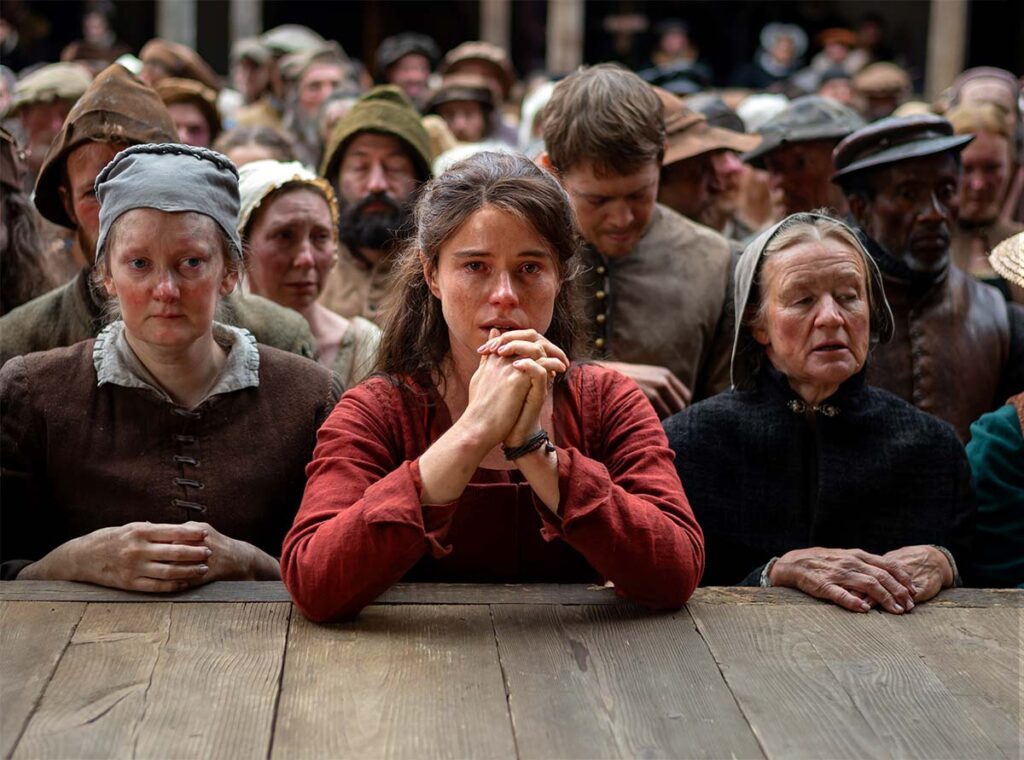
The festival’s opening night film is Hamnet, Chloe Zhao’s interpretation of the backstory of the creation of Hamlet. Zhao has a decidedly singular vision and the film promises to be an eye-opening and unexpected journey. Hamnet premiered at the Telluride Film Festival a few weeks ago and as with all of Zhao’s films it garnered a lot of attention for its unconventional vision and storytelling.

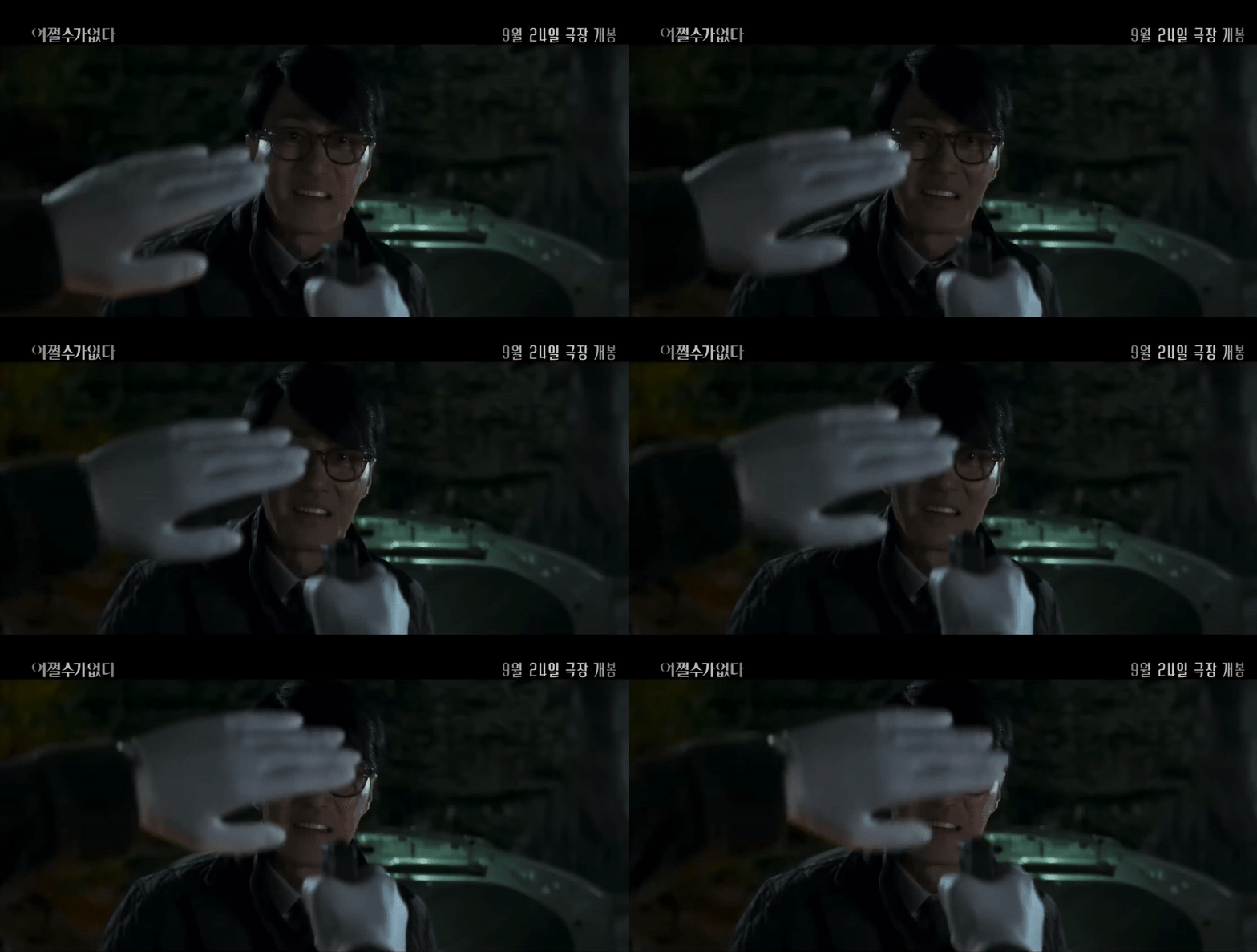
Probably one of the most talked-about films at the recent Venice Film Festival, Park Chan-Wook’s newest joint No Other Choice has its Bay Area premiere at MVFF ahead of its theatrical release later this year. With an A-list cast toplined by Lee Byung-Hun (Squid Game; Mr. Sunshine; A Bittersweet Life) and Son Ye-Jin (Crash Landing On You: The Pirates), the film is a black comedy about a white-collar worker (Lee) whose world is turned upside down when he suddenly loses his cushy corporate job. As expected in a Park film, things go sideways quickly. No Other Choice garnered a long standing ovation (reported as anywhere from six to nine minutes) at Venice and has presold to 200 countries.

Taiwan represents at MVFF with Left-Handed Girl (dir. Shih-Ching Tsou), another festival favorite that premiered at Cannes. Set in the night markets of Taipei, the film follows a single mother and her two daughters as they navigate life in the big city. The film is Taiwan’s nominee at the Academy Awards for Best International Feature.

Diamond Diplomacy (dir. Yuriko Gamo Romer) looks at the popularity of baseball in Japan as well as among the Japanese American community, exploring the ways that the game reflected and facilitated US-Japan relations both on and off the field. An encyclopedic look at its topic, the film spans more than 150 years from just after the Civil War to the present day, with appearances by Babe Ruth, Joe DiMaggio, Ichiro Suzuki, Masanori Murakami, and many more. The film is an intriguing examination of how sports, politics, celebrity, and soft power intertwine.
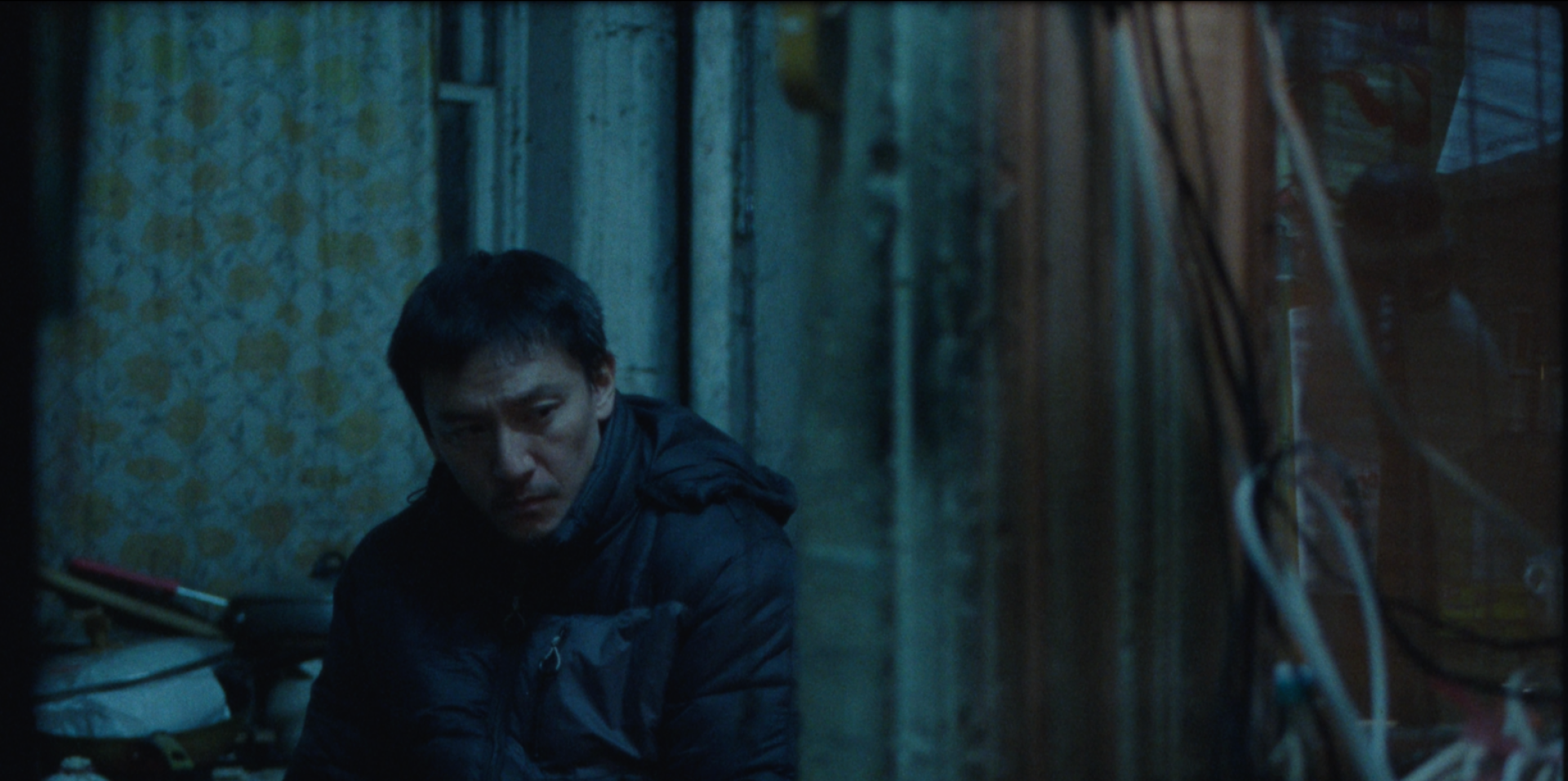
Chang Chen (A Brighter Summer Day; Crouching Tiger, Hidden Dragon; The Soul) stars in Lloyd Lee Choi’s directorial debut, Lucky Lu, which also premiered at Cannes. The film follows a New York City delivery driver, played by Chang, through a harrowing series of events as he roams the city in search of an acquaintance who’s run off with a large sum of his money.
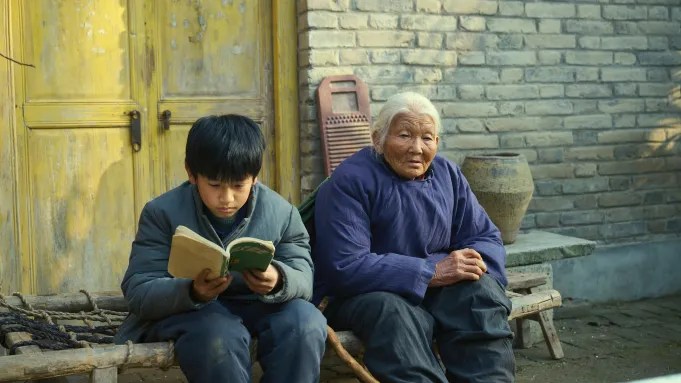
Living The Land premiered at the Berlinale last February where director Huo Meng won the Silver Bear for best directing. The film is set in 1991 and looks at life in a small village in China as its inhabitants live through the vast changes in the country at the time.
Along with these feature films there are a plethora of shorts by Asian and Asian American directors among the festival’s several shorts programs. It’s a great chance to see these films in the friendly confines of MVFF, since unlike the feature films many of them might not get widespread distribution.
All in all, this year’s MVFF is an excellent opportunity to catch the newest and hottest Asian/American movies.
Get Ur Freak On: Favorite Movies of 2017
My favorite films from 2017 made the list for a variety of reasons but these are the movies I most enjoyed from last year. Three of the films were theatrically released in 2016 but I viewed them first at the Hong Kong International Film Festival (HKIFF) in 2017 so I’m including them here. I saw Get Out and The King on plane flights, but the rest I watched in a cinema somewhere. Listed in no particular order.
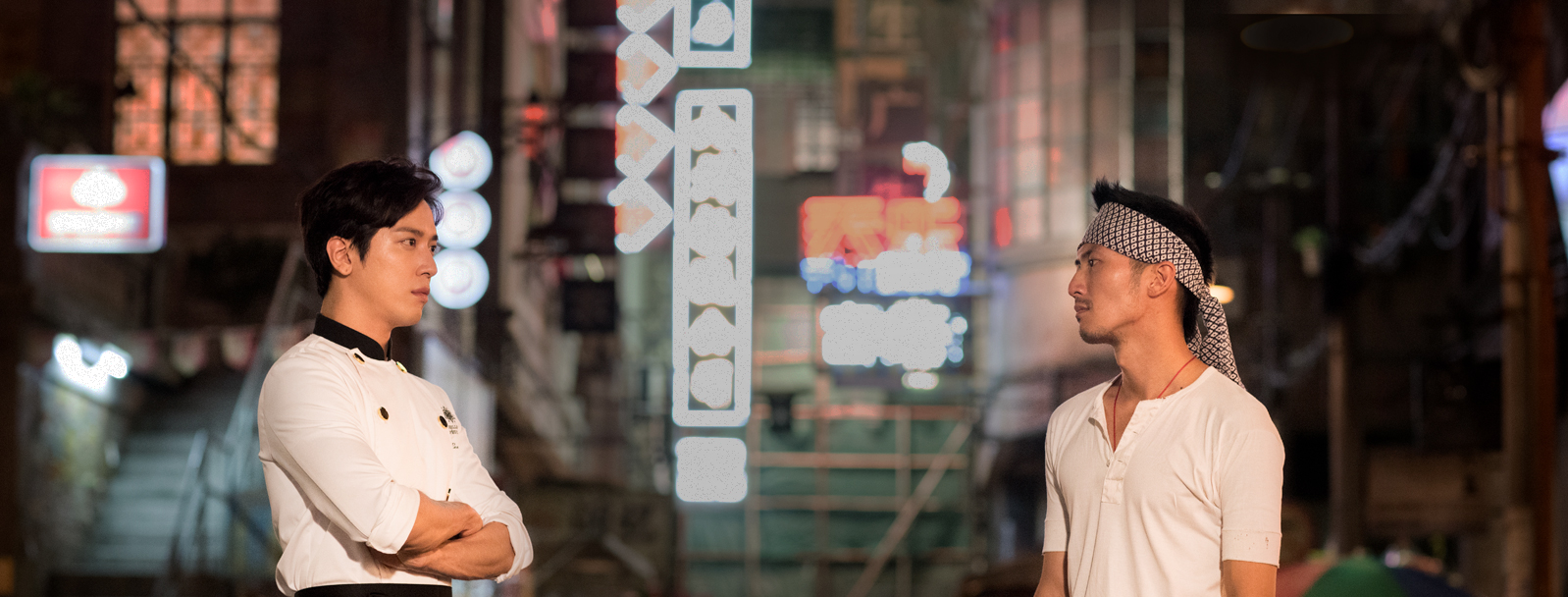
Pulchritude, Jung Yonghwa and Nicholas Tse, Cook Up A Storm, 20171
1. Cook Up A Storm: This film is on the list for the purely aesthetic pleasure of seeing Jung Yonghwa’s perfect features on the big screen. There’s also a lot of nice food porn cinematography but the movie itself is quite lightweight and if it didn’t star my boy Yonghwa (as well as the equally photogenic Nicholas Tse) I’m not sure I would have even given it the time of day. But I’m a big fan of pulchritude so I’m putting it on my list.
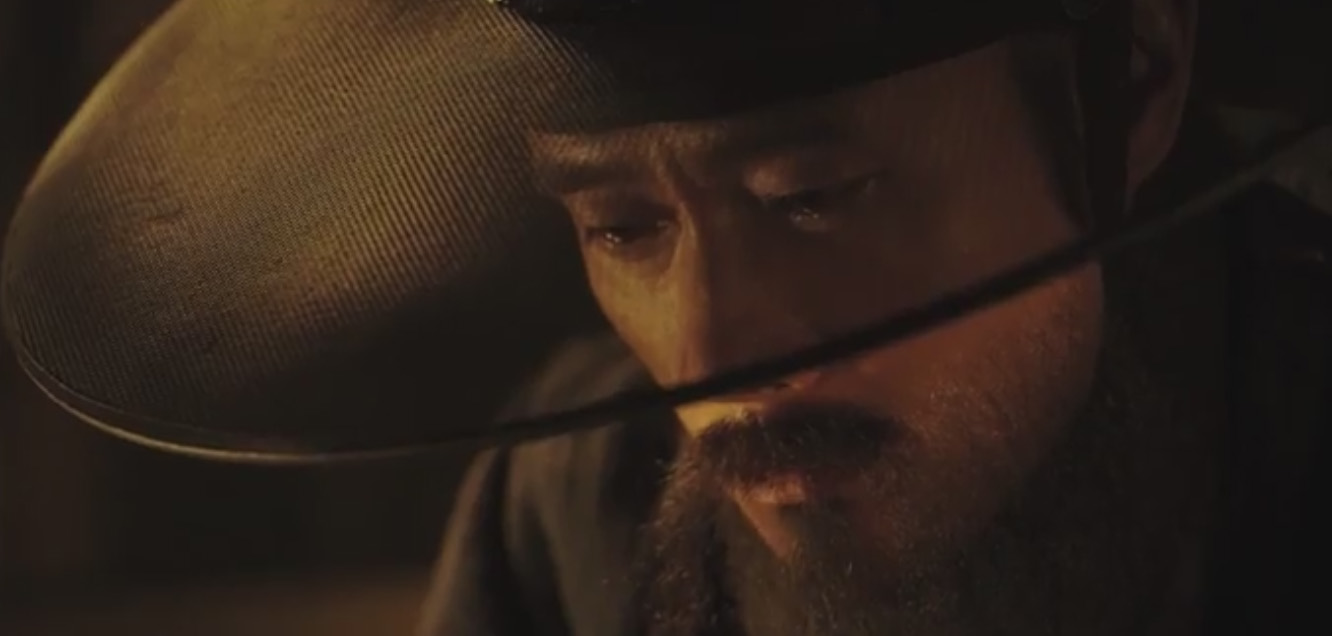
Emo, Lee Byung Hun, The Fortress, 20172.
2. The Fortress: Lee Byung Hun rehabilitates his public image completely in Hwang Dong Hyuk’s absorbing and emo historical about a famously tragic moment in Korean history. While Lee is brilliant as the courtier who must make an unbearable moral choice the rest of the cast is also excellent, including Kim Yoon Seok as Lee’s counterpart, the equally conflicted royal advisor who also pays a heavy price for his decisions.
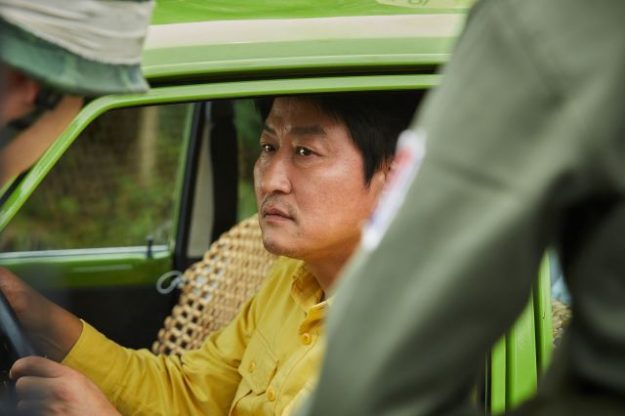
Wary, Song Kang Ho, A Taxi Driver, 2017
3. A Taxi Driver: Song Kang Ho is solid as usual in director Jang Hoon’s retelling of the 1980 Gwang Ju uprising, in which the repressive government brutally put down student protestors in the southern Korean city. Although the film doesn’t shy away from the political ramifications of the story it’s still very character-driven, as Song’s wary taxi driver gradually comes around to the side of justice and truth. Bonus points for a dope car chase that turns spunky taxicabs into vehicles for the resistance.
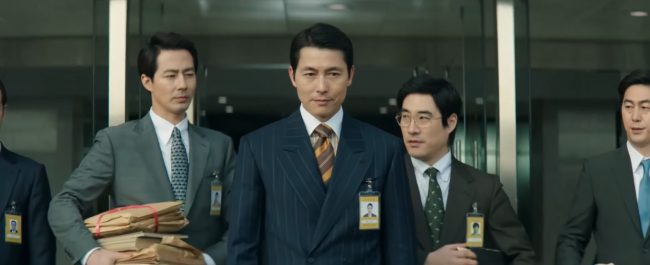
Indistinguishable, Jung Woo Sung, The King, 2017
4. The King: The third South Korean film on this list attests to the strength and diversity of that country’s commercial film industry. Han Jae Rim’s brutal and cynical political thriller, in which the gangsters are indistinguishable from the lawyers and politicians supposedly opposing them, includes a great performance from rising star Ryu Jun-yeol, who also had a strong supporting role in A Taxi Driver.
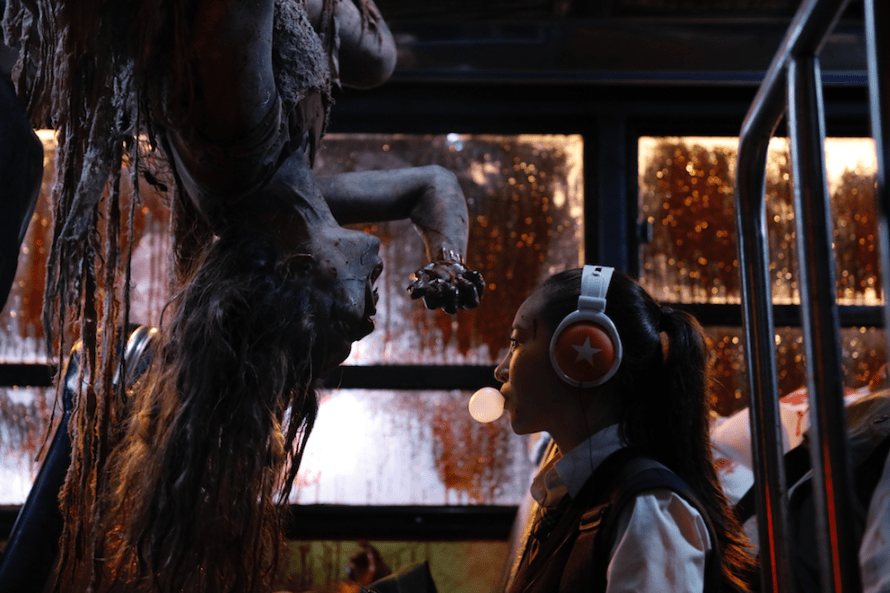
Complicit, Mon Mon Mon Monsters, 2017
5. Mon Mon Mon Monsters: Giddens Ko’s horror film/teen movie presents a nightmare high school scenario where no one is innocent and everyone is complicit. As he stated in his introduction to the film at the Hong Kong International Film Festival, who is the real monster in the movie?
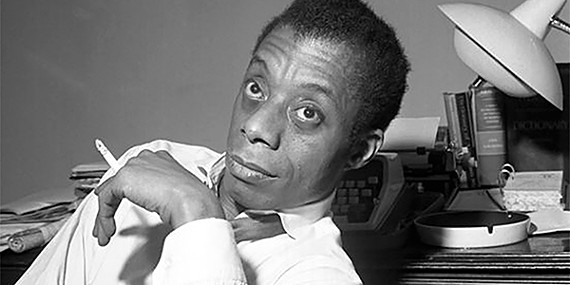
Fierce, James Baldwin, I Am Not Your Negro, 2016
6. I Am Not Your Negro: Raoul Peck’s doc about the legendary James Baldwin shines when it connects the dots between past and present racism in the U.S. Although Samuel Jackson’s does a fine job narrating the film, he is easily upstaged by archival footage of Baldwin himself fiercely speaking out about race, politics, and the historical and contemporary struggles of African Americans. Released 2016, viewed in 2017 at HKIFF.

Tensions, Justin Chon, Gook, 2017
7. Gook: Justin Chon’s indie gem presents the Korean American perspective on sa-i- gu, the 1992 civil unrest in Los Angeles following the acquittal of the Wind, Powell, Koons, and Briseno, the four police officers caught on video beating motorist Rodney King. Chon miniaturizes the conflicts of the time and his film effectively captures the racial tensions of that moment in time.
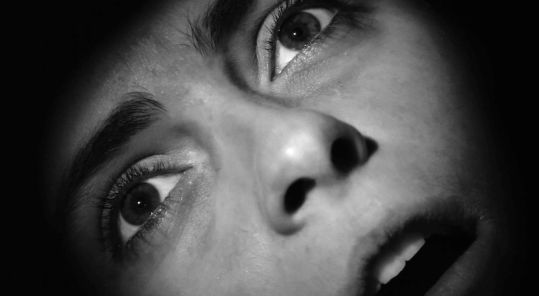
Lovely, Cinema, Manoel de Oliveira and Me, 2017
8. Cinema, Manoel de Oliveira and Me: An outstanding essay film directed by João Botelho, one of the influential Portuguese film director’s protégés. The film looks at the relationship between the late director and Botelho and concludes with a lovely restaging of one of Oliviera’s unfinished silent films.
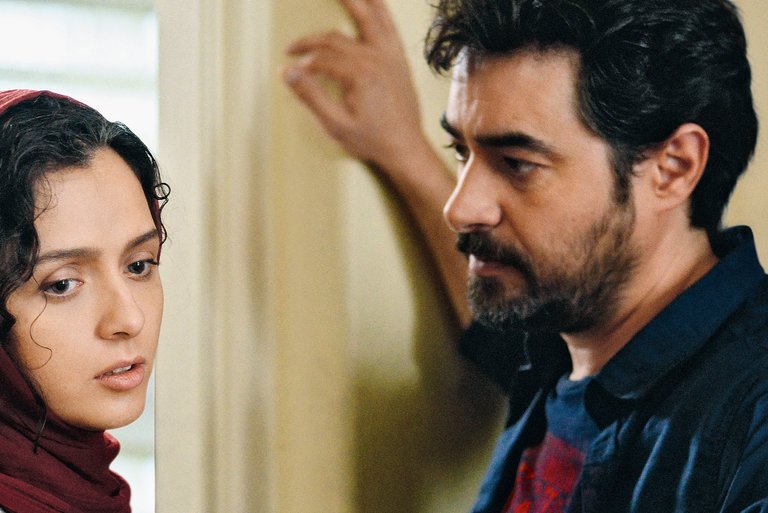
Ellipses, Taraneh Alidoosti and Shahad Hosseini, The Salesman, 2017
9. The Salesman: Director Asghar Farhadi creates another humanistic look at moral ambiguity and human frailty. As in A Separation (2011), his use of narrative ellipses and architectural metaphors is masterful, as is his ability to draw out strong and sympathetic, vividly shaded performances from his cast. Released 2016, viewed in 2017 at HKIFF.
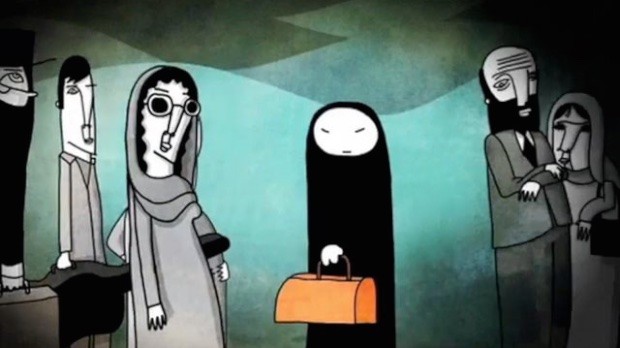
Unexpected, Window Horses, 2017
10. Window Horses: Another excellent animated feature from Ann Marie Fleming (The Magical Life of Long Tack Sam, 2003), this time following a young Iranian-Chinese Canadian poet named Rose as she travels to her father’s home country for a poetry festival. Yes! Totally fun, unexpected and imaginative, with a gorgeous blend of hand-drawn and digitally generated animation.
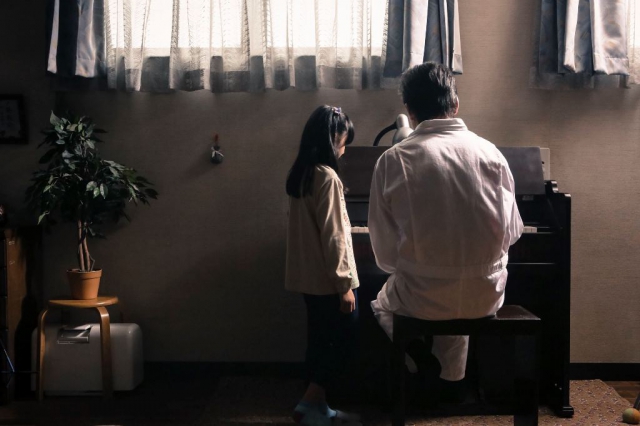
Bleak,Tadanobu Asano, Harmonium, 2017
11. Harmonium: an utterly bleak family drama in the tradition of Tokyo Sonata, Koji Fukada’s movie shows the catastrophic consequences of a few bad life decisions. Released 2016, viewed in 2017 at CAAMfest.

Bravura, Youth, 2017
12. Youth: Feng Xiaogang’s look at a theater troupe in Cultural Revolution China uses a familiar trope of the youth romance film—the awkward country bumpkin outsider rebuffed in her attempts to join an elite, more sophisticated group–to cleverly investigate the deeper political and social elements dividing the country at the time. Utilizing his familiar bravura filmmaking style, including swooping camerawork and intense and masterfully conducted battle scenes, Feng never loses his focus on the impact of great historical events and social movements on ordinary human beings.
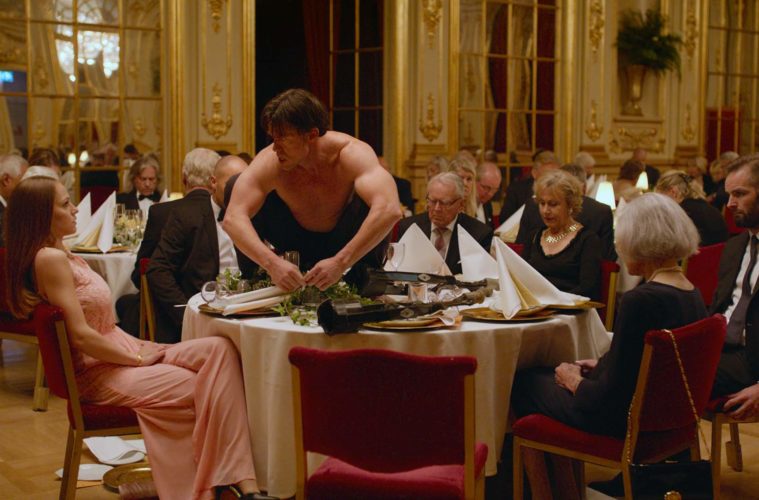
Unease, Terry Notary, The Square, 2017
13. The Square: Ruben Ostlund kicks up the social commentary a notch from Force Majeure (2014), and The Square is an even better film about male anxiety and weakness than its predecessor. Ostland is a master at inverting cinematic conventions and manipulating sound, image and editing to create maximum awkwardness, discomfort and unease.
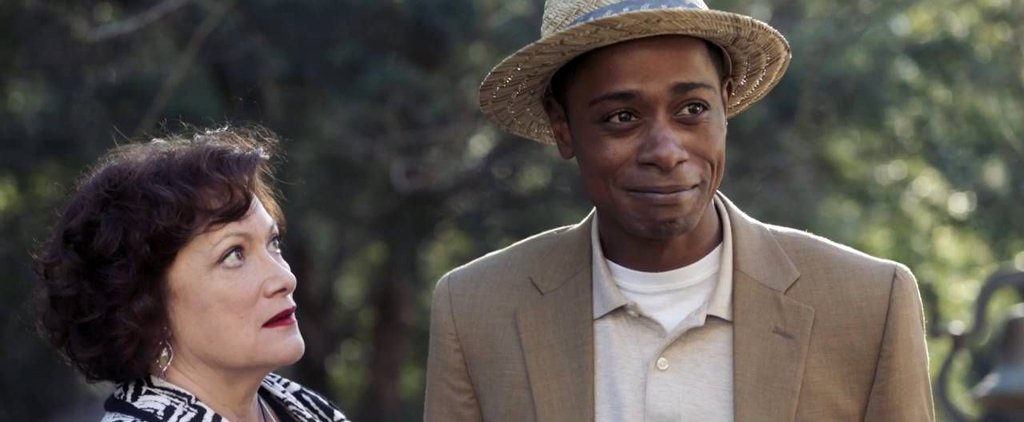
Horrors, LaKeith Stanfield, Get Out, 2017
14. Get Out: A brilliant brilliant movie that proves that commercial genre films can be as significant as any other art form in capturing the zeitgeist of a moment in time and place. Director Jordan Peele utilizes the horror genre to reveal the true horrors in the U.S., where racism and oppression lie just below the surface of seemingly benign everyday gentility.
Legal Man: The Attorney movie review
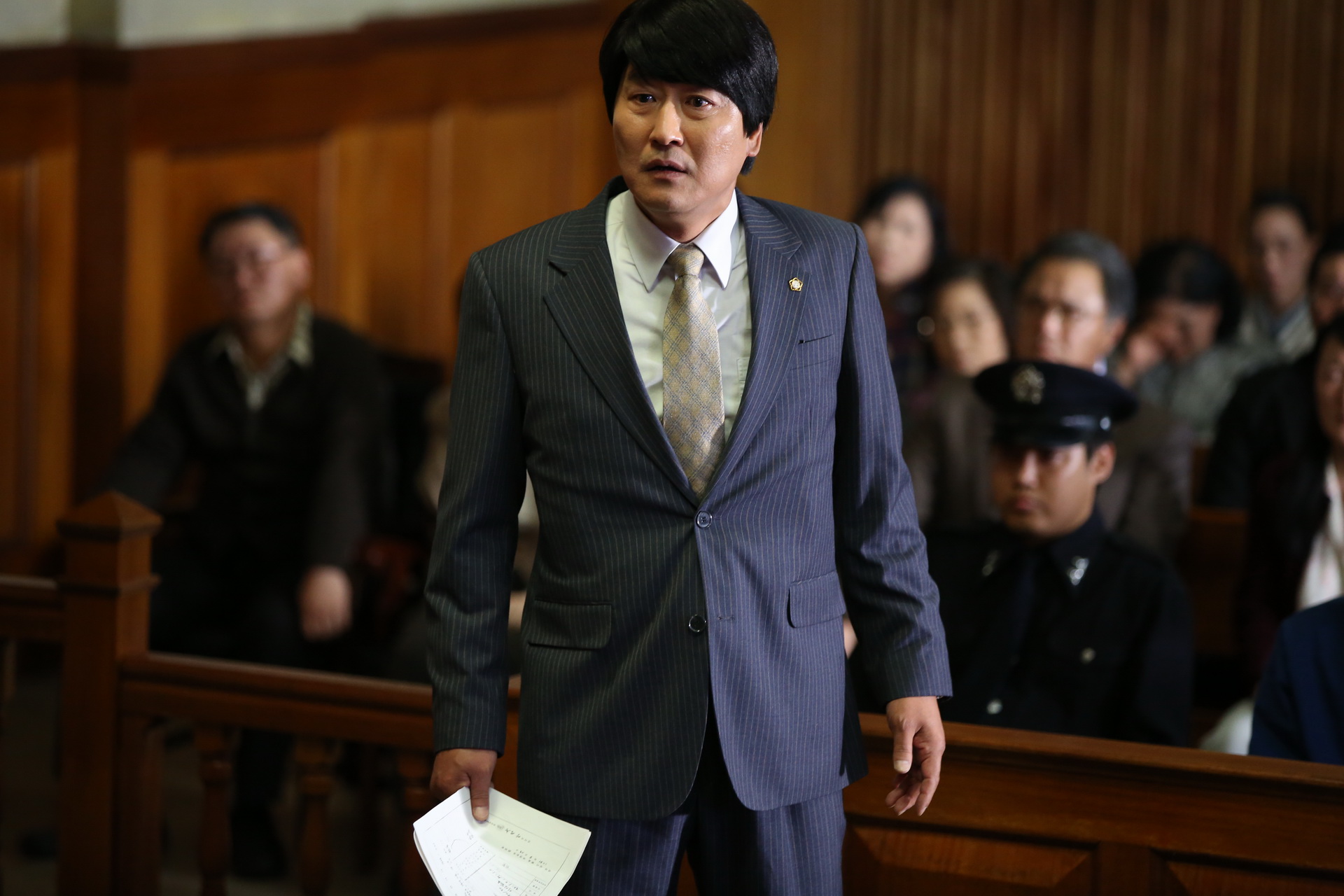
Song Kang-Ho, crusader, The Attorney, 2013
Opening this weekend in San Francisco and other select U.S. cities, The Attorney is the latest South Korean hit film to reach U.S. cinemas. Unlike some of the beloved ultraviolent S. Korean movies to reach our shores, The Attorney is a character-based drama that requires a bit of knowledge of the intricacies of recent S. Korean political history. Its appeal lies in its intimate look at S. Korean social strata, its commentary on political and governmental corruption, and yet another charismatic lead performance by the people’s actor, Song Kang-Ho.
Set mostly in 1981, The Attorney follows mild-mannered autodidact tax attorney Song Woo-Seok (Song Kang-Ho), who is moderately reviled among the snooty, better educated Busan lawyer crowd for his lack of a college diploma until he takes on the South Korean government in a case of “national security.” A group of teenage boys are framed for sedition and accused of being communists, their confessions taken under torture. Song is outraged and defends one of the boys, who also happens to be the son of the lady who runs the pork stew shop that Song frequents. Despite government corruption and obfuscation Song persists in the case and wins the respect of the law community.
The film takes a while to pick up steam, focusing at first on Song’s character and career. But once the main body of the narrative kicks in the story becomes an engaging courtroom drama, leavened with some unpleasant torture sequences that affirm S. Korean cinema’s leading role in oppressively violent imagery. No one films a beating quite like the South Koreans and, though mild by the standards of, say, A Bittersweet Life or The Yellow Sea, the scenes of a helpless, near-naked teenager lying brutalized on a concrete floor or choking underwater effectively make their point.
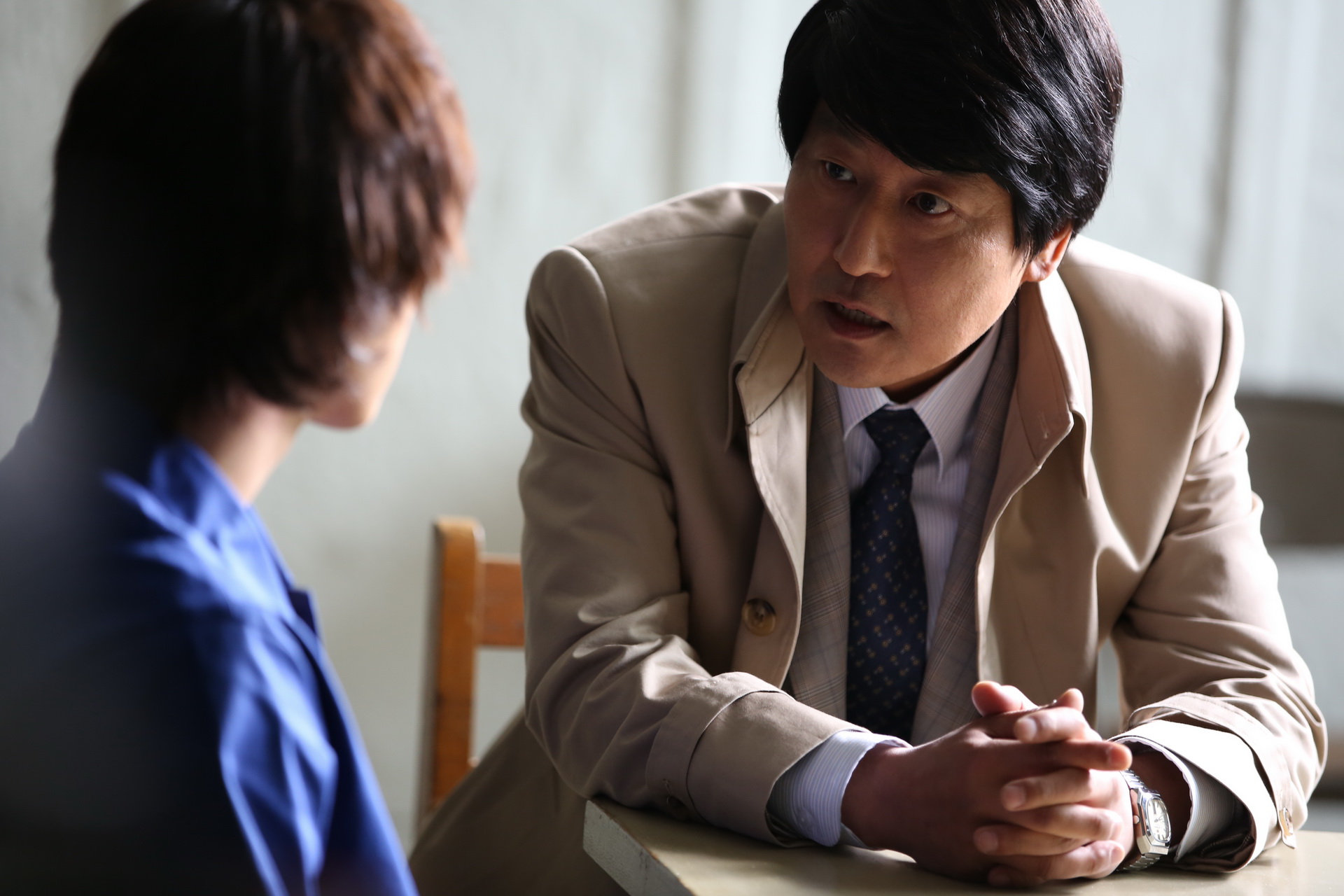
Playing it straight, The Attorney, 2013
Dressed in a suit and with his often-wild and frizzy hair combed flat, Song Kang-Ho as Song Woo-Seuk is as straight as his hair, unlike the wacky characters he’s played in the past, including the “weird” in The Good, the Bad, the Weird, the conflicted vampire priest in Thirst, and the slacker dad in The Host. Song is on a roll this year, with three blockbuster hits in S. Korea including Bong Joon-ho’s Snowpiercer, the period drama The Face Reader, and The Attorney, which was the top-grossing film in S. Korea in the past month. In The Attorney he’s very effective as the modest tax attorney turned crusader, using his mobile and expressive face and body language to good effect. He’s always been good at playing the schlumpy everyman and here he exploits that persona, transforming from the wrong-side-of-the-tracks lawyer to a civil rights hero.
Although I was caught up in the story, I thought the film’s ending was somewhat treacly and let the government off the hook a bit. Even if Song is validated, does that mean he’s affected real social change, or is the movie all about him feeling good about himself? Sure, one person is redeemed, but was the oppressive social system dismantled? Or is that too much to expect from a commercial movie product? The anti-fascist commentator in me was a bit disappointed by the conclusion until I found out more about the film’s backstory.
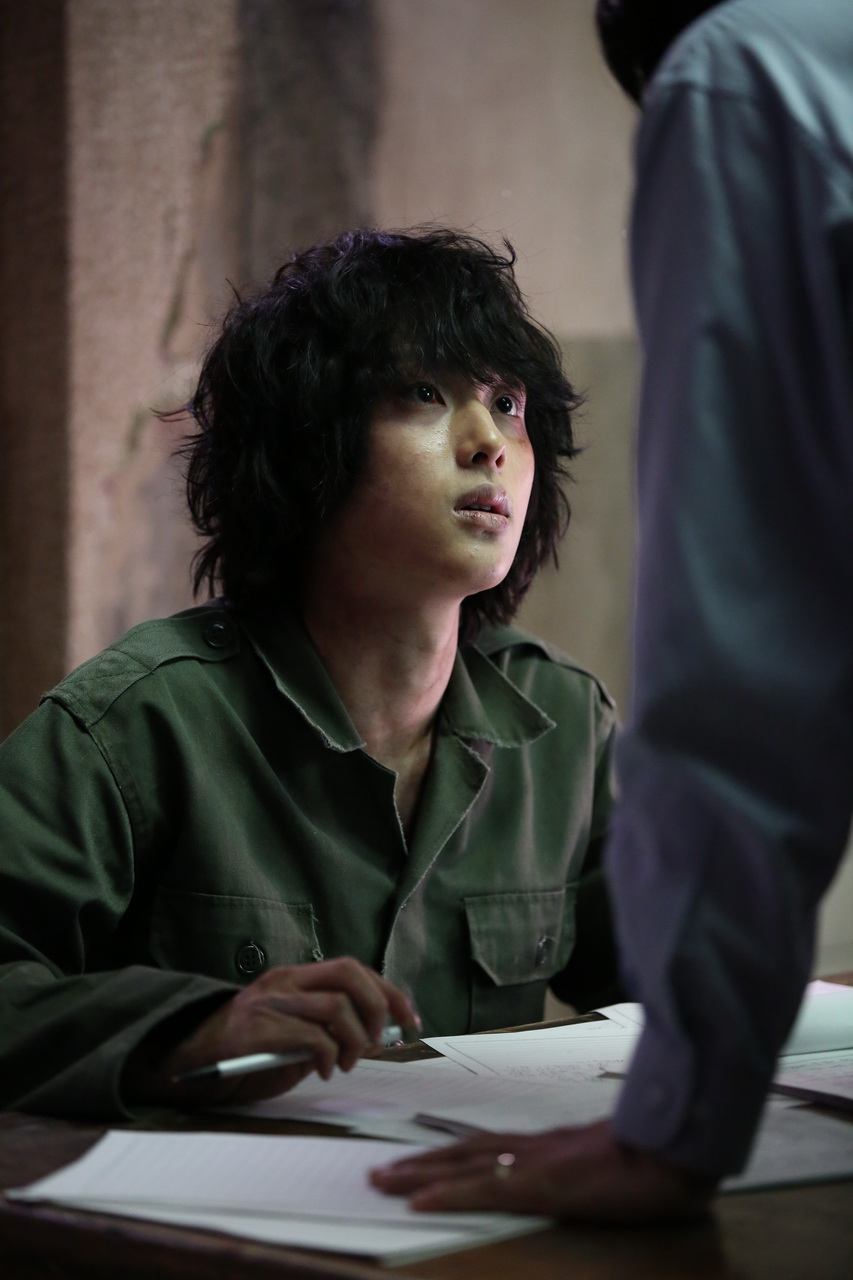
Governmental brutality, The Attorney, 2013
The finer points of the film’s social commentary may be elusive to non-Korean viewers without some knowledge of late 20th century S. Korean politics but upon closer inspection I realized that the movie plays an interesting role in the real-life South Korean political milieu. By exposing the ruling party’s dirty legalistic tricks the film clearly condemns the paranoid, nationalistic mindset that gave rise to National Security Act instituted in the early 1980s that severely limited civil rights in S. Korea. More significantly, the movie is loosely based on the early career of former South Korean president Roh Moo-Hyun, a civil rights lawyer turned politician whose reforms were often vigorously challenged by more conservative elements in the South Korean government and who, after retiring from politics, committed suicide (not an uncommon choice for contemporary S. Korean politicians) amidst a blurred presidential legacy that included charges of corruption amongst his cabinet and family members. Ironically, after his suicide in 2009 public opinion of Roh improved considerably and The Attorney is a part of the reclamation and redemption of Roh’s legacy.
The Attorney has become a mega-hit in South Korea and is one of the top-ten grossing films of all time there, so its message has clearly resonated for audiences there. It’s an interesting example of the way that commercial cinema can work towards resolving troubling national histories like the NSA and reshape perceptions of controversial public figures like Roh.
The Attorney
opens Feb. 7
AMC Metreon
San Francisco
AMC Cupertino Square
Cupertino CA

 beyondasiaphilia
Recent Comments