Although I love the overwrought histrionics of commercial cinema (see Agneepath), that’s certainly not the only way to make a movie. Two films that have been on a lot of last year’s top ten lists have recently made their way to San Francisco cinemas. Nuri Bilge Ceylan’s Once Upon A Time In Anatolia and Asghar Farhadi’s A Separation are both riveting pieces of work that deal with the ambiguity and shades of gray found in complex moral situations
Despite a title that harkens back to Sergio Leone’s expressionistic spaghetti Westerns, Ceylan’s Anatolia is an understated, masterfully told story that sidesteps the conventions of most genre films. The film follows a group of local police through a long night on the Anatolian steppes as they search for the grave of a murdered man. The cops are reluctantly assisted by two perps whose memory of the crime wavers in and out of focus throughout the night.
Moral complexity, Once Upon A Time In Anatolia, 2011
As they drive around western Turkey’s vast landscape the police amiably debate the benefits of sheep versus buffalo yogurt, meticulously tot up mileage for reimbursement, and gossip about who among them might have prostate issues, among other mundanities. The narrative unfolds naturalistically, without a soundtrack, with some of the dialogue seemingly improvised or loosely scripted. Themes and plot points emerge slowly and sometimes indirectly—a character’s offhanded comment in one scene takes on great relevance later in the film. Such restraint and respect for the audience’s intelligence is a welcome change from the hamhandedness of most films, where exposition is a blunt instrument used to club the viewer into submission.
The film presents realistic, complex characters, with killers that weep remorsefully, cops that show compassion for criminals, and men who are overawed by the beauty of a young woman simply serving tea by candlelight. Ceylan’s direction brings a deft and subtle touch to the film—the movie concludes with a matter-of-fact autopsy with the unsettling sounds of the procedure, including cracking breastbones and dripping fluids, emphasizing the operation’s dehumanizing effect. Overall Ceylan’s direction is a lovely thing to behold, as he uses the policemen’s wanderings through the Anatolian countryside as a metaphor for the imprecision and ambiguity of humanity’s moral landscape.
While it also looks at the unclarity of human morality, A Separation’s briskly paced and intense storyline takes a different tack than Anatolia’s slower, more naturalistic tale. Farhadi’s political allegory/family drama starts in medias res, with a middle-class Iranian couple arguing their case directly to the camera (standing in for the off-screen judge). Simin, the wife wants a divorce in order to move to the United States against the wishes of Nader, her husband, who feels a duty and an obligation to remain in Iran to care for his Alzheimer’s-afflicted father. Simin pleads the urgency of going abroad in order to improve the life of their adolescent daughter Termeh, although the details of this necessity are not made clear. The judge dismisses her suit, and Simin decides to move to her mother’s house rather than stay with her husband. The film follows the aftermath of her decision, with this seemingly small action leading to unexpected, ever-broadening repercussions.
The film features an outstanding ensemble cast including Leila Hatami and Peyman Moaadi, who won Best Actress and Actor awards at the 2011 Berlin Film Festival for their portrayals of the conflicted couple. However the rest of the performances are also excellent, including Sareh Bayat as the devout woman that Nader hires to care for his father, and Shahab Hosseini as her hotheaded husband.
Divided, A Separation, 2011
Director Farhadi makes great use of his locations’ architecture, confining his characters in small, enclosed spaces that stifle communication and hinder movement. He also effectively utilizes windows and doors, often framing the actors separated or trapped behind panes of glass. Several times his characters slam or pound on a rattling, fragile stained-glass door, yet it resolutely resists shattering. The door thus becomes a symbol for the delicate yet impenetrable separations of class, religion, and gender that divide Iranian society.
Farhadi also successfully conveys the illogic of government bureaucracy in a chaotic trial that takes place in a cramped, crowded judge’s chambers. Witnesses shout at each other without hesitation, various people come and go, and criminal charges quickly escalate from theft to battery to murder based on hearsay, conjecture, and unproven accusations.
The film ultimately hinges on 11-year-old Termeh’s choice—which parent will she stay with? Her indecision becomes the crux of the film, symbolizing the impossibility of neatly resolving most human conflicts.
Like Once Upon A Time In Anatolia,A Separation eschews a Hollywood ending—loose ends dangle, storylines are unresolved, and characters remain in limbo. As in real life, clear and easy resolutions aren’t a part of the picture.
UPDATE: As expected, A Separation won for Best Foreign-language Picture at this year’s Oscars, following a similar award at the Golden Globes and, as expected, with Israel on the verge of bombing its irascible neighbor, (with the tacit approval of the U.S. government), the film’s increased profile is being spun by all sides. Although director Farhadi used his Oscar acceptance speech to make a plea for tolerance and understanding, the Iranian government claimed the award was a blow against “the Zionist lobby,” while Iranian hard-liner Masoud Ferasati called the film “the dirty picture (of Iran that) westerners are wishing for.” No doubt more mud will be slung on both sides of the propaganda war.
A funny thing happened on the way to the multiplex last week—both of the number one movies in China and in India were playing simultaneously at Bay Area theaters. The Viral Factor, director Dante Lam’s latest actioner, and Agneepath, a remake of a classic 1990s Bollywood revenge drama, both made their way to the U.S. with day-and-date releases in the U.S. and their respective countries of origin.
Agneepath, starring the remarkably hot and handsome Bollywood star Hrithik Roshan, set a record for highest opening day grosses in India and is on its was to joining the 100 crores club, along with blockbusters like Aamir Khan’s Three Idiots and Ghajini, Shahrukh Khan’s Ra.One and Don 2, and Salman Khan’s Bodyguard and Dabangg.
The flick is an old-school vengeance story with new-school stars, including the aforementioned Hrithik, pouty-lipped former Miss World Priyanka Chopra, and hulking villain Sanjay Dutt. It also features an item number with another rising star, Katrina Kaif, who shows off her amazing articulated torso in a fast-paced dance sequence.
The original Agneepath is a cult classic in India and stars OG bad boy Amitabh Bachchan. Both the original and the remake take their title from a well-known poem written by Bachchan’s father, Harivansh Rai Bachchan, and it’s featured prominently in both films. Agneepath roughly translates as “the path of fire,” referring to persevering in the face of great struggle.
Sanjay Dutt, evil, Agneepath, 2012
In the new Agneepath the intensity is turned to up eleven for the duration as first-time director Karan Malhotra brings the high melodrama on a grand scale, including child slavery, beatings and hangings, tattooed villains both bald and hairy, machete-wielding transvestites, and a bride who gets gunned down on her wedding day. Not to mention Hrithik Roshan’s smoldering green eyes simmering with rage throughout the movie. At the plex where I watched the show with a mixed crowd of both desi and non-desi audience members, the stoned teenager in the projection booth had jacked up the theater’s volume to “deafening,” but this only suited the movie’s thundering score and accentuated the general more-ness of the storyline.
In contrast to the theatrics of the plot, Hrithik turns in a subtle, intense performance as the tortured hero bent on avenging his father’s wrongful death. Despite being astoundingly hot, as always Hrithik’s on-screen persona is fairly low-key, downplaying his tousled hair and perfect profile. He’s the dreamboat with a heart of gold who is incredibly handsome, cut and toned, yet remarkably unassuming. At the show I attended, Roshan’s first appearance thirty minutes into the movie was greeted by an elated fan calling out, “I love you, baby!” Her sentiment was quickly echoed by a happy murmur from most of the female viewers in the audience.
Producer Karan Johar’s Sirkian aesthetic is all over this one, thought it’s nominally directed by Karan Malhotra. The film’s emotional palette is completely saturated, with every scene staged for maximum dramatic effect. Yet despite the overall fever pitch, some sequences manage to stand out, including a harrowing lynching that sets the dark and violent tone of the film, and a gorgeous orange-toned set piece that takes place during the Ganesh Chaturthifestival. Malhotra makes excellent use of the festival’s spectacle, skillfully intercutting the riotously colorful celebration with a cat-and-mouse assassination attempt. The film’s sleek production values, its gorgeous and charismatic leading man, and its bloody tale of violent retribution make it a good candidate for crossover success in the U.S. and worldwide.
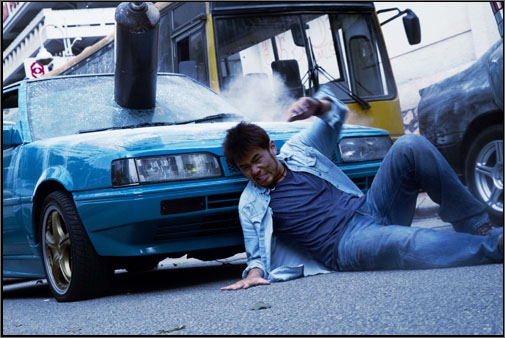
Nic Tse, misunderstood, The Viral Factor, 2012
The Viral Factor, China’s number one movie last week, is a horse of a slightly different color. Part intense and violent actioner, part family melodrama, and part reunification allegory, the film boasts an amazing amount of property and vehicle destruction, and copious quantities of flying bullets, sheared-off limbs, and characters leaping from high ledges. In other words, it’s a typical Dante Lam movie.
The story concerns a pair of estranged brothers, one raised in Hong Kong by his father, and one raised in China by his mother, who of course end up on opposite sides of the law. Fai, the cop, stiffly played by Taiwanese pop superstar Jay Chou, and Yeung, the thief, more energetically rendered by Hong Kong pop superstar Nicholas Tse, meet cute after Yeung busts out of police custody in Malaysia. Intertwined with their nascent reunion is a plot involving a mutant smallpox virus, corrupt cops, and a sleek English-speaking gangster clumsily played by Andy On (here billed as Andy Tien).
Jay Chou, cornered, The Viral Factor, 2012
Director Lam keeps the pace cracking throughout, starting with a blistering car chase and shootout in the streets of Jordan—clearly someone’s been watching The Hurt Locker. Yet in true Hong Kong style the action sequences, smartly choreographed by Chin Kar-lok, are interspersed with a melodramatic family subplot. The hoary cop-criminal brothers theme has a long and venerable history in Hong Kong action movies, perhaps most notably essayed by Chow Yun-Fat and Leslie Cheung in A Better Tomorrow. Here the conflict is much less dramatically rendered, in part because neither Jay Chou nor Nic Tse possess the passion, chops, or sheer charisma of either Chow or Cheung, and as such the brotherly relationship is more friendly than fraught. Tse manages to be convincing as the hotheaded criminal, despite his slight and wiry stature, but Chou doesn’t bring a lot to his role as the cop. Without much fraternal tension the familial dynamics don’t possess a huge amount of urgency, so the storyline’s resolution ultimately lacks impact.
But the action sequences more than make up for this dramatic slackness, and veteran director Lam makes excellent use of enclosed spaces full of whizzing bullets, hand grenades, and sharp objects. As with his two previous films, The Beast Stalker and The Stool Pigeon (both of which also star Nic Tse), all of the lead characters suffer grievous bodily harm from car wrecks, gunfire, blunt force, and other physical trauma, with each eventually sporting the facial scars that have lately become Lam’s signature. Although he handles the fancier set pieces effectively, including a helicopter chase that weaves through a dense jungle of skyscrapers, Lam seems most at home down in the mean streets of Kuala Lumpur. It’s there that the film really gains some traction, with corrupt cops and scraggly gangsters populating neon-lit outdoor food stalls not unlike those found in Lam’s native Hong Kong. Along with Herman Yau, Lam is one of the few directors in the former Crown Colony still making streetwise commercial cinema, and the success of The Viral Factor both at home and abroad will hopefully enable him to find future financing for his gritty, kinetic Hong Kong-style movies.
Bonus beats: Here’s a clip of Chikni Chameli from Agneepath with Katrina Kaif and her amazingly flexible abs. Props for lighting a match on her forearm. Also includes nice cutaways of Hrithik brooding prettily and Sanjay Dutt getting his mean on.
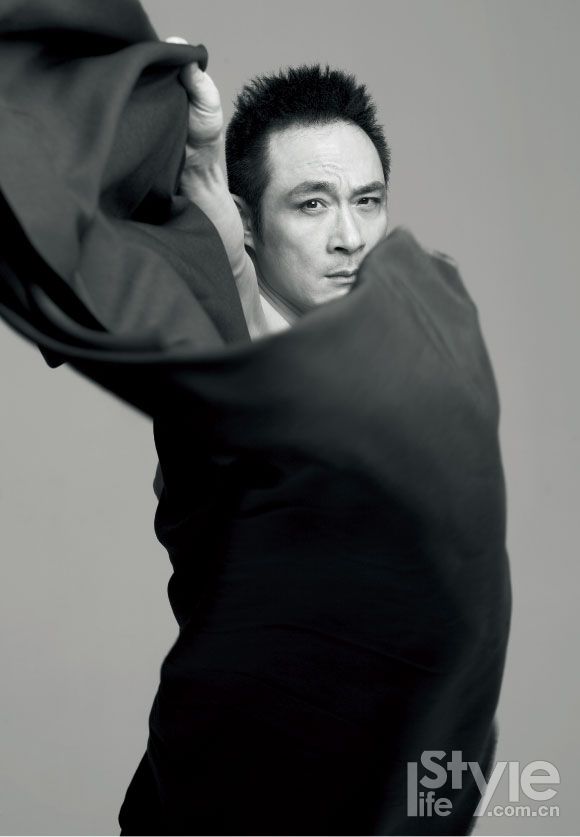
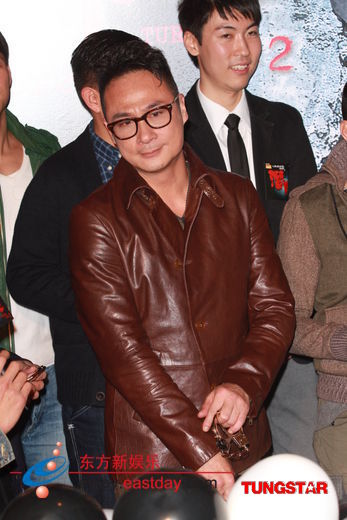
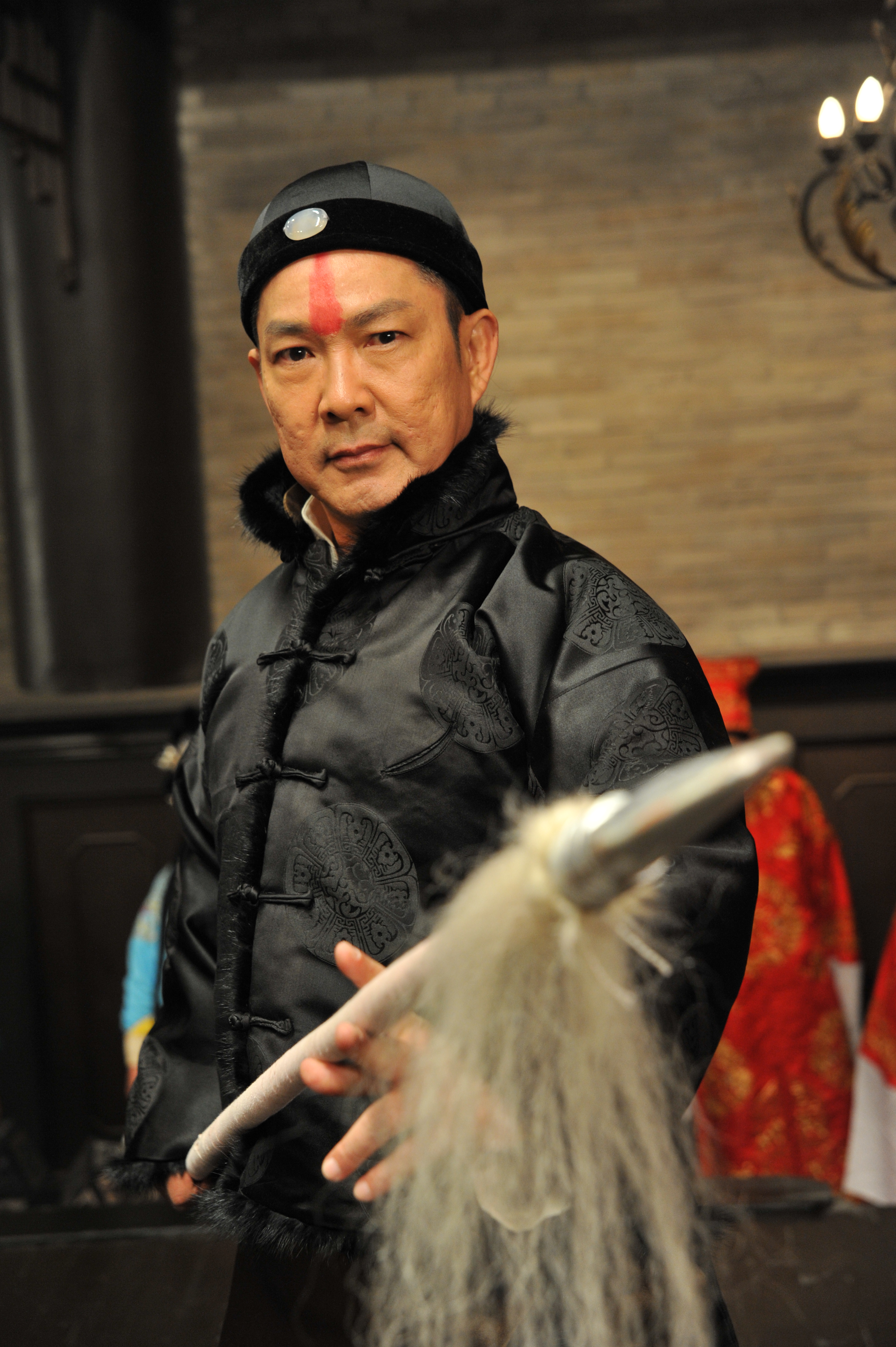
Just a quick fangirl shout-out to Francis Ng Chun-Yu, whose fiftieth birthday is this week. Francis has had a remarkably long and vigorous career that spans four decades (!), from his humble beginnings as a bit player at TVB back in the 1980s through various villainous and supporting roles in the early 90s to his current status as one of Hong Kong’s most popular and well-known actors. He’s part of an amazing generation of male Hong Kong acting talent that came of age in the 1990s, many of whom are also turning fifty this year or in the next few years. Andy Lau Tak-Wah and Anthony Wong Chau-Sang were also both born in 1961—soon to follow are Tony Leung Chiu-Wai (b. 1962), Stephen Chow Sing-Chi (b. 1962), Jet Li (b. 1963) and Lau Ching-Wan (b. 1964). Tony Leung Kar-Fai and Simon Yam each turned fifty a few years ago. All of these actors are still working today, although some of their output has decreased since the heyday of Hong Kong cinema back in the 1990s, and all of them are at the top of their game in terms of skill, talent, charisma, and screen presence.
Francis in naugahyde, Laughing Gor 2 premiere, Dec. 20, 2011
What’s perhaps less evident from this list is the dearth of similar talent in the generation of Hong Kong actors following them. The decline in Hong Kong film production in the past fifteen years since the 1997 handover has mightily impacted the development of stars of note, as indicated by the diminishing talent pool among younger actors. Of Hong Kong movie stars in their forties only Louis Koo Tin-Lok is a legitimate leading man, and his acting chops are nowhere near as masterful as the aforementioned group. Of actors in their thirties Daniel Wu and Nicholas Tse Ting-Fung ably fill the movie star niche, but their range and output have yet to reach the scale and impact of the class of 1961-64.
What’s also notable is that, although all of the abovementioned fiftyish movie kings are actively working today, only a handful of their female counterparts are likewise gainfully employed. Most female Hong Kong stars of the same generation have either retired (Brigitte Lin Ching-Hsia; Joey Wang; Chingmy Yau), or moved to television (Anita Yuen; Cheung Man). Anita Mui Yim-Fong died of cervical cancer in 2003. Of those female stars who came of age in the 1990s only Maggie Cheung Man-Yuk, Carina Lau Ka-Ling, Sandra Ng Kwan-Yu, and Michelle Yeoh are still working, although Maggie hasn’t really starred in a film since 2004.
Micheal Tse & Francis Ng meet the press, Laughing Gor 2 premiere, Dec. 20, 2011
So hats off to Francis on the anniversary of his solstice birth—show business is a cruel mistress and it’s a testament to his talent, determination, and savvy that he’s survived so long as a top star. Fingers crossed that he’s on the silver screen for at least four more decades to come.
UPDATE: Okay, I just realized that I accidentally left off Donnie Yen (b. 1963) in my above list. I’m not a huge Donnie fan but he is a big deal now so he’s gotta be included. But it also points out the glaring hole in the martial arts movie world–who will follow Donnie? Wu Jing? Andy On? Collin Chou, for god’s sake? Slim pickin’s–
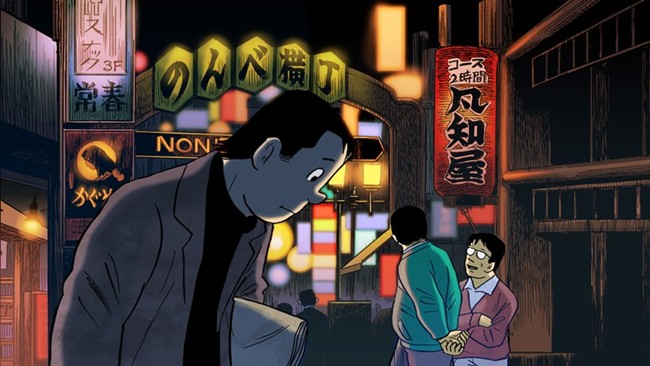
Tatsumi, 2011 San Francisco International Animation Festival
After World War Two Japan was a wreck, economically, physically, and psychologically, yet from those unquiet times came much brilliant and innovative creative work. The legendary Japanese comics artist Yoshiro Tatsumi emerged from this milieu, remaking the manga field and creating a new type of comics, gekiga, that was aimed at the adults rather than children.
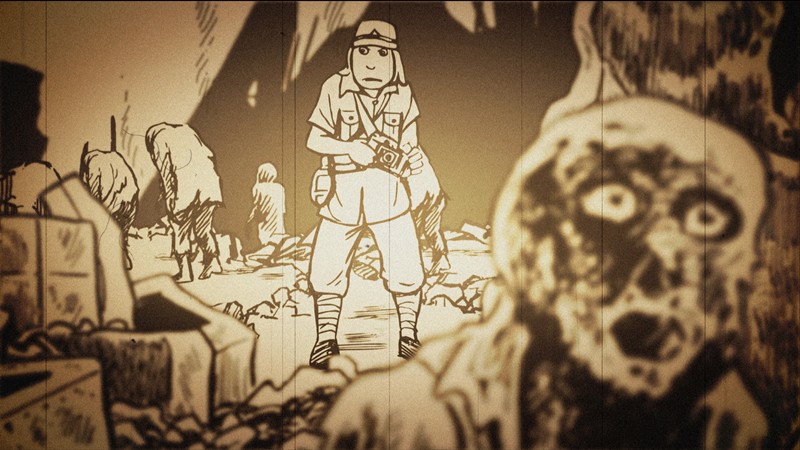
Tatsumi, Eric Khoo’s intriguing feature-length documentary about the master comics artist, screens this weekend as part of the San Francisco International Animation Festival. The film is an interesting hybrid as it both documents Tatsumi’s life as well as adapts several of his manga into short movies with the movie.
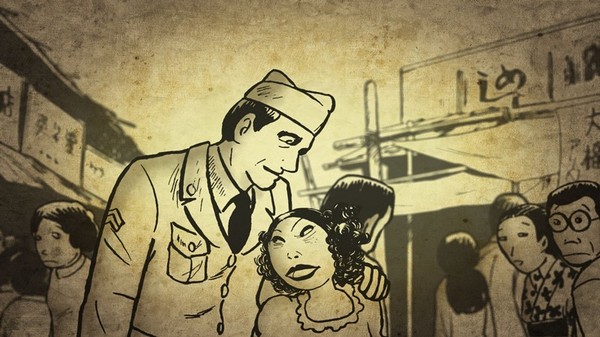
Tatsumi, 2011 San Francisco International Animation Festival
Tatsumi’s raw and gripping, beautiful manga are credited with revolutionizing the form in Japan in the 1950s. Post-World War Two Japan provides the backdrop for his stories and the spectre of a destroyed society attempting to rebuild constantly informs the tone of the work, with sorrow, inhumanity, and alienation the overriding themes. The five short stories animated in Tatsumi are mostly dark tales of human suffering, with protagonists who grapple with oppressive forces beyond their control. “Hell,” which looks at the horrors of the atomic bomb as well as the darkness within one person’s soul, “Beloved Monkey,” a parable about an ordinary man’s descent into misery and “Good-bye,” a tale of an emotionally and physically traumatized woman in postwar Japan, are all terribly sad and yet deeply compassionate stories. At the same time Tatsumi’s stories are leavened with a dark humor that acknowledges the foibles of everyday human existence, most notably in “Occupied,” a black comedy about a children’s book author with a taste for pornographic graffiti who falls into moral disgrace.
Khoo skillfully interweaves these bleak and sometimes harrowing tales with dramatized animated scenes from Tatsumi’s life that in some ways parallel the grim despair of his manga. Although he found some success as an artist as a young man, Tatsumi still grappled with the difficulties of everyday life in postwar Japan and his early career was shadowed by a jealous, bedridden brother who also had artistic aspirations.
Tatsumi, 2011 San Francisco International Animation Festival
Khoo worked closely with his subject on several aspects of the film, consulting with Tatsumi on the film’s color design and other elements of the project. Khoo also used a voiceover of Tatsumi himself recounting his life and work that is laid over animation based on the renowned artist’s visual style. In addition, Khoo took most of movie’s framing directly from the original manga panels, adding some layering and coloring effects but otherwise remaining true to Tatsumi’s compositions.
The result is an engrossing look at one of Japan’s most influential twentieth-century artists, one who used a popular medium to comment and reflect on some of the painful realities of Japan’s postwar existence. Tatsumi’s work is an excellent example of the way in which pop culture can serve both as a catharsis for and a critique of society’s ills.
San Francisco International Animation Festival
November 10–13, 2011
SF Film Society | New People Cinema
1746 Post Street, San Francisco CA 94115
Information: 415-525-8600
Full schedule, film descriptions, and tickets here.
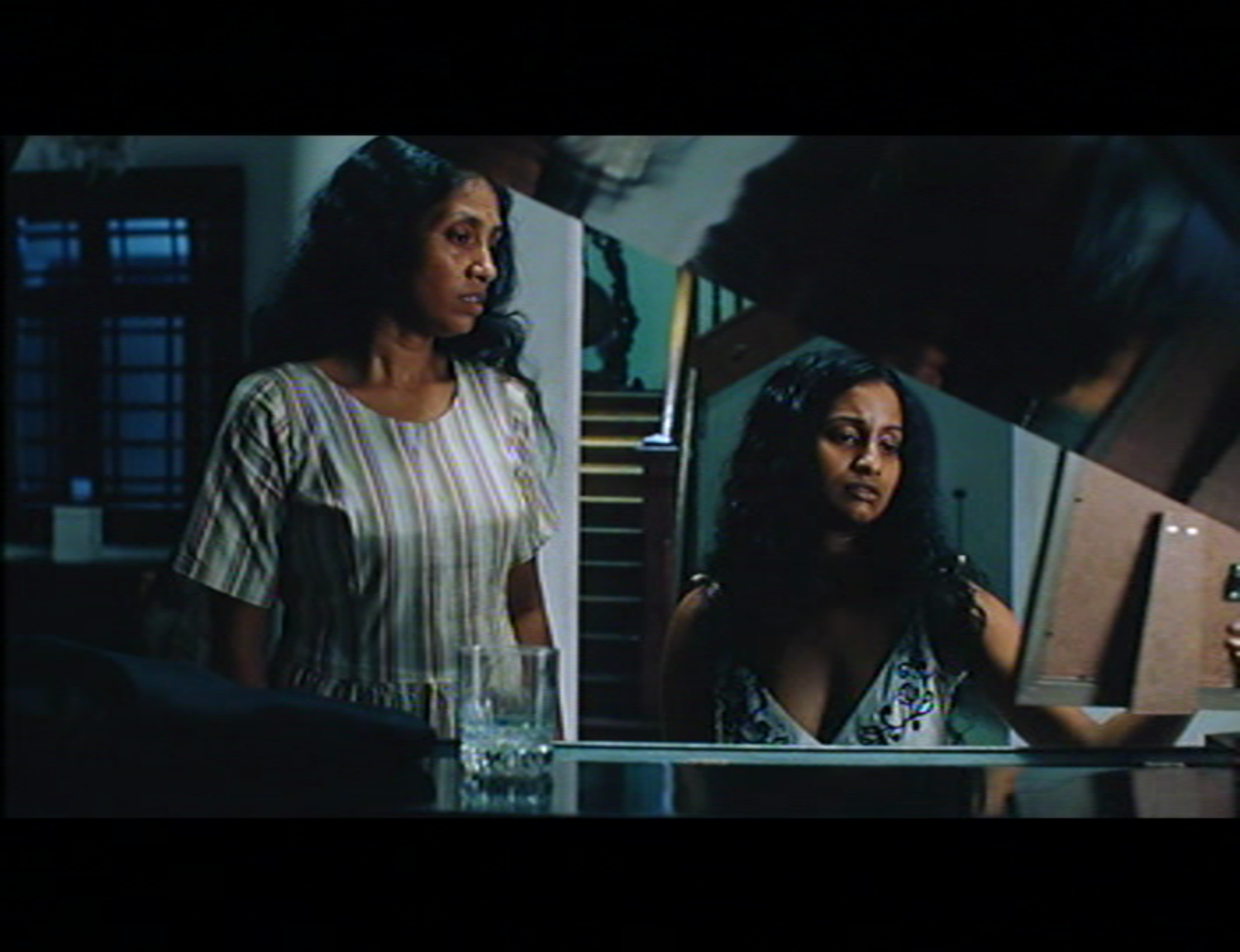
A Letter of Fire, 2011 Third I South Asian Film Festival
This Wednesday sees the opening of the 2011 Third I South Asian Film Festival here in San Francisco, which is one of the best chances to see local theatrical screenings of films from India, Bangladesh, Sri Lanka, Tibet, and the South Asian diaspora. The festival primarily focuses on movies outside of Bollywood’s massive scope, including documentary, narrative, experimental and short films.
According to 2010 U.S. census data, South Asians are the fastest growing Asian American subgroup and have surpassed Filipino Americans as the second-largest Asian American ethnicity. In California the Indian American community grew an amazing 68% between 2000 and 2010, to more than half a million people statewide. This population growth is reflected in the increasing desi flava in pop culture, from banal TV sitcoms like Outsourced to Das Racist showing up on the cover of Spin magazine.
Not to conflate an entire subcontinent’s creative outlet, but since Slumdog Millionaire won big at the Academy Awards back in 2009, the profile of South Asian films has also increased here in the US. Of course Indian-centric theaters such as the Big Cinemas multiplex in Fremont have been showing Indian movies for years, but since Slumdog ran the table at the Oscars, Hindi-language movies have been making more appearances at mainstream cinemas. Just last week, Shah Rukh Khan’s deliriously escapist sci-fi superhero movie Ra.One opened in select theaters across the U.S. and scored the highest per-screen gross of any film that weekend, beating out Puss In Boots and other Hollywood releases.
The Third I festival brings an eclectic mix of films to the Roxie and Castro Theaters. Opening night film Big In Bollywood is a fun, energetic documentary that captures some of the star mania of the commercial Indian movie industry. The movie looks at the experiences of Indian American actor Omi Vaidya, whose meteoric rise to fame in India follows a supporting role in Aamir Khan’s 3 Idiots, the highest grossing film of all time in India. Vaidya’s small but popular role allowed him a taste of the fanatical devotion Indians have for their film stars as the documentary follows Vaidya from his home in Los Angeles to the Mumbai premiere of 3 Idiots. The doc captures the rapid escalation of Vaidya’s public profile as the film smashes Indian box office records. At one point Vaidya makes an appearance to what looks like about 5,000 cheering fans lining several city blocks, reprising some of his lines from the film as the massive throng wildly cheers him on.
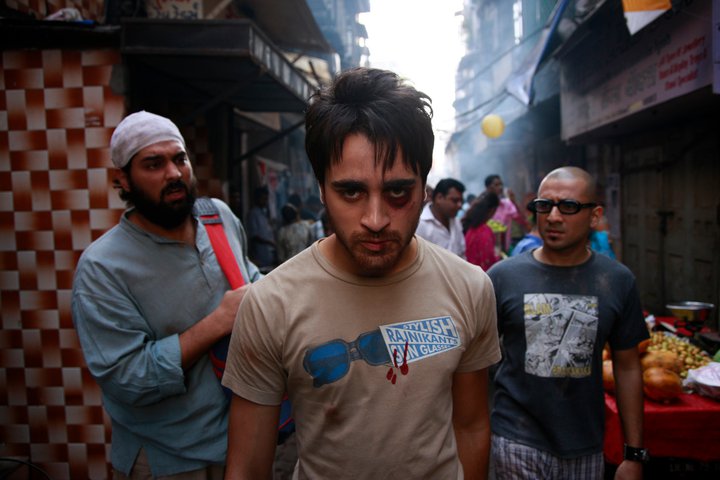
Disheveled Imran Khan, Delhi Belly, 2011 Third I South Asian Film Festival
The festival’s centerpiece movie, Delhi Belly, exemplifies a new breed of Bollywood movies far removed from the conventional Hindi-language film industry. A hilarious, fast-paced, and vulgar flick, Delhi Belly follows the misadventures of three twenty-something slackers as they chase down jewel smugglers, gangsters, and other marginal denizens in India’s capital city, with one of the main characters fighting the severe gastrointestinal dysfunction that gives the movie its name. Running a tidy two hours, the film has none of the song-and-dance numbers for which Bollywood is reknowned (except for one tongue-in-cheek OTT production over the end credits that guest-stars executive producer Aamir Khan) and owes more to The Hangover than Dilwale Dulhania Le Jayenge.
Indian American actor-director Ajay Naidu debut feature Ashes gives a desi spin to the venerable gangster genre. Set in New York City, the film follows a small-time pot dealer (also portrayed by Naidu) as he struggles care for his mentally ill brother while trying to resist falling deeper into the vortex of New York’s underworld.
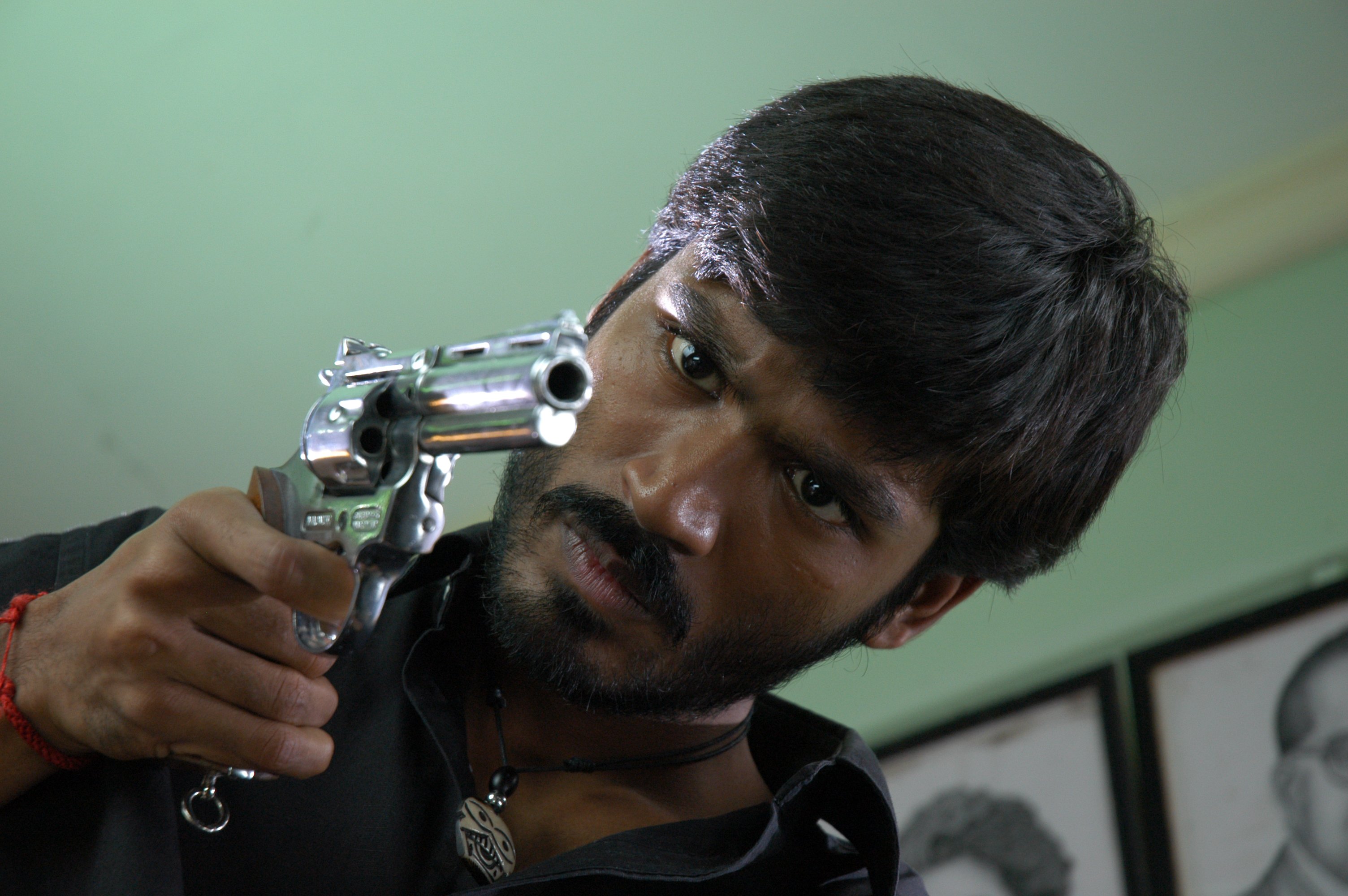
Dhanush & friend, Pudhupettai, 2011 Third I South Asian Film Festival
Closing the festival is the awesome-looking Tamil-language crime thriller Pudhupettai, starring the intense and feral Dhanush, which follows the rise of a Chennai gang lord. As seen in the clip below, the film manages to be gritty and realistic while also including outstanding dance numbers. Also notable are Vipin Vijay’s surreal feature length experimental narrative The Image Threads, and A Letter of Fire, Asoka Handagama’s gorgeous drama of a wealthy, twisted family in Sri Lanka. The festival also features two programs, The Boxing Ladies + Shorts: Gender/Sexuality in Frame, and The Family Circus: Local Shorts, which showcase often-overlooked short films.
While South Asian films have yet to completely break through to the mainstream in the U.S., the Third I festival is an excellent opportunity to see the wide range of production from the region and beyond, reflecting the growing desi influence in this country’s cultural landscape.
The 9th Annual 3rd I San Francisco South Asian Film Festival (SFISAFF),
November 10-13, 2011
Roxie Cinema & Castro Theater
Tickets, complete schedule, and film descriptions here.
Brilliant dance number from Pudhupettai, 2011 Third I South Asian Film Festival
Taiwanese cinema has produced several world-class filmmakers, including Hou Hsaio-Hsien, Edward Yang, and Tsai Ming-Liang, but fans of those arthouse titans would be hard-pressed to recognize the current crop of Taiwanese films now popular on the island nation. Cape No. 7 (2008), the second-highest grossing film in Taiwan of all time (just behind Titanic), was a frothy, melodramatic little flick that nostalgically recalled the Japanese occupation of Taiwan (!), and Monga (2010), another recent blockbuster, had more in common with Hong Kong’s gangster movies than Hou or Yang’s thoughtful, epic dramas. Taiwan’s biggest box office hit this year, popular novelist Giddens Ko’s adaptation of his book, You Are The Apple Of My Eye, is a coming-of-age comedy that’s light years from earlier Taiwanese arthouse fare.
Taiwan Film Days, the upcoming three-day festival at the San Francisco Film Society which is now in its third year, reflects the recent upswing in Taiwan’s commercial film industry and showcases its wide range of moviemaking styles and themes. Opening night film Formosa Mambo (2011, dir. Wang Chi-tsai )bears no relation to Hou Hsiao-Hsien’s Millenium Mambo, and in fact, other than its country of origin, is pretty much unrelated to the Taiwanese auteur in any way. A quirky and breezy movie that touches lightly on the Taipei underworld, the story follows several characters including a gang of incompetent kidnappers, an underemployed businessman running a popcorn chicken stand, and a group of shady entreprenuers involved in a telephone scam. After the kidnappers snatch a schoolkid various hijinks ensue, with the hapless gang attempting to collect ransom from the kid’s recalcitrant single mom, who can ill-afford the modest ransom. The film’s interlocking stories comment on fate and free will against a backdrop of modern-day Taiwan.
Gangsters, Ranger, 2011
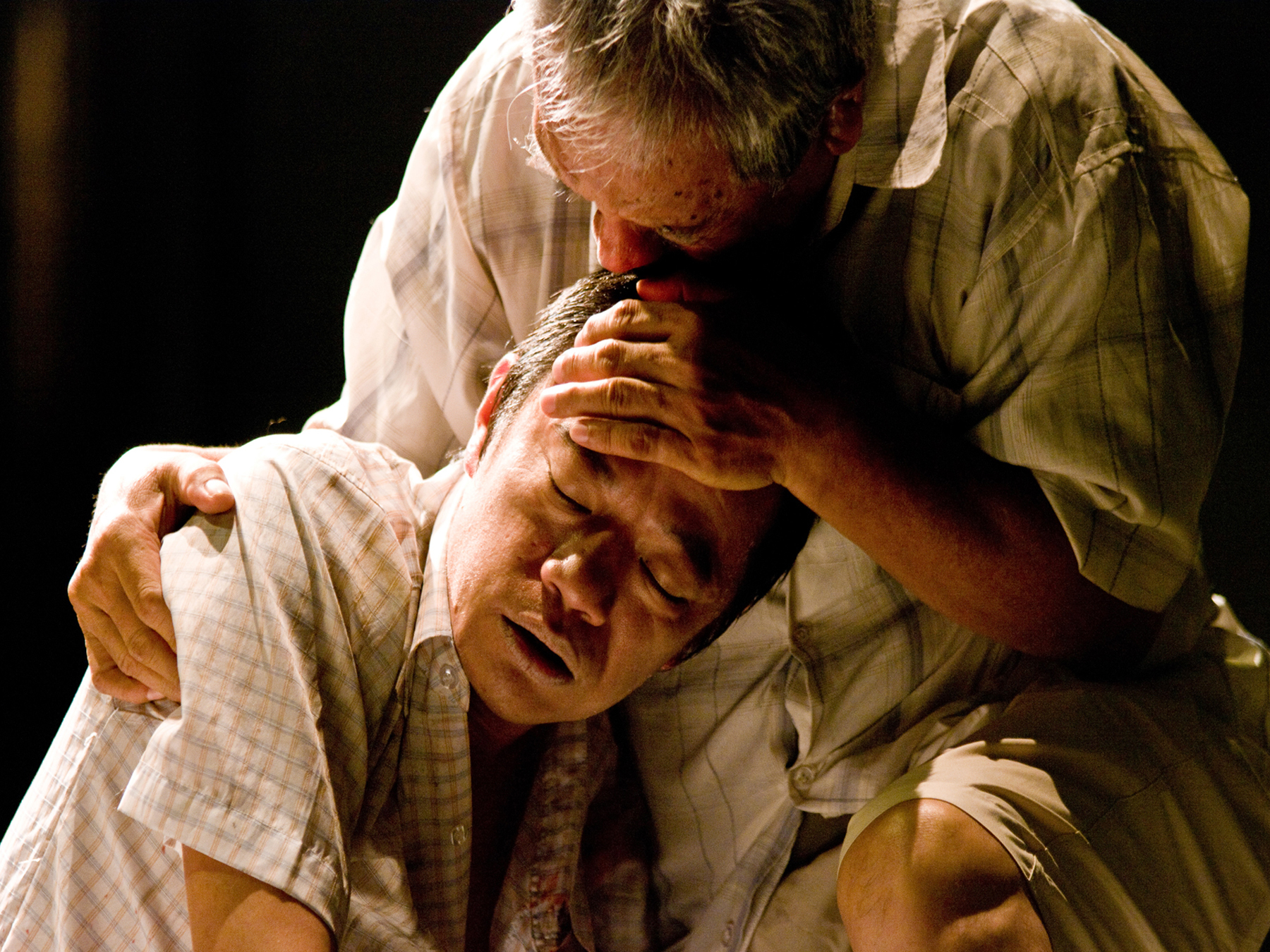
Ranger, (2010) a much darker gangster movie, closes the festival. Wen-Sheng, a convicted killer, is released from prison after 25 years and finds himself immediately re-enmeshed in the hard-knock life. A gritty and observational crime drama, Ranger is also a character study of a man seeking redemption after a wasted life. Director Chienn Hsiang makes good use of the mean streets of Taipei and the film’s handheld camerawork underscores the everyday brutality of Sheng’s woeful existence. Lead actor Wu Pong-fong effectively conveys the resilience of his worn down but not yet defeated character.
Honey Pu Pu (2011, dir. Chen Hung-i) presents a dreamy, visually imaginative view of Taiwanese society, following a group of young groovesters as they ramble the streets of Taipei apparently in search of the a totemic beehive. The screener DVD that I tried to view was alas very janky and I wasn’t able to watch the film in its entirety but the little I saw was engaging, full of pretty young art-student types blithely wandering through trippy, experimentally framed cityscapes.
Groovesters, Honey Pu Pu, 2010
Also notable at the festival are Giddens’ aforementioned hit film (although both screenings have gone to rush), as well as the intriguing documentary Taivalu (2011, dir. Huang Hsin-yao), which looks at the effect of climate change on the southern Taiwan city of Tainan, and Pinoy Sunday (2009, dir. Ho Wi-ding), a comedy that follows the travails of a pair of Filipino immigrants in Taipei. The festival opens with two screenings of Formosa Mambo sandwiching a reception and party.
Taiwan Film Days
October 14–16, 2011
San Francisco Film Society | New People Cinema
1746 Post Street, San Francisco, CA
(415) 561-5000
Tickets and full schedule for Taiwan Film Days here.
Buzz Chung, astronaut, Echoes of the Rainbow, 2010
This weekend the San Francisco Film Society presents Hong Kong Cinema, the first of two Chinese-language film festivals, which runs for three days with seven films from the former Crown Colony. Although it doesn’t include any blockbusters, the brief festival runs the gamut from romantic comedies to crime films to melodramas and is a good look at the range of films coming out of Hong Kong these days. Herewith are a few of the films included in the series.
Punished
A sleek, economical crime film that’s actually a family drama in disguise, Punished is produced by Johnnie To and directed by Law Wing Cheong, To’s editor and frequent second unit director. The story moves along at a brisk and efficient pace, emphasizing the dysfunctional family relationships behind the kidnapping drama.
Moral choices, Anthony Wong and Richie Jen, Punished, 2010
Anthony Wong is outstanding as Wong Ho-chiu, a ruthless and powerful businessman seeking vengeance for his errant daughter’s kidnapping and death–his performance is subtle and explosive and as usual he can do no wrong. Richie Jen is also excellent as Anthony Wong’s bodyguard and hatchet man with his own family issues to deal with. Supporting performances are uniformly strong and the mood is mostly realistic throughout–the bad guys aren’t too bad and the good guys aren’t too good, so the film possesses a great deal of moral complexity. Each person has a motivation for his or her actions, justified or not, and no one is completely evil or completely good.
In the end, it’s a mother-daughter relationship that’s the catalyst for the resolution of Wong’s moral crisis. As with the best Hong Kong films the movie is also unafraid to tap into the characters’ deep emotional responses–men cry, women swoon, and children weep unashamedly. Director Law keeps things pretty straightforward, with none of the annoying quirks of fellow Milkywayer Wai Ka-Fei. The film makes intelligent connections between the corruption of big business, damaged family dynamics, and immoral criminal activity.
Meeting cute, Gao Yuan Yuan and Daniel Wu, Don't Go Breaking My Heart, 2011
Don’t Go Breakin’ My Heart
An adequate rom-com that attempts to capture the uber-success of early 2000s Johnnie To flicks Needing You and Love on A Diet, Don’t Go Breakin’ My Heart stars Louis Koo, Gao Yuan Yuan, and Daniel Wu in a love story set in Hong Kong and China. The three play young urban professionals, with Gao unable to decide between playboy Koo and nice guy Wu.
Gao’s dilemma becomes tedious pretty quickly since Louis Koo’s character is so clearly a womanizing asshole. It’s hard to understand what she sees in him, especially with the charming and sensitive Daniel Wu also courting her. But the plot demands a love triangle so the audience must suffer through her indecision for nearly two hours (whatever happened to the excellent concept of the 90-minute Hong Kong movie?) while she dithers between her two beaus. Director To even cribs from his own most successful romantic comedy, Needing You, by using the device of would-be lovers communicating the movie’s catchphrase by signage. There’s some clever usage of messages pasted on office building windows but even that seems awfully contrived by the end of the movie. Though both are cute and dimply, Gao and Koo never seem to really spark–Gao and Wu’s chemistry is better, with Wu nicely conveying a sense of romantic longing. Gao lacks the manic goofiness and exquisite comic timing of To’s usual rom-com muse Sammi Cheng and Louis Koo just isn’t charming enough to warrant Gao’s long-term fascination. Daniel Wu is very sweet as the long-suffering third party but he doesn’t have much character development except his ongoing dedication to a neon green frog. But as rom-coms go, this one is serviceable, with three good-looking and well-dressed lead actors amidst the glamorous backdrop of Hong Kong’s skyscrapers.
Choices, Teddy Robin and Ella Koon, Merry-Go-Round, 2010
Merry-Go-Round
Though it looks great, with beautiful, rich cinematography and art direction, Merry-Go-Round, (dirs. Yan Yan Mak and Clement Cheng) is just a bit too long and a bit too dependent on coincidence to be completely effective. Ella Koon and Nora Miao play two Hong Kong ex-pats living in San Francisco who return to the former Crown Colony after long absences. Koon’s character is a young bohemian with a hidden past, and Miao’s is a master herbalist who left Hong Kong to follow her bliss in the United States. Their lives converge in somewhat forced circumstances– the film’s narrative links its many characters with overly convenient plot twists.
Merry-Go-Round takes a light but serious look at death, loss, and separation. The film uses the idea of returning home as a metaphor for going back, not forward, in life, with several characters attempting to make amends for past misjudgments or dealing with the results of long-gone choices. It also makes some nice points about the advantages of moving on with life instead of dwelling on past traumas, with one character wistfully telling another, “I would have forgotten long ago but you keep reminding me.”
Teddy Robin, who won Best Actor for Gallants (also directed by Clement Chang) at last year’s Hong Kong Film Awards, is very effective as the lovelorn manager of the coffin home/mortuary where Koon ends up working. Also excellent is Nora Miao as the imperious herbalist who so long ago followed her fate to the U.S. But the time structure of the film seems a little skewed–if some of the characters were young adults in 1938, that means that they would be in their nineties now, and the actors playing them in the modern-day sequences seem much too young to be nonegenarians.
Despite its handsomely mounted production design, Merry-Go-Round’s storyline is a bit too unfocused to be completely convincing. But it’s nice to see a Hong Kong film that’s a serious drama instead of the martial arts/triad/comedy flicks that the city’s film industry usually puts out.
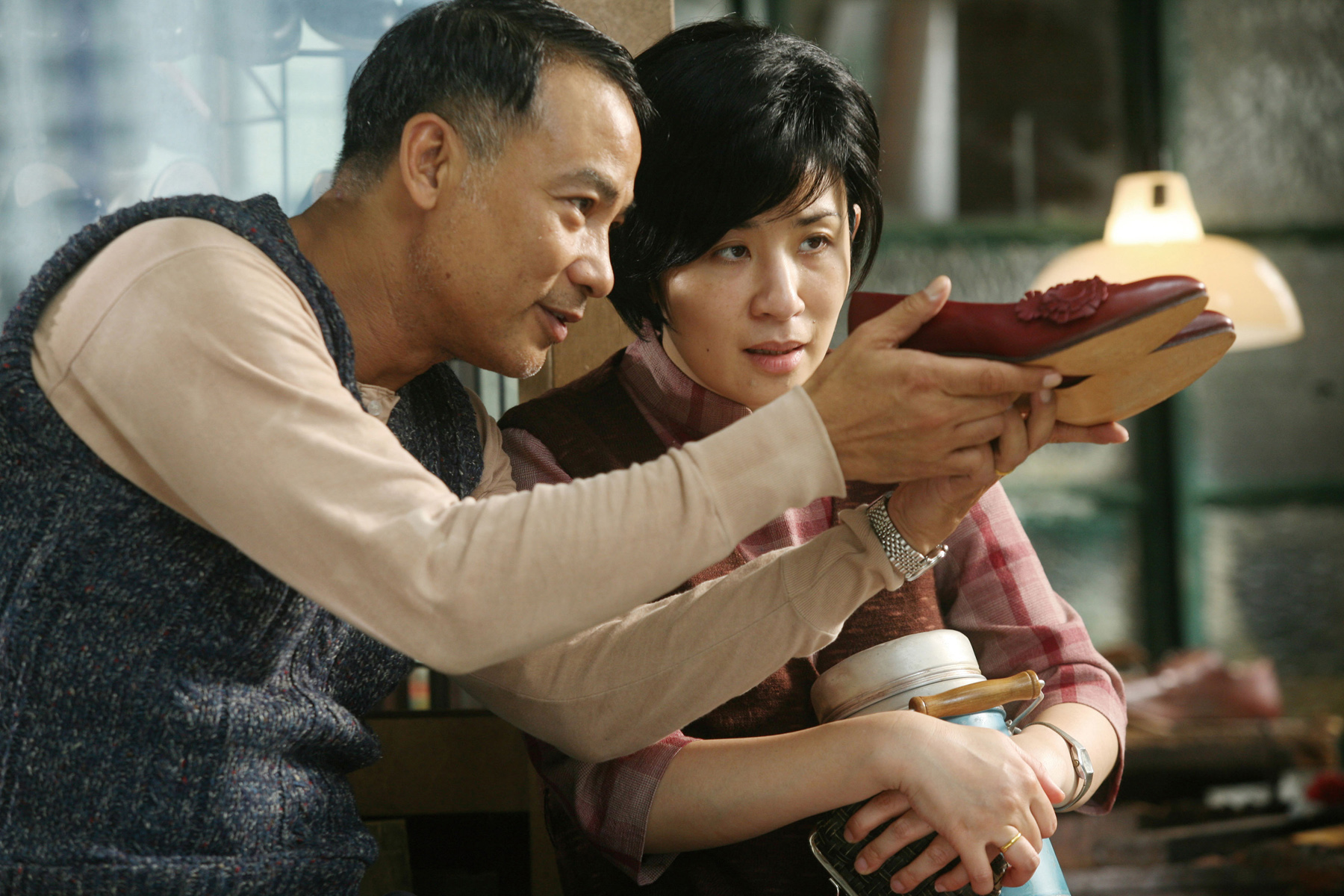
Shoemaking, Simon Yam and Sandra Ng, Echoes of the Rainbow, 2010
Echoes of the Rainbow
A charming family drama set in 1960s Hong Kong, this melodrama by Hong Kong New Wave director Alex Law stars Buzz Chung Shiu-Tiu as Big Ears, a young boy whose shoemaker father, his mother and his older brother strive to make an honest living making and selling shoes in their working-class neighborhood. Though a bit soft around the edges, the film is best when it illustrates the community neighborliness found amongst the residents of the street. One pleasant moment occurs when Big Ear’s family takes its nightly meal out to the street behind their house to eat on a homemade dinner table built on top of a tree stump. They’re joined by the rest of their neighbors who are also dining al fresco, presumably to escape the heat of their small, non-airconditioned houses. This small but engaging scene underscores the sense of belonging, safety, and comfort found in an earlier, less hectic time and place.
The film also makes cogent point in its examination of class differences between Desmond (Aarif Lee) and his girlfriend Flora (Evelyn Choi). In one scene Desmond walks for a very long time from his humble street to visit Flora, eventually arriving at the toniest neighborhood in town. The length of his journey and his awkwardness and discomfort in such rarefied surroundings contrasts nicely with the sense of ease and belonging he feels in his own neighborhood and underscores the great gulf in social status between himself and his wealthier sweetheart.
Simon Yam and Sandra Ng are excellent as the cobbler and his wife, and Buzz Chung is endearing without being saccharine. Aarif Lee is suitably modest despite his blazing hotness and Evelyn Choi is sweet and charming as his love interest. Eventually the film succumbs to extreme melodrama but it still remains a lovely rendering of a more innocent time in Hong Kong history.
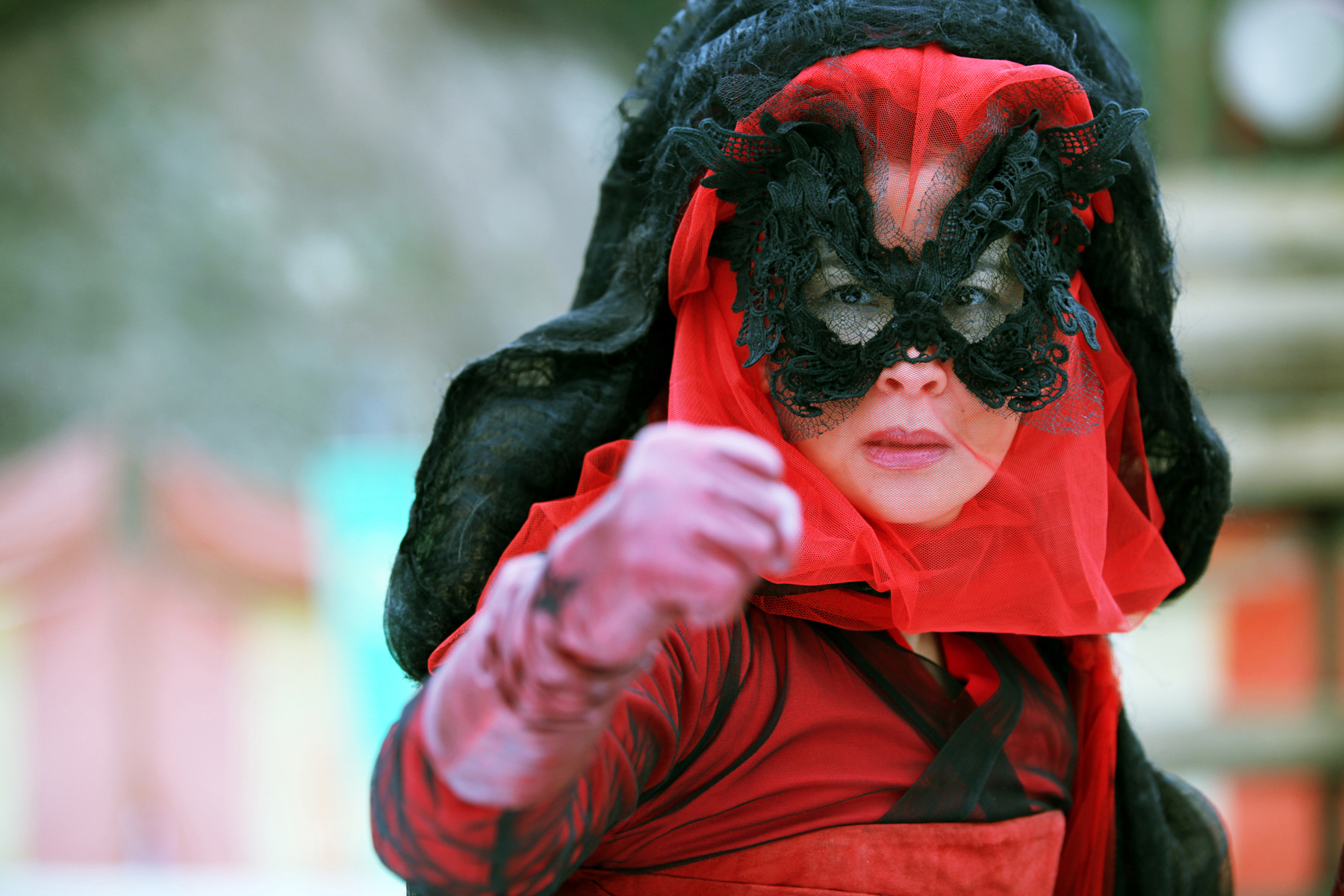
Ass-kicking, Sandra Ng, Mr. and Mrs. Incredible, 2011
Mr. and Mrs. Incredible
A period piece directed by Vincent Kok, the sometime collaborator of king of comedy Stephen Chiao, this superhero comedy feels a lot like a Lunar New Year film, with its wacky concept, broad humor, slapdash production design, and lead performances by popular stars Louis Koo and Sandra Ng. Koo and Ng play a married couple who are also the retired superheroes formerly known as Gazer Warriorand Aroma Woman (both excellent superhero names). The two erstwhile heroes have renounced adventuring and have settled down incognito in a quiet village where they run a pork bun shop. Their attempt to start a family and to live anonymously in peace is interrupted by a martial arts contest, a life-force sucking villain, and other outlandish circumstances.
Goofy and mild, with humorous banter between its amiable co-stars, the film is a bit talkier than you’d expect from a movie about costumed heroes. It’s carried by the charming performances of Koo and Ng, who are unafraid of looking ridiculous and whose good-natured interplay makes the film an innocuous and pleasant timepass.
Also screening: Redoubtable auteur Ann Hui’s All About Love, a lesbian love story starring Sandra Ng and Vivian Chow, and Benny Chan’s City Under Siege, an action film that involves toxic waste, mutants, circus performers, and other everyday Hong Kong denizens, starring Aaron Kwok and Shu Qi, with production design by the legendary William Chang Suk-Ping (In the Mood for Love, Rouge, 2046).
Andy Lau, sleuthing, Detective Dee and the Mystery of the Phantom Flame, 2010
Two more Chinese-language films have their theatrical releases in San Francisco, and, although they are completely different in subject, tone, and treatment, both are testaments to the vitality of the new Chinese cinema.
City of Life & Death, dir. Lu Chuan, 2010
My head was spinning when I walked out of the screening for City of Life and Death, Lu Chuan’s devastating and uncompromising look at the Rape of Nanking (or Nanjing). City of Life and Death is an unflinching look at the infamous Japanese occupation and destruction of the Chinese capital in 1938–the film is a stellar example of the ways in which cinema can both explicate and elevate events from real life. Lu masterfully utilizes wide-screen, black and white, mostly hand-held cinematography, subtle and emotional performances, and a story structure that precludes simplistic nationalism.
Civilians, City of Life and Death, 2010
At the very start in the first hour of the film Lu kills off one of the main characters, forcefully undermining any pretense of a conventionally told story and serving notice that the film will be merciless in the treatment of its characters. As in the real-life occupation of Nanjing, no one is safe and no one will be spared from the casual brutality of wartime and the mentality it fosters. The film also refuses to focus on acts of heroism, although though there are brave and unselfish acts throughout the film’s 2.5 hour running time. No single character is a savior, nor are there any simple answers to the inhuman violence that was perpetrated upon the citizens of Nanjing.
As a Chinese filmmaker Lu makes the unusual choice of presenting the well-known story, which has been used in China to demonize Japan, in part through the eyes of Kadokawa, a Japanese soldier. The opening shot of the film is a close-up of the wide-eyed and impressionable Kadokawa’s terrified face as he and his fellow Japanese soldiers prepare to storm the walls of Nanjing. Kadokawa’s horrified responses to the violence surrounding him as well as the pivotal choices he makes at the end of the film belie any condemnation of the Japanese as inherently bestial or subhuman, The film refuses to lay the blame for the events in Nanjing on inborn flaws in the Japanese national character, instead placing responsibility on the insanity of militarism itself.
Atrocities, City of Life and Death, 2010
Viewers shouldn’t be deterred by the grim subject matter as this is filmmaking of the finest order. The wide screen black and white cinematography underscores the huge scope of the atrocities, and director Lu Chuan understands the value of a long, long take in creating an almost unbearable tension. The performances are also uniformly outstanding. Liu Ye is excellent in his brief but significant role as a pragmatic Chinese officer, utilizing his sensitive, evocative face to great effect. Wei Fan is also very effective as a bureaucrat working for the Germans who realizes too late that his position does not grant him immunity from the horrors around him.
A scene near the end of the film where the Japanese soldiers perform a celebratory dance underscores the violent group psychosis of war. While taiko drummers beat out a mournful cadence, the crouched-over soldiers move through the rubble-filled streets with blankly fierce expressions on their youthful faces. After the screen carnage of the past two hours their procession seems like an exercise in group insanity as the men move in hypnotic lockstep, driven by a rhythm dictated to them and with little will of their own. The scene becomes a grim and surreal commentary on the collective madness of war and the indoctrination that makes young men such as Kadokawa into unfeeling, obedient machines of destruction. This image and many others in City of Life and Death make the film absolutely essential viewing, The film’s current theatrical release makes it possible to experience it on the big screen, where its vast and detailed rendering can completely engulf the viewer and magnify its cataclysmic impact.
Detective Dee and the Mystery of the Phantom Flame, dir. Tsui Hark, 2010
Andy Lau investigates, Detective Dee and the Mystery of the Phantom Flame, 2010
A film epic of a completely different sort than City of Life and Death, Tsui Hark’s extravagantly fun and fantastic movie is another example of the outstanding product coming out of China and Hong Kong. Like Benny Chan’s Shaolin, Detective Dee is a brilliant blending of traditional Hong Kong moviemaking with the super-high production values of recent mainland films.
Detective Dee is very loosely based on the exploits of real-life historical figure Di Ren-jie, also known as Judge Dee, who has been the subject of several Hong Kong and Chinese films, books, and television series. Here Dee is played by the ageless Andy Lau, as an implacable sleuth assigned to determine the cause of a spate of spontaneous human combustion.
Carina Lau plays another historical figure, Wu Zetian, who was the only woman to ascend to the Chinese imperial throne. Both Andy and Carina, who started their careers at TVB long ago in the 1980s, are excellent as the titular sleuth and the Empress who may or may not be his adversary. Carina Lau holds the distinction of being one of the only actresses of her generation (along with Maggie Cheung and Michelle Yeoh) who is still working, and she brings a presence and authority to her role. Andy Lau has turned into an excellent screen actor and his ability to convey thoughtfulness and depth (despite his incredible good looks) is a result of his experience in more than a hundred films. He’s not afraid to take roles that emphasize his maturity, as seen here and in Shaolin, which is a nice testament to his graceful aging.
Phatasmagoria, Detective Dee and the Mystery of the Phantom Flame, 2010
As expected from a Hong Kong fantasy film, Detective Dee includes a surfeit of cleverly staged action set pieces, underscored by director Tsui’s fantasmagoric set designs and kinetic camerawork. But Detective Dee moves beyond earlier Hong Kong films’ visual realizations with its excellent use of extensive digital effects. The world of digital effects has finally caught up to Tsui’s gloriously saturated cinematic vision and in Detective Dee he makes the most of them. Whereas Tsui’s 1990s fantasy classics such as Green Snake featured charmingly unconvincing rubber prosthetics and matte paintings, Detective Dee has the advantage of a full slate of DFX, here outsourced to a well-known Korean effects house. Tsui utilizes this to full effect in realizing his lavishly imaginative vision, which includes transmogrifying faces, a herd of talking (and fighting) deer, characters convincingly immolating from the inside out, and a skyscraper-sized statue of a female bodhisattva.
At the same time Tsui doesn’t let the digital madness take precedence over plot or characterization. The film’s story is a clever and well-developed mystery, and Andy Lau, Carina Lau and Li Bing Bing portray intriguing and complex characters. Tony Leung Kar-Fei is excellent as a revolutionary with a long grudge against the empress. In fine Hong Kong movie tradition, Li and Andy Lau court and spark as conflicted would-be lovers separated by duty and circumstance. As is his wont, Tsui also throws a bit of political commentary into the mix in his critique of the corruption of power.
Detective Dee won Best Director and Best Actress statues at the most recent Hong Kong Film Awards and represents a comeback of sorts for longtime auteur Tsui. Although it was financed by mainland Chinese money and performed in Mandarin, Detective Dee is still a Hong Kong movie through and through, and is an outstanding example of what might come from the integration of mainland and Hong Kong commercial cinema.
City of Life & Death
opens Fri. Sept. 23, 2011
Landmark Opera Plaza Cinema
601 Van Ness Ave.
San Francisco, CA 94102
(415) 267-4893
Detective Dee and the Mystery of the Phantom Flame
now showing
Landmark Embarcadero Cinema
One Embarcadero Center, Promenade Level
San Francisco, CA 94111
(415) 267-4893
Landmark Shattuck Cinema
2230 Shattuck Avenue
Berkeley, CA 94704
(510) 464-5980
Aaron Kwok and Rene Liu in zero-gee, with chocolate, Love In Space
For those of us lucky enough to be in the Bay Area, San Francisco is going to be an epicenter of theatrical Chinese-language film screenings as in the next couple months we are about to get slammed by a profusion of movies from Hong Kong, China, and Taiwan. Two film festivals plus several open-run screenings will be taking place in the last part of 2011, giving us sinophile film otaku many chances to partake of our favorite addiction on the big screen. In fact, there are so many Chinese-language movies playing in the next couple months that this is the first of at least three posts on the subject, with upcoming entries on two more movies from Hong Kong and China next week, as well as two film festivals sponsored by the San Francisco Film Society (SFFS) respectively focusing on Hong Kong and Taiwan.
With China’s increasing financial clout and the subsequent meteoric rise in the Chinese film industry (64 percent growth last year, to US$1.6 billion; 526 films produced in 2010, up 15%; and 6,000 new cinemas planned for next year) we are witnessing a new era of Chinese-language films. For better or worse the Chinese film industry has grown exponentially in the past decade and with the inexorable integration of the finest talents from the Hong Kong film industry, Chinese cinema has evolved from the arthouse-oriented political allegories of the 20th century to highly accessible commercial fare like the three films releasing this week. Shaolin,My Kingdom and Love In Space, opening in the U.S. on Sept. 9, represent the new paradigm of Chinese filmmaking and their appearance in U.S. theaters, along with and other upcoming Hong Kong and Chinese releases, heralds a trend toward increased Chinese theatrical releases in this country. These three recent Chinese-language films, one from Hong Kong and two from mainland China, also reflect the trend toward Hong Kong-China co-productions, as all three are cross-pollinated projects with talent both from Hong Kong and “the North.”
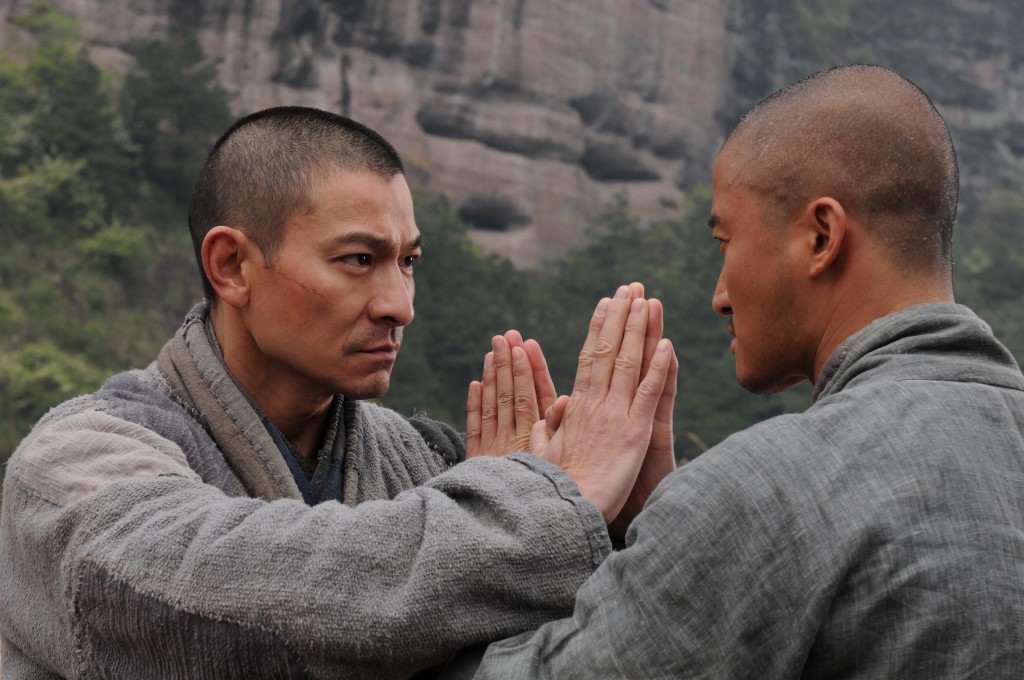
Andy Lau and Wu Jing, monks, Shaolin
Now playing at the Four-Star Theater (and also playing at the San Francisco Film Society’s New People theater on Sept. 28-29) is Shaolin, director Benny Chan’s historical martial arts film involving warlords, monks, and lots of kung fu. Shaolin is an exhilarating big-budget spectacle that captures a lot of the fun of classic 1990s HK moviemaking—although the producers claim the movie is a tribute to Jet Li’s debut film from 1986, the storyline doesn’t have a lot to do with that old-school kung fu classic, aside from having a cadre of righteous, kick-ass monks defending the honor of the legendary martial arts stomping ground. This Shaolin is set in the Republican era of the early 20th century when ruthless warlords duked it out for domination of their various fiefdoms. Superstar (and my favorite Heavenly King) Andy Lau ably anchors the film as an ambitious warlord who tragically learns the error of his ways. He’s aging beautifully, and that aquiline nose and perfect jawline look as photogenic now as they did twenty-five years ago. Nicholas Tse as Andy’s adversary is a bit less effective, overacting his way through his villainous role decked out in shiny black boots and an evil sneer. Wu Jing leads a group of crack martial artists as awesome Shaolin monks defending their sacred turf. Jackie Chan’s supporting role as the temple cook provides him a fun little fight scene, as Chan uses woks, cleavers, and other kitchen implements to showcase his trademark comic kung fu style.
Also outstanding is Cory Yuen’s fantastic action choreography, which includes a furious fight on wheels during a nighttime horse and carriage chase through the city as well as excellent hand-to-hand martial arts with bad-ass monks showing off their mad skilz, armed only with wooden staffs or their bare hands against rifle-carrying bad guys. As with many Chinese co-productions these days there are also the obligatory sadistic European actors maniacally giggling their way through senseless destruction. Fan Bing Bing (not to be confused with Li Bing Bing) is effective as Andy Lau’s wife, though she mostly just bats her eyes and weeps.
The film’s scenery, art direction, and cinematography are all top-notch–if this is the future of Hong Kong films then I’m all for it. Veteran HK director Benny Chan does a great job scaling up and the movie blends the big-budget production values of recent mainland films with the heart and emotion of Hong Kong movies.
Han Geng, popstar, with porkpie, My Kingdom
Two other films from China also open up Stateside today from distributor China Lion, which has been putting out series of monthly day-and-date releases of Chinese commercial films. The lineup has been a somewhat random and diverse slate of pics including 3D Sex and Zen: Extreme Ecstasy (officially banned in China but a massive hit in Hong Kong), the weepy Shu Qi/Liu Ye melodrama A Beautiful Life, and the Chinese Communist Party epic Beginning of the GreatRevival.
Its release postponed a month due to the success of 3D Sex & Zen, My Kingdom is an action melodrama played out against the backdrop of classical Chinese opera. The film has the typically high production values of current commercial Chinese films and nicely recreates 1920s Shanghai, with great art direction and cinematography. But the 90-minute movie is very slight in comparison with the big kahuna of Chinese opera movies, Chen Kaige’s Farewell My Concubine. While Chen’s film was a vast, emotionally wrenching epic writ large across twentieth-century Chinese history, My Kingdom focuses on a much smaller story of love, revenge, and opera.
Yuen Biao and staff, My Kingdom
The movie also suffers from the callowness of its lead performers, with Sinopop idols Wu Chun and Han Geng cast as Yi-Long and Er-Kui, sworn brothers trained as “opera warriors.” Although Wu occasionally works up to a good smolder, the wide-eyed Han seems a bit overwhelmed by his role and never really seems like a man consumed by a desire for vengeance. Barbie Hsu is adequate as the opera troupe’s lead actress but she’s not convincing as a diva, much less one desired by most of the male cast. The three leads also are less than stellar in their opera performances, and the choreography in some of these scenes is also pretty uninspired. The exception is when the fabulous Yuen Biao, one of Jackie Chan’s “brothers,” shows up at the beginning of the movie in a brief role as the Yi-Long and Er-Kui’s sifu. Both his acting and his footwork demonstrate Yuen’s genuine Chinese opera training, and showcase “big brother” Sammo Hung and Chin Kar-lok’s fluid and efficient action choreography.
The film’s producers were clearly aiming for the youth market, but the singers cast here are not quite up to the task of driving the emotional, convoluted plotline. Especially miscast is the floppy-haired actor who plays a scheming policeman–the actor looks about 22 years old and his haircut seems to be channeling Justin Bieber. However, the movie is an interesting example of the ongoing integration of Hong Kong and mainland Chinese commercial film productions, with Hong Kong stalwarts such as Yuen and Hung teaming up with their younger mainland co-stars.
Also from China Lion is Love In Space, the only modern-day film of the three on the docket this week. Love In Space follows the romantic adventures of three sisters, an actress, an artist, and, yes, an astronaut, in Bejing, Sydney, and orbiting around the planet. This fun and fanciful little film reflects co-director Wing Shya’s whimsical fashion photography–it also stars a slew of pop stars (including three generations of male idols–Aaron Kwok, Eason Chan, and Jing Boran) who are put to better effect than their compatriots in My Kingdom.
Guey Lun-Mei and Eason Chan get wacky, Love In Space
Most effective are Cantopop king Eason Chan and Guey Lun-Mei (who kicked ass in Dante Lam’s crime thriller The Stool Pigeon) who play a garbageman and his germ-phobic love interest. Both Chan and Guey have mobile, expressive faces and excellent comic timing, and their story is the most fun and engaging to follow. Also good, though a bit more twee, are Angelbaby and Jing Boran as a movie-star-in-hiding and her spunky, watermelon-selling suitor. Oddly enough, the least compelling story features Rene Liu and Heavenly King Aaron Kwok as estranged lovers working together on a space station. The space-station set and the constantly revolving camerawork suggest a rom-com Solaris, and the soundtrack even features The Blue Danube waltz from Stanley Kubrick’s 2001: A Space Odyssey, but the storyline is predictable and Liu and Kwok’s performances are unconvincing. However, the movie as a whole is a delightful confection and a far cry from the dour political allegories of Chinese filmmakers from the 20th century.
Next week will find Indomina Pictures continued U.S. rollout of Tsui Hark’s blockbuster Detective Dee and the Mystery of the Phantom Flame, as well as the World War II drama The City of Life and Death. Relativity Media also recently announced a deal with SAIF Partners and IDG China Media to produce and distribute Chinese films for the international market. With more product comes the need for more consumers and, although the billion-person Chinese market is a good start, the Chinese film industry sees more income ripe for the picking in the international market. As an Asian film aficionado I see no reason to complain–seeing movies on the big screen beats torrenting any day. It will also be interesting to see how the demands of the international market further affect the look and feel of Chinese cinema in the 21st century.
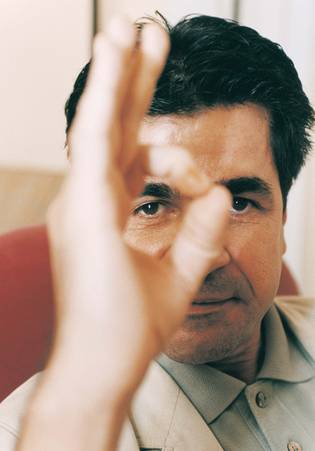
The Berlinale opened this week and the film festival posted on the front page of its website a powerful and poignant letter from jailed Iranian filmmaker Jafar Panahi, whom the Iranian government recently sentenced to six years in prison and banned for twenty years from making films, for supposedly plotting against the regime. In his letter Panahi states, “The reality is they have deprived me of thinking and writing for twenty years, but they can not keep me from dreaming that in twenty years inquisition and intimidation will be replaced by freedom and free thinking.”
It’s heartbreaking to think that an artist as talented as Panahi and as outspoken in his support of human rights might be muzzled for two decades. I’ve only seen his three most recent films but each of them are both innovative and imaginatively made movies as well as clear, uncompromising critiques of social inequities in Iran and beyond. The Circle (2003) savagely exposes the gender inequities in the lives of Iranian women. Crimson Gold (2003), written by fellow Iranian director Abbas Kiarostami, concerns an everyday pizza delivery man whose daily humiliations by the ruling class eventually push him over the edge. Offside (2006) also takes on gender roles in modern-day Iran, framing its story against the runup to the World Cup.
The international film community, as evidenced by the Berlinale’s decision to leave a symbolically empty chair for Panahi on its jury panel, has been vocal in its opposition to his sentence, but it remains to be seen if the Iranian government will bow to public pressure to release Panahi or reduce his sentence.
Panahi has been eloquent in his own defense, noting in an interview in August, ““When a filmmaker does not make films it is as if he is jailed. Even when he is freed from the small jail, he finds himself wandering in a larger jail. The main question is: why should it be a crime to make a movie? A finished film, well, it can get banned but not the director.”
David Wojnarowicz, still from "A Fire In My Belly," 1987
Though Panahi’s sentence may seem shockingly excessive, we here in the U.S. shouldn’t forget that culture wars are still being fought in this country as well. In October 2010, conservative Reps. John Boehner, R-Ohio(now Speaker of the House) and Eric Cantor (R-Virginia) targeted the inclusion of the late artist and AIDS activist David Wojnarowicz’s short experimental film A Fire in My Belly in the show Hide/Seek: Difference and Desire in American Portraiture at the Smithsonian’s National Portrait Gallery. Citing a brief passage from the film in which ants are seen crawling over a wooden crucifix, Boehner called the exhibit “an outrageous use of taxpayer money and obvious attempt to offend Christians during the Christmas season.” Skittish Smithsonian curators quickly pulled the film from the show, to the outrage of much of the art world (the Warhol Foundation threatened to withdraw its funding from the museum). As with early 1990s attacks on NEA-funded artists by Sen. Jesse Helms, another far-right stalwart, the current assault attempts to silence what the right considers a dangerously subversive perspective, that of a gay man who dared to include religious iconography in his work. It’s one more volley in the ongoing attempt by the right to control the cultural discourse of the U.S.
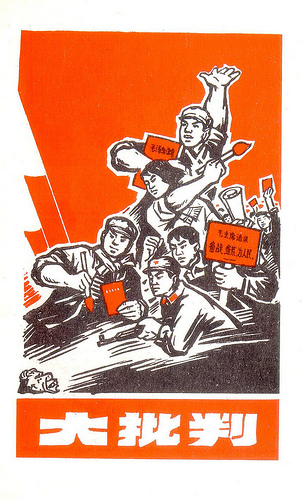
Perhaps more so that the left, the right wing keenly understands the ability of art and culture to sway public opinion. As Jeff Chang and Brian Komar so astutely note in Vision: How We Can Beat Conservatives With Progressive Culture, their excellent essay on alternet.org about what they term “cultural strategy,” “When artists tell new stories, they can shift the culture and make new politics possible.” There’s a reason why conservatives are once again agitating to de-fund the Corporation for Public Broadcasting, National Public Radio, and the National Endowment for the Arts, and it’s not because they don’t like the tote bag they got with their membership pledge. It’s because the right understands that by controlling arts, culture and media outlets, and by extension controlling the master narrative, it can control the social and political landscape as well. As Mao Zedong famously stated, “[Our purpose is] to ensure that literature and art fit well into the whole revolutionary machine as a component part, that they operate as powerful weapon for uniting and educating the people and for attacking and destroying the enemy.” (Talks at the Yenan Forum on Literature and Art, May 1942) Change “revolutionary” to “conservative” and “enemy” to “Democrats” and this quote could be straight from the latest installment of Fox News.
Poster, Cultural Revolution, ca. 1971
Mao had a good reason to fear the millions of artists and intellectuals that he exiled to hard labor in the countryside during the Cultural Revolution. He understood the power of art to shape popular thought and sway political opinion, as does the Republican brain trust that has been fighting for control of the arts and culture of this country for decades, and as does the ruling party in Iran that has chosen to silence Jafar Panahi.
So while we wring our hands over the fate of Panahi, we should keep in mind that we’ve immersed in a culture war here in our own backyard as well. Rush, Sean, and Bill aren’t just harmless kooks mouthing off on cable tv, but are significant bully pulpits of the right-wing thought-control machine. It’s no accident that in the dire hours of the Egyptian revolution this past month, then-President Mubarak immediately moved to shut down Internet access, repress independent media outlets, and harass journalists. The power to define and shape the cultural narrative, whether through art, media, or information exchange, is the new high ground in the battle for ideological and political power.
UPDATE: Jafar Panahi has just been awarded the Carrosse d’Or (Golden Coach) at the 2011 Cannes Film Festival, which is awarded for “innovative qualities, courage and independent-mindedness.” Cannes will screen Offside on May 12 and will keep an symbolically empty chair in the theater for Panahi.












 beyondasiaphilia
Recent Comments