Posts filed under ‘asian american cinema’
Let It Shine: 2023 San Diego Asian Film Festival

Just got back from a quick and dirty one-day trip to San Diego to attend the San Diego Asian Film Festival (SDAFF). SDAFF is the biggest film fest in North America focusing on Asian/American films and artistic director Brian Hu and his team consistently program an outstanding blend of art house, genre, and indie films. Since I ride for Lee Byung-hun, I got the impetus for my trip when I found out that SDAFF was screening his latest film, CONCRETE UTOPIA (which is also South Korea’s entry in the upcoming Academy Awards). I had a bit of airline credit I had to use by the end of the year, plus a few points to spend on a rental car and a hotel so I made the decision to take a jaunt to sunny San Diego.

I arrived Sunday morning just in time to have some excellent chicken jook and to see a few friends at the filmmakers’ brunch. SDAFF is known for its great hospitality and this year was no exception. Then it was off to the movies, starting with the shorts program Astral Projections. MANY MOONS (dir. Chisato Hughes) was the standout film in this program, an essay film about the 1880s forced expulsion of almost the entire Chinese population of Humboldt county. Since I’d made THE CHINESE GARDENS about a similar occurrence up in Port Townsend Washington back in 2013 the topic was of particular interest to me. Hughes did a great job layering interviews, text. archival images, and other visual elements to question the facts and fictions around this notorious event.

After another pit stop at the reception area for a couple slices of pizza and some butter cookies I then saw the nouveau martial arts film 100 YARDS. Set in 19th century Tianjian, the film is co-directed by brothers Xu Junfeng and Xu Haofang, the latter of whom is known for writing Wong Kar-Wei’s THE GRANDMASTER, and this movie similarly attempts to re-imagine and revisit the martial arts genre, but with less success. Although the smoky greys and browns of the mis en scene create a striking visual tableau and the costumes, props and set design were all great, there were way too many fights and not enough character development to hold my interest. It was hard for me to care much about the main character’s daddy issues, although Jacky Heung and Andy On brought the skilz to their fight scenes.

I then moved on to Yu Gu’s documentary, EAST WEST PLAYERS: A HOME ON STAGE. As Gu notes, she had less than an hour to cover nearly sixty years of the history of the legendary and influential Los Angeles-based Asian American theater company, but the film does an excellent job of doing just that. Gu pairs older and newer veterans of EWP such as George Takei, Daniel Dae Kim, James Hong, Tamlyn Tomita, and John Cho to discuss the significance of the troupe as a voice for Asian Americans in the theater. It was fun to see clips from the trove of archival footage of EWP as well.

By then I was contemplating how I would squeeze in time to grab a bite for dinner but decided to forgo eating to line up for the main event of my trip, CONCRETE UTOPIA. I first heard about this movie from my friend Anthony Yooshin Kim, who’d seen it at CGV in Los Angeles a few weeks prior. Unfortunately at that time there were no plans for a wider theatrical release in the US so when SDAFF announced it as part of its lineup I decided to catch it there, since I wanted to see it on the big screen. A dystopic story about the residents of the only apartment building left standing after a massive earthquake levels Seoul and starring A-listers including my man Lee Byung-hun, Park Bo-young, and Park Seo-jun (who makes his US debut in THE MARVELS this year), the movie did not disappoint. The film has everything that makes South Korean cinema so pleasurable—outstanding special effects, brilliant acting, imaginative storytelling, well-drawn, complex characters, and sharp social critique. Lee Byung-hun does an outstanding job modulating his character, making his character arc compelling and believable. Park Seo-jun and Park Bo-young are also great as a young couple whose lives and values are literally shaken up and turned upside down by the catastrophe. Despite its fantastical premise the movie never wavers in its examination of humanity under extreme duress.

CODA: This past week I had the fangirl pleasure of joining a zoom press conference for CONCRETE UTOPIA that featured Lee Byung-Hun and director Um Tae-hwa. It was fun to share the same virtual space as Lee, even if we didn’t directly interact. I tried to restrain my cyberstalker stanning as best I could but I’m not sure if I was entirely successful. CONCRETE UTOPIA is set to open in New York and Los Angeles on Dec. 8, and will go into wide release across North America the following weekend.
Talent Is An Asset: 2021 SXSW Online, part one: Film Festival

When the COVID-19 tsunami hit the U.S. back in March 2020 Austin’s SXSW film and music festival was one of its first casualties. The entire event was dependent on live performances and screenings and with the country going into lockdown there was no chance it could happen that year, so the whole shebang was cancelled outright. But subsequent film festivals began pivoting to fully online and this year SXSW was an entirely online event, including films, music, conference panels, and networking. Luckily for me, this format also gave me the chance to attend my first SXSW and I ingested a huge amount of content from the comfort of my own home. Because of the sheer volume of performances that I consumed Imma split my review into the film side and the music side, starting with the cinematic treats I watched.
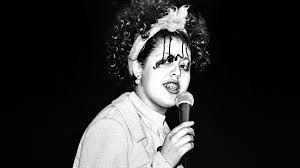
The festival included two documentaries about influential and innovative pop stars that have flown somewhat under the mainstream radar. Poly Styrene: I Am A Cliche looked at the life of the leader and vocalist of the legendary UK punk band X-Ray Spex. As a baby punk back in the 80s one of the best things about early punk and new wave was the presence of women of color such as Pearl E. Gates, Pauline Black from Selecter, and Poly Styrene. Poly was not only a punk icon but also a woman of color icon and it was great for me to have a Black woman role model who could belt it out with the best of them. The film traces Poly’s meteoric brilliance as the leader of X-Ray Spex at age 19, as well as her struggles with mental illness and her involvement with the Hare Krishna sect later in life. Told from the POV of her daughter Celeste Bell, who is credited as the film’s co-writer and co-director, the film interweaves her narration with a plethora of archival footage and photos. As a mixed-heritage child (or half-caste, the term that was in common usage at the time) raised by a single mother in 1960s Britain, Poly (nee Marianne Joan Elliott-Said) faced a fair amount of casual racism and ostracization. The film shows the range of Poly’s artistic endeavors outside of her singing career, including several passages from her journals (read by Ruth Negga), as well as her unique and idiosyncratic fashion sense which she developed in her teens and which she highlighted in her years as the face of X-Ray Spex. Celeste Bell’s somewhat mournful narration adds a gravitas to the film as she searches for the truth of her mother’s life and legacy. But throughout it all the story is driven by the power of Poly’s clarion voice and poetic vision.

The Sparks Brothers, directed by Edgar Wright (Shaun of the Dead; Baby Driver) explores the iconic cult band Sparks, utilizing a ton of archival footage, interviews with the band’s many admirers including Bjork, Giorgio Morodor, Todd Rundgren, and many more, accompanied by Sparks’ excellent and eclectic pop music. Emulating the cheeky and off-kilter attitude of its subjects, the film follows Russell and Ron Mael, the two brothers who founded Sparks, from their childhood in Southern California through their long and winding musical career. The film captures the brothers’ sardonic style as seemingly British invasion cult darlings (belied by their SoCal roots) with their first hit in the UK, This Town Ain’t Big Enough for Both of Us, through their survival in the fickle world of rock music in the more than four decades since. I’ve always been a fan of Sparks and their unique and twisted pop stylings, led by Russell Mael’s dramatic and operatic high tenor and Ron Mael’s sophisticated keyboards and songwriting, so this movie was a fascinating look at their career trajectory. Always ahead of the pop music curve, the film demonstrates the Mael brothers’ influence on disco, new wave, EDM, synth pop and much more. It also shows how their highly visual and cinematic presentation, with the more traditionally rock styled Russell contrasting with Ron’s odd Hitler/Chaplin persona, made them a perfect fit for the MTV era, when they scored their new wave hits The Number One Song In Heaven and Beat The Clock. Throughout the film their wit and intelligence shine through.
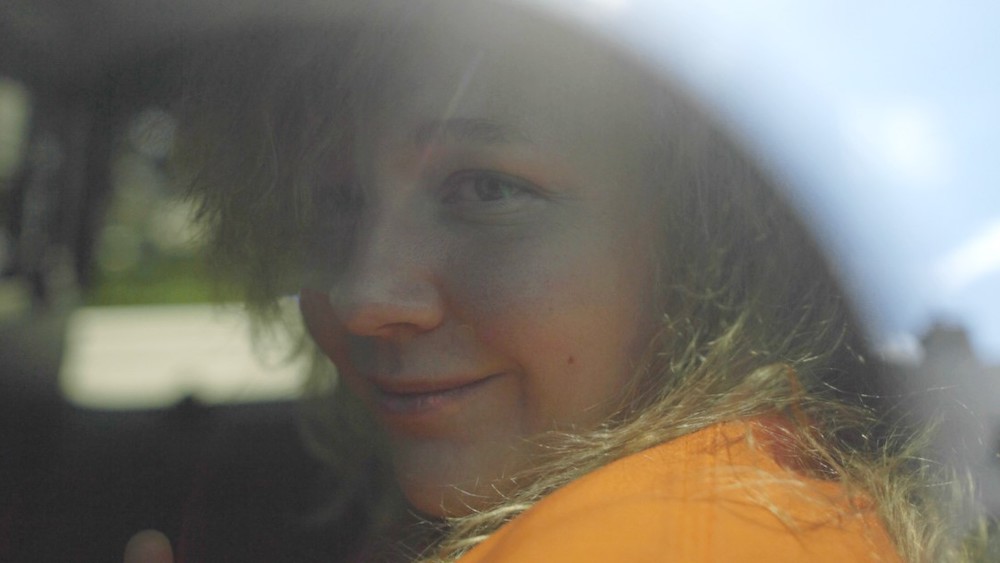
Two other docs in the festival looked at politics and current events. The United States vs. Reality Winner is a procedural agitprop doc ala CitizenFour, Laura Poitras’ Oscar-winning film about Edward Snowden, another famous whistleblower. Snowden even makes an appearance in this film, as do several other commentators who contextualize Winner’s case. The film follows Winner’s mom as she tries to get a fair trial for her daughter who has had the book thrown at her for exposing Russia’s influence on the 2016 US presidential elections. As with CitizenFour and other films of its ilk, The United States vs. Reality Winner has a definite opinion and relentlessly pursues it.

In contrast, Nanfu Wang’s documentary In The Same Breath, which looks at the beginnings of the coronavirus pandemic in Wuhan and in the US, is all about doubt and questioning and its lack of clear answers reflects the confusing times we’re still enmeshed in.Included in the film is some stunning security camera footage of the very earliest days of the pandemic in Wuhan that shows how quickly the virus spread and how unprepared health officials were in their initial response. The film beautifully expresses the ambiguity and uncertainty of the COVID-19 era while sounding a warning about the inherent untrustworthiness of governments both in China and the US.
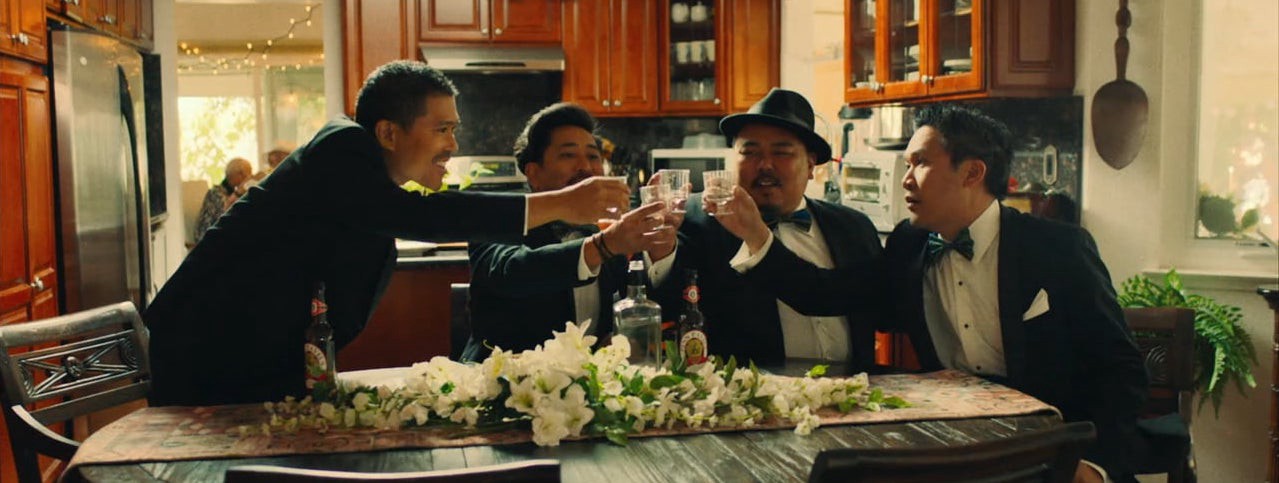
The Fabulous Filipino Brothers, Dante Basco’s directorial debut, is in some ways a spiritual successor to the iconic 2001 Asian American film The Debut. That movie, which starred Dante and also included appearances by his three brothers Dion, Derek, and Darion and sister Arianna, is much beloved in the Filipino American community for its lighthearted look at FilAm culture, traditions, and identity. The Fabulous Filipino Brothers is is similarly Filipino AF and it was interesting to watch more than 20 years after The Debut made its premiere. It’s set in Pittsburg, CA and loosely revolves around an upcoming wedding in a big-ass Filipino family. Many Bascos were involved in the making of this film, including the four Basco brothers in lead roles, with narration by Arianna. The film is a bit rough around the edges and never transcends its sitcom aesthetic, but all four brothers are talented performers and each does well in their respective vignettes. Their agile comic timing and ability to hold the screen makes me wonder why their careers didn’t take off after the success of The Debut, but as usual the answer is probably racism. A humorous side note: one of the characters is in a depressive funk which he deals with by composing atonal electronic music that sounds a bit like some of the stuff I heard at the SXSW music festival.

I also caught a couple excellent short films of the many that were included in the festival. Águilas, by Kristy Guevara-Flanagan and Maite Zubiaurre, follows a group of volunteers who scour the Sonoran desert near the Arizona border looking for the remains of those who have died attempting to migrate on foot to the US. A short, intense look at those who carry out this grim duty, the film is suffused with empathy for the people who have lost their lives traveling from their home countries as well as those who search for their last remains.
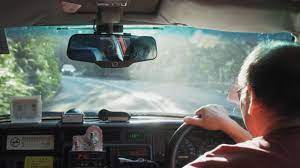
Red Taxi, by an anonymous director, utilizes interviews with cab drivers on both sides of the Hong Kong-Shenzen border that were shot during the massive 2019 Hong Kong protests. The short documentary provides an interesting contrast between the pragmatic hopefulness of the Hong Kong cabbies and their PRC counterparts, who for the most part don’t have much sympathy for people of Hong Kong who were speaking out against the government at the time. It’s an interesting snapshot of the times and shows the divide in opinion on either side of the border without judging or taking sides. It’s also telling that the director has chosen to be anonymous, reflecting fears of the oppressive new National Security Law in Hong Kong that effectively punishes residents for speaking out in any way against the Beijing regime.
Next up: Part two, in which I attempt to encapsulate the huge number of international performers I saw on the music side of this year’s SXSW.

 beyondasiaphilia
Recent Comments