Posts tagged ‘SFFILM’
Summum bonum: 2023 SFFILM festival

The 2023 edition of the SFFILM Festival took place this year in mid-April , with in person screenings in San Francisco and the East Bay. This was a streamlined version of the festival, with just two or three screenings of most films and taking place at just three venues, the Castro and CGV Cinemas in San Francisco and BAM/PFA in Berkeley, plus one show on Opening Night at the Grand Lake in Oakland. The number of programs was down from 105 in 2023 and 130 in 2022 to 96 this year. It was a bit trickier catching films but I managed to see three excellent non-fiction films, each of which challenged documentary filmmaking conventions.

With King Coal, director Elaine McMillion Sheldon creates a poetic elegy to Appalachia, at once dreamlike and hard as nails. The film is a stylistic departure from her earlier verite-style films Heroin(e) and Recovery Boys, both of which looked at the opioid crisis in the region where she was born and raised. King Coal blends observational filmmaking with several staged, unscripted sequences featuring two young girls and was shot in the heart of the heartland where coal mining was the backbone of the economy for decades. The film is a fascinating hybrid that sympathetically portrays the plight of a region that has long been exploited for its natural resources, at great human cost. King Coal does make the case that white working class people are victims of capitalism, which may skirt a bit too close to arguments about “economic anxiety,” ignoring the presence of white privilege. But McMillion Sheldon’s cinematic vision is so compelling and so lyrically realized that in this case I’m willing to overlook a little bit of societal myopia.
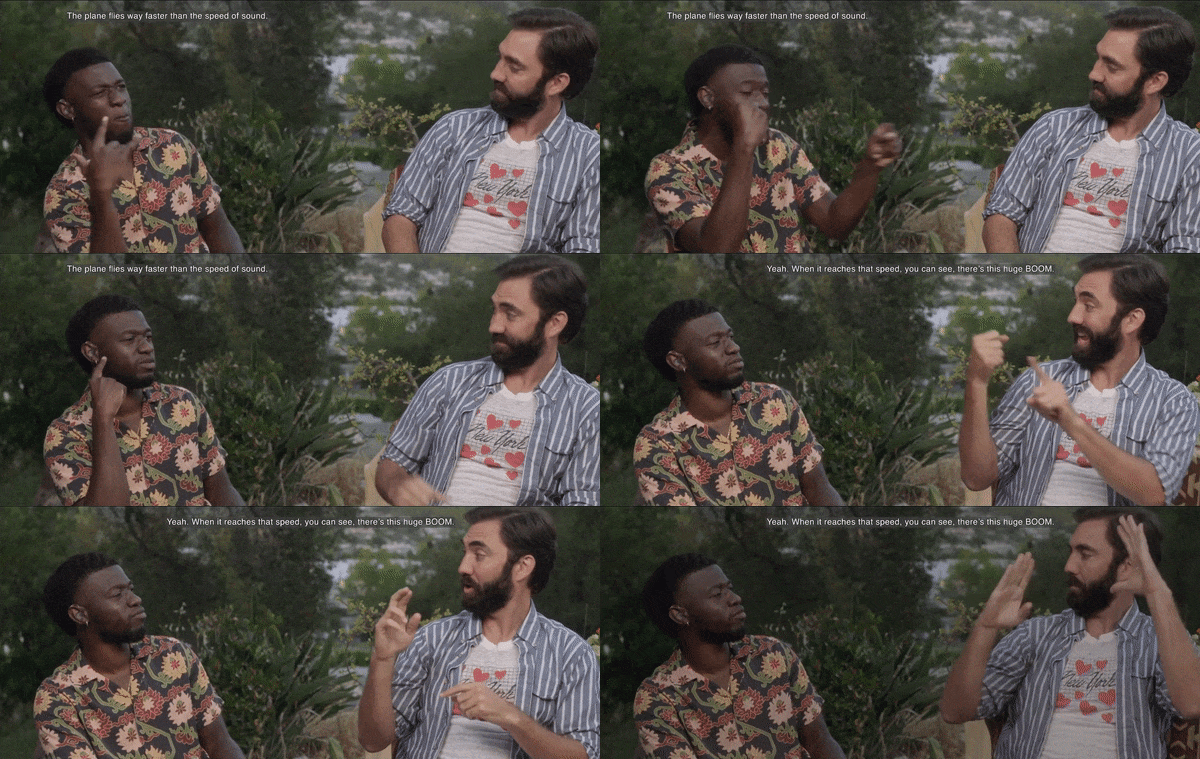
In The Tuba Thieves director Alison O’Daniel, who is hard of hearing, creates a film that questions the presence and absence of sound from the perspective of mostly Deaf characters. As might be expected from its title, the film takes as a jumping off point a series of thefts of tubas from Los Angeles area schools over the span of a few years, but its scope is wide-ranging and only tangentially touches on those events. The Tuba Thieves consists of several short vignettes that look at sound and silence, including a dramatization of the premiere of John Cage’s 4’33” to a somewhat bemused audience in upstate New York, archival footage of the organizers of Prince’s 1984 concert at Gallaudet University (the famous institution for Deaf and hard of hearing students), a recreation of a concert at the legendary San Francisco punk venue The Deaf Club, and parallel narrative threads focusing respectively on a Deaf drummer and a hearing teenager in a marching band whose tubas are among the stolen items referenced in the film’s title. O’Daniels’ film makes creative use of open captioning, creating poetically descriptive titles that enhance and embellish the sounds and dialog in the film.
Another particularly telling element is the recurring discussion of sonic booms, which are created when an aircraft travels faster than the speed of sound. Instead of including the actual sound of the phenomenon, O’Daniels instead shows pictures of planes breaking the sound barrier. In these ways the film privileges the perceptions and points of view of the Deaf and hard of hearing community. The result is a fascinating take that draws attention to what most hearing people take for granted—the way that sound interacts with the environment and with daily life.

Milisuthando, Milisuthando Bongela’s semi-autobiographical eponymous essay film, is a long and dense look at South Africa just before and just following the end of apartheid. Comprised of much archival and broadcast footage, personal reminiscences, some sit-down interviews, and the filmmaker’s own astute observations in voiceover, the film explores South Africa’s fraught and convoluted history of race relations. Milisuthando examines a multitude of topics including Nelson Mandela, white guilt and white privilege, school integration, and the perils and pleasures of interracial friendships, among many others. Bongela allows many passages in her film to run a bit longer than may be comfortable to viewers accustomed to the rapid pace of most commercial films, a technique that works to good effect in both stimulating introspection and creating discomfort. It’s a good film and one that I plan to revisit to tease out more of its nuances.
NOTE: SFFILM had most of its San Francisco screenings at CGV Cinemas (formerly the AMC 14), an outpost of the huge South Korean cinema chain, which opened in 2021 in the middle of the pandemic. The theater was my go-to whenever I wanted to see a blockbuster Hollywood or Korean movie all by myself and the handful of times I saw a film there there were usually about a half-dozen other customers in attendance. Once or twice I was the only person in the entire theater (and possibly in the entire multiplex) and for some reason the venue either didn’t have or never turned on the air-con, which made it much less appealing to go to. For whatever reason, business has continued to not be good and in late February CGV announced that it would be closing the San Francisco branch as of March 1, with sporadic events such as SFFILM continuing in the space. With the future of the Castro Theater still in limbo and the closure of the last movie theater in downtown Berkeley in January 2023, big-screen moviegoing in the Bay may be very limited in the future.
Save It For Later: 2021 SFFILM Festival

Before COVID-19 upended our lives I was a big-screen film snob. Living in San Francisco, with its year-round calendar of world-class film festivals as well as rep theaters such as the Pacific Film Archive, the Roxie, and the Castro, it was easy to consume a steady diet of a huge range of cinematic treats solely in movie theaters. All of that changed with the pandemic, and as we enter the second year of the age of coronavirus pretty much all film festivals have shifted online. The SFFILM Festival’s 2021 edition was no exception, and as usual it presented a broad spectrum of international programming. Though my time was very impacted I was able to catch several outstanding movies.

I really enjoyed South Korean director Lee Ran-hee’s impressive debut feature, A Leave, which is a small slice of life about an out-of-work laborer who’s been suing his former employer for the past five years. While manning a protest station in Seoul with a few other diligent souls his daughters who are living apart from him in a Seoul exoburb have entered their teen years and grown up without him. When he returns home for a brief week he cleans the house, fixes the sink, does itinerant labor at a small furniture-making shop and gradually re-enters his family’s life. But his duty as a protestor calls him back to Seoul despite his older daughter’s pleas for him to abandon his quixotic cause. Gritty and realistic, this humanistic portrait shows the crushing weight of workers who live hand to mouth in a neoliberal economy.

Also outstanding was Iranian director Firouzeh Khosrovani’s personal documentary, Radiograph of A Family. Tracing her parents’ relationship starting in the 1960s from their meeting in Switzerland, when her father, who was educated in the West, met her mother, who was younger than her husband, more conservative and more religious. The film follows their lives together in both Europe and Iran, where her mother became a teacher and an activist during the Islamic revolution. Using archival footage and photographs, home movies, and fictional and non-fictional dialog Khosrovani creates a delicate, fascinating portrait of a family caught up in great historical events.
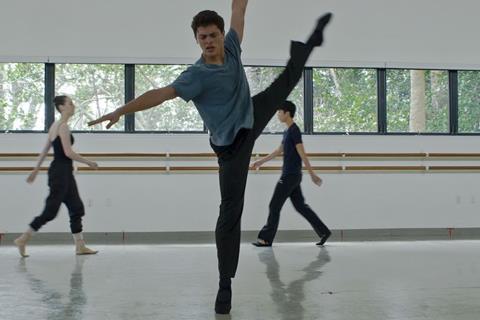
Roberto Salinas’ unobtrusive observational documentary Cuban Dancer follows aspiring ballet dancer Alexis Valdes from age 15 from his home in Cuba to the US where he trains in Florida at a private dance academy. The film includes some failures and some successes as Alexis adjusts to his life in a very different environment from the nurturing world he left behind in Cuba, as he gradually learns English and makes friends in the US. This is the third documentary I’ve seen about Cuban performing artists this year, the other two being the outstanding Los Hermanos/The Brothers and the somewhat more pedestrian but still enjoyable Soy Cubana. Cuban Dancer falls somewhere in between the two of them, as it lacks the cultural and political context of Los Hermanos but has a sturdier and more compelling narrative than Soy Cubana. Postscript: Alexis Valdes went on to attend the San Francisco Ballet School and is now an apprentice dancer in the company.
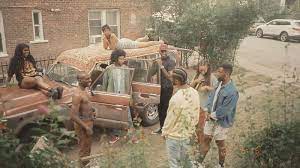
The festival also included several mid-length films with running times between 30-50 minutes. Created as promotional material for his album of the same name, hip hop artist Topaz Jones’ essay film Don’t Go Tellin’ Your Momma is structured around replicating the Black ABCs, the iconic flashcards created in the 1970s by a pair of Black educators in Chicago in an attempt to center African American culture. Jones’ film similarly focuses on the Black experience, blending archival footage, staged vignettes, and interviews with Black intellectuals. Tiffany Hsiung’s mid-length documentary, Sing Me A Lullaby, follows her mother Ru Wen’s journey back to Taiwan to find her own mother who she hasn’t seen since she was five years old. This emotional doc captures the sense of loss and longing among exiles as it traces Ru Wen’s poignant story.

The last film I managed to see was Chloé Mazlo’s narrative feature, Skies of Lebanon. Charming and inventive, the film follows the lives of Joseph, a Lebanese rocket scientist and Alice, a Swiss expat who moves to Lebanon in the 1950s to escape her oppressive family life. Joseph and Alice fall in love and marry, raising their daughter in 1960s Lebanon among a large and affectionate family. Beginning in 1975, the long destruction of the Lebanese Civil War takes its toll and gradually most of Alice and Joseph’s extended family flees Beirut, including her beloved daughter Mona. Like Radiograph of A Family, this film looks at the effect of history’s upheavals on everyday individuals. Director Mazlo is a French Lebanese animator and artist and Skies of Lebanon, her first feature film, uses claymation, subtle CGI, theatrical devices, magic realism, and surrealism, as well as some really beautiful, economical storytelling, to spin its engaging tale.
Though I appreciate the ease of viewing that comes with streaming films at home on my laptop it’s still no substitute for watching movies in a theater with a crowd of like-minded cineastes. Still, until it’s safe for us all to go back to the cinema, I appreciate SFFILM’s thoughtful and varied programming. It’s a balm in a year of deprivation.

 beyondasiaphilia
Recent Comments