Posts tagged ‘JRock’
A Tale of Two Tours: CNBLUE and One OK Rock In Japan

A special guest post by CNBLUE fan Glenn!
I was in Japan for a bit over a week in April 2023 and in that time was lucky enough to attend shows on tours by two different veteran acts – CNBLUE’s Calling Zepp tour and One OK Rock’s Luxury Disease stadium tour. Very different in their size and scale, but both exceedingly worthwhile.
Introduction
I suppose since I am Valerie’s guest here I should introduce myself. My name is Glenn and I am a 55-year-old man who lives in the DC suburbs of Northern Virginia. So, not exactly in the typical CNBLUE demographic. I first saw CNBLUE on the old MNET America cable channel about 8 years ago and I was immediately captivated by their music (and good looks). Until then I had only really been exposed to KPOP dance groups, so the idea of a real band playing their own instruments was fascinating. I dove headlong into their story, watching every youtube video and collecting as much of their back-catalog of CDs and DVDs as I could. Luckily, the many, many tour DVDs do a good job of capturing what the band is all about. Shortly after my intro I discovered that the WHITE Spring 2015 tour was going to be happening. In those days getting tickets was difficult but there was a fairly straightforward way to get them via secondary sources. So with that in mind I used one of the many little companies that work on behalf of foreigners to get a ticket to one of the Yokohama shows. I also became aware via the CNBLUE International Fans group on FB that someone had an extra ticket to the other Yokohama show. After an easy paypal transaction I had secured tickets to both and made my plans for a whirlwind weekend in Yokohama. It’s nice to have the tour DVD of a show I attended. So those are my general bona fides.

For the 2023 CNBLUE Calling Zepp tour I had already booked a trip to Asia before the tour was announced that included about a week in Tokyo for the first week of April. Given the byzantine world of Japanese concert ticketing I expected it would be difficult to get tickets since the initial lottery was only open to Japanese BOICE. which seems to basically require you to live in Japan (or be close friends with someone who does). Luckily when the winners of the first round of the lottery were announced several BOICE with extra tickets were advertising them on Twitter. Thanks to Valerie for making me aware of this! I contacted a few and was able to fairly quickly line up a ticket for night 2 in Nagoya and night 1 in Sapporo. Both were extremely helpful to me and I sent payment by PayPal, then had to go through the process of figuring out how to get a Japanese phone number to be able to use the electronic ticketing system. This also proved to be stressful but fairly straightforward.
With all of that out of the way, let’s (finally) get on with the show!
When this tour was announced I was initially a bit baffled. Why was a band that’s been playing arenas for years scaling way down to a tour of Zepp live house clubs? From what I can gather it was a chance to rebuild their audience and to reconnect with their biggest fans after being on hiatus for military service and after the loss of a band member.

I arrived in Nagoya a few hours before the second night’s show. I had seen the set list posted from the first night so had some idea what to expect. Zepp Nagoya holds about 1800 people. Signs were posted around the club and around the block for every 100 people. Everyone lined up by their ticket reference number. My number for this show was 1062. Around 5:30 I walked across the street from my hotel (Strings Hotel Nagoya – highly recommended if you’re going to a show here) to the club to see where I needed to go. Once doors opened at 6 PM the ticketing app made the tickets active and the line eventually started moving.

Despite my high number when I got inside the club I managed to be one of the last people to squeeze into the area about fifteen rows deep from the stage. Anticipation built as the 7 PM show time approached with audio of past CNBLUE shows playing over the club’s PA. Shortly after 7 PM the lights went down and Kang Minhyuk was first out to his drum kit. Now that they are a trio Minhyuk’s spot has moved to the front of the right side of the stage with bassist Lee Jungshin in his customary spot on the left and of course frontman Jung Yonghwa in the center. The sound is filled out on this tour by three extra musicians—two guitar players and a keyboard player who mostly were kept off on the fringes of the stage.
The show was arranged in short blocks of songs, the first of which was the “Rock” block that opened with IN MY HEAD. The sound in the club was a bit bass-heavy so having concert earplugs made a big difference in filtering the sound. Yonghwa’s vocals were loud and clear and Jungshin’s takeover of former band member Lee Jonghyun’s vocal parts was pretty seamless. It also felt like having Minhyuk that much closer to the audience really made the drums even more immediate. The block finished out with ONE TIME: RYU CAN DO IT, WHERE YOU ARE, and one of my favorites, TIME IS OVER. It was quite interesting to see how the set was constructed with some real out-of-left-field choices. I’m not sure I would have expected TIME IS OVER but I’m glad it was there.
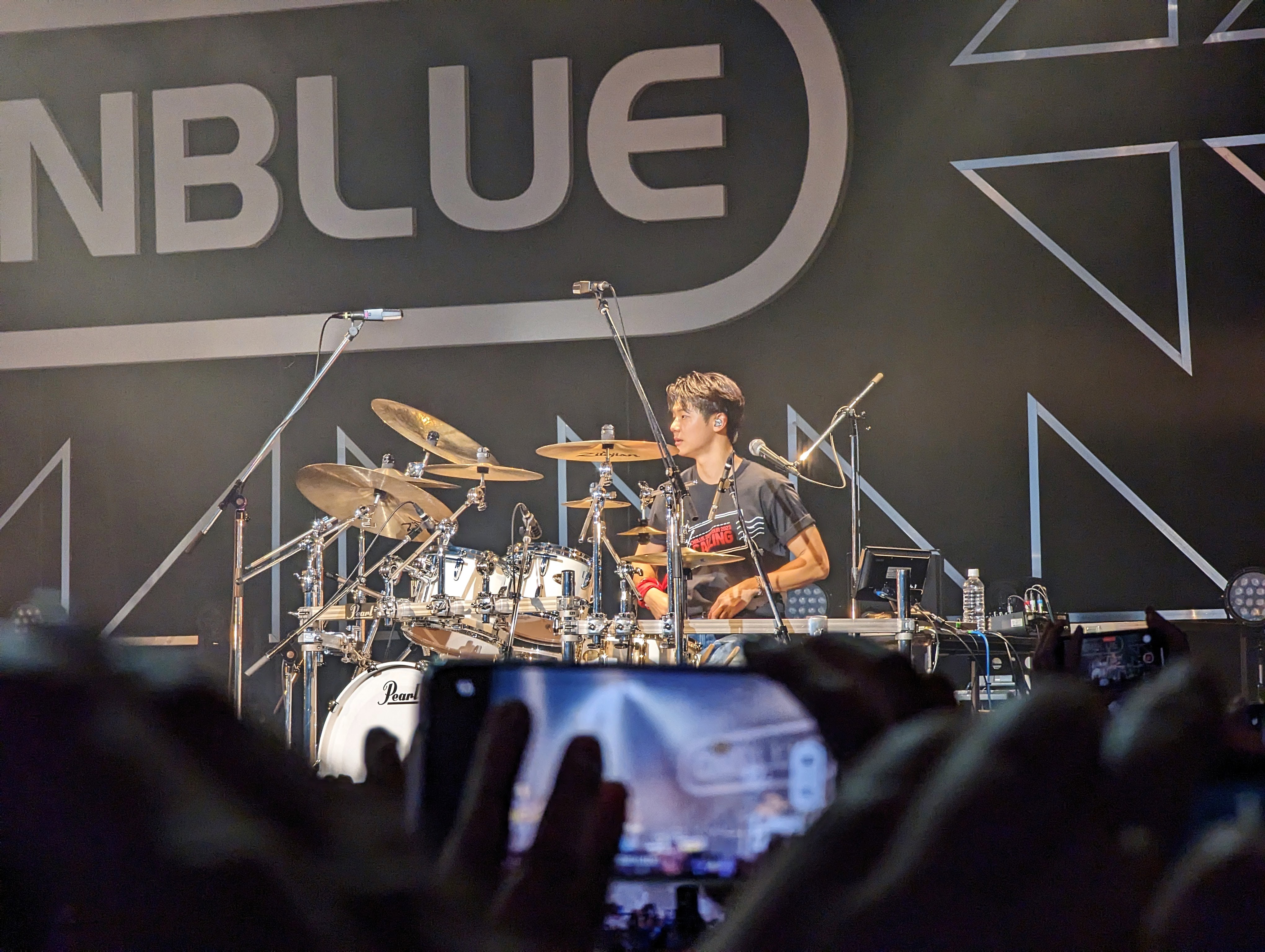
Then it was time for the first MC block. Since I don’t speak Japanese I don’t know exactly what was said but it was the usual introductions from the three of them welcoming everyone to the show and riffed on the word “Calling.” Yonghwa also mentioned that IN MY HEAD was their major label debut single.
Second was the “Dance” block that opened with FACE TO FACE (with Yonghwa mugging for the crowd), THIS IS, and SHAKE SHAKE. That was followed by the next MC block with a recap of the SHAKE SHAKE choreography.THIS IS also seemed like a pretty deep cut.The guys were all extremely relaxed with lots of laughter and gentle ribbing of each other.
Next was the “Emo” block that kicked off with SUPERNOVA—yet another track you wouldn’t have really expected. This part of the show was very strong, however I felt like at the end of this song the drums got a little out of sync with everyone else. It definitely sounded better at the Sapporo show. That was followed by one of the real highlights of the show for me which was ROYAL RUMBLE. I feel like this song is really underrated and Yonghwa really gets to exercise his vocal talents. The additional musicians also allow him to just sing this song without having to worry about anything else. The section closed out with MOON, with the very excited crowd enthusiastically clapping along.

The following MC section was time for Food Talk, a staple of every CNBLUE performance.
The next section has apparently been dubbed “Powerful” by YH and included LET IT SHINE, TRIGGER, and BETWEEN US. Again the crowd seemed to really enjoy this section of newer material followed by another MC.
And the main set closed out with the crowd-pleasing “Final” section that included some of their best-loved audience-participation songs: LADY, WAKE UP, COFFEE SHOP, and I’M SORRY. Honestly, these are probably four of the best live songs ever. Because they’ve played them so many times and are free to play around a little it’s really a joy between Yonghwa goofing around during LADY, followed by all of the various “Wake Up, Wake Up” call-and-responses that can really be played with. Since the club is small Yonghwa several times called for silence from the crowd and did his call without a microphone, which worked well in such an intimate setting. And then he coached Minhyuk in a couple of rounds of the same thing. For my money COFFEE SHOP might just be the perfect song. It’s just so fun in the live environment and the whole club was really dancing along. I’M SORRY will always be a crowd favorite, with Yonghwa’s overhead arm thing that looks like a little kid asking a truck driver to blow his horn.
Of course the band returned after a brief break to change into the tour t-shirts. Yonghwa delighted the crowd by telling everyone it was ok to get out our phones to take photos and videos of TRY AGAIN, SMILE AGAIN. As someone who’s been to lots of shows in North America over the years I have to say that the prevalence of smartphone photography has largely detracted from the concert experience. So being in a place where photography is strictly forbidden is kind of refreshing since it allows everyone a chance to concentrate on just enjoying the show. But for one song I guess we could all be distracted by trying to get as many good pictures as possible. After that we had time for thank you’s to the extra tour musicians and I presume to the tour and club staff and of course all of us for being there.
The show closed with GLORY DAYS, which I guess seems to be the new traditional closer. After that they took their bows and it was all over.
The show in Sapporo was basically exactly the same but with different Food Talk. The queues were organized slightly differently and I was number 485 for this show. Once inside I got the almost identical spot to the previous show. Zepp Sapporo holds about 2000 but I think this show was not quite sold out and there was a little more personal space on the floor which I really appreciated.

If I could suggest one thing to the band it would be to change up the set from show to show to make them all different. They have such an extensive catalog now that it would be easy to switch out at least four or five songs every show. I get that they like everything to be well-scripted, but my favorite artists over the years like James or REM always played a different show every night. So if you went to multiple shows it was always fresh and it kept the band on their toes. On a tour like this where there is no big video or light show it would be somewhat easier to do.
I had wondered how the smaller stage would affect Yonghwa’s manic energy and his running all over the place, but in general he was focused and had plenty of chances to get out his energy. He’s always been the consummate frontman and in a venue this size he’s really able to connect with everyone.

The chance to see the band in a venue this size was really exciting and I still can’t quite believe how lucky I was to see them twice on this tour. A huge thank you to the two Japanese fans who sold me the tickets and were so nice in looking after me to make sure I got the tickets and knew where to be. In such a crazy world these days it’s great to see that there are still people who are happy to help a complete stranger.

One OK Rock at Tokyo Dome
Sandwiched between these two shows I had a chance to see One OK Rock at Tokyo Dome. On a bit of a whim I checked when I arrived in Japan to see if there were any tickets available in the Pia website and sure enough there were. I had no idea where the seat was located but it was easy enough to buy my ticket.
Tokyo Dome shows are very well-organized. I found the appropriate entrance and asked if I was in the right place. The staff member tapped on my phone and then another person applied a little NFC device to the screen to verify my ticket and I was in. One of the nice things about shows in Japan are the early start times. CNBLUE was doors at 6 PM, show at 7 PM. One OK Rock was doors at 4 PM, show at 6 PM. I had arrived a little after 4 PM, which was obviously quite early. It turned out that my seat was in the outfield bleachers with a generally obstructed view of the stage and no view of the big video screens. I couldn’t even see Kanki Toyoma but could just see the front of his drum kit.
I will admit that, while I really enjoy their music, I am not as intimately familiar with their catalog. But I knew this would be an interesting experience. When we entered everyone was given a radio controlled LED bracelet. These were certainly an integral part of the overall light show.
The band were fresh off a North American arena tour opening for Muse, but of course they are so huge here in Japan that they can sell out consecutive nights at the biggest stadiums in the country. I believe Tokyo Dome holds about 50,000 people for concerts and the place was packed full by show time.
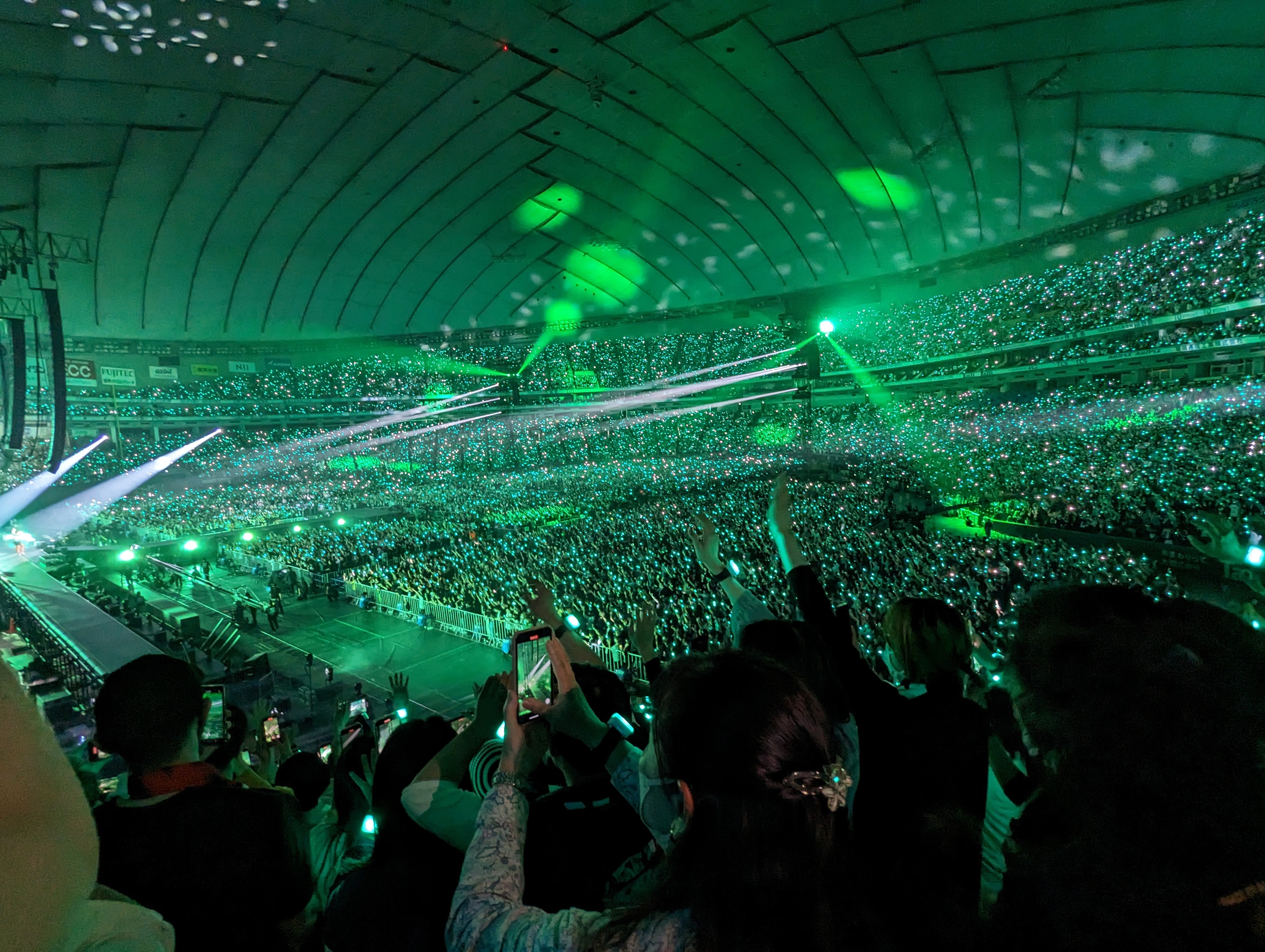
The lights went down a few minutes after 6 PM and the opening strains of WONDER hit the crowd, but only Tomoya was on the stage so everyone was a little confused. Then spotlights hit two raised platforms around 1st base and 3rd base with Yamashita Toru and Kohama Ryota atop them playing before eventually coming down and running to the stage. And then Moriuchi Taka was raised up to the stage extension in front of the stage to start singing. I am not really a fan of stadium shows but the band are veterans of big shows like this and know how to make BIG movements and grand entrances. There is clearly a lot of work that goes into putting together a show on this scale. They really brought out all of the pyro, fireworks, and dry ice aided lasers.
I won’t do a song by song of the show, but they played 25 songs over the course of nearly 3 hours including some quite long MC sections. Here’s a link to the set https://www.setlist.fm/setlist/one-ok-rock/2023/tokyo-dome-tokyo-japan-3bbb6490.html Apparently this show was recorded for the eventual live DVD.
The show was quite a spectacle as I expected. Once the bracelets got activated the whole audience became a giant mood light. Everyone was REALLY into the show with most people singing along to everything and most arms in the air. Permission was granted for everyone to photograph the encore.

Taka is another fantastic frontman who loves being dramatic with lots of grand gestures. They’ve played lots of very large venues through the years so he’s clearly had time to hone his craft and play to a venue this enormous. For such a little guy he really has a large presence in addition to his huge voice.
Among the interesting contrasts between these events was the breakdown of the crowd. At the two CNBLUE shows I attended I’d estimate that I saw a total of ten other men (besides the band, crew, and venue staff) and I think the average age was probably in the area of forty. At One OK Rock I think it was about 50/50 women to men with the crowd skewing younger to their twenties – although I did see one businessman in a suit who was probably in his sixties. I’m not really sure why CNBLUE doesn’t have much of a male fan following. Are they just too handsome?
Overall it was three great shows by two excellent bands. I’ll always prefer a more intimate venue, but the OOR stadium experience was worth doing.

Practical Information
Valerie (again!) suggested a company called Mobal (www.mobal.com) which will provide you with a Japanese SIM card and real Japanese Softbank or DOCOMO phone number. Just make sure your phone is unlocked. You can either pick the card up when you arrive in Japan or they will ship it to you for free. The cheapest short term plan is currently about 8000 JPY for thirty days which includes a phone number for calls and texting as well as 7 GB of data.
Once you receive the SIM you can request a specific date to activate your account and they suggest that activation may take up to a couple of days so getting it activated right before you arrive is a good idea.
You will need a Japanese phone number to create and verify your account with the Ticket Pia site (t.pia.jp) and their service called Cloak which allows you to receive ticket transfers from other users. Because I had never used this before and couldn’t actually register until I arrived in Japan there was some stress about whether I would be able to get it working. But the worry was unnecessary as I was able to register no problem. As part of the process you call a toll free number from your phone number to verify it. Once I had that set up I was able to receive the ticket transfers. Until I actually got into the show though there was still some question over how it worked. But just showing the ticket screen to the venue staff was all I needed to do and they quickly clicked the link they needed to and I was in.
For the One OK Rock show however I also needed another app called MOALA to use this ticket. The Google Play store told me this app wasn’t available to me (presumably because it’s a US phone even though I had my Japanese SIM installed), but I managed to install a sideload version that worked fine. Just search for something like “How to install the MOALA app” in your favorite search engine and you will find the apk to download and install.
Art Of Life: interview with We Are X director Stephen Kijak

Yoshiki, We Are X, 2016
So the awesome new documentary, We Are X, about legendary Japanese speed metal band X Japan, dropped last week here in San Francisco. An energetic and engrossing look at one of Japan’s most popular bands, the film follows the group’s long and often tragic history, as seen through the eyes of its charismatic leader Yoshiki, the band’s drummer, pianist, composer, and mastermind.
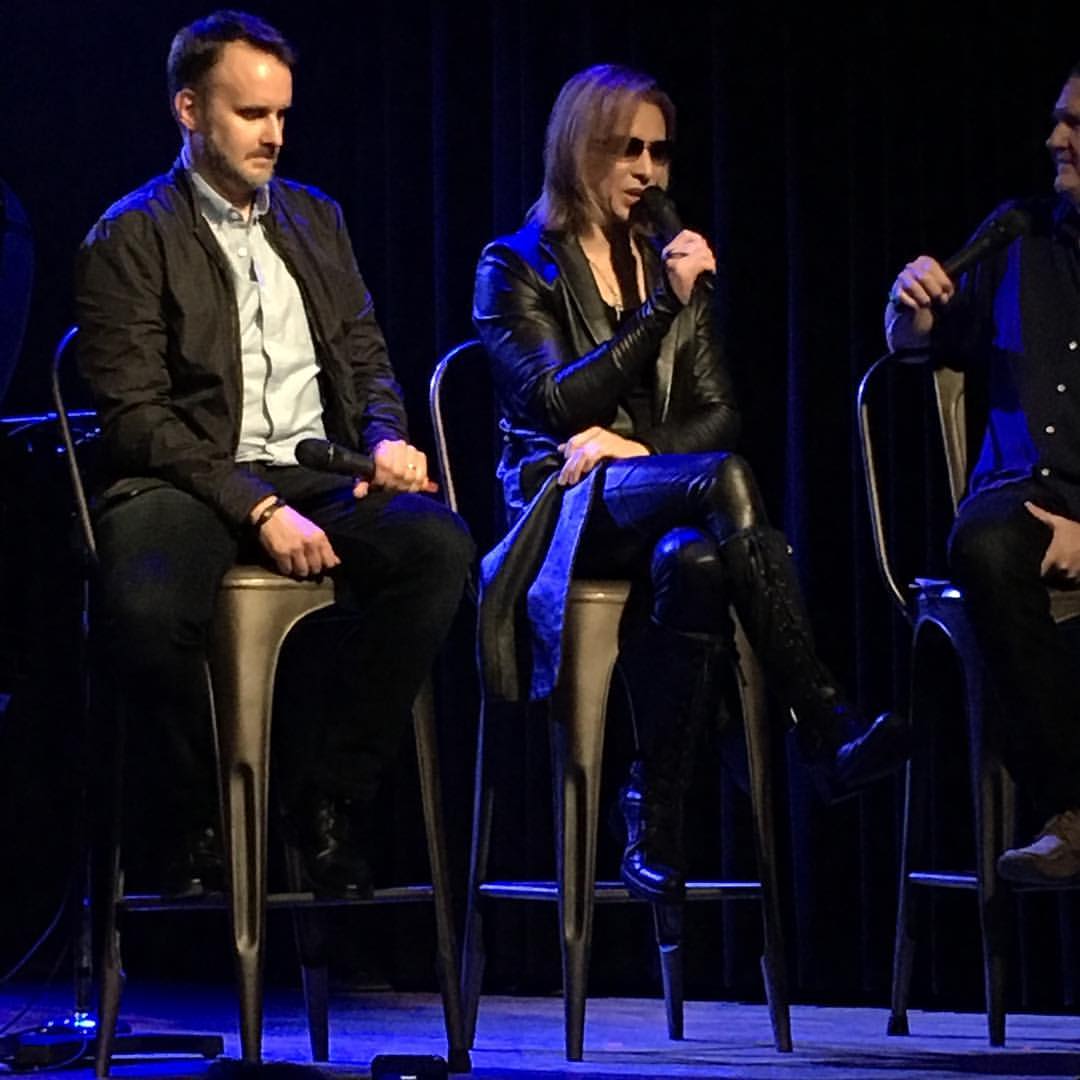
Stephen Kijak and Yoshiki, Mezzanine, 2016
I attended a screening of the film at Mezzanine in San Francisco, followed special performance by Yoshiki, who performed a short set including a rendition of The Star-Spangled Banner (!) and held an extensive Q&A/lovefest with his adoring fans.
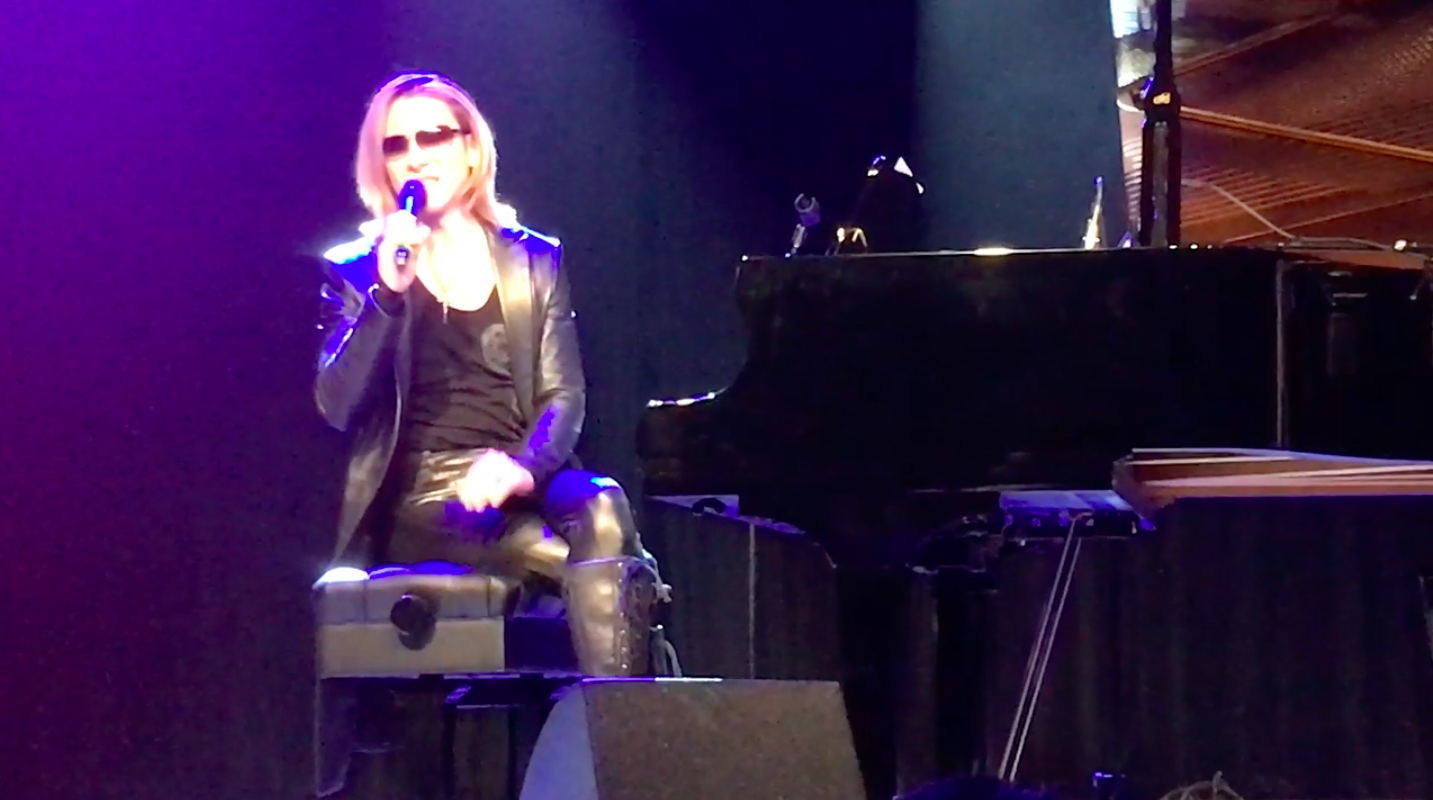
Yoshiki plays, Mezzanine, 2016
As a special perk I also got to meet Yoshiki backstage, where I tried desperately to control my fangirling. I got to shake Yoshiki’s hand (soft and smooth) and observe him as he chatted with his friends while a hovering videographer and a photographer documented his every move. I’m happy to report that despite his superstar status Yoshiki is a nice fellow, especially for a rock god.
The next day I got the chance to sit down with filmmaker Stephen Kijak to talk about We Are X. I’m also familiar with Kijak’s earlier film, Scott Walker: 30 Century Man (2006), so it was fun to talk with him about his experiences working with two pop music legends.
beyond asiaphilia: So what was it like to show the film to room full of fan people last night?
Stephen Kijak: Last night was amazing! We were in Austin the night before and then San Francisco last night for the screening and both cities had the most passionate fan response I think I’ve seen. Just young people, too, that had a history with the band and discovered the band as teenagers–collecting all this stuff, they had really deep knowledge of the band and a really passionate response.
BA: So what is the difference between when you show it to a general audience versus people who know every detail of the history?
SK: At the festivals, some of the fans find out and make their way, so you kind of test each audience by starting off with a, “WE ARE (makes X gesture)“, and you see how many people do an X. At Sundance, I think, maybe five?
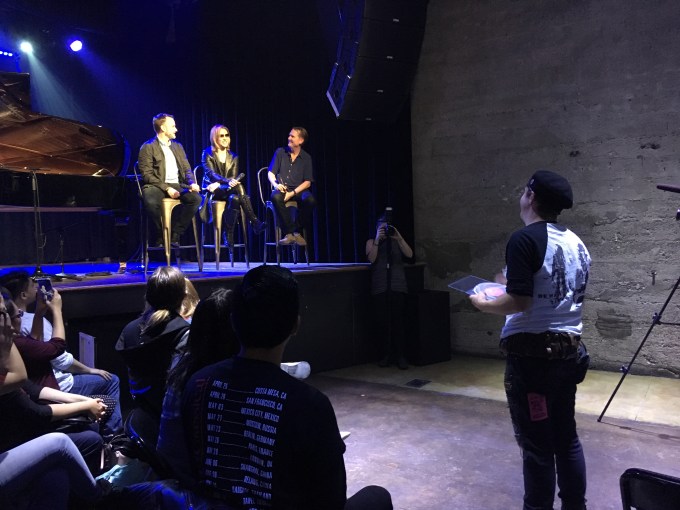
Yoshki and fanboy, Mezzanine, 2016
SK: We did a festival in Moscow, the beat festival. It was all music and documentaries, and it’s a lot more accessible to the general public. We went “WE ARE (makes X gesture)“ and the whole place went up in Xs, the whole cinema. So, like, the metal heads of Russia all came to Moscow to pay homage to Yoshiki! You know, it’s one thing when it’s a screening of the film but when he’s going to appear afterwards to either take questions or play piano, it becomes a real event for the fans.
SK: Because usually, you’re seeing him on top of a drum riser with pyrotechnics and it’s a stadium show, and here he is in a movie theatre with you-
BA: Ten feet away.
SK: It’s pretty intense.
BA: He was really close. I’m sure a lot of people couldn’t breathe in that room last night.
SK: Yeah, I could not believe it, actually. It was intense last night.
BA: Yes, at one moment when he was playing the second song he paused. People were singing along–
SK: Endless Rain. Yeah.
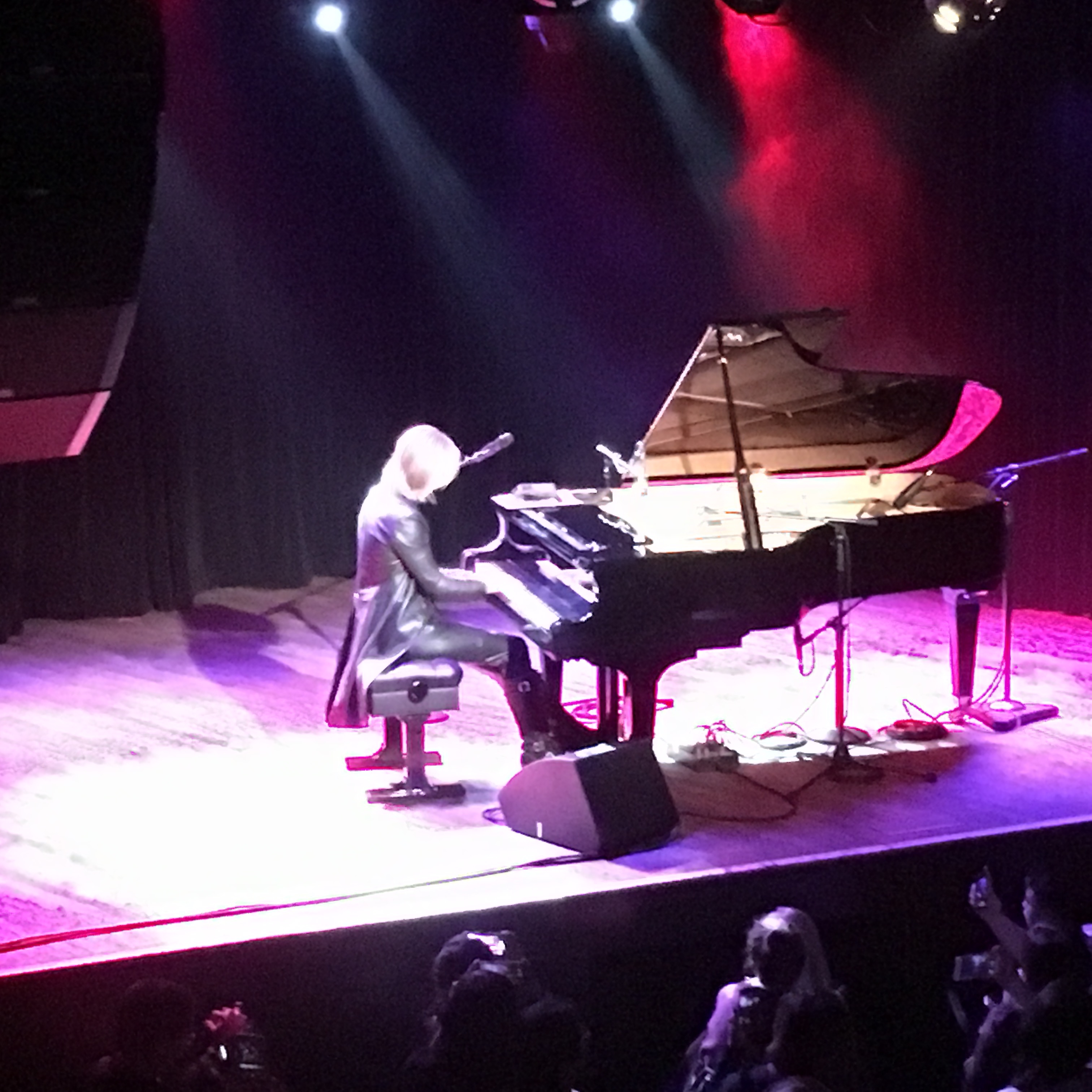
Yoshiki and piano, Mezzanine, 2016
BA: They were singing along quietly. Not loudly. Which I thought was very beautiful. And then he paused and stopped playing and they kept singing.
SK: They kept singing.
BA: It was just, like-
SK: Oh, my God, right?
BA: That was the moment. Wow. His charisma is amazing. Just amazing. But anyway, ok, we’re done squeeing here.
BA: So I actually know your other film about Scott Walker, which I really love, and again it’s kind of weird, because you’ve done the Rolling Stones movie? And the Backstreet Boys movie. Then, this X Japan movie – everybody knows who X Japan is in Asia but here they’re a little more obscure. Scott Walker is definitely obscure these days unless you’re really, really, really hip. So what are the different approaches you have when you have to deal with these incredibly famous people like the Rolling Stones versus Scott Walker?
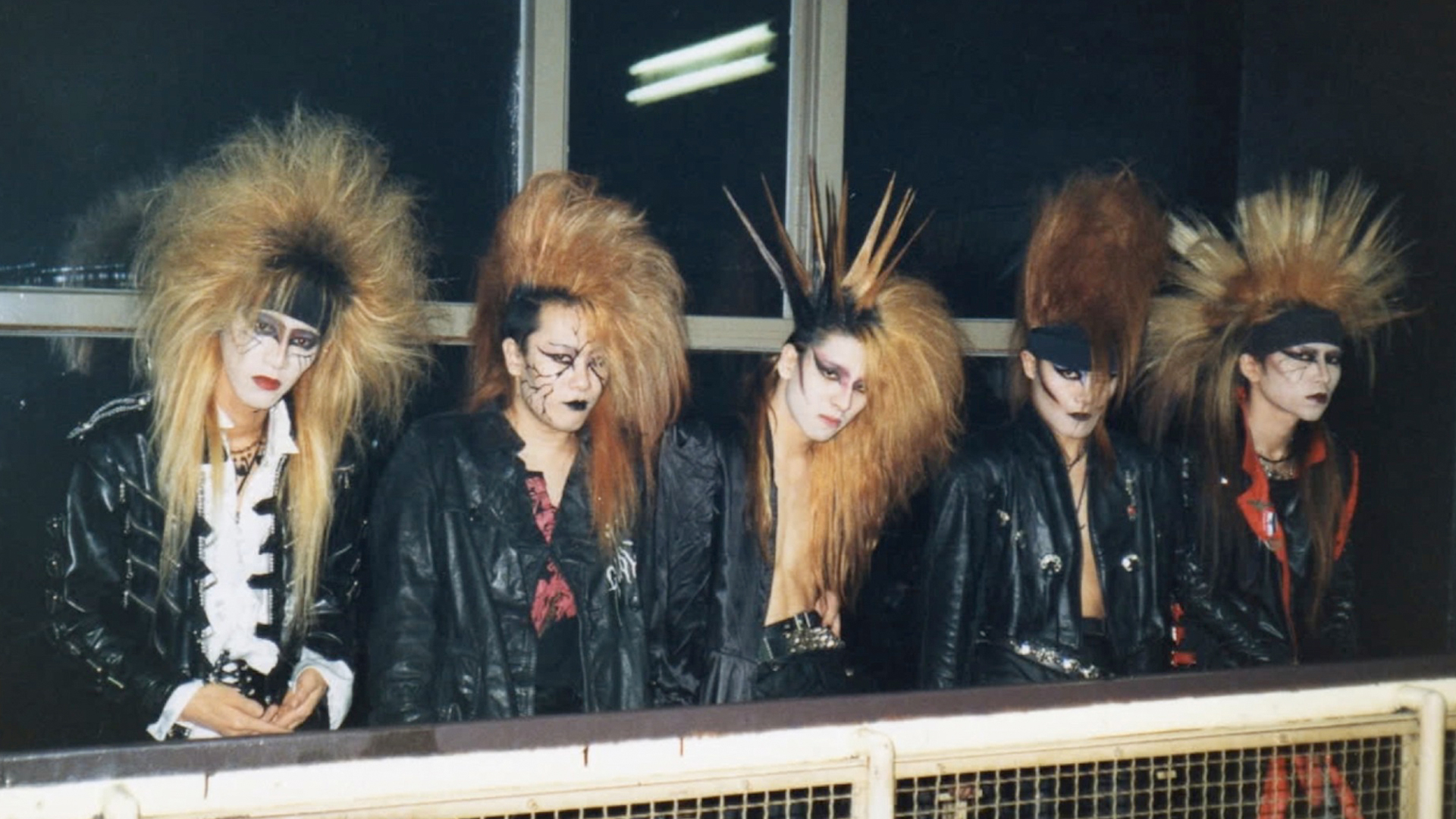
X Japan visual kei, We Are X, 2016
SK: It’s all storytelling. You have to just tell a story, and that’s it. Scott Walker–I was the fanboy, you know, I was obsessed with his music. But you really have to just approach them professionally and go ok, I’m not a fanboy, I’m a professional storyteller, I need to figure out how to break this down and piece it together in the best way possible that’s going to be emotional and cinematic. I’m not just putting facts in order to tell you A, B, C, D, whatever it is. My creative approach is always that of a kid making a mixtape for his friend. The art of the mixtape was something that I tried to perfect when I was younger. I worked in a record store, I was taping songs off of records and making mixtapes for friends and wrapping them up in these little packages, and to me the movies are literally an extension of that because you have to figure out how to tell a narrative, you have to communicate it in a way that’s going to move people emotionally and half the time the technique is to imagine you’re literally making them up –
BA: You said that last night, yeah.
SK: It’s a way to work that, if you had the choice, what would be the beats, where would you go next, logically, if you were trying to craft a drama. Because you can’t let the celebrity and all that get in your way. They try to get in your way and you can’t let them.
BA: That’s my other question. Both Scott Walker and Yoshiki are quite strong characters, human beings, personalities. There must have been some push and pull with them, right?

Yoshiki, beautiful enigma, We Are X, 2016
SK: I weirdly feel that the two films are slightly similar in that you’ve got a beautiful enigma kind of hovering in the middle, which are our central characters, but they couldn’t be more opposite. Scott Walker was someone who was super-famous who, because of the shock of fame, retreated into this kind of wilderness. And he tried to surround himself with silence and he really keeps himself well-hidden and protected and really just wants the music to be the only thing you’re confronting. So our access to him was relatively limited. I think I might have had forty-five minutes to interview him, and it was the last thing I did.
BA: Weren’t you in the studio with him, though?
SK: We were in the studio. We had, like, one and a half days. We really did not have a lot of time. Which was insane, to think we had to make a whole film and he gives you just enough. But he’s a master of that economy within his music, so it kind of makes sense. Whereas Yoshiki is fully revealed at all times, you would think, it’s constant cameras. I had ten billion hours of archive to work with. He’s been having himself filmed and archived forever and it’s actually very well organized and logged. It was an open door policy. I mean, cameras everywhere, people were filming us filming him, it was kind of excessive. But at the same time he wears a mask which you need to try and chip away at.
SK: Which is a great cue to go okay, we can go all doppelganger on you and work with a lot of visual doubles and splits. It gave us a clue to a visual world we could create.
BA: Did you pull all that B-roll from his archive? All the psychedelic, dreamy stuff, was that something he shot, or did you shoot that?
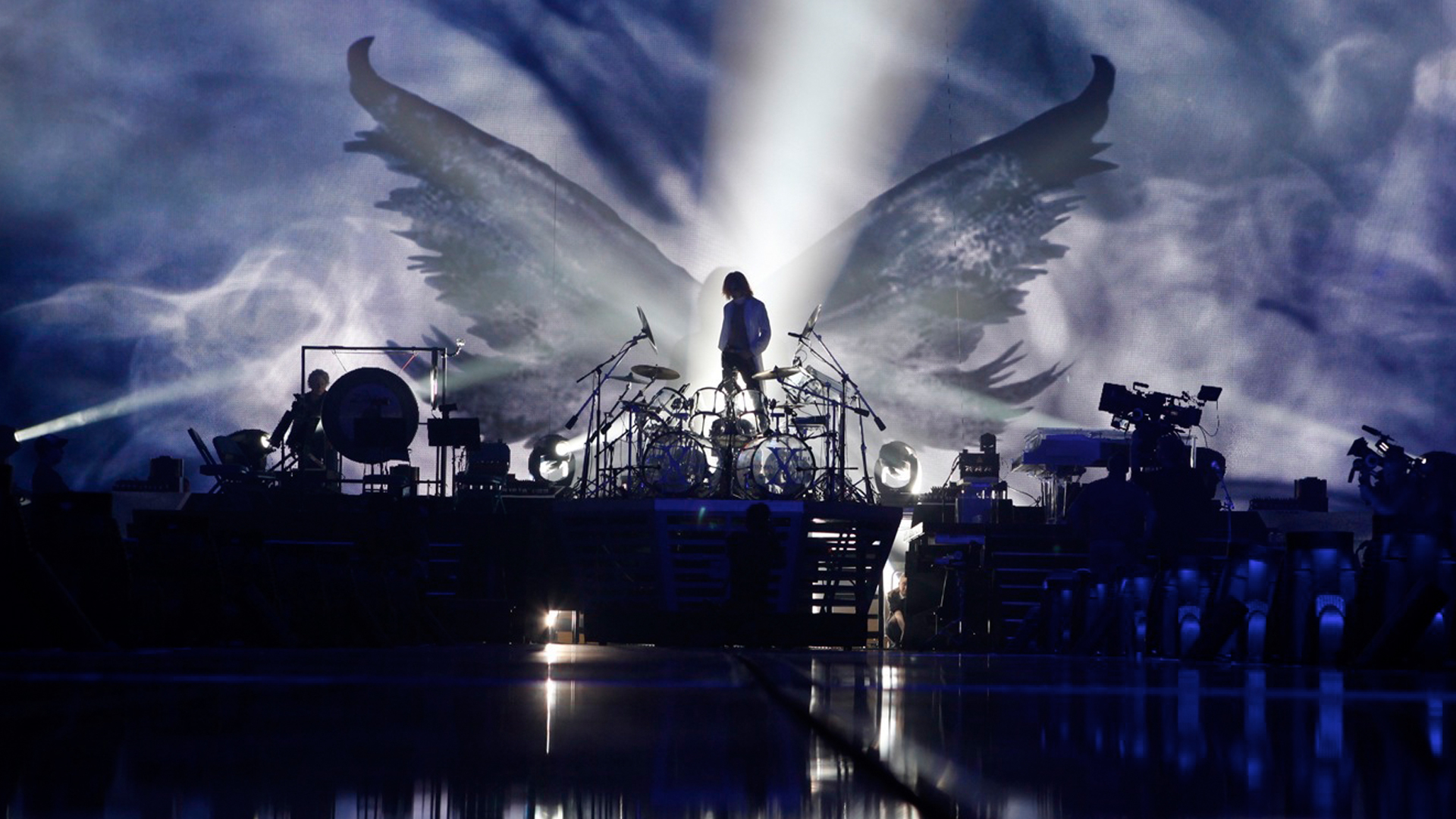
X Japan rehearsal, We Are X, 2016
SK: Well, the real psychedelic crazy stuff was probably stuff we created. We got a brilliant graphic design team that created that title sequence and all the really psychedelic sequences within the movie which are probably things we made, but we would generally make them with things we shot or from his own archive.
BA: Although there is that one part with the David Lynch footage—
SK: That was like a total surprise. I knew they had worked together and I had been combing through the logs going, where’s Lynch, where’s Lynch, and just one day it was like, box 903 and tapes one through twenty and I was like, what’s this, let’s just start looking at things, and there he is. He basically directed a music video for Yoshiki that I think kinda got shelved but it was right before he was gonna make Lost Highway so I think he was testing out a lot of tricks. Like the fire in the desert and all that stuff, but there’s Yoshiki in the middle of it.
BA: It was like, oh yeah, there’s David Lynch. Because it’s not flashy the way you put him in there! So, you make a lot of documentaries. You made a narrative a while ago but it’s been pretty much straight up docs and music docs. And it sounds like you were a big music fan when you were a kid.
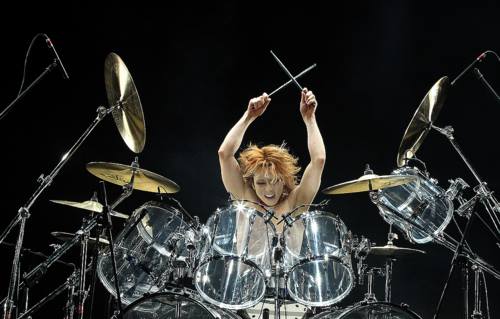
Yoshiki bangs, We Are X, 2016
SK: It’s a pocket that I like being in, I love. It motivates me. I feel like you can turn these stories around so many different ways. And each one provides unique challenges in terms of how to approach it, and they’ve all been radically different and this one especially, starting from no knowledge of the band. It was like great, I know nothing about this band, let’s hop in and take this on, you know? And the majority of those people you are trying to reach here in the West are going to be like me, like who the hell are these guys? So I can be that guy and that conduit and you can maybe see it through my eyes. Yet at the same time given the privileged access that we were allowed, what I discovered, thankfully, was that the fans are seeing a side of the band that they’ve never seen before, so it kind of works both ways.
BA: And has it screened in Japan yet?
SK: I think it’ll be February or March – I’m not a hundred percent sure.
BA: Oh, because the record is coming out.

X Japan throws down, We Are X, 2016
SK: Yeah. The record is coming out and I think he kind of wanted kind of like a homecoming, with the success of the film in the States, like with the wind in his sails. I think it was very important for him. Because it would have been very easy just to make the film and release it in Japan and be done with it. But there is an aspect of this whole thing that is about trying to expand the awareness of the band just to see what kind of a success they can make of themselves outside of their comfort zone and the film is a big part of that.
BA: Is he pretty hands-on about that stuff?
SK: Yeah. He runs everything. I mean, look at the tour. There’s no artistic director. He runs everything, standing up on his drumstool, on his drum riser, dictating everything–the pyro, the lights, the screens, where the band goes, who walks down there, when things explode, when the CO2 blasts out, when the drum goes out (laughter), I mean, he’s running it all himself, all the time.
BA: He’s orchestrating it.
SK: It’s absolutely mind-boggling. So he’s got a plan. And if this ever makes this way to fans in Japan–they’ve been so patient. And we thank them for their patience. It’s coming, we haven’t forgotten about you.
BA: It’ll be interesting an experience to see how that’s received.
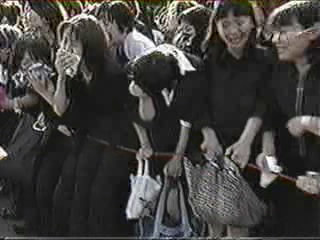
Hide’s funeral, We Are X, 2016
SK: I really just can’t wait, because we did show it at the Shanghai International Film Festival and it was in some freaking movie palace and it was off the charts– security, people rushing on the stage, screaming…
BA: Throwing dolls up there…
SK: Everything. They actually had advised him not to do a red carpet because it would be too crazy. He said, well, then I have to do a red carpet. It’s like he orchestrated the event in such a way that there would be pandemonium. But it only got people more excited. He’s a master showman.
BA: It’s interesting because I think in the movie he comes off as being this very delicate angsty person – which I’m sure he is, but what seems to me is that his personality also has an incredible steeliness to it. What you did to try to bring that out as well|? How did you balance that with his tragic life?
SK: Well I think you just have to present it. You just have to see it and draw your own conclusions. You know, we asked Pata, the guitar player, are you ever worried about him, seeing him collapsing. I mean, Pata’s been there since day one and he’s man of few words, but he winks at you and he goes, pssht, he’s not that weak. Come on. (laughter) Not that guy. Give me a break.
BA: So it’s the mask again.
SK: But there’s psychic and emotional pain and physical pain and I think there’s a really interesting relationship between the two. The physical pain helps numb what’s inside. But he carries himself in a very calm, peaceful, quiet manner outside of the realm of his rock star presentation. But he also just lets it out. And I think that’s the case with a lot of performers. The stage is where they unleash it, right?

The mask, Yoshiki, We Are X, 2016
BA: Do you think that you were able to penetrate the mask that he wanted to show you?
SK: Oh yeah. I mean, granted, it was hair and makeup for every interview, but we had to stop half the time, because he’d be crying and getting very emotional. I think once he decided he’d let me in, in a way, he was really forthcoming and I just felt a closeness in these interviews that I don’t usually get to with musicians. I mean you try to go there and sometimes you just can’t get through.
BA: How long did that take?
SK: The first interview was the day after Madison Square Garden and really we had started with that–I had no preparation. We were shooting days after we got the job, really. And so he was exhausted and kind of elated at the same time. We just sat him down for a very quick forty-five minutes and one of the first things I asked him was, what an amazing night, who do you wish could have been here to share in this experience, you know, totally loaded question – but he immediately started talking about his dad and just got really choked up. And we just went from there and I think just having him observing how we work – he was very impressed with the crew and the team, I think a lot of people who will normally shoot with him or try to approach him for interviews or anything especially in Japan are doing so with a real reserve and they put him on this pedestal, and we just had to go for it. No boundaries – I mean, it was respectful, but we were invasive. And I told him, look, we’re gonna be as obnoxious and as annoying as we can be during production and I’m going to make you uncomfortable and we’re going to cross as many lines as we can, because we can always pull it back in the edit if we need to. But let’s not be censored. If you want to make a great film, that’s kind of part of it, so… And he got it–-I think once he was in, he was all the way. Because he was resistant to making the film apparently, for years.
BA: So what was surprising to you about making this movie? What did you learn about them that you didn’t expect?
SK: Well, it was just the whole thing. It was X Japan itself. It was literally being side-stage at Yokohama Arena, literally a week after meeting him, to see them warming up – warming up – for Madison Garden with two sold-out arena shows. I had never seen anything like it in my life–just the intensity of the fans. I think that was THE most jaw-dropping, just seeing twenty thousand people X-jumping, and crying, and singing along, and just that simultaneous collective passion was at a level I had never experienced. I mean it was an actual just shock in the most beautiful way, literally just being privileged to stand right there. I’m right here, the stage is EXPLODING, there’s pyro, there’s all this stuff, and there’s just a sea of people with their little glow sticks making Xs as far as the eye can see and I was just, where am I? What has happened to me? I just couldn’t believe it.
BA: So you hadn’t witnessed Asian pop music before-
SK: Not to that level. Not to that level. I mean that was pretty awesome. Pretty awesome. It’s a question you get a lot, and it’s never just one thing, it was just kind of the totality of that experience. And then you realize what a heavy burden you have to carry. I’m sure there’s a million fans that wish they could have been in a position to tell the story.
BA: So did the moviemaking change you?

Yoshiki-san, We Are X, 2016
SK: I think they always change you a little bit. I know I have a lot more grey in my beard right now. But, they always change you in some way. I mean, Scott Walker had set a certain bar as an artist and he was someone I felt that I could learn lessons from in terms of how strong you have to be to be an artist and to go down a certain path. I don’t think I could ever be that strong, to go so fully into an artistic wilderness on your own and do something, though I would love to. I think sometimes economically and just logically you kind of can’t do that –
BA: Right.
SK: But, in Yoshiki’s case, X Japan… there was such an artistic freedom. It was more about freedom, in a lot of ways. He didn’t mess with us at all and literally, the film was 90% finished, accepted into Sundance, and then we showed him a cut. He gave us that much kind of leeway.
BA: Did you get feedback after that?
SK: A little bit. But it really, it was so minor, because the film was done. There was kind of no going back after a point, so it was a bit of a risk. I think what I took away from his kind of artistic project that allowed us to push it that far visually and emotionally. You kind of feed on the artist and their aesthetic world–that’s kind of how I try to then put that back into the film and try to make sure it’s all calibrated in a way that feels like the music and feels like the show and has a visual aspect that rises to the level of the subject, you know. And it was that kind of excessive freedom that I think he brings to his art that really fueled us and let us really stretch out and do something different with it.
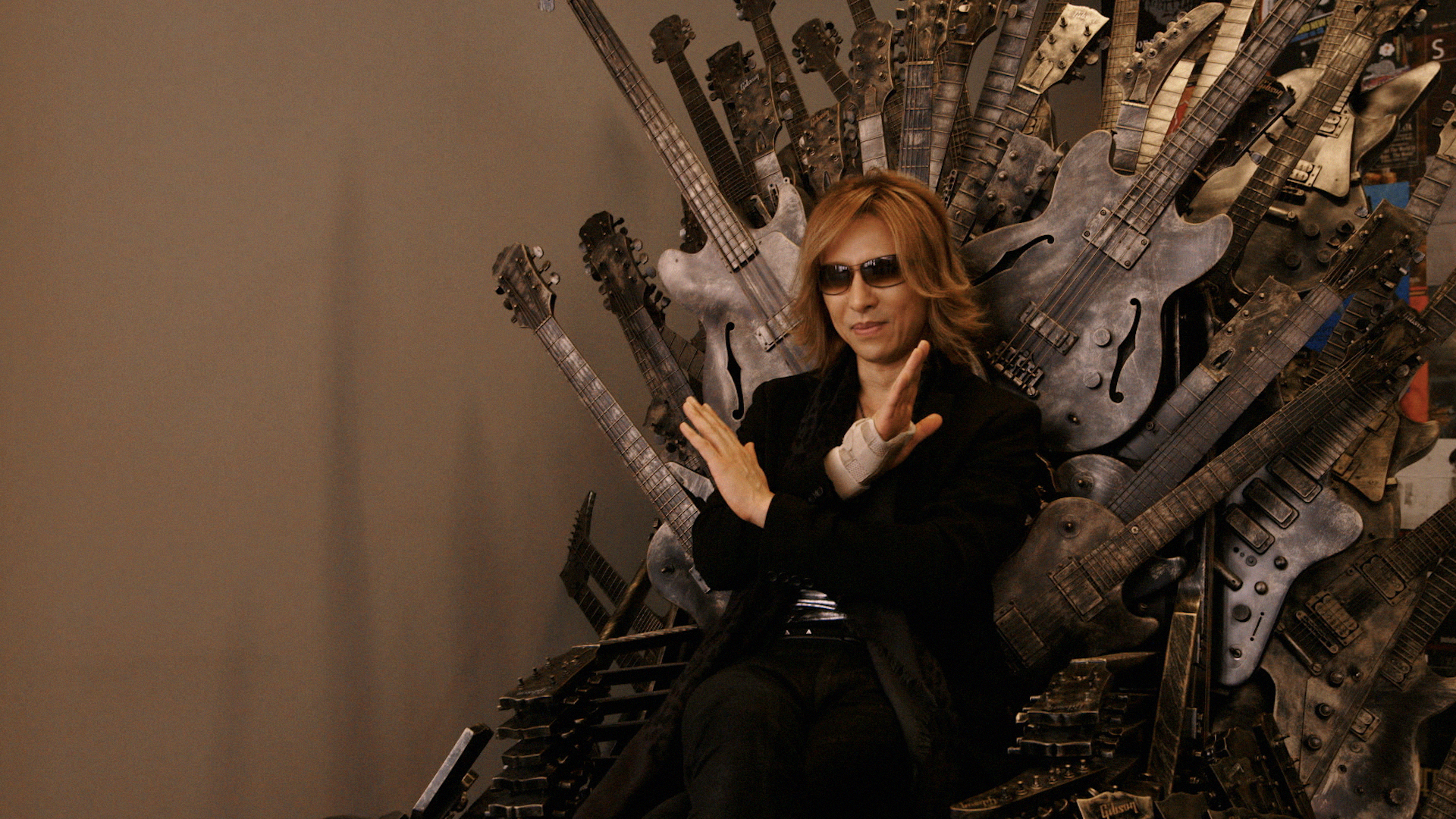
Yoshiki king, We Are X, 2016
BA: Did you feel like he was collaborating with you?
SK: Oh yeah. Yeah yeah yeah. You know, he says, “Oh, I was too busy to mess with you,” Because he is really on the go all the time. But he said to him it was just a level of trust, so he couldn’t be involved because it’s too painful. He says it a lot and it’s a good story but I do buy it because I’ve seen it in action–he could hardly edit the DVD of the Last Live concert, you know. He said it took him three or four years to finish it because he would watch five minutes and he’d have to go cry and take a break. And that’s one show, forget about the whole career.
BA: Did you ever find a barrier or a wall that he wouldn’t let you through? Like when you asked him about why Taiji got thrown out, and he said, “I’m not telling.”
SK: Those aren’t necessarily walls or barriers, there are just certain things that you know, if he’s not gonna answer, he’s not gonna answer. And we’ve never got an even off the record, that’s one he’s going to take to his grave. Which is fine. I think we need to leave a little mystery intact.
BA: Cool. So you’re still in love with this movie?
SK: I love this movie. I love this movie. I can’t remember – was it Picasso, they asked him, what’s your favorite painting, he says, “the last one, or the next one,” or whatever it is. It’s only in the last few weeks of really showing it to a lot of diverse audiences where you’re really feeling the impact of it. And your perception of it keeps changing. But, yeah, I’m really proud of it. I’m really proud of it. I love it. Which I said about the Backstreet Boys movie, and I love that movie. (laughter) But this one’s just like another level. There’s just something other about this one. It was more of a challenge and I just think it’s visually one of the most stunning things I’ve done yet. I had such great collaborators, like really great collaborators, behind the camera and the graphics team, my editorial team… Everyone just knocked it out on this one. I love it.

 beyondasiaphilia
Recent Comments