Posts filed under ‘san francisco international asian american film festival’
U Got The Look: CAAMfest 2013
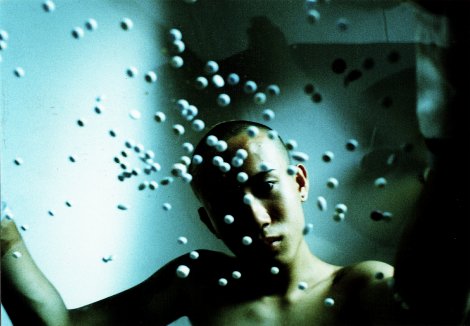
Teen dream, 15, dir. Royston Tan, 2003
Another year, another San Francisco Asian American International Film Festival, except now it’s been rebranded as CAAMfest, which certainly rolls off the tongue more easily than the previous moniker. The festival has added a tagline (film, music, food) that’s a nod to the increased presence of the audio and gustatory arts, but it doesn’t mean that movies are taking a backseat. As per usual there are more than a hundred new Asian and Asian American flicks in this year’s festival—below are a few preview picks.

Jeremy being Jeremy, Linsanity, dir. Evan Jackson Leong, 2013
Linsanity
I don’t need to tell you that this is a great Cinderella story, but filmmaker Evan Jackson Leong has taken the familiar material and shaped a charming and inspiring documentary about everyone’s favorite Asian American underdog. Jeremy Lin turns out to be funny, self-aware, and loquacious and Leong uses his longstanding access to his subject (he started shooting the film when Lin was at Harvard) to great effect. Interviews with Lin’s friends and family members, home videos of the budding basketball prodigy, and great coverage of the actual Linsanity phenomenon makes this a super-fun, captivating movie. The movie also touches on the racism and discrimination faced by Lin, the NBA’s first Asian American superstar, as well as Lin’s devout Christianity, but Lin is such a self-effacing guy and Leong so skillfully handles these elements that they work seamlessly into the whole picture.
Graceland
A solid film noir set in Manila and directed by Filipino American Ron Morales (Santa Mesa, 2008), Graceland looks at the repercussions of the kidnapping of a pair of young girls. Dark and moody, the film questions the morality of its various characters and, like the best noirs, no one is above scrutiny, everyone is guilty, and everyone has something to hide. The cast is lead by a nervous, sweaty performance by Arnold Reyes as the desperate father trying to save his daughter and who has many hard choices to make. The film also indicts the sex trade, corrupt policemen, and shady politicians—this is classic hardboiled stuff and well worth a look.
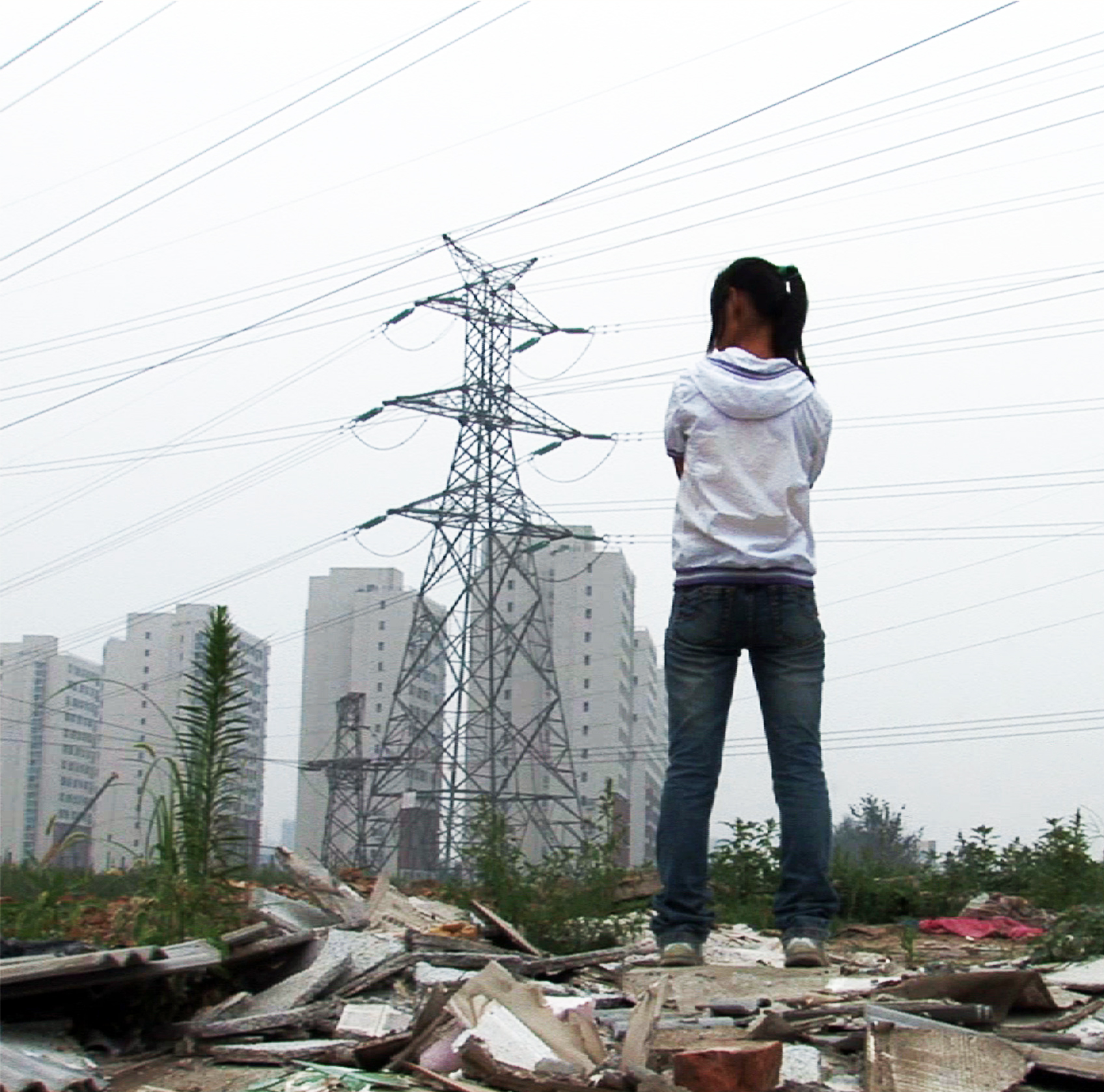
Hard times, When The Bough Breaks, dir. Ji Dan, 2012
When The Bough Breaks
Ji Dan’s verite documentary about a poor Chinese family living in a hovel on the outskirts of Beijing examines the effects of China’s rapidly expanding economy, which has ironically left many in dire economic and social straits. The father is a laborer, the daughters are adolescents trying to find money for themselves and/or their preteen brother to go to a decent school (one “sponsor,” a sick elderly man, offers to fund their education if they’ll sleep with him), and upward mobility is nowhere to be found. As if that wasn’t enough, Dad is a tyrannical drunk who verbally abuses his family at any opportunity, Mom is angry and fed up, and the teenagers are already learning to psychologically torment each other. Plus, the family’s eldest daughter has gone missing for some years after being lured into prostitution by the false promise of a factory job folding cardboard boxes. Overlong, somewhat shapeless, and leaning toward poverty porn, the film is interesting nonetheless due to the tenacity of the two younger daughters who grimly soldier on in the face of a bleak existence.
When Night Falls
Another film set in China, this narrative examines the notorious case of a young man who is driven to commit murder by that country’s oppressive police force. Ai Wei Wei made a documentary about the same case, but this film focuses on travails of the man’s mother as she tries to unravel her son’s unfortunate fate. The movie is composed primarily of long, stationary shots that emphasize the delicate action within the frame, lending a sense of oppression, immediacy, and intimacy to the film.
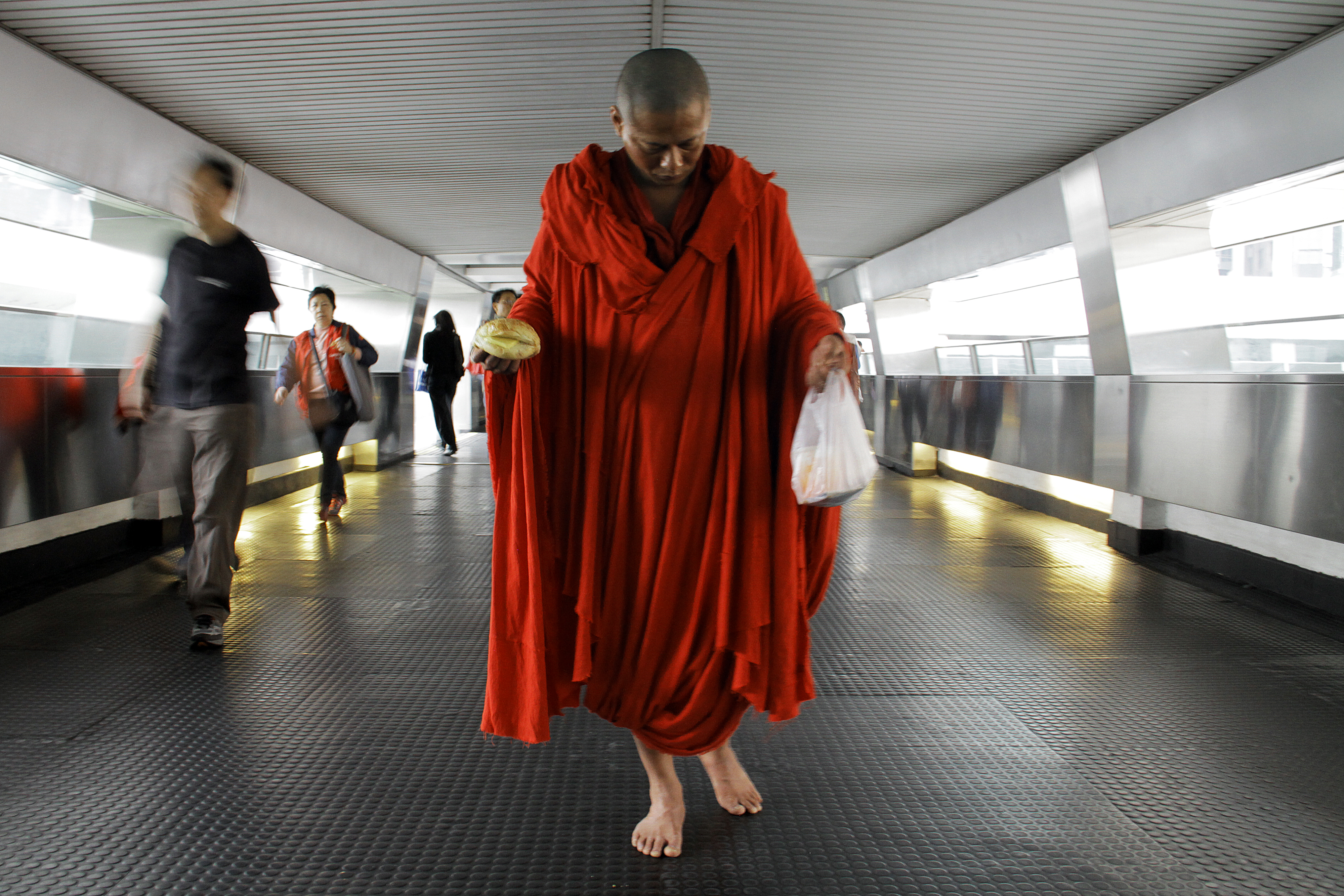
Walker, Beautiful 2012, dir. Tsai Ming-Liang, 2012
Also of note in the fest: Debbie Lum’s sharp and observant documentary, Seeking Asian Female, which is all about white dudes with yellow fever (full review here); The Land of Hope, Sion Sono’s second feature set in the Fukashima tsunami zone (full review here); the omnibus film Beautiful 2012, which includes Hong Kong director Ann Hui’s short narrative My Way, starring Francis Ng as a transgendered woman (!) (full review here), and Apichatpong Weerasethakul’s latest dreamwork, The Mekong Hotel. The festival is also presenting a brief retrospective of director Royston Tan, including Old Romances, his documentary elegy to old-time Singapore, the maniacal musical 881, and his debut feature 15, which looks at teenage angst, Singaporean-style. I’ll be interviewing the director onstage live at the Pacific Film Archive following the screening of 15, so be there!
CAAMfest
March 14-24, 2013
San Francisco and Berkeley, CA
full schedule and ticket information here.
Swagga Like Us: 2012 San Francisco International Asian American Film Festival
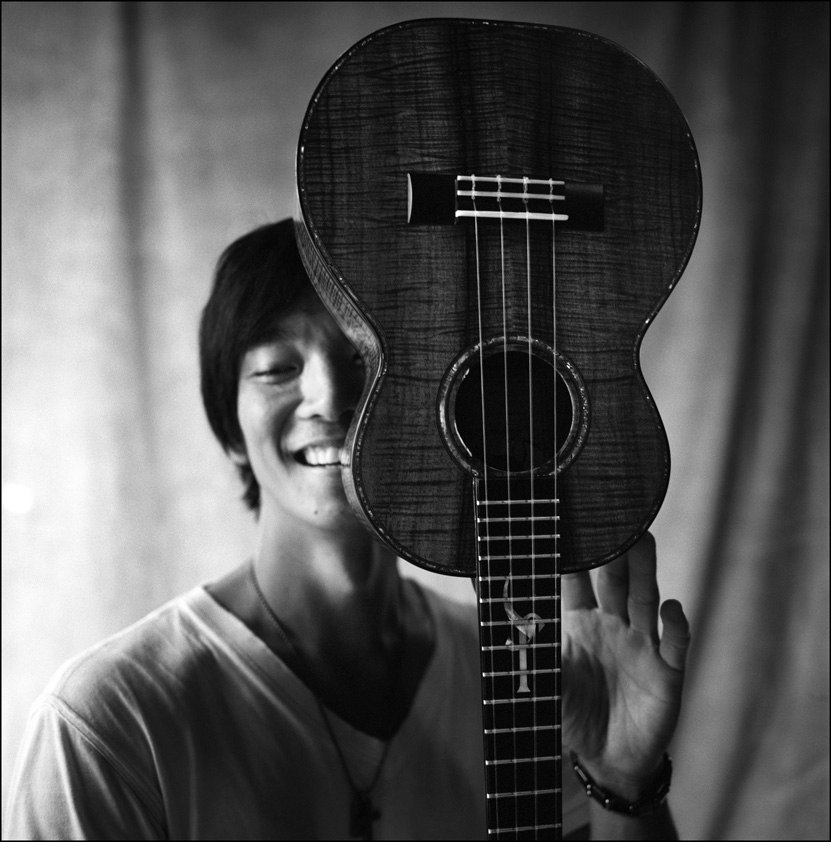
A man and his ukelele, Jake Shimabukuro Documentary, 2012
Now in its thirtieth year, the San Francisco International Asian American film festival offers several treats this year, with some brand new narrative films from Asian American directors. These include features by some familiar names and one remarkable debut by a newcomer that is astoundingly assured and original, demonstrating the continued growth and expansion of Asian American cinema.

The lucky Kimberly-Rose Wolter with foxy Sung Kang, Knots, 2012
Michael Kang’s Knots is a fast-paced rom-com with great comic performances and a decidedly un-cloying script. As in his debut film, the offbeat adolescent comedy The Motel, Kang has an eye for strange yet engaging characters coping with the bizarre dynamics of dysfunctional family life. Lead actress and screenwriter Kimberly-Rose Wolter is a marriage-phobe whose weird mom and sisters are wedding planners in Hawai’i. Sung Kang (Fast & Furious; Better Luck Tomorrow) is the dreamy love interest.
Yes, We’re Open, directed by Richard Wong (Colma: The Musical) is an entirely agreeable, sleek and charming timepass, with a clever and engaging script (by Colma’s star and screenwriter H.P. Mendoza) and winsome performances from its cast. Lynn Chen and Parry Shen play a comfortable yet slightly bored couple whose relationship has lost its groove, until they meet another couple that tantalizes them with the possibility of an open relationship. The film does a good job capturing the feel of non-tourist San Francisco, with locations at Green Apple Books, the Alemany Farmers’ Market, the Roxie Cinema, and other neighborhood locations, as well as gently lampooning foodies, hipsters, and tech geeks. I haven’t seen Parry Shen in a movie since Better Luck Tomorrow and he does a great job as the slightly neurotic male lead who is somewhat lacking in self-awareness. Lynn Chen is funny and endearing as the other half of the conflicted couple. The movie is not unlike Annie Hall or some of Woody Allen’s other earlier romantic comedies in its young urban groovester milieu, its reliance on a specific cityscape (here San Francisco instead of New York) and its lighthearted take on the foibles of contemporary relationships.
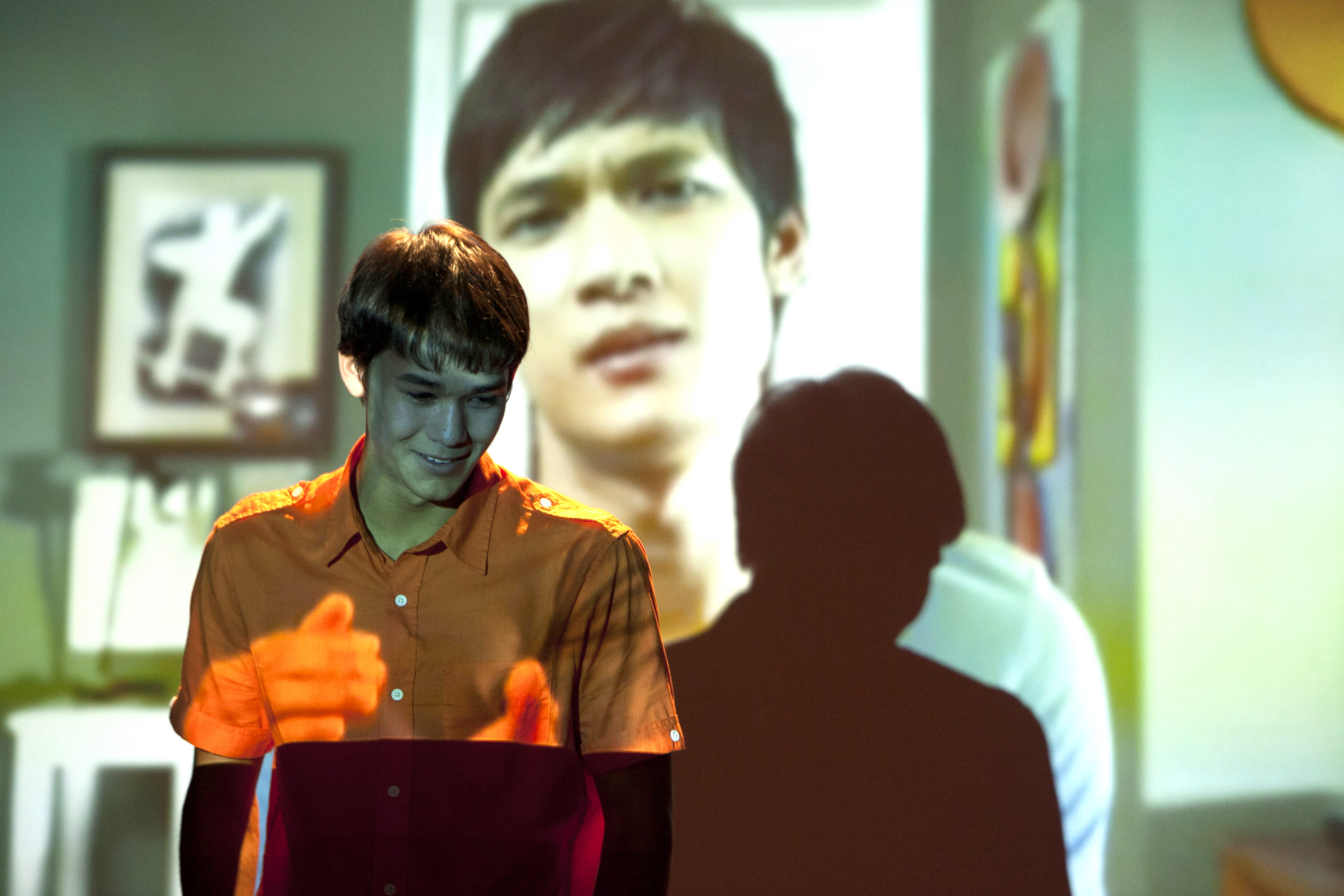
BooBoo on the spectrum, White Frog, 2012
Quentin Lee turns up the melodrama with White Frog, a family tale of a teenager with Asperger’s syndrome dealing with tragic circumstances. Led by a strong performance by BooBoo Stewart (Twilight: Breaking Dawn), the cast also includes some of the best-looking teenagers I’ve seen since Beverly Hills 90210, yet the actors overcome the handicap of their beauty by turning in convincing performances. The story makes a plea for tolerance and understanding of difference, and while it tilts toward maudlin at times, director Lee’s strong direction steers it back toward steady ground. He modulates the somewhat overwrought twists of the narrative by drawing out believable and sympathetic turns from his actors, including BD Wong as the conflicted father and Joan Chen at her dreamy and vulnerable best.
Although it also delves the family dynamics of coping with a tragic loss, Patrick Wang’s In The Family is a horse of a different color. Subtle and smart, the film offers a new way of seeing that diverges radically from the classic Hollywood style of filmmaking–it clocks in at nearly 3 hours, and the majority of the film is shot in long, deep-focus master shots. However, its formal style is in no ways mannered or pretentious. The film begins with a series of long, static scenes that simply explicate the quotidian lives of Joey and Cody, an interracial gay couple living in Martin, Tennessee with their energetic and precocious young son Chip. The long lockdown takes emphasize the normalcy of their everyday life despite a family structure that falls outside of the heteronormative frame. The time that the film takes to establish their deep emotional bonds pays off later in the film as tragic circumstances as well as societal pressure conspire to destroy their idyllic home life. With a reliance on long single takes the acting had better be good and here it’s stellar, anchored by actor-director Wang as the humble yet passionate and devoted father.
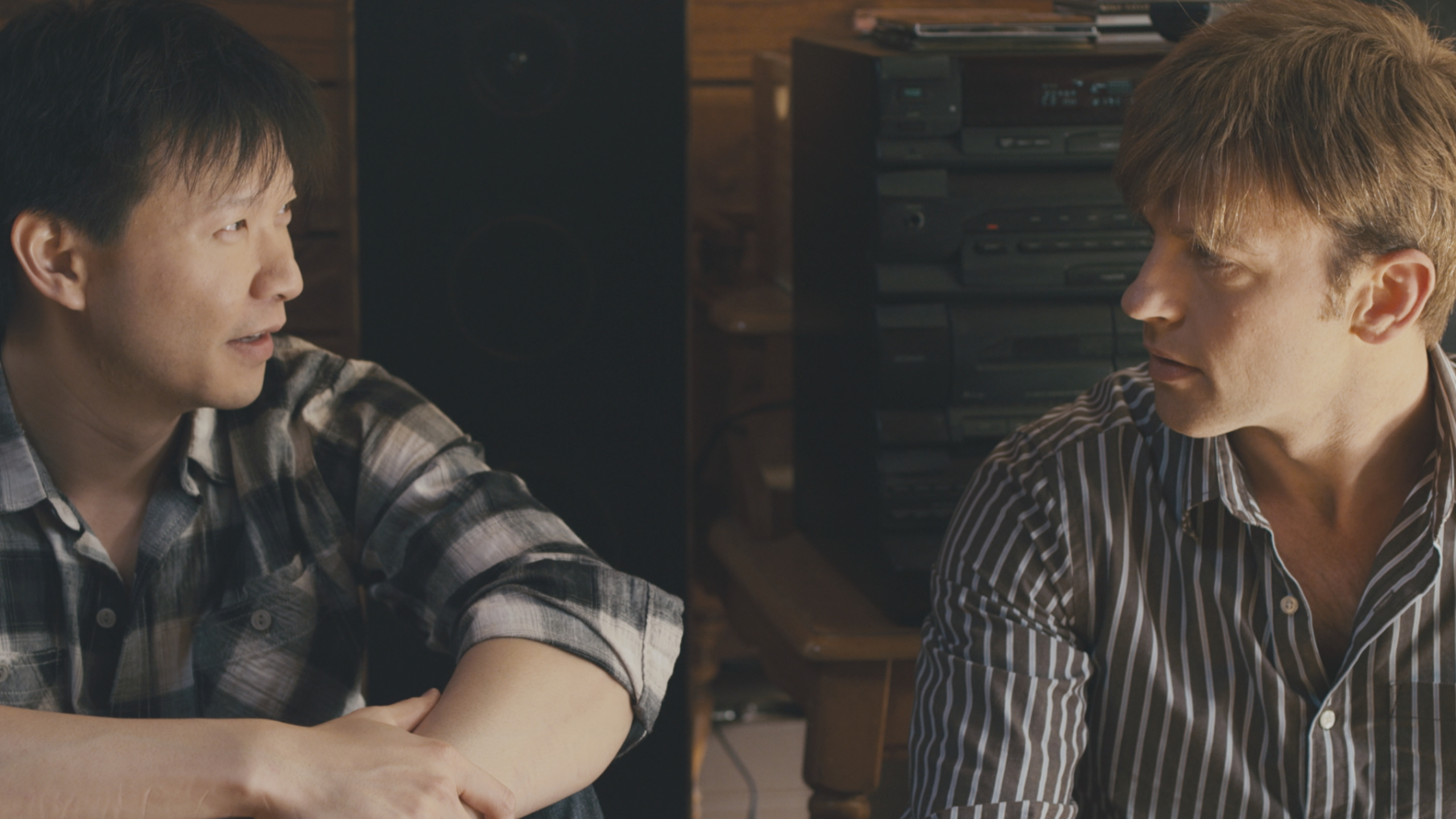
Stillness and movement, In The Family, 2012
In The Family is not only one of the best Asian American films I’ve seen in a long time, it’s one of the best films, period, that I’ve seen in a long time. Not to overstate the point but Wang’s compositions and his confidence in the power of the action within the frame are reminiscent of Taiwanese auteur Hou Hsiao-Hsien or Japanese master Yasujiro Ozu. Although touching on several hot-button issues the film deftly sidesteps polemics and instead presents a subtly shaded, morally complex story.
Also of note: Tad Nakamura’s Jake Shimabukuro Documentary, his first feature-length film that centers on the Okinawan-Hawai’ian ukelele wizard. The film follows up Tad’s short docs Pilgrimage, Yellow Brotherhood, and A Song For Ourselves and, although there were no advance screeners of the film, it promises to be as brilliant and moving as Tad’s earlier work. It’s great to know that not all Asian American filmmakers aspire to making narrative films, and Tad is following in the footsteps of Loni Ding, Steve Okazaki, Renee Tajima-Pena, Christine Choy, and his own parents, Bob Nakamura and Karen Ishizuka, all seminal Asian American filmmakers whose documentaries are the gold standard for Asian American cinema. The film festival will feature a program with Tad and his parents, A Conversation with the Nakamura Family, on Saturday, Mar. 10 at 3.30p, where science will surely be dropped.
Bonus: here’s a clip of Jake Shimabukuro from the upcoming documentary playing Queen’s Bohemian Rhapsody.
For tickets and a full schedule go here.
Picture This: 2010 San Francisco International Asian American Film Festival

Illuminated curtain, Great Star Theater, A Moment In Time, Ruby Yang, 2010
I’m not sure that the nice Chinese American ladies sitting behind me during the screening of James Hong & Yin-Ju Chen’s Lessons Of The Blood, shown last Tuesday as part of the San Francisco International Asian American Film Festival (SFIAAFF), knew exactly what they had signed up for when the bought their tickets. They had been behind me in line outside of the Sundance Kakuki Cinema, chatting amiably in English and Toi San, and I heard them mention that the film was “about the Nanking massacre” and that it had “won some kind of award in Europe.” As the film progressed and drew the audience deeper into its horrific tale, the ladies began to gasp and groan in dismay since Hong & Jin’s movie is not for the faint of heart and tells its story in chilling detail. Not unlike when I see a particularly brilliant horror flick, I found myself overwhelmed with dread and anxiety by the end of the movie, all the more so since its story is drawn from facts and history.

Germ warfare victim, Lessons Of The Blood, James Hong & Yin-Ju Chen, 2010
The film outlines the infamous series of war crimes commonly known as ‘the rape of Nanking,” but as told by Hong & Chen it’s quite a bit more. Unflinchingly graphic in its description of the various atrocities committed by the Japanese military in Nanjing during World War II, it also included several stomach-turning closeups of festering wounds found on the now-elderly survivors of the germ warfare unleashed by the Japanese Imperial Army in the 1940s. Lessons Of The Blood, however, is more than sensationalized propaganda or simple polemics. It’s also an impressively crafted film, using found footage from propaganda films, newsreels, Hollywood movies, television news, and other filmic detritus, as well as a disturbing and ominous soundtrack, coupled with modern-day interviews with Chinese wartime survivors (who willingly reveal their various scars and disfigurations). The result is a haunting condemnation of both the historical crimes as well as the modern-day complicity that implicates us all. Needless to say, watching this movie was hella intense.
Lessons Of The Blood was one of the strongest films from this year’s action-packed SFIAAFF. Although once again I spent more time at the parties than watching movies (in part because so many shows sold out), I managed to catch A Moment In Time, Ruby Yang & Lambert Yam’s luminous elegy to San Francisco Chinatown movie houses. The film is a comprehensive look at the ways the Great Star, the World, the Bella Union, and the Mandarin theaters were in days of yore the glue that held together the Chinese community, beginning in the 1920s and continuing until their collective demise in the mid-1990s. I myself had the privilege of seeing several classic Hong Kong films with my buddy Patrick at both the World and the Great Star (including a strange and awesome double bill of the violent shoot’em up Big Bullet and the weepy melodrama Comrades: Almost A Love Story) and I can attest to the downscale utilitarianism of both of those movie houses. But there’s nothing like seeing a Chinese-language film with a roomful of Chinese people who are eating cuttlefish, smoking, and chattering incessantly in Cantonese during the show, and Yang and Lam’s movie captures that sensation exactly. One patron interviewed described his entire family including young children attending 9.30p Saturday night shows for 25 cents total, the kids running up and down the aisles and the parents gossiping and eating chicken wings and melon seeds until all hours.

Cell phone a-go-go, Tehran Without Permission, Sepedeh Farsi, 2008
I also caught a screening of Tehran Without Permission, shot surreptitiously on a cell phone in the months running up to the 2009 presidential election in Iran. Although I was dog-tired from attending my own world premiere and reception for The Oak Park Story earlier that day, Sepedeh Farsi’s verite documentary held my attention throughout its 80-minute run time. Through subtle and succinct vignettes the film captures the mood and attitude of citizens of Tehran, with small details and comments presaging the upheavals that would occur in a few months hence.

Deepika Padukone & Saif Ali Khan, just another impossibly gorgeous Bollywood couple, Love Aaj Kal, 2009
I also made time to see the festival’s annual Bollywood at the Castro movie, Love Aaj Kal, although it was the fourth film of a long day of movie-going. I have a soft spot for this program since it was at last year’s festival that I caught my very first Shah Rukh Khan movie, Rab Ne Bana Di Jodi, which spurred my obsessive love for SRK in particular and for Bollywood movies in general. Love Aaj Kal, alas, does not star Shah Rukh Khan but the hot and charming Saif Ali Khan makes an acceptable substitute. Paired with the doe-eyed and astoundingly pretty Deepika Padukone, Saif plays dual roles as a modern-day commitment-phobic NRI in Britain and a noble and lovestruck suitor in the 1960s Punjab. The film deftly shuttles back in forth in time between these two stories, drawing parallels and distinctions between the romances from each period. A well-made and satisfying love story with some excellent dance sequences, the film is a great example of high-quality Hindi-language commercial moviemaking—in other words, a fun and rewarding bit of Bollywood entertainment.
I also passed by a rush line full of excited teens waiting for the special appearance of youtube darlings kevjumba, wong fu, nigahiga and timothy delaghetto. The youth were madly texting and tweeting as they waited to see their favorite internet stars in the flesh, but tickets were, alas, impossible to come by since the show had sold out as soon as it was announced. It was nice to see the next generation of SFIAAFF fans out in force, which hopefully augers well for the continued health and well-being of Asian American filmmaking.

Filmmakers Felicia Lowe & the late, great Loni Ding, 2009. photo: Jay Jao
NOTE: This year’s fest was dedicated to the memory of the force of nature known as Loni Ding, the legendary Asian American filmmaker and educator who a few weeks ago died at age 78 from complications from a serious of strokes. Loni was one of the fiercest and most amazing people on the planet and her energy, dedication, and sheer determination guided her filmmaking, which included seminal documentaries like Ancestors In America and The Color of Honor. She always had a kind word and a smile for younger filmmakers like myself and made us feel like we were doing something significant in our work. She was the moral center of the Asian American film community and she will be sorely missed.

 beyondasiaphilia
Recent Comments